H5PROJECT
  • Home
  • Culture
  • Fashion
  • Design
  • Search
  • Home
  • About Us
  • Culture
  • Fashion
  • Design
  • Contact

Recent Posts

Five-star retail experiences from across the Mediterranean

Five-star retail experiences from across the Mediterranean

Monocle Christmas Market 2019

Monocle Christmas Market 2019

Jil Sander is bringing its modern, understated aesthetic to London

Jil Sander is bringing its modern, understated aesthetic to London

Search

advertisement
Five-star retail experiences from across the Mediterranean
Fashion 2025-12-17 15:01:28

Five-star retail experiences from across the Mediterranean

Sunny travels offer you the chance to explore new, more carefree versions of yourself – and your wardrobe. You might pick up a punchier fragrance, swap your classic watch for a bright-yellow waterproof Swatch chronograph or experiment with new patterns. But when you return home, these purchases often feel out of place. So you store them away, together with your memories of the trip.If that scenario feels familiar, it’s probably because, until recently, most resort destinations had little to offer beyond souvenir shops stocked with everyday necessities for forgetful travellers and mass-produced beachwear. Having made enough bad shopping decisions, today’s holidaymakers are seeking more meaningful items that are unique to the place that they’re visiting but will also enrich their lives when they get back home. Montesol Experimental, in the heart of Ibiza’s Old TownSelect swimwearHoteliers have spotted the opportunity and have started to put more effort into satisfying guests’ appetite for purchases on the road. Retail is no longer just an afterthought. Where once, even in the most luxurious establishments, hotel boutiques were usually confined to badly lit corners and run by third-party companies, many have now evolved into thoughtfully designed retail spaces employing in-house creative teams to curate one-of-a-kind fashion selections, home decor and locally produced beauty products. These boutiques have become an important part of the hospitality experience, helping to lure people in, just as the right restaurant atmosphere or a signature drink on a bar menu might.Here, Monocle speaks to the creative directors, buyers and entrepreneurs who have taken up residence in sunny locations around the world, upgrading hotel boutiques in places such as the Greek isle of Paros, Italy’s Porto Ercole and the Cayman Islands.1.Bohemian exhibitsMontesol ExperimentalIbiza, Spain The Montesol Experimental hotel opened in the heart of Ibiza’s Old Town last year in a building that dates back to the early 20th century. “When we had the opportunity to get the oldest hotel in Ibiza, a Unesco World Heritage site, we were thrilled,” says Pierre-Charles Cros, co-founder of the Experimental Group, which also owns the island’s much-loved Experimental Beach club. The building was renovated by Parisian designer Dorothée Meilichzon, who used pastel colours to capture Ibiza’s sunny, bohemian spirit.Ever-changing curationPit stop at Café MontesolAll that glittersBespoke selection of accessories and craft piecesSpecial attention was paid to the boutique, which you’ll find by the hotel’s entrance. Cros saw a chance to use the space as a window into the Montesol experience, providing a taste of the best that Ibiza has to offer. The challenge was in creating the most interesting space possible within the compact area. “We wanted to showcase a selection of items that changes several times throughout the season and features a wide range of local talent,” says Cros, pointing to the rows of colourful kaftans lining the limewash walls, leather bags by Spanish brand Malababa, handwoven jackets by Gypsy Truck and gold jewellery crafted in nearby workshops. “If you make it too practical, it stops being about presenting a curation and doesn’t really inspire anybody,” says Cros. “Building a strong hotel brand extends to retail. It’s yet another dimension of the service that you offer guests to ensure that they remember you after they have gone home.”montesolexperimental.com2.Heart of the countryHôtel Crillon le BraveVaucluse, FranceSince Hôtel Crillon le Brave was established in 1989, its owners have considered shopping to be an important part of the customer experience. “We have always had a retail corner,” says general manager Dagmar Lombard. However, it was only when fashion and property entrepreneur Patrick Pariente acquired the premises 30 years later that it introduced a dedicated boutique space filled with Made in France keepsakes.Overlooking the countryside of Vaucluse, 35km northeast of Avignon, the boutique offers guests glimpses of the village’s surroundings before they even step out of the 17th-century hamlet. Its rails are lined with souvenirs such as silk scarves crafted in northern France by Inoui Editions, linen dresses from Luxe Provence made between Provence and Paris, and embroidered cotton blouses from Valentina Store produced in an atelier a few kilometres away in Malaucène. Hôtel Crillon le Brave’s boutiqueScarves from Inoui EditionsDagmar LombardVaucluse’s countrysideAs well as highlighting the region’s savoir-faire and skilledcouturières, the in-house Hôtel Crillon le Brave collection of wicker baskets, espadrilles and outerwear has proven to be an effective communications tool, spreading the word for the luxury hotel group, which has outposts in Saint-Tropez, Paris and Méribel. Every space takes inspiration from its surroundings; in Crillon le Brave, this translates to rustic shelving, Génoise-tiled floors and luscious pots of lavender. “As a family-owned hotel, we like to tell a story through the brands that we stock,” says Lombard.maisonspariente.com3.Caribbean collectionDolores at Palm HeightsCayman IslandsUrban fashion capitals no longer have exclusivity when it comes to brand collaborations. Today, you can find limited-edition items by the likes of Wales Bonner, Tekla and Bode even in the Caribbean. In the Cayman Islands, the founder and creative director of the Palm Heights hotel, Gabriella Khalil, regularly teams up with some of fashion’s most in-demand names for the hotel’s shop, Dolores. The boutique stocks exclusive items such as sarongs by Christopher John Rogers and striped pyjamas by Danish giant Tekla. New York-based Bode even adapted the hotel’s towels into smart terry jackets. “We have collaborated with Bode on our uniforms from the very beginning and, since then, we have also designed our first collection with them,” says Khalil. “Art, design and fashion has always been a part of our ethos.”Khalil also prioritises designers and brands from the Caribbean. “I launched Dolores with [crochet knitwear specialist] Diotima because the label’s clothes are made between Jamaica and New York, and now we’re collaborating with [Jamaican-US label] Theophilio,” she says. “We want to involve people who are making waves in fashion but we’re also in the Caribbean, so we need our items to reflect that.”The hotel’s line of merchandise, Palm Heights Athletics (PHA), consists of branded shorts, jumpers, socks and, soon, a range of pha sunglasses. “We want to provide items that people will use when they go home, not just on holiday,” says Khalil. “I was nervous about launching a hotel shop at first but I have surprised myself with how passionate I have become about Dolores.”palmheights.store4.Exclusive experiencesIl PellicanoPorto Ercole, ItalyTuscany’s Argentario coast is best known for its clear waters and rugged cliffs. For Marie-Louise Sciò, it’s also home. Her family has been running Il Pellicano here since 1979. The hotel was opened in the 1950s by a US socialite and a UK aviator as a haunt for their glamorous friends, and has always had a certain magic associated with it.Sciò, who took over as CEO and creative director in 2011, wanted her guests to be able to take some of that magic home with them. So she opened the Pellicano boutique and began curating collections that capture the hotel’s old-school elegance. “The boutique was born of a desire to extend the Pellicano’s charm into a shopping experience,” she tells Monocle. “I wanted a space where guests could find items that resonate with our philosophy.”Joy is central to this – hence the bright interiors, complete with pink cabinets and sunny accents. Sciò, who is her own best customer, mixes artisanal Italian brands such as Florence-based Loretta Caponi, best known for handcrafted bedding, with more established names including Métier, a London-based leather-goods label. In 2020 she launched Issimo Corner, a dedicated space for limited-edition products designed for Il Pellicano in collaboration with Scio. The exclusivity enhances the hotel’s five-star offering.issimoissimo.com5.House specialitiesLoja boutique at Casa MãeLagos, PortugalWhen former investment banker Veronique Polaert opened Loja boutique at Casa Mãe hotel in southern Portugal, she envisioned a retail destination in its own right and wasn’t discouraged by the lack of comparable shops in the region. Polaert was born in France and has lived in London and Los Angeles. Not being native to the area allowed her to take a risk in a city where change happens slowly. “Locals said that the concept wouldn’t work because Portugal’s hotel retail industry tends to focus on items considered useful for guests staying at the hotel, while our boutique was about decor,” says Polaert, who works with artisans across the country to design exclusive items for the boutique and promote Brand Portugal.Loja stocks limited-edition collaborations with furniture designers, textile ateliers and marble sculptors, including stoneware pieces by Braga-based Atulipa and colourful cotton beach towels by Futah, made in the northern Douro region. Polaert’s commitment to Made in Portugal also extends to the boutique’s interiors: she worked with Algarve-based firm Alberto Rocha on the custom tiles, while weaver Teresa Gameiro created jute rugs for the entrance. As for the staff’s smart uniforms, they were designed by Porto-based label La Paz, whose maritime-inspired garments also line the shop’s rails. “We curate a selection that reflects our sunny aesthetics,” says Polaert, who sees value in creating a sense of place and telling the stories of the region with her wares. “The trend of promoting local craftsmanship in hotels remains a niche concept but I like to think that Loja is proof that hotel retail can go beyond a mainstream approach.”casa-mae.com6.Retail romanticsAnthologist at CosmeParos, GreeceAndria Mitsakos has been working in the hospitality industry since the 1990s, helping to shape the communications strategies of a wide range of hotels, from Coquillade Provence and El Mangroove in Costa Rica to Phaea Blue Palace in Crete. “I remember the gift shops of the 1990s, which were stacked with things that you would never buy or necessities such as sun cream,” says Mitsakos. “We have moved through a number of different phases since then. For a while, hotel boutiques didn’t exist, then the big brands came in and started renting the retail space. Today we’re returning to authenticity.”What does authenticity look like when it comes to resort retail? “Items that have a sense of place, are exclusive to the area and tell a story of local craft,” says Mitsakos. She recently moved to her native Athens from the US and opened her by-appointment showroom, Anthologist. The shop is brimming with such products: think leather and brass belts for cinching caftans, gold and blue enamel jewellery paying homage to the Aegean sea, vintage textiles,komboloibracelets handmade using glass beads and customised stationery. This summer, Mitsakos will take Anthologist on the road with a boutique at Cosme hotel on Paros, hoping to meet travellers who share her passion for artisanal fashion. “People aren’t looking to buy the same items that they can purchase at home,” she says. “In summer resorts in particular, purchases are driven by emotion.”Andria MitsakosExterior of the CosmeA more intimate retail experienceCrocheted bag by AnthologistCosme is located in Naoussa, a village at the heart of the island. Mitsakos’s space is in the middle of the lobby. “It’s completely open, with no lock and key, and no opening hours,” she says. “You just pass through, rather than having to open a door and commit to spending time inside.” She points to a new trend in hotel retail that is all about creating more inviting shopping spaces. “It’s like being in someone’s closet. As you walk past, you might try on a blouse or pick up a beautiful bracelet. It’s a poetic approach that takes me back to the era of the grand hotel.” Because it’s in a summer outpost, the shop’s selection naturally caters for hot weather but Mitsakos also sprinkles in home decor pieces such as hand-blown vases or year-round fashion items such as kimonos to ensure that customers will still use these purchases long after they fly home with them.Even as resort retail evolves, established luxury names will always dominate a part of the market, says Mitsakos. “Travel is aspirational. People want to spend while they’re on holiday, so this is an easy way for the big brands to gain access to a new clientele.” Yet people are now seeking out intimate experiences, creating more space for concepts such as Anthologist to pop up. “Ours is a very romantic approach to retail,” says Mitsakos. “I picture someone coming in, buying stationery and a beautiful pen, writing a letter and tucking it into their lover’s bag before leaving for the airport.”anthologist.comBringing it all back homeFew things can bring back memories like a holiday purchase, however small – even a T-shirt or a cap picked up on your travels can revive moments spent in the sun if they feature, say, the logo of your favourite summer resort. “Hotel merchandise is so popular because it represents an experience,” says Francesco Sersale, head of business development and marketing at the family-run Le Sirenuse hotel on the Amalfi Coast. “It’s a marker of having been somewhere.” Given their limited availability, items such as a graphic T-shirt from Positano seafood restaurant Da Adolfo, featuring its widely recognised fish motif, or a tote bag from Les Roches Rouges hotel on the Côte d’Azur could be considered more exclusive than many designer accessories. Here are three must-have items from the Mediterranean.Float from Hotel du Cap, AntibesT-shirt from Da Adolfo, PositanoTrinket tray from Le Sirenuse

Monocle Christmas Market 2019
Fashion 2025-12-23 21:35:31

Monocle Christmas Market 2019

RetailDecember 13, 20192 MIN 9 SECMonocle Christmas Market 2019Tyler Brûlé and his merry team got festive last weekend with the annual Monocle Christmas Market at Midori House in London. Our favourite retailers brought their yuletide treats and sharedGlühweinwith subscribers and guests. And, of course, Santa was on hand too.Editor Agathe TrouetteSubscribeEmailiTunesYouTube

Jil Sander is bringing its modern, understated aesthetic to London
Fashion 2025-12-21 12:25:16

Jil Sander is bringing its modern, understated aesthetic to London

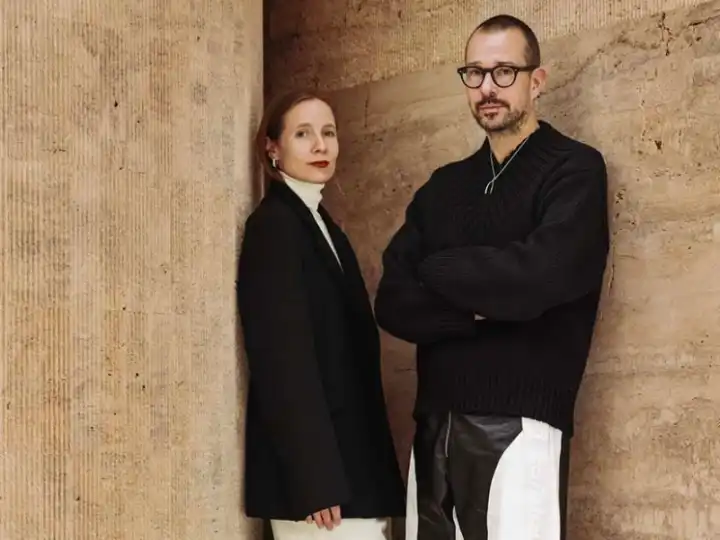
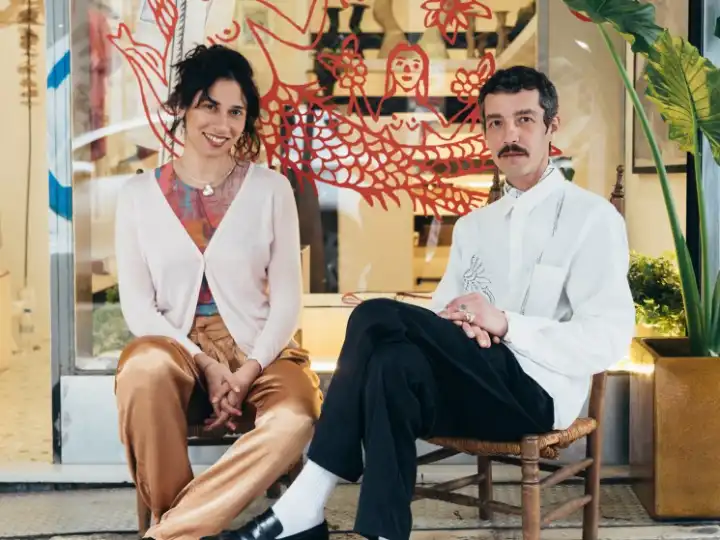
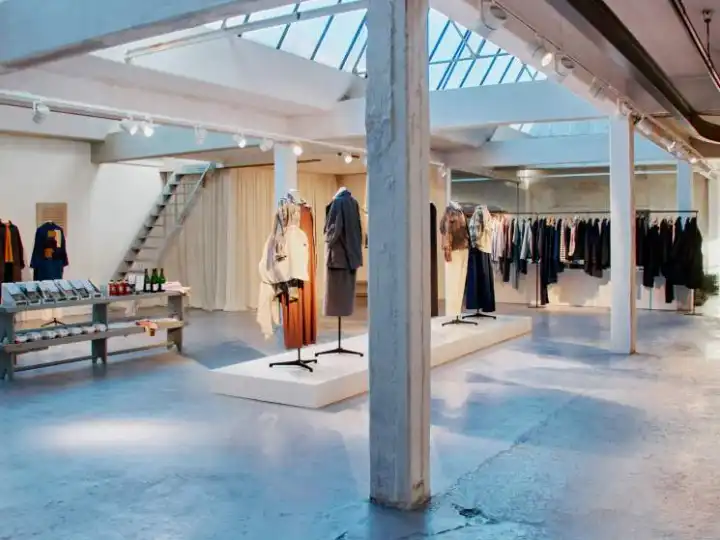
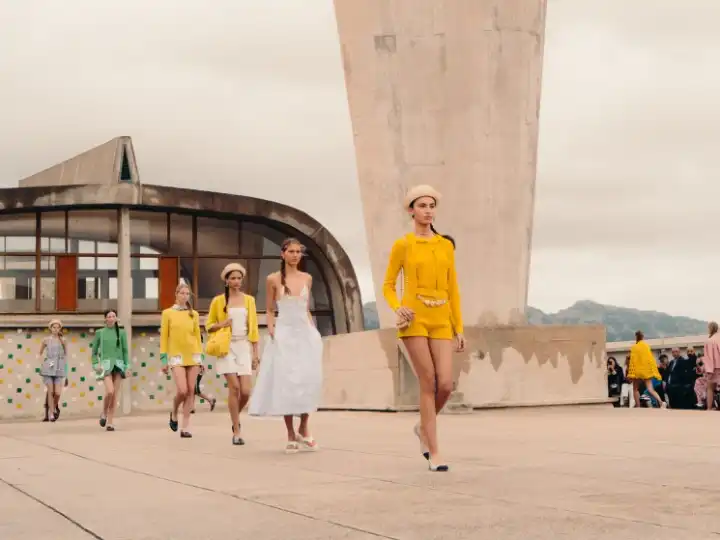
The house of Jil Sander operates in a world of its own, divorced from trends, the fashion industry’s rigorous schedules and expectations for seasonal renewal. Not that it ever really sought to be part of the collective. When founder Heidemarie Jiline Sander presented her first womenswear collection in 1973 in Hamburg, she wanted to address professional women like herself with pared-back, modernist designs: the smartest wool trousers, the most elegant outerwear and the sharpest white shirts. Her debut collection instantly sold out and, soon after, women the world over couldn’t imagine buying wardrobe staples anywhere else.In the 1980s, Sander decamped to Milan, finding ways to participate in the city’s fashion week on her own terms: her shows were always early morning affairs, her models were fresh-faced and dressed in pared-back looks that could be taken straight from the runway to the streets. She disregarded editors’ preference for late-night events, supermodel appearances and loud design, even if it meant that she rarely made front-page news. She was more interested in making clothes that enhanced the day-to-day lives of men and women – and did just that throughout the 1980s and 1990s, often referred to as the brand’s heyday.The pair favour simplicity in designThe 2000s were less stable, as Sander stepped down as creative director (she returned briefly in 2003 and 2012). The business changed many hands: from the Prada Group to private-equity firm Change Capital Partners, then Japan’s Onward Holdings Co and finally the current owner, OTB Group. Under OTB, the brand has reclaimed its individualist spirit and, along the way, regained cultural relevance and legions of new, loyal customers. This is thanks to Luke and Lucie Meier, who took over as co-creative directors in 2017. The husband-and-wife team didn’t set out to revive Jil Sander by following the usual branding playbook, often requiring a new logo, a highly publicised ad campaign and drastic change in design direction. They chose to focus on looser interpretations of Sander’s original independent spirit and sense of pragmatism, building a design language of their own – one that is based on intuition, the imagery they are drawn to, the architecture that inspires them and the conversations that they have with each other. “Lucie is always right,” says Luke, jokingly.The designers stress that they don’t believe in hierarchies. In their studio in Milan, there’s always an open dialogue and they encourage everyone to add their own perspective to the briefs they set at the beginning of each season. “Interestingly, we usually arrive exactly where we set off at the beginning but it’s also important to leave the door open for the unexpected and allow a lot of meandering along the way,” says Luke, who applies the same attitude to his own life and career. Born in Canada, he moved from his home in Vancouver to study finance in Washington and business policy at Oxford University, before studying fashion at New York’s Fashion Institute of Technology and Florence’s Polimoda. He became Supreme’s head designer after a chance meeting with its founder, James Jebbia, and went on to co-found the streetwear label OAMC. Lucie, who spent her early years in the Swiss village of Zermatt, followed a more traditional path into the industry, studying fashion marketing at Polimoda (where the two met) and going on to work for some of the most established houses in Paris, including Louis Vuitton and Dior.Spring 2024 designsTheir experience stretches from rarefied haute couture to mainstream streetwear design, from the offices of dynamic New York start-ups to the ateliers of Paris’s most storied houses and from quaint, countryside living to life in urban, fast-paced fashion capitals. But the couple refuse to attach themselves, or Jil Sander, to any labels, instead bringing the full breadth of their identities and rich backgrounds into their work. “You could say that we’re Canadian and Swiss but we moved around so much in our formative years, it doesn’t feel like we’re from one single place,” says Lucie. “Our studio is the same. It’s fully international and everyone brings their own experiences and points of view.” At a time when brands are doubling down on national identity, the Meiers are going against the grain. “That’s an asset, right?” says Luke.“Minimalist” is another label that the pair are eager to shed from the Jil Sander brand. Despite their affinity for neutral colour palettes and timeless silhouettes, including plenty of tailoring, they believe that “minimalism is old and boring”, and opt for simplicity or purity instead. “Even if you do something very bold, the approach can still be simple,” says Lucie, while Luke nods in agreement. “Pure or simple doesn’t mean boring, while minimalism can veer towards it,” he says. “You can have something fully embroidered or something in colour but it’s still a pure version of that design. There’s a bit more energy in this approach.”Accessories in the new boutiqueThis is why they always make a point to sprinkle playful details into their collections. Their autumn/winter 2023 range incorporated splashes of pastels, checkerboard patterns and 1990s-inspired colour-block leather, which took everyone by surprise. “The 1990s were a formative time for us, from the music to the cultural exchange that was happening,” says Luke, who is dressed in a pair of black-and-white leather trousers from the collection. “It felt inspiring and positive. I was studying at Oxford, I lived in New York for a while and felt that there was this open dialogue around the world, while now it seems like things are getting more insular and people want to close borders.” For Lucie, who is dressed in the kind of elegant black-and-white tailoring you would more easily associate with Jil Sander, the element of surprise remains important. “People might already expect something when they come to our shows or our shops but we need to exceed those expectations.”That was also the thinking behind Jil Sander’s new retail concept, formally introduced on London’s Bond Street this year. The aim was to surprise customers by marrying the purist design that the brand is known for with something warmer. “It’s easy to make something simple,” says Luke. “But to do something that’s simple but also has personality, soul and a warm energy is actually very difficult.” “It comes down to considering everything from colour to materials, and the small details such as the curves on the shelving. It all comes together to create this intimacy.”Indeed, the new space feels like a breath of fresh air on Bond Street, where new openings have become less frequent of late. At the door, smiling staff in crisp white shirts set the tone, while inside, the sense of warmth that the Meiers were aiming for is immediately felt through the use of raw travertine, brass poles that create more private, intimate sections and subtle touches of colour, like the pair of silver-blue benches, created using recycled CDs. There’s enough product on display to encourage browsing – a refreshing change from current design trends where shop floors are sparse and boutiques resemble museums. “The idea of slick, quite intimidating spaces is in the past,” says Luke. “There needs to be an element of discovery and you should feel like you’re having a unique experience. The sounds, the interaction with people, need to be at a very high level. This isn’t just a place where you come and pick something up; it’s a place to experience.”Travertine and marble is used throughout the new London shopBench made using recycled CDsDespite the ephemeral nature of fashion, the Meiers apply this long-term thinking to all their projects, whether retail design, their seasonal collections or their ongoing print project, Jil Sander Publishing. Their latest volume,Manchester, was made in collaboration with UK photographer Chris Rhodes, whose portraits of musicians and DJs, such as Jeff Mills, reflect the designers’ fascination with the 1990s. “We don’t like loud, online [communication],” says Luke. “With print there’s a curatorial element: every page deliberately follows the next rather than having a series of hyperlinks that send you into a labyrinth,” says Luke. “Having the perspective of someone like Jeff Mills about the late 1990s was so interesting because there are so many parallels with what’s going on today. Technology was becoming part of people’s daily lives and there was more information exchange – the difference was that there was more optimism back then. We want to encourage people to think a little bit more like that again, instead of seeing darkness everywhere and thinking that artificial intelligence will destroy the world.”At a time of global uncertainty, using creativity to inject a dash of optimism into the world is what the Meiers are ultimately hoping to achieve. “We’re not naive enough to think that what we’re doing is saving the world in any way,” says Luke. “But if we can inspire someone, work with great artisans who care about what they’re doing, that’s really important. In the end, it’s about good materials, good people, good design and a rigorous thought process – that’s our medium for commenting on the world.”jilsander.com

New perspectives: Brave openings and what to catch at the Venice Biennale and Art Basel
Culture 2025-12-23 23:42:57

New perspectives: Brave openings and what to catch at the Venice Biennale and Art Basel

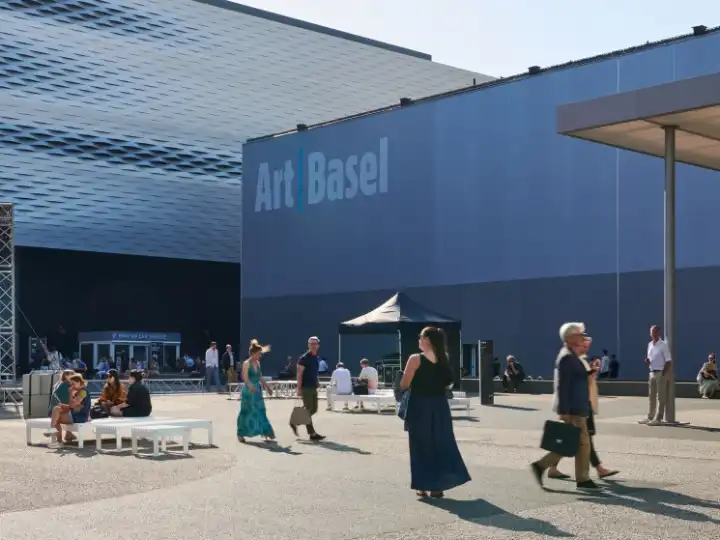
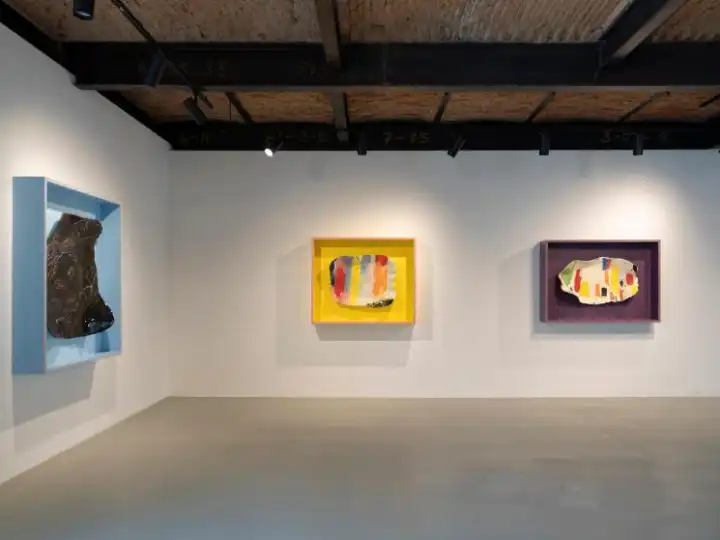
The Culture pages of Monocle’s June issue include a dab of inspiration, a splatter of fresh ideas and a rather fetching art special. First, our editors whisk you around three bold new openings, from the gallery making Carthage cool again (and rallying Tunisian talent) and a Valencian palace-turned-nightclub that’s welcoming an altogether artsier crowd, to the canny conversion of a military building aiming to put Kristiansand in Norway on the contemporary art map.Elsewhere in these pages, we offer a not-to-be-missed preview of Art Basel, the 10 things to see at the Venice Biennale and share come secrets from a Canadian art collector par excellence. Sometimes the hardest thing about making a masterpiece is knowing when it’s finished – we hope that you enjoy our portrait of the best to see, buy and inspire this summer.Emerging art sceneCarthage coolTunisGallerist Selma FerianiSelma Feriani took a gamble when she decided to open a contemporary art gallery in Tunis’s commercial district Le Kram, far from the city’s arts neighbourhood. “When you take the initiative, other people follow your lead,” says Feriani, who is perched on an orange George Nelson sofa on the vast third floor of her industrial gallery, which was designed by Tunisian architect Chacha Atallah. The space, the largest of its kind in the country, deliberately feels out of place. Feriani wanted to redefine the city’s arts boundaries by positioning her gallery downtown, rather than in the bourgeois neighbourhood of La Marsa, where you’ll find the residence of the French ambassador and the whitewashed bohemian village of Sidi Bou Saïd, which Paul Klee came to paint in 1914.It’s a bold move but this is Feriani’s third outpost (she first opened in London’s Mayfair in 2010 before inaugurating a smaller space in Sidi Bou Saïd in 2013, now closed) and she isn’t afraid to take risks when it comes to championing her country’s art. More challenging, however, has been finding Tunisian artists who remain in the country. Under the dictatorship of Zine El Abidine Ben Ali, Tunisian creatives emigrated en masse to Europe in the 1980s in search of freedom of expression and, since his overthrow in 2011, their return has been slow and gradual. But Feriani intends to do everything she can to keep them here.Exhibition opening at Selma Feriani’s galleryTunisia gained independence from France in 1956 and the European population that had settled in Tunis under the French protectorate dissipated. “The identity of the arts and culture scenes experienced a vigorous Arabisation as a result,” says Atallah. That Feriani’s eponymous gallery has moved from a location in a converted convent in Sidi Bou Saïd to a slick white cube in Le Kram in the time since the dictatorship was dismantled is a useful barometer for measuring how the country’s changed politics have given the arts space to flourish.Nevertheless, ever a product of its time, art here remains politically charged. Wider social tensions have calmed but the sector is experiencing significant growing pains. As a result of heavy taxes imposed on importing and exporting artworks, as well as the weakness of Tunisia’s currency, making a living as an artist in Tunis can be complicated and arduous. Relocating elsewhere is not an option for most. The US, for example, only offers 55,000 visas to Tunisians seeking to emigrate via an annual lottery.Sculptures by Nidhal Chamekh at the Selma Feriani GalleryPainter Fares ThabetBut the community is persistent and is making headway at home. “In Tunis, you always have to have a plan B because nothing comes without a fight,” says Feriani. “As Tunisians, we know never to ask anything of the government. Instead we support each other.” In a country that dedicates a tiny percentage of its budget to the arts, the scale of the new Selma Feriani Gallery sets a precedent for a city with a distinct absence of space for exhibitions.Feriani’s aim isn’t just to contribute to her native city’s burgeoning art market; she wants to take it to the next level. “I looked to build a gallery that would become a reference point for the region and for the continent as a whole,” says Feriani, who hopes that by exhibiting works by Latin American and Middle Eastern artists, alongside the domestic output (which remains the focus), she can create a cultural mix, harnessing renewed links, particularly within the Middle East and North Africa. She wants to channel her energy into bringing art to Tunis, rather than sending it away. “I don’t want to be everywhere and nor do my artists,” she says. “When artists from here become international, they’re no longer accessible to the Tunisian market, which disenfranchises the industry further.”One way of doing this has been to create an artist-in-residence programme. “We want to invite international and Tunisian players to spend time in Tunis, to integrate into the tight-knit community and to produce site-specific projects,” she says. In a converted garage in Bhar Lazreg, a rural area in the northern suburbs, Franco-Tunisian visual artist Férielle Doulain-Zouari, who studied at the École Duperré Paris, is currently using the programme to hone her craft. “In Bhar Lazreg, it’s much easier to engage with people who don’t find the city’s art to be very accessible,” she says, motioning to curious onlookers peering in, including a flock of sheep – a reminder of how recently this area has become home to an artistic community. Industrial workshops here make raw materials that Doulain-Zouari, who uses scraps from an ironmonger and a Syrian glassblower based nearby, can easily access to celebrate what she refers to as the behind-the-scenes Tunis.Bohemian village of Sidi Bou SaïdBehind the scenes at Selma’s galleryFeriani’s dynamic artist-in-residence programme is nurturing local talent and helping to democrtise the industry. “Before the Tunisian Revolution, the art world was reserved for those who could afford to study in Paris. Now emerging creatives are being granted the space to get involved, challenging the Western idea of the art world as elitist,” says sculptor and filmmaker Malek Gnaoui, who is also the artistic director of the video art section of the Gabes Film Festival. The trope of documentation appears in one form or another across much of Tunis’s modern artwork. “Our government is still very secretive when it comes to archiving,” says Gnaoui.Bookshop in Selma’s galleryCopper work in the MedinaEstablished in 2007, the work of cultural ngo L’Art Rue is another driving force behind the opening up of the city’s artistic spaces. Tucked away in the Unesco-protected medieval Medina, L’Art Rue’s lively programme runs workshops funded largely by the French and Swiss ministries of culture. “We’re trying to break down barriers, in terms of the spaces themselves but also economically: some of the most marginalised people live in the Medina, which is home to one tenth of the population,” says production manager Aicha Zaied. Cultural centre 32bis, which is in the former Philips HQ in downtown Tunis, offers free access to its media library to make arts publications more accessible. “We don’t publish enough art books in Tunis,” says Feriani, who has a budget to produce one publication a year. Removed from the pressurised environment of Europe’s most lucrative markets, artists choosing to return to Tunis feel some sense of relief. “Here my work has the space to breathe,” says landscape painter Fares Thabet, who studied fine art in Madrid before returning to Tunis in 2016 to take over his father’s ceramics workshop. “In Madrid, the art world has become very intellectual.” As we sip fresh mint tea on the studio balcony overlooking the coastal fishing village of La Goulette, it is clear why Thabet feels calmer away from the noise of Madrid.Exhibition at 32BISFérielle Doulain-ZouariThe same goes for other key European centres. “Paris is a bubble,” says photographer and calligrapher Nicène Kossentini, who studied fine arts at the Sorbonne University and whose calligraphy poetically preserves medieval Arabic texts, the language tha forms the bedrock of her Maghrebi identity. After exhibiting in Algiers, Tehran and Alexandria, Kossentini found the most fertile artistic territory in her native North African nation, returning in 2010 despite her family’s base in the French capital. It’s a familiar feeling that Feriani wants to harness. “In Tunis, your work won’t be judged. That’s very refreshing,” she says.Views of Sidi Bou SaïdBut without a comparable proliferation of arts institutions throughout Tunis, the new generation will continue to migrate. “It’s still the norm to study abroad because we only have 12 art schools,” says Kossentini. This has led to an undervalued Tunisian market. “Art here isn’t always meritocratic because people are still scared to give native artists a platform,” says Benjamin Perrot, co-founder of El Warcha design studio in Le Kram. “Until we fully commit to investing in the art produced within our borders, the scene here will lag behind.”Sculptor and filmmaker Malek GnaouiThough Tunis’s arts infrastructure continues to be hampered by political, economic and logistical constraints, there is a fresh sense of optimism pulsing through the city, which is still suffering from post-revolutionary trauma. Organised by L’Art Rue, the city’s biennial art festival was exported to Brussels for the first time in April. It is a clear indicator that there is a growing European appreciation for North Africa’s rich artistic offering, a trend that Feriani intends to nurture. The festival is aptly named Dream City – a reminder that Tunis has always dared to dream.selmaferiani.comTunis address bookstayLa Villa BleueArab-Andalusian architecture draped in bougainvillea looms large over the Gulf of Tunis.lavillableuesidibousaid.comeat & drinkBen RahimArab coffee culture is ingrained in Tunisia’s first speciality coffee shop, which is open late.benrahim.tnLe GolfeAn elegant spot overlooking the Mediterranean: sample the boutargue (mullet roe), a delicacy of the city’s Italian diaspora.restaurantlegolfe.comKonbiniJapanese-Mediterranean fusion cuisine inspired by Tokyo’s convenience store culture.Rue de Phosphate, MarsashopBleue DeliSidi Bou Saïd’s only concept store-cum-café: pick up a jar of locally made harissa or try the signature shakshuka.8 Rue Habib Thameur, Sidi Bou SaïddoPhosphor Design DistrictA creative area in the city’s industrial neighbourhood, which is home to 12 studios.Rue Phosphate, Bhar LazregLe Violon BleuSet up by Selma Feriani’s mother, Essia Hamdi, in 2004, this gallery promotes the modern artists of L’École de Tunis.16 Rue de la Gare, Sidi Bou SaïdThe palatial galleryHortensia Herrero Art CentreValenciaThe museum used to be a nightclubArt collector Hortensia Herrero’s plan to establish a museum that would be the pride of her hometown, Valencia, has been a decade in the making. Herrero, a part-owner of Mercadona, Spain’s biggest supermarket chain, wanted to create a world-class venue for cutting-edge international artists and worked with curator Javier Molins, her advisor and artistic director of the project, to make the museum come to life.“We had to think about what would be good for Valencia,” says Molins as he shows Monocle around the Hortensia Herrero Art Centre, obviously excited by the opening day ahead. “It’s about bringing together artists who would normally only exhibit in London or New York. By having this art here, we are making Valencia more beautiful and international than before,” he adds, peering out of a window towards the sun glinting off the golden roofs of the historical centre.Curator Javier MolinsThe Mediterranean city is already home to a clutch of well-pitched commercial galleries – among them, Luis Adelantado, Vangar and Ana Serratosa. But, until now, there were few hallmark spaces dedicated to bringing contemporary art into the public sphere. From works by Alexander Calder, Eduardo Chillida and Anselm Kiefer to Georg Baselitz, Olafur Eliasson and David Hockney, the collection is a hit list of modern visual art. The building is inviting, with the works presented against a deliberately accessible backdrop of whitewashed walls.Sean Scully’s rethought chapelFor some Valencianos, the structure is part of the pull. Many hadn’t stepped foot inside the building since its time as a club in the 1980s, when the owners are said to have kept lions in the basement (Monocle is still trying to find out whether this is apocryphal). The property was originally built as a palace in the 17th century but also served as a printing press forLas Provinciasnewspaper from the early 1890s until the 1970s. By the time the architects at Erre studio were tasked with reimagining the space in 2016, the building had been abandoned for decades. “It had completely deteriorated; it was in ruins,” says Amparo Roig, a partner at Erre and Herrero’s daughter, while standing in the light-filled inner courtyard. “But you could see that it was magical. We were sure that it would be great in the end.”The light-flooded former granaryPlaying with perspectivesRemarkably, it is the only place in town where you can catch a glimpse of the city’s ancient Roman circus, the remains of which are hidden beneath the streets. During the renovation work, the architects uncovered a medieval oven, Moorish fountains and a tiled passageway from the former Jewish ghetto. All of these signs of the city’s past are now displayed alongside the gallery’s main collection. “You know that you’re going to find a prize when you start digging in the centre of Valencia,” says Roig with a chuckle. “There are so many layers of history.”Olafur Eliasson’s iridescent corridorThe biggest challenge for the studio was to adapt the residence to displaying art. The team decided to build a vast, hidden elevator platform to bring hefty works all the way up to the top floor, as well as a new wing to house multimedia projects. Much of the debate between the architectural and curatorial teams centred on whether it was possible to keep all of the original windows in place – or whether it might be better to cover them up to create more wall space on which to hang the art.Work in situ Amparo Roig of architecture studio Erre 6The former idea – and seemly fenestration – prevailed. The refit feels more sensitive and airy as a result. The team was keen to involve artists in shaping the structure from the beginning of the process, commissioning six site-specific installations to maximise all the display space.Space to lingerArgentine artist Tomás Saraceno’s bulbous glass sculptures give the brick-lined courtyard an iridescent glare, while Cristina Iglesias’s “Transito Mineral” – a reproduction of large tree trunks in stone – creates a seamless passageway between the museum’s two wings. The building’s former chapel was given to Sean Scully, who produced a striped painting and two colourful stained-glass panels to add to the space’s sense of solemnity.British artist Mat Collishaw’s video installation, “Left in Dust”, plays a seemingly infinite loop of galloping horses that eventually reveals itself to be a chariot race. For him, the project was an opportunity to connect with the location and showcase its layers of history. “It’s good to evoke some of the ghosts of this spot,” he says, surveying his piece’s final placement. “In a lot of my work, I explore primal impulses and I am also interested in celebrating spectacle.”Artist Blanca MuñozBritish artist Mat CollishawMadrid-based artist Blanca Muñoz has a small sculpture on show in the building’s most atmospheric room – the former granary, under the old roof – and has collaborated with Herrero on a number of bespoke projects in other locations. She appreciates the value of a patron. “Working with a collector is the best thing that you can do,” she says, taking a seat on the breezy terrace. “It’s great to adapt your inner world to a concrete space.” Thanks to these artists’ efforts to fit in, the Fundacíon Hortensia Herrero is all the better for it. fundacionhortensiaherrero.orgThe museumKunstsiloKristiansand, NorwayStaircase inside a former silo cylinderA bird’s eye view of Kristiansand, a city on Norway’s southern tip, only a short ferry ride from Denmark, reveals a neat settlement nestled on a rugged coastline. A smattering of red, yellow and white wooden houses perch on the waterfront opposite a port where cruise ships from the UK and Germany dock and disperse little crowds at intervals throughout the day.Beyond the fish restaurants, wine bar and ice-cream parlour lies what is putting this city of nearly 117,000 people on the map: art, specifically Kunstsilo, a new quayside museum on the island of Odderøya, a former naval base in southwest Kristiansand. The space houses the Sørlandssamlingen (the South Collection), the Christianssands Picture Gallery and the Tangen Collection, the world’s largest, most comprehensive body of 2oth-century Nordic art. The last of these takes its name from Nicolai Tangen, the manager of the Norwegian Sovereign Wealth Fund, who bequeathed his collection of Nordic art to Kristiansand, his hometown, in 2015.As custodian of the donation, Kunstsilo received more than 3,000 ceramics, paintings, photographs, installations and conceptual works. Tangen believes that the new museum will make Kristiansand a more interesting place to live. “I love that this small place will be able to challenge some of the big national museums,” Tangen tells Monocle from Olso. “The museum will be important for the children who grow up there. It will also be good for visitors.”Magnus Wåge of Mestres Wåge ArquitectesExhibition rooms being readied for opening dayKunstsilo is within a former grain silo that was designed by renowned Norwegian architects Arne Korsmo and Sverre Aasland in 1936. The structure had stood unused for almost 20 years. And now Mestre Wåge Arkitekter, the practice that won the international competition to repurpose the silo – beating more than 100 other proposals – has breathed new life into it. Entrance to the museumKunstsilo’s industrial space feels akin to a cathedral. Its soaring silo cylinders have been cut open to enable free passage around the building. Monocle visits a month before its opening on 11 May. The atmosphere is giddy: everyone seems excited and not yet stressed about any last-minute snags. New staff are being ferried around to get the feel of the place. The menu for the downstairs café and rooftop restaurant is being sampled. Workers busily finish the plaza outside the building’s harbourside entrance.When the museum gave out passes for its opening day, they were snapped up within hours. “It was like selling tickets to a rock concert,” says Kunstsilo’s CEO, Reidar Fuglestad, who joined the project in 2017 having previously run a nearby theme park for 17 years.Modernist Nordic paintings on displayThe opening exhibition,Passions of the North, comprises 600 works from the Tangen Collection. It was curated by Åsmund Thorkildsen, who previously worked with Norway’s Drammens Museum, in consultation with Norwegian art historian Steinar Gjessing, and showcases significant pieces of Nordic modernism, including Swedish impressionist Isaac Grünewald and Danish surrealist Rita Kernn-Larsen.Curator Åsmund Thorkildsen“We have had a lot of fun developing this exhibition,” says Thorkildsen as he directs us through the exhibition rooms, some of which are painted in inviting hues of yellow, green, blue and pink. “We’ve done away with the neutral way of showing art,” he says, pointing at a group of paintings that hang close together as if in a huddle. He then stands next to a work that’s hung high up on the wall. “The placement does something to how you view the art,” he says with a mischievous glint in his eye. “The exhibition should be a bodily, as well as visual, experience.”Solen’ by Synnøve Anker AurdalHanne Silje Dovland, head of project management (left), and Else-Brit Kroneberg, head of collectionsBut the process of showing the Tangen Collection in a functionalist grain silo hasn’t been fun and games from start to finish. “We endured six-and-a-half years of political opposition and only six months of support,” says CEO Fuglestad.Kunstsilo’s exteriorHe explains that scores of Kristiansand’s residents opposed tax payers’ money going to the art museum. Kunstsilo became such a hot potato that local politics shifted against the project. However, once interest from beyond Norway’s borders started to trickle in, Fuglestad noticed a significant change in people’s attitudes and the positives of having the museum there became apparent. “Now it is a source of pride that residents can show to visitors,” he says. “I joined this project because I believe in it and I am convinced that it will bring real benefits to the people who live here.”kunstsilo.no

Home truths: 15 essays on the meaning of home
Culture 2026-01-09 11:57:56

Home truths: 15 essays on the meaning of home

1.The war reporterYaroslav Trofimov on: Why a place can still be your home, even when you’re far awayDubai“Dubai wasn’t meant to be home when I moved here. It was meant to be a transit point, a convenient place from which to go and cover the world. But I’ve been here 10 years now and over time, places become homes. So it’s home now, and when I’m travelling, I do miss it and I do want to come back.Coronavirus was a turning point. We were stuck here for nearly a year, so we went hiking and diving, and started to appreciate the city as more than somewhere to be between trips.We have an apartment on a very high floor. It’s a change, as before Dubai I was living in Kabul in a house with a garden and goats and chickens: we were growing our own tomatoes and greens. Me and my colleagues all came from cities, so we were living the dream of a rural idyll. But I lived on the ninth floor in Kyiv when I was a child, so where I am now feels normal. Looking out now, I can see the port, the airport and, on a clear day, all the way to the mountains of Oman. Life is quite vertical in Dubai but there are neighbourhoods enabled for pedestrian life. I can walk underground in the summer or above ground in winter to various malls and restaurants.I used to have a lot of things from reporting trips but my partner is an architect and designer, so now I have to negotiate where my Afghan war trinkets can and cannot hang. But in the living room we have an Afghan war carpet and a bronze of a Boko Haram fighter with a Kalashnikov that I brought from Africa. And lots of books, obviously. But we’ve also bought a lot of art together in Ukraine, mostly by contemporary Ukrainian artists.I still feel a great deal of emotional attachment to my native Ukraine. When I was a child, we lived on a very famous street in Kyiv called Andrew’s Descent. It goes from the upper town of Kyiv down to what used to be the Jewish quarter of Podil. When I was a student in art school in Kyiv, we would go there every weekend and make some money selling our paintings. So that street is very much part of my identity.I have thought of Ukraine differently since 2022. I left in 1990 and lived in the US and Italy for a long time. My passport is Italian, I spoke Italian and when people asked where I was from, I’d say I was an Italian of Ukrainian origin. After 2022 my answer is: I’m Ukrainian. You feel a much more visceral attachment when your country is under attack. Covering Ukraine as a journalist, I’ve taken much greater risks than I did covering Iraq, Afghanistan or the Middle East. When the city where you grew up, where every piece of geography is connected to your childhood, is under threat of being destroyed, of course you take it personally.”As told to Andrew Mueller.Biography:Trofimov is a journalist and chief foreign affairs correspondent atThe Wall Street Journal. His latest book is the novelNo Country For Lovepublished by Abacus.2.The galleristNina Yashar on: How childhood memories can shape your taste and even your career trajectoryMilan“My earliest memories of home are in Tehran, where we lived until I moved to Milan at the age of six. I have this very clear image of overlapping carpets in our home in Iran and how they would create these small, distinct environments within a larger space.These Persian rugs were everywhere in our home, hanging on the walls as well as on the floor. Today this idea of layering and creating different zones is my signature as a gallerist.It’s not just about filling the room with beautiful objects; it’s also about creating a dialogue between the different pieces, letting them complement and challenge each other. I feel this need to create conversations between different pieces – all on top of a rug. I never create something without a carpet on the floor because it has this power to create unity and a harmony between the things.The common denominator in my home and my spaces is my taste; it’s my point of view. I don’t like everything to be totally in harmony. I like to create a personal and unique environment where different pieces with their own stories and characteristics come together to have a conversation. I have things that I really like – and this is important to say because not everything that I have in my gallery I would buy for myself. I like unexpected pieces that aren’t positioned in a conventional way, such as a very low chair next to a high table. For example, at home I have two unique console pieces by Gio Ponti for the Parco dei Principi Hotel in Sorrento and I didn’t know where to put two ‘Due Più’ armchairs by Nanda Vigo for Acerbis – so I put them together. It’s nonsense but I like it; it’s this idea of challenging conventions.I have pieces at home connected to travel I did 20 years ago. I was in Copenhagen and I bought these tube vases with hand-made, steam-curved wooden bases from a Danish designer from the 1950s named Peder Moos. They were originally made as a 60th birthday present for a friend of his and there are 60 little tubes in glass. Whenever I receive friends at home, I put 60 flowers in them and place them on the dining table. I also have two candelabra that are from the Victorian period – so around the 1850s – that I bought in London. I put them on the table alongside the mid-century tube vases.I love my neighbourhood, Risorgimento, here in Milan because it also has one foot in the past, with its little old shops and bars. It’s incredible but every time I come back to Milan from abroad, I feel like I’m in secure territory. I am very attached to the city – even its provincial side.”As told to Ed Stocker.Biography:Milan-based Yashar has been in the design business for more than 40 years. The collector, dealer and gallerist is founder of Nilufar Gallery. In 2015 she founded Nilufar Depot in a former silverware factory and in 2023 launched a new line of furniture called Nilufar Open Edition.3.The magazine publisherRebecca Wesson Darwin on: How you can rediscover your roots – and turn it to your advantageCharleston, South Carolina“We’ve lived in our house for more than 20 years. It was built in the 1850s and has survived hurricanes, fires and earthquakes. There’s not a straight wall left in the place and I love that about it. It’s a home with deep memories for us as a family.This house is what’s called a ‘Charleston single’, which has ‘piazzas’ [balconied porches] on two sides of the house. Sitting on the piazza in the sunlight is a very special place for me. Porches play an important role in southern US culture because of the heat and humidity we get here. We like to open all the doors and let the breeze blow through the house. So, for me, home is the smell of jasmine because we have an entire wall of it growing in our garden outside.I was born in South Carolina but for a long time New York was my home. I was the publisher ofThe New Yorker, and I loved the city: whenever I’d step out of my front door, I always felt that I could take on the world. Looking back, I think my ‘southern-ness’ – which is about having a bit of grit and a lot of grace – meant that I was able to achieve certain things in New York that I wouldn’t otherwise have been able to do, especially as a woman at that time [in the 1980s].When my husband wanted to retrain to become a pastor in the church, we moved back to South Carolina and I began to think about how the southern states were represented elsewhere in the US. There are so many clichés about this part of the country – that we all sit around drinking sweet iced tea, for instance – whereas I wanted to celebrate the great, sophisticated things that were happening all over the region: the rise of a food scene, for example, and lots of music being made.In 2007, I co-foundedGarden & Gunmagazine to celebrate the soul of the South, from its sporting life to its culture. The initial team was all southerners like me who had been working elsewhere and had come home to make this magazine. We now have readers all over the country. Many come to us, I think, because they’re longing for a sense of home that they can connect with; the South has that strong draw for a lot of people.InGarden & Gunwe write about beautiful houses all over the region, but these don’t tend to be the biggest homes. We’re especially interested in that little home in Louisiana that has been brought back to life. Or the tiny place hidden away up in the mountains that somebody has put their heart and soul into.”As told to Christopher Lord.Biography:Darwin had a long career in magazines that saw her become the first female publisher ofThe New Yorkerand marketing director ofFortune. In 2007 she co-founded the Allée Group to publishGarden & Gun, a successful publication about the contemporary life, culture and taste of the US southern states.4.The Hollywood veteranFrancis Ford Coppola on: Family, the power of personal creativity and why he’s happy to be getting olderNapa, California“Human beings are at their best when they play with their kids. That’s when everything gets invented. I once heard that the word ‘family’ is related to a German word that means ‘friend’. The meaning of ‘freedom’ shares its roots with ‘friend’. In Indo-European and Germanic languages, ‘family’ has another root that’s interesting in a darker sense. The Latin root,famulus, means a house slave. Our word for family, then, contains the germ of slavery.We are in a joyous moment in time. We should talk about division and everything that’s happening to the world, and use our great talents to solve its problems, which we’re capable of doing. How many babies and children are dying every day? It’s not only unacceptable but also unnecessary. We can solve these problems beautifully with the talent that we have been given.I’m not only a grandfather but also a great grandfather. Children are your jewels and grandchildren are dividends; my great-grandchildren are immortality itself. I’m comfortable with where I am. I’m not like Faust – I don’t want to be young but I want young people to have a beautiful world when I’m gone. And that’s what I’m trying to say in [the 2024 film]Megalopolis.I have always had a rule while making films. Whenever I had to go away to work on something for more than 10 days, I pulled my kids out of school and brought them with me, sticking them in any school there was. My little Sophia was put in a Chinese school when she was five. She did not speak Chinese but they got the idea. The kids were around movie-making all the time. What I tell them is, ‘You’re unique. So whatever work you do, make it personal. Everyone here is a million-to-one shot and there’s no two of you.’I made a film based on a story by John Grisham,The Rainmaker, in 1998. After that, I wanted to take 10 years off and see what I could learn if I wasn’t a professional film director. I went to different countries. I experimented a lot with acting. I recommend creative work because, in the future, we’re going to make robots do all the toil. We’re just going to play together.Megalopolishas a lot of personal detail – it’s got every movie I ever loved in it.My father always said that he was a composer. He said, ‘Steal from the best. Poor artists borrow; great artists steal.’ We are on the shoulders of the extraordinary, talented people who came before us. The young are talented – more talented – because they are always an improvement on the previous generation: that’s human. The world has a lot of trouble and people are worried but if we could understand who we really are, there’s nothing we can’t solve. That’s a hopeful thought.”As told to Tom Webb.Biography:Born in 1939, Francis Ford Coppola is one of Hollywood’s most celebrated directors, with a career spanning seven decades and countless accolades, including five Academy Awards. His 23 feature films include milestones of cinema such as theGodfathertrilogy andApocalypse Now. His latest release isMegalopolis.5.The book maestroIrma Boom on: The importance of rigour and how books speak volumes about usAmsterdam“I live in Amsterdam now but I grew up in the countryside, in the eastern part of the Netherlands. It was a big, old house – we had no central heating; it always was a very cold house but a warm family. I’m child number nine of nine. My memories are of long tables with lots of people: not only my brothers and sisters and my parents but also lots of friends – because if you can cook for nine children, you can cook for 12. There were always people who wanted to come to our house because it was very friendly. In Dutch the word isgezellig.My mother was always cooking – fresh vegetables for the whole family and, of course, apple pie. It was a very organised family life – if you have so many children, you have to be – so my mother ruled as a sort of general. Everything was on time: 08.00 was breakfast, midday was lunch and 18.00 for dinner. It was all very strict but that was good; it gave structure to our life.I now live in the south of Amsterdam. It’s a very high house with five storeys and steep stairs. The office is in the same house, on the ground floor. So I only have to go downstairs to get to work, which is super convenient. At the beginning I thought, ‘Oh, working and living in the same building is terrible,’ but now I really love it.I trained as a painter and in the last year of art school, I found out that I wasn’t so good; at least, that’s what I thought. I had this romantic idea of being alone in my studio and painting. But in the end, it was not my thing at all. So I checked out other disciplines. Every week, one of my teachers showed us books and how you can create a new world with type and that you work with a ‘commissioner’. That was exactly what I was looking for: to collaborate on projects. Making books is a collaborative effort: you work with an author, artists, photographers, architects, printers and binders.I love seeing [US artist] Sheila Hicks’s book in people’s homes. It always makes me a smile. Making books is a big responsibility. It’s very time-consuming and you use a lot of resources – water, wood, ink and people’s labour – so I try to do my best.If you go to younger peoples’ houses, they often don’t have books anymore, which I think is sad as books are an integral part of our culture and knowledge. It’s important to have books in the house, I have them on every floor. They’re my friends. But if I had to save one thing in my home, it would be [my] photos and my ancient Roman wedding rings. My partner was very ill and we got married on the last day of his life. One of our friends brought us these Roman rings that they got at an auction, which I now wear. They’ve really changed my life, because I now think differently about time. It’s beautiful to have something so old on my hands; I’m connected to eternity, which gives a good feeling.”As told to Sonia Zhuravlyova.Biography:Dutch graphic designer Boom is a specialist in books and has contributed to, commissioned, made and designed more than 300 titles.6.The serial entrepreneurRamdane Touhani on: How you can make a home anywhere and with anything, as long as it contains a good bedParis“I grew up amid the apple trees on the farm where my father worked. We were living in a very poor place and our home then wasn’t really meant to be a house. It was in the middle of the field, next to a castle – well, a little château, where my mother did the cleaning – deep in the countryside of Tarn-et-Garonne, southwest France. I’m not bourgeois but my life is very different from that of my parents. Honestly speaking, my wife and I live in another world.I moved into my first flat when I was 17 but I don’t remember what I bought first – I didn’t care about houses for a long time. I was always out. I just needed a good bed and maybe a table. I wasn’t concerned about the interiors but the first item I did care about was a double Technics SL-1200 turntable and a pair of speakers – that was in the mid-1990s.In my life I’ve lived in 17 houses, from India to the US to Japan to Morocco. Really, home for me is where my wife and children live; it could be anywhere in the world. I’m not a materialistic guy. Even if I have a beautiful home in Paris with a garden, houses are still more of a logistical thing to me. Yes, it has to be beautiful first but the most important things are really the bed and the kitchen. What touches me physically matters too: mattress, bed, sheets, towels. I know people find art very important; we have art but it’s not an obsession. I try to use my house like a tool.A new thing that’s important for my wife is the pool. We have a pool in Paris; not everyone has that. But I would rather have a very tiny home that’s comfortable than a very big one that’s not.I don’t like too many people in my house. I have a guest room for friends but having them stay for two or three days is enough. It’s too intrusive. When I have a guest at home, they tend to always talk to me – I like to be by myself. Tonight, for instance, I have dinner with a friend at ours and, even though I’ll enjoy it, I’m already hoping that it’s not going to go on too late.Designing my home was nothing like my work in retail: they’re totally different ways to do things. The light is different. Everything is different. The only thing in common is the fact that you have to design it but a store is all about efficiency: it’s not about the pleasure of staying somewhere. If people want to stay in a shop but spend nothing, that’s problematic.Home is where you want to be at home. Sometimes that’s Tokyo but I can feel at home anywhere in the world. I don’t [always] like France but I live here because my wife wants to be here near her mother. But one day our home could be somewhere else.”As told to Simon Bouvier.Biography:Touhami is a serial entrepreneur. His business triumphs include revamping the fragrance brand Officine Universelle Buly 1803 and selling it to LVMH. He recently opened the Hotel Drei Berge in the Swiss Alps and a hiking supply shop in Paris.7.The filmmakerFelix Chong on: How the violence surrounding his childhood homes went on to inspire an acclaimed movie careerHong Kong“My first home in Hong Kong was in a legendary building in North Point called Kiu Kwan Mansion. The colonial government labelled it a communist stronghold and when I was five or six I would often see police raids.The most memorable was when they lined up a group of suspected communists and made them kneel in front of this huge steel wall made out of mailboxes. When someone did something the police didn’t like, they’d get kicked in the back of their head and their face would smash against the metal. The sounds, the smells, the blood: that stuck with me all my life.We shared that apartment with two other families; 10 people squeezed into a tiny space. By the time I was 17, my dad had found success selling soda and popcorn in cinemas, so we moved into our own apartment in Fortress Hill. I had to help in the shops every weekend and during holidays. It was so hot that I’d sneak to the air-conditioned cinema to cool down: that meant watching the same movie five times a day. A big hit could run for two months, so I started to learn about editing, camera placement and designing my kung fu choreography. I left my degree in industrial engineering after the first year and enrolled in the only film school that existed back then.Hong Kong directors shoot on the street a lot because only real people and traffic can reflect this city. It’s hard, though, because the old city is disappearing. I now have to spend a lot on CGI. Each time a building is going to be pulled down it’s a kind of tradition for filmmakers to think of a scene that can be captured there. Hong Kong people are always charging towards the future, but we also want to stay where we are. It’s quite contradictory.I now live in a historical building in Happy Valley and have fond memories of the old HSBC building in Central. My father would let me sit on the stone lions outside. I loved all of the buildings on that street but only the Bank of China still stands. I moved out of my parents’ home in Fortress Hill with my wife when we got married. I was planning to go to China to write TV scripts because it made a lot of money but whenInfernal Affairsbecame a hit and my wife was pregnant, we decided to stay.I like to have a silent space at home to work in but every home we’ve lived in has been next to a school. Only in our last one in Happy Valley was that deliberate. It’s next to my daughters’ old school because I wanted them to be able to walk there. I walked to my school as a child and I saw a lot of things: drug deals, violence, Triad members chopping each other up on the street. Hong Kong in the 1970s was a very different place.”As told to James Chambers.Biography:Chong is an award-winning Hong Kong screenwriter, film director and actor who is best known for depicting his hometown in acclaimed crime thrillers includingInfernal Affairs,OverheardandThe Goldfinger.8.The historianAlex von Tunzelmann on: Why dwellings are improved by pets and even big cities have nice neighboursLondon“Having tried several compass points, I’ve settled in east London, in Bethnal Green. It’s part of the old East End. It has a huge amount of historic character but has also had waves of interesting migration and change, and now gentrification, another wave of change on top of the others.I’m always struck by the extraordinary pace of it. In the 1950s it was a very Jewish area, more recently a Bengali one. A while ago I saw a retrospective of Don McCullin’s photography at the Tate. Bethnal Green in the 1970s and 1980s looked like a war zone and now flats can cost a million quid. As a historian, it’s inspiring: you see the layers like sediment that has built up – and those layers don’t go entirely, they just accrete on top of each other.We live with two cats, both named after obscure characters in 1980s movies – Bixby Snyder and Martha Dumptruck. You can have 10 points if you can name either movie. I grew up with parents who were quite resistant to pets, so this is my first venture and now I would find a house without pets a bit empty. It is sort of magical, having two miniature tigers wandering around the place. And it makes you relate to your home differently because you’re sharing it voluntarily.There is a lot of art, to the point where it is now one in, one out. It’s probably all 20th and 21st century but it’s also very eclectic. I have a great love for Cuban film posters from the mid-20th century – they’re graphically very beautiful. I also have a poster from an exhibition of the work of Berthold Lubetkin, the architect. My mother was his lodger in Bristol, and there are buildings near us that he was involved in designing, so there is deeper significance than just liking it as a piece of art.My husband grew up in northern Scotland and I grew up mostly in Brighton. Though we’re fond of those places, I don’t think we commemorate them. It’s probably significant that we’ve chosen to live very much in a city. People think of London as cold and impersonal but if you make the effort, it’s absolutely possible to get to know the neighbours. I love having people over but I like a bit of notice.The biggest feature is books. The thing which drew us to our flat was the fact that it was double-height, so my fantasies of a double-height bookcase with the ladder have come to fruition. We have our own books in a cabinet which you can’t see through, so as to make our mothers sufficiently happy but without creating too much of a wall of [personal] achievement. I wouldn’t want people thinking they had to pay homage.”As told to Andrew Mueller.Biography:Von Tunzelmann is a historian, screenwriter and author. Her latest book isFallen Idols, a study of the theory and practice of statue-toppling. She lives in London.9.The career diplomatPetri Tuomi-Nikula on: How a diplomat’s home represents more than just their countryHelsinki“When I think now of my earliest childhood memories, I realise that they were a precursor to what life had in store for me. My childhood home was by a river in Ostrobothnia, western Finland. Less than a 100 metres from my bedroom window, rapids roared: that sound is my strongest memory from then. Long ago, ships would sail down that river to the Gulf of Bothnia and from there to the world’s ocean. Another memory – also a sound – is the whistle of train horns; those thoughts of a world far away that I wanted to explore.My parents, both of whom were teachers, pushed me toward the rest of the world. They encouraged me to study languages and to travel. My father was a Francophone; my mother spoke German. During the summer holidays there were always friends from abroad at our dining table: it certainly influenced my career choice.A home is not just a physical place to live in; it’s a state of mind. For me, it’s the Finnish language, my mother tongue. It’s the language that allows me to express myself most clearly but also the language that best allows to me understand others. I’ve spent a large part of my life living abroad and speak at least five languages but it is my mother tongue that provides me a sanctuary and renewal through reading and listening.There’s a proverb that feels a bit old-fashioned these days but that has great wisdom in it for us diplomats: ‘A man builds a house, a woman makes it a home.’ It’s about the role of a spouse – man or woman – in creating a cosy, personal and unique home. Of course, a diplomat’s home is more than just their home. It’s also a state residence and is expected to reflect the diplomat’s home country and culture. This is especially true for the ambassador. However, it doesn’t mean that it should look like a showroom; it should look and feel authentic. It does this when you see the inhabitants feeling comfortable in it, surrounded by familiar things and objects, regardless of where those items originated. Diplomats’ homes are often furnished with objects and furniture from the countries where the family has lived, rather than items brought from home. In my case, Italy is strongly present but there are also items from my first posting more than 40 years ago in Germany.For a diplomat, home is where you host, which is an important part of the job. My spouse and I have always invited people with different political views to gather around the same table. The best and most constructive conversations happen between people with different backgrounds and opinions. There’s less to talk about with those who share views. I guess you could say that for a diplomat, home is more than just a home.Finally, home is nothing without music. After long dinners with colleagues from various countries, I find myself retreating to it. Music is a language of its own. My favourite is soft jazz, slow and classical. That’s the kind I fall asleep to.”As told to Petri Burtsoff.Biography:Tuomi-Nikula is a retired senior diplomat who was Finland’s ambassador to Rome and Budapest. His recent bookErilaista diplomatiaa(A Different Kind of Diplomacy) is one of Finland’s best-selling non-fiction books of the autumn.10.The restaurateurPierre Touitou on: How a workplace can become a second home – and keeping things tasteful while you’re awayParis“It might sound weird coming from a chef but for many years, I only had two pots and pans at home. Most days, I’d eat at the restaurant [I worked at] and on my days off, I’d try new places. It wasn’t until coronavirus that I started properly cooking at home. There’s a lot of value in it though: anything I put on my menu has to be good enough for you to want to eat a full plate of it, just like when you’re cooking for yourself.I’ve lived in a very small Parisian studio for the past 11 years, so hosting at home hasn’t really been an option. It’s a place to sleep and rest. That’s why many friends haven’t seen my apartment but they’ve all been to my restaurant. My restaurant is my second home; it’s where I spend the majority of my time and keep many familiar items – my favourite books. My job is about more than food; it’s about hosting people.I recently bought a bigger apartment. It’s very minimal for now but maybe I’ll have more friends over when I’m more settled in. If there were a fire, what would I grab? My most prized possession is probably a pair of leather boots. I’ve been wearing them for a decade; they are so tough to break in but once they’re worn in, they become incredibly comfortable. Aside from that, I don’t own much: books and some clothes.If home weren’t Paris, it would be Japan. I’m not into manga or anything but the general mindset – particularly the attention to detail – has resonated with me ever since I first visited as a child. My parents [APC founder Jean Touitou and art director Agnès Chemetoff] spent a lot of time there for work and would always bring me back things like crayons, backpacks and toys.My girlfriend is French-Japanese and we go to Japan every May. I wish I had more time to travel but I also like the familiarity of revisiting places I know. Every New Year’s Eve, I go to our family house in Normandy. I have this flannel shirt there: as soon as I wear it, it feels like I’ve arrived home. It’s funny how you have different rituals in different places. Italy, where I go every summer, is the only place on Earth where I have breakfast. I look forward to it.When people ask what the best meal I ever had was, I say it’s not just about the food but the where, when and who – the elements that make it feel right. That makes me think back to when I was working in a tiny village in Uruguay. One day we drove to buy food and guess what the three things I bought were? Société roquefort, a bottle of Evian and a baguette. I didn’t have much French food growing up but when you’re on the other side of the world, the food from your home takes on a new significance.As told to Annick Weber.Biography:Touitou is a French restaurateur and the chef-patron of the unmissably good 19 Saint Roch restaurant in Paris’s 1st arrondissement.11.The architectJeanne Autran-Edorh on: The importance of bringing a little bit of home with you wherever you may goBerlin & Lomé, Togo“I grew up in the south of France, close to Marseille. It’s a beautiful region but what was most formative for me was the fact that I grew up between two cultures. My dad is from Togo and my mother is French. They separated when I was young, so I was always in between two households and these two different traditions. For me this was really rich because it allowed me to feel at home in different contexts, making me adaptable and flexible.I spent a lot of time in my mother’s house when I was young, where we also lived with my grandmother. It was an old farmhouse that was always in a state of transformation because my mother was an artist. She worked with textiles initially, making decor and theatre costumes. Our place was always filled with material and art, and the sound of home was a sewing machine – even today it’s a noise that I find really relaxing because I would fall asleep with it as a child. When I was a teenager, my mother changed disciplines and became a ceramicist. She kept a studio at home which meant that there was always a creative space to retreat to. For me, even now, an atelier always goes with a home.Today I’m based in Berlin but it’s not the only place I call home. I’m often in Lomé, Togo’s capital, and in France too. I share time between these three locations but the thing that unites these environments are crafts and materials inspired by my childhood. I furnish my spaces with objects and fabrics – there’s always texture and colour. This provides me with inspiration.If I’m not at home in a big, blank and neutral place, I will always try to add things to make it feel like home and inspire me. As such, when I travel I always have textiles in my luggage, which I will place on things like the hotel couch to make it feel like part of my universe. I’m drawn to African woven fabrics such askente, a type of silk and cotton fabric, that can serve as a blanket on the bed or couch – or even as a towel. I like the fact that it’s multifunctional.As an architect, if I’m designing a home for someone else, I work really hard to understand their character, as well as their taste and what inspires them. I also like to ask what their ideal day looks like. This is different to asking what your daily routine is. I’m more interested in what your dream is. In an ideal world, how would you want to start your day? Where would you want to spend your time? What would you want to look at?By answering these questions you can create a space that’s inspiring beyond your everyday life. It’s nice to think about the role that your home can play in creating your future.”As told to Nic Monisse.Biography:Berlin-based Autran-Edorh is the co-founder of Studio Neida, a multi-disciplinary design practice, working between Europe and West Africa.12.The homemakerJohanna Gullichsen on: How a designer’s home doesn’t have to be perfect. It’s sometimes a space to experimentHelsinki“As a designer of home textiles, I see a lot of homes. In Finland, where I live, the climate is cold and people spend a lot of time indoors. This means that people put considerable effort into making their homes feel cosy and nice.But what makes for a good home? Many people follow trends and commission interior architects to design a perfect home for them. But at the end of the day it is about adding that personal touch that can only come from you. People need to find their own sense of style instead of letting someone else impose stylistic choices on them. If I think about my own home in Helsinki, I have a large collection of books and design items that I have accumulated over the years. They have travelled with me from home to home, and without them my home would feel empty. That said, they are still just things; they’re not holy to me. If I had to grab just one thing to salvage from my home, it would probably be my beloved woollen Ruskovilla sweater.I think about things that remind me of home when I travel; it would probably be the smell and taste of rye bread, which is something quintessentially Finnish. Travelling a lot makes me sometimes think of why I don’t feel at home in hotels. I really don’t like them. There’s something impersonal and I feel constrained in an environment that I cannot shape.I’ve been exposed to great design ever since I was a child. My grandmother, Maire Gullichsen, was a close friend of Alvar and Aino Aalto, and lived in Villa Mairea, one of Aalto’s most acclaimed buildings. I spent a lot of time there as a child, surrounded by wonderful design and architecture. Of course, as a child you don’t think about those things but with hindsight, I admit that it probably had something to do with the fact that I became a designer myself. My grandmother founded the Finnish furniture company Artek together with the Aaltos, and I grew up around Aalto furniture – both prototypes and the classics. In fact, one of the earliest things I remember from my childhood is sleeping in a wooden children’s bed that either Aino or Alvar had designed. That’s where my love of natural materials also comes from. As a child, I was barefoot a lot, and I still remember the tactility of the wooden floor and the rugs I walked on, as well as the scent of wood. If I look at my home now, there are a lot of surfaces and textures that are pleasant to touch, such as the indigo batik from Japan and the sisal rug that covers the floors – and, of course, my own woven textiles.People often believe that designers’ homes look like showrooms. But just like great chefs don’t always cook Michelin-star dinners at home, a designer’s home can at times look chaotic and disorderly. We are creatives and the freedom, which is an essential part of the creative process, cannot and should not be constrained. That’s what my home means to me: freedom.”As told to Petri Burtsoff.Biography:Gullichsen is the founder of the eponymous Finnish design brand known for its woven home textiles and fashion accessories.13.The UN housing chiefAnacláudia Rossbach on: The housing deficit and how crucial it is to offer a sense of home to everyoneNairobi“Even though I move cities every few years, at any moment I could return home – I have the key to my place in São Paulo. When I think of my home, I think of sitting down with my children and dear friends on my brown sofa. It’s so comfortable and it reclines so you can stretch your feet out. I grew up in the Pinheiros neighbourhood. Our apartment building was on a dead-end street. I knew the neighbours and we played in the street, which is very rare in São Paulo. The city was safer then too. We went back and forth to each other’s houses. Having that sense of community in a big city like São Paulo was important to me.My father was in the army and when I was eight years old we moved to a town without much infrastructure on the border of Brazil and Paraguay. There were indigenous tribes and rural people: a very different experience from São Paulo. It was remote but also on the border of another country. We would cross the river by boat almost every day to go into Paraguay.One time there was an enormous flood that nearly wiped out the whole town. We had to flee our house. We came back with a boat to reach the second floor and gather whatever we had stockpiled upstairs. We lived in a temporary house for a while. I watched other families go through the resettlement process too. The experience created a sensation of vulnerability, that at any moment your house could be destroyed. And ours was a solid one – brick, two storeys – compared to the others in town.Whether working with my NGO in São Paulo, or at the World Bank where I advised the Brazilian government, I visited lots of communities where we designed and built social housing. In Osasco, on the outskirts of São Paulo, I got to know several families who moved from wooden shacks to proper flats. I’ve followed their lives for 20 years and seen how this transition changed their lives, especially the children. Now they go to school, even university, and earn better wages. When they were living in shacks, they didn’t want to go to school because they were bullied for living in a slum. Plus, they had no place to do their homework.Making their lives better was not only about the house. We also made sure that these families have access to a cultural centre, recreation facilities, green space and better connectivity – it’s important to have a robust home but also to enjoy the city and public spaces. These experiences inform how I think about the global housing crisis. I have two children and I couldn’t imagine them growing up without a house. Being a mother creates a feeling of urgency. We need to act now.”As told to Gregory Scruggs.Biography:São Paulo-born, Nairobi-based Rossbach is an economist and the executive director of UN-Habitat. She took office in August 2024.14.The chefElena Reygadas on: The importance of dining tables and how their significance can span generationsMexico City“In my childhood, just as it does today, family life centred around the dining table.As a child, my family had two: one informal in the kitchen where we would laugh, chat and argue, and another for larger family gatherings, where, once again, we would laugh, chat and argue. Dinners were always prolonged at home; it’s where we reunited after long days. At my restaurant, Rosetta [in Mexico City’s Colonia Roma], I still enjoy watching the tables who stay late as they chat over their food and treat the place like their own.At home I have two daughters who are used to the fact that, as a chef, I can’t always be home for dinner. The table, however, is where we congregate. Yesterday it was over a quick avocado salad. Despite my daughters being teenagers, challenging me and being occasionally, let’s say, provocative, these moments are always special. These table scenes are the reason I became a chef.Years back, when I lived in London, I missed gatherings with family: I noticed the tastes and smells I missed, too. I cravedtamalesandpan dulce– two things always painfully missing from Mexican menus there. However, I loved visiting pubs whose warmth, carpets and chatter always remind me of home. On the colder evenings I would think ofchile relleno– poblano chilli stuffed with cheese and black beans. Hearty meals like this evoke so much more than something light or intricate. You’ll never see a tasting menu at Rosetta: no one feels at ease or warm with them.While tables and people made me a chef, I am sure of the exact reason I became a baker. I remember taking a long walk every afternoon with my cousins to a bakery in Velasco, the town just outside of Mexico City where I grew up. An old man and his two sons would be kneading dough and pulling fresh loaves from the wood oven. This region is a lot cooler than the rest of Mexico; I recall the bread’s warmth as we would walk back for dinner. Naturally, a taste would prove irresistible. Even with the words of warning from my mother repeating in my head – the bread was for everyone to share – I could never resist tearing off some small pieces to fuel my journey home. When we got back, some of the bread that we had fetched would be dipped in hot chocolate oratoleat teatime, while the rest would sit at the centre of the table for dinner. It always pleased me to see my family enjoying the bread that I had brought them.Recently, I went back to Velasco and back to that bakery. The old man was no longer there but his son was working the wood oven. Thirty-five years on, we both remembered one another and the bread has remained unchanged. I took a few loaves for the journey back.”As told to Jack Simpson.Biography:Reygadas is the chef-patron of Rosetta and Panadería Rosetta in Mexico City. She also runs the sought-after Lardo, Café Nin and Bella Aurora restaurants.15.The enemy of the stateGeorgina Godwin on: How being disowned by your country can trigger a different sense of belongingLondon via Harare“Zimbabwe has always been home to me and remained so, even though I’m not allowed back. In my thirties I started an independent radio station in Harare and now I am an enemy of the state. I have this complete visceral love for the place and a total antipathy for the politics and the way that it’s run. My family lost everything when we were forced to leave. I arrived in London with nothing and started again. In the UK, I still don’t feel British. I do, however, feel like a Londoner, which I think is something completely different. I really have no idea where I belong.Home comes back to people. Of course, you can surround yourself with things. I might say I’m at home when I’m surrounded by my books but once you’ve lost material things, you realise that they don’t matter. I’ve managed to hold on to a couple of old family antiques and it’s lovely to have things but if I didn’t, it would be OK. Home to me is like being a tortoise with its shell – I take it with me.My earliest memories are of wearing no shoes a lot of the time. It’s warm in Zimbabwe, though we have torrential rain: it’s extreme weather, which is wonderful. I grew up on an estate that grew wattle trees and tea and coffee. We were right up in the Chimanimani mountains between Mozambique and Zimbabwe. There were lots of waterfalls, so those sounds are evocative. Later, I lived in cities but cities in the 1980s that still felt like they were stuck in the 1950s. I’ve worked in radio since I was 16 years old and so in the background there’s always kind of different jingles going on and time checks and things for the various stations that I’ve worked for throughout my life.In a fire I’d grab a book calledWhen Hitler Stole Pink Rabbitby Judith Kerr, a story about a child needing to move home set against the backdrop of the Holocaust. She was born in Berlin and her family moved when the war came. When I was growing up, I had no idea that my father’s family were killed in the Holocaust. My father completely reinvented himself. The book had been given and inscribed to my older sister by some relatives. My sister, in turn, was killed during the Rhodesian war. It was the one book I took from Zimbabwe with me. Years later, I interviewed Judith Kerr and I took it to her house. I told her the story and she wrote in my copy. Now this book has my sister’s name in it and Judith’s name in it. Honestly, when I think about it, it makes me want to cry.My brother has just written a memoir. It’s calledExit Woundsand it examines the thought of home. Like me, he grew up in Zimbabwe, came to the UK but now lives in America: he really kind of pulls apart what it means to come from somewhere. He uses the allegory, if that’s the right word, of migratory birds and talks about how the swallows return in spring. It’s just a very beautiful way of examining and teasing apart where we really belong. And I think the answer is that we don’t really know.”As told to Carlota Rebelo.Biography:Zimbabwe-born Godwin is a London-based broadcaster and fellow of the Royal Society of Literature who was exiled from her home country. She hosts Monocle Radio’sMeet the Writerspodcast.
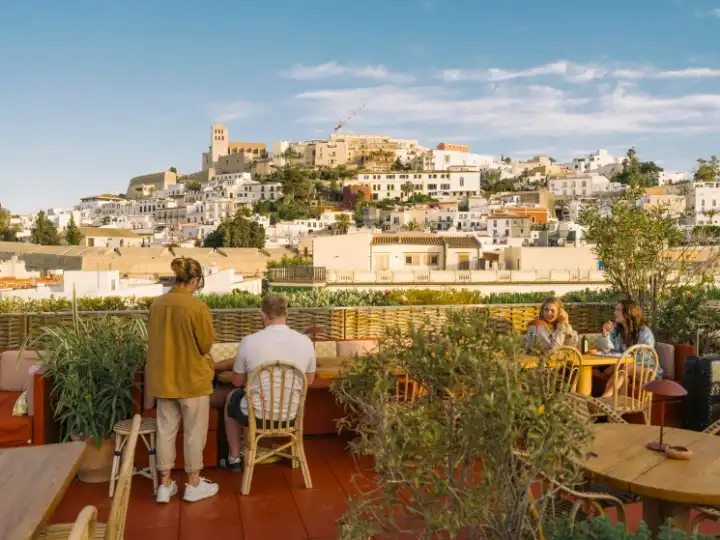
Five veteran journalists discuss the future of news in the face of tech failures and election
Culture 2026-01-07 20:27:15

Five veteran journalists discuss the future of news in the face of tech failures and election

When former US president Donald Trump sat down with the billionaire Elon Musk for an interview earlier this year, things didn’t quite go to plan. Livestreaming on X, the feed wasn’t accessible for most viewers for the first 40 minutes. Then the two participants were stuck on mute. Ultimately, the whole thing ran to a rambling two hours. Musk blamed the glitches on a cyberattack, which is certainly possible. Yet the ad hoc production and discursive chat also underlined the teething troubles of these new, supposedly disruptive sources of where people get their news and views.With a month to go until the US decides its next president, monocle spoke to five veteran journalists about how to cover such a twisting, turning election. We often hear that it is a tricky moment for legacy broadcasters and news outlets. That audiences are leaking to influencer interviewers and chatty online anchors, and trust in the trade is at an all-time low. Yet the journalists and teams we spoke to still command vast audiences, week-in-week-out, and they do so using old-school principles. We travelled from newsrooms in the American South to studios in Washington via the Democratic National Convention in Chicago to see these journalists at work. There’s no doubt that news is changing, and many of our interviewees have also branched out into personal platforms like podcasts and newsletters. But, for now, much of the news is still as we knew it.1.Local heroLeroy Chapman JrEditor in chief, ‘Atlanta Journal Constitution’Atlanta is among the fastest-growing cites in the US, while Georgia, where Joe Biden won by 11,000 votes last time, is among the swingiest of the swing states. This gives the local paper outsize influence in this election. “This is also one of the fastest diversifying counties,” says Chapman. “This is what America’s going to look like in years to come.”Chapman describes himself as a ‘rabid non-partisan’. “Our job is to bring light but not heat,” he says. “We can bring light to what makes the parties dysfunctional; what gets in the way of them serving the country.” Ahead of this election, theAJCopened three new bureaux and is offering voter guides to the candidate options on local ballots across the state. “We have elections in 159 Georgia counties – for the sheriff, the district attorney, officials who stand a chance of having more impact on [Georgians’] lives than who ends up president,” says Chapman. With the loss or hollowing out of so many local outlets, people simply do not know who they’re voting for or who’s funding their campaigns. “There’s a lot of opportunity and public desire for that very basic information. It’s also what our democracy demands.”The facts‘Atlanta Journal Constitution’ founded: 1868 [as The Atlanta Constitution]Circulation: 80,000-100,000 for weekday editionMotto: “The Substance and Soul of the South”2.Cool headBret BaierChief political anchor, Fox NewsAfter Donald Trump was shot in the ear in July, Bret Baier was one of a select few reporters the former president called. Not that the long-standing Fox anchor is a toad for the former president; in fact, Baier was on the sharp end of a Trumpian online tirade last year after a grilling interview. “What you’re going to get from me is fair, respectful, but sometimes tough,” says Baier, whose face still has a hint of pancake makeup after recording hisSpecial Report, which airs every weeknight at 18:00 Eastern time. “To do that with [Trump], who’s perceived to be more aligned with [Fox’s] opinion is, I think, a good thing for news.”Baier has anchored the nightly slot since 2009. Among the network’s on-air talent, he has carved out a niche for doing less of the editorialising – and virulent anti-Democrat monologues – that characterises much of Fox’s output. “I’m trying to take the temperature down,” he says. Once the network of conservatives, Fox executives say that in this election cycle more Democratic politicians want to come on air to reach crucial swing voters.Common Ground– a format that Baier himself came up with – brings together politicians from opposing sides of the House to talk through a piece of bipartisan legislation that they’re working through together. “Covering both sides [in this election], with the structure that we do, is a comfort for some folks and for that we [attract an] audience,” says Baier. He always presents the evening news in a starched collar and never drifts into the kind of animated outrage of some of his Fox colleagues. There is something pleasantly throwback about Baier’s evening news show: “I think there is hunger for the more formal way,” he says. Baier has written extensively about former president Dwight D Eisenhower and the transition of power to the Kennedy administration that kicked off the 1960s and changed America forever. The most recent transition in 2021 was fraught, as Donald Trump famously refused to accept the result. How can the media do better if that happens again? “I was on air that day and we did a pretty good job,” says Baier. “I think we could speak less to the extremes and get to that middle ground where people agree. There is a lot of space there.”The facts‘Special Report’ viewers: 2.9 million every night (July)Increase in Democrats appearing on Fox this year: 41 per centNightly sign-off: “Fair, Balanced and Unafraid”3.Trusted hostKatty KayUS special correspondent, BBC, and host, ‘The Rest is Politics: US’ Much like her current title at the BBC, Katty Kay’s role as US special correspondent, and her broader position in the American media ecosystem, is, well, somewhat special. It is rare for a non-American news broadcaster (Kay is British-Swiss), working for a foreign newsroom, to be as close to a household name as Kay has become, since she began reporting from Washington in 1996. Kay’s journalism has cut across the loose partisan lines that characterise much of the US broadcast news landscape. This, she says, is because her reporting and analysis is tethered to her deep contacts with political figures on either side of the political divide, rather than being informed by a political agenda of any given stripe. “Maybe it is because I’m an outsider; I actually don’t have an American passport,” she tells monocle. “But I’ve been covering American politics for 20 years, and it has taken a long time, but I have built up a reservoir of trust with the people that I speak to. And whether I talk to people through podcasts, on television, or in print, I know that my audience is following me where I am going.”It is in that spirit of seeking trustworthy perspectives on the upheavals of a dramatic US presidential election that has drawn listeners in their millions to Kay’s latest venture, weekly politics podcastThe Rest is Politics: US. The show is produced by the UK-based podcast studio Goalhanger, and Kay acts as co-host alongside former White House communications director Anthony Scaramucci.“It’s interesting with podcasts, because everyone bemoaned the fact that we had an attention deficit disorder – yet here are people happy to listen to a discussion for 30 or 40 minutes,” says Kay. “And these are young audiences who are happy to take the time to listen to something deeply and thoughtfully. We’ve broken down some of the hierarchy of the media – it’s gone.” Listeners respond to a format that allows discussions to flow more freely. “The days where somebody could just sit behind a desk and present the dry facts – that’s not good enough anymore. The onus is on us to deliver information in a way that our audiences want. And they want to know that they’re spending their time with someone they trust.” The factsFirst international posting: Zimbabwe in 1990 before postings in London, Tokyo and WashingtonNumber of US elections covered: Nine‘The Rest is Politics: US’ downloads: 18 million since launch4.Latino voiceMaria HinojosaExecutive producer of ‘Latino USA’ and founder of Futuro MediaWhen the Pulitzer-prize winning radio host and producer Maria Hinojosa emigrated to the US from Mexico as a child in the 1960s, the US’s southern border was not as politically fraught as it is today. “I grew up at a time when immigrants were actually sought-after in this country,” Hinojosa says. Her father Raúl, a doctor, was invited to join a research team at the university of Chicago, which would go on to devise the world’s first cochlear implants. “It was a time when the brain drain of other countries was a ‘brain gain’ for the United States,” she adds.Among the rituals the Hinojosa family adopted upon their arrival in Chicago’s south side was to tune in to the nightly news. “Television was our source of understanding the US as new immigrants,” Hinojosa says. “But I never saw myself reflected [on, or in, the news] in any way.”So, in 1992, when Hinojosa was invited to hostLatino USA– the first English-language news programme devoted to Hispanic affairs on US public radio – she jumped at the chance. Broadcast each week on more than 240 public radio stations across the country,Latino USAis now America’s longest-running radio programme of its kind. The show’s stories and investigations reflect multiple aspects of life among the US’s second-largest demographic group. Hinojosa’s deftness during interviews, plus her ability to move nimbly between subjects, attracts high-profile guests – including vice president Kamala Harris, who sat down with her for an interview last September. But despite also being one of the fastest-growing demographics, Hinojosa argues that the US’s Latino communities are still covered in broad brushstrokes in much of the mainstream press. Shows likeLatino USA, as well as the documentaries and podcasts produced by Futuro Media, the production studio Hinojosa established in 2010, aim to chronicle the US’s Latino populations with a nuance often absent from news coverage elsewhere. “This is a danger, because Latinos and Latinas are the swing votes within the swing states. To not acknowledge the power of those votes, and to not help educate Latino voters and, indeed, the entire country, about the power of the Latino vote – that is a problem. And it’s just bad journalism.” The factsLaunch of ‘Latino usa’: 1993Recent reports: Press freedom in Venezuela; Mexico’s election; and Palestinian solidarity movements in Latin AmericaOn air greeting: “Now, dear listener…”5.Calm handsMary HagerExecutive producer of ‘Face the Nation’ at CBSThe mantra atFace the Nation’s first editorial meeting of the week is, “It’s only Wednesday.” This means that everything is still to play for until showtime on Sunday morning: never settle on a lead interview too early, hold your nerve, be prepared to rip up the running order on Saturday night. It’s a crucial news instinct in an election of handbrake turns and is instilled in the team by executive producer Mary Hager. She has shepherded the show for the last 14 years and has been at cbs for 30 years. Alongside her team of producers, Hager decides who gets grilled each week – usually one or two politicians – and which news lines to pursue along with in-house analysis. “The bottom line is this: how are Americans going to vote and what do we need to do – what do they need to know – to help them make up their minds?” It’s been a rocky few years for America’s news networks amid declining audiences and shrinking newsrooms. cbs was not immune to this. YetFace the Nation, 70 years on since it first aired, remains the most-watched show in the crucial Sunday morning spot. As networks battle for attention with discursive podcasts and livestreamed influencer chat shows, the programme has not budged from its undiluted format that typically puts newsmakers in a tight spot. Armfuls of lanyards hang from a hook on the wall of Hager’s office in Washington, alongside the relics, flags and flyers of past conventions and caucuses. Colleagues say the EP embodies her own mission statement of “News not noise.” While many journalists talk about the unprecedented nature of what’s currently unfolding in American politics, Hager has seen dramatic upsets before: “The biggest challenge has been staying away from what we call the ‘bright shiny objects’,” she explains. “These are the grenades that are thrown by either campaign: the campaign staff shakeups and all the insider stuff.” She says this election is happening while public distrust in government is increasing. “Our role is to present [officials] as government, push them, challenge and question them but still respect them,” says Hager. “It builds trust in us. If we’re going to take elected officials seriously and give them respect, then hopefully that will trickle down to the public.” The factsFirst aired: 1954‘Face the Nation’ viewers: 2.8 million per yearHow many elections Mary Hager has covered: 17

Meet the Annecy creatives redrawing the animation industry
Culture 2025-12-27 21:43:01

Meet the Annecy creatives redrawing the animation industry

At a screening of an AI-generated music video, there are blank faces in the audience. Moments later, boos fill the hall. It is the first sign of discontent at the Annecy International Animation Film Festival. About 16,000 people from 102 countries have gathered for the flagship event of the animation industry, which is projected to grow by €200bn in the next decade. Despite these positive numbers, mass layoffs at major studios and the arrival of generative AI have left animators fearing that human artistry could soon be left behind. But Monocle finds a wave of artists who are redrawing the industry by blending traditional craft with new technology.“I love the artistic possibilities of animation and the breadth of trades that you encounter on set,” says Argentinian director Rosario Carlino, who has come to pitch her film Karetabla as part of Women in Animation, a programme promoting animators from the Global South. There’s a growing confidence among artists who are embracing their heritage through animation, not least thanks to the booming export of Japanese anime to the rest of the world. “With streaming, animation has become a more global movement,” says Mitchel Berger, the senior vice-president of global commerce at Crunchyroll, who is credited with distributing almost half of the top-grossing anime films in North America. “What people once thought of as uniquely Japanese now has an audience everywhere.”Among those present is Pakistan-based Mano Animation Studios, which entered The Glassworker, its first hand-drawn feature. “In the beginning, people said that we were crazy,” says film director Uzman Riaz. “Why would you do animation by hand when you can do it with the click of a mouse?”However, this mouse-clicking mentality misses the point of what inspires many animators. “We put in all of this work out of our love for the art form and the audience can feel that,” says Canadian filmmaker Denver Jackson, who wrote, directed and painstakingly animated his new film, The Worlds Divide, by himself. “I won’t deny that some audiences will watch AI content,” says the film’s producer, Nicole Sorochan. “But is this algorithmic ‘more of more’ approach really what we need to be focusing on?”Investing in craft in an industry fast becoming automated might not be as naive as it seems. “Because of AI, things that are handmade are more appreciated,” says Australian stop-motion director Adam Elliot, this year’s Annecy Cristal prize winner for best film, with Memoir of a Snail. “Films that used to be niche are reaching more people through digital technologies such as streaming.” Swiss director, producer and writer Claude Barras also believes that digital advances have benefited the creative process of stop-motion filmmaking, including his award- winning film My Life as a Courgette. “I think that 3D printing and digital cameras have removed a lot of barriers by making the process more affordable and fluid,” he says.It’s a paradoxical claim often repeated at the festival: technological advances are allowing independent artists to preserve traditional animation approaches long abandoned by legacy studios. Smaller studios are now on track to snatch about half of the market from industry giants in the next few years. The success of these outsiders should be a reminder that, in this medium, the people who are doing the drawing are often the ones drawing in the audiences.

Balancing act: Catalonia’s castells, or human towers, offer a lesson in sharing the load
Culture 2026-01-16 19:49:37

Balancing act: Catalonia’s castells, or human towers, offer a lesson in sharing the load

On one Saturday in October,colles– groups consisting of people of all ages from all over Catalonia and beyond – parade down the streets of Tarragona accompanied by bands playing Catalan music. Dressed in white trousers, colourful shirts, sashes and bandannas, they make their way to the Tarraco Arena, an amphitheatre in the heart of town. Boys and girls play thegralla, a double-reed instrument, and drums calledtimbals. Their progress announces the 29th edition of the biggest gathering ofcastells, Catalonia’s human towers, which are a feat of collaboration and focus.The human towers are the work of amateur groups that meet for rehearsals twice a week in sports halls across the region. The aim is to build towers that can reach up to 10 people high. “It’s nerve-wracking but also exciting,” says Santi Pie, leader of the Castellers de Sant Cugat, from the eponymous town just north of Barcelona. Pie’s group is one of 30 that has qualified to compete in Tarragona over the weekend in this biannual extravaganza. His job today is to co-ordinate almost 300 people as they aim to create the tallest, most intricate tower possible in order to gain a place, alongside 12 othercolles, in the finals of the championship, which take place over the weekend. Monocle joins an audience of 11,000 people, a figure that doesn’t include the thousands ofcastellerstaking part.Over the past half-century thesecastells, once the result of a relatively marginal activity, have become one of the most potent symbols of Catalan identity. The tradition was declared a Masterpiece of the Oral and Intangible Heritage of Humanity by Unesco in 2010 and, since then, the number ofcolleshas doubled. The pastime originated in the 18th century in the town of Valls in the Tarragona region. Thecollesare thought to have developed from a popular dance tradition called Ball de Valencians; music remains central to the activity. Eachcollahas its own band that starts playing once the base of the tower – thepinya(pine cone) – has been built, and carries on as people climb up to form the upper tiers. The song “El Toc de Castells” guides participants to co-ordinate their movements with the melody, while those at the bottom are able to estimate the tower’s progression via the music.Castellscan be found at festivities across Catalonia, where the towers are often built in front of town halls and not necessarily competitive, though the activity is inherently ambitious.As competitors slowly pile into the centre of the Tarraco Arena Plaça, a former bullfighting ring that has heldcastellscompetitions since 1932, a voice on the loudspeakers introduces eachcolla, many of which have names that hint at the important role played by children: the Xiquets del Serrallo (Kids of El Serrallo); Marrecs de Salt (Brats from Salt); Nens del Vendrell (Children of El Vendrell). Children as young as five or six, whose job it is to climb up to the top of the tower, wear mouthguards and helmets. In pairs, participants help each other to wrap the all-important sash tightly around their waists. This crucial part of their outfit supports the lower back and provides grip for climbers on the ascent. A banner hanging on the edge of the arena reads, “Fent pinya, fas poble.” (“When you huddle together, you make a village.”)Surveying the crowds from the top floor of the arena is Pere Ferrando, president of the jury. He is surrounded by several screens showing all the action. Allcollesreceive a score based on the difficulty of their constructions, and alongside six other jurors, Ferrando will be marking the performances. There are about 40 different types ofcastells, each of which is only complete when theenxaneta(one of the smallestcastellers) reaches the top of the tower and raises one hand. Extra points are given for a safe dismantling. But today is not only about rivalry. “What makes it interesting is that you don’t necessarily need to compete with anothercolla,” says Ferrando. “It’s also about surpassing yourself.” That said, he will be keeping a close eye on the tug of war between the two teams angling for the tallestcastells: the Castellers de Vilafranca and the Colla Vella dels Xiquets de Valls. The former has dominated the competition since the mid-1990s, winning 11 of the past 13 editions, while the latter is the team threatening this dominance.It’s mid-afternoon, and the time has come for the Castellers de Sant Cugat to attempt their first tower – an eight-storey construction with fourcastellersper tier. Pie, the group leader, calls out instructions from the bottom as the stadium watches on. Every step is perfectly synchronised to complete the tower as quickly and safely as possible. As soon as the fourth storey is complete, eight-year-old Candela Casas begins her ascent, stepping on a sea of arms and heads. “I climb up by holding on to sashes, grabbing shoulders and legs,” she says when Monocle meets her backstage. She’s not scared of heights, she says, but it’s important to not look down and to stay focused. When she reaches the top and lifts up her left hand, the stadium breaks into applause. But it’s only when it’s clear that the tower will not crumble, and that everyone is safe, that thecastellersbegin to jump up and down, exchanging hugs and kisses. When asked what the best thing aboutcastellsis, Casas replies without hesitation, “To enjoy yourself!”Many participants liken the experience to being part of a huge family. For Maricarmen Álvarez, who is watching nervously from her front-row seat, that is quite literally the case. She is here to support her two daughters and six grandchildren, ranging between the ages of 12 and 23. They are all taking part in the competition with the blue-shirted Xiquets del Serrallo from the Tarragona fishing neighbourhood. “It’s very hard for me to watch,” says Álvarez, pausing to point out every family member as they take their positions in the tower. “Come on, you’re almost there,” she says, cheering on as the youngest reaches the top. “Oh God, please don’t let them fall.”Of course, not every tower can defy gravity. Though thepinyadoes act as a cushion and serious accidents are rare, the risk involved incastellsis what makes the feat of collaboration so enthralling. Álvarez is acutely aware that this is the price to pay for the strong sense of belonging and community thatcastellsprovide. She knows that it’s the collective bravery and unconditional trust placed in others that has kept the tradition alive. “My late husband was acastellerand my great-grandchildren will probably becastellers,” she says with a sigh. “It’s passed down from generation to generation; it’s in their blood.”Making his way through the crowd is Tarragona’s mayor, Rubén Viñuelas. When you grow up here, he says,castellsare never far away. “Part of daily life is going out for a vermouth and watchingcastells,” he says, referencing the celebrations of Sant Magí and the Santa Tecla Festival, which take place in August and September. “Tarragona is the capital ofcastells, so this event means a lot to us. We pay homage to this way of life. Those of us who grew up here understand what this means and we love to see people from around the world watch on with excitement.”As a strong expression of Catalan identity,castellsoften go hand in hand with a sense of regional pride that can be tied to Catalonia’s independence movement, which came to a head with an ultimately unsuccessful declaration of independence in 2017. The competition begins with everyone singing “Els Segadors”, Catalonia’s national anthem, with hands on hearts and fists in the air. Inevitably, this is followed by calls for “Independència!” Some seecastellsas a metaphor for the region’s strong sense of unity. “There’s the cultural aspect of makingcastells– it’s about looking after our language and the traditions that have been around for hundreds of years,” says Víctor Biete, president of the Castellers de Sant Cugat. Of course, that doesn’t mean that the activity is incompatible with wanting to remain in a united Spain. And whilecastellshave grown in popularity in recent years, the push for independence has suffered some setbacks. For the first time in more than a decade, the Catalan nationalist parties failed to secure a majority of seats in the regional parliament earlier this year. The pro-union Socialist Party, of which Viñuelas is a member, now leads the Catalan government after years in opposition.A few streets away, a parallel event is taking place in front of the town hall. In recent decades,castellshave expanded beyond Catalonia’s borders. Today several internationalcolles– from London, Paris, Berlin and Copenhagen – have gathered here before heading to the arena to support the Catalan teams. The Xiquets de Copenhagen were founded in the Danish capital in 2014, and Marta Trius, a PhD student, joined them a year ago. “When you’re abroad, the social dimension becomes even more important,” she says. “When you move abroad you have to find your family and this is like having a family.”Back in the arena, Viñuelas says that the global appeal ofcastellsis due to the teamwork and inclusivity involved. “It’s a piece of Catalonia that we are exporting to the rest of the world, with all its symbolism,” he says. “Everyone has a function in society – the elderly, men, women, children – just like incastells. And in the end, everything depends on the youngsters; on little boys or girls who rise high above everyone else to complete the tower.” In the end, the Castellers de Vilafranca triumphed, taking home its 13th title. For the other, there’s always next time: you’re only as good as your lastcastell.

Apotheke, the Athenian natural cosmetics brand taking beauty back to basics
Fashion 2025-12-21 20:11:18

Apotheke, the Athenian natural cosmetics brand taking beauty back to basics

“This is all about bringing back a liberating simplicity to people’s lives,” says Eva Papadaki, as she moves through 10am Apotheke (Greek for “storage room”), her new concept shop in Athens’ vibrant neighbourhood of Gazi. Just beside the boutique – where Papadaki picks a collection of homeware, cosmetics and culinary ingredients – is a garage that repairs old cars. There’s a link to these unlikely neighbours: both are focused on preservation.The idea for Apotheke (as it’s usually known) was born in the basement of the brutalist, concrete 10am Lofts building where Papadaki, for the past seven years, has based her talent management agency for photographers and artists. “It feels like I have given birth to this project and there’s so much sentiment attached to it for me,” she says, looking up towards the space’s incredibly high ceilings. Minimalist shelving units line the walls, displaying limited-edition products that Papadaki promises are sustainable all the way down to the manner in which they are transported from her native Crete to Athens.On the wall, a film projection of the inky blue, sun-scorched Aegean landscapes and whitewashed houses captures the very essence of Papadaki’s new brand – a conscious movement back to simple living, inspired by the ways her Greek grandparents lead their lives. It’s why she has sourced limited-edition ingredients from Cretan producers who she has known since childhood. Olive oil, honey, handmade soaps, beeswax candles (just like the ones used in Greek Orthodox churches) and moisturising beeswax balms that can be applied all over the body. Most products fit in a beauty cabinet as much as they do in a kitchen pantry and will inspire you to rethink your beauty rituals – replacing complex formulas with natural ingredients and finding joy in the process rather than just the result, from applying a soothing balm on your pulse-points to lighting incense.Minimalist living was the guiding principle for the shop fit-out but Papadaki also wanted to pay homage to the history of the building. “This was once a warehouse for dried foods,” she says. “I love the word ‘Apotheke’ because it also refers to our inner, metaphorical storage rooms, where we keep our memories, our feelings, our spirit.” Her own spirit remains firmly in her native Crete. “It’s where I’m from and it’s where I will always go back to,” she says, referencing the sounds, scents and landscape of the island, which inspired all the products now available at Apotheke.Her commitment to local sourcing was also guided by her experiences growing up on the Mediterranean island. “So many people talk about sustainability but no mass-produced product is really sustainable,” she says. “Here, products are not made in huge quantities. The honey and the oil might run out. It’s whatever nature can give in that moment. I always want to be in tune with and respectful of what nature has to give me.”Papadaki travels to Crete to pick up the products herself and ensure that she maintains an ongoing dialogue with the producers she collaborates with. Her ultimate aim? To transport people to Crete, every time they light the Apotheke incense or use the wild herb soap that has been made using her grandmother’s old recipe.Every Saturday, Papadaki opens the heavy doors of Apotheke to Athens’ ever-growing community of artists, designers and photographers, making the most of the airy space as a gathering spot as well as a shop. Nodding back to her previous job as a talent agent, the idea of Apotheke Saturdays is to create opportunities for creatives to come together and inspire each other with conversations about art, creativity – and, of course, the best natural beauty remedies.“I want to offer a space for artists to showcase their work, so we have this weekly gathering that is interlinked with the ethos of Apotheke,” she says. “It’s all about returning to your roots.”10amapotheke.com

Exploring Edge House: Tom Wood’s founder’s minimalist masterpiece
Design 2025-12-18 11:43:36

Exploring Edge House: Tom Wood’s founder’s minimalist masterpiece

On a rocky outcrop near central Oslo, an unconventional house looks out over Kolbotn, a residential area of otherwise conventional wooden houses and low-rise brutalist apartments. Nicknamed Edge House, the distinctive edifice is the family home of Mona Jensen and Morten Isachsen, the duo behind Norwegian jewellery brand Tom Wood, which was founded in 2013 and is known for its simple, elegant designs.Access is via a narrow stairway, which has 52 steps that cut through rough granite boulders glinting with quartz crystals. As you ascend, the seven load-bearing pillars that support the house – which sits entirely over the stony slope – loom close, with pine saplings seeding into the nooks and crannies of the surrounding rock. Then, at the top, 12 metres above street level, you reach even ground as the stairway opens out into a garden.Built into the rockView looking out over KolbotnEdge House was an ambitious undertaking for Jensen and Isachsen. After living in apartments in central Oslo, they were spurred by a desire to move to a home where their children would have more space to run around among greenery. For the couple, who grew up in bucolic Stord and Tromsø, it was also about regaining a connection to nature.Mona Jensen and Morten IsachsenTo do so, they enlisted Oslo-based architects Einar Jarmund&Co, to whom they submitted a somewhat unorthodox initial brief in 2006. “We sent them the James Bond theme song and asked, ‘Can you make us a house like this?’” says Jensen. “They were our dream architects at that time but we were very young and couldn’t really afford them. So they told us to save up some more money. We did and came back a year later but still had a very limited budget.”Exterior of Edge HouseSeen from street levelUltimately, Jensen and Isachsen wanted to build a home that, much like their clean-lined jewellery, wouldn’t age in terms of style or integrity. “Building a house is a significant project, something that most individuals or families do only once in their lifetime,” says Isachsen. “It prompted us to ask what kind of footprint we wanted to leave on this planet. Is building a house truly necessary? And if the answer is yes, how can I design a home that will not only stand the test of time but remain relevant and sustainable for many decades – perhaps even a century?”In response to these questions, rudimentary raw materials were chosen for their hardiness, cost efficiency and durability. The exterior of the house is clad in fibre cement panels that, like a giant Meccano set, are screwed in place, allowing easy access to the structure of the building for repairs. It was a relatively new technique at the time of construction; the couple had heard of its use in The Oslo School of Architecture and Design, which was also built by Einar Jarmund&Co. “If one panel gets damaged, you can change it and don’t need to tear down the whole façade,” says Jensen. “You don’t have to paint it or do anything to it for 100 years,” adds Isachsen. “It just stays and looks the same.”There’s a practical simplicity to the home’s interiors too, with the walls clad entirely with birch veneer, with no paint or wallpaper, and no skirting boards or highly finished edges. A sizable steel bench-counter is the heart of the kitchen – both in terms of activity (Jensen and Isachsen like to cook) and in presence. Appropriately, the finishes match the look of Tom Wood’s Oslo flagship shop, where similarly steely surfaces create a common visual thread that links the couple’s home and creative venture – even though Jensen says that her work as a jeweller didn’t influence the house directly. The home’s concrete terrazzo floors, reminiscent of those found in Venetian piano nobile, are also found at the Tom Wood office, which was opened after the house was built. (Perhaps it was the residence that influenced the brand.)Set across one floor, almost every room in the house is oriented towards – and opens out onto – the garden. Cultivated by a Japanese landscaper with particular attention given to the seasonality of its vegetation, it has copses of trees and flower beds that bloom in the warmer seasons. “In summer especially, the house becomes twice as big because it’s all on one level, with windows towards the garden,” says Isachsen. “We constantly move from indoors to outdoors.”Built in 16 months on a 900 sq m plot of land (an area about the size of 3.5 tennis courts), the house was designed to work in harmony with the landscape. “When the architects came here, they got the idea to put the house on the edge of the plot, destroying as little of the existing vegetation as possible and creating this very private garden,” says Isachsen. “There was very little demolishing that had to be done.”Birch-clad wallsDespite its imposing appearance on its rocky perch, the house isn’t a behemoth. It was originally just 210 sq m with three bedrooms. Following a 2018 extension, it now occupies 258 sq m, when an extra bedroom and a study-cum-entertainment room were added after the couple’s children complained of living on top of each other. The addition is marked by a transition from light to dark as you walk from the luminous open-plan living and dining area towards the bedrooms through a softly lit birch-panelled corridor, evoking a winding down of energy and indicating that you are heading to a place of relaxation.The furnishings, meanwhile, reflect the couple’s personal tastes and their journey through life. There’s a big collection of vinyl (Isachsen is a former DJ) and a larger-than-life portrait of Norwegian musician Turbonegro, taken by Aleksander Nordahl, which presides over the living space. A colossal suar-wood coffee table that the couple brought back from Bali takes centre stage in the living room. Throughout the home, you’ll find a mix of modernist, postmodernist and contemporary furniture from designers such as Terje Ekstrøm and Andreas Engesvik, and brands including Fjordfiesta and Italy’s Flos.A bespoke “thinking bench”, cushioned with Norwegian woollen textiles, starts at the end of the steel kitchen counter and extends into the living space, butting up against the plate-glass window and defining a clear sightline to the undulating neighbourhood beyond – it’s a psychotherapist’s couch with a view.Jensen and Isachsen are part of a wave of now-established Nordic creatives who are breaking out of the mid-century mould that has come to define design in the region. Their home is reflective of this: it’s exactly what one would expect from cool industry leaders. Appropriately, when monocle visits, both are dressed head to toe in black, with Jensen drifting elegantly in a vintage Celine shirt and Hermès loafers and Isachsen wearing an asymmetrical-zip White Mountaineering top and capacious slacks. They appear totally at ease in their natural habitat but they’re quick to explain that there were times when they didn’t always have such confidence in the home’s creative form. “I cried when I saw the mock-up model of the house,” says Jensen. “I thought it was horrible. I expected something practical and easy to understand. This was hypermodern. There were so many angles and corners – it was entirely new.”Isachsen, on the other hand, thought that it was exciting. “He said, ‘It’s only four walls and a roof – it’s a house,’” Jensen tells monocle. She explains that she soon came around to the originality of the design. Now, she can’t imagine living anywhere else – at least for the foreseeable future.The architecture, says Jensen, has enriched their lives over the past 16 years. She explains that one of the keys to its success was that it reflected their ideals. “To me, a home is a place that holds a family together and needs to work with its different phases. We spent a lot of time thinking about which rooms and functions a house needed to have, to work for us the way we like to live.” For Jensen and Isachsen, it turned out that living on the edge doesn’t mean having to be totally out of your comfort zone.tomwoodproject.com

Interview: Giovanni del Vecchio on Giorgetti’s journey from classic to contemporary
Design 2026-01-14 11:32:10

Interview: Giovanni del Vecchio on Giorgetti’s journey from classic to contemporary

Despite its 126-year history, Brianza-based furniture maker Giorgetti is anything but complacent. The Italian firm is continuing its transformation from a more classical design brand to one rooted in the contemporary. We asked its CEO, Giovanni del Vecchio, about this transformation.Giorgetti has talked about a contemporary evolution. What does that mean?Evolution – and not revolution – has been one of the pillars of our strategy since the company was acquired [by Italian private equity fund Progressio] in 2015. Back then it was probably thought to have a higher attention from the Asian markets than the European or American ones. This is the reason why we have tried to let the company evolve into more contemporary design but it’s also part of our tradition. Even in the early 1980s, Giorgetti launched the Matrix collection: an incredible, out-of-context range made up of colourful pieces and innovative shapes. This need for continuous evolution has always been part of our make-up.How do you continue to build on this legacy?One of the directions that we have been taking is to keep collaborating with some of the designers who have been working with us for many, many years. When we start a collaboration, our objective is for it to be long-term because when you learn how to design a Giorgetti piece, we want you to keep doing it.How do you ensure that Giorgetti doesn’t only look to the past?We have two other directions. One of these is to collaborate with young designers. This is a commitment that the company must make – giving opportunities to young designers to approach established brands and use the research and development competencies that we have in order to grow their expertise and their design proposals. And the other direction we have is to work with architects who are not really into product design but are helping us to identify how product can become a tool to develop architectural solutions.Want more stories like these in your inbox?Sign up to Monocle’s email newsletters to stay on top of news and opinion, plus the latest from the magazine, radio, film and shop.Your EmailSubscribe

Design agenda: Sydney’s Studio Prineas, London-based Hût Architecture and the revival of the Memphis waterfront
Design 2025-12-28 06:18:17

Design agenda: Sydney’s Studio Prineas, London-based Hût Architecture and the revival of the Memphis waterfront

Urbanism: USAWalking in MemphisThe city of Memphis, Tennessee, was founded on the banks of the Mississippi river in the 19th century but its modern waterfront has long been defined by unremarkable swaths of turf abutting the famous waterway. Now, a 12.5-hectare portion called Tom Lee Park has opened as a dynamic public and natural space, refreshing the city’s most prominent landscape.“The redesign was inspired by a desire for Memphians to come to the river to reconnect with each other and with the Mississippi,” says Kate Orff, founder of New York-based design studio Scape. “It’s also inspired by the story of Tom Lee, an African-American river worker who became a hero after risking his own life to save 32 people from a capsized steamboat in 1925. The space celebrates Lee’s legacy of generosity, while still confronting difficult and unfinished conversations about justice.”Brought to life by Scape and architecture firm Studio Gang, the new design has organised the parkland into a series of zones that mimic the sediment flows of the Mississippi. Boasting structures made from timber, a river-themed playground, sports and recreation courts, as well as picnic areas, the park also works to strengthen the connection between downtown Memphis and the river, with locals now having a reason to venture towards the water.More than 1,000 new trees and native plants have also been added to the space, helping to replenish and restore the local ecosystem.The transformation has added a new civic common space where Memphis residents are welcome to gather, exercise, relax and attend events alongside the ecologically revitalised river corridor. “Our job was to design a park that aspires to meet Tom Lee’s spirit of generosity,” concludes Orff. “Communities in Memphis are so vibrant. We wanted to make a park that enables that grit and love and creativity to come together in one place – at the river’s edge.”Design: EuropeCharged upFrankfurt-based design firm E15 and Australian brand Zetr have joined forces to create a new flush-finished socket set-up to subtly incorporate power sources in office furniture. Called System 25, it can be fitted to E15’s own tables or integrated into products from other manufacturers. The nifty little gadget is composed of two parts: a power box which is fitted to the underside of desks and contains electrical charge, and a flush metal faceplate from which only essential cables, such as phone or computer chargers, emerge. Available in brass, bronze, steel or black steel finishes, there’s a host of options available to ensure that a table’s silhouette is no longer interrupted visually by clunky outlets.e15.com, zetr.com.auArchitecture: UKEast-end makeoverLondon-based Hût Architecture have transformed a former military drill hall into a new mixed-use development in the UK capital’s East End. The property, which has been largely undisturbed since the 1930s, when it served the Royal Army Service Corps 1st Anti-Aircraft division, had seemingly been doomed to a gloomy future of use as a storage space and the dilapidated backdrop for grunge fashion shoots. But the restoration has breathed new life into the building in the form of new offices, apartments and a coffee shop.Roof lights and translucent block walls ensure that natural light glows across the exposed structure and brickwork, while also illuminating the forest-green accent colour that defines the renovation. From sheets of corrugated iron and steel beams that cross the lofty ceilings, to plants and vines that tumble down the exterior walls, the redesign’s juxtaposition with the original industrial feel brings a sense of purpose to a neglected urban relic.hutarchitecture.comFor more on Drill Hall, click through to our feature here, where the project sets the scene for a fine selection of sofas, chairs and lighting.Design: AustraliaQ&AEva-Marie PrineasFounder, Studio PrineasSince 2004 the Australian architect Eva-Marie Prineas’s projects have focused on building on Sydney’s historic architectural legacy, “thinking more and building less”. We asked her about her responsible approach to building and the peculiarities of work in Australia.How does a ‘building less’ approach end up improving your practice?It’s the most responsible way for architecture to move forward. When you’re working with existing buildings, you have to think about what you need to keep and what you might not necessarily have to keep; these are the decisions that are important moving forward, so that you’re doing as little as possible, but with as much impact as necessary. Why is ‘responsibility’ your word of choice when describing your projects?I feel that the word sustainable is almost an oxymoron in construction. Everything that we do is creating more of a carbon footprint. So it’s about being responsible about our choices and minimising the impact as much as possible. How do you create architecture that is grounded in place?With a recent project, we developed the landscaping as a reference ecology for the local area. We went for a bush walk with our clients and looked at all the planting, then we came up with a beautiful scheme. Once the garden started to grow, beautiful fauna were coming to the site.studioprineas.com.au

Toying with convention in the House of Toogood
Design 2025-12-17 12:43:26

Toying with convention in the House of Toogood

If you’ve been on the design-fair circuit over the past 12 months, there’s a strong likelihood that you have encountered the work of Faye Toogood. Whether it’s being named guest of honour at the Stockholm Furniture Fair and designer of the year at Paris’s Maison&Objet, working with Italian manufacturers including Cc-Tapis, Tacchini and Poltrona Frau, collaborating on an installation for Danish brand Frama’s Copenhagen flagship or working on the Toogood fashion line with her sister Erica, the British designer has, of late, been unavoidable. “Sorry about that,” Toogood tells Monocle when we meet at her London studio, where she heads up a team of 25. “Something seems to have clicked and it’s amazing to be riding that wave.” Toogood with models of her Bread and Butter collectionSketches for Faye Toogood’s collaboration with NoritakeAs we sit down, Toogood posits that this surge in popularity is linked to her work’s emotive content. “I’ve been putting more of myself into my work without worrying about how it sits in the context of design,” she says. “I’m working intuitively and allowing space for experimentation.” When she founded her studio in 2008, Toogood came from a background in fine art and sculpture, and had been working as a stylist atThe World of Interiorsfor eight years. “I didn’t set out to be a designer, so I started quite apologetically,” she adds. “Because I was on the fringes of design, art and fashion, I was seen as not being serious, as dabbling. But I’ve formed a place for myself on these fringes.” Inside the House of ToogoodMaterial samples in Toogood’s studioNow firmly established in the industry, Toogood is regularly tapped by manufacturers looking to work with modern designers. When we meet, she has just returned from Nagoya, where she spent a week hand-painting pots with roses for Japanese ceramics company Noritake. The resulting collection of limited-edition pieces, called Rose, will be shown at Milan Design Week this year, with scaled-up production of the pieces slated for 2026. Toogood is also returning to Milan this April to launch her second line of furniture with Brianza-based manufacturer Tacchini, after the success of her Cosmic collection of a sofa, shelves, mirrors and pendant lights, unveiled at last year’s fair. Titled Bread and Butter, the new collaboration revolves around a modular sofa rendered in a soft, light yellow leather. “I like looking to food for inspiration; it’s a smack of reality,” she says. “It’s about rejoicing in the everyday, in the food I grew up with, in the food I give to my children.”As a designer, Toogood infuses her work with a tenderness rarely spoken about in the design industry. Her Roly Poly chair’s voluptuous shape draws inspiration from her personal experience of pregnancy and motherhood. To sit in her Gummy armchair is to receive an upholstered hug. “I’m quite a tactile person, an emotional person,” she says. “I often feel like a thermometer because I’m hypersensitive to the energy of what’s going on around me. A lot of my designs are autobiographical but they’re also out of genuine care for others.”Playful structuresAccording to Toogood, this need to put society over the self is the reason she became a designer and not an artist – albeit in her own experimental manner. Every new project often begins with a word, a song title or even a poem, providing a starting point to shape the identity of each piece. She makes early miniature models using materials such as sheets of aluminium or pieces of clay, allowing her to play around and see what comes out. And during the editing stages, Toogood will begin to search for tension between the soft and the hard, the precious and the raw, the industrial and the handmade, before finding a balance. When it comes to the actual production of these pieces, Toogood mostly works with carpenters and upholsterers based in the UK. It’s a far cry from intricately drawn sketches or computer-assisted design – but her divergent method for design is now at a stage in which it is being welcomed by the very industry that sets the norms. “It’s my role to break down boundaries, agitate, open doors, question, blur,” says Toogood. “I might not have achieved everything I wanted to achieve but I’ve opened up the conversation through my own experimentation. I’ve helped to widen the lens of what design is. For that, I’m proud.”As Monocle leaves the serenity of House of Toogood, the designer changes into a pair of paint-splattered overalls to tackle a mobile and table. For Toogood, there’s no time to rest but always plenty of time to play. The CV1977Born in the UK1998Graduates with an art history degree from the University of Bristol1999-2007Works as decoration editor forThe World of Interiors2008Founds her studio2010Designs Spade chair, stool and bar stool2012Launches Toogood clothing with her sister, Erica2014Designs the Roly Poly chair 2019Collaborates with Cc-Tapis on the Doodles collection2021Creates the Puffy ottoman for Hem2022Phaidon publishesFaye Toogood: Drawing, Material, Sculpture, Landscape2024Releases Gummy armchair and collaborates with Vaarnii, Cc-Tapis, Tacchini and Poltrona Frau2025Named Maison&Objet designer of the year and Stockholm Furniture Fair guest of honour. Launches collaborations with Tacchini and Noritake 

Interview: Brazilian actress Fernanda Torres on bringing resilience to life in ‘I’m Still Here’
Culture 2026-01-11 20:03:40

Interview: Brazilian actress Fernanda Torres on bringing resilience to life in ‘I’m Still Here’

In 1986, Fernanda Torres became a Brazilian icon after winning the best actress award at Cannes for her role in Arnaldo Jabor’s Love Me Forever or Never. Here, she tells Monocle Radio about her latest film, I’m Still Here, set during Brazil’s military dictatorship. The film is already one of Brazil’s most successful-ever features and has been nominated for three Oscars, including Best Picture and Best Actress for Torres.The film tells the story of Eunice Paiva, who became an activist after her husband disappeared during the country’s military dictatorship.When did you first learn about Eunice Paiva?It was through her son Marcelo Rubens Paiva’s 2015 book [I’m Still Here is based on his memoir of the same name]. I watched interviews too. She was persuasive but always gentle and intelligent.You have just won a Golden Globe for your performance in the film. How important was the recognition?It was made [during the Bolsonaro years] at a time when the arts were under attack in Brazil. I’m so happy that people of all religions and political beliefs are proud of our culture and going to cinemas to see it.You’re well known for your comedy roles. Did you enjoy returning to drama?I thought I was lost to drama! No, not really, I don’t separate genres that way. I’ve done theatre, musicals, and comedy, but of course, my recent TV roles made me widely known as a comedian. Then Walter gave me this incredible gift: a role in a deeply humanistic, profound drama.What’s special is that a new generation of Brazilian teenagers is watching this film and learning about the dictatorship, often for the first time. They’re discovering history through a family that could be their own. That humanistic approach to storytelling is rare. It might take another 25 years for a film like this to happen again.‘I’m Still Here’ is out now in Brazil and the US, and will soon be released across Europe. For the full interview with Fernanda Torres and Walter Salles, listen to Monocle Weekly above, or on Apple Podcasts and Spotify.Want more stories like these in your inbox?Sign up to Monocle’s email newsletters to stay on top of news and opinion, plus the latest from the magazine, radio, film and shop.Your EmailSubscribe

Three literary leaders share their predictions for the book industry in 2025
Culture 2025-12-30 17:16:57

Three literary leaders share their predictions for the book industry in 2025

Every October, Frankfurt becomes a hive of activity with the arrival of the annual Frankfurter Buchmesse. Once upon a time, publishers, agents and authors would hold back-to-back meetings here, the air fizzing with new ideas and high-stakes negotiations. Many still talk about the time when an agent could slap a manuscript on the table for an editor to read overnight before striking a deal the next morning.Networking at the Frankfurter Buchmesse<Author conversations are a key feature of the fairToday, most of the decision-making takes place in conference rooms or via video calls beforehand but the fair still serves as a marketplace for industry leaders to talk shop and it is still the world’s largest book fair in terms of business conducted, if not size.“There’s a very positive vibe in the industry,” says the fair’s ceo, Juergen Boos. “In publishing we tend to be quite pessimistic but this year on the ground it feels like a party.” Among many areas of evolution, Boos mentions young-adult fiction and the rise of #BookTok (a social-media movement that focuses on literature). AI also featured in many conversations and talks, often in a positive light. “On the one hand, it helps us to organise our workflows in the publishing houses,” says Boos. “It helps us to translate, market and reach target groups. But it also poses a big threat because we have not yet sorted out content ownership and legislation.”Not everyone sees blue skies ahead for the future of books, particularly in the current socio-political climate. What is clear is that the state of the world is influencing readers’ choices: political books with answers and fantastical fiction with heroes and villains are on the rise.“The economy is not good, we have political challenges and we have wars,” says Boos. “The books that we want to read now ask questions, give answers and they entertain.”We speak to three industry leaders to hear their predictions for the industry in 2025. Here’s what they have to say.1.The editorMichael Reynolds, Europa EditionsNew York, USA“Non-fiction, at least in the American context, has struggled this year. There has been more desire on the part of readers to centre themselves, to find greater meaning and more significance, and they might find that more readily through fiction. In terms of which types of books readers are buying, I’m seeing a little bit of everything: romance, cosy mysteries, literary fiction. And perhaps the boundaries are now becoming more porous.In many ways it’s a good time for the small, nimble, mid-sized publisher, because the larger companies have shareholders and tend to play it safe and many better, more interesting books feel too risky. As a smaller publishing house, we can take more risks with less predictable books.”Reynolds’ title to look out for in 2025‘Gabriële’ by Anne and Claire Berest2.The agentJuliet Mushens, Mushens EntertainmentLondon, UK“We’re finding that readers are responding well to escapist fiction. I suppose the state of the world can be horrifying enough that people want to escape into something which transports them to a different time and place. Crime thrillers are still successful, because you catch the bad guy right at the end of it, you know who the villain is and there’s some kind of resolution.Fantasy is also much more successful than it has been. I’m president of the British Fantasy Society and have represented fantasy for my whole career. We’re seeing lots of publishers who have never bought fantasy before starting to acquire it for their lists. We’re seeing authors who have been published for years suddenly getting a new jacket, or people rediscovering old books written by them years ago. Fantasy has seen big growth over the past couple of years and I think that will continue.”Mushens’ title to look out for in 2025‘Bitter Sweet’ by Hattie Williams3.The audiobook expertCarlo Carrenho, Carrenho Publishing ConsultingTrosa, Sweden“We’re getting to a point where books are being voiced by AI-generated actors and writers are being influenced by the audio format, which is changing the way books are being written. Would Gabriel García Márquez have writtenOne HundredYears of Solitudetoday? That story would not do well as an audiobook.In a more positive light, we’ve had a huge milestone in audiobooks this year with Spotify introducing the subscription model to the English-speaking markets. Now it’s expanding to France, Belgium and the Netherlands. I think in the coming year we will see more and more people listening to audiobooks. In Sweden, 60 per cent of purchased books are audio, so in many places people are already listening more than they’re reading.In terms of what types of audiobooks people are listening to, it depends on geography. In Scandinavia, fiction is popular; it’s about storytelling; people just want to travel, be distracted. But if you go to southern Europe and Mexico, people are listening to non-fiction books, mostly business and self-help.”Carrenho’s audiobook to look out for in 2025‘The Intruder’ by Freida McFadden

Tech corner: Three releases to keep on your radar
Design 2025-12-24 21:44:23

Tech corner: Three releases to keep on your radar

From sleek new smartphones to high-tech accessories, this roundup features some of the latest innovations that combine style with cutting-edge functionality.Whether it’s Samsung’s revamped Galaxy with improved AI and photography, Technics’ impressive in-ear headphones with seamless connectivity, or Oura’s slimmed-down ring with advanced health tracking, these gadgets are designed to elevate your everyday life.From left to right:Samsung Galaxy S25 Ultra smartphoneThe rounded corners of this phone give it a welcoming new look but the tower of cameras on its back remains in place last year’s S24 Ultra. There’s now a faster processor, better photographic sensors and the next version of Galaxy AI, including the Now Bar, which shows apps on the lock screen and can even tell you when to leave home to catch that flight.samsung.comTechnics EAH-AZ100 Technics describes these new in-ear wireless headphones as reference class and they do sound impressive, with direct, clean and balanced audio. They also have a cute design and active noise-cancelling, and pair with three different gadgets so you can connect them as you move from your phone to your laptop, for instance.technics.comOura Ring 4Finnish firm Oura’s new ring is slick and slim with sensors that are flush, making it comfier.  Sleep tracking remains key and Symptom Radar can even alert you if you’re coming down with a cold before you’ve even sniffed.ouraring.com

Green rooms: Isabel Duprat’s flora-first garden designs
Design 2025-12-19 13:30:15

Green rooms: Isabel Duprat’s flora-first garden designs

“Garden design in Brazil is still not as respected as it should be,” says Isabel Duprat. It is a balmy day in São Paulo when Monocle meets the country’s pre-eminent landscape architect, who lays bare her feelings about the state of the discipline in her home nation. She is well placed to comment on the topic. Having earned her stripes under legendary Brazilian landscape architect Roberto Burle Marx, Duprat collaborates with some of architecture’s biggest names today, from Marcio Kogan to Moshe Safdie. And she has a 45-year pedigree that makes her well equipped to fly the flag for the discipline in her home country.Born in São Paulo in 1954, Duprat says that she was destined to design gardens and landscapes from a young age. “I always had this intimacy with planting and I would get all muddied up from playing on the land as a child,” says Duprat, referencing time spent at her family’s small farm in the countryside near São Paulo. Encouraged by her mother’s enthusiasm for gardening, Duprat dreamed of studying botany before ultimately pivoting to architecture. “In high-school, I said, ‘I think I will go and study architecture, so I can do landscape design.’ Brazil didn’t have a school for landscape architecture at the time.”Outside looking inDespite never wanting to create buildings, Duprat graduated with an architecture degree in 1978, from the Mackenzie School in São Paulo. This institution is renowned for producing a host of multi-disciplinary talents, from modern painter Anita Malfatti to architect Paulo Mendes da Rocha, and Duprat made up for the lack of landscape classes by reading extensively on the subject. “At the beginning of my career, because of Brazil’s military dictatorship, it was really hard to get hold of any international books about my field of interest,” says Duprat. She also attended botany classes at the University of São Paulo. It was a self-imposed education that was soon enhanced by an internship with Burle Marx.Greenery envelops the house from all anglesOften referred to as the Oscar Niemeyer of Brazilian landscape architecture, Burle Marx began changing the public’s perception of Brazilian garden design since the 1930s. His work on high-profile public projects in Brasília, particularly gardens at the Ministry of Army and Itamaraty Palace, shifted expectations away from the Renaissance and Baroque forms associated with the gardens of the former Portuguese colony. Burle Marx’s works were abstract and organic, inspired by modern art and the native landscapes. He also replaced European species with the lush tropical plants that are indigenous to the country. Burle Marx’s effect on landscape architecture in Brazil – and on Duprat – was profound. “I was very influenced by him,” she says. “He had a richness inside him. He was, for instance, [not only an excellent designer] but also an excellent opera singer. And we once travelled to the coastal region of Angra dos Reis to research new plants in person. It was a very important time for me, where I absorbed a lot of things that I still use in my work today.”That work stepped up a notch in 1983, when Duprat opened her garden design studio and a plant shop (she moved to her current office in 2003). Early clients were based in Rio de Janeiro and included the Marinho family – owners of Globo, the country’s largest broadcaster – and the Moreira Salles banking dynasty. Both commissioned Duprat to work on their private residences. Despite being a proud Paulistana, her experience working elsewhere and her field trips with Burle Marx expanded her conception of what good design could be.“It freed my work,” she says. “Just looking at the Rio landscape with its mountains, I let myself go in a very positive way. Life there is lived outside, unlike in São Paulo.” Intending to share what she had learned from her work by leaving the city, Duprat hosted a garden history and landscape design tutorial at the gardening school in São Paulo’s Ibirapuera Park (which, appropriately enough, was designed by Burle Marx and Niemeyer). Albert Einstein Education and Research CentreStudying among the greeneryToday, Duprat has clients across Brazil, from Rio de Janeiro to coastal towns in the state of Bahia. Working with architect Nathalia Fonseca and her husband, Manoel Leão – a musician and agricultural engineer who helps to co-ordinate the studio’s garden designs delivery – the landscape architect has instant name recognition in her hometown. Her namesake practice, which employs eight people, is in the leafy neighbourhood of Jardins. The office where Monocle meets to discuss her recent projects is striking, lined with sucupira wood panelling.Like Burle Marx, Duprat’s portfolio includes everything from private gardens to public works. There are plans afoot for a park in the mountainous city of Campos do Jordão and a new roof garden for São Paulo’s Iguatemi shopping centre. The most significant recent civic commission was the Albert Einstein Education and Research Centre, a medical school in São Paulo designed by Safdie Architects: Duprat was tasked with bringing flora to the skylit atrium. Planting 149 native trees and palms, she designed the space in such a way that the greenery would survive in an environment with 50 per cent less light than outdoors. “It was a very complex project,” says Duprat. “The plants spent two years acclimatising in a vivarium [a controlled terrarium-like environment].” As with many of her projects, this was pioneering work in Brazil and it was meticulously researched through consultations with UK-based Kew Gardens botanist Sue Minter and State University of Campinas professor Rafael Ribeiro.A place to relaxNeutral tones contrast with the lush landscapeWhen it comes to working with residential architects and their clients, Duprat is particularly demanding. “When you want to have a garden, you will have to care for it for life,” she says, expressing her outlook regarding these residential projects. “I never think of a garden that my client will not tend to.” It’s an exacting vision that comes to the fore on projects such as the Ramp House. For this home, designed by Brazilian architect Marcio Kogan, Duprat created a landscape that includes fruiting, flowering and bird-attracting trees such as jaboticabas and jacarandas, as well as a pool lined with vegetation. The effect, for those who take a dip, is like swimming in the middle of a tropical rainforest. “I drew the pool as a body of water that was surrounded by vegetation,” says Duprat. “It’s almost like a flowerbed that has the ability to reflect and illuminate.”For another property, Jardim Brasileiro (a name that simply means, “Brazilian garden”), Duprat subverted the typical residential formula by prioritising a larger front garden over creating a more private space at the back of the house. The result is a grand, verdant gesture of welcome for those arriving to the property, a dramatic experience for those entering the home. “I wanted to bring my own interpretation of Brazil’s native forests to this garden,” says Duprat. “You can’t imitate forests, of course, but I wanted to create a sensation that we experiment when we go deep into one.”Flora is the focus of Casa M3An inviting entranceThis sense of discovery is important for Duprat’s work. In another of her projects, Casa 3M, the garden has been laid out to limit sightlines and so create a sense of intrigue. “The pool in this house can’t be seen from the living room and terrace,” says Duprat. “A garden shouldn’t be unveiled in only one look. Instead, you should be encouraged to discover it through its fluidity and its empty and full spaces. That feeling of discovery is exciting and attracts us to the place. I drew inspiration from the Japanese for this, who do it like no one else.”In all three cases, her work enhances the architecture. And in many ways, she has allowed the gardens to become perhaps the defining feature of each plot. The buildings, without the lush landscaping framing structures of concrete, glass and brick, would lack their particular visual impact. “I don’t see the work I do as an add-on to architecture,” says Duprat. “But I feel that for most in Brazil today, it is an after-thought. And it’s a shame, because the eye of the landscape architect is different from that of the architect. We work on different scales, with the sky as a reference, and that changes our perceptions completely. We work with the surroundings, with the wider landscape.”It’s an outlook on her discipline that feels appropriate for a country so aligned with the outdoors. Its biggest cities have warm and balmy year-round temperatures and are home to plants such as bougainvilleas and bromelias, spaces that are bright and uplifting – all traits that make Brazil an appealing place for living with beautiful gardens and being more in touch with nature. And that particular Brazilian stamp can be seen in the gardens, dense with native species, that Duprat designs. It is also part of her wider vision to fight the urban heat-island effect and add greenery to São Paulo. In fact, Duprat’s passion for vegetation is so intense that during the planning process for a home, she once requested that the structure be moved by 50cm to make space for a large native tree. “In São Paulo, the trees gives the city a dignified look,” she says. The same too could be said of her landscape architecture, whether civic or residential, whether in her hometown, in Rio de Janeiro or elsewhere across Brazil. “For me, it’s difficult to define the work I do. But there is an implicit Brazilian touch to it.”isabelduprat.comOffshootsFrom her studio in São Paulo’s Jardins neighbourhood (meaning, appropriately, “gardens”), Duprat has been delivering some of the city’s finest residential and civic projects. Here are four of our favourite properties.Albert Einstein Education and Research CentreArchitect:Safdie Architects Completed:2022An innovative research building. An atrium through the centre of the structure features an indoor garden that spills from the roof to the basement, bringing the outdoors in.Casa 3MArchitect:Marcio KoganCompleted:2020An open-plan home made with natural materials: timber ceilings and volcanic rock floors. Its connection with the natural world continues outdoors, where a garden features greenery planted in patterns.Ramp HouseArchitect:Marcio Kogan, Studio MK27Completed:2015This residence in the centre of São Paulo feels as though it could be in a Brazilian rainforest. Native plants surround an outdoor pool that’s perfect for the warmer months.Jardim BrasileiroArchitect:Andrade MorettinCompleted:2009A house surrounded by tiered garden beds that follow the site’s contours, blurring the lines between indoors and out. The residence presents itself as a continuous exploration of textures and colours.

“I despise the idea of comfort for an artist” – Audrey Diwan on eroticism in film
Culture 2026-01-10 22:32:36

“I despise the idea of comfort for an artist” – Audrey Diwan on eroticism in film

Early in the morning, as Paris begins to wake, Audrey Diwan likes to draw the curtains in her living room and watch a film. “It’s the best time of day for it,” she says, welcoming Monocle into her 9th-arrondissement apartment. She projects films directly onto a niche in the wall. On the floor next to the fireplace are piles of DVDs. “There are only two shops in Paris where you can still rent them. I go to Le Vidéo Club de la Butte in Montmartre, which is a magical place. It has films that you can’t find anywhere else.”Diwan shot to fame in 2021 when she won the Golden Lion at the Venice Film Festival forL’Événement(released internationally asHappening), based on French writer Annie Ernaux’s 2000 memoir of the same name. It chronicles the author’s experience of struggling to get an abortion in the 1960s.L’Événementcaptured the zeitgeist, sparking conversations about a topic that remains taboo for many. The decision to adapt the book at that moment now feels prescient. In 2022, less than four months after the US Supreme Court overturned Roe vs Wade – the landmark ruling that had made abortion a constitutional right in America – Ernaux became the first French woman to win the Nobel Prize in Literature. Then, in March 2024, France revised its 1958 constitution to enshrine the right to terminate a pregnancy as a guaranteed freedom.Diwan’s deft ability to address societal issues originates, in part, from her work before film. She studied journalism and political science, and began her career as an editor at Éditions Denoël. She then worked at magazines such asGlamourandStylist. She has also published several novels, includingLa Fabrication d’un mensonge(“The Making of a Lie”) andDe l’autre côté de l’été(“On the Other Side of Summer”). Today she continues to write as well as direct. She recently worked on the screenplay forThe Stronghold, a Cédric Jiménez-directed film about Marseille’s criminal underworld, as well as Valérie Donzelli’s romantic comedyJust the Two of Us.In 2024, Diwan became one of 11 people selected to join France’s newly revamped Oscar selection committee. The overhaul came as the country sought to win an Academy Award in the best international feature category for the first time in more than 30 years. “Deciding on a film was a heavy weight on our shoulders,” says Diwan. “How do you know what the right choice is?” The committee eventually selectedEmília Perez, a musical by Jacques Audiard, for this year’s awards. “Watching films and talking about them is my life,” she says. “Audiard is a giant of French cinema. To win best picture would be great but we would love to receive best international picture because it’s symbolic. Many filmmakers here deserve more attention.”Audrey Diwan’s pick of new films to watch:1.‘L’Histoire de Souleymane’Boris LojkineThis immigration story will “change your whole perception of the world”, says Diwan. “You can’t look at people on the street in the same way after seeing it.”2.‘September Says’Ariane LabedLabed’s directorial debut explores the bond between two teenage sisters.3.‘Misericordia’Alain Guiraudie“It’s an unexpected piece that sets itself up as a thriller in the French countryside,” says Diwan. “It is unlike anything you’ve seen before.”Diwan’s third directorial feature,Emmanuelle, is a remake of Just Jaeckin’s 1974 softcore hit, which was based on a book by Thai-French novelist Emmanuelle Arsan. Unlike Jaeckin’s version, Diwan presents her film from the titular character’s point of view, restoring Arsan’s focus on female agency. It’s a brave choice but Diwan doesn’t shy away from a challenge. “I despise the idea of comfort for an artist,” she says. “When I find the right project, I have to feel as much fear as desire. Those are my two essential ingredients.” She couldn’t finish watching Jaeckin’s film adaptation. “I obviously wasn’t the intended audience,” she says. In her reinterpretation, Noémie Merlant, known forPortrait of a Lady on FireandParis, 13th District, steps into the role of an older Emmanuelle who roams the halls of a luxury Hong Kong hotel in search of a way to reconnect with her lost sense of pleasure.“When I read the book, I thought, ‘What is eroticism nowadays – does it still exist?’” says Diwan. She began to see the project as an opportunity to explore how young people relate to one another in the digital age. In many ways,Emmanuelleis a natural continuation of her work onL’Événement. Both films challenge cultural taboos about women’s rights, sexuality and the struggle to reclaim control over their bodies. “There is a strong feeling of shame in the films,” says Diwan. “I talk about bodies that are broken.” The making ofEmmanuellealso shows how things are changing on French film sets in the wake of the MeToo movement. Diwan and Merlant worked with an intimacy co-ordinator, a role that is now common in Hollywood but is still new in France.On-screen intimacy is frequently treated with a frustrating lack of nuance and Diwan is determined to change this. “I’ve read so many screenplays that simply state, ‘And then they have sex,’” she says. “That’s where the problem is. You would never say, ‘And then they have dinner.’ You would explain what’s going on during that dinner, what kind of interactions you expect.” Too often, she says, filmmakers avoid discussing these scenes with the cast and crew, which leads to improvisation. It’s a risky approach that can create superficial results or even dangerous situations. “When you don’t know what you’re looking for – when a scene is only included because you want to see people having sex – you’re in trouble,” she says.Diwan thrives on films that spark meaningful discussions. “It’s always good to challenge people’s expectations,” she says. “Those are the journeys that I prefer when I’m in the audience. You can love it or hate it but a strong reaction means that you can have a conversation. An open discussion – that’s what cinema should be.” — L

Spring into action with brand new styles
Fashion 2026-01-14 20:32:49

Spring into action with brand new styles

jacket and trousers byGiorgio Armani, jumper byZanonefromSlowear, shoes byJohn Lobb, scarf byCanalisunglasses byLa Paz3Alf, Seamaster Aqua Terra 150m watch byOmega, bag by Rue deVerneuilJacket and trousers by Hermès, shirt by Massimo Alba, glasses by Oliver Peoples, pen by ST Dupont,Bag by Louis Vuitton, Tank Française watch and Trinity ring by Cartier, glasses case with lanyard by Valextraovershirt byAndWander, t-shirt byCorneliani, trousers bySnow Peak, backpack byPrada Re-Nylonjacket byLa Paz, jumper byBrioni, trousers byAltea, socks byRototo, shoes byHeschung, bag byCanalijacket byMoncler Grenoble, gilet byDe Bonne Facture,jumper byGoldwin 0, trousers bySnow Peak, backpack byAndWanderjacket and trousers byHerno Laminar, jacket byTod’s, t-shirt byCorneliani, bag byA Kind of Guisecoat and t-shirt byBaracuta, jacket byLoro Piana, jeans by ResolutefromTrunk, shoes byParaboot, hat byLa Paz, dog leash, dog pouch and dog collar byHermèscoat byMackintosh, jumper, trousers and bag byGucci, trainers byCQPJacket and cap by Applied Art Forms, sweatshirt by La Paz, T-shirt by BaracutaTrousers by Snow Peak, socks by The Workers Club, sandals by Birkenstock 1774, bag by Rue de Verneuilgilet byMackintosh, apron and garden gloves byNiwaki, shirt byLoro Piana, t-shirt byBaracuta, trousers by Arpenteur, trainers byMoonstar, beanie by Colorful Standardjacket byBoglioliforTrunk, shirt byLouis Vuitton, trousers byIncotexfromSlowear, tie byBigi Cravatte MilanofromTrunkGrooming: Sam BashamModel: Alexis Petit

The agenda opener: Updates from our correspondents and a conversation with Chris Black
Fashion 2026-01-15 05:53:55

The agenda opener: Updates from our correspondents and a conversation with Chris Black

How to live – UniformsSmart chanceTyler Brûlé on why dressing the part is about more than just self-expression.It was 2008. To mark the recent launch of Monocle, we had decided to host a dinner for our advertisers and bought crisp, white waiter jackets from Hakuï in Japan for the occasion. All was going to plan on the night until I overheard one of the serving staff tell her manager that she wasn’t happy with the jacket that she had been given.“What’s wrong with it?” asked the manager. “It looks good on you.”“It inhibits my creativity,” said the woman. “I need to express myself.”What a curious comment, I thought. Had she been booked for the wrong event? Did she assume that there would be a dance component to the evening? Maybe some acrobatics? The exchange continued for another minute or so before the gent in charge told her that therewasan alternative outfit for her: the coat that she had arrived in, which she should collect on her way out.I didn’t recognise it at the time but that exchange was a taster of what many companies now have to contend with: staff putting their own freedom of expression before what’s best for the company. Firms must stand up for what is right for the brand, the customer and corporate culture.In this fashion-and-hospitality-themed edition of Monocle, we highlight a few hotel brands that understand the power of giving their staff uniforms that make the wearer proud, while also allowing guests to identify who is staffing the lobby or bar. The vogue for putting everyone in polar fleece cannot be the solution for banks, airlines and courier companies. If you don’t like the uniform of a potential employer, you might want to reconsider applying.Reporting from…Monocle has a network of correspondents in cities around the world. This month, our brief updates feature greased wheels in London, a buzz above the streets of Tokyo and a wet’n’wild festival in Bangkok.TokyoHoney trapGinza might be famed for its high-end shops and restaurants but less well known is that the area is home to five volunteer-run rooftop beehives. The Ginza Mitsubachi Project started in 2006; today 250,000 bees make two tonnes of honey every year. Tours are available, as is the sweet stuff.BangkokMaking a splashHeading to Bangkok in April? Be prepared to get wet. Annual water festival Songkran is set to unfold over the entire month as part of the government’s push to promote Thai soft power. The festival’s global ambitions mean that it might one day rain on even the Easter bunny’s parade.LondonPedal powerIs London in a golden era of cycling? Ridership is up 20 per cent on pre-pandemic levels, while cycling trips make up the equivalent of a third of all Tube journeys. Transport for London says that more than eight million motor-vehicle journeys a day could be biked instead.The InterrogatorChris BlackCo-host, ‘How Long Gone’Chris Black is the New York- and Los Angeles-based co-host of podcastHow Long Gone, as well as a cultural commentator and fashion consultant for brands such as J Crew. Alongside his co-host, Jason Stewart, Black offers a refreshingly honest take on the fashion, entertainment and hospitality industries, and regularly interviews high-profile musicians, restaurateurs and journalists. Here, we ask him about his media habits and what it takes to be a skilled conversationalist.Chris Black portraitWhere do you get your news?Newspapers such asThe New York Timesand theFinancial Times. I’m a big Puck person. I go to Mediastar for media news, Hits Daily Double for music and Vogue Business for fashion. I like to be in the know about all of these industries. Being informed helps my career and show. I never feel exhausted by keeping up with the news. Music, fashion and media are businesses that are constantly in flux.What’s on your sofa-side magazine stack?I have so much stuff.Apartamento,The Gentlewoman,Fantastic Man,Middle Plane,Staf,The New Yorker,The Paris Review,System,Epoch,L’Étiquette,Popeye,Slop. And then I have a lot of old issues ofIndex,The Face,Dazed & ConfusedandGQ. I have the first issue of Monocle.‘How Long Gone’ doesn’t pull its punches when it comes to making fun of the industries it covers. Why do you think this approach has worked for you?It’s fun and it comes from a place of respect. When you record three hours of yourself talking every week, you care less about what you’re saying and it’s easier to be honest. You’re not thinking about repercussions. Most people who listen to the show know that there’s a tongue-in-cheek element to it.Do you think the cultural conversation is ready for a little more cheekiness?People revel in doom and gloom. They make that an identifying feature. Yes, there are ills in the world. And maybe it’s worse now than it used to be. But you can’t let every little thing affect you. And humour or honesty still shine through.What are your tips for being a good conversationalist?Be curious. We are so used to talking about ourselves. Our culture rewards it. When it comes to conversation, the only way to make it interesting is to ask genuine questions. On our show, we have an hour with someone and we want to make it fun for all of us. And everybody likes talking about themselves.Key messagesWhile it’s true that we’re bookshop and newsstand aficionados here at Monocle, even we are prepared to admit that some shopping experiences can be a tad mirthless. Luckily, Lisbon retailers Luis Cunha and Arturas Slidziauskas might have found a solution: humour. Our editors recently visited the pair’s shop, Under the Cover, in Bairro Azul. There, we discovered the art of canny copywriting flourishing in an unlikely place: on keychains, emblazoned with arch, oddball slogans. Was it Kant or a keyring that first said, “My cat is right about you”? You get the idea. Sure, it’s not quite Pessoa but it certainly sends a message: words matter and the best ones ring true. And it’s also a reminder that a little humour here and there can be as key to reading as it is to retail.Three things you’ll learnMonocle’s correspondents have brought back insights into design, world leaders, education and more. Here are just three things you’ll learn in this issue.1.Kyriakos Mitsotakis doesn’t mince his wordsThe Greek prime minister isn’t amused by a recent report about press freedom in his country. “May I be a little blunt?” he asks Monocle contributing editor Andrew Mueller, who he spoke to at the Munich Security Conference. “This report is a joke.” The EU’s report – not ours, we hope. Read our Q&A for more on Greek equality, defence and how to handle the neighbourshere.2.Not everyone needs (or wants) a university degreeEducation rates are rising but university courses can lead to debt and not always to jobs. That might be why a growing number of US students are choosing to take a hands-on approach. We visit North Bennet Street School in Boston to see what the next generation is making of the opportunity to learn a tradehere.3.Paris is home to tens of thousands of state-owned design treasuresFrench diplomats have a secret weapon when it comes to showing off Gallic design: Mobilier National. Since the 17th century, this Paris-based workshop has decked out embassies, repaired priceless antiquities, dressed rooms and provided fittingly grand backdrops for statecrafthere.Tipping pointUS tipping culture is on the march and could soon be coming to an after-dinner bill,facturaorRechnungnear you (writes Christopher Lord). I have always preferred not to complain about what is an unavoidable fact of dining out stateside, even if it confounds most visiting Europeans. Yet I have started to see its influence spreading: a percentage point added to the bill in London restaurants, for example, and a growing pressure to fork out. Most Americans recognise that tipping is out of control. Gratuity has become gratuitous.Point-of-sale (POS) machines – those devices at the till on which you tap your card, digitally sign your name and select a tip percentage – have become ubiquitous. Adding 20 per cent was once a solid recognition of good service in the US but some pos machines now urge you to add more than 35 per cent to your bill – all before you get your coffee. How do you know that the service will be any good?For daily opinions, analysis and insights, subscribe to The Monocle Minute, our free email newsletter, atmonocle.com/minuteWild blue yonderIt has been almost 42 years since Argentina lost its war with the UK over the Falklands. It has been 11 years since the people of the Falkland Islands voted – 1,513 to three – to remain an overseas territory of the UK. Argentina has never taken the hint. Perhaps the only Argentinian political orthodoxy observed by its eccentric new president, Javier Milei, is the belief that the Falkland Islands are in fact Islas Malvinas and should be returned.The dispute has nevertheless long been at a fairly low simmer: even the combustible Milei has ruled out another war. However, the standoff is bad news for the South Atlantic’s sea creatures. Wedged between the UK’s exclusive economic zone (EEZ) surrounding the Falkland Islands, and Argentina’s EEZ, which borders Argentina, is a rich but lawless realm that has become known as the Blue Hole.Trawlers in South Atlantic blue holeThe area has been overrun by trawlers (many of them Chinese), drawn by the area’s extraordinary diversity of marine life, as well as by the fact that there’s nothing to stop them from harvesting as much of it as they can carry. Reports suggest that many of the trawlers turn off their tracking systems, further liberating them from oversight.A possible solution would be the establishment of a Regional Fisheries Management Organisation (RFMO) but that would involve Argentina co-operating with the UK – therefore implicitly acknowledging that the UK gets a say in the matter. It is quite the diplomatic conundrum but reaching a compromise would be (marginally) easier than persuading the local squid to avoid the area.

A cultural renaissance in Salzkammergut is reviving art and history
Culture 2026-01-12 18:24:06

A cultural renaissance in Salzkammergut is reviving art and history

Stretching east of Salzburg to the Dachstein mountains, Austria’s Salzkammergut region, once renowned for salt-mining, has a new currency: culture. Under the banner town of Bad Ischl, the Salzkammergut’s 23 municipalities are one of this year’s three European Capitals of Culture; for the first time, a region, rather than a city, was awarded the coveted title. Buoyed by this vote of confidence from the EU, and with €30m in funding, it is busily reviving its artistic heritage.“We’re using this impetus to understand how the region can be attractive globally,” says the programme’s artistic director, Elisabeth Schweeger. As part of the yearlong initiative, about 300 projects, including art exhibitions, concerts, operas and operettas, panel discussions, guided hikes and public installations, will come to fruition. It’s a feat spearheaded by Schweeger’s efforts to revive the Salzkammergut’s postindustrial spaces and defunct railway infrastructure.“We don’t have an impressive opera house or a vast state-owned museum so we must think outside of the box,” Schweeger tells monocle in Bad Ischl’s Trinkhalle, the town’s classical-style concert hall that was once a place for mineral water thermal baths. She has her work cut out: following its illustrious peaks during the imperial era, the town’s cultural clout dramatically faded over time.In the 19th century, Bad Ischl was considered somewhat avant-garde. Artists and well-heeled Austrians seeking to escape the heat of the capital during theSommerfrische, the summer holidays, would flock to the Salzkammergut’s mountains. Among them were members of the Austro-Hungarian monarchy, who brought Vienna’s cultural prowess with them in the 1850s. One of the aims of this year’s events is to distribute tourism more evenly around the region. “We’re a team of 38 based across the area, looking at its cultural deficits but also at the possibilities of the Salzkammergut as a model rural region. This isn’t about urbanising the countryside. It’s about reviving dormant cultural facets, on behalf of the Salzkammergut and for Europe as a whole.”Elisabeth SchweegerArtistic directorBorn in Vienna, Schweeger studied comparative literature and philosophy in Innsbruck, Vienna and the Sorbonne in Paris. Since then, she has curated at the Akademie der bildenden Künste in Vienna and the Venice Biennale. Between 2014 and 2022, she was the artistic director of the Academy of Performing Arts Baden-Wuerttemberg and of the Salzkammergut Capital of Culture programme in November 2021.1.JanaLüthje, Head of dramaturgy,“Lüthje incorporates diverse international perspectives into her theatre, dance and discursive projects.”2.ChristinaJaritsch, Head of ecology, agriculture and social affairs,“Jaritsch returned to the region after studies in Vienna, Nancy and Havana. Her focus is on climate change and gender diversity.”3.EvaMair, Head of building culture and crafts,“Mair is responsible for areas involving the culture of buildings.”4.Lisa Neuhuber, Head of programme, remembrance culture, history and museums,“Neuhuber focuses on the Second World War and remembrance.”5.Maria Neumayr-Wimmer, Head of production,“The lead producer of the official opening ceremony this year.”6.StefanHeinisch, Head of communications and marketing,“He helms the Tavern Culture Reloaded project, offering chefs a way to reimagine the regional gastronomy.”7.Christian Haselmayr, Head of music, youth and community building,“A former music curator at Linz’s Crossing Europe Film Festival, Haselmayr leads experimental digital art festival New Salt.”8.Martina Rothschädl, Head of performing arts and literature,“Rothschädl worked for Salzburg State Exhibitions and the European Art Forum before joining us in Salzkammergut.”9.SimoneBarlian, Head of visual arts,“As an artist and curator from Gmunden, Barlian is interested in sociopolitical interaction through the medium of art.”10.Gottfried Hattinger, Curator for visual arts, performance and sound,“Hattinger curated the ‘Art Your Village’ series, exploring the artistic gaze placed on local communities, traditions and rituals.”

The Fashion Top 25
Fashion 2025-12-23 09:06:06

The Fashion Top 25

When Monocle stops by, the conversation turns to the intricacies of a suit, from the benefits of half-linings and single darts on jackets to top-stitched seams. “We both feel that in Florence they are making the sort of suits that we like to wear,” says Marsh. “And I like my suits to be properly worn, not left hanging in a cupboard.”Speciale’s knitwear offeringAny collar you likeThe tailoring studio in the back of the shop is where jackets and trousers are cut, shaped and altered for customers who often come to invest in their first made-to-measure suit. Ready-to-wear is also on offer, with shirts made in Naples, jeans cut in north London, knitwear from Wales and ties from Florence. “We source the very best when it comes to materials,” says Marsh. “Pure cashmere jumpers, pure cotton socks; even if that means stocking fewer items.”speciale324.comGeorge Marsh (on left) and Bert Hamilton Stubber1.Feet firstSocks & shoes, GlobalSocks offer the quickest way to introduce a flash of colour to any look. To do it right, pick a shade that complements the palette of your base garments. A pair of blue-toned socks by Marian will bring cohesion to crisp white trousers and a blue shirt. If you’re bolder, opt for a striped Paul Smith pair featuring similar shades of blue. On sunnier days, a pink T-shirt with floral pink-and-green socks. It shows consideration from head to toe.paulsmith.com; marimekko.comsocks byThunders Love, shoes bySebagosocks byAnonymous Ism,sandals byBirkenstocksocks byTrunkbyTabio, shoes byJohn Lobbsocks byRototo, loafers byKlemansocks byUniversal Works, sandals byLoewesocks byIvyEllis, trainers byNew Balancesocks byBeams Plus, loafers byGuccisocks byBaserange, loafers byJMWestonsocks byThunders Love, sandals bySuicoke2.Solar flairLa Paz 3 Lunettes Alf, Portugal & FrancePortuguese brand La Paz and France’s Lunettes Alf have teamed up for a line of sunglasses to mark the start of spring. The line was inspired by vintage snow-explorer glasses, according to La Paz co-founder José Miguel de Abreu. “We were amazed by the high quality of Alf’s materials,” says de Abreu. “The frames are made in France with Japanese acetate, riveted hinges and mineral lenses that darken when exposed to sunlight. It’s classic with a contemporary twist.”lapaz.pt;lunettes-alf.comt-shirt byRóhe,trousers byLa Paz3.Physical spaceCiele Athletics, CanadaA decade ago, designers Mike Giles and Jeremy Bresnen launched Montréal-based cycling and sports apparel brand Ciele, known for its colourful technical headwear favoured by the city’s cyclists and runners. Now Ciele has opened its first flagship in the Griffintown neighbourhood. The vast space was designed by MRDK and serves several functions: there’s a warm-up area and locker rooms for members of its in-house running club, office and design studios, and a retail space stocking Ciele’s first clothing line. Giles and Bresnen tell Monocle more.Ciele Athletics, CanadaWhat did the opening of Ciele’s first shop add to the business?Jeremy Bresnen: The idea of creating a physical space, where people can roll into, meet up and find out what races are happening, felt essential to us.Mike Giles: It has created a real sense of community. We probably have between 200 and 300 runners in the space on a weekly basis. We host events, movie screenings, product launches.blouse bySoeur, trousers byBaserangeHow did you approach its design?JB: We wanted this to feel luxurious, warm and inviting. We chose a mosaic entrance that was based on a pattern by one of our artists – a beautiful thing that can’t be replicated.Is it important that every part of the brand is now under one roof?MG: You come in in the morning, see everyone and get a better sense of the part that you play in the company.cieleathletics.com4.Formal approvalDior Homme, FranceDior Homme is doubling down on tailoring, with a new capsule collection that will become part of the label’s permanent line-up. The range celebrates the return of formality, with eveningwear pieces rendered in dandy-esque velvet and silk, as well as looser blazers and chinos in signature Dior colours, such as pewter grey and sky blue, which are more suitable for wearing in the day.Kim Jones, creative director of Dior Homme, looked to the label’s founder, Christian Dior, for inspiration. Dior was known for always wearing an elegant, slim suit to work and he constructed the famous Bar Jacket (a tailored, hourglass style for women) after the Second World War. Jones has often looked to the Dior archives to inform his menswear designs and he launched this capsule to further highlight the house’s rich heritage in tailoring.Look out for intricate details in the collection, from the subtle curves on the sleeves of double-breasted jackets to the buttons that resemble the ones on the original Bar Jacket.dior.com5.Labour of loveLa Blouse de Lyon, FranceLa Blouse de Lyon’s Prussian-blue shopfront on Rue Gérando in Paris’s 9th arrondissement offers a subtle clue as to what you will find inside. The deep pigment has long been a symbol of workwear, the type of clothing that this small boutique has specialised in for decades. Ever since it opened in 1937, city carpenters, mechanics and gardeners have been coming here to stock up on hard-wearing overalls, aprons, berets and worker’s jackets.Inside the storied boutique on Rue GérandoIn the bagNicolas le Jeune and Gwendoline van OpstalShearling vest by its in-house labelSome of the shop’s accessoriesThough the shop has changed hands over the years, its dedication to offering the best in workwear remains undiminished. Gwendoline van Opstal and her partner, Nicolas le Jeune, are the current owners, having taken over the boutique in 2019. While preserving the soul of the place, they have expanded its range by sourcing from manufacturers globally. A well-stocked inventory includes shirts by German brand FHB, pruning shears by Japanese gardening specialist Niwaki and clogs by Sweden’s Troëntorp. “We have identified a new category of clients that I would call ‘new artisans’: natural-winegrowers, farmers who work in sustainable agriculture, cheesemakers or chefs searching for meaning in what they do,” says Van Opstal. “They are the people we dress.”lablousedelyon.com6.Great lengthsMan on the Boon, South KoreaSouth Korean clothier Man on the Boon has been helping men upgrade their wardrobes since 2011. Today the retailer has refined its strategy to reflect shifting tastes, stocking relaxed yet handsome pieces that work both on and off duty. “Customers want to know how long a piece will last,” says Rick Hwang, general merchandising manager at Shinsegae International, the fashion house in charge of the franchise. “Impulsive purchasing is out.” The retailer is working with Italian manufacturer Maglificio Gran Sasso to create high-quality pullovers, polo shirts and turtlenecks, suitable for easy layering. Further investment in bricks-and-mortar retail is also on the agenda, with a new flagship set to open in Cheongdam soon.boontheshop.com7.Unity of purposeLabrum, UKLondon-based designer Foday Dumbuya stands out in the world of menswear for his ability to merge traditional British tailoring and West African design, instilled in him during his early childhood in Sierra Leone. Here, he talks to Monocle about the power of purposeful clothing.Foday DumbuyaHow have you been utilising fashion’s soft power?When you bring two cultures together, it ignites a conversation and helps to empower communities. We collaborate with artisans and designers from West Africa as well as British tailors. By mixing their skill sets, there is opportunity for exchange. I brought designers from Sierra Leone over to London to look at how the designers work here, how we create patterns. This cross-cultural conversation is crucial today because it promotes diversity and innovation.Tell us about exploring the issue of migration through your work.Migration has been the theme of the brand for a decade. How do people accept each other? We’re not talking about fantasy, these are people’s real life stories. How do people move 5,000 miles away from home to start a new life and embed a new culture within their own heritage? We look at what is currently happening in the world and what needs to be highlighted. I want to push this in a mainstream [context] because when I was growing up, it was difficult to be African and proud of it.How has London influenced you and your designs?Every day I walk out of my studio and I am inspired by the people and their dress codes. My aesthetic is rooted in time-honoured techniques and stories that people connect with here.labrumlondon.com8.Reinventing the feelLoro Piana, ItalyThis spring, Loro Piana is launching a new fabric, denim silk, to create the world’s most luxurious jeans. The innovation is part of a collaboration between Loro Piana’s in-house artisans, based in Piedmont, and denim-manufacturing experts from Japan. The result is a featherlight material, made up of 59 per cent cotton and 41 per cent silk, that was used to create five-pocket straight-cut jeans and collarless, double-breasted jackets.Loro PianaAccording to Varianini, the launch of denim silk reflects Loro Piana’s determination to invest in textile innovation. “We’re committed to research, excellence and innovation in textile craft,” she says.loropiana.com9.Pump up the volumeBottega Veneta, ItalyBottega Veneta’s creative director, Matthieu Blazy, has quite literally been expanding the Italian house’s range of accessories for spring 2024. Inspired by travel, he has created oversized shoulder bags and vast duffles that travellers can carry anything in, from souvenirs to newspapers and a change of clothes. We recommend this extra large tote, rendered in the brand’s signature “Intrecciato” leather, woven by a single artisan over the course of two days. The laidback, slouchy shape of the bag will fit all of your essentials while on the road.bottegaveneta.comBottega Veneta10.Time honouredWatches, GlobalTies between the fashion and watch industries are becoming tighter, with luxury fashion houses making ambitious investments in the sector. Watch brands too have been opening their doors to fashion designers to renew signature models and create limited-edition items. But the beauty of a timepiece lies in its longevity and you can’t go wrong with a classic design. We have rounded up some of our favourites.Cadenas watch byVan Cleef & ArpelsMademoiselle J12 La Pausa watch byChanel WatchesAlpine Eagle watch byChopardRM 67-01 Automatic Extra Flat watch byRichardMilleOcto Finissimo Tscan Copper watch byBulgariCape Cod watch byHermèsTank Louis Cartier watch byCartierforWatches of SwitzerlandVictoria Beckham watch byBreitlingSeamaster Aqua Terra watch byOmega‘Snowscape’ Hi-Beat watch byGrandSeiko25h watch byGucci11.Connecting threadsSignal, USASignal is a new retail development in Los Angeles’s Arts District. It brings together several smart multi-brand shops. New York’s by-appointment showroom M5 has opened an outpost here; LA concept-shop stalwart Please Do Not Enter has also moved in, to be joined by multi-brand retailer Departamento. California bon vivants Flamingo Estate are open and there will soon be a café by Berlin’s Concierge.Bryan Calvero, founder of Period Correct at SignalBefore the pandemic, this post-industrial area of LA was booming. Dover Street Market had set up shop and the presence of galleries such as Hauser&Wirth attracted a reliable, well-heeled footfall. Signal’s co-founders, Paolo Carini and Raan Parton, say that the project is tapping into the area’s potential for revival.Homeware and sundries by Flamingo EstateAll smilesFlagships by M5 Shop“There are pockets of LA with natural foot traffic,” says Parton. The site has now been reimagined by LA-based Klein Agency, with shopfronts evoking porticoes and stone lanes that run between the buildings. “Parts of LA have natural foot traffic,” says Carini. “But there hasn’t yet been a big idea to anchor many elements under one roof.”signal-la.com12.Top of the formRóhe, the NetherlandsRóhe was founded in 2021 by Marieke Meulendijks and Maickel Weyers, who set out to honour German-US architect Ludwig Mies van der Rohe and his “less is more” design approach. To achieve that, they built a team of experts in fabric sourcing, draping and construction – quickly making the brand a go-to for seasonless, modern tailoring. “We deconstruct blazers and piece them back together to reinvent classic shapes,” says Meulendijks. Retailers quickly responded to the Dutch label’s timeless approach and started putting in orders. “We want to focus on the old way of making: we use vintage finds to create new lapels, collars and sleeves, where modern meets classic.”roheframes.com13.Natural fitPlay Earth Park, JapanTokyo’s new Meiji Park opened to the public in January in the shadow of the National Stadium. The project aims to bring nature to an overlooked corner of the city by planting a “100-year forest” and making a park for the community. Among its retail tenants is Play Earth Park Wonder Store, an outdoor shop from sports-apparel company Goldwin. It’s stocked with clothes and accessories from Goldwin’s stable of outdoor labels, as well as original Play Earth Park products and a line of gardening gear from Garage Green Works.Play Earth Park logo T-shirtsLight-filled shop floorGoldwin will focus on its environmental responsibilities by offering everything from children’s bike rental to a line of recycled garments; a large park and campsite are set to open in Toyama in 2026. “This shop is a trial but the idea is to be doing something good for the planet,” says Goldwin’s Naoki Sugi. “We want to create spaces where people can experience the outdoors.”playearthpark.goldwin.co.jp14.Quality controlIsa Arfen, UKIn 2019, Italian-born designer Serafina Sama stepped back from the fashion industry’s relentless pace, reassessing how she wanted to run her womenswear label, Isa Arfen. “We’re a small operation but I was still conscious of too much fabric and samples being left over every season,” says Sama. She is now back on her own terms. The label’s launches are limited to individual items or small capsule collections. “It’s about pieces that can be added to your existing wardrobe, not new collections,” she says. Sama restarted her label with a range of striped, knitted capes, produced in small quantities in a factory near her west London studio.Serafina SamaThe capes can be layered over a T-shirt and jeans, or styled for more formal occasions, in line with Sama’s conviction to only offer “realistic, relatable and useful” items. “There’s a decadence to the silhouette but it’s very comfortable. I wanted it to feel like something you turn to again and again. That’s what makes good clothing.”isaarfen.com15.Heart on sleeveESC, JapanBefore he set up his lifestyle company Elephant Street&Co (ESC), Shinji Komine had been working in brand marketing for some of the world’s biggest corporations, including Apple, Nike and Dyson. “I knew that when I set up my own company, it would have to have a strong ethical dimension,” he says. Two years on, ESC has released its first capsule collection: an easy-to-wear line of T-shirts, hooded waterproof jackets, painter trousers and totes.ESCKomine works collaboratively with a small group that includes a fashion-loving doctor, a designer with experience at top brands, and small, Japanese producers. They make garments using natural materials and artisanal techniques. The brand’s core fabric is a traditional Takashima canvas made in Shiga prefecture using unbleached organic cotton, while the dyes come from natural herbs and minerals. Boxy cotton T-shirts are manufactured on shuttle looms in Shizuoka, while the Anthracite nylon collection uses a technical fabric (with a plant-derived coating), developed by Japanese fabric maker Seiren.ESC’s ethical credentials are impeccable but Komine always keeps fashion central to the project, with streetwear-inspired silhouettes.esc-tokyo.com16.Kick startHigh Sport, USACalifornia-based womenswear label High Sport’s Kick trousers might not appear newsworthy at first glance: a classic, cropped silhouette that comes in an array of colours, from neutral black and navy to more playful gingham patterns. But the flattering silhouette, thick stretch-cotton fabric and absence of hardware – it took founder Alissa Zachary more than four years to perfect the fit – has captured the attention of shoppers who prioritise quality and elegance. Despite the $860 (€795) price tag, Zachary has proven that there’s little price resistance for this versatile design; the trousers tend to sell out as soon as they make their way into shops worldwide. “High Sport has created a pair of trousers that are the perfect luxury staple,” says Clemmie Harris, head of contemporary buying at Harrods, one of the brand’s stockists. “The fact that they come in multiple colours is even better, as customers tell us that one pair isn’t enough.”High Sport luxury trousersAs the brand grows, Zachary is staying committed to only adding items that are as useful as her original Kick design. Along the way, she is creating a business to be reckoned with.high-sport.com17.Redefining luxuryEtro, ItalyItalian fashion house Etro is thinking beyond its bohemian paisley patterns and diving into the made-to-measure tailoring business, with a new space in its hometown, Milan. Discreetly located behind its flagship boutique on Via Montenapoleone, the shop is accessible only by appointment. “The men’s fashion world is changing,” says Etro’s CEO, Fabrizio Cardinali. “January’s menswear shows gave us a clear message about a return to formalwear. At Etro, our connection with tailoring has always been very strong, so we created this space to continue our dialogue with our customers through a personalised service.”Etro, ItalyYou can now work with Etro’s in-house team of tailors to create fully customised garments. You start by choosing a silhouette; you then adjust them to your tastes by picking from a wide range of fabric swatches, button types and linings. The tailors cut the clothes to a slim, regular or looser fit using materials manufactured by Etro’s partners, including cashmere from Piacenza 1733 and wool from Biella-based manufacturer Drago Lanificio.“Etro was founded in 1968 as a textile company,” says Cardinali. “Many of our fabrics come from our archive, as well as from our important collaborations with these textile companies.” As the fashion industry continues in its efforts to redefine modern luxury, the return of made-to-measure services and in-person interactions between artisans and customers are steps in the right direction.etro.com18.Delivering the goodsLouis Vuitton, FranceAs Louis Vuitton’s creative director of menswear, US singer and producer Pharrell has been adding humour, colour and plenty of whimsy to the French label’s collections. In his debut range, which has landed in shops just in time for spring, you’ll find playful touches, such as the way that this leather clutch references the shape of a humble paper lunch bag.Louis Vuitton, FranceThis might represent a new direction for the French luxury house but its commitment to craft remains unchanged. Every clutch is made from soft cowhide leather in a warm, tan shade and is finished with the label’s logo and an electric-blue fastening.louisvuitton.com19.Reform and functionWe the Knot, PortugalLisbon-based label We the Knot set up shop in the city’s Alfama district at the end of 2021. “The area has many souvenir shops and restaurants but a distinct lack of high-quality fashion ateliers,” says co-founder Filipe Cardigos. A former graphic designer, Cardigos launched the menswear brand more than a decade ago with fashion designer Sérgio Gameiro, after upcycling an umbrella and turning it into a pair of swim shorts. Since then the duo have worked with Portuguese manufacturers to create a capsule collection of cargo trousers, sweatshirts and chinos made with deadstock materials or organic cotton, recycled nylon and vegan leather sourced from Portugal and Italy.Sérgio GameiroLisbon shopLabels on the brand’s minimalist silhouettes are displayed on the outside of clothing, some printed with a map of the shop’s location; others featuring a Japanese haiku. “We don’t like slogans or branding, so we wanted to show our cultural influences through other means,” says Cardigos.wetheknot.comSplash of colourAll in the bag20.National fabric100 Hands, the NetherlandsLaunched in 2014 in the Netherlands, 100 Hands is on a mission to showcase the finest Indian craftsmanship. Akshat and Varvara Jain, the husband-and-wife team behind the label, drew inspiration from Akshat’s family, who are involved in India’s textile industry.100 HandsStarting with a small team of 18 artisans in a manufacturing atelier in Amritsar, 100 Hands now works with more than 300 artisans. While expansion is in motion, the original dedication to craft and focus on the classic shirt remains unchanged; the label produces one of the widest ranging collections of shirts on the market, using materials such as linen, poplin and cashmere-cotton. Every shirt takes between 16 and 34 hours to make and is completed entirely by hand.So far the Jains have focused on working with specialist boutiques globally, including Stockholm’s Lund&Lund, but the brand is now expanding its scope and beginning to partner with bigger department stores, such as Harrods. Monocle plans to replenish its wardrobe with the washed Japanese chambray style from the label’s new spring collection.100hands.nl21.Pulse of the cityUni Form, South AfricaLuke Radloff, Uni Form’s founder and designer, is endlessly inspired by Johannesburg. “The true style of Joburg is gritty workwear mixed with a lot of traditional clothing,” says Radloff. His studio overlooks a taxi rank where people offer a snapshot of the city’s style as they come and go. “It’s an industrial city and it’s built by the industrial workers,” says Radloff. For Uni Form, he creates workwear-inspired clothing for women: oversized stark white cotton shirts, draped trousers and slinky mohair dresses made using almost entirely natural fibres sourced and produced in South Africa. “I want to promote luxury production in Africa,” says Radloff, who worked for Italian label Marni before moving back to South Africa to launch his own brand in 2019. “I want to push the narrative of Joburg as a style capital.”Uni FormThough many people might not view Johannesburg as a fashion city or recognise the country’s potential in high-end manufacture, Radloff wants to shift that narrative by highlighting regional craft. The brand collaborates with craftsmen who work with everything from hand-woven cottons to mohair, silver and even textile waste, proving that South Africa has a lot to offer when it comes to top-end textile production.uniformza.com22.Shirt storiesChava Studio, MexicoVillanti worked in magazines for years in New York before moving to Mexico City in 2019, where her in-laws run a business importing European fabrics from select mills, such as Alumo in Switzerland, to supply the best Mexican tailors. “They had amassed a lot of deadstock, including cashmere and silk, which I began to work with,” she says. To create her pieces, Villanti works with seasoned seamstresses at the family-run atelier, next door to the historic studio of Mexican modernist architect Luis Barragán. “There’s a balance in each of our pieces between very formal elements, such as a cocktail cuff or French cuff, mixed in with a cutaway collar,” says Villanti, pointing to her love of easy, draped silhouettes and lightweight poplin fabrics.Chava Studio’s founder, Olivia VillantiFabric swatchesChava Studio now has clients across the US and Villanti is starting to work on unisex pieces, with plans to turn its showroom in Mexico City into a retail space. “Having a shirt made for a man is a coming-of-age story,” she says. “I wanted to take this experience and feminise it but do it in a way that’s unfussy. That word embodies what we’re trying to do.”chavastudio.com23.High flierMKDT Studio, DenmarkCopenhagen-based label MKTD Studio, founded by Chinese-Danish designer Mark Kenly Domino Tan, is known by its admirers for its sharp tailoring and flair for classic designs. It has begun a new chapter under its creative director, Caroline Engelgaar, expanding into menswear and setting global ambitions. “We want to offer a long-lasting wardrobe for both men and women,” she tells Monocle. “Our customers collect our pieces in the same way that they collect furniture.” She took inspiration from legendary American pilot Amelia Earhart for her latest collection, which features classic aviator jackets, trench coats and loose tailoring. “The range has a retro feel,” she says, explaining how significant the 1920s were for women’s fashion. “It takes you back in time to when women were coming out of skirts, wearing trousers for the first time and developing a new identity.” We recommend one of the brand’s collarless, light-grey suits for a smart spring look.mkdtstudio.comMKDT Studio24.Men of the clothSpeciale, UKMenswear label Speciale, founded by George Marsh and Bert Hamilton Stubber (both pictured), has brought some Florentine tailoring nous to London’s Portobello Road, home to its studio and flagship shop. Hamilton Stubber leads the retail arm, while Marsh heads up the bespoke business, having trained as an apprentice in Milan and Florence under famed tailor Antonio Liverano.When Monocle stops by, the conversation turns to the intricacies of a suit, from the benefits of half-linings and single darts on jackets to top-stitched seams. “We both feel that in Florence they are making the sort of suits that we like to wear,” says Marsh. “And I like my suits to be properly worn, not left hanging in a cupboard.”The idea was to combine the comfort of traditional denim with the elegant draping of silk. “By introducing silk into denim, Loro Piana aims to redefine the boundaries of denim,” says Alessandra Varianini, the brand’s product development and collection merch director. “It is elevated beyond its casual image to a fabric of exquisite refinement and luxury.” She explains that it can take up to a day to produce a mere 50 metres of denim silk, given the complexities involved.

Interview: Sara Zewde on how she is designing for a changing climate
Design 2026-01-09 11:29:11

Interview: Sara Zewde on how she is designing for a changing climate

Landscape architecture is often viewed as a “nice to have” design discipline, one that’s focused on making projects look pretty once architects have finished their work. It’s a notion that Sara Zewde is turning on its head. The New York-based landscape architect’s work for Studio Zewde – the practice she founded in 2018 – merges her work with social and environmental causes.The young designer has been earmarked as a generational talent thanks to projects such as the installation of temporary public spaces in Seattle and a winning commission to shape the gardens of the Dia Art Foundation’s gallery in Beacon, New York. Here she tells us about the importance of one of design’s lesser-heralded fields.The visionary designer, Sara ZewdeHow did you arrive at the decision to practise landscape architecture?Architects often say, “I started drawing houses when I was five.” But landscape architects typically don’t have a straight career trajectory. I initially studied sociology, statistics and urban planning but landscape architecture emerged, for me, as a discipline that could take on some of the major challenges of our society and engage culture at the same time. I also cite 2005 as a shift in my thinking, when Hurricane Katrina hit the Gulf Coast, where I’m from. It affected me deeply and awakened me to the importance of design and urban planning.Stone samplesWhat can the discipline do better?Historically, landscape architecture hasn’t necessarily been practised to its full potential. It has been seen as a sub-discipline, as a new field relative to architecture. But people have been shaping land for all of history. There’s a lot of latent genius in indigenous histories of land design and management from across the planet that could lend itself to contemporary landscape architecture.Tell us about your planned work on the Dia Art Foundation’s Dia Beacon site and why the museum approached you to redesign its grounds.Dia Beacon is in the town of Beacon on the Hudson river. At the moment, visitors can’t access the eight acres [3.2 hectares] of land to the south of the gallery buildings, where there’s a flat lawn ringed by trees and a railway running past. This landscape needed to be addressed because when Hurricane Sandy hit in 2012 there was flooding on the site. Nothing disastrous happened to the collection but it showed just how vulnerable it is to climate change. Before the railway was built, separating the site from the river, this property was a part of the floodplain. That is why the flooding happened – and will continue happening.Sara Zewde sketchingArchitectural modelWhat can visitors expect when it opens in 2025?We’ve designed sculptural landforms that highlight the historic pattern of water moving from east to west on the site. These landforms also serve as basins for water when it does rain or flood. Aside from relieving some of this environmental pressure, those basins are a way for people to engage with a changing climate. One hundred years from now, when we have very different levels of precipitation, the experience of visiting the site will be different. We’re also converting more than four acres [1.6 hectares] of lawn into native meadow. There’s an emphasis on seasonal expression across the planting palettes of the meadow, so there will be a lot in the landscape in terms of texture, colour and seasonality.Is landscape architecture as a field going in the right direction when engaging with social and environmental issues?Frederick Law Olmsted, who’s often understood to be the founder of our profession, spent time travelling the southern states in the 1850s, where he was commissioned byThe New York Timesto write about conditions of slavery. He came back with strong views about the role that public space plays in a democracy. From there, he launched the profession of landscape architecture. So these aren’t new ideas; they’re the origin of the profession. We need to keep making progress in terms of thinking about the role of public space in a civic society.

Iberian furniture brands are driving shifts in the global interiors industry
Design 2026-01-02 08:54:00

Iberian furniture brands are driving shifts in the global interiors industry

Brands from Italy and Scandinavia have long dominated the global furniture market. The latter has become renowned for producing work under the banner of “democratic design”, creating functional contemporary furniture that is also excellent value for money. But it might soon face some stiff competition – at least, if brands and industry bodies on the Iberian Peninsula get their way.In a sector where durability and wellbeing are becoming increasingly crucial to consumers, Spain is emerging as a country that is redefining what functional quality furniture looks and feels like. Established luxury firms such as Andreu World, Kettal and Vondom are being joined by some more accessibly priced direct-to-consumer brands including Kave Home, The Masie and Sklum. There are newly emerging forces too: think fashion brand turned homeware and furniture specialists Zara Home.According to the Spanish National Association of Furniture Manufacturers and Exporters (Anieme), international sales in the Spanish sector grew by 3 per cent in 2023, surpassing €3bn. Firms in Catalonia, where the likes of Kave Home are based, and the Valencian Community account for more than 50 per cent of these exports. Galicia, where Zara Home is headquartered, also stands out with sales from brands in the territory growing by a notable 10.5 per cent over the past year. In short, these regions, deeply rooted in craft and tradition, are producing furniture brands that are catching the eye of an increasingly broad and international client base. Here, we meet three of the key players – the fashion brand, the family firm and the fair – that are driving these shifts in the industry and new growth in Spain.The fashion brandZara HomeA CoruñaTraditional furniture manufacturers are not the only companies responding to a global surge in demand for Spanish furniture. For years, fashion retailers have been slowly expanding into the homeware market, blurring the lines between clothing and interiors. Now they’re eyeing up furniture too.Homeware on showA case in point is Inditex, Spain’s most valuable company and the world’s largest apparel and accessories retailer, best known for fast-fashion juggernaut Zara. Its home décor and furnishings division, Zara Home, has been quietly growing, with its revenue increasing by 7.2 per cent to €18.1bn in the first half of 2024.A complete offering in A CoruñaPlanning a takeoverEstablished as a division of Zara in 2003, Zara Home’s model for growth starkly contrasts with the fast-fashion ethos. Instead of throwaway trends, it has embraced a concept closer to what some are calling “affordable luxury”, offering high-quality homeware as well as furniture by top designers. This shift is perfectly encapsulated in its collaboration with Vincent Van Duysen, which has been ongoing since 2022. Perhaps best known as the creative director of Italian furniture powerhouse Molteni&C, the Belgian designer has created collections for Zara Home that include elegant sofas, desks and rugs, with pieces crafted from materials such as oak and solid brass. Many of these are produced in Spain and available at accessible price points. A Van Duysen-designed Zara Home armchair will set you back €1,200 – much less than the eye-watering “price on request” tags used by high-end furniture brands working with designers of the same ilk.Wooden armchairNo half measuresZara Home is also investing in bricks-and-mortar retail. It recently made waves with a new flagship shop on rue du Bac, an iconic street on Paris’s Left Bank – a short distance across the river from Kave Home (see next spread). The shop’s crown jewel is its mezzanine, dubbed “the Apartment”, where Van Duysen’s plush sofas sit alongside vintage furniture. “We wanted to create a space where people could imagine living with these pieces,” Lorena Mosquera, director of Zara Home, tells Monocle when we tour Inditex’s HQ in A Coruña. Here, the firstApartamentooccupies the top floor of Zara’s home city flagship. “It’s about offering something people want to touch, feel and keep for a long time,” she says.Honest materialsZara Home showing its coloursPlaces to lay your headThis move towards high-end yet accessibly priced furniture speaks to the broader evolution of the brand. No longer content with just offering stylish, affordable fashion, Zara is now aiming to provide a complete lifestyle. The collaboration with Van Duysen is not just a collection but rather a statement that Zara Home is ready to compete in the luxury and furniture space. “We want to offer pieces that communicate calmness and durability,” adds Mosquera. “It should last over time.” And consumers seem to be responding. Zara Home has enjoyed a significant increase in its annual sales in recent years, reaching about €630m in 2023. Meanwhile, works by the likes of Van Duysen for Zara Home are becoming collectable pieces of furniture, suggesting that this is much more than a mere flash in the pan. zarahome.comThe family firmKave HomeGironaFrancesc Julià AmetllerMany of Spain’s furniture industry stalwarts began as family businesses and have been passed down through the generations. For some, the secret to continued familial success lies in combining a humble, homegrown approach with a product that doesn’t break the bank. Take Kave Home, a furniture-maker based in Catalonia disrupting the market with a mix of craftsmanship, digital innovation and bricks-and-mortar retail.Founded by Francesc Julià Gelabert in the 1980s, the company began as a mattress distributor before expanding into furniture. It embraced e-commerce early and became one of the first in Europe to launch a digital B2B shopping portal. This investment in digitisation paid off, allowing it to control distribution and expand its mattress services internationally, before launching its own design brand in 2013. Following impressive growth through its first six years, Kave Home opened its first shops in Spain in 2019.While its online sales continue to boom, momentum has not slowed for its physical outposts either, with the brand expanding its retail operations abroad. Its first shop in Paris, a short walk from the Louvre, opened in October, while there are plans afoot for more in Milan and Rome. This expansion has been complemented by the successful launch of franchise establishments in locations as far afield as Guatemala, Bulgaria, Iceland and Singapore, giving Kave Home more than 100 additional points of sale across 50 countries. All of this helped the company to finish the most recent financial year with an impressive 30 per cent growth, driving its revenue beyond €200m.Vessels for designKave Home’s distribution centre in CataloniaThough the accessibility of its direct-to-consumer and retail operations is important, the Catalan brand still relies on its ability to deliver high-quality furniture. “The focus has always been on having our own designs and a quality-price ratio that is attractive,” says Julià Gelabert’s son, Francesc Julià Ametller, who leads the company as CEO while his father focuses on design operations. “We want to make excellent products accessible to as many people as possible.”It’s not just about affordability either, says Julià Ametller. Like many other Spanish brands, Kave Home is riding the wave of the pandemic-driven desire for more refined home environments. “Many of us, especially us southern Europeans, used to live with our backs to our homes because we spent more time outside,” he adds. “But people are now more willing to invest in the best pieces.”kavehome.comThe fairFeria Hábitat ValènciaValenciaPerhaps the best place to take the temperature of this Spanish surge is the annual interior-design and furniture fair Feria Hábitat. Founded in 1963 in a region known for innovating bentwood furniture in the early 20th century, the showcase has a history of highlighting the best in Spanish design. This year’s event, held in the 96,000 sq m Feria València, hosted nearly 1,000 exhibitors (80 per cent of them Spanish) showcasing interiors, textiles and kitchen industries.Daniel Marco, the fair’s director, sees the event as more than a display of products – it’s a manifestation of a growing movement. “Spanish design has been around for many years,” he tells Monocle. “But what we’re seeing now is a consolidation of what it means to express the Mediterranean lifestyle. It’s about sustainability, wellbeing and a deep connection to natural materials.”Valencia-based furniture firm Omelette EditionsProspective buyers at the fairThis year’s trade show featured an installation by Héctor Ruiz Velázquez. The Madrid-based architect created a conceptual hotel within the fairground, furnished with Feria Hábitat brands that have solid sustainability credentials. “We’re seeing design that is timeless, functional and sustainable, and seeks a sense of wellbeing,” says Marco. At the fair, this was seen in the form of soft wooden textures, stone accents and colours that evoke the warmth of the Mediterranean coast. “Some are calling it ‘warm minimalism’. Companies are looking for furniture that fits with the minimalism that new generations are looking for but that is also welcoming and says something about you.”Things are stacked in the Spanish furniture industry’s favourCreative display at Feria HábitatIn addition to defining a new look and feel for furniture makers, the fair plays a role in generating business opportunities for Spanish brands. Feria Hábitat’s work connects the Spanish furniture industry with overseas buyers, developers and architects in a bid to facilitate creative exchange and commercial expansion for brands. Of the 45,000 industry professionals who attend, 15 per cent come from abroad, many from Europe and North America.Warm and robust materials typify Spanish furniture designThe colours of “warm minimalism”Successful international business partnerships have been forged through the fair. At the 2023 edition, leading US architecture firms were scoping out furniture to kit out a host of different projects, while a Valencian exhibitor signed off on a deal to furnish thousands of rooms in a new hotel complex. “Buyers do not come from just Spain but from all over the world,” says Marco. “We have buyers and others of an exceptionally high level who now see what our industry is capable of.”feriahabitatvalencia.comThree brands to watch:1.SklumValenciaSklum produces a wide range of home furnishings, from sofas and dining tables to lighting. As its Nordic-sounding name suggests, the brand’s distinctive style blends Scandinavian minimalism with Mediterranean warmth.sklum.com2.DecowoodCataloniaSpecialising in pieces made from reclaimed wood, Decowood offers a unique collection of dining and coffee tables, and shelving units. Its environmentally minded approach to home furnishing has made it a hit with eco-conscious buyers.decowood.com3.The MasieValenciaWith a focus on e-commerce, The Masie offers a well-curated collection of sofas, armchairs and coffee tables. Defined by clean lines, natural textures and bold pops of colour, the Valencia-based outfit is beloved for its playful take on home furnishing.themasie.com
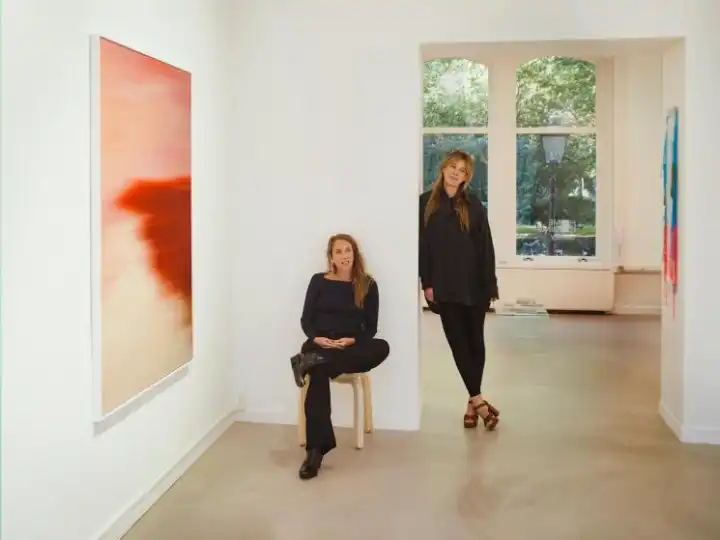
Meta’s news ban in Canada is disrupting the country’s media outlets
Culture 2026-01-06 11:06:18

Meta’s news ban in Canada is disrupting the country’s media outlets

Earlier this year I joined the judging panel of a journalism prize to assess submissions from across Canada. It was a particularly interesting time to review the country’s news output, not only because of the sheer range of stories covered – from record-breaking wildfires to the end of a prime-ministerial marriage and the run-up to a general election – but because of the additional hurdle that its newsrooms have faced in publishing their work online.This August will mark a year since California-based technology conglomerate Meta, which owns Facebook and Instagram, began blocking access to news stories on those platforms in Canada. The move was in response to the Online News Act, which Justin Trudeau’s government passed last June with the intention of compelling Big Tech companies to pay for the journalism that is shared on their platforms. At time of writing, it’s a stalemate: neither Ottawa nor Meta seem willing to relent.“The ban has created an internet news blind spot for Canadians,” says Brett Caraway, a professor of media economics at the University of Toronto. “Many of the smaller news publishers in this country were heavily reliant on Facebook and Instagram to drive traffic to their websites, which allowed them to generate both subscription and advertising revenues.” That model – for now, at least – is no longer an option.However, while some outlets continue to suffer, particularly smaller ones, several independent newsrooms have worked around the ban in nimble and imaginative ways. It has energised publishers to engage more meaningfully with their readers – through live talks and events, additional or special editions of their publications and thoughtful editorial campaigns – rather than simply viewing them as points in a social-media dataset. Audiences have noted and rewarded the effort.As wildfires approached the city of Yellowknife in the Northwest Territories last August, its 20,300 residents were ordered to evacuate. In the absence of reliable local information on Meta’s platforms, independent outlets filled the gap. Founded by five journalists in 2017, Cabin Radio, which is funded by advertisers in the city, decided to broadcast wildfire updates 24 hours a day. Eight months later, it was receiving 700,000 visits to its website every month in a province with a population of 44,000. Plans for an additional FM service, intended to reach more remote audiences, are now in motion.Other outlets, such asThe West End Phoenix, a monthly paper based in Toronto, and The Tyee, a website launched 20 years ago that covers the Pacific province of British Columbia, have experienced growth in their readerships too. “Visits to our website have recovered since the ban,” says Jeanette Aegeson, The Tyee’s publisher. “We have long thought that owning our channels of engagement is the best strategy and this experience has just strengthened that conviction.”The direct revenue that The Tyee has generated, she says, has allowed it to add journalists to its team and broaden the scope of its coverage. “Social-media platforms can be useful when it comes to reaching new readers. But we should be trying to establish more direct connections with our audiences, on channels that can’t get ripped out from under us. It’s never a good thing when a trillion- dollar US corporation invites another country’s news media to weave itself into its social-media platforms and then dumps them.”It will take time to assess the full effect of Meta’s Canadian news ban. But it is clear that the standoff cannot continue indefinitely, particularly in an already-delicate media environment. If a resolution to the dispute feels elusive, the story of how some independent newsrooms have not only survived but thrived is an instructive one.Lewis is Monocle’s Toronto correspondent.
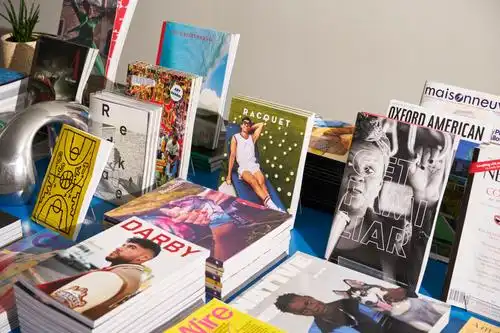
The new Ginza Sony Park is as radical as its 1966 predecessor
Design 2025-12-25 05:41:37

The new Ginza Sony Park is as radical as its 1966 predecessor

To witness a prime example of how corporate giants can meaningfully insert themselves into the life of a city without plastering their branding all over the place, make your way to Tokyo’s Ginza district. If you’ve visited at any time over the past eight years, you might have observed the transformation of one of its most prominent corners, Sukiyabashi Crossing, once the most expensive piece of real estate in the city. First came the demolition in 2017 of the Sony Building, a towering slice of futurism that originally had 2,300 cathode-ray tubes on its façade. Built in 1966 by architect Yoshinobu Ashihara, the then state-of-the-art structure defined the vision of its creator, Sony co-founder Akio Morita, and announced the ambition of one of Japan’s greatest brands.Take a strollOnce the old building had gone, Sony turned the blank space into a temporary site for events and pop-ups, as well as somewhere to take a breather. With its lush plants, it was an arresting sight that drew eight and a half million people over three years. Now a new landmark has emerged: Ginza Sony Park, an intriguing hunk of raw concrete open to the street and the elements.Sony Enterprise president Daisuke NaganoOpen to the streets“The previous Sony Building was a showcase for electronics,” says Sony Enterprise president Daisuke Nagano, who has overseen the process. “But our business is now more diversified – music, movies, games, electronics. The challenge was to create something that matched where we are now.” In recent years the streets of Ginza have become a forest of high-rise towers designed for global luxury brands by the world’s finest architects. Ginza Sony Park is different: about half the height of its neighbours and with almost no branding. Nagano didn’t have to worry about the usual commercial pressures – there are no tenants – and the design was a team effort rather than the work of one famous architect. “People remember the Walkman, not who designed it,” he says. “That’s very Sony.”The structure is not a conventional showroom and has no offices. It’s a free public space that will be a platform for exhibitions, music and ideas. “The building is not meant to be a big showpiece,” says Nagano. “It’s more like a smartphone, which depends on the apps that are added.” The team also thought hard about the meaning of a park. “We felt that it should be considered basic infrastructure, like a bridge or a highway, and we wanted the materials – raw concrete and steel – to reflect that.” The building is open to the street above ground and connects to the subway and underground car park below below. Fragments of the Sony Building have been retained in the underground entrance as a reminder of the site’s past life.Car park kioskGinza Sony Park gives back to the Tokyo public the tradition of wandering around the Ginza district and echoes the staggered-petal design of the old Sony Building as it spirals down, allowing visitors a vertical stroll from top to bottom. It isn’t sealed off from the world: the central stairwell is uncovered, so when it rains, you can feel it. It also enjoys theshakkei(borrowed scenery) of Renzo Piano’s remarkable glass-brick building for Hermès next door and has an open rooftop with a bird’s-eye view of the district.Construction was completed last summer and the pre-opening phase featuredArt in the Park, an exhibition of new works by three Japanese artists. Nagano sees potential for the building to be used for social messaging too – the chunky exterior metal grid has already exhibited giant images of endangered animals. Following the grand opening on 26 January, the first event is the Sony Park Exhibition 2025, designed to show six core Sony themes via interactive installations that reference everything from music and gaming to cinema.Art for allJapanese corporations have a long history of cultural engagement but these endeavours are increasingly under pressure from bossy shareholders who seem to know the price of everything and the value of nothing. Where, they ask, is the return on an art museum? Ginza Sony Park shows that there doesn’t have to be a quantifiable financial return but, as an exercise in showing Sony as an innovative creative force, it works on its own terms.In its own way, Ginza Sony Park is as radical as its 1966 predecessor and sets out the company’s mission in the 21st century to be collaborative and open to ideas. Nagano hopes that it will inspire Sony’s creatives too. — Lsonypark.com

The science behind Japan’s perfectly crafted vending machine drinks
Design 2025-12-30 10:22:51

The science behind Japan’s perfectly crafted vending machine drinks

From the top of Mount Fuji to the gates of the holiest shrines, it isn’t much of an exaggeration to say that vending machines are everywhere in Japan: at the last count, there were 2.64 million of them. They light up every street corner and station platform; there’s hardly an office or a public building without one standing sentry. Most service the country’s voracious thirst for beverages, particularly ready-to-drink coffee and tea. A vast industry has been built around the idea of developing hot and cold drinks that can be housed in a can or plastic bottle, dispensed from a machine and still satisfy the precise palate of the Japanese consumer.Creating drinkable tea in a plastic bottle took years of research and development (Kirin won that race in 1986 with itsGogo no Kocha, or “Afternoon Tea”). When Suntory bought French drinks brand Orangina, its bulbous glass bottle was redesigned in plastic for its new life in a vending machine.Seemingly unloved in other countries, these machines are as seasonal as traditional food menus in Japan and often switch from dispensing cold drinks to hot in the cooler months. There are regional variations too. A vending machine in Okinawa will offer chilled bottles ofshikuwasacitrus squash and pineapple-flavoured Bireley’s that you won’t find in Tokyo.Japanese consumers crave novelty – a quick glance at one of these machines will reveal what is popular, whether that’s fat-busting health drinks or cold green teas that almost rival a fresh brew. Unsurprisingly, vending machines have also moved far beyond just drinks: ice cream (Seventeen Ice is the classic in that genre), frozen food, bags of rice, hangover cures and clean underwear are just some of the array of products on offer. Of course, it helps that the machines aren’t troubled by vandals in low-crime Japan.Innovation in the technology has been slow but steady. The energy-saving period (setsuden) that followed the tsunami and nuclear meltdown in Fukushima in 2011 pushed developers to create more sustainable versions. Asahi Beverages recently developed a machine that absorbs carbon dioxide and artificial intelligence is having its own impact – one coffee machine now determines which beans to use based, apparently, on the customer’s preferences.Crucially, vending machines also double as mini-billboards for brands and are likely to be festooned with the latest campaigns. Tea company Ito En has hired the services of baseball player Shohei Ohtani, Japan’s biggest sports star, to bolster its market-leading bottled green tea, Oi Ocha. Perhaps peak vending machine has been reached in Akihabara, Tokyo’s electronics and anime district, where you will find a machine that sells cans of air for ¥500 (€3). Rarefied air, indeed.

How heritage brand Tolix’s revival reflects the boom in traditional luxury design
Design 2025-12-28 19:12:48

How heritage brand Tolix’s revival reflects the boom in traditional luxury design

There’s something afoot in the peaceful Burgundian town of Autun. Among the vineyards and the vestiges of Roman temples, design brand Tolix has been undergoing what could be described as a fashion makeover since Antoine Bejui and Emmanuel Diemoz took over the company in October 2022. After meeting at Parisian couture house Balmain, where they held executive roles and helped to save the firm from bankruptcy, Bejui and Diemoz worked at fashion brands Anya Hindmarch and Carven, respectively. But when the opportunity to turn around a French heritage brand arrived, the pair sensed that it was time for an industry sidestep. Now, nearly two years since they bought the company, they have helped Tolix to get its groove back.Silhouette of a stoolRaw steel reissue of the 1958 UD chairFounded in 1927, Tolix produces sturdy steel chairs and stools that you’ll spot in many parks, terraces and cafés across France. Despite this, it has long flown under the radar. The arrival of cheap made-in-China imitations in the 2010s resulted in a challenging time for the company. “Tolix occupies a space in the French collective consciousness without many of us realising it,” Bejui tells monocle at the company’s industrial headquarters in Autun. “The brand was losing esteem. It’s like we’ve taken over a vineyard that hasn’t been tended to for a couple of decades but no real damage has happened. It just needs some attention and care to bear fruit again.”Bejui and Diemoz’s priority after purchasing Tolix was to streamline its catalogue. Initially, only a small selection of its most emblematic pieces were produced, including the t37 chair, which the brand’s founder, Xavier Pauchard, designed in 1937, and the UD chair by his son Jean, originally made for the University of Dijon in 1958. From there, new designs have gradually been introduced in a more cohesive manner. “While we wanted to establish some house codes, we didn’t want to get stuck on the same three chairs,” says Bejui. “So Tolix asked French designer Pauline Deltour to add pieces such as a high-chair and a bench to her outdoor patio collection [which launched in 2020].” With the brand’s offerings tightly controlled, the materials and colours were also reworked and a more restrained palette introduced. Finally, the duo’s background in fashion came into play as the logo, image and branding were given a contemporary refresh.Bench from the Patio collection by Pauline DeltourMaxime de AlmeidaTolix’s new ownership reflects a wider trend that has been gaining momentum in recent years: fashion crowds have serious designs on… well, design. Luxury brands including Prada, Bottega Veneta and Hermès are now regular fixtures at Milan Design Week. New Parisian design salon Matter&Shape made waves in March when it launched during the French capital’s fashion week. Finnish heritage brand Iittala’s new creative director, Janni Vepsäläinen, made the switch to design from UK label JW Anderson. France, where the luxury industry employs more than a million people, presents itself as fertile ground for this type of aesthetically minded cross-pollination, helped by a general appreciation for and investment in smaller-scale manufacturing.When Bejui and Diemoz took over Tolix, they inherited a factory staffed with talented craftspeople who specialise in the production of its metal pieces. Autun and the surrounding Sâone-et-Loire region were once bastions of the French metalworking industry and many of the tools used to make Tolix’s designs date back to the mid-20th century. As we make our way across the factory floor, sheets of steel are being cut, moulded, hand-hammered and checked. One chair is being customised with an engraving as a wedding gift for an employee. “We keep our production as artisanal as possible,” says Maxime de Almeida, who is responsible for development at Tolix. “By continuing to use the techniques that have been inherited from our ancestors, we’re keeping our savoir-faire alive. Today we employ 30 people who can produce as many as 300 products per day.”Boxed up and ready to goWelding expertiseTolix has been designated by the French state as a Living Heritage Company – a prestigious label that comes with the responsibility to transmit know-how to young apprentices. On the factory tour, a stop is made so we can watch a new addition to the team, Samuel, weld a chair with a thin brass brazing rod. The choice of brass rather than copper or aluminium is a Tolix signature. It also helps to distinguish the genuine article from imitations, as the welding process leaves behind gold-coloured marks.Once the pieces are cut, moulded, assembled and welded, they are cleaned and galvanised or powder-coated. The hazmat-suit-clad team responsible for this process carefully examines every newly coated piece as it’s hung upside-down from a revolving conveyor belt. If a paint coat isn’t quite up to scratch, it will be sanded down for another round. In the stock room, colour labels point to a restrained palette going form jet black to brown green and oyster white. For those who are more partial to the industrial look of metal, a simple coat of varnish is also an option.Luckily for Bejui and Diemoz, metal furniture has been enjoying a renaissance, with aluminium and steel designs taking over bars and restaurants in cities such as Paris and Sydney. This year, as part of their plan to broaden Tolix’s international appeal, the company has been cropping up at design fairs including Matter&Shape and Milan Design Week (at the latter, in Finnish firm Marimekko’s temporary café Bar Unikko). A new flagship on Paris’s Boulevard Saint-Germain is helping Tolix to establish itself as a premium brand. As for global retail, the company works with select shops and stockists to reach a demographic that has an appreciation for French manufacturing and industrial history.“We’re here to save a piece of national heritage and make sense of it,” says Bejui. The entrepreneurial duo now split their time between Paris and Burgundy to be close to the manufacturing team. “It’s a source of pride for Frenchmen that we have these extraordinary companies such as Tolix. I feel a civic duty to tell people about the marvels that take place here.” — Ltolix.comTolix timeline:1917Xavier Pauchard sets up a factory making steel household items.1927Pauchard trademarks Tolix.1937The Pauchard-designed T37 chair is launched.1958The UD chair is released.2000Emmanuel Diemoz joins fashion firm Balmain.2011Antoine Bejui joins Balmain as CFO.2012Diemoz becomes Balmain’s CEO.2017The pair leave Balmain, after growing annual revenue to more than €120m.2020Tolix releases the Patio collection by Pauline Deltour.2022Bejui and Diemoz buy Tolix.

How 1940s-era bungalows of the Mar Vista Tract are nurturing the community
Design 2026-01-16 15:48:00

How 1940s-era bungalows of the Mar Vista Tract are nurturing the community

When Gillian Tennant and Steven Summers started house hunting in Los Angeles for their family of four, they had the goal of any reasonable Aussie transplants: a modern home not too far from the beach. They happened to be driving past a stretch of low bungalows on Beethoven Street, just off Venice Boulevard, when they were stopped in their tracks. The houses would probably have passed unnoticed had it not been for the gathering that was taking place out front. “In someone’s yard, there was a live band playing, with people sitting on the lawn listening,” says Tennant. “That’s something you don’t see anywhere. We said to each other that this is where we want to live.”This scene of 1950s-era neighbourhood bonhomie that Tennant and Summers had stumbled on is typical for the Mar Vista Tract. A grouping of 52 houses that runs three streets deep (Beethoven, Moore and Meier Street, from west to east), this modernist enclave is easily missed when driving through the flat suburbia that sprawls out east of Venice Beach. The main decoration on the small, colourful bungalows are slim, V-shaped trusses that hold up awnings over garage doors and entrance walkways. But when Tennant and Summers fixed their mind on living in one, they had to get in line. Mar Vista Tract residents hardly ever leave; when a house does go up for sale, bids can exceed $2m (€1.8m).In Southern California’s modernist architectural heritage, which mostly consists of the ritzy and secluded single-family villa, the Mar Vista Tract is a misfit. So was its architect, Gregory Ain, the child of a socialist Polish émigré who grew up partly on a commune. Ain viewed architecture as a “social art” that should address the “common architectural problems of common people”. After working in the drafting room of Austrian master Richard Neutra, he opened his own office in the late 1930s. By the mid-1940s, together with associates Joseph Johnson and Alfred Day, he started planning the Mar Vista houses.Ain himself referred to his masterplan as a tract – a term connoted with a kind of repetitive, characterless suburbia. In Ain’s design, the houses have the same basic layout and average just 98 sq m but every millimetre was carefully considered. The architect developed a plan that maximises space and flexibility using sliding doors and an open kitchen. By flipping and rotating this floorplan, and varying the position of the garage, he made every home slightly unique. Just as much thought was given to the surrounding green spaces. Ain’s frequent collaborator, Harvard-educated landscape architect Garrett Eckbo, drew up fenceless, communal gardens planted with species from six continents. Each parallel street had its own plant-lined walkway: ficus for Beethoven, melaleuca for Moore and magnolia for Meier. Backyards were dotted with loquat, mulberry, plum and guava trees to encourage fruit trading and socialising between neighbours.The houses were completed in 1948 and christened the Modernique Homes (“Modern in design, unique in liveability!”). While keeping mum about Ain’s socialist leanings, the advertising material emphasised his innovative design solutions. “Check these features against homes twice the cost” it urged, followed by a 10-point list ticking off all that Ain had squeezed in, including folding and sliding doors that made space for one, two or three bedrooms, floor-to-ceiling windows and a dining table between the kitchen and living room that doubled as a buffet or a bar.The design was progressive for the 1940s but prospective buyers, alas, did not take in Ain’s nuanced vision. Though the houses started at a reasonable $12,400 (just over $160,000 in today’s money), they were in a blue-collar area where homes sold for a third of that sum. The neighbouring property was a shooting range. The mainstream reaction to the development is captured in the 1949 film noirTension, where a newlywed couple arrive in Mar Vista and the husband proudly presents the home he has picked out for them. Behind Ain’s unadorned design, barren fields stretch into the distance. “It’s 30 minutes from nowhere,” says the wife, sliding into the driver’s seat and taking off.Though the Mar Vista Tract was a commercial failure, it attracted residents who saw the value of Ain’s design, many of them architects and designers. Early occupants included the founders of Architectural Pottery, the company that pioneered modernist ceramics in the US. The tract has also had an LA-appropriate share of intrigue (including one murder mystery) and makes several unexpected cameos in the city’s cultural history (empty pools in the tract informed early designs of skateparks).When Amanda Seward and Hans Adamson moved in on Moore Street in 1994, they had never heard of Gregory Ain. “This was the only house that we could both agree on,” says Seward. The couple only had a lay interest in architecture: Seward, who grew up in Santa Monica, is a lawyer, while Swedish-born Adamson produces music software. But when they began work on the fixer-upper, which needed a new roof, they started digging into the neighbourhood’s history. The previous owner had left behind the tract’s original blueprints. “He had been an enthusiast of these buildings and I inherited that with the house,” says Adamson, who started researching the original planting schemes and colour palettes of the homes. “It took years of detective work.”By that time, in the late 1990s, Mar Vista was becoming a desirable place to live in LA, and the first McMansions had started popping up in the area. Eventually somebody submitted a planning application for adding a second floor to their Ain house but the neighbours did not acquiesce.Angela Caputo, Ken Kook&Maya Cook“We moved from Chicago to Los Angeles and happened to cycle by here and saw a ‘for sale’ sign out front – we put a bid in and got it,” says Angela Caputo, who has lived on Moore Street since 2020. “This is a very welcoming neighbourhood. People are so warm here. It would be tough if that atmosphere were lost. Hopefully, many of the neighbours’ children will stay. We hope that our daughter will one day have this place.”Ken Kook and Angela Caputo with their daughter, Maya CookThe family’s expanded living roomGillian Tennant&Steven Summers“We have been surprised by how safe this neighbourhood is, especially for this part of Los Angeles,” says Gillian Tennant, who has lived on Meier Street with her partner, Steven Summers, and their young family since 2023. “We thought we couldn’t let the children out the front door but there are kids running up and down the street. They love it here. The only odd thing is how many people take photos of the house while driving by.”Secluded back yardGillian Tennant and Steven SummersChildren’s roomKitchen table with Paul McCobb chairsTakashi Yanai“I made an offer on a house here 20 years ago and didn’t get it but I always thought that someday I would live in one of these houses,” says Takashi Yanai, whose vision became a reality when he bought a house on Meier Street in 2023. “I want to make it possible for more people to experience this architecture. I have hosted dance performances and art exhibitions; next up is a karate performer. I am thinking about starting an informal artist residency.”Architect Takashi YanaiOpen dining roomHiroshi Sugimoto photo and Eames wooden splintYanai has been editing the home down to its original featuresIsamu Noguchi lampRuth Handel&Lloyd Scott“Living in these houses makes you appreciate time in a different way,” says Ruth Handel, who has lived on Moore Street since 1999. “I’m working on a book about life in the tract and have been gathering stories and photos from previous residents. In one stack of photos I received, the first photo was of someone sitting in exactly the same spot I was in. It was a strange moment. You realise that you’re just passing through.”Ruth Handel and Lloyd ScottOriginal Ain kitchen tableMaster bedroom, a later expansionCastiglioni’s Arco lamp and Saarinen’s Tulip and Womb chairs in the living roomBonnie Jones&Anni Michaelsen“We moved in 54 years ago, six months apart,” says Bonnie Jones, who has lived on Meier Street since 1970, with Anni Michaelsen across the street. “We both had children and became friends. In most houses at the time, the kitchen was in the back and you looked out through a tiny window. Here everything is open. We have never wanted to change our homes. The architect knew what he was doing.”Longtime neighbours Anni Michaelsen and Bonnie JonesEntrance to Bonnie’s kitchenOriginal floor-to-ceiling windowsDining table is from Michaelsen’s Danish furniture shopHans Adamson&Amanda Seward“While we were waiting for our bank to finalise the sale, the Los Angeles earthquake hit,” says Hans Adamson, who bought a place on Moore Street, with Amanda Seward, in 1994. “Buildings collapsed everywhere and we came over here to see if our home was still standing. But there was no damage anywhere in the tract. The construction is so light. We often get estate agents knocking on our door but we will never sell.”Hans Adamson&Amanda Seward with Seward’s 1994 Alfa RomeoLiving room with original fireplaceThis room can be closed off with a folding doorA grassroots movement of residents including Seward and Adamson began pushing to make the Mar Vista Tract a Historic Preservation Overlay Zone, or HPOZ, which blocks outward changes to a historically significant district. The move was unprecedented – no other postwar modernist buildings were protected by the programme. In 2003, after years of campaigning, 50 of 52 homeowners voted in favour.“These houses are small and people think that they need to live in a palace,” says Anni Michaelsen, a resident since 1970 who went door-to-door cajoling signatures in favour of the HPOZ. Danish-born Michaelsen opened her impeccably furnished home for campaign meetings and cocktail receptions. “I wanted to show what people wanted to tear up,” she said. “If we hadn’t done that, these houses would have disappeared.” Now any changes to the street-facing façades are off limits and most renovation work must pass approval of a five-person board made up of residents and at least one architect.Mar Vista turned out to be the last large-scale housing project completed by Ain. The architect was hounded by the FBI as a suspected communist, and commissions dried up. It is a fortunate twist that the community spirit that Ain set out to create in Mar Vista is also what enabled this nook of LA to be preserved. “This architecture has a simplicity, openness and democracy to it,” says Seward. “Those are things that I am still attracted to.”When Tennant and Summers first placed an offer for an Ain house, they were outbid; likewise with a second, a few years later. “We almost gave up,” says Tennant. But last year a house came up for sale on Meier Street and the third time proved the charm. The sunset-facing home was one of the best-kept in the neighbourhood, with welcome extra living space thanks to a tasteful 1960s expansion. The couple have created an LA-meets-Sydney idyll in warm wood and earthy tones, with pieces by mid-century designers Paul McCobb and Bror Boije.Having settled into life in Mar Vista, the family’s first impression has held up. The tract’s residents all correspond on a reply-all email chain, where there are frequent invitations to barbecues and events. “We don’t have family here, so we really appreciate that,” says Tennant. “If anything happens, you’ll be looked after.” The Australians also feel at home thanks to the amount of wildlife that resides in Eckbo’s 75-year-old scheme. Coyotes, raccoons and squirrels all pass by the front porch, while a stately redwood in their yard hosts a family of hawks.Across the street from Tennant and Summers is the house of Takashi Yanai, a Japanese-born architect who uses the home as a studio, salon and event space. This summer he invited an LA-based dance company to stage a show around the homes. Suddenly, his new neighbours found themselves at the centre of precisely the kind of event that had first drawn them here. “The performers moved down the street and then stopped in our front yard,” says Summers. “The whole neighbourhood came.”

The architectural diplomacy of Swiss embassies in Singapore, Cuba and the UK
Design 2026-01-10 11:47:39

The architectural diplomacy of Swiss embassies in Singapore, Cuba and the UK

Embassies are more than just outposts in foreign lands. They serve as diplomatic hubs and cultural centres, playing a role that extends beyond waving flags and displaying national emblems. We visit three Swiss embassies to see how the confederation’s ambassadorial outposts are not only functional buildings but architectural ambassadors, projecting values and fostering understanding between nations.1.Raising the standardSingaporeThe newly renovated Swiss Embassy in Singapore is striking yet unassuming. Its entrance is a low-slung white gate flanked by pale concrete walls separating it from a quiet, tree-fringed road. An unobservant passer-by could mistake the structure for an art gallery or the home of a contemporary architect.From the street, a gently sloping path leads to a bright white, single-storey building wrapped in floor-to-ceiling windows with one side of its roof jutting tent-like over the front doors, a corner stretching towards the sky. The impact is simple but dramatic. From outside, the effect is akin to that of a welcome mat. Heading up the drive, the visitor feels that they are being invited in. Inside, the result is abundant natural light – a perk for the embassy’s staff.Switzerland’s embassy in Singapore“The idea was to have a bungalow in nature and that means we needed to open the building up as much as possible,” says Jaime Rodriguez, who oversaw the construction as part of the team from Berrel Kräutler Architekten, the Swiss firm that carried out the project. As is standard practice for all public building projects in Switzerland, the job went to the winner of an open competition, which was held in 2019. Berrel Kräutler Architekten’s vision for the embassy beat 53 others and the architects got to work. The Swiss Embassy had occupied the same building in Singapore’s Bukit Timah district for 35 years when the time came for an update. Decades of fierce equatorial sun and storms had weathered the building but its foundations were sound. Rather than tear it down and start again, the embassy opted for an environmentally friendly renovation. “We kept 90 per cent of the old concrete structure,” says Rodriguez. “It’s important not only to be sustainable with materials, but to keep as much as possible. That’s what we did for this embassy.”Swiss and Singaporean flagsOffice spaceThe total office space was expanded to accommodate 35 people, from a previous maximum of about 10. Solar panels were added to the new roof, helping the embassy to generate a substantial part of its energy in-house and powering the new EV charging stations in the garage. The renovation was completed at the end of 2023. “I am proud that we did a lot to reduce our energy consumption,” says ambassador Frank Grütter. Stepping into the building, visitors find themselves in the light-filled public area for consular services; staff sit behind glass-fronted booths, and a secure door leads to the main office, which is laid out in an open-plan format and ringed around a courtyard where plants sprout abundantly.The ambassador occupies a corner office with glass walls; he says his favourite part of the renovation is its transparent design. “The open glass walls are a sign of the Swiss government’s willingness to be transparent and close to its citizens,” says Grütter. This is echoed by Sarah Theus-Clausen, a consular officer and interior designer. “We’re approachable as an embassy and that’s something that people enjoy,” she says. Open-plan nookStaff pantryThe building embodies a blend of values from Switzerland and Singapore. One challenge for the architects was how to fuse an authentically Swiss aesthetic with Singaporean architectural traditions and the local environment. They achieved it with a minimalist spin on the colonial black-and-white houses of Singapore and a careful integration of the surrounding tropical flora. Swissness is evoked in the clean lines and modernist furniture – and subtle nods to patriotism, such as the coat of arms in light relief on the walls outside. The white walls do well in the year-round sunshine and the architects constructed the windows with three layers of insulated glass and UV filters to ensure that the ambassador and his colleagues can enjoy the rays without suffering from their heat. “Being able to work in this environment every day really gives me pleasure,” says Theus-Clausen.2.Home from homeHavana, CubaSwitzerland’s ambassadors to Cuba have occupied a revered piece of modernist architecture – by late Austrian-American designer Richard Neutra – for almost 70 years. Built in 1956 in Havana’s leafy Cubanacan neighbourhood, the house was commissioned as a family home by Swiss banker Alfred de Schulthess. Ater the onset of Cuba’s socialist revolution three years later, it was sold to the Swiss government, which has accommodated its representatives there since 1961. “People love this house,” Switzerland’s current ambassador to Cuba, Stefano Vescovi, tells Monocle. Here, he explains the value of high design in a diplomatic setting and tells us about the restoration of the embassy’s gardens by Brazilian landscape architect Roberto Burle Marx. Gardens by Roberto Burle MarxWhat role does your official residence play in Switzerland’s diplomatic presence in Cuba?There is a convening power to this house; everybody is welcome. It’s helpful to be able to meet colleagues and people from different countries, who might have different perspectives on the world, in a setting like this. While we do it in different ways, both Switzerland and Cuba have a power to convene diplomatically. There are about 120 foreign bilateral embassies here – more than almost any North American city, second only to Washington (and Brasília in the Americas). Additionally, very important people have met in this house. As ambassadors and diplomats, it is critical to have conversations that are quieter, in a venue that feels relaxed. It’s important to have a place where you can look somebody in the eye and discuss and listen, and not just engage in diplomacy that is public. How is the house designed to host this broad range of conversation?The southern façade has wood panelling along the exterior of the first floor and was designed to offer privacy. It depends on the politics, of course, but generally speaking we like to think of Swiss embassies as open houses with Chatham House Rules. Reception areaStefano Vescovi, Switzerland’s ambassador to CubaHow valuable is the residence as a showcase of Swiss design?The design is really thought-through. It is very functional and there is wood throughout the house because the De Schulthess family wanted it to feel like their home in Switzerland. In 2000 the Swiss Confederation changed the furnishing concept, in keeping with the broader tradition of classical modernism. Today it is finished with pieces by Mies van der Rohe, Eero Saarinen, Le Corbusier, and pieces of art from the Swiss government’s collection, as well as rotating, smaller exhibits of art by Cuban creatives.What relationship do the house and garden have to each other?This was the only project that Neutra and Burle Marx worked on together in the Caribbean. To have these big names in one setting is extraordinary. It’s also the only surviving garden that Burle Marx ever made in the Caribbean. The result is that you have this visual contract between the rectangular house and the first part of the garden, which is thought-out in a rational way – like a Mondrian flower garden, where everything is very angular, complementing the swimming pool area where we host official events. There are 70 varieties of plants from across Cuba here, which bloom and flower at different times of the year. So it feels natural.Living roomDo you think the two designers mettheir ambition with this project?The combination they had in mind was a synthesis of two concepts. And it works nicely. There are fruit trees and a vegetable garden where we grow the ingredients that we use for the official receptions that we host. When our Cuban colleagues who come to enjoy the garden are here, I sometimes joke that “around this table, we might not all be Marxists but we are all Burle Marxists”. That seems to go down very well.3.Mission to moderniseLondonAlun Jones and Biba Dow of Dow Jones Architects are leading the renovation of the Swiss Embassy in London. Together with Bern-based Studio DIA, they have been tasked with bringing the building into the 21st century. The current embassy, which juxtaposes a heritage-listed Georgian-style mansion façade with a modernist annexe, was completed by Swiss architect Jacques Schader in 1971. What are the key changes of the renovation?Alun Jones:Currently the middle of the plot is occupied by the visa centre but the embassy no longer needs such a large space for this. The idea is to make this space an external courtyard so that we can drop natural light and ventilation into the building’s heart.Biba Dow:The embassy’s representational spaces, visa hall, offices and the residence all have different entrances. We’re bringing a certain democracy to the building by renovating these entrances with a similar level of clarity and detail.Can designing for diplomacy be a challenge?BD:Any Swiss embassy project is the expression of the relationship between Switzerland and the host country. This needs to be embodied in everything, from sourcing the materials to the construction and furnishing of the space.How does this project in London represent contemporary Swiss values?AJ:The Swiss government included specific decarbonisation requirements in the brief. That’s unusual, as a lot of our UK clients will want to reduce their carbon but have no precise implementations.dowjonesarchitects.com

How Canadian art patron Bruce Bailey is uplifting next-generation talents
Culture 2025-12-23 15:49:12

How Canadian art patron Bruce Bailey is uplifting next-generation talents

Bruce Bailey cuts a striking figure in front of the Chiesa di San Samuele on the opening day of his new exhibition,Beati pacifici: The Disasters of War and the Hope for International Peace,which runs at the same time as this year’s Venice Biennale. Wearing a red suit and vintage Saint Laurent silver loafers, the Toronto-based collector and philanthropist is unafraid to stand out. Though his attire is conspicuous, Bailey has been quietly working to support the Canadian cultural scene and revive the lost practice of the art salon over the past few decades. The 200 works inside the church are from Bailey’s personal collection, which is usually housed in Ontario, and are illustrative of his wide-ranging taste. The exhibition’s focus on war art was not only intended to document the dark side of human nature. “I want to show that we must take the responsibility to stand up to evil and oppression,” says Bailey. The curation begins with a series of chilling 17th-century etchings by Jacques Callot based on the Thirty Years’ War. “There weren’t any war correspondents in those days,” he adds. “Callot went to the source to depict brutality. He also wrote text below his works, so they’re almost like early versions of comic books.”From here, Bailey’s selection travels forward in time, passing by some of the greatest envoys armed with paint and a brush, including Francisco Goya and Otto Dix. Visitors are then brought up to the present with Peter Doig’s depiction of Toronto’s famous Rainbow Tunnel and a work by Tyler Bright Hilton, a Canadian artist who Bailey has been supporting. Art didn’t feature in Bailey’s upbringing. His life changed when he went on a school trip to Europe as a teenager. “I was transfixed when I saw Théodore Géricault’s ‘The Raft of the Medusa’ at the Louvre,” says Bailey. “I didn’t see any other artwork that day.” It was not until he was studying to become a lawyer at university that a small scholarship enabled him to make his first foray into collecting. “I bought three prints by Eric Fischl, Michael Snow and Christopher Pratt for a total of CA$5,000,” he says. “I framed them and put them in my student house. I felt terribly sophisticated.” During his subsequent careers as a lawyer and an investment banker, Bailey was able to add to his collection. It now includes everything from sculpture and film to photography and painting. Ever since his first purchase, however, he has maintained a particular fondness for prints and their collectors. “I find that print buyers are more passionate than other people at art fairs, who are often only there in order to buy trophy pieces by established names.”Bailey believes that it is important for all budding collectors to look at as much art as possible. “I poke my head into contemporary art galleries no matter where I am in the world,” he says. “For me, the process is not to listen with my ears but to look with my eyes and my heart.” He tries to make decisions about a piece before learning about the artist. By acting on this impulse and buying from artists’ first shows, Bailey was able to become an early collector of work by Thomas Demand, Kiki Smith and Marlene Dumas. “It wasn’t that I was smarter than anyone else,” he says. “I could only afford to buy from artists before they became more well-known and, thankfully, I was able to do this before the game changed.” Bailey laments the recent rise in intermediaries who create a distance between the buyer and an artwork. These frustrations led Bailey to invest more time into his philanthropic endeavours, including the financial support of the Montréal Museum of Fine Arts and creation of his own arts incubator. The programme champions lesser-known Canadian artists by giving them their first show and pushing them to receive commercial gallery representation. Bailey credits this work with helping to launch the career of Canadian First Nations painter and performance artist Kent Monkman.Bailey also believes in the power of art to forge connections and aid dialogue between nations. In 2011, the National Gallery of Canada became the official commissioner of the country’s pavilion in Venice. “This shows that the state uses art and music as forms of diplomacy,” he says. While his collection might have started as a group of artworks that captured his imagination, it has evolved to become a gathering point for the community. His art-salon summer garden parties, orfêtes champêtres, aim to build bridges between English- and French-speaking parts of Canada through a shared experience of culture and nature. “It’s a neutral ground where people can enter into conversation and discuss their personal history,” he says. These interactions help assuage Bailey’s worries about his legacy and the as-yet-unknown future destination of his art. He is reassured by how the collection has brought people together in Canada – and elsewhere in the world. “We all want to seek meaning in our lives,” he says. “Being a collector is not only a question of accumulating art but also how you can then use it to create a better society.” In a similar vein, Bailey believes that you can give people who you pass on the street a “visual treat” by way of a thoughtful or surprising outfit. With his opening dinner at the Venice Biennale approaching, Bailey gets up to return to his hotel. He has, of course, a dramatic costume change to make.‘Beati pacifici: The Disasters ofWar and the Hope for International Peace’ runs at Chiesa di San Samuele in Venice until 29 September.

The Agenda: How the Olympics could jeopardise the French capital’s ‘bouquinistes’
Fashion 2026-01-15 01:35:38

The Agenda: How the Olympics could jeopardise the French capital’s ‘bouquinistes’

Retail: ParisFinal pagesJulia Webster Ayusoon the Olympian threat looming over the iconic booksellers on the banks of the Seine.“There’s the Louvre, the Passerelle des Arts, the Vert-Galant garden.” Jérôme Callais is pointing to the different monuments he can see from his workplace, a book stall on Paris’s Quai de Conti. “When I finish in the evening, I walk across the Pont Neuf and watch the sunset.” For the past 400 years, booksellers such as Callais have lined the banks of the Seine. They are as intrinsic to Paris as the Eiffel Tower or Notre-Dame but in recent years their existence has come under threat. First there were thegilet jaunesprotests and transport strikes disrupting their trade, then came the coronavirus lockdowns that forced them to close. Now they face an existential challenge: citing security concerns, city hall announced in July that the booksellers’ iconic green boxes must be removed in time for the opening ceremony of the 2024 Olympic Games, which will take place on the river. Thebouquinisteshave never left their spot and are worried that they won’t survive the move.“The authorities are supposed to promote the city and its monuments, and now they want to make one of the biggest symbols of Paris disappear,” says Callais, who is the president of the Cultural Association of Booksellers of Paris. “It makes no sense.” He explains that most of the wooden boxes were set up 50 years ago or more and risk falling apart if moved. The authorities have said that they will pay for the temporary relocation of 50 per cent of the booksellers to a “literary village” in Bastille and offered to replace any damaged boxes. But thebouquinistesdon’t think that this is viable and it’s unclear when they will be allowed back – if at all. Callais, who makes no more than a few dozen euros a day from sales, says that depriving thebouquinistesof their place by the Seine could deal a final blow to those who are already struggling. “Nobody does this for the money,” he says. “I would make much more if I stayed at home and sold my books online. But this is a different ethos: you meet people, you share things, you watch the world go by. Sitting in front of a computer, that’s not life for me.” When Monocle visits on a sunny Monday afternoon, an elderly woman stops to reminisce about her youth, a student lingers for a chat about music (Callais had a previous career as a double-bass player) and a book dealer arrives to offer his selection of old editions. Most have heard the news and offer their support.Thebouquinisteshave survived previous attempts to ban their practice, including by Baron Haussmann, the architect of modern Paris. Today the 233 sellers don’t pay rent but are assigned a space by local authorities where they can set up five boxes, which they must open at least four days a week (if weather allows). The majority of what they sell must be made up of secondhand books, prints or magazines, though they’re also allowed to sell some souvenirs. Everybouquinisteis a bibliophile and some are specialists. All are a human lifeline in the age of Amazon. On the other side of the bridge, Véronique sells mostly comics, and a few steps upstream from her, Gilles Morineaux focuses on rare books. Though mostbouquinistesare retirees, young people also see the profession’s appeal. Among them is 19-year-old history student Fanfan Derai, who works as an assistant on Morineaux’s stall, a role known as anouvre boîtes(“box opener”). “It’s a fantastic profession,” she says. “You meet all kinds of people.” Could she see herself here in the future? “I would like to have a different career first, and then return to the quais,” she says. Hopefully thebouquinisteswill still be here.Julia Webster Ayuso is a journalist and Monocle contributor based in Paris.

How to stage an art heist
Culture 2026-01-09 14:32:59

How to stage an art heist

In many ways, a contemporary art gallery has a lot in common with a courtroom. Both are places of high spectacle, of lofty judgement, enforced decorum and politesse. People dress up to attend both and often leave owing vast sums of money (possibly overcast with fear or shame). It has always seemed odd to me, therefore, that when art dealers end up on trial, they do such a good job of looking out of place, of seeming shocked to be there. A good blue suit, it seems, will only get you so far.Art dealers are synonymous in the public imagination with big money and dastardly behaviour. (I once briefly dated a woman whose family beseeched her to break up with me solely because I owned an art gallery.) And so, when considering how to pull off a fine-art swindle, it can be a little difficult to choose from the bright and varied palette of available criminality. Cicero wrote, “To be ignorant of what came before you is to remain forever a child.” Fortunately, the history of art-market criminality provides us with plenty of lessons in deception and scurrility.When I tell people that I’ve recently published a book about fraud in the art market, their questions tend to go straight to art forgery. They picture a little old man in a remote Tuscan village, painstakingly putting the finishing touches on an as yet “undiscovered” Leonardo. This new-old painting then makes its way to market via a network of beret-wearing scallywags, all of whom smoke ominously and from the sides of their mouths, despite the conflagratory risk to their precious cargo.This image comes, of course, from Patricia Highsmith novels and Hollywood movies starring hirsute billionaires, but it does have roots. One such forger (Dutch rather than Italian) was Han van Meegeren, the most prolific and successful forger of Vermeer paintings. Van Meegeren was canny in his choice: not only were Vermeer paintings incredibly valuable and sought-after but there were also very few of them (there are probably only 35 in existence). The discovery of “new” works by the Dutch master was welcome news to gullible buyers. Working from the basement of his house on the French Riviera, Van Meegeren used Bakelite to form an authentic-looking craquelure on his paintings.Van Meegeren is remembered in the Netherlands as something of a national hero. During the Second World War, Hermann Göring traded 137 looted Dutch paintings for just one of Van Meegeren’s fake Vermeers. Van Meegeren thereby helped to safeguard precious national heritage – and got one over on the Nazis. After making and selling more than a dozen fakes (and becoming hugely wealthy in the process), Van Meegeren was caught and put on trial. He died in 1947, months into his prison sentence, at the age of 58.What Van Meegeren did right was to select an artist to forge whose work was scarce. Half a century later, however, Iranian-American Ely Sakhai pulled off a fraud scheme with a brazenness that employed the opposite approach. Sakhai, who speaks fluent Japanese, knew that what most concerned new collectors in Japan was authenticity. So he trawled the auction houses of Europe and America, exclusively buying minor works by major impressionist artists, from Monet to Renoir, that came with certificates of authenticity. He would then have the painting expertly copied and sell the facsimile, along with its original’s certificate, to a Japanese collector. This went on until one of the buyers decided to sell, and a sharp-eyed auction-house employee in New York spotted what appeared to be the same Gauguin painting for sale in two different auctions, continents apart.What elevated Sakhai’s scheme above that of a forger such as Van Meegeren was that it exploited a weakness in the art market of its day. Collectors, especially new ones, knew next to nothing, and with no internet databases available, they were flying blind, forced to trust their dealers. These days, with the price of practically every artwork that sells at auction available online, you must become ever more creative if you’re going to pull off something lucrative.Perhaps part of the reason why forgery is the art crime that first comes to people’s minds is that it at least involves some artistry. But contemporary art, which is where the money is, is too tricky to fake; for one thing, the artists are often still alive. Nowadays, art crime has gone the way of the market, and it is increasingly financialised. As Damien Hirst once said, “Art’s about life; the art world’s about money.” Today art is all about the money.All this is to say that art fraud today is, by necessity, a far trickier beast; one that is more contractual sleight of hand than imitated brushstroke. Take my former friend and business partner Inigo Philbrick. His fraud scheme, which clocked in at more than €79m, is thought to be the largest in US history. The swindle was wildly complex – like a Hollywood bank heist but carried out over emails and Whatsapp. The simplified version is that he would sell the same painting, or shares in that painting, to multiple people. In one instance, Philbrick sold 220 per cent of one multimillion-dollar painting – obviously 120 per cent more painting than exists.There are several things to analyse here. Since art has become an asset class of its own, dealers and collectors have begun to buy works that they have no intention of hanging in their galleries or penthouses. Instead, the artworks languish in tax-haven warehouses until they have increased sufficiently in value. These kinds of buyers also often buy percentages in paintings to mitigate risk. Philbrick kept physical control of these paintings, ostensibly so that he would be able to arrange a client viewing at the drop of a (top) hat, but in reality so that he could sell the same work over and over. And what happened when two buyers both wanted control of a painting they owned (or thought they owned)? Philbrick simply sent them a blank canvas in a crate to their Swiss warehouse, where it remained unopened.There are many different ways in which you can pull a fast one in the art market, though as with many get-rich-quick schemes, you’re more likely to end up counting the bars on your prison-cell door than your fortune. We’re fascinated by hucksters and villains but to me this seems a great sadness when it comes to the art world. When we obsess over fraudsters and their grimy actions, we forget ourselves. But perhaps our preoccupation with art crime also tells us how important art really is, how it can enrich us far more than mere lucre. We would do well to remember that.

The Welsh mill securing its future by becoming an employee-owned enterprise
Design 2026-01-03 21:11:38

The Welsh mill securing its future by becoming an employee-owned enterprise

From the outside, the whitewashed stone workshops nestled in the Welsh countryside look remarkably similar to how they appeared a century or so ago, when the Melin Tregwynt wool mill was established. But step inside the facility, where some of Wales’s most striking fabric designs are made, and you’ll see that a quiet transformation has taken place – and a new yarn on how to overhaul the business model of a heritage brand is being spun.Melin Tregwynt’s 40-plus employees recently became the mill’s indirect owners, when it was transferred from the Griffiths family’s ownership to that of a trust for employees. “They weren’t quite sure what they were letting themselves in for,” says Eifion Griffiths, the third generation to run his family’s mill. “We knew that we were getting ready to retire,” says Eifion, who took over the company from his father with his wife, Amanda, in 1986.“We don’t have children so we haven’t got anybody to pass it on to,” he says. “It is a big deal passing a family business on.” Selling the company outright felt like the wrong decision. “It would have been very difficult to see it being run by somebody else,” says Amanda. “This is a sparsely populated area so we are a focal point in terms of employment. We’re knitted into the community.”The restructuring has allowed production to continue uninterrupted (five looms produce more than 1km of fabric per month), while ensuring that there is flexibility and time to develop new designs, collaborations and additional products, such as a collection of premium Melin Tregwynt yarn for home-knitters to weave with, which is currently under development.“It is very important to evolve all the time because you don’t ever want your business to turn into a museum piece,” says Eifion. “In the world of smaller businesses such as ours, there has to be some room for natural growth and this feels like a better, more modern way of passing our business on.”melintregwynt.co.uk

Culture round up: A thrilling Japanese crime drama, a cult Norwegian novel and a New York exhibition
Culture 2025-12-23 03:36:44

Culture round up: A thrilling Japanese crime drama, a cult Norwegian novel and a New York exhibition

MusicGirlCoco & Clair ClairAfter their successful 2022 album,Sexy, Atlanta duo Coco&Clair Clair are back with another playful mix of hip-hop and electronica. The new record takes inspiration from UK groups such as Saint Etienne and Everything but the Girl. Highlights include the incessant electro undercurrent of “My Girl” and lead single “Aggy”, a breathy, synthy track that will do wonders on the dance floor.‘Girl’ is released on 30 AugustMilton+ EsperanzaMilton Nascimento and Esperanza SpaldingBrazilian singer Milton Nascimento and American vocalist and bassist Esperanza Spalding – friends for 15 years – celebrate their rapport by reworking some of Nascimento’s classic songs, including “Outubro” and “Cais”, with Spalding’s glorious vocals. There are plenty of original tracks too, such as the joyful “Wings for the Thought Bird”. An inspired meeting of musical minds.‘Milton+ Esperanza’ is out nowIn WavesJamie xxThe long-awaited second solo album by English musician Jamie xx does not disappoint with its line-up of club-ready delights.In Wavesis a beautiful mix of 1990s house and sunny optimism. The song “Life” went down a treat at this year’s Glastonbury Festival when performed live with its featured guest, Swedish singer Robyn. “Treat Each Other Right” is a more nostalgic highlight.‘In Waves’ is released on 20 SeptemberTVTokyo SwindlersNetflixOn paper, a crime drama about an elaborate property scam might not sound the most engrossing but the stakes involved here (¥10bn; €59.8m) create a high-octane drama full of suspense, explosions, intrigue and murder. This seven-part Japanese series is an adaptation of the acclaimed book by Ko Shinjo and stars award-winning actors Etsushi Toyokawa (Love Letter) and Go Ayano (Gatchaman).Pachinko (season two)Apple TV+For the many fans ofPachinko, it has been a long two-year wait for the epic family saga to return to screens. Based on the best-selling 2017 novel by Min Jin Lee,Pachinkofollows a Korean immigrant family over 70 years told, in the series, through two parallel storylines. Look forward to bold plots, excellent cinematography and exceptional attention to detail.La MaisonApple TV+Streaming series that examine the world of high fashion are all the rage. This fictional French show takes us behind the scenes of a fashion house and explores what happens when creative ambition collides with family politics. Expect a deep dive into French couture, with sage reflections on reinvention and creativity.FilmKneecapRich PeppiattReal-life Irish hip-hop band Kneecap play themselves in this madcap coming-of-age comedy about their (largely fictionalised) origin story. There’s street fighting, romance, robbery, interrogations and a lot of swearing.Spice Worldfor rap fans.‘Kneecap’ is released on 23 August Sing SingGreg KwedarOscar nominee Colman Domingo leads this drama about a group of inmates at infamous maximum-security prison Sing Sing, as they stage their own theatre production. Through the foibles of theatre-making, they find a humanity that seemed lost to them in the harsh conditions of their everyday lives. The cast of professional actors and former inmates imbues this drama with palpable emotion.‘Sing Sing’ is released on 30 August In CameraNaqqash KhalidFilmmaker Naqqash Khalid’s fierce debut is about an actor, played by Nabhaan Rizwan, striving to create a new role for himself while fed up with endless rejections and the reductive roles that he is asked to audition for.In Cameradissects who’s doing the looking and who’s being looked at, both in fiction and real life.‘In Camera’ is released on 13 SeptemberArtChiharu Shiota: I to EyeNakanoshima Museum of Art, OsakaThe Nakanoshima Museum of Art’s six-metre-high ceilings will be put to good use in Chiharu Shiota’s first major exhibition in her hometown for 16 years. Now based in Berlin, the Japanese artist creates immersive installations where the scale is matched by the conceptual ambition, as bright blood-red yarns evoke thoughts of life and death. Paintings, drawings and video work will add further context to this welcome mid-career survey.‘Chiharu Shiota: I to Eye’ runs from 14 September to 1 DecemberVan Gogh: Poets and LoversThe National Gallery, LondonFrom spiralling starry nights to idealised asylum gardens, Vincent van Gogh had many unlikely visions during the final two years of his life. This landmark exhibition, which is part of The National Gallery’s 200th-anniversary celebrations, focuses on the Dutch artist’s period in Provence and makes good on one of those unrealised visions – a triptych comprised of a portrait flanked by two of his “Sunflowers”. A curatorial coup, the show reaffirms that the creator of some of the world’s most enduring single paintings also had one eye on the bigger picture.‘Van Gogh: Poets and Lovers’ runs from 14 September to 19 January 2025BooksPlanes Flying Over a Monster: EssaysDaniel Saldaña París, translated by Christina MacSweeney & Philip K ZimmermanIn this beautifully translated collection, Daniel Saldaña París – the novelist whom American author Ottessa Moshfegh called “the Mexican Philip Roth” – considers the cities that formed him. From trying to be a writer in Mexico City to attending NA meetings in Montréal, Saldaña París draws in the reader as “a witness capable of compassion and laughter”.‘Planes Flying Over a Monster’ is out now If OnlyVigdis Hjorth, translated by Charlotte BarslundFirst published in Norway in 2001, this diary of a passionate but ultimately destructive love affair is considered cult author Vigdis Hjorth’s most important novel. Now out in English for the first time,If Onlyexposes the tragedy of both longing for and attaining one’s love object – it’sA Sport and a PastimemeetsAnna Karenina.‘If Only’ is released on 3 SeptemberA Complicated Passion: The Life and Work of Agnès VardaCarrie RickeyA female filmmaker in the boys’ club of French New Wave, Agnès Varda (1928-2019) was underappreciated for most of her life. In this definitive biography, the first in English, film critic and historian Carrie Rickey traces Varda’s trajectory, which included genre-defying films such asCléo from Five to Seven(1962),Vagabond(1985) andFaces Places(2017).‘A Complicated Passion’ is released on 27 SeptemberPhotographyWe Are Here: Scenes from the StreetsInternational Center of Photography, New YorkStreet photography came of age in a less self-aware era, prior to the ubiquity of smartphones. The 30 contemporary practitioners who are featured here, including Iran’s Farnaz Damnabi and Cairo-based Randa Shaath, must work harder to capture authentic moments that stand out from the crowd. It will be interesting to see how curator Isolde Brielmaier incorporates fashion-focused portraits and documentary shots from global protests into this expanded definition of street photography.‘We Are Here: Scenes from the Streets’ runs from 26 September to 6 January 2025

Reel potential: Is Uruguay South America’s next cinema hotspot?
Culture 2025-12-28 10:08:35

Reel potential: Is Uruguay South America’s next cinema hotspot?

Facundo Ponce de León is a man on the move. The president of the Uruguayan Film and Audiovisual Agency has just landed back in Montevideo after a whistle-stop tour of Europe, touting his country at the London Film Festival as the place to make movies in 2025 and learning how the UK and Germany built their national film archives. “We’ve never had a film win a Palme d’Or in Cannes or even be in the main festival,” says Ponce de León. “But we are creating the conditions to get there in the next two or three years.”Uruguay came on the radar of many film-location scouts during the pandemic, when it became the first country in Latin America to open its borders to working film crews. It might lack the snowy peaks of Patagonia or the grandeur of Lake Titicaca but Uruguay is drawing the big streaming networks and studios with its generous tax and cash rebates. In 2024 there were 35 co-productions made in Uruguay, 12 of which were feature fiction films. In December 2024, Uruguay will host the Ventana Sur, Latin America’s biggest market for film and television, which is usually held in Argentina.“Our offer to Netflix, Amazon, Paramount and others is that we give back up to 25 per cent of whatever they invest [in making a film here],” says Ponce de León. “If they hire a Uruguayan script writer or directors, even as a second unit, we will give them 5 per cent more.” That was the case withAmia, a slick series with a Uruguayan director on the crew, telling the story of the terror attacks on Israel’s embassy in Buenos Aires in the 1990s with Montevideo’s art deco centre standing in for the Argentine capital.Uruguay is tapping into its larger neighbour’s stardom. Since Argentine president Javier Milei slashed public budgets, the state’s longstanding backing for cinema has sharply declined but in Montevideo a strategy to support film production is now a part of public policy that’s expected to continue into the next administration. At a tumultuous moment across Latin America, with political upheaval and shaky economies, the so-called “Switzerland of the Americas” looks relatively steady.There are about 1,000 companies in the audiovisual sector in Uruguay, which international productions can tap into. “The field of people working in media here is enormous, given that it’s a population of just three million people,” says Pablo Casacuberta, a filmmaker and director of Montevideo’s Gen Centre for Arts and Sciences. His business partner, film producer Juan Ciapessoni, agrees. “For many years, Uruguay was a place to leave if you wanted to find investment,” he says. “But now it is becoming an island of stability.”Want more stories like these in your inbox?Sign up to Monocle’s email newsletters to stay on top of news and opinion, plus the latest from the magazine, radio, film and shop.Your EmailSubscribe

Three trailblazing photography dealers in LA, Hong Kong and Amsterdam
Culture 2025-12-25 18:45:41

Three trailblazing photography dealers in LA, Hong Kong and Amsterdam

Gallery 01The West Coast pioneerWebber 939,Los AngelesAfter more than 20 years of running photographic and creative agency Webber Represents, as well as a London gallery, Chantal Webber (pictured) moved to Los Angeles in 2019, just as the city’s art scene was luring galleries from across the world. “The creative energy reminds me of New York in the 1990s,” she says from her east-side space. “But for a city steeped in photographic history, there aren’t many photo-led galleries.”Webber’s gallery, which opened in 2023, has made its mark by spotlighting future greats such as Daniel Shea and dusting off long-unseen works including those by feminist photo legend Tee A Corinne. Performance, film and ephemera are often integrated into shows and the gallery also has a public reading library, lined with photography books.Enticing some LA collectors out to the grittier east side and asking them to take the leap into buying photography is a “work in progress”, says Webber. “It’s important for us to take risks with what we show. For a younger, contemporary collector, we’re at the right price point.”webberrepresents.comGallery 02The local heroBlue Lotus Gallery, Hong KongSarah Greene at Blue Lotus Gallery in Hong KongIn 2007 ship-broker Sarah Greene opened Blue Lotus Gallery in an industrial building in Hong Kong. It was a side project: Greene, who hails from Belgium, tells monocle that she was more interested in creating a space where emerging artists could showcase their work than in “sales or making money”. In 2012, she narrowed the gallery’s scope to photography – especially work that took Hong Kong’s identity as its theme. “I’m happy that I found a special corner focusing on photography and crafting a unique programme,” says Greene. “A lot of the artists who we represent will be very difficult to find elsewhere.”Blue Lotus now occupies a street-level shopfront in Sheung Wan. Its roster includes the late street photographer Fan Ho and Hong Kong-based French artist Romain Jacquet-Lagreze. Greene is now expanding her remit across Asia, where young photographers often struggle to find galleries that will champion their work. Blue Lotus was an early exhibitor of Japan’s Yasuhiro Ogawa and Greene is excited to build a list of the best practitioners from across Asia. “There’s still a lot of talent that needs to be shown.”bluelotus-gallery.comGallery 03The talent spottersHomecoming,AmsterdamNadine van Asbeck and Karlijn Bozon at Homecoming in AmsterdamFounders Nadine van Asbeck and Karlijn Bozon (pictured, on right, with Van Asbeck) describe Homecoming Gallery as “a space to discover rising stars in photography, ahead of the curve”. And now, having previously popped up in spaces around the world and online over the past four years, their gallery has a permanent home.When monocle visits the central Amsterdam space, there are works on show by US artist Mia Weiner, who makes hand-weavings based on intimate photos. Kunstmuseum Den Haag modern art gallery has already snapped one up. In the back room, we find vibrant abstract prints by Dutch-German photographer Johnny Mae Hauser.The aim of Van Asbeck and Bozon, who met while working in fashion, is to present photography-focused work that doesn’t usually make it into traditional galleries. “We started this space because we felt that a lot of galleries were very focused on the same art schools,” says Bozon. “A whole generation of artists was being overlooked.”The duo are particularly focused on promoting female artists and hope to appeal to new audiences. “We wanted to show a little bit more of the person behind the art,” says Bozon. “We are drawn to work that ignites something in you. There needs to be a personal bond.”homecoming.galleryWho to buyThese five visionaries from across the globe are producing innovative, often highly personal work that is not only setting the standard when it comes to original contemporary photography but is exceptionally collectable too.1.Noémie GoudalParis-born visual artist Goudal works across various media, from film and photography to installations. Her ambitious work explores questions of ecology and anthropology.noemiegoudal.com2.Johnny Mae HauserThe Dutch-German artist’s abstract photographs have a painterly quality and have gained a strong following in Amsterdam, London, Taipei and Tokyo.johnnymaehauser.cargo.site3.Daniel SheaNew York-based Shea has a wide-ranging photographic CV, which includes shooting for fashion magazines and documenting the lives of working people. His images are known for their thrilling specificity and sense of humanity.danielpshea.com4.Daniel ObasiThe Lagos-based stylist, photographer and art director’s Afro-futuristic work addresses themes of masculinity, identity and gender in often theatrical ways.danielobasi.com5.Mohamad AbdouniBased between Beirut and Istanbul, photographer, filmmaker and curator Abdouni often works for fashion publications. His personal photography focuses on the rise of Beirut’s queer culture scene.mohamadabdouni.com

Lausanne’s Capitole cinema shines once again
Culture 2025-12-22 12:02:33

Lausanne’s Capitole cinema shines once again

Lausanne’s Capitole cinema has reopened after being renovated for the third time since it was built at the end of the 1920s. Switzerland’s largest movie theatre owes its longevity to its longtime owner, Lucienne Schnegg, who died at the age of 90 in 2015. An ardent cinephile from the Jura region, Schnegg was hired as the cinema’s secretary in 1949, before being appointed as its manager seven years later. When its former owner, Luxembourgian confectioner Matthias Köhn, died in 1981, he left the business to Schnegg but his children successfully challenged the bequest in court. Undeterred, Schnegg bought thelausannoisinstitution in 1996.The Capitole’s name in neon lights on the building’s exteriorAffectionately known as “la petite dame du Capitole” (“the little lady of the Capitole”), Schnegg ran the cinema for almost 60 years. She also worked there as a cashier, usherette and ice-cream seller. As the era of online streaming platforms took hold, she was determined to ensure that the Capitole would remain a dedicated movie theatre, rather than being redeveloped for other commercial purposes. That’s why, when she decided to sell the building in 2010, she made a deal with the city authorities to safeguard its future. The Cinémathèque Suisse, the national film archives, was brought in to manage the venture, with the mission of protecting works that are considered part of Switzerland’s film heritage, as well as the buildings in which they were shown.The renovation has been carried out by Montreux-based practice Architecum at a cost of CHF21.6m (€22.5m). “Today most of Lausanne’s 18 historic cinemas have been repurposed as bars or supermarkets,” says Marion Zahnd, one of the project’s lead architects, when Monocle meets her in the Capitole’s sumptuous foyer. “We had the opportunity not only to salvage the historic building but to restore it for its original purpose.”At first glance, beyond a 500 sq m extension, little seems to have changed. Many of the original art deco features, as well as those added during a smaller-scale renovation in 1959, have been painstakingly restored. But behind the scenes, the Capitole has received a significant upgrade. “We wanted to make the demands of modern technology work around the restored structure, rather than compromising the architecture,” says Zahnd, pointing to the state-of-the-art projection room above.Projection boothArchitecum has added an intimate subterranean screening room named after Schnegg that seats an audience of 144. This complements the original 731-seat auditorium whose vast theatrical structure has remained largely unchanged since its inception. The additional room will show the works of emerging film-makers and the main screen will focus on international blockbusters.Stairs to the newly excavated lower levelsBehind the scenesThe Capitole was originally designed by Swiss architect Charles Thévenaz and inaugurated in 1928, towards the tail end of the silent-film era. At the time, it featured a glitzy melange of gilded marble columns and pink-velvet sofas. Between the 1930s and 1940s, however, it developed into a more versatileciné-concertand conference venue, incorporating an orchestra pit, organ and dressing rooms. These features broadened the scope of the Capitole’s offering and the venue welcomed the likes of Russian ballet dancer Anna Pavlova and Geneva’s Orchestre de la Suisse Romande for performances. In 1946, Jean-Paul Sartre declared his existentialist manifesto inside the cinema’s packed auditorium. Then, in 1953, Switzerland’s first panoramic screen was installed here.In 1959, architect Gérald Pauchard was brought in to update the Capitole’s architecture, partly in a bid to lure audiences back to the big screen as domestic television sets soared in popularity. Pauchard made several significant decorative alterations: he emblazoned the cinema’s name in neon on the façade, for example, and introduced red upholstery, fabric-lined ochre walls and Murano-glass lighting fixtures.Fast-forward to the cinema’s third renovation, which began in 2021. Zahnd’s team restored the evocative art deco features with Schnegg in mind. Every intricate 1950s chandelier was painstakingly cleaned to eliminate ancient stains caused by cigarette smoke. When the panoramic screen was removed, Zahnd found a frayed sample of the original 1950s blue-grey carpet, allowing her to replicate its precise shade. The new corrugated-aluminium walls in the foyer imitate the folds of the velvet screen curtains that Pauchard installed in the grand auditorium.“We wanted to preserve the texture of the velvet as much as possible. Velvet is synonymous with the opulence of art deco cinema”The screening room, which was luxuriously lined with crimson velvet in 1959 to improve its acoustics, has been left untouched. “Removing it all would have spoilt its lustre, so we brought in a consortium of textile restorers to maintain the humidity of the auditorium during the works,” says Zahnd. “We wanted to preserve the texture as much as possible because velvet is synonymous with the opulence of art deco cinema. Heritage and art form had to cohabit.” A media library belonging to the Cinémathèque Suisse replaces what was once the building’s barbershop, while a specialist bookshop and a café-cum-bar have also been added.Vintage film postersUnderground foyerThe restoration, which draws deeply on Switzerland’s artistic, architectural and technical capabilities, is evidence that the country’s appetite for the silver screen remains healthy. “There has been a noticeable shift in the way in which we consume movies,” says Christophe Bolli, the Cinémathèque Suisse’s communications director. “But in this country we have also seen an increased demand for our heritage pictures, many of which are found exclusively in our film library.”Restored art deco auditoriumThough Schnegg passed away before she could witness the renewed splendour of her beloved picture house, the new screen honours both her name and her legacy as a champion of the art form’s timelessness and power to entertain. “The magnificence of the Capitole’s interior helps to re-establish Schnegg’s idea that a trip to the cinema should be a celebratory experience,” says Bolli. “I like to think that she would have been satisfied with the job that we have done here.”cinematheque.ch

The independent Toronto retailer keeping magazine culture alive
Culture 2026-01-14 09:24:33

The independent Toronto retailer keeping magazine culture alive

Back in 2021, Nicola Hamilton, an award-winning art director for several Canadian magazines, noticed something missing from Toronto’s media ecosystem. Despite being Canada’s largest city and home to the country’s biggest print, broadcast and media-production hubs, it seemed to lack a specialist shop dedicated to selling print. “I have worked in magazines for a decade,” says Hamilton. “But I realised that Toronto hadn’t had an independent kiosk of its own in a very long time.”That set in motion a career shift, from designing magazines to selling them. In the summer of 2022, she established her own magazine shop, Issues, in the city’s Dundas West neighbourhood, an area already rich in independent retail. “It’s really fascinating to be on the other side of this industry,” says Hamilton, who firmly believes that magazines will continue to enrich and entertain future generations of people. “I’m used to putting a title together but seeing what customers are interested in reading and what they get excited about in the shop has taught me a lot.”It was one piece of advice in particular, offered by Jeremy Leslie, founder of MagCulture in London, that guided her initial steps into magazine retail: begin by bringing in five copies of every title that you want to stock, assess what sells, then build up the inventory from there. “I’m the first Canadian retailer for a lot of these titles so that felt very exciting,” she adds.The pared-back space was designed by Toronto-based Company Company as a shop and also as a gathering spot for the city’s creative folk. Issues hosts live talks with editors, writers and publishers, as well as magazine launches and other events. Demand has been so high for some of these that Issues now hosts pop-up shops and live talks in other parts of the country too.“I believe in independent media,” says Hamilton. “We encourage people to linger, browse, take a seat and ask questions. I hope that there’s plenty of inspiration to be found here.”issuesmagshop.comInk big: Monetising magazine retailConsider your inventory: Manage your stock when you start out. This will give you a clearer sense of what sells.Expand your offering: Pop-up shops, live events, collaborations and subscriptions to monthly magazine bundles will help to broaden your customer base.Champion harder-to-find titles: Stock familiar publications next to independent newcomers – people want to be inspired.

Brand image, urban geese, and the perfect shot – stories of city life and corporate culture
Culture 2025-12-24 15:06:17

Brand image, urban geese, and the perfect shot – stories of city life and corporate culture

Tyler Brûlé on why brands need to take back control of their imageIn the past few weeks, uniforms and guidelines have become leading topics among clients. Over dinner in Zürich, a ceo asked me to find out how a competitor was able to keep staff looking so well groomed while he was fighting a running battle about whether or not female staff should have to shave their legs or if male staff could wear jangly earrings. Meanwhile, in Toronto, a global hospitality group told me that it was struggling to define itself as premium because too many staff members were resisting guidance about what to wear. I keep hearing the same questions: “How did we let things get so baggy? When did we lose our courage to fight for our brand?”I usually interject with the reminder that the uniform is alive and well in many parts of the world. “But how do we get back to where we were 10 years ago?” clients would ask. In the case of the company in Toronto, I said that it would require its board to jettison some inclusivity initiatives in favour of brand preservation. Such advice used to be met with spasms of wincing but it’s now clear to most that something has to give. Many companies are weighing up how to bolster their customer base and build brand loyalty through superior products and service delivery rather than political gestures. The Toronto executive summed it up best. “We have lost our best people because they were embarrassed by colleagues showing up for their shift in slippers,” he said. “It all happened on our watch.”Waste not…Anyone who has recently ventured into a park or spent a day at the beach in Helsinki knows that the city has a problem. Or 5,338 problems, to be precise. That’s how many geese the authorities say have made their home  in the city and its leisure areas. Not only can these geese get aggressive but their faeces litter much of Helsinki’s coastline. To make matters trickier, this particular species, the barnacle goose, is protected by the EU, meaning that Helsinki has had to come up with some rather innovative ways to deter them…This summer, the Finnish capital experimented with fencing in, not birds, but humans. It turns out that the urban geese, despite having wings to fly with, opt to walk in cities rather than become airborne. However, by installing fences just high enough so that the geese can’t be bothered to jump over them has meant Helsinki has turned to enclosing areas in parks en masse for people to enjoy without the birds bothering them. And, so spoiled are these urban geese that show a preference for manicured lawns, that this has also resulted in the city to curb cutting the grass in certain parks. Some have suggested a softer strategy: adaptation. If we are to coexist with the geese, let’s at least have better tools. Helsinki recently launched an open competition to design a more effective shovel for the 45 city officials tasked with collecting the geese’s waste. We’re waiting for those results to drop soon.The government has promised to help as well. In its policy programme, it says it will allow people to hunt for barnacle geese. Some skilful EU-level diplomacy is needed first, but in a country that boasts more than 300,000 active hunters, it would be an effective solution. We’re just not sure how many people would enjoy hanging out in parks with bullets flying around.Perfect shotA fleeting visit to the verdant Alpine Austrian town of Bad Ischl might sound like an idyllic trip to the land ofThe Sound of Music,but reporting trips are never as tranquil as one might imagine. Coordinating the calendars of 12 members of the region’s cultural programme to find a convenient time for a group shot (see page 44) is a challenge in and of itself. The selected time for the photoshoot happened to be during rush hour and the location – chosen for its quaint Austrian spires to create an atmospheric backdrop – happened to be a through road. It made for an amusing episode of role play as a school crossing patrol officer when I found myself halting residents on their way to work, apologising in broken German for blocking their way. Meanwhile the photographer, perched on a rickety stepladder for a privileged viewpoint, took the 10-second break in the traffic to snap as many pictures as possible. When it comes to getting that perfect shot for a monocle feature, we’re prepared to move mountains – and a number of cars.

The unseen influence of Fathia Elaouni in Moroccan public discourse
Culture 2026-01-16 05:22:13

The unseen influence of Fathia Elaouni in Moroccan public discourse

Fathia Elaouni has a voice that often gets her recognised. The Radio 2M presenter has been on the airwaves since she was 17 years old. “I got involved in a local station in France, where I grew up, and was told I had a radio-friendly voice,” she says. “What started as a hobby soon became an addiction.” After working at several French stations, she moved to Morocco in the early 1990s and is now the antenna director and editor in chief of its biggest public radio station, on which she appears as a host.Elaouni and her team report on the daily news and the topics preoccupying the nation and the hosts of the weekly showsFaites Entrer L’Invité(Let the Guest In) andL’Hebdo(The Weekly). Radio is an intimate medium: only a microphone stands between a host and the two-and-half-million listeners that Radio 2M attracts each day. “We’re in people’s homes, their cars and their ears when they take public transport,” she says. “It’s extraordinary because with just our voice we transmit information as well as our emotions. ”Radio plays a central role in Moroccan people’s lives. It follows the oral tradition of the Africanconteurs, storytellers who passed down information from generation to generation through folktales, fables, proverbs and riddles. It also benefits from its ability to reach even the remotest areas of the country. Radio 2M broadcasts in the three major languages spoken across the country: Arabic, French and Tamazight.Beyond the linguistic diversity, it’s also the content of Elaouni’s work that has earned the broadcaster a loyal listenership. Along with her team, she works to provide accurate information in a media landscape shaped by social media and evolving AI technologies that make it difficult to discern the truth. “People trust us,” she says. “If something makes it onto our shows, then it’s true. We have an immense sense of responsibility.”The CV1988: Begins working as a journalist for Europe 2 in Auxerre, France.1990: Moves to Morocco, first to Tangier then to Casablanca, to work for Medi1. Obtains her official press card.1991: Founds her first radio station in La Rochelle as part of the Skyrock media conglomerate.2009: Joins the 2M media conglomerate.2013: Becomes editor in chief at Radio 2M.2015: Is appointed head of radio at Radio 2M.Radio 2M also invites the public to call in to its shows. Through these conversations, topics that might be considered taboo in Moroccan public life, such as domestic violence or poverty, can be broached. “Our lines are open from 07.00 until midnight and people call in every day to share their most personal stories,” says Elaouni. On one of Radio 2M’s shows,Kilma Likoum(The Floor Is Yours), public figures face questions live on air. “We recently had a minister on for two uninterrupted hours. It wasn’t us asking the questions – it was the Moroccan people.” For the country’s elite, from politicians to medical specialists, successfully navigating appearances on the show is a badge of honour. For members of the audience, it’s proof that their voices matter. “Being able to speak openly is important,” says Elaouni. “I often get told, ‘I didn’t think that you would have let me say that,’ but as journalists that’s what we’re here for.” This year, Morocco moved up 15 spots in Reporters Without Borders’ Press Freedom Index Ranking, from 144th to 129th. Though there’s still work to be done to protect Moroccan journalists, Elaouni is hopeful. “There’s more freedom of speech and that can be seen by how much our listeners make their voices heard on our shows. This has opened the media’s eyes to subjects that we didn’t tackle enough in the past.”

How Catalan creatives are drawing on Spain’s design history to create new collections
Fashion 2026-01-02 12:15:07

How Catalan creatives are drawing on Spain’s design history to create new collections

Barcelona is a city built on the riches of its manufacturing heritage. For much of the 19th century, Catalonia was known as “the factory of Spain” and the wealth generated by its booming textiles industry helped fund the development of Barcelona’s cultural scene and its impressive architectural landmarks.The city might no longer be quite the industrial powerhouse that it once was, but it has retained a reputation as a hub for innovation and cultural taste-making. There are still manufacturers to be found in and around the city, producing small batches of premium quality wares, while in the neighbourhood of Poblenou, warehouses and factories have been transformed into all manner of creative studios filled with young Catalan designers who are determined to make their mark on the international fashion landscape.Here, we round up some of the most noteworthy regional designers who remain committed to producing their collections in their hometown.1.Shoulder seasonÖlendÖlend co-founders Adriana Dumon and Fran Rios first crossed paths while working as filmmakers in Barcelona. After taking a diy backpack-making course together, they started creating their own designs. Encouragement from friends and family inspired them to officially launch Ölend in 2012 and start selling commercially. “Our initial inspiration was Nordic aesthetics, with very geometric shapes,” says Dumon. “But over time we evolved and began incorporating more colours and organic shapes.” Today, Ölend produces totes, backpacks and shoulder bags in lightweight nylon, all designed in its Poblenou atelier. All bags come in bright colours, with internal and external pockets. “City life requires designs that are functional and versatile,” says Dumon. olend.net2.Hidden gemAprès SkiFounder Lucía Vergara and her team design Après Ski’s jewellery collections in the brand’s small shop-cum-atelier down a narrow side street in El Born. A few years ago, she started making her own clothing for models to wear in her jewellery campaigns. Customers expressed interest in buying the full look, prompting Vergara to add unisex shirts, jackets and hats to Après Ski’s collection. Pieces are limited, as they’re mostly made using vintage fabrics. “I search for fabric everywhere, from flea markets to auctions,” says Vergara. apresski.es3.Material rewardsBieloBielo founder Josep Puig Romeu’s family has been producing premium knitwear since the mid-1980s. From the small town of La Llacuna, its manufacturing business has used state-of-the-art Japanese knitting machines to create designs for the likes of Marni and Balenciaga. “Since the age of 20, I was gaining experience across all departments: knitting, programming, finishing,” says Puig Romeu. “I also worked closely with various luxury brands and their designers.” With all this experience under his belt, Puig Romeu set up Bielo in 2013 to experiment with techniques and materials. His creations are a mix of the minimal – chunky wool cardigans, simple grey sweaters – and the eccentric, from patterned capes to reversible jumpers. The Admo navy cardigan (pictured) will make a great layering piece as you transition into spring.bielo.cat4.Trunk callBassalIt was a visit to Kyoto that inspired Pol Bassal to open his own shop in Barcelona. “I kept noticing all these really well-designed stores selling Japanese brands,” he says. “I thought that’s what my city is missing.” His eponymous, multi-brand shop opened next to La Pedrera-Casa Milà in 2020, stocking mostly Spanish designers with the odd high-end international label thrown in. There’s also a range of swimwear designed by Bassal himself, ranging from one-piece suits for women and swimming trunks for men featuring upbeat colours and graphic patterns. “I noticed a lack of swimwear made using premium, European-sourced materials and thought it was time to do something about it,” he says. bassal.store5.Body of evidenceRodaMarta Jubero Domènech took an unconventional route to becoming a beauty entrepreneur. The Barcelona native was working in San Francisco for an aerial-software company when she realised that she could take what she had learned in tech and use it in cutting-edge cosmetics. “I’d come into contact with the ways in which data science could be applied to health,” she says. “I noticed that beauty was missing the modern way of formulating products.” In 2020, Jubero Domènech returned to Barcelona, where she set up Roda with her brother, Virgili. Their first step was to create a database of more than 10,000 ingredients and 2,000 dermatological studies. They then analysed the data using AI-assisted techniques to develop the product formulas. The result is a concise range that prioritises ingredients from the Mediterranean region.  rodacosmetics.com6.Delivering the goodsManuel DreesmannAfter graduating from his design studies in Germany, Bremen-born Manuel Dreesmann headed to Barcelona to forge a new life for himself. “I instantly fell in love with the city and its vibrant atmosphere,” says Dreesmann, who took on various freelance design jobs before launching his own leather goods brand in 2018. “Initially, I was just making things for friends and family. As more and more people started showing interest, I decided that this could be the project upon which I build my career.” In 2021 he opened an atelier and showroom in the El Born neighbourhood. It’s here that Dreesmann and his small team of artisans create their wares, cutting and stitching with precision to create a range of bags, belts, wallets and laptop sleeves. “We carefully select only the finest, vegetable-tanned leathers,” he says. “Most of it comes from renowned tanneries in Igualada, just a stone’s throw from Barcelona.” manuel-dreesmann.com7.Working classBastidaBastida is known for its unisex range of workwear, made in workshops along Barcelona’s industrial fringes. You’ll spot Bastida-designed uniforms in some of Spain’s most elegant establishments, from Seville to Madrid, but its heavy cotton T-shirts and loose trousers work just as well in day-to-day life.bastidaforwork.com

The Pentax 17 film camera is bringing a digital generation back to analogue
Culture 2026-01-11 07:57:37

The Pentax 17 film camera is bringing a digital generation back to analogue

When camera designer Takeo Suzuki first suggested to his bosses at Ricoh Imaging that they make a new Pentax film camera, he was met with an awkward silence. Ricoh had acquired the iconic Japanese camera brand from the optical-glass company Hoya Corporation in 2011 but film-camera production had been abandoned in Japan; there hadn’t been a new Pentax model since 2003 and Ricoh’s focus was now fully on digital. “I just remember everyone seemed to freeze,” says Suzuki from the Pentax Clubhouse in Tokyo. Despite his colleagues being unsure, Suzuki managed to win them over. He persuaded them that they would be doing something completely fresh: making a film camera for the modern era, aimed primarily at a young smartphone-literate generation who don’t have a clue how to load film, let alone have the patience to wait for photographs to be developed. “I was one of those people who froze,” says Makoto Iikawa, an engineer. He started out as a sceptic but ended up leading the development team of the Pentax Film Camera Project, which created the Pentax 17, the company’s first film camera in 21 years.Suzuki and Iikawa were joined by Yoichi Nomura, a lens whizz, and Shinichiro Sanada, whose job was initially to turn dog-eared technical drawings for film cameras into a more usable 3D format. Suzuki had some older cameras in mind for inspiration – the Ricoh Auto Half from the 1960s and the Pentax Espio – but there was no existing mould for this new camera. “We had to start from zero,” says Suzuki.Suzuki made some key design decisions that set the Pentax 17 apart from other film cameras on the market. Unless turned on its side, it takes pictures vertically, which is good for viewing and sharing on smartphones (Suzuki knew that this would be a must for younger users); it has a simple fixed lens with manual focusing, which offers autonomy without demanding too much technical know-how, and it uses a half-frame film format (it takes two shots per frame, which doubles the number of pictures that can be taken on each roll of 35mm film). “Half-format cameras were big in the 1960s and 1970s when every family only had one camera – they were just more economical,” says Suzuki.Suzuki was certain about one thing: having a manual advance mechanism. Sanada took advice from the one person at Ricoh who had worked in film cameras and then dedicated himself to perfecting the length of the lever and the satisfying sound as it winds the film forward. “It took a few attempts to get it just right,” he says. The Pentax 17 has blown open the possibilities for film cameras and shown that film photography can co-exist with, and even take inspiration from, smartphone cameras. “You can get the perfect shot with a smartphone but a film camera allows you to explore and mess up,” says Suzuki. “There’s a good synergy in having both.” — Lricoh-imaging.co.jpInstant gratificationRicoh isn’t alone in combining smartphone-inspired features with film. Here are three other models taking instant snaps to the next level.1.I-2 CameraPolaroidPolaroid has recently introduced the I-2, which has an ultra-sharp lens, manual controls and Bluetooth to link up with printers and photo apps.polaroid.com2.Instax Wide 400FujifilmThe Instax Wide 400 is twice the size of the popular Instax Mini. It offers instant high-quality prints and features a manual timer for easy group shots.instax.com3.Lomo’Instant Wide BostonLomographyInstant cameras were once limited by a single lens. The Wide Boston comes with three lens attachments, offering flexibility on instant film.lomography.com

Playlist: 50 cosy songs for long, dark nights
Culture 2026-01-08 20:22:34

Playlist: 50 cosy songs for long, dark nights

Morning sunThere’s nothing like the sunlight on a crisp winter morning. Allow these tracks to provide a gentle, warming accompaniment.1.Todo Dia SantoMarcos ValleBrazilian legend Marcos Valle delights with his breezy, effortlessly cool bossa sound.Marcos ValleBrazilian singer and producerWhat are you listening to currently?On the road, I like to listen to playlists that I’ve made. I’m also listening to Céu’s new album, Novela, which is very nice, very beautiful. She wrote lyrics for a song on my album, which I love. And to tell you the truth, I listen to Ravel and Debussy in the quiet moments.What are your plans for 2025?I recently released a new album, Túnel Acústico, so I’ll continue touring it in Brazil, Europe and the US. We’re also planning to tour in China. Another project that I’ve been working on is a music series by [the late] French composer Henri Salvador, which I artistically directed, produced and did arrangements for. It’s becoming an album and will also be turned into a show, which will be toured. Beyond that, I don’t know. I can only to wait and see what will happen.Do you have any New Year’s traditions?I prefer to stay at home with my wife, Patricia, and our little dog, Merlot. If I’m performing on New Year’s Eve, it’s got to be something very special. Otherwise, I prefer to relax. I think that’s the way to be prepared for a new year.2.Moonlit FloorLisaA member of K-pop group Blackpink, Thai singer Lisa shines in this track that riffs on 1990s classic “Kiss Me” by Sixpence None the Richer.3.Cinnamon and CloveSérgio Mendes & Brasil ’66Another bossa nova classic, selected in tribute to the late Sérgio Mendes, who passed away in September.4.Sinking BoatInfinity SongSoft rock from four talented New York siblings.5.Crockett’s ThemeJan HammerThe iconicMiami Vicetheme.6.TurboSunni ColónMornings are always smoother with a little Sunni Colón.7.Rosário do DesejoAyomA sunny blend of lusophone styles, from Brazilianfrevosto Cape Verdeancoladeiras.8.Love Me JejeTemsThis Tems track revamps Seyi Sodimu’s 1997 Nigerian Afro-pop hit of the same name.9.Amor em JacumãLucas SanttanaLet cool Brazilian dub beats ease you into the day ahead.10.Erase/RewindThe CardigansWe never get tired of this one.Walk in the parkWant to blow off the cobwebs with a walk? Grab your headphones…1.Somente o SolDeborah BlandoThe Italo-Brazilian legend delivers a stirring cover of 10cc’s “I’m Not in Love”.2.Cruz de NavajasMecanoA Spanish new-wave classic.3.Amar Pela MetadeCalemaKizomba pop from a duo with São Tomé and Príncipe roots.4.Sciura MilanesePopaA slick synth-pop tribute to thesciuras– the name given to chic older ladies in Milan.5.OrtakMelike SahinNew soulful pop from one of Turkey’s biggest stars.6.PowerTelenovaAlt-indie from the Melbourne trio’s 2024 debut album,Time Is a Flower.7.Si Antes Te Hubiera ConocidoKarol GThe Colombian singer dominated this year’s charts with this bouncy track.8.Leh BenkhabyTul8teThis masked singer and producer blends pop with bossa nova and Egyptian sounds.9.AcidenteJãoMelancholic pop by the young Brazilian singer-songwriter.10.Cool BreezeThe Jeremy Spencer BandLet this cinematic yacht-rock track whisk you to the 1970s.Aperitivo hourWhether you’re enjoying an aperitivo at home or après-ski on the slopes, these songs will kick-start your evening.1.I Forget (I’m So Young)Sofie RoyerShimmering up-tempo electro-pop from the Austrian singer.2.DeslizaAna MouraShort, sultry and infectious, this new track from the Portuguese fado artist will get you moving.3.NenupharPolo & PanThe French duo’s electro-disco track is inspired by Mexico City and its grooves are guaranteed to spice up your evening.4.AirCrystal MurrayEmotional pop-r&b from the Franco-American singer.5.Una Notte SpecialeAliceThis dreamy synth track became a classic upon its release in 1981.6.Total NormalMichael CretuTop synth-pop by the Romanian-German music producer.7.Diet PepsiAddison RaeSimply a perfect pop song.8.Veridis QuoDaft PunkLuca Guadagnino selected this for his new Chanel No 5 ad.9.Esperar Pra VerEvinhaPure bossa nova brilliance.10.Uciekaj!LorExciting Polish folk-pop.Hedonistic nightEscape the cold and lose (or find) yourself on the dance floor with these club-ready songs.1.Ô traversZaho de SagazanThe acclaimed star combines French chanson with electro.2.Galactic RomanceJaakko Eino Kalevi(Kiva Kiva Versio)Italo-disco collides with Finnish melancholy – and it works.3.Serotonin MoonbeamsThe Blessed MadonnaA love letter to 1990s rave.4.Acid in My BloodChannel TresTechno to get lost in.5.Pump It UpEndorFeatured on the soundtrack of one of the year’s buzziest films,The Substance.6.NightcallKavinsky, Angèle & PhoenixRevived when it was performed at the 2024 Olympic Games closing ceremony.7.TabooKylie MinogueClassic Kylie from this year.8.Dancing IslandAngelina PetrosovaThe Uzbek diva in full flow.9.LifeJamie xx, RobynLet optimism banish the blues.10.Mystery of LoveMr FingersA famed Chicago house track.New Year’s celebrationsRaucously ring in 2025.1.Tout Pour MoiClara LucianiAn uplifting song from new albumMon Sang.2.FantasyJadeThe former Little Mix member turns disco diva.3.Bafana BafanaProfessor RhythmRecorded at the end of Apartheid.4.Nandakke?AiliDelicious electro-pop by the Belgian-Japanese duo.5.Somebody to LoveKazy LambistIt’s all about love in this gem.6.Time for CelebrationDov’è LianaIndie with an Italian twist from the French trio.7.La BohèmeMauvais OeilPop inspired by Arab divas.8.Promised LandJoe SmoothStart your year by bouncing.9.Ti VoglioOrnella Vanoni, Elodie, DitonellapiagaA new version of a classic track by Italian icon Ornella Vanoni.10.Rescue MeMadonnaGospel for the dance floor.Monocle RadioTo listen to the playlist, search “Monocle Radio” on Spotify or tune in live. Our radio station broadcasts around the clock, seven days a week. You’ll find more music alongside a daily mix of comment, analysis and news shows across the schedule. Head to monocle.com/radio or download the programmes as podcasts wherever you get your audio.

Adrenaline meets architectural wonder at Snowbird’s maverick ski resort
Design 2025-12-25 01:33:58

Adrenaline meets architectural wonder at Snowbird’s maverick ski resort

A dusting of powder blows over Utah State Route 210 as Monocle drives up the canyon from Salt Lake City. Mountains loom above, covered in white snow and dark trees. Bound for Snowbird ski resort, a 1971 gem of modernist architecture hidden high in the Rocky mountains’ Wasatch Range, this stretch of highway is among the most avalanche-prone in the US. Road closures are frequent and the 30-minute drive from the Utah state capital is best navigated with sturdy vehicles (Monocle opts for an enormous, chauffeured black GMC Yukon).“Snowbird is the first studiously modern American ski resort,” says Jack Smith. The Fellow of the American Society of Architects, now 92, was instrumental in the design of this pioneering destination, as an original member of the Snowbird Design Group. More than 50 years after opening, its bold concrete architecture – which includes several large, multi-purpose lodges, a hotel and conference centre, resort operations facilities and even a fire station – still feels contemporary. “Concrete is a miracle,” explains Smith. “You mix gravel, sand and water and get the hardness of stone. You can use it to make something special that has not been seen before.” Indeed, when it was completed, nothing like Snowbird had been seen before in the US, with its angular, modernist buildings emerging from the contours of the rocky, mountainous landscape.“It erupts from nature, rather than imposing on it,” adds Smith, explaining that Snowbird’s building forms and materials suit the character of the mountains. But perhaps this shouldn’t come as a surprise. Little Cottonwood Canyon, where Snowbird is located, was formed by the immense force of millennia-old glaciers, carving out exceptionally steep slopes that have made its ski runs some of the world’s most thrilling – and conditions that make this landscape very difficult to build on.One of the resort’s entry gatesSnow piles beside the central driveBut it’s this tough terrain that first drew Snowbird’s founder, Ted Johnson, to the area in the mid-1960s, when he took a job at the neighbouring Alta Ski Resort. Known as the “Silver Fox” for his good looks and mane of light-grey hair, Johnson was a thrill-seeker on skis and appeared in now-classic Warren Miller-directed ski movies and on the cover ofSports Illustrated(twice). But he also carried a similarly adventurous streak in his business dealings, as evidenced by his moves at Snowbird.Fuelled by a desire to create a truly unique ski experience in Utah, on terrain so steep that it initially seemed impossible to develop, Johnson and his wife, Wilma, began to research the prospect of building a resort in the canyon. After identifying that the landscape where Snowbird is located amid US Forest Service land, crossed by a host of different historical mining claims (land titles that allow private development), the duo set about trying to collect all of the claims.“Wilma went to the records office in Salt Lake County to research the claims,” says Neil Cohen, Snowbird’s official historian and retired 52-year-old veteran manager of the resort’s Golden Cliff Restaurant. The Johnsons slowly bought the claims and, in 1964, approached Smith, a friend and fellow avid skier, to start design work. Initial consultations took place in secret (to avoid others laying claim to the, well, claims) and the Snowbird Design Group was formed – a motley crew of architects and others passionate about skiing and striking gold with a new kind of resort.In addition to tapping Smith, Johnson also hired Ted Nagata early in the process to give Snowbird its graphic identity. The Japanese-American graphic designer’s “wing” logo, with Snowbird printed in Helvetica above it, is now a classic example of 1960s American graphic design. This branding was instrumental in developing “the black box”, a paper pitch deck for investors that Johnson used to raise the first $400,000 needed to start the development.By 1967 the Snowbird Design Group had created the first master plan. And from the outset, it was clear that the resort was designed to be different. “Ted Johnson said, ‘I’m not going to have that European chalet motif,’” says Cohen. The resulting designs were bold and angular, influenced by modernist masters such as Mies van der Rohe and Le Corbusier and the pragmatic utility of the illustrious US Army 10th Mountain Division, who had brought recreational skiing back to the US after the Second World War.Like Marcel Breuer’s 1969 modernist masterwork Flaine Ski Resort in the French Alps – an inspiration to everyone involved – Snowbird developed its own design language. Dictated by a topography that left little room for buildings, the design group prioritised structures that fit into the terrain rather than fighting it. With no space to sprawl in the steep canyon, initial construction in the early 1970s saw buildings rise taller than other typical ski resort architecture. But careful siting below the interstate highway and along the contour lines ensured hat the massive structures seem smaller than they are.Key to this approach was the master modernist landscape architect Dan Kiley, a mentor to Smith, who provided key input in suggesting the “skiers’ bridge” over Little Cottonwood Creek, which divides the canyon. The bridge seamlessly connects the ski slopes directly with the centrepiece Snowbird Center, one of the first spate of buildings completed for the opening day on 23 December 1971. The megastructure contains ski facilities and dining, alongside the base station of the Snowbird Tram.Also among the facilities open at Snowbird’s inception was the now-beloved aerial tram. One of the first of its kind in the US, its blue-and-red cars travel 884 vertical metres to the top of the resort – an area known as Hidden Peak – in 13 minutes. Built by workers from Swiss lift company Garaventa (who brought their own liquor to Salt Lake’s dry Mormon country), it was – and still is – the most efficient option for transporting skiers to the peak.This foundational work proved to be (unsurprisingly) expensive, and Johnson needed more cash to make his vision a reality. The most significant investors was Texan rancher, oilman and adventurer Dick Bass. Initially coming on board in 1969, Bass spending more than $13m on the resort by opening day. Development continued at pace, with the constellation of architects responsible for Snowbird evolving to include the likes of James Christopher and Ray Kingston. Bass became patron saint of Snowbird, buying Jonhnson out in 1974.The finest expression of Snowbird’s architecture is The Iron Blosam, a lodge that was finished in 1975. Its intricate concrete, steel and wood façade used one of the first staggered transverse construction systems in the US: each concrete floor slab both hangs and supports the next element. It’s a method of building that allowed the creation of double-height living rooms in all units as well as a multi-levelled common space, built around a large central hearth (entering the space today, one is reminded of a gentler age in hospitality, with wooden details including mail cubbies tucked behind a bell desk).The façade of Iron Blosam lodgeIron Blosam’s lobbyThis way to the rooftop poolConcrete and wood constructionAtrium of the Cliff LodgeSlightly uphill from the Blosam and other central buildings is the 12-storey Cliff Lodge, which was finished in 1974, itself complemented by a sizeable extension in 1986. It is Snowbird’s largest and most iconic building, crowned with a bright-blue heated outdoor pool and hot tub. The original Cliff Lodge condo units are angled at 45 degrees, providing views, balconies and wonderful articulation in the façade. This contrasts with the smoked-black 1980s hotel addition, which features an expansive 11-storey open atrium and a swooping mezzanine detailed in cedar. The Atrium Café sits at the bottom, opening early to serve coffee and flaky ham-and-cheese croissants for guests aiming to take the first tram up.Floor-to-ceiling windows offer spectacular snowy viewsSnowbird is still operated independently, a growing rarity in the US. Bass continued as sole owner until 2014, when he sold to Ian Cumming of Powdr Corp, a small seven-resort group based in neighbouring Park City, Utah. A decade later, it’s clear that they understand the resort’s need to be different, if not the need for excellence in architecture. Recent structures, such as the Summit Restaurant and proposals for the replacement of the on-slope Mid-Gad restaurant (a masterpiece of wooden trussing) suggest a more modest contemporary design aspiration.Luckily, the snow still falls. “We receive an average of 500 inches of snow every winter and in 2023 we hit almost 900 inches – the canyon record,” Dave Fields, Snowbird’s president and general manager, tells Monocle with glee. The ski season roughly runs from November to May, with Utah powder – trademarked as “The Greatest Snow on Earth” – revered for being extremely dry, meaning that skiers can float in it chest-deep. (Snowbird is also a tree-skiing paradise, impressing Monocle’s Swiss ski instructor and fixer, Roger Mogg. “You move through the forest in wild steep turns,” says Mogg. “That’s hard to find in Switzerland.”) Snowbird’s current terrain map also shows off its enduring appeal as a complex ski zone, with many black lines. “It challenges people and they’re forced to progress,” says Fields. The blacks are often double black and the blues are very dark blue. The names of the runs reference Snowbird culture, from “Bassackwards” (Dick Bass) and “Silver Fox” (Ted Johnson) to “Junior’s Powder Paradise”, named for the now 99-year-old former Snowbird ski school director Junior Bounous, who helped design trails – and who still gets out on the mountain.Trail names reflect the history of the resortChicadee LiftSupergraphic wayfindingPowder poles are essentialThe iconic Snowbird aerial tramSki patroller Sam Chovan with avalanche dog MabelWhile the excessive powder, which can be up to 20 metres deep and on steep slopes, is appealing to skiers, it presents an extreme avalanche risk. All the buildings are, as a result, made from 5,000 PSI reinforced concrete. (“Nuclear plants are 6,000 PSI,” says Smith.) In fact, securing the resort requires triggering controlled snowslides. “We use artillery, we use remote avalanche control devices, we use helicopters,” says Fields.Such activities can lead to a unique phenomenon called “interlodge”, where everyone at Snowbird becomes building-bound. “It’s declared when avalanches could surround the resort,” says Sarah Sherman, Snowbird’s communications manager. “It’s actually illegal to leave the buildings during interlodge.” Bright red warning signs are posted on locked doors during such events, which can last multiple days.The summit of Hidden PeakSkier in avalanche trainingLeading the way downhillSnowbird is, in short, not a place for the ski-to-lunch-then-après crowd – and, given its steep landscape, remote location and free-spirited foundation, this is perhaps to be expected. Snowbird is about the pure love of big mountain skiing and landscapes, from the architecture they inspire to the personalities they attract. “I’ve never met someone who’s neutral about Snowbird,” says Sherman. “You love it or you hate it.”On Monocle’s last day on the slopes a figure in orange catapults off a boulder, flipping on a 10-metre drop. The entire slow-moving chairlift audience goes wild. There’s a collective, vocal, American welcome at Snowbird. “That’s only the second time that line has ever been skied,” the woman next to Monocle yells out. From its creators to its fans, Snowbird is made for the mavericks.snowbird.com

A different view with Adrien Sauvage
Fashion 2026-01-07 19:10:39

A different view with Adrien Sauvage

Travel and restaurantsBeverly HillsJanuary 26, 20213 MINA different view with Adrien SauvageThe distinctive designs of House A Sauvage fuse elegant British tailoring with the laid-back lifestyle of Beverly Hills. We meet founder Adrien Sauvage who takes us on a tour around this dazzling city that fuels his imagination and allows him to dream. Monocle Films has partnered with Beverly Hills Conference & Visitors Bureau to reveal hidden gems through the eyes of local creatives.Editor Giada GhiringhelliSubscribeEmailiTunesYouTube

Brussels + Antwerp: The Monocle Travel Guide
Fashion 2026-01-01 05:14:13

Brussels + Antwerp: The Monocle Travel Guide

FashionAntwerpOctober 23, 20193 MIN 11 SECBrussels + Antwerp: The Monocle Travel GuideBelgium had no fashion history until six young designers put their country at the centre of that world in the late 1980s. To celebrate our latest travel guide, we travel to Antwerp to see how the fashion scene has matured.Available now at The Monocle Shop.Narrator Venetia RaineySubscribeEmailiTunesYouTube

Australia’s laneways investment is breathing new life into its cities
Design 2025-12-28 02:25:46

Australia’s laneways investment is breathing new life into its cities

Australian cities don’t have panoramic piazzas like in Italy, nor do their streets rival the grandeur of France’s finest boulevards. But the treatment of laneways here contains lessons that any municipality can learn from. For the better part of 30 years, players from both the private and public sector have been turning the country’s small-scale thoroughfares into vibrant urban places.So what is the appeal of investing in such spaces? These alleys were typically built to service buildings and were frequented by delivery and waste-management vehicles. But when they are reoriented to serve pedestrians, they bring to a city a potent blend of lifestyle and economic benefits. As well as improving the permeability of city grids, the friendlier proportions of laneways (which feel more intimate than a city’s main arteries) making for comfortable and desirable spaces for walking, shopping and dining.Angel Place connects to George Street, Sydney’s main thoroughfareTake Fish Lane in Brisbane, for instance, which hosts several significant city-shaping projects that symbolise the Queensland capital’s recent ambitions to become a bigger player on the world stage. “Brisbane is changing quickly and is infinitely different now to what it was when we started revitalising Fish Lane more than a decade ago,” says Michael Zaicek, commercial manager for developer Aria Property Group, which acquired a building on Fish Lane in 2012 – an underused former service street in South Brisbane – and began redeveloping. “At the time, we saw such a strong appetite for a sophisticated placemaking project in the public realm.”When it reopened in 2015, brandishing a new residential offering and three hospitality venues, it garnered instant acclaim – and foot traffic. Following this initial success Aria pressed on, bringing in public art, acquiring more buildings along the laneway for adaptive reuse, and installing street lighting throughout the area’s public spaces. It’s a combination that has proven so successful that Fish Lane now has a full-time precinct co-ordinator, who is responsible for organising public events, from markets to concerts. “There wasn’t a master plan, it’s just evolved organically into a positive feedback loop,” says Zaicek. “The more we invest in the laneway, the better the outcome for everyone.”On the terraces of one of the city’s many laneway barsSydney’s historic pubs have laneway accessToday, South Brisbane is the city’s fastest-growing residential area and more than two million people pass through Fish Lane annually. Brisbane’s laneways were nearly extinguished in the 1980s; now they’re some of the most sought-after addresses in town. “Ten years ago Fish Lane was a very uninviting place,” says Zaicek. “We’ve reclaimed those nooks, crannies and otherwise unusable spaces and now I see opportunities everywhere.”It’s a lesson that Melbourne is intimately familiar with. In the 1990s, confronting a precipitous decline in commerce and visitation, the city centre decided to rethink itself. “Growing up in Melbourne in the 1980s, you could literally see tumbleweed blowing down the streets of the city,” says Jocelyn Chiew, Melbourne’s director of city design. “So the City of Melbourne decided to use its laneways to attract a critical mass of visitors and residents.” In 1994 just 300 metres of the lanes within its urban grid were accessible. Now, following a decades-long effort to convert, reactivate and reinterpret its alleys, there’s more than 3km of traversable laneways.The roots of this transformation in the Victorian capital can be traced to Postcode 3000, a programme that incentivised developers to build in the city, beautified and greened up streetscapes and boosted the city centre’s residential population. Once the laneways had been cleaned up and repopulated, a host of red-tape-cutting changes, such as small-bar licences, lower rents, active street frontage requirements and retail footprint limits, encouraged fledgling bar owners, retailers and creative entrepreneurs to move in, injecting round-the-clock vibrancy into the network. And the work hasn’t stopped: Chiew and her 50-strong multidisciplinary design team are constantly tinkering with the laneways, from increasing safety through better lighting to ensuring that each one feels distinct and different. Documents, such as the Central Melbourne Design Guide, inform designers, architects and developers working on the city’s built form. “But you also want to maintain consistency and curation across the whole network. It’s an ongoing investment,” says Chiew.Meanwhile, Sydney, which has always had a complicated relationship with its heritage spaces, is still recuperating from the state’s controversial, now abolished, lockout laws, which saw entry to bars (and the potential for nightlife) stop at 01.30 in the city centre. Despite those challenges, several long-term infrastructural bets, from the new metro line to the pedestrianisation of George Street, one of the city’s busiest thoroughfares, have recently been delivered to instantaneous success.Ash Street in Sydney is a little Parisian pocketThese landmark city-making projects, and the dynamism that they’ve returned to the city, have assisted with another of Sydney’s key goals: reviving and rediscovering its historic laneways. Since 2008 the City of Sydney-backed Live Laneways revitalisation strategy has brought dozens of alleys – including Ash Street, Angel Place, Tank Stream Way and Bulletin Place – back to their best. Throughout town, with funding through Live Laneways, sculptures, projections and even native micro-forests have been installed on laneways to transform them into pleasant refuges between Sydney’s busier, broader streets. With government-supported business alliances, such as YCK Laneways (a consortium of small bars in Sydney), and a new plan to spruce up Chinatown and its warren of lanes, these small streets are becoming a big part of the agenda.Grand dining room hidden in plain sightSydney’s private sector is pitching in too. By the harbour, mixed-use precinct Quay Quarter Lanes, completed in 2021, is a seamless blend of new and heritage buildings across an entire city block, all interwoven with a cross stitch of laneways. Previously dead-end lanes have been unblocked; apartments on the upper floors ensure a residential character and a mix of street-level businesses, from a handmade-pasta shop to a beloved banh mi spot, cater to hungry office workers. Miniature plazas and recesses encourage anyone who stumbles upon these laneways to sit down and take a beat.“Australians like to abbreviate things so no wonder that we like laneways,” says Adam Haddow, director of Sydney architecture studio SJB, one of the firms that worked on Quay Quarter. “As shortcuts through our cities, they’re like a physical abbreviation but we want to make sure that they’re also places where you can linger.”View of Island Radio, one of Wunderlich Lane’s most exciting restaurantsWunderlich Lane is woven into the surrounding areaWhile projects like Quay Quarter Lanes relied on existing laneways, its success in Sydney is inspiring a new approach: making new laneways the focal point of new developments. That’s the brief for SJB’s latest project, Wunderlich Lane, in the inner-city neighbourhood of Redfern. The precinct’s centrepiece is a long laneway thronged by high-end restaurants and shops. But just like the historic laneways that it is based on, Wunderlich Lane improves liveability and vibrancy for everyone in the area. “When we do a private project, we always think about how we can generate public good,” says Haddow. “So we built the lane around the existing supermarket and kept that key community infrastructure.” Wunderlich now draws crowds from around Sydney without displacing long-time locals.Tapas on tapOne more scoopBig names, like Gelato Messina, have arrivedBulletin Place, one of Sydney’s oldest lanesAustralia’s successful laneway love affair isn’t slowing down. It’s a sign that sometimes focusing on our most forgettable streets can have the most memorable impact. Perhaps, if we want to get a real sense of a city’s trajectory, we should examine how it treats its least glamorous and lowest-visibility spaces, as opposed to its most conspicuous ones. And laneways are a great place to start – if you can find them.How to design an Antipodean lanewayAustralian cities have a knack for transforming laneways into thriving urban pockets. Here are some design and policy moves that can replicate this success.1. People firstLaneways should favour comfortable walking and easy talking, with limited vehicle access. Remove obstacles, bollards and curbs, and add good lighting.2. Use the finest finishesInvest in custom street furniture, signage and visually rich, tactile materials, rather than painted concrete or cheap off-the-shelf seating. A laneway’s unique sense of identity will draw in the curious.3. Activate building frontagesMany laneways are lined with blank façades so create visual interest by adding windows or shopfronts. Invite retail and small hospitality ventures, particularly cafés, to take up tenancy.4. Mix the offeringWhere possible, create opportunities for people to live and work on the laneway, combining residential use with retail and hospitality.5. Loosen the licenseRelaxing licensing laws and incentivising longer opening hours secures a laneway’s reputation as somewhere fun too.

State of the art: Six important new museums to visit in 2025
Culture 2026-01-15 03:54:44

State of the art: Six important new museums to visit in 2025

1.Museu de Arte Contemporânea Armando MartinsLisbon, PortugalLisbon’s new cultural hotspot, the Museu de Arte Contemporânea Armando Martins (Macam), is housed in the 18th-century Palácio Condes da Ribeira Grande a five-star hotel. It is both a gallery and a hotel – the first of its kind in Europe. Founder Armando Martins’s private collection of 600 artworks decorates the walls of both the exhibition areas and the hotel rooms. “This creates an immersive cultural experience,” says Macam director Adelaide Ginga. A night spent in the deconsecrated-chapel-turned-bar before jumping into bed with a masterpiece is an experience indeed.macam.pt2.FenixRotterdam, NetherlandsFenix, a new museum devoted to telling stories of migration through art, will open in May in a former warehouse in the Katendrecht district. While the collection will include chastening photography of refugee camps, lighter pieces will also be scattered throughout. One such example is American artist Red Grooms’s mixed-media, soft-sculpture New York bus, in which visitors will be encouraged to take a seat alongside brightly painted passengers made from foam. “It’s important that the museum stays grounded,” says director Anne Kremers. “And it’s essential that people embrace it locally, in addition to being an international museum.”fenix.nl3.Naoshima New Museum of ArtNaoshima, JapanIf art is meant to inspire and revive, what better setting for a gallery than a hilltop perch overlooking the waters of Japan’s Seto Inland Sea? This new Tadao Ando-designed museum, which will open as part of the Benesse Art Site Naoshima, will focus on contemporary Asian art, with its inaugural exhibition featuring works by Takashi Murakami and Cai Guo-Qiang. “It’s not about one museum but an integrated collective of museums sitting in harmony with the islands’ nature and community,” says Benesse Art Site Naoshima’s international artistic director Akiko Miki. “That’s what makes it unique.”benesse-artsite.jp4.The Hip Hop MuseumNew York, USAA museum to celebrate hip hop could only ever have one proper home: the Bronx. “This authenticity can’t be replicated elsewhere,” executive director Rocky Bucano tells monocle. With MCs, DJs, breakers, graffiti artists and other cultural leaders at the helm, the museum will honour pioneers of the art form. As well as showcasing memorabilia and rare artefacts, The Hip Hop Museum will have an in-house radio studio and a theatre for performances from emerging talent and well-known artists. “It’s not just about commemorating the past,” says Bucano. “It’s about grounding the story in its original soil; inspiring the youth who still call these streets home.”thhm.org5.Museum of West African ArtBenin City, NigeriaThe tangle of buildings that make up the Museum of West African Art (Mowaa) are clean-lined, low and surrounded by trees. As well as exhibition spaces, the campus hosts a science lab, research facilities and a guesthouse. Though its location in Nigeria’s Benin City might provoke debate about returning the Benin bronzes to Nigeria, Mowaa has not been built as the artefacts’ future home. Crucial to the project is creating practical infrastructure for research, while also serving contemporary artists’ needs. “Mowaa is a statement to the world,” says director Phillip Ihenacho. “It is a vehicle to more firmly ensure that West Africa is part of global art practice and recognised for its contributions.”wearemowaa.org© 2025 Museum of West African Art6.TeamLab PhenomenaAbu Dhabi, UAEFounded in Tokyo in 2001, TeamLab is an art collective that is represented internationally by Pace Gallery, placing it in the esteemed company of artists such as David Hockney and Mark Rothko. While TeamLab’s digital installations lack the tactile qualities of a Rothko canvas, they are similarly immersive, using cutting-edge technologies to create renderings of larger concepts. The collective’s vast new 17,000 sq m space will provide these artworks with a home in Abu Dhabi’s Saadiyat Cultural District – an island destination that also includes branches of the Louvre and Guggenheim. By embracing innovation, TeamLab might just steal the spotlight from these established institutions.teamlab.art

Istanbul musician Melike Sahin’s literary lyrics and stage presence have helped create a modern diva
Culture 2025-12-25 18:37:34

Istanbul musician Melike Sahin’s literary lyrics and stage presence have helped create a modern diva

Turkey’s music scene is so vibrant and eclectic that many Western stars are unheard of here. This homegrown dominance became even more unassailable in the mid-2010s when a period of political turbulence led to international acts cancelling their tour dates in the country. And while some notable international artists are creeping back to the country’s concert venues, it is still locals who dominate the music scene. Artists who merge the sounds of old Anatolian folk music and psychedelia, along with the artistic vision of a new generation and the occasional input of international collaborators, have the market singing to their tune. Melike SahinWhile mid-20th century Turkish pop stars confined themselves to producing covers of international hits, today the Turkish sound is distinctive and already popular across the Middle East and Eastern Europe. Now that sound is starting to reach Western audiences. A boom in Turkish film and television – spurred by the success of hit series including the 2020 Netflix dramaEthosand the bbc’s recentThe Turkish Detective– is giving Turkish music global visibility. Acts such as Altın Gün, a Turkish-Dutch rock group, and Hey! Douglas, the stage name of Ankara-born DJ Emin Yasin Vural, have already found global success. Melike Sahin is poised to be the next breakout star. Her forthcoming show in London in November will be her first time performing in front of a UK audience. “I hope that I can explain something about Turkish music and show the audience that it is easy to catch onto,” says the 35-year-old Sahin when monocle visits her at her home, a traditional wooden villa overlooking the Bosphorus. Sahin’s crystal vocals and ethereal style have propelled her to the forefront of a new wave of musicians who are bringing Turkish music to the world. “I want audiences to see a young, modern Turkish diva who has hopes of becoming a global name.”Sahin’s concert will come shortly after the release of her albumAkkor, which was recorded in London, New York and Istanbul, alongside a cast of guest stars – including drummer Sterling Campbell, best known for his work with David Bowie. The album is produced by Martin Terefe, a Swede who has collaborated with artists including Beverley Knight and Coldplay. “The main connection between East and West happened in London,” says Sahin. “I was abroad with new musicians and new ideas, and that gave me inspiration. When those musicians arrived, a new fusion happened.” Akkoris still an unmistakably Turkish album. The opening track,Sag Salim, announces itself with a bar of pounding drumbeats and then a set of bold minor chords, before giving way to Sahin’s vocals. But it is also pared-back and elegant, stripped of the rococo flourishes that adorn more traditional Turkish songs, and reminiscent of the minimalism of London Grammar. There are the sounds of classic eastern instruments such as theoud, a stringed instrument that looks something like a lute, but also choral backing vocals that add a euphoric quality to the closing bars of songs such asIfsa. You can even sense a hint of drum’n’bass in the rhythms of the track “Beni Ancak”. Sahin’s lyrics and performances elevate the music with the kind of theatricalism and storytelling that is a hallmark of Kate Bush and, like the legendary UK singer, she says that she takes much of her inspiration from literature. “Sometimes, when I am reading a novel, one word inspires me and I start to write a song based on that. My main inspiration is to explain the inexplicable.”Where to startFive Melike Sahin songs to get you moving.1. Olur Mu (with Gazapizm)2. Durma Yürüsene3. Diva Yorgun4. Ortak5. Düldül (with Mabel Matiz)In turn, Sahin’s lyrics are inspiring a generation of Turkish women. In recent years, her words have been appearing on placards at women’s-rights demonstrations. One of her lyrics has become iconic: “I deserve each and every inch of this smile.” In a country where, in 2014, the deputy prime minister said that women should not laugh out loud in public – and where rates of femicide appear to be rising – this is more than an abstract statement. In 2021, Turkey withdrew from the Istanbul Convention, an international treaty designed to combat gender-based violence. Protests in opposition to the withdrawal were met with violent police crackdowns. Sahin has leant into her feminism withAkkor, an album that she says is centred on the themes of rebirth and survival.“I enjoy writing things that I am not able to shout on the streets,” she says. “The problems in Turkey are serious. We are not talking about wage differences; the number of murders of women is huge. It is our job as artists to say that this is wrong. I feel useful when I see my lyrics on the placards. When I first saw that, my eyes were full of tears of pride for being their sister.”Sahin first entered the spotlight as a frontwoman with Baba Zula, a group formed in 1996 that features a changing cast of musicians and spans genres from folk to electronica. With them Sahin honed her vocal style, which she has been developing since she first started singing at family gatherings as a child.Sahin was born in Istanbul to a family originally from Sivas in eastern Anatolia and attended high school in the affluent district of Besiktas. While she was a teenager, she took singing lessons from Timur Selçuk, a legendary Turkish composer and vocal coach who twice participated in the Eurovision Song Contest. The outcome was Sahin’s signature: lilting, melancholy moments in which she hits several notes within one syllable. She continued to sing in choirs as a hobby while studying for a degree in sociology at Istanbul’s prestigious Bogaziçi University, adding Latin choral music to her repertoire. Then, on graduating, she went straight into music.After six years fronting Baba Zula, Sahin decided to set out as a solo artist in 2018. It seemed a bold move at the time: she was a relatively new voice, leaving an institution to go it alone. But Sahin says that she knew it was the right moment. “It was my time to fly.” Her first album,Merhem, which she released in 2021, was an instant hit. Off the back of the release, she played more than 100 shows in Turkey and around the world. She has had more than 460 million downloads as a solo artist, her first hit being “Olur Mu”, a duet with Turkish rapper Gazapizm. The video for the next and biggest, “Diva Yorgun”, is a camp pastiche of Turkey’s club culture that plays on Sahin’s diva stage persona.In person, Sahin is slight and diminutive, and speaks with a friendliness that is rare among well-known musicians. Onstage, however, she is unrecognisable. Her costumes and styling match those of the most flamboyant Turkish legends and she stalks the stage, conversing with her audiences. Her favourite Istanbul venue is the Cemil Topuzlu theatre in Harbiye, a huge open-air arena with a 4,500 capacity and which has been the setting for some of the most iconic performances in Turkish music history. “It was my childhood dream to perform there,” she says. In London, her stage will be more intimate: Earth has a capacity of 1,200 and hosts some of the UK’s most loved DJs and alternative artists. At a time when live music seems to be swinging towards huge, impersonal (and prohibitively expensive) stadium shows, it promises to be an antidote. Every part of Sahin’s performance is intentional and planned out months ahead. “Right now we are designing the new stage and I am going to the costume fittings. As a control freak, I am there for every part. I consider the emotional flow of my shows. I start with the serious emotions and by the end I am making them dance. It’s not just about the singing or the costumes. It’s about opening my heart to my audience.”Turkish pop timeline1940s: Artists including Suat Sayın and Haydar Tatlıyay popularise Arabesque, a style of music with Arabic roots and a lyrical focus on nostalgia and longing.1950: Zeki Müren wins trt Istanbul Radio’s music competition and performs live on the station a year later, kick-starting a four-decade music career.1968: Ajda Pekkan, Turkey’s first modern pop megastar, releases her debut LP. Many of her early releases are Turkish-language covers of classic tracks, including “I Will Survive”. Now 78, Pekkan still releases music and performs stadium shows.1973: Anatolian psychedelic star Barıs Manço makes Turkey’s first music video to accompany his single “Hey Koca Topçu”, eight years before the launch of mtv popularised the concept of music videos globally.1980: A military junta overthrows the government and imposes strict cultural censorship until the restoration of democratic elections three years later.1997: Tarkan’s Sımarık becomes a smash and its riff is widely sampled. Five years on, Holly Valance’s English cover goes to number one in the UK.2003: Sertab Erener wins the Eurovision Song Contest with Every Way That I Can.2008: Mabel Matiz becomes the first Turkish pop star to break out on Myspace.2018: The head of trt says that Turkey is unlikely to compete in Eurovision again in the near future.2022: Arabesque singer Ibrahim Tatlıses breaks Turkey’s live music record, playing to 120,000 people in four days.

On the scent: Five brands to look out for this June
Fashion 2025-12-26 20:50:30

On the scent: Five brands to look out for this June

Le Labo FragrancesJapanKyoto’s historic woodenmachiyatownhouses are not always treated with the respect they deserve. But this hasn’t been the case for a 150-year-old, family-owned former saké brewery by the Kamo river, which has been turned into a new home for New York-based fragrance brand Le Labo Fragrances.The atmospheric old building has been renovated with a light touch: door frames and walls have been left in a comfortably worn state and nothing feels overly restored. “It was about finding the right balance between preserving the past and bringing in new life,” says Deborah Royer, Le Labo Fragrances’s president and chief creative officer. The courtyard garden has been revived, while the oldkurastorehouse at the back has been turned into a small coffee stand. A tatami-mat room upstairs hosted a Kyoto calligrapher for the opening and will be used to welcome other craftsmen in the future. “We always try to connect with local artisans,” adds Royer, who tends to opt out of releasing traditional ad campaigns. “We don’t overdo the explanations; we try to [focus] everything around the fragrances.”Royer, who grew up on a farm in France, has long had a soft spot for Japan and itswabi sabiaesthetic. “We only use high-quality ingredients and work with small businesses and family-owned farms.” Ingredients come from all over the world, including cardamom from Guatemala, roses from Grasse, bergamot from Italy and sandalwood from a farm in Australia. “There are many similar products in the world, so if we’re going to offer something, it has to be different and resonate with us,” adds Royer, who can spend more than three years developing a fragrance.Le Labo Fragrances was bought by Estée Lauder in 2014 but Royer is confident that she can retain the brand’s identity. “I feel good about respecting the original intention and focusing on our craft.”lelabofragrances.comSantoniItalyItalian footwear and accessories label Santoni is going full steam ahead with its expansion plans. After setting up shop in London’s Harrods in 2023, executive president Giuseppe Santoni is now plotting openings in Paris, Zürich and Dallas later this year. “We want to better understand our customers’ needs and offer them the best service available,” says Santoni. “That’s part of the luxury experience. Having this physical touchpoint is the best way to get closer to your consumer.”The brand is best known for its smart leather loafers, which are crafted in its own manufacturing facility in Italy’s Marche region. The shoes stand out for their rounded-toe silhouettes, buckle embellishments and nature-inspired colour palettes, and have been enjoying a resurgence as fashion returns to formality. “The younger generation seem to be drawn to them,” adds Santoni. “Trainers are part of everyday life but we can offer more formal shoes that are equally as comfortable by blending craft with innovation.”Santoni has also been working on expanding its men’s offering, as well as bolstering its women’s and leather-goods ranges. These unisex leather slides, featuring double-buckle straps, make for an elegant off-duty staple.santonishoes.comDior Men’sFranceAccessories have always been a focus for Dior, one of the largest businesses in the LVMH portfolio, with menswear artistic director Kim Jones creating hits including smart shoulder bags for work and modern-day iterations of the Saddle bag. The new Dior Gravity capsule extends to travel-friendly styles and introduces a new type of grained leather, featuring the house’s signature Oblique motif. The material has been used across backpacks, messenger bags and leather goods in a palette of blacks, beiges and khakis. We have our eye on the weekender tote – ideal for short getaways.dior.comAvartLuganoAlma Veragouth had been dreaming of opening a menswear shop for some time. She had been running Avart, her Lugano-based womenswear boutique for more than a decade when the opportunity to expand came up. It was too good to ignore. “It was difficult to get the space; there were seven other candidates,” says Veragouth. But she prevailed and Avart’s new menswear shop opened its doors earlier this year after six months of renovation work.It is housed in an elegant building with huge, curved windows and continues Veragouth’s work of bringing niche, high-end brands to the Italian-speaking Swiss city. Veragouth, who worked in fashion in her native Kazakhstan before moving to Switzerland, picked labels such as Nigel Cabourn, RRL, Studio Nicholson and Salvatore Piccolo for the new boutique. She recently returned from a trip to Japan – part-holiday, part-research mission – and spoke of her deep affinity for Japanese and American brands, pointing to her selection of favourites, including Orslow and Engineered Garments.She is equally fond of refined interiors and hired renowned designer Bruno Keller to work on the shop’s refit. Keller created a warm space, which includes a mezzanine with wooden accents and recessed neon lighting from Italy’s Viabizzuno. Look out for the area featuring shoes, bags and accessories, and the cosy corner where you can kick back on an Eames lounger with a magazine or book from the shop’s selection. “The idea is to create a multicultural, intellectual space,” says Veragouth.avart-shop.comHermèsFranceFrench luxury house Hermès is delving deeper into the world of beauty, with a growing perfume-and-cosmetics line. It has quickly gained the approval of connoisseurs thanks to its best-in-class formulas, playful colour palettes and pristine packaging. The label recently released Herbes Vives, the third instalment in its H24 perfume line. The scent, created by Swiss perfumer Christine Nagel, evokes the fresh, earthy aromas of the natural world following heavy rainfall. The fragrance blends notes of sorrel, hemp and parsley with pear granita and fresh mint. The perfume’s light-green and refillable glass bottle is also striking.hermes.com

The finest new furniture, lighting and homeware to curate your dream space
Design 2026-01-10 09:17:46

The finest new furniture, lighting and homeware to curate your dream space

1.Oru ChairAndreu WorldSpainFully circular and sustainable in its production methods, Andreu World uses responsibly harvested timber to craft bold designs such as the Oru Chair. The firm’s expert craftsmanship is evident in the elegant curves of this solid ash frame, which wraps around a seat that can be upholstered in an array of colours.andreuworld.com2.Helium lampDe PadovaItalyDesigned by Elisa Ossino for De Padova, this lamp’s sculptural form makes it a statement piece for any living space. It can be composed of one, two or three glass components, and comes in two finishes that gently diffuse light: textured granular glass or an etched surface with a velvety appearance.depadova.com3.Clori armchairGiorgettiItalyNo cosy lounge or office is complete without a comfortable armchair – and this swivel wing chair and ottoman is the perfect design-minded addition. Made by Brianza-based Giorgetti, the Clori model is defined by its five-spoke metal base, finished with solid Canaletto walnut inserts.giorgettimeda.com4.Stopper lampDaniel SchofieldUKDesigned on the back of an apéritif napkin at Milanese establishment Bar Basso, this lamp takes inspiration from a wine bottle stopper. Composed of a smooth opal glass shade and a cork body, it’s light and warm in appearance, with a subtly indented button for adjusting light levels and finding the perfect cocktail-hour glow.daniel-schofield.com5.Ayon dining chairLemaItalyItalian designers and architects Gabriele and Oscar Buratti’s leather-clad Ayon is the perfect perch for dinner parties. Its slender frame is made from ash, with upholstery in several hues. It celebrates the slight natural imperfections of wood and leather, adding character to a well thought-out seat.lemamobili.com6.Origata console tablePorroItalyCreated with designer Nao Tamura and made from thin aluminium sheets, the Origata’s construction is informed by kimono-making techniques, whereby materials are cut and folded to take striking forms. The table is available in a range of glossy colours but we’re partial to the warm glow of arancio siena.porro.com7.Base StoolOriginUKDesigned by Giles Pearson for Origin (and stocked by the likes of scp), this seat is a minimalist take on the ubiquitous plastic stool. Pearson’s careful refinement of a well-known form ensures the perch is suited to a range of environments. Origin is currently experimenting with a host of wavy new colourways.originfurniture.com8.VLA62 Radio House MirrorCarl Hansen&SønDenmarkThe VLA62 was originally designed in 1945 by Vilhelm Lauritzen for Copenhagen’s Radio House. Re-released by Carl Hansen&Søn, it has a deep, concave frame that adds warmth to any space.carlhansen.com9.F2 floor lampMinimaluxUKMade from partly recycled aluminium, the slender F2 enriches the atmosphere of any room. Its cylindrical shade gently diffuses light without bulb glare.minimalux.com10.Arcade ChairSmithMatthiasUKThis new piece strikes the balance between comfort and beauty. Its curving profiles complement a wide rotating backrest, which adapts to its user’s seating position.smithmatthias.com11.Lauren armchairFlexformItalyAntonio Citterio’s design appears to be inspired by a director’s chair. The base is composed of solid wood while its armrest, seat and backrest are made from metal that’s clad in cowhide.flexform.it12.Ridge VaseMuutoDenmarkAs the name suggests, a subtle sculptural ridge adds visual interest to this vase, while propping up floral arrangements and offering a handle for manoeuvrability.muuto.com13.Isles Side TableJacob MarksUKThe compact Isles Side Table is made from a mix of sustainably grown timber and is an ode to natural British materials. A playful addition to any home, it’s finished in a natural hard wax oil. The jigsaw of light oak and dark alder, crafted using modern marquetry techniques, ensures that every iteration of the piece is unique.jacobmarks.co.uk14.Facet CabinetHayDenmarkDutch designer Stefan Scholten has created this portable piece in the reductionist style for which he has become a flag bearer. The ridged surface means that the storage unit can act as a bedside table or office organiser if your workspace needs colour. Made from recycled polymers, it’s executed with characteristic Danish flair.hay.dk15.Fonte side tableMolteni&CItalyThis side table from Belgian designer Vincent Van Duysen would make an excellent addition to any living room or bedroom. A pragmatic work, it rests on three oak-stained, solid-wood legs, with the circular table top available in a range of finishes, including marble, glass and this dramatic black-stained oak.molteni.it16.Additional SystemTacchiniItalyDesigned by Joe Colombo in 1967, this lounge chair and ottoman has been newly re-released by Tacchini. The retro-futurist piece is made from a series of arching cushions.tacchini.it17.Seto StoolFredericiaDenmarkThis solid oak and canvas stool’s H-shape structure is inspired by the form of Japan’s longest bridge, Seto Ohashi.fredericia.com18.Anagram SofaVitraSwitzerlandThis Panter&Tourron-designed sofa can be configured to suit any space, thanks to its range of backrests and side panels.vitra.com19.Ren magazine rackPoltrona FrauItalyKeep reading matter tidy with this handy addition to Poltrona Frau’s Ren line by Neri&Hu.poltronafrau.com20.Profile StoolCaseUKMade from solid wood, this stool has a soft upholstered leather seat and a recessed back for comfort.casefurniture.com21.Wassily ChairKnollUSAMarcel Breuer’s famous design has been refreshed as a new edition available in a host of Bauhaus-inspired colours.knoll.com22.Daystak Table and Chair&TraditionDenmarkTo own a table or a chair by Robin Day, who helped to shape the look and feel of postwar Britain, is to have a piece of design history in your home. The striking Daystak collection from 1951 has just been reissued by&Tradition and exemplifies Day’s attention to detail and love of timber.andtradition.com23.Jepara ShelfReddieAustraliaMade from 100 per cent reclaimed teak wood, the Jepara shelving system is an impressive work by Reddie, a brand established by Caroline and Andrew Olah. Highlights of this design include the sleek metal corners that connect the shelves to the frame and provide a striking contrast with the solid wood.reddie.com.au24.PR Link speakerLa BoiteFranceLa Boite’s multiroom speaker, created in collaboration with Micromega, has a touch of the mid-century about it. Stocked by Silvera, it combines digital with tactile analogue features in a clean, compact form. The walnut-coloured front grille protects the speakers, creating a minimalist musical marvel.laboiteconcept.com25.Tortello armchairB&B ItaliaItalyFor an armchair with personality, look no further than design duo Edward Barber and Jay Osgerby’s playfully plump Tortello. Recently unveiled by B&B Italia, the name of the curvaceous piece derives from tortello, a folded pasta shape associated with the Lombardy region of Italy.bebitalia.com

How AIM Studio applies its creative vision to brand-building
Design 2026-01-03 03:32:52

How AIM Studio applies its creative vision to brand-building

In the initial stages of a residential project, Milan-based architecture and interiors firm AIM Studio likes to ask their clients for references that extend beyond architecture and design. This means cultural picks such as movies and books, but also favourite travel destinations and information about their family lives. Gathering clues about people’s ways of living and translating them into their homes is integral to being a mindful residential architect.“We have a strong visual language, but we can’t impose it on our clients,” AIM Studio’s founder and creative director, Claudio Tognacca, tells Monocle when we visit his office in the north of Milan. “We need to create open conversations and understand needs.”Claudio Tognacca and Anna de RoseSince founding AIM Studio in 2012, Tognacca and his team have worked on interior design and architecture but also creative direction for brands and product development. However, the bread and butter of the studio is their expertise in creating clean-cut, minimal homes that hinge on superlative materials. “We love the textures that natural materials create,” says Tognacca. His colleague, architect and interior designer Anna de Rose, agrees. “Working with the same craftspeople and the same stone suppliers is thefil rougeof our practice.”In the studio, a library of material samples has pride of place. As we talk, Tognacca pulls down different squares of chiseled stone to show variations in finishes (glossy, rough-cut, matte, and so on) that he offers his clients. “This one is calledceppo di gré; it can only be found in the north of Italy,” he says. “It was used to build a lot of Milan’s façades.” It’s a geologically minded approach to design that has the potential to create sensorial havens for residents. For example, one client from Sardinia’s apartment features limestone walls that evoke the sand found on the southern shores of his native Mediterranean island.Samples of materialsAnother source of inspiration for Tognacca is the architecture and interiors found in Nordic countries and Japan. Both regions demonstrate expertise in stylistic restraint and a focus on functionality, especially in the context of smaller apartments with spaces that need to serve multiple functions, from guest room to home office. “I like the Japanese philosophy ofwabi sabi. I like imperfect marble, for example, because it’s unique,” adds Tognacca, recalling that the studio once found a slab of marble with a dark spot that turned out to be a fossil. “It’s crazy to think that I can put a piece of the mountain or forest in my house.”All in the detailsBy the bookAIM Studio’s quiet confidence stands out in Milan, a city better known for gold, glitz, and glamour rather than considered minimalism. (Perhaps unsurprisingly, most of the firm’s clients are transplants to the city, not born-and-bred Milanese.) “Our clients are usually less Dolce&Gabbana, more Sunnei,” adds Tognacca, citing the local fashion brands to illustrate the different facets of the city. “And Milan is in constant evolution, at the crossroads of culture, fashion, and design.”Those looking to renovate their apartments in the Italian city now have the option to infuse their homes with a sensibility inspired by Nordic and Japanese design—albeit with a proudly Italian focus on materiality.aim-studio.com

Our top 25 furniture picks to purchase at Salone del Mobile
Design 2026-01-09 00:13:45

Our top 25 furniture picks to purchase at Salone del Mobile

1.Roè armchair by FastItalyDesigner Francesco Meda and interior designer David López Quincoces wanted to blur the lines between the indoors and the outdoors for their collaboration with Fast. This dining chair is a stylish option for a summer aperitivo or alfresco dinner.fastspa.com2.Stelo chair by MattiazziItalyLondon-based design consultancy Industrial Facility reinterprets the typology of an all-wooden English Windsor chair. With a curved back that extends into relaxed armrests, it embodies Mattiazzi’s dedication to craft, with its components seamlessly assembled in batches by artisans.mattiazzi.eu3. The Boxed Collection side table by SCPUKSwiss-French designer Julie Richoz teamed up with SCP to create a side table that fits into the confines of a standard shipping container. Its burnt-orange hollow box shape features curved pillars and exposed screws that lend a subtle industrial edge.scp.co.uk4.Passage chair by KettalSpainFrench designer Ronan Bouroullec’s piece might look simple at first glance but it boasts technical innovation and attention to detail. With an aluminium frame and an extruded backrest, the chair is available in all-aluminium or with seat in materials including rope and papiro fibre.kettal.com5.Boltons lamp by ArtemideItalyThis playful lighting element consists of a metal disk that rests on a pyramidal clear-glass base, courtesy of Swiss architecture firm Herzog&De Meuron. Its lightweight form is a masterclass in the technical art of light design.artemide.com6.Dezza armchair by Poltrona FrauItalyOriginally designed by Gio Ponti in 1965, the Dezza armchair is turning 60 this year. To celebrate, a limited run of 60 pieces is being released, featuring unpublished illustrations of hands by the Italian design maestro.poltronafrau.com7. Cygnet chandelier by Michael AnastassiadesUKUnveiled at the Fondazione Danese, this geometric lighting system by London-based Cypriot designer Michael Anastassiades was inspired by childhood memories of flying paper kites. Thanks to its paper shades, it diffuses a soft glow.michaelanastassiades.com8.Reformer by TechnogymItalyThis Pilates reformer machine was developed in collaboration with renowned instructors to ensure performance through controlled movement. It’s crafted from wood, aluminium and vegan leather – the sandstone colourway is our top pick for workout spaces.technogym.com9.Chaise longue à réglage by CassinaItalyIt’s 60 years since Cassina began issuing this familiar chaise longue by Le Corbusier, Charlotte Perriand and Pierre Jeanneret. To celebrate, the Italian manufacturer is releasing an electric-blue iteration that provides a jolt of joy.cassina.com10.Seeds table by EthimoItalyItalian designer Cristina Celestino’s Seeds collection of furniture for outdoors-focused producer Ethimo features earthy tones and organic elements. This table’s combination of brass legs, pastel-green hue and wooden top is a sophisticated option for your garden or terrace.ethimo.com11.Auro table by De PadovaItalyNow for a design that commands attention. Crafted primarily from marble, this table is a feat of natural material beauty. Available in elliptical and round iterations, it brings a sculptural presence to interiors.depadova.com12.Touch cabinet by ZanatBosnia and HerzegovinaUK-based Studioilse’s Touch collection of furniture for Zanat includes this cabinet made from solid wood. With deep shelves, slim legs and delicate handmade carvings on its doors, it combines Balkan manufacturing expertise with London flair.zanat.org13. Diffrient Lounge Chair and Stool by HumanscaleUSAAmerican industrial designer Niels Diffrient has given his name to the first lounge chair produced by New York-based Humanscale. Reflecting the brand’s commitment to comfort in the office, an integrated work surface and adaptable back and headrest make it an appealing workstation.humanscale.com14.Twin sideboard by PorroItalyDordoni Studio interprets constructivist geometry with this sideboard table, made from black-stained ash and mirrorpieces. The low, elongated structure connects two contrasting volumes: one side features a hollow form, while the other is topped with a mirror.porro.com15.Africa chair by TacchiniItalyTacchini is diving into its rich archive to reissue this chair by designer-couple Tobia and Afra Scarpa. Its rounded shapes and split backrest are unpretentiously spectacular. We’re grateful to see it back in production.tacchini.it16.Planetario Giove loveseat by Dolce&Gabbana CasaItalyThis season the Italian luxury brand seeks some sunny inspiration from the coastal landscapes of southern Italy. This inviting armchair captures the warmth of the region’s hospitality, with a welcoming rounded seat, curved backrest and oakwood base.dolcegabbana.com17.Grid shelf by Time&StyleJapanThe Grid shelf by Japanese furniture brand Time & Style’s is available in a multitude of different configurations, with the possibility to add (or subtract) shelves, draws and cubby holes. A standout storage system to organise your life.timeandstyle.com18.Porthole mirror by No-GaSwedenA designer of many talents, Willo Perron’s collection for Scandinavian brand No-Ga demonstrates his expertise in theatrical designs with a modular approach to interiors, making your home a stage. This mirror, with its four-piece glossy frame and fluid edges, is futuristic in looks but hand-crafted every step of the way.no-ga.com19.Giano table by LuxenceItalyLuxury Living Group’s own furniture brand Luxence is a celebration of Italian expertise and craftsmanship. Made from marble, with a distinct red lacquer finish, the sculptural Giano dining table is an ode to the Italianarte della tavola.luxurylivinggroup.com20.Lambda table by RimadesioItalyThe latest in Italian industrial architect and designer Giuseppe Bavusio’s 39-year collaboration with furniture-maker Rimadesio is an impressive dining table made of Verde Lepanto – a type of green marble quarried in Turkey. Its intricate lines strike the balance between practical object and piece of art.rimadesio.it21.Cycad sconces by Joe ArmitageUKThis double-sconce lamp by Joe Armitage is part of a collection commissioned by Milan’s design doyenne Nina Yashar for Nilufar Gallery. Showcased during Milan Design Week, the wall lamp is made from walnut and brass with recycled plastic shades.joearmitage.com22.Great sofa by HemSwedenA name that promises all a sofa needs to be. British-Canadian designer Philippe Malouin’s modular sofa for Hem boasts the perfect ratio of softness and firmness. Its Kvadrat upholstery stays tucked in thanks to elasticated corners, a functional touch that doesn’t compromise on aesthetics.hem.com23.Biboni Sofa by KnollUSADesigned by Californian architecture firm Johnston Marklee, this sofa is an ode to anthropomorphic design. The seating system features sculptural curves that mimic the human form with soft, puffy folds that provide comfort and support. Its exterior is intended to evoke human skin.knoll.com24.Treetops lamp by MemphisItalyThis lamp doesn’t only light up a room, it also lifts the mood thanks to its playful colours and composition. Piedmont-based brand Memphis (a revival project of the unconventional and fun-tastic design movement of the 1980s) is bringing back this postmodern interpretation of a tree branch on a breezy day.memphis.it25.Atollo lounge chair by StudioutteItalyMilan-based multidisciplinary practice Studioutte’s Atollo collection consists of furniture crafted from solid glossy wood. This low armchair is made up of four upholstered blocks that also allow for negative space. Its muted monochromatic exterior exudes refined simplicity.studioutte.com
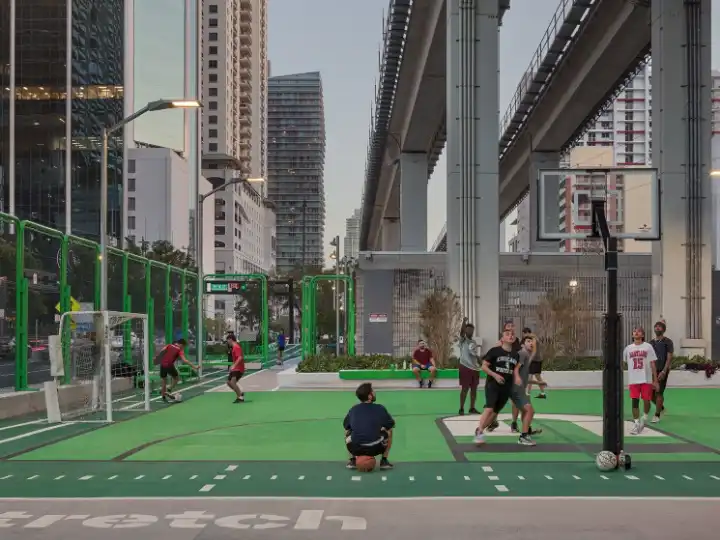
10 of the best bookshops in Paris
Culture 2025-12-18 11:50:52

10 of the best bookshops in Paris

The richness of Paris’s reputation as a centre of literary creation veers close to being a trope. It was here, in 1791, that one of the first-ever copyright laws, designed to protect authors, was enacted. FromNotre Dame de ParistoLes Misérables, the capital is also the setting of many of French literature’s best-known exports.With its 400 bookshops, Paris has succeeded not only in ensuring their survival but enabling them to thrive as the economy of bookselling has undergone a transformation around the world. Ultra-competitive pricing from online marketplaces and skyrocketing commercial real-estate leases have combined to put bookshops in major cities in a difficult spot. But booksellers in Paris have two key advantages.The first is France’s “Loi Lang”, named after president Francois Mitterrand’s culture minister, Jack Lang. This 1981 legislation, originally intended to protect independent bookshops from aggressive wholesaler pricing, outlawed discounts of more than five per cent on new releases, ensuring equal book prices nationwide. So even in the age of online retail, France is the country with the most bookshops per capita and is home to 3,500 independent bookshops. The second policy is one for which Parisian booksellers have former mayor Bertrand Delanoë to thank. The city of Paris started buying up Latin Quarter real estate with the objective of leasing it to bookshops at below market rate. The city is now landlord to 25 per cent of all bookshops across Paris.Here, we visit 10 bookshops that exemplify Paris’s literary prowess. From preserving 15th-century manuscripts to feeding the appetite forbandes dessinées, these are the stores turning over new pages in the city’s literary history.To enjoy Monocle’s full Paris City Guide, click here.1.7LKarl Lagerfeld’s voracious appetite for books was legendary. One story involves his chauffeur loading up a car full of books after the fashion designer visited a single bookshop. It seemed only natural, then, for Lagerfeld to start his own bookstore, 7L, at number seven Rue de Lille in 1999.While the studio housing his personal book collection is sadly not open to the public, the bookshop at the front of the building offers one of Paris’s sleekest collections of coffee-table books on the visual arts, from architecture to street photography. Booksellers at 7L also offer a service that builds collections for clients seeking to fill shelves with works in tune with their personal literary and aesthetic interests.After Lagerfeld’s death in 2019, Chanel acquired 7L and has big plans for its book club, the Salon 7L. It meets on the first Wednesday of every month for readings and cultural events as diverse as its founder’s artistic pursuits. “I wanted 7L to continue being a place of living creation, celebrating Karl Lagerfeld’s love of books and photography,” Laurence Delamare, 7L’s director, tells Monocle.librairie7l.comDate founded: 1999Recommended book: Journal d’un Peintre suivi de Lettres Provencales (selected writings of arts patron Marie Laure de Noailles)Number of titles: 2,5002.La ProcureOf the handful of Parisian bookshops that have been open for more than 100 years, La Procure on Place Saint- Sulpice might be the most successful today. Originally a supplier of goods to the Catholic church – from pews to pipe organs – La Procure has become the European leader on religious books, with a thriving network of 26 shops and franchises across France.When Monocle visits, Elie Khonde, a priest from the Democratic Republic of Congo, is stocking up on volumes to take home after completing a summer seminary near Paris. But, over time, La Procure has expanded beyond prayer books, religious art and sculpture. More than half of the shop’s space is dedicated to a general audience, from political memoirs tobandes dessinées.“We might advise others against it but we will order any book a customer requests,” says La Procure’s CEO, Thomas Jobbé-Duval (pictured above). “It’s in bookshops, including ours, that the diversity of points of view is best fostered. We are almost the opposite of social media. Rather than narrowing down viewpoints, we facilitate openness and exchange.”laprocure.comDate founded: 1919Other items on sale: Groceries made in monasteries or conventsAnnual turnover: €8m3.Librairie Paul JammesLibrairie Paul Jammes is not the place for you to pick up an ephemeral beach read. Instead, every rare book inside is a piece of our collective history. The shop, which specialises in rare tomes and typography, proves that these objects aren’t a thing of the past – the digital world has made them more important.Esther Jammes (pictured above) is the fourth generation of Jammes booksellers to take over the family business. When Monocle visits, she picks up a 1485 vellum astronomy book detailing lunar and solar eclipses in colour – its glaring red and yellow charts as bright as they must have been 500 years ago. Nearby, a statue of Gutenberg gazes approvingly at a printing press from the era of the French Revolution.“People who come in out of curiosity sometimes ask whether this is a museum,” says Jammes. “I tell them that the difference is, for a price, you can leave with the exhibits you like.”To be surrounded by these books, from typography catalogues to a first edition ofMadame Bovary, is to be reminded that human progress – even in the age of smartphones and AI – owes a lot to books. That fact permeates France’s bookshop culture and its proud custodians, Jammes included.librairiejammes.comDate founded:1925Oldest book in the shop:1485 edition ofDe Sphaera Mundiby Johannes de Sacro BoscoNumber of employees:14.ArtazartIn July 2000 journalists across Paris received a bright orange, Artazart-branded hard hat. Balled up inside was an invitation to attend the construction- site-themed opening party of a new bookshop and cultural space on the Canal Saint Martin: “Artazart, the bookstore of creation.” Next year,the shop will celebrate 25 years of housing graphic design publications and events.“When we started, we would host up to two events a week,” says Jérôme Fournel, co-founder of Artazart. Sitting beside fellow founder Carl Huguenin, he recalls a time when running Artazart involved a lot of white paint and elbow grease to allow one graffiti artist after another to use the bookshop walls as a celebration of creativity. “We were never strictly a bookshop,” says Huguenin. “There isn’t really another structure like ours that intrinsically mixes illustration and books.”Artazart’s offering, which ranges from magazines to limited-run artist books, is selected by Laetitia de la Laurencie, Artazart’s book curator. Her meticulous attention to paper quality, layouts and typographic choices when picking books earned her a place running Artazart alongside Huguenin and Fournel. “People come from around the world,” she says. “They are delighted to discover in France places with this kind of richness.”artazart.comDate founded:2000Recommended books:Homelandby Harry Gruyaert (Carl);Viaggiby Luigi Ghirri (Laetitia);Ishimoto, Lines and bodies– a monograph of late Japanese photographer Yasuhiro Ishimoto (Jérôme)Number of staff:95.Palais de TokyoAlongside its dynamic contemporary art space – complete with a nightclub and gourmet café – Palais de Tokyo also boasts one of the coolest bookshops in Paris. Created in partnership with German art-books publisher Walther König and French literary magazineCahiers d’Art, the store blends König’s expert eye and the magazine’s 1920s style to create a unique space that carries the biggest selection of art books in Paris.“We have a big and luminous space where the public is not only attracted to the books on the tables and yellow shelves but also our colourful design objects and our magazines section,” says bookshop manager Arnaud Fremaux. Among the trinkets that visitors can purchase, along with their favourite artists’ catalogues or the latest issue ofLes Inrockuptiblesmagazine, are solar-powered lamps by Olafur Eliasson and tongue-in-cheek pills, by artist Dana Wyse, that promise profound improvements to your life or personality upon swallowing.Arnaud FremauxBeyond the curated selection and prime location in the heart of the Trocadéro, Fremaux considers the museum’s clientele the key ingredient that makes the bookshop such a vibrant space. “The Palais de Tokyo’s programme always attracts an interesting crowd, and the store is the place to spend a moment of relaxation after seeing an exhibition,” he says.palaisdetokyo.comNumber of titles:1,500Recommended book:Donald Judd Furnitureby the Judd Foundation and MackbooksNumber of staff:66.Yvon LambertWhether or not you live up to your family’s legacy is a classic French plot found in stories by writers from Roger Martin du Gard to Balzac. Perhaps that is why Ève Lambert, daughter of legendary Parisian gallerist Yvon Lambert, felt compelled to create a different legacy all together.The sleek and cosy result is the Librairie Yvon Lambert, which offers publications on fine arts and photography, a well-stocked magazine wall and an art gallery. “We wanted to continue having a space to organise exhibitions, both with new artists and artists that Yvon has a history with,” Ève tells Monocle.Ève continues to manage the space alongside her father. The pair also run the Yvon Lambert publishing house, which releases limited edition books featuring original works by artists who the Lamberts are close to. “Matisse and Picasso made such books, where there was a relationship between the artist and the author,” says Yvon. “That is the tradition I am carrying on.”This combination of activities has been a hit with serious art aficionados as well as digital natives. “We have a very young audience that has always known smartphones – and they buy books,” says Ève. “It shows that there is continued affection for the book as an object.”yvon-lambert.comDate founded:2017Recommended book:Motel 42by Éloïse Labarbe-LafonRecent exhibition:Allegoria Con Ortaggi, Pollame, Cesti E Vasellame, a sculpture exhibition by Luca RestaProtecting books in a digital ageLibrairie Michel BouvierEvery visit to my uncle Michel Bouvier’s rare-books shop in Saint Germain des Prés yields a captivating new tale about a recent acquisition (writes Simon Bouvier). Prints of Soviet-era propaganda photos taken by Ukrainian photographer Yevgeny Khaldei. A handwritten letter by a young Claude Monet breathlessly recounting a recent visit to an exhibition. A tiny medieval prayer book with a golden clasp. Every object carries meaning beyond its message. Whether glossy paper or pristine vellum, its form holds a snapshot of human interactions.Practical, economic and strategic considerations have shifted the attention of consumers and policymakers to the digital realm. But bookshops have something that the efficiency-driven economy of algorithms and convenience can’t replicate.“On the internet, you find what you seek,” says my uncle (pictured). “But in a bookshop, you find what you weren’t looking for.” This sense of discovery doesn’t just result in a potential sale. It also fosters the community and awareness that are the lifeblood of civic life.Thanks to my uncle, I know that bookshops matter. Whether you are a powerful mayor or humble reader, support for them shouldn’t merely be a political afterthought or a hip badge of honour. They require serious investment that pays priceless dividends.Simon Bouvier is Monocle’s Paris bureau chief7.GalignaniItalian publisher Giovanni Antonio Galignani of Lombardy established the Librairie Française et Étrangère bookshop in Paris in 1801. Today a stone plaque outside the door reads: “The first English bookshop established on the continent.” An astute businessman, Galignani also started an English newspaper widely read by the anglophone movers and shakers of the time, including Lord Byron and the Marquis de Lafayette. More than 200 years since its founding, the bookshop – now known simply as Galignani – is back in the hands of its founder’s descendants, with Anne Jeancourt-Galignani at the helm. “Our family had moved away from the profession of bookselling for a few generations,” says Jeancourt-Galignani. “I took over the leadership of the bookshop a few months ago, which has allowed me to reconnect with this family tradition.”Inside the bookshop’s main room, browsing can require some athleticism. Accessing the titles on the upper shelves involves climbing tall ladders, while nearby stands are stacked with heavy volumes on art and photography. The selection is a testament to the bookshop’s history of adaptation: during the German occupation of Paris, a Nazi command post set up shop next door. With English books banned and unyielding enforcers close by, the shop pivoted to fine-arts books to survive.galignani.frDate founded:1801Recommended book:Hourisby Kamel Daoud. “A violent but necessary book.”Annual turnover:€3.8m8.Le Bon MarchéThe most visited section of Le Bon Marché in the 7th arrondissement features neither handbags nor night creams. The historic department store’s foot-traffic crown instead goes to its vast bookshop, on the top floor, under the original glass roof designed by architects Louis-Charles Boileau and Gustave Eiffel. “Even more than the rest of the store, we have a clientèle that comes very often,” head buyer Noëlle Chini tells Monocle. “We have also had a more international clientele drawn by our books on art, decoration, architecture and fashion.”The selection of literature, cookbooks andbandes dessinéescovers all bases but under Chini, who got her start at Le Bon Marché selling postcards nearly 30 years ago, the bookshop has emphasised what she calls “beautiful books”. “Fashion and culture have always carried the store, so we wanted to translate that to the bookshop,” she says.As well as a well-chosen selection of reading materials, you’ll also find a luxury stationery shop, where patrons can customise notebooks and pens from brands such as Caran d’Ache and Leuchtturm1917. “This is a neighbourhood of publishers,” says Chini. “For us, it makes sense to talk about both reading and writing at the same time.”lebonmarche.comDate founded:2010 in its current form, but Christmas-time book sales date back to the 1880sRecommended book:Cabaneby Abel QuentinNumber of book events per year:About 309.Librairie VignettesComic books are too often considered the province of children or anoraks. In France and Belgium, however,bande dessinée(BD) is rightly recognised as a bone fide art form, on the same level as music, architecture or poetry. It’s also a thriving business: in 2023, 75 million BDs were sold in France, the third-best year ever for the industry. “France has a very unique BD culture,” Charlotte Foucault, one of the three partners of Librairie Vignettes, tells Monocle. “We are open to allbande dessinéesgenres, which isn’t the case for Americans or the Japanese.”Foucault, Ariane Roland and Roxane Pingal had been booksellers together at a larger BD specialist when they decided to strike out on their own in 2020 and open Librairie Vignettes. They offer edgier, more on-the-pulse works and less merchandise now that they are in charge. “Back then, we used to sell a lot of action figures,” says Foucault. “Our idea ofbande dessinéeis to showcase every genre, including stuff that we don’t like.”At Vignettes, classics featuring characters such as Tintin and Asterix have their place beside thornier contemporary explorations of topics including feminism or the Israel-Gaza war. This selection reflects the medium’s place in France – as cultural canon with an appeal that continues to bridge the generations.canalbd.net/vignettesDate founded:2020Recommended book:Madeleine, Résistante,a BD series about historic Résistance figure Madeleine RiffaudRecent author event:Brothers Ulysse& Gaspard Vry for the release ofUn Monde en Pièces10.ChantelivreGreat readers are not born but places like Chantelivre help to make them. “The original idea was to create a space where you would learn reading through fun, discovery and emotions, and where everyone felt welcome, no matter their previous approach to books,” Alexandra Flacsu, co-director of Chantelivre, tells Monocle. Founded in 1974 as the first specialised children’s bookshop in France, Chantelivre revolutionised the literary landscape with its playful approach to reading. “There were comfortable spaces with pillows for children to read in and things were built to fit their height, something that hadn’t really been done before,” says Flacsu.The 6th arrondissement store was renovated in 2023, and now boasts a complete reading lounge for kids and “la maison des histoires” (the stories house), a dedicated place where children can play and reading sessions with authors and actors are held. Through these activities, books are used not only as mediums for learning but for discovery and moments of sharing. “It’s our way to make reading come alive,” says Flacsu. Today a quarter of Chantelivre’s books are for adults, a choice that she considers to be more inclusive. “We wanted to create a family bookshop. People can come with their toddlers or teens and enjoy a moment together.”chantelivre-paris.comNumber of titles:30,000Recommended books:Lettres d’amour de 0 à 10by Susie Morgenstern;Graines de Cheffesby Lily LaMotte;Bandes de Boucanby Anais SautierNumber of employees:19To enjoy Monocle’s full city guide to Paris, click here.

Nic Monisse on why Dubai designers are the future of the Middle East’s creative scene
Design 2026-01-06 10:40:58

Nic Monisse on why Dubai designers are the future of the Middle East’s creative scene

At the turn of the century, when the likes of Norman Foster, Zaha Hadid and Rem Koolhaas began designing buildings in Dubai, the Emirate faced criticism for importing talent rather than nurturing it. But things have changed. The city’s design scene is growing in confidence and nowhere is that clearer than at Dubai Design Week. The most recent edition of the annual event, which took place in November 2024, made local talent the headline act (even key international draws such as India Mahdavi have Middle Eastern roots).“There has been a shift recently,” says Dubai native Omar Al Gurg, guest curator of the 2024 event’s uae Designer Exhibition and founder of furniture and lifestyle brand Modu Method. “A lot of people in the Emirates are now looking for regional designers to be able to actually design furniture and places for people to live the way we’re supposed to be living in this region. We’re not bringing in as much design from Europe, which is great. It’s becoming much more contextual.”But what’s perhaps most impressive about the event is the way these local talents have been made the stars of the show. Rather than the majority of works on display being commercially ready for production or produced by designers without any financial support (as is often the case at design events across the globe), Dubai Design Week commissions new and experimental structures and installations. In November, there was a cardboard pavilion made to experiment with new building forms by Dubai-based studio Deond, unconventional furniture by Iraq-based architect Ola Saad Znad, crafted from reeds using ancient techniques and much more. In short, it’s a showcase focused on innovation and potential rather than sales.“It’s about the designers who are willing to enter this space of experimentation making themselves vulnerable and leaving room for failure,” says Natasha Carella, director of Dubai Design Week. “It’s only by being inventive that we can move forward.” This event is one of the most impressive in the industry – and it’s cultivating an equally strong community.Want more stories like these in your inbox?Sign up to Monocle’s email newsletters to stay on top of news and opinion, plus the latest from the magazine, radio, film and shop.Your EmailSubscribe

Why national dress is back in fashion
Culture 2026-01-15 15:13:52

Why national dress is back in fashion

The Great Male Renunciation is a term used to describe a phenomenon in the late 18th century whereby European men all began to dress the same. Out went almost any form of ostentation (wigs, gold braids or high heels) and in came the dull lounge suit. Since then, the Western way has been hegemonic. Indeed, at the end of the 20th century the suit and its female counterpart, the ball gown, had become the comportment of choice for almost any formal setting anywhere in the world. It appeared as though Western-led globalisation had succeeded in not only homogenising the world of trade but that of dress too. Twenty or so years later, the foundations of this bland new world look shaky. As was the case in the late 1700s, such phenomena are difficult to identify at the time (the term “Great Male Renunciation” was coined in the 1930s) but it seems that in many countries there has been a re-embracing of national dress. Some may ascribe this trend to the dark forces of nationalism but it’s worth noting that it has also coincided with the retreat of another shoddy Western invention: cultural appropriation. At about the same time as the grand panjandrums of globalisation were smugly surveying their spoils, a subset of people in Western academia were, like po-faced Gok Wans, decreeing what was and wasn’t acceptable to wear. National dress became smothered by the censorious: a dead thing meant for museums rather than real life. The joy and generosity involved in the mutual exchange of cultures were now fraught with guilt. Of course, there have been times in the past when people have donned national dress in order to ridicule and belittle others, but this too, thankfully, has for the most part been consigned to the bin. Today, people from all corners of the globe see the wearing of another’s national dress as an act underpinned by admiration. It is in this spirit that the following feature has been put together. From Nigeria to Malaysia, via Bavaria, Ukraine and the Arabian Gulf, we look at how national dress is making a comeback for a variety of reasons: political, economic and, yes, sartorial. We have also included an illustrated chart such as readers might remember from classroom walls of yore – made with love for eyes that wish to learn and appreciate, not roll.1.Desert dressThawb and abayaThe GulfThe Emirati ‘kandora’To the untrained eye, the garments worn by men across the Gulf region might seem indiscernible: a white ankle-length dress paired with a headscarf in either white or a red-and-white checkered pattern. But each of the seven states in the region has its own distinctive male robe, known as akandora,thawbordishdasha, and headscarf, known as aghutraorshmagh.The Gulf states (especially Qatar, Saudi Arabia and the UAE) have undergone an astounding transformation over the past half-century. The UAE, for example, was only established in 1971 and moved from being a country dependent on farming, fishing and pearl-diving into one of the most technologically advanced and richest urban societies in the world. Here and in other Gulf states, traditional attire has acted as an anchor to the past, tempering the lightning-quick changes happening elsewhere in society. Looking to traditionSo, what are the differences between men’s dress in the Gulf? In the UAE and Oman, men wear a collarlesskandorawith atarbooshorfarakah, long tassels roughly analogous to a Western tie. The Emiratitarbooshaextends from the neck to the belly button, while in Oman, it hangs just below the collarbone. In the UAE, men either tie their headscarf around the head like a turban (known as thehamdaniyahoressama) or wear it in the formal style with theagal, the black crown common across the Gulf. In Oman, the formal headgear is a turban called themassar, while akumma, a cap without a visor, is a less formal option. The Kuwaiti, Saudi, Qatari and Bahrainidishdashaorthawb, which all feature a collar, are almost identical. The Saudi one is more of a tight fit with a two-button collar and shirt sleeves designed to accommodate cufflinks, while the Kuwaitithawbhas a one-button collar and wide sleeves without cufflinks. The Bahraini and Qatarithawbsare looser, with pockets on the right chest and softer collars.These garments evolved over centuries to suit nomadic lifestyles: white fabrics helped their wearer survive the region’s heat, while theghutraorsifrah(a wrap worn around the head) protected against dust and sunlight. Theagalwas once used to secure a camel’s legs at night and worn on the head when not in use. Though the vast majority of the region’s people now live in air-conditioned cities, these garments still serve a utilitarian purpose while providing and enforcing a common identity. The Gulf’s leaders and public figures have played a crucial role in the latter regard. By choosing to exclusively wearthawbsandghutrasat public events, they signal their intention to preserve these cultural traditions. Indeed, traditional dress is compulsory for many who work in government-run institutions in Saudi Arabia, Oman and Qatar.Wearing a Kuwaiti ‘dishdasha’Speaking off the cuffYoung Emiratis, many of whom are more likely to wear Western dress on a casual basis, often come to cherish the time they spend in thethawborabaya(its female equivalent) at work. Saaed AlMheiri, a business development manager in Dubai, believes it reinforces an intergenerational bond that’s important as young Emiratis are exposed to Western mores. “It reflects where I come from and the upbringing that shaped me,” he says. “Traditional clothing perfectly balances timeless elegance and a deep connection to values passed down through generations. It seamlessly blends into both business and casual settings, making it a symbol of continuity and solidarity.”An ‘essama’ turbanRinging endorsementThe ‘abaya’ female garment2.United in styleBatik and kebayaMalaysia Nellie Song wearing ‘sarong kebaya’ at home with her dog in Kuala LumpurDuring coronavirus lockdowns in 2020, Malaysian dressmaker Nellie Song began sewing clothes for her daughter. She decided to experiment withbatik, a colourful textile with wax-resistant dye patterns that originated in Java and has become a staple of Malaysian traditional wear. Song’s daughter received so many questions from friends about her mother’s designs that the duo decided to start their own tailoring business, Batik by Nell. “It all started with thekebaya,” says Song. Thekebayais a traditional garment worn by women, an intricately detailed blouse accompanied by a wraparound sarong. In a country as multicultural as Malaysia, with large Malay, Chinese and Indian populations as well as numerous smaller ethnic groups and indigenous tribes, there is no single national dress – there are dozens. At the National Textile Museum in Kuala Lumpur, a line of mannequins, each sporting a different traditional outfit, stretches across the room – a Chinese silk jacket here, a headdress made of tree bark there. Amid such diversity, thekebayais a rare cross-cultural garment. “Women of all ethnicities and social classes in Malaysia, from royal families to commoners, have worn thekebaya. It holds a special place in Malaysian culture,” says Tengku Intan Rahimah binti Tengku Mat Saman, the director of the National Textile Museum. “Thekebayahas evolved to reflect Malaysia’s unique cultural identity, incorporating elements of Chinese, Indian and Malay cultures.”It has also become a border-crossing, soft-power wielding sartorial ambassador. Pre-colonial and colonial migrations of different populations across the Southeast Asian archipelago brought thekebayaalong for the ride. In 2023, Malaysia, Indonesia, Thailand, Singapore and Brunei jointly nominated thekebayafor Unesco’s Intangible Cultural Heritage list, an admirable show of regional unity in a part of the world that loves to bicker about whose version of a certain noodle dish is the most authentic. Soon after she launched Batik by Nell, Song was rushing to fulfil orders for modern spins onbatikand classic sarongkebayaand even the occasionalbatiktie or pocket square. She has designed custom versions of various traditional garb – abatikChinesecheongsam,batikIndian bridal wear and Malay-stylebatiksets for Ramadan celebrations. Many customers are young Malaysians like Song’s daughter, Wong Ann Jee, and her friends. “We’re so used to the Western idea of dressing but I feel that, as we grow older, people start to be more open and receptive towards wearing local textiles,” says Wong, who is 27. Some Batik by Nell customers are Malaysians living abroad who want traditional outfits to wear to weddings and parties in the UK and Australia. “People are just getting more comfortable with representing their culture.” Wong often wore sarongkebayawhen she had to deliver presentations at university. “That’s one of the nice things about Southeast Asian traditional wear: it’s considered formal attire now,” she adds. “I was so sick of wearing boring corporate clothes and a button-up shirt!”3.Pride of placeVyshyvankaUkraine Gathering with friends to celebrate her 26th birthday in Kyiv, Ada Wordsworth chose to wear the Ukrainian national dress, known as avyshyvanka. It was a hot August evening in 2024 and the venue a shady, wild beach on the banks of the Dnipro River. Packing a picnic and bottles of prosecco, Wordsworth donned her outfit for the evening: a linenvyshyvankadress embroidered with sheaves of wheat and chestnut leaves, symbols of Ukraine’s capital.Wordsworth came to the country in March 2022, abandoning a master’s in Slavonic studies at Oxford University to set up a charity, Kharpp, which helps to repair buildings damaged by war, in the northeast Kharkiv region. She was immediately drawn to thevyshyvanka. “In the early months of the full-scale invasion, everyone was wearing the dress all the time and I started to, too,” says Wordsworth. “I’ve been travelling around the country and love buyingvyshyvankasin different regions. Each has a different use of colour, patterns and embroidery; you can tell where it has come from just by looking at it.” Maria Gavrilyuk in a black ‘vyshyvanka’Though British and a relative newcomer to the country, Wordsworth has tapped into a feeling that many Ukrainians have had since the country gained independence from the Soviet Union in the early 1990s. In 2017, designers Natalia Kamenska and Maria Gavryluk founded Gunia, a Kyiv-based fashion and homeware brand that has become a go-to for stylish, modern takes on thevyshyvanka. “Our journey began in the Ivan Honchar Museum, Ukraine’s national centre of folk culture,” says Gavryluk. “We started working in their archives in preparation for launching Gunia, and it sparked journeys across the country, visiting different collections and libraries.” Gavryluk describes a yearning common across a nation whose heritage was violently suppressed under Russian rule. “In school, we were taught about Ukrainian folk tradition in a very limited and uninspiring way,” she says. “Walking into that museum, I realised how varied my country’s culture really is.” Strolling down Kyiv’s trendiest streets, many passers-by can now be seen in Gunia’s designs, with symbols and details taken from visits to workshops and villages across the country. It is a far cry from the Soviet era, when people were jailed for wearing theirvyshyvankain public. But it is Kamenska’s work as a stylist to Ukraine’s first lady, Olena Zelenska, that has helped show off thevyshyvankaon the international stage. “Cultural diplomacy through fashion is extremely important, especially in Ukraine’s current situation,” says Kamenska. “The clothes signal national belonging. They convey who we are, showing Ukraine’s importance and history to the world.” Representing her country on foreign visits, Zelenska is often greeted by émigrés of Ukrainian descent wearingvyshyvankas. The first lady is regularly seen in one chosen by Kamenska from Gunia’s collection, or one of the many brands now offering contemporary takes. “Because of the modernity of the pieces, they can also reflect the wearer’s personality – they mirror an otherwise hidden individuality,” says Kamenska. Back on the Kyiv beach, the light is softening as Wordsworth’s guests arrive at the party. Many have taken the host’s cue in opting for avyshyvanka. “Coming from a left-wing London background, I was aware of cultural appropriation,” says Wordsworth. “At first, I was nervous about wearing thevyshyvanka. But I’ve found that Ukrainians appreciate foreigners wearing it. It shows our admiration for a country and a culture that has been suppressed for so long.”4.Team playerLederhosen and dirndlBavaria, GermanyWhen Max Lechner was 15 years old, he decided he wanted to work with leather. The material had played a central role in his upbringing on a farm in Hofolding, 20km outside Munich. On special occasions or while out hunting with his father, Lechner had always worn lederhosen, the traditional leather pants of the Eastern Alps. So, he applied for a job with aSäckler, the craftsmen who had historically processed leather into bags and trousers. There, Lechner found his calling. He loved the mix of conviviality and comfort that lederhosen signify, while at the same time envisaging a renewed boom in the garment.Bier flowing in BavariaEmbroidered local motifsThe first wave of lederhosen arrived in the 19th century, when the Bavarian royal family, the House of Wittelsbach, began to wear the garment in official portraiture. “When Bavaria became a kingdom in 1806, its rulers looked for local traditions to unite their diverse subjects,” says Simone Egger, a cultural anthropologist at Saarland University. “So, they set up Oktoberfest as Munich’s annual funfair. They also promoted leather pants, initially worn only by Alpine hunters and farmers.” The annual Oktoberfest in Munich occasionally featured aTrachtenumzug, a parade of traditional costumes. Since 1948, the event has run annually with about 9,000 participants, 250,000 spectators and one million viewers on live TV watching men and women in lederhosen and dirndl, the corresponding dress for women.Today, lederhosen are promoted by the new kings in town: the players of Bayern Munich football club. This tradition began in 1979, after rival fans had taken to chanting, “Take the lederhosen off Bayern.” As a cheeky riposte, the Bayern players started appearing at their away games clad in the traditional attire. They began wearing lederhosen at trophy celebrations, team outings to Oktoberfest and when presenting new players at the club. “The message is attractive for anyone yearning for belonging,” says Egger. “Put on lederhosen and you become part of the team.”Team building was on the Bavarian king Ludwig II’s mind when he supported the foundation of the firstTrachtenverein, a club to promote regional costume, in 1883. Today there are about 900 such clubs with 180,000 members in Bavaria. “These members are like ambassadors who wear their lederhosen most days,” says Lechner. He is a member of his local Trachtenverein Brunnthal and owns four different lederhosen: one for work, two for festive occasions and a longer one for winter. Their durability is one reason why people are willing to pay €2,500 for a pair of Lederhosen Lechner’s handmade trousers. While it is possible to get cheap factory-made equivalents for €100, these are usually produced from chemically tanned goat leather in Sri Lanka, India or Pakistan. Lechner’s trousers, on the other hand, are made using European deer leather that is tanned in Bavaria in fish oil for months. “The most labour-intensive part is hand-stitching the embroideries with local motifs,” he says.While regional pride has always defined lederhosen, the garment’s political message has changed significantly over time. When Bavaria lost its king after the First World War, lederhosen became a reactionary symbol of protest against the newly formed liberal Weimar Republic. The open-hearted revival of local costume started only after the Second World War. It was epitomised by the hostesses for Munich’s 1972 Summer Olympics, dressed in dirndl to welcome the world to Bavaria.5.Higher purposeAgbada, buba and aso-okeNigeriaOn a continent where Western powers have historically dictated everything from diet to dress, Nigeria has managed to maintain a strong individuality. “Nigeria is so comfortable in itself and its identity,” says Obida Obioha, a Lagos-based creative director and founder of Obida, a brand making clothes inspired by traditional designs. In fact, the country, Africa’s most populous, has been arguably the most successful on the continent at exporting its culture: from Nollywood movies to musicians Burna Boy and Fela Kuti.But one art form that hasn’t yet been celebrated is fashion. Whileagbadasuits andbubasused to be ubiquitous on the streets of Lagos and among the Nigerian diaspora, only recently have people begun to turn back to these garments. “In the 1980s and 1990s, people wanted to dress like in the West, wearing Ralph Lauren and Tommy Hilfiger,” says Obioha. There was this idea that if it’s from abroad, it’s nicer. Or at least, that used to be the case. “My generation is changing that.” It was during the pandemic that designers and local brands began working with techniques and materials found on home soil. “Importing and exporting was slow, so we had no choice,” says Rukky Ladoja, founder of Dye Lab, a brand that makes hand-dyed garments. The textile du jour isaso-oke, a native cotton that was historically spun into elaborate outfits worn for events such as weddings. “The meaning ofaso-okeis ‘higher clothing’,” says Ladoja. “It’s the king of clothing, designed for special occasions.” Though there’s never been a scarcity ofaso-oke, the fact that it was reserved for parties or ceremonies meant items became less prominent, quickly losing relevance with younger generations. “Our parents would treasureaso-oke; it was something they inherited from their parents and became collector’s items,” says Seun Oduyale, a fashion entrepreneur and image consultant, whose family runs Bisbod Aso-Oke, which specialises in this native fabric. Then, around 2020, more designers started incorporatingaso-okeinto everyday clothing, using a strip on a pocket or a lapel to add a flash of Nigerian colour. They also tweaked and contemporised the shapes ofbubasandagbadasuits, making them more casual and wearable. “Labels have looked to traditional attire and methods of making fashion and inserted their own spin on them,” says Obioha. Roomier cuts and cotton fabrics suit life in Lagos, especially during the summer when temperatures regularly hit 40c and the air is like a wet sponge. “We already wear loose garments,” says Ladoja. “Theagbadais 100 per cent cotton, so it’s breathable. The style and shape are loose; you feel comfortable.” They also feed into Nigerians’ love for boldness in personality and dress. “Aso-oketells a story. People want to emote with their clothing,” says Oduyale. “We’ve gone from saving clothes for special days to looking good every day.” Wearing the printedbubasandagbadasis also a signal that you’re part of a crowd that’s in the know about emerging designers. Not only are many of these labels worn by Afrobeat stars but they carry a certain cachet. “Africa is rising and the spotlight is on us, from the music to food to art,” says Oduyale. “We are presenting our culture to the world as an enticing, marketable product and the world is loving it.”National dress differs across the globe depending on region, ethnicity, climate and more – but every nation has a story to tell through its traditional dress. It remains an important cultural tool, used to create a sense of belonging.1.BotswanaThe most common fabric used in national dress in this southern African nation isleteise, a dyed cotton with geometric patterns. Women and men often wear a blanket of animal skin called akaross.2.IndiaTraditional dress in India varies by region and climate and are part of daily life for many. The clothing – whether a saree for women or thedhotigarment for men – can be traced back thousands of years.3.BoliviaBolivia’s Andean dress, worn by indigenous Aymara populations, was developed in the 16th century and includes ponchos for men andpolleraskirts for women. Thebombín(bowler hat) came via British railway workers and was clearly a hit.4.MongoliaThe deal with Mongolia is thedeel, a kaftan-like garment accompanied by a sash, belt, hat and boots. Every ethnic group has its own style and there are 400 different types of hat.5.ArgentinaThere’s a focus on the mythical figure of thegaucho, a Southern Cone cowboy, and thepaisanarural figure, both of whom gained prominence in the fight for independence from Spain. Also add in ponchos andbombachatrousers.6.FijiThe national dress for men and women here has been a kilt-like skirt known as asulusince colonial times. The first examples were brought by missionaries from Tonga and originally signified a conversion to Christianity.7.FinlandBased on everyday outfits from the late 17th and early 18th century. There was a revival in national dress from the 19th century but it wasn’t until 1979 that the National Costume Council of Finland was created.8.JapanNow mostly worn for formal occasions, the kimono (literally “things to wear”) became the principal means of dress from the 16th century. It’s worn left side over the right and secured with a sash called anobi.9.MexicoRegions and ethnic groups affect the styles but a dominant form belongs to thecharro, the Mexican horseman whose uniform worn at equestrian shows includes a wide hat, boots and an embroidered jacket.10.ThailandKnown aschud thai, Thai traditional dress was given impetus by Queen Sirikit in 1960 when she started to establish national costume for Thai ladies (there are eight types of dress).11.UgandaWomen’s colourfulgomesidress is said to have been developed as a high-school uniform in the first half of the 20th century, while men’skanzuconsists of a long, white tunic and jacket, first worn by Arab traders.12.MoroccoBoth sexes wear flowing garments, with men donning a hoodeddjellabaand women a kaftan. The design of kaftans varies depending on origin, with every area using different embroideries and jewellery. The male fez is thought to have Ottoman origins.

Workwear is back in the fashion fold – does the trend mark a shift in consumer behaviour?
Fashion 2026-01-12 04:44:26

Workwear is back in the fashion fold – does the trend mark a shift in consumer behaviour?

Fashion trends come and go at lightning speed, but one is proving to have lasting effect on wardrobes. Workwear has gone from being associated with the working classes to being embraced by style communities and subcultures around the world, from skateboarders to British punks. It’s a category that has been a fixture on the sartorial landscape for quite some time but today it has gained newfound momentum in mainstream men’s and women’s fashion – helping to shape the way we get dressed and set a new style agenda for 2024. In all four fashion capitals this year, houses grounded their ready-to-wear collections in styles synonymous with workwear. Celine, Ferragamo and Brunello Cucinelli opted for suede trucker jackets in their collections, while Coach offered gabardine and denim dungarees. Versace and Prada paraded utility vests, while Fendi featured leather aprons and tool belts – an homage to the elegant uniforms worn by the workers in its new leather-manufacturing facility in the Tuscan town of Capannuccia. It joins MaxMara, where creative director Ian Griffiths looked to Britain’s Land Army with his dyed drill boiler suits and chore jackets, to inspire his collection for next spring. Designers across the luxury spectrum are referencing humble workwear archetypes, while original workwear brands such as Carhartt WIP and Dickies are enjoying renewed popularity.Utilitarian design by AspesiBut why the sudden appeal? For one, people are drawn to the way that workwear whispers smart-casual, says Lucie Greene, trend forecaster and founder of consultancy Light Years. “Workwear has almost become quiet luxury for the original hipsters,” she says. “As this group reaches financial maturity, it is starting to embrace the workwear aesthetic in a more refined way, looking for indulgent materials. But core design values, such as reductionism, sturdy quality and industrial cues, remain.” Pointing to new-wave workwear-inspired brands, including Alex Mill and Studio Nicholson, Greene notes that their appeal also lies in a unisex approach, creating “a modern uniform for anyone who wants elevated comfort”.Workwear addresses our demand for increased comfort while providing a refreshing alternative to the streetwear wave of the past decade. It also shines a spotlight on the value of embracing classic design and eschewing trends. “This reflects a broader social and cultural shift in values and preferences in which people are seeking authenticity, durability and functionality in their clothing choices,” says Carolyn Mair, author ofThe Psychology of Fashion. Mair notes that workwear fosters a mindset that views clothing as long-term investments. “By prioritising craftsmanship and wear-forever clothing, brands and consumers are embracing a paradigm that reduces consumption, extends the lifespan of clothing and minimises waste.”From a recent Fendi collectionWorkwear on the MaxMara runwaySuch is the continued appeal and success of the original workwear brands in hooking new customers, luxury designers need to elevate and move the design along to offer something fresh. Labels such as Japan-based Sacai (which has recently collaborated with Carhartt WIP), Britain’s Olly Shinder and Fendi have all been helping to diversify the market, so much so that today the swing tags of workwear garments oscillate from accessible to premium. At luxury multibrand retail outfit Matches Fashion, menswear buyer Alexander Francis has bought into workwear styles from Carhartt WIP, Drake’s, RRL and Visvim, some of which are under the £100 mark (€115) and average around the contemporary price bracket. “All these brands offer go-anywhere, do-anything products at a selection of price points,” he says. “We are seeing customers looking for styles that can work in the office and at the weekend. It’s about buying less but buying smarter – and workwear really talks to this shift in behaviour.”While Francis doesn’t predict a return to the head-to-toe workwear dressing of the early 2010s, he points to “die-hard” workwear style icons such as Daniel Day Lewis and John Mayer “who show that a uniform approach to workwear remains a classic look”. The uniform element of workwear strikes a chord: see the rise of the Danish fashion industry or bellwether brands such as Prada using their fashion shows to celebrate uniforms associated with the care sector and workwear (the irony of a €4,000 full-length donkey jacket noted). For Morten Thuesen and Letizia Caramia of uniform specialist Older, a Milan-based business, “uniform means longevity”. In the decade since they left their jobs at Alexander McQueen in London to explore the artistic potential in the industrial side of uniforms (their clients include the Noma Group, Tate Modern, Château Marmont and Flos), they have become experts in the space. “Uniforms have always been a fascinating aspect for fashion – it’s to do with the tailoring and understanding proportion,” says Thuesen. “Our ideology is that the uniform is democratic and that needs to be translated in the design but also the pricing, supply chain and production.” As for Lawrence Steele, a fellow Milan-based designer and creative director at Aspesi, uniforms have gone from symbols of restriction to a form of “liberation” from the daily task of getting dressed.  It’s by the same notion that workwear is again in the spotlight. “Craft used to be seen only in terms of hand-sewn garments, while manufacturing had associations with mass production and low quality,” says Greene. “New-wave workwear highlights the intersection of hand craft and old-school manufacturing, associated with true skill in small-batch production, ingenuity in mechanical machines and pride in clothing emerging from factory towns.” It hails a new era. As Mair puts it, this chapter in fashion won’t be defined by a trend for a change but “a fundamental shift in the psychological relationship that people have with their wardrobes”.

Design round up: The new Finnair lounge at Helsinki Airport, Japanese townhouses and more
Design 2025-12-28 00:28:50

Design round up: The new Finnair lounge at Helsinki Airport, Japanese townhouses and more

Finnair commissioned Helsinki-based designer Joanna Laajisto to create a new 440-seat Finnair lounge at Helsinki-Vantaa Airport. The recently opened space, which is located on the Schengen side, is influenced by Finnish nature and features local wood, stone, leather and woollen fabrics. “I wanted to create an environment that gives your senses a moment of rest from the hectic world of travel, the type of positive feeling you get when you collapse in your own bed,” Laajisto tells Monocle. The materials are complemented by Finnish furniture, including Artek’s Domus chairs, Made by Choice’s Goma bar stool by Thomas Sandell and Centenniale coffee tables designed by Laajisto for Finnish furniture maker Nikari. “I used round shapes as a nod to the cabin experience and to create a cosy atmosphere in what is a busy environment,” says Laajisto (pictured).The lounge features separate yet subtly demarcated areas for a range of uses. “A great lounge caters to various use cases,” says Meri Järvinen, Finnair’s head of airport customer experience, as she walks Monocle through the lounge’s quiet zone, where dark blue seats reminiscent of Finnair’s award-winning AirLounge Business Class seat have been laid out in a two-by-two configuration. “Some people want to freshen up and relax; others want to celebrate and socialise, while we also have a lot of commuting passengers who need a space to work before or after their flight.” Järvinen adds that Finnair also went to great lengths to address acoustics. Laajisto’s team soundproofed spaces for conference calls and meetings, to ensure that those taking a short nap after their 13-hour inbound flight from Haneda are not woken by a cacophony of voices from someone’s laptop. The only downside is the potential that one might snooze past their departure time – they will, at least, wake up comfortable and well fed.Little and large in ZürichPassengers looking out onto Zürich airport’s runways might well be intrigued by a new sight: small, bubble-like cars zipping between aircraft. Three of these two-seater electric vehicles, made by Swiss brand Microlino, are now ferrying the staff of Switzerland’s flag carrier, Swiss, between tasks on the tarmac. A partnership was signed between the two brands this summer. “Bigger cars can do other jobs, such as transporting maintenance teams, luggage and tools around the grounds,” says Swiss’s project manager Marcus di Laurenzio. “But Microlino offered us exactly what weneeded for other members of our team: the car is designed to travel short distances with a maximum of two people, which is perfect for our staff moving between meetings at our headquarters, a 10-minute drive away, and logistics operations at the airport hangars.”Di Laurenzio explains that the decision to work with Microlino was in part about kick-starting a collaboration that speaks to the power of a country’s best transport brands coming together. “We want to promote Swissness and send a message to Zürich Airport passengers looking on,” he says. “It has a bit ofBeauty and the Beastabout it – the biggest people-mover in Switzerland meets the smallest people-mover in Switzerland.”Character revivalThere is an abundance of older building stock in Japan’s rural prefectures and smaller cities, from traditional folk houses tomachiyatownhouses – and many of them are ripe for renovation. The restoration of such structures is essential to protecting the country’s distinct architectural character – work that has become a key focus for architect Yoshihiro Yamamoto and his Kansai-based firm Yoshihiro Yamamoto Architects Atelier (YYAA). “Working throughout Nara, Kyoto and Osaka, there is such an abundance of historic architecture,” says the 47-year-old architect. “While new buildings are great, I also want to play a role in cherishing the old ones.”When it comes to these renovation, restoration and repair projects, Yamamoto believes in the value of not imposing himself too heavily on the design. Instead, he develops uniqueness by listening to the client’s needs and finding optimal solutions. Case in point is his work on Mederu House, which has been home to the Kimura family for more than 30 years. As Noriko and husband Keisuke Kimura approached retirement, they enlisted YYAA to rework their beloved residence for their next chapter.The couple’s affection for their home saw Yamamoto focus on ways to improve their quality of life. The first step was a reconfiguration that saw the dining room relocated so it is adjacent to the kitchen, which was redesigned to make the preparation and enjoyment of food an experience to share and savour. With garden views and ample natural light, aided by the addition of two skylights, the space was soon at the centre of daily life.The architect also countered a lack of storage by creating built-in shelves, which are used for the display of art and antiques dating back to the eighth century. “I spent time showing Yamamoto-san every single piece I wanted to have on show,” says Noriko, with a laugh. “He measured them one by one, then designed the space and fixtures to fit them perfectly.”Yamamoto’s focus on balancing practical measures with charming touches extended to the traditional tearoom and gallery, where functional issues were addressed alongside additions including Yoshino cedar floors and Makoto Kagoshima-designed paper on the slidingfusumapanels. The renewal inspired Noriko to restart tea-ceremony lessons. “Since the renovation, my mood has brightened and we can enjoy a more relaxed way of life.” The project shows the power of a renovation to not only preserve the architectural character of a place but also to support the ambitions of its residents. Yves BéharChief designer, FuseprojectSwiss-American designer and entrepreneur Béhar is founder and chief designer of San Francisco-based Fuseproject. His practice is guided by the belief that design is a tool for not only showing us the future, but bringing us to it. What is design to you?Design has always been about the opportunities to be diverse, to try new things, to learn. I’m currently working on a truck for US electric vehicle manufacturer Telo. We’re hoping to present full-size, functioning versions by the end of the year.How do your Swiss roots influence your work?I have a Swiss inclination for engineering and precise realisation. An idea might initially seem impossible but it requires good thinking, good manufacturing and good engineering. So I’m never afraid of taking risks – it’s part of the thrill of design.What’s next?There’s a lot in the works. The past three years have been interesting because I have an office in Lisbon [after buying Portuguese digital design agency Mindshaker] and my office in San Francisco. I reacquired Fuseproject in 2023, so it’s an exciting time. And there is a forthcoming boom in San Francisco. A lot of people are surprised when I say that but a lot of human-centric technologies are being developed there that we, as designers, will have access to, which I find very exciting.

Interview: Cecilie Manz on design with a purpose
Design 2026-01-12 19:51:15

Interview: Cecilie Manz on design with a purpose

Since founding her studio in 1998, Danish designer Cecilie Manz has contributed to the catalogues of manufacturers including Fritz Hansen, Bang&Olufsen, Kasthall, Maruni and Hermès. Considering how prolific she is, it’s peculiar that the lasting impression that she leaves is one of restraint or, rather, compelling discretion.“I like to balance output and inspiration,” Manz tells Monocle in her studio in Sølvgade, Copenhagen. Sitting across an oak table that she designed for Fritz Hansen in 2009, she is cradling a cup ofhojichaand wearing a pair of pleated black trousers by Japanese designer Issey Miyake. Surrounding us are stacks of paper weighed down by stones, cardboard prototypes and tchotchkes that she brought back from her trips across the globe, all neatly displayed on shelves.Here, projects start as paper sketches or cardboard mock-ups before being refined in the workshop. Manz believes that function is the driving force of design, which means that all the pieces that she creates require considered examination. “I want to be involved in every step of the process, not just the part where you draw nice doodles,” she says. Manz employs two assistants to help with her work, including creating all the digital 3D models so that she can maintain her personal creative process as a strictly analogue affair. “With furniture, you can’t skip making mock-ups. You need to see how something interacts with your body.”Born to ceramicist parents in Odsherred, about an hour’s drive from Copenhagen, Manz knew from early on that she would pursue a creative career. “I picked furniture design to do something different from my parents,” she says with a smile. “That was my crazy teenage rebellion.” Manz was admitted to the Royal Danish Academy of Fine Arts and went on to found her eponymous studio soon after graduating.The CV1972: Born in Odsherred.1997: Graduates from the Royal Danish Academy of Fine Arts.1998: Founds Cecilie Manz Studio in Copenhagen.2007: Receives the Finn Juhl Prize.2018: Named designer of the year at Paris design fair Maison & Objet.2019: Named Chevalier des Arts et des Lettres by French Ministry of Culture.2024: Launches products with manufacturers Maruni, Fritz Hansen, Kasthall and Elvang.2024: Named designer of the year at the Scandinavian Design Awards.Grants from art foundations initially helped to keep her afloat but then her designs were picked up for production. From there, she began to receive commissions for tables, chairs, lights, glass objects and even the occasional hat stand – all crafted with perfect clean lines and a purity of purpose. Awards including the Finn Juhl Prize in 2007 followed. She was named designer of the year at Maison&Objet in 2018 and again at the Scandinavian Design Awards in 2024. Today her work can be found in the permanent collections of the Design Museum Denmark and New York’s Moma.Manz now has an extensive back catalogue. Does she ever run out of inspiration? “No, I have never had that problem,” she says after a short pause. “It’s just work. I just get on with it. Maybe you’ll draw some bad sketches but you can always destroy those. You have to produce and, at some point, you might find something interesting that you can dig into.” With a pragmatism and straightforwardness, Manz has quietly cut through the noise of the design industry, negotiating its evolving tastes.Her pet peeves include the word “trends”, using a material because it’s popular rather than questioning its purpose and the art world creeping into the realm of design to sell decorative pieces with little to no function. “When I entered this field, I worried and felt guilty about bringing more stuff into the world,” says Manz. “But I design functional objects that last a long time. It justifies my practice if they are at least of a good quality and have nice design – parameters that you might call old-fashioned design virtues, right?” Sometimes, it’s as simple as that.ceciliemanz.com

10 must-see exhibitions at the 2024 Venice Biennale
Culture 2026-01-07 14:38:07

10 must-see exhibitions at the 2024 Venice Biennale

Curated by Adriano Pedrosa and entitled “Foreigners Everywhere”, this edition of the Venice Biennale is wrapped up in identity. If that doesn’t sound like fun, let us point out that it’s less “my truth” and more “hey, look at what we get up to down here!” – and it is mostly “down here”, with many of Pedrosa’s selected artists coming from the Global South. Their works invite you into worlds full of joy, colour, history, vivid folklore, vim and vigour. Look at Dalton Paula’s life-size portraits of black Brazilian heroes and Pakistani-American Salman Toor’s physical figurative paintings and you’ll see what we mean.The national pavilions are not required to follow the curator’s lead. However, many chose to reflect the art world’s current curatorial concerns. Our picks follow but we should also mention the Arsenale’s Ukrainian pavilion, which is rich, poignant, funny and a ringing endorsement of artists’ survival instincts. At other “news agenda” pavilions, Russia has lent its prominent Giardini plot to Bolivia, while Israel’s empty pavilion displays a sign explaining that no art will be displayed until “a ceasefire and hostage-release agreement is reached”. This sheet of paper seemed to be photographed as much anything else on opening week. EthiopiaPallazzo Bollani, CastelloWith its debut at this year’s Biennale, Ethiopia has shown that good things come to those who wait. Carrying the inaugural torch for the East African country is Tesfaye Urgessa, with his striking figurative paintings on show at the Palazzo Bollani. Curated by British poet and writer Lemn Sissay, Urgessa’s bold artworks skilfully combine Ethiopian iconography with German neo-expressionist influences – clear evidence of his studies in Stuttgart – to address themes of domesticity and human fragility. Viewers move between large-scale works and smaller portraits, which Urgessa compares to watching a film that cuts between wide-angle shots and close-ups. “One of the things that fascinates me about painting is that I am able to learn about myself,” says Urgessa. “It’s a medium to go beyond what you know and into a greater dimension. You just have to trust the process. As long as the painting is in the studio, it’s a conversation between the painting and me, and with the ones that take a long time, you build up an intimate relationship”.Ethiopian painter Tesfaye UrgessaSouth KoreaGiardiniKoo Jeong A’s scent-based work, which celebrates 30 years since the South Korean pavilion’s inauguration, is subtle yet imaginative. “Odorama Cities” is the result of hundreds of people submitting their memories of Korean fragrance to inform a space submersed in olfactory meaning, alongside infinity symbols and a scent-breathing bronze mega-baby.Inuuteq Storch at the Danish pavilionSpainGiardiniSandra Gamarra Heshiki was born in Peru and is the first non-Spaniard to represent the nation in whose capital she works. In “Pinacoteca Migrante”, she presents her original works as if in a historical museum that merges themes and elements by Velázquez, Francisco de Zurbarán and Frans Hals to look at the paths of migration and colonialism – what is taken and what is left behind. Heshiki demonstrates an uncanny eye for the brutality behind an “innocent” 17th-century family portrait, for example. John Akomfrah at the British pavilionDenmarkGiardiniPhotographer Inuuteq Storch of Greenland takes over Denmark’s pavilion this year, demonstrating the knotty relationship between the two countries. Storch’s photographs show intimate moments of his daily life, as well as the natural beauty of the region. Take a break in one of the hammocks behind the pavilion to admire an unexpected recreation of the breathtaking view from Storch’s house.UKGiardiniThe grand staircase of the imposing 19th-century British pavilion is this year shunned in favour of a backdoor that leads to “Listening All Night to the Rain”, artist John Akomfrah’s commission. “We were tracking the ghost of listening,” Akomfrah says of his multi-screen video installations, which investigate ideas of memory, migration and racial injustice. The exhibition’s eight interlocking works create surprising echoes between sound and visuals.Sandra Gamarra Heshiki, representing Spain with ‘Pinacoteca Migrante’‘Odorama Cities’ by Koo Jeong AWillem de KooningGallerie dell’AccademiaThis show explores Dutch-American abstract expressionist Willem de Kooning’s affinity for Italy in big bold canvases and priapic sculptures, examining how classical Italian masterpieces – and torrid love affairs – influenced his work.‘Breasts’ACP Palazzo FranchettiCurated by Carolina Pasti, this show brings together works from around the world that explore the symbolism of breasts in art. Expect uplifting works by Cindy Sherman, Laura Panno and Louise Bourgeois.Jean Cocteau‘The Juggler’s Revenge’, Peggy Guggenheim Collection‘Breasts’ of all shapes and sizesSwooning at De KooningThe French trickster is celebrated in a sprightly show that swoons at his skills: poetry, music, film-making, textiles, jewellery and visual art. It’s easy to see here how his endless invention ensured he was seen as anenfant terribleuntil his death at the age of 74.Willem de Kooning, inspired by ItalyPeter Hujar portraitsPeter HujarChiesa di Santa Maria della PietàThe late, great US photographer Peter Hujar’s 1976 bookPortraits in Life and Deathhas been turned into a beguiling and atmospheric show, combining the creative outsiders of New York’s Lower East Side scene – John Waters, Susan Sontag, artist Paul Thek – with the human remains of Palermo’s Capuchin Catacombs. Hujar’s lens seems to animate the dead while preserving the living.Santa Maria Gloriosa dei FrariSan PoloOne of Venice’s largest churches, the Santa Maria Gloriosa dei Frari is home to as much artistic greatness as godliness. No less an artist than Titian’s tomb sits below his own vast, stunningMadonna di Ca’ Pesaro, while hisAssumption of the Virginbeams down from the altar above. Meanwhile, a Donatello sculpture of John the Baptist keeps a monolithic marble pyramid by Canova in very good company. This is a palate-cleansing dip into the pious.

Adopt your own look: The case for dressing in a personal uniform
Fashion 2025-12-30 16:45:16

Adopt your own look: The case for dressing in a personal uniform

For New York writer Fran Lebowitz, it’s an Anderson&Sheppard suit, made bespoke on Savile Row. For the designer Rei Kawakubo of Comme des Garçons, it’s a black leather biker jacket and a trademark razor-cut bob. At Milan Fashion Week, Miuccia Prada tends to take her catwalk bow in a pleated midi skirt topped off with some fine knitwear. In a world filled with novelty, a recognisable look, a trademark garment or signature silhouette, can work as a calling card. Think of a uniform as a kind of personal branding. However you choose to dress, the clothes you don are a chance to impress a version of yourself upon the world, to say something to those you meet without speaking out loud. To wear the same item, or a variation on a theme, wherever you go, adds another layer of definition to your image. At the same time, having a uniform removes a layer of decision-making from your morning routine. Perhaps that’s partly why for generations, men in positions of power have relied on the same variation of a well-cut, navy or grey suit. There’s something quite precious about having a signature look: it speaks to an intentionality around getting dressed that requires time and attention – two of the ultimate luxuries of the modern world.  I’ve always aspired to have a uniform, poring over pictures of Diane Keaton as Annie Hall in masculine Ralph Lauren separates and envying peers who built wardrobes around a single designer or trademark piece. Instead, for the majority of my twenties, my own wardrobe was a collection of oddities with no through-line connecting them. In hindsight, I wasn’t ready to pin myself down. My work-life often felt precarious, so I wanted my clothes to act as armour and give me the flexibility I needed to move from one project to the next. That’s one of the powers of clothing, after all – it’s the camouflage an individual needs to gain access to different kinds of context. One morning, I would put on a turtleneck and a smart blazer to meet a new client in a boardroom; another afternoon, I would wear a vintage Laura Ashley dress and trainers to interview an off-duty actor in a neighbourhood café. The single signature style felt like an indulgence that I couldn’t quite afford. A signature style is a way of taking stock of the changes that define us: places, jobs, people, decisions made and regrettedOver time, though, I started defining a uniform and turning particular colours, fabrics and silhouettes into staples. To get there, you can start by tracking down multiple iterations of your favourite styles and silhouettes, the moment you find them. I like slightly wide-legged trousers, men’s shirts, tweed or corduroy layers, knit turtlenecks, a little blue denim, a little white linen and always a dark woollen coat in winter. It’s also better to aim for coherence over strict concurrence and dress for your lifestyle. Out of practicality and a love of walking, I wear my colourful Hoka trainers almost every day. It’s an ever-evolving process, informed by the places we experience and the people we meet along the way. Last year, I moved home to Dublin, fully aware that the cities we inhabit leave traces on us. It’s not that a city comes with its own dress code but it pushes us to adapt to a new set of circumstances. Until recently, I felt myself to be a Londoner and I dressed for the city’s temperamental nature: its rain and morning fog; its influences, from Savile Row and sportswear alike. I was conscious that my neighbours, my colleagues, strangers on the Tube carriage – most of us had not grown up here. We decided to move here of our own volition; like getting dressed in the morning, it was a choice we had made for ourselves, as a way of determining our own lives.Dublin, by contrast, is a smaller city – you can walk across it in an hour or two – with long winters that are reminiscent of the Nordics. It’s why here wool is mandatory and a big coat trumps everything. Since making the move, I’ve started wearing colourful vintage scarves to keep warm. I reach for one almost every day and tie it loosely at the throat. Then I go about my day, just the smallest bit more certain of who I am, where I find myself and why. This evolution is a reminder that signature style is a way of taking stock of the changes that defined you: places, jobs, people, decisions made and regretted.Where to begin to figure out your own style signature? Pinpoint the garments you most enjoy wearing – it might be a blazer with particularly sharp shoulders, a fedora in a specific shade of green or the perfect pair of loafers – and double down. Filling your wardrobe with the items that bring pleasure will shape the impression you leave among acquaintances both new and old.The unmistakeablesMajor players who defined their own look1.Miuccia PradaEmbodying Milanese elegance, Prada is always seen in midi skirts and slim-fit cardigans of her own design.2.Rei KawakuboThe Comme des Garçons designer carries an air of mystery, partly thanks to her all-black uniform and signature bob. 3.Steve JobsNever without his signature Issey Miyake rollneck sweaters, Jobs understood the power of personal branding from early on.4.Fran LebowitzThe writer is known as much for her sharp wit as her flair for boxy Savile Row blazers and brown cowboy boots. 5.Tom FordFord applies his sense of precision when dressing himself in a uniform of slim suits and aviator glasses. 6.Karl LagerfeldA uniform of fingerless gloves, sharp suits and dark sunglasses turned the fashion designer into a pop-culture icon.Monocle comment: Rethink your shopping habits by taking a step back from the fast fashion cycle and returning to the atelier, where you get to meet the makers, learn about the production process and invest in fully personalised items.

Athens’ creative renaissance: Makers, designers and shopkeepers to know
Fashion 2026-01-14 21:47:22

Athens’ creative renaissance: Makers, designers and shopkeepers to know

In Athens, the sun shines brightly, the music is extra loud and crowds overflow from cafés and restaurants. This commitment to savouring life’s simple pleasures – good food, good company, good weather – has defined Athenians’ outlook. And today, it seems that the world is taking note and looking to join in on the fun.This would explain why hotels such as the Grand Bretagne in the centre, the newly opened One&Only resort in the south and many new boutique concepts are booked year round. Athens is becoming a real destination and not just a mere summer stopover for those visiting Paros or Spetses. It has also become the chosen home for an ever-growing group of entrepreneurs and creatives who move here for the sunshine, the food and the cost of living. A renewed sense of optimism is in the air too: the streets are cleaner and busier than before, people smile at strangers more and entire neighbourhoods have been transformed by the opening of new restaurants, bakeries, shops and cultural spaces.Dimitra Kolotoura, co-founder of Zeus + DioneThe Zeus + Dione boutique in AthensIt’s no surprise that the hospitality sector was the first to take off, given the Greeks’ affinity for hosting. But locals have been experimenting beyond food and drink by applying their skills to retail by launching their own fashion brands and setting out to revive craft and manufacturing traditions that have been dormant since the 1980s. This means that when you walk around the Greek capital, whether along the cobbled streets of Plaka or in busy Syntagma Square, you’ll find more than cheap souvenirs and mass-produced fashion. Instead, there is a variety of multi-brand boutiques, concept shops and brand flagships where the owners are likely to greet you in person, share stories behind their designs and tell you about the provenance of their products – the majority of which are proudly “Made in Greece”.“We’re finally in the right place at the right time,” says Dimitra Kolotoura, co-founder of Zeus + Dione, a luxury ready-to-wear and accessories label. “The economic crisis of the 2010s urged people to start thinking outside the box. In our case, we wanted to do something creative for our country during that difficult time,” says Kolotoura, who co-founded the label with Mareva Grabowski 11 years ago.Zeus + Dione is a good example of what a modern Greek luxury label looks like, translating classic Greek design and symbolism into modern clothing, supporting artisanal manufacturers across the country and making its presence strongly felt in the city centre. “Within a half-mile radius, you’ll find us in so many different locations, from the GB Corner Shop inside the Grand Bretagne hotel to the Attica department store and our own flagship,” she says. “International customers come to Zeus + Dione to buy something that represents Greece.” It’s A Shirt colourful spring collectionThe brand’s own shop is a minimal, compact space on Voukourestiou Street, a prime spot where the historic Athenée café, Pallas theatre and boutiques for the likes of Rolex and Eres are also located. Kolotoura and her team are always on hand to talk customers through the stories of cultural heritage underpinning every choice of fabric: silk produced in the town of Soufli, embroidery from Argos or shearling from Kastoria, nodding to the area’s community of shepherds. “Greeks have distanced themselves from manufacturing but as new opportunities come up, people will want to get involved again,” says Kolotoura. “If you commit to creating high-quality products, recognition will come, people will start to feel proud and they’ll change their preconceptions around Greek-made products. Greeks didn’t want to hear about local labels in the past but I think that we’ve helped change that mentality.” There are signs of this shift across the city centre, where homegrown labels now sit proudly next to shops by established international houses. A stone’s throw from Zeus + Dione, and next to Chanel’s Athens boutique, is the flagship of handbag label Callista, which is owned by Celia Sigalou and Eleni Konstantinidou. “The idea was to create quality leather products with artisanal details so we built our entire team around that [concept],” says Sigalou in reference to the Callista atelier where women make hand-embroidered straps and handles that go on the label’s minimal tote bags. “There was a danger at one point of associating Greek design with folklore. We want to apply traditional craft to modern silhouettes.”On the other side of the street, you’ll find a sun-filled shop designed to resemble a glamorous 1970s hotel, complete with mesh chairs (reminiscent of the ones found in Athens’ popular outdoor cinemas), colourful tapestries and aquamarine tiles. This is the home of Ancient Greek Sandals, another local label that has achieved international recognition and established itself among the new generation of Athens’ luxury that Athenian brands are achieving, with its footwear collection (beyond the signature summer sandals, you’ll find shearling slippers, ballet flats and more) and curation of other international labels, from Italian sock label Maria La Rosa to Ukrainian outerwear specialist Ienki Ienki. “We have this home and we want to use it to bring friends of the brand together,” says co-founder Christina Martini.One of Christina Christodoulou’s classic designsChristina Christodoulou, It’s A Shirt founderThere is even more to discover beyond bustling Syntagma Square. Heading uphill to the heart of Kolonaki, an area that was always populated with high-end boutiques, you’ll find renovated brand flagships, menswear specialists and heritage jewellers scattered amid its narrow streets. The absence of a main shopping thoroughfare makes venturing into Kolonaki a little more adventurous than usual; there is no loud signage so you have to seek out each destination and brave some steep slopes along the way.Christakis, the area’s historic tailor, is a great place to start. Having operated in the same spot since 1947, the shop is an Athens institution. It’s now run by brothers Christos and Antonis Nyflis, the owner’s grandsons, remains a go-to for lightweight shirting, made-to-measure suiting and pyjamas. The in-house tailor is often found cutting patterns at the back of the shop and the Nyflis’s mother manning the till while they meet clients for one-to-one appointments. “There’s a lot of new business travellers from Europe and the US who have become loyal clients because we offer competitive prices and shorter waiting times,” says Christos. “You can also get a feel of old Athens here. We stick to the original design of the shop so that someone can come in and be reminded of what it is like to visit a traditional shirtmaker.” Indeed, the dark-wood cabinets, stacks of archival sketches and sounds of fabric being cut and steamed transport shoppers back in time. Across the street, multi-brand boutique The Aesthet brings together a number of Greek womenswear brands under one roof, from Zeus + Dione to summer specialist Ancient Kallos and jewellers Lito and Ileana Makri. “We were the first boutique to bring together local designers in about 2013,” says founder Alexandra Zakka. “Before that we were governed by this xenocentrism and everything was imported.” Zakka, an ambitious entrepreneur, has gone on to open a second shop on the island of Mykonos and plans another in the forthcoming Ellinikon malls in Athens. “There’s ongoing demand from both tourists and locals,” she says. “Given its position, Athens is a great weekend destination and can really deliver when it comes to food, nightlife, history and now shopping. We are calling it the ‘Greek-end’.” The Kolonaki neighbourhood is also a treasure trove for jewellery lovers, filled with boutiques and showrooms of some of the city’s most renowned jewellers. Ileana Makri is the leader of the pack, known for her namesake line, which is particularly popular with US department stores. Her concept shop, near Kolonaki Square, brings together her own collections with some of the best – and hardest-to-source – names in fashion. You’ll find cabinets of Ileana Makri rings featuring the popular evil eye motif next to pieces by Bibi van der Velden, Sophie Bille Brahe and Marie Lichtenberg; accessories by The Row (elusive founders Mary Kate and Ashley Olsen are fans of Makri’s work) as well as clothes by La Double J. “Nothing is seasonal,” says Myrto Anastassopoulou, Makri’s daughter who works on the shop’s curation. “We don’t see competition – we just want to reflect how people dress and you never just wear one brand. The mix of brands and price points also means that people feel more comfortable to walk in.”Jeweller Nikos KoulisJewellery by Nikos KoulisNikos Koulis has also built an international jewellery business out of Athens with partners in the US, Europe and the Middle East who appreciate his purist design ethos. He is now building a new Kolonaki boutique to create more space for meeting his customers and designing bespoke pieces for them. “A big part of what we do revolves around unique stones,” says Koulis as he opens the safe behind his desk to show off two dazzling, uncut emeralds sourced for this type of commission. “I build a narrative around the stone.” The pieces are produced in a workshop where a multi-generational team of artisans works together. “It’s a family-style office and the ages of our staff range from 25 to 75, with everyone offering their own perspectives and wisdom.” Fashion discoveries aren’t reserved for the hilly roads of Kolonaki. The older parts of Athens, known as Plaka and Monastiraki, where the streets are narrow and lined with cobblestones, are becoming destinations in their own right. If you’re heading to the Acropolis today, you won’t just find cheap souvenir shops along the way. Though there are still plenty of those around, a corner of Plaka is now also home to Mouki Mou boutique’s new Athens outpost where you can pick up glamorous evening wear by Paris-based Maison Rabih Kayrouz, classic linen tailoring by Apuntob and handcrafted homeware. If you feel like a break, the shop’s terrace also happens to have one of the best views of the city.Clothes featuring traditional Greek block printingA quick stroll around the surrounding area reveals the wave of change taking place in an area that was previously the preserve of tourist traps. After shopping at Mouki Mou, you can also stop at Wine is Fine, one of the many new wine bars and try modern Greek cuisine at Linou Soumpasis&Sia, a favourite of Mouki Mou owner Maria Lemos. Olgiana MelissinosMelissinos’s handmade sandalsThe area is also home to historic, family-run shops that are finally becoming recognised for their meticulously crafted products. Olgianna Melissinos Sandals is one such spot. Discreetly located in a Monastiraki arcade between antique shops and cafés, it offers some of the best made-to-measure leather sandals in town, crafted by owner Olgianna Melissinos, who continues her father’s craft. “I was scared of living up to his name; he was such a character and had a reputation as a sandalmaker but also a poet,” says Melissinos, who now spends her days cycling between her shop and her workshop, where all sandal orders are fulfilled by her and her husband. She is not afraid to experiment with colour and different types of leather, which means that her shop has become the worst-kept secret among discerning travellers who appreciate handmade pieces and classic designs. “We want to highlight that sandals are a sophisticated shoe choice for the summer,” she says. “At the end of the day, sandalmakers in ancient Greece were also politicians,” says Melissinos, who is always on hand to take customers’ measurements and offer personalised recommendations. “The concept of handmade can be quite elitist but I want to make sure that it is as accessible as possible.”The energy of Athens can be felt throughout the city but nowhere is it more evident than Exarchia, the city’s anarchist quarter, which has now turned into a vibrant, creative hub filled with independent boutiques run by young entrepreneurs, vinyl shops, artists’ studios and bookshops. “There was a time when you weren’t able to walk here at night or leave your car without the windows getting smashed,” says Harilaos Kourtinos Pallas, who has just opened concept shop Aphilo Athens in the area, with visual artist Antigone MacLellan. “When I lived here as a student there was something to discover in every corner but all of a sudden everything was deserted and crime went up in the 2010s. It’s great to see people walking around freely again and tourists exploring the area.”Alexandra MacLellan and Harilaos Kourtinos Pallas, co-founders of Aphilo AthensThe team at historic tailor ChristakisAphilo Athens brings together the founders’ creative circle (jewellers working with upcycled materials, designers experimenting with natural dyeing and ceramicists) as well as their own work, which ranges from jewellery to furniture and handcrafted fashion. “This was missing in Athens, where these concepts are usually limited to art galleries,” says Pallas, who custom-made all the furniture in the two-storey shop. “We want to show the skills being revived by young people in Athens.” He is leading by example by introducing his own label, Kyr Lakis, in the shop, created as an homage to his grandfather, a craftsman specialising in traditional Greek block printing. “My mum taught me the craft young,” says Pallas, who now prints his grandfather’s drawings, carved on wooden stamps, cotton shirts, silk scarves and tote bags. “We’re the only family with this heritage and it would have been lost otherwise,” “I want to grow this into a fully fledged lifestyle brand.”There’s a unanimous urge here to revive traditional Greek craft and a palpable sense of national pride. “We’re seeing this in the design world too,” says Pallas. “People used to throw away mosaics and traditional furniture. They craved that modern, clean look because in the 1990s they couldn’t travel much and felt a bit trapped. Now that the world has opened up, we are able to appreciate our own culture more.”Pallas’s thoughts are echoed by Christina Christodoulou, founder of shirting brand It’s A Shirt, whose studio-cum-shop is a street away from Aphilo. Her brand is equally intertwined with family heritage; she grew up with a tailor father who now cuts and sews every shirt that is produced by her label. “Up until the late 1980s, my father ran a small production company in Athens and worked with 10 to 15 local clients but most of those brands either closed down or moved production to China,” says Christodoulou, who saw an opportunity to revive her father’s workshop and target the growing group of local and international customers who want to know who makes their clothes. She sources cotton and linen from a factory in Nafpaktos in the west of Greece, which is one of the last cotton producers in the country. “People write to me to say that they can’t wait to travel to Athens to try on the collection,” she says. The Vathis neighbourhood in the city centre, is being transformed at a similar pace. It was best avoided until a few years ago but for US-born Andria Mitsakos, the neoclassical building that she took over on Anexartisias Square was the perfect location for her by-appointment concept, Anthologist, where she sells clothing, accessories and furniture produced in small workshops in Athens, Cairo and Armenia. Her presence in the area, along with the opening of the Alekos Fassianos Museum nearby, has helped to transform the face of the neighbourhood. “I make most of my bags, belts, ceramics, jewellery, furniture and stained glass all in this country,” she says. “There’s a shift in perspectives and people’s value systems so they’re appreciating tradition again; what’s old is new.”Ileana Makri designsIleana Makri with her daughter, Myrto AnastassopoulouMitsakos’s business is shining a light on the plethora of skilled artisans across the city and connecting them with a new European and American clientele, who often come in to commission custom pieces. “Athens is a convergence of cultures,” says Mitsakos. “That’s why I feel strongly about also producing in Egypt where so many Greeks still live, “It’s about cultural preservation. People don’t want cookie-cutter, they want pieces with history and soul.”And there’s plenty of soul in Athens, given the intimacy of the shopping experiences on offer and the sheer breadth of products and price points available. You could be commissioning furniture in Exarchia one day and picking a stone for a piece of high jewellery or getting a pair of made-to-measure sandals for less than €100 the next, all the while having coffee and a deep conversation with each business’s owner. Locals are grasping this momentum and are determined to maintain it, with more ambitious shop openings, cross-sector collaborations and a new vision of what modern Greek design could look like. “There’s this freshness in our designs that is surely associated with our country,” says Nikos Koulis. “Every time I land in Athens and see the sunshine, I’m so thankful that I live here.”Address book:Best for Athenian style:Zeus+Dione6 Voukourestiou Street, 10564Elegant leather bags:Callista11 Voukourestiou Street, 10671Footwear haven:Ancient Greek Sandals 1 Kolokotroni Street, 10562One-of-a-kind jewellery:Nikos Koulis15 Filikis Eterias, Kolonaki Square, 10673Meet the tailor:Christakis5 Kriezotou, 10671Made-to-measure sandals:Olgianna Melissinos7Normanou Street, Monastiraki, 10555Best luxury curation:Mouki Mou15 Diogenous, 10556Best-in-class shirts:It’s A Shirt67 Asklipiou, 10680Craft revival:Aphilo Athens49-51 Zoodochou Pigis, 10681To refuel:Wine is Fine6 Vissis, 10551Post-shopping dinner:Linou Soumpasis k sia2 Melanthiou Street, 10554

DJ Harvey’s recipe for the perfect nightclub
Culture 2026-01-01 13:29:49

DJ Harvey’s recipe for the perfect nightclub

Turns out, DJing for 40 years to audiences around the world teaches you about human nature. DJ Harvey, born Harvey William Bassett in London, cut his teeth behind the decks after hearing early glimmers of hip-hop on a trip to New York. His sound has morphed and moulded over time, touching on house, disco and whatever else catches his ear, into a mélange of beautiful eclecticism.As a drummer in his earlier musical life, rhythm and interesting percussion are often the red thread but he has a knack for finding gems, forgotten B-sides and music that requires a bit of digging. He has also earned bragging rights during his 40-year tenure: he is often referred to as “your favourite DJ’s favourite DJ” and holds residencies around the world in places such as Ibiza and Bali.One of these longstanding relationships, with Bali’s Potato Head in Seminyak has resulted in an interesting opportunity: Harvey was asked to lead the design of an entirely new club from the ground up. The result, Klymax Discotheque, is a space made for hedonism, with an emphasis on sound and acoustics, but also created around the nuances that, according to DJ Harvey, make for a good night out, that understanding of human nature. It is a place where he’s been able to put things together the way they should be. “I like to say that my place is a machine where you feed art in one end and happy people come out the other,” he says.DJ HarveyKlymax’s huge disco ballWhen Monocle speaks to DJ Harvey, he is perched at Potato Head, embarking on a monthlong residency where he plays Saturdays – all night long. We talk about what makes a good club, either as a dancer or a DJ. “Good, well-functioning bathrooms,” he says, also citing friendly security and a well-run door. Hospitality is one of the key, unsung heroes: making people feel safe and looked after. “People pay their money on the door and they all come in,” he says. “At that point it’s on you. I actually feel personally responsible for everyone’s welfare when I’m putting on an event.”The aesthetics of the room are essentially a byproduct of the need for the room to be acoustically treated, taming errant frequencies to build what the club calls a “sonic sweet spot” on the entire dance floor. Any look or “vibe” is a direct outcome of the obsession with sonic design. “Just by the nature of acoustics, if you do it right, it’s beautiful,” says DJ Harvey. To do this, 2,680,135 holes are perforated in the wood to diffuse the sound as it hits the walls and ceiling. Concrete walls 20cm thick are fitted with 365mm of acoustic layers in three sections: Rockwool, perforated panels of 25mm plywood and 3mm of teak veneer. And, of course, there’s a giant, glittering disco ball.DJ Harvey’s emphasis on welfare also extends to subtle elements of feeling: the way a club is laid out, the flow of people and subconscious feng shui. He also cites the capacity of Klymax as being a particular emphasis for him: 500 people is a sweet spot. “It doesn’t shift into the sort of stadium-type stuff where you start having to lower your common denominator to reach 10,000 people. But it’s big enough to have that sort of group trance – the sort of thing when people feel stronger and braver in a mob, together.”Before the party…Dressed to partyClubgoers Chiara Croserio and Kai EvillSome of the physical attributes are hidden and unseen, down to a sprung dance floor. Traditional ballroom dancing floors used a similar technique, says DJ Harvey. “That floor would not only give you a little push back and bounce in your step but it would also stop the hard compression and damage to your joints from stomping up and down for five or six hours at a time,” he adds.And then there’s the sound. It’s a traditional New York-style four-stack system including Larry Levan-style Bertha bass bins, with drivers from JBL, amps from Crown and processing by Lake. The audio engineer, George Stavro, previously worked with engineer Richard Long, who was responsible for the sound at legendary venues Studio 54 and Paradise Garage. DJ Harvey jokes that there’s nothing out of he ordinary about the components, saying that you can probably “buy everything off of Amazon Prime”. Instead, “it’s about the 300 years of collective experience of the people that put it together”. The magic is in the wood, paper and transistors, assembled by people with taste and experience.This focus also extends to the design of the DJ booth. DJ Harvey didn’t set up the controls as a place for idolatry but rather functionality and flexibility. “I’d go to nightclubs and not even see the DJ. I went to [famed London club] Heaven for five years straight and had no idea where the DJ was; they’re actually in a cage above the dance floor.” He says that DJs should be not very interesting to look at but be very interesting to listen to. As such, there’s respect for the craft: DJs at Klymax can play whatever format they want, be it vinyl, reel-to-reel or, as DJ Harvey says jokingly, “even Laserdisc”. There’s also a bathroom, bedroom and shower. “There’s a toilet in the DJ booth and an apartment behind it” he says. “You can put on a long track and go have a shower if you’re all sticky.”Feeling the beatHarvey is quick to dismiss overt fetishisation of components or materials when it comes to the club, speaking to an intangible atmosphere that has to be created. “I’ve been playing for 40 years on the worst sound systems known to man having the time of my life” he says. “The party will transcend that; it’s just that all of that might help a bit, give it a nudge in the right direction. But if you don’t have an intention…” His thought trails off. He’s alluding to the particular alchemy of sound, people, safety and other details that go into making a wonderful night out amid the flashing lights and bass bins.

Hul le Kes proves that small-city manufacturing can be the right choice
Fashion 2025-12-21 10:39:55

Hul le Kes proves that small-city manufacturing can be the right choice

Historically, the city of Arnhem was known as an industrial centre and a focal point for Dutch-German grain trading. But more recently the city, in the east of the Netherlands, has blossomed into a creative hub – a development triggered by the opening of the ArtEZ academy in the early 2000s, which offers courses in fashion design, dance and fine art, alongside a host of other creative disciplines. A number of homegrown labels and boutiques, such as Judith ter Haar’s Jones, have helped build this reputation even further. Co-founders Sebastiaan Kramer (on left) and Sjaak HullekesFor designers and ArtEZ alumni Sjaak Hullekes and Sebastiaan Kramer (who follow in the footsteps of other famous ArtEZ graduates, such as couturiers Iris van Herpen, Viktor Horsting and Rolf Snoeren), the city’s compact size and sense of community offer an opportunity to return to traditional ways of making clothes and building a fashion brand. In their world, a customer can easily drop by the atelier to ask for an alteration or a repair and know the makers by name. Linens are often sourced from French flea marketsHullekes and Kramer, who were disillusioned with the fashion industry’s waste footprint, founded their label, Hul le Kes, in 2018 with the goal of returning to the basics. Working in a small workshop in the Van Oldenbarneveldtstraat area next to the Rhine, the duo is committed to producing every piece that they design within their atelier’s four walls. More than 90 per cent of the materials that pass through the workshop are recycled and given a new lease of life.What we would buy:The Cremer jacket:Crafted entirely from upcycled vintage woollen blankets sourced from donations in the Netherlands.The Abramovic jumper:This oversized garment made using recycled cotton from an interiors company was inspired by the raw edges often found the work of Serbian artist Marina Abramovic.The Rodin shirt:A modern silhouette created from deadstock linen pays homage to the iconic Parisian sculptor.Inside the workshop, sewing machines hum with activity as the Hul le Kes team of 50 tailors, pattern makers and apprentices painstakingly sew, stitch and steam natural or recycled fabrics. “We wanted to get back to the knowledge of manufacturing that is almost non-existent in the Netherlands,” says Kramer. “Arnhem doesn’t traditionally have a strong textiles know-how. The city is known for its fashion and design prowess but not for manufacturing – that tends to happen in India and China. This is the craft that we are trying to renew.” Streamlined production allows Hullekes and Kramer to see the process through from start to finish, meaning that their craft is evident in every small design detail, from the hand-crocheted edges on the pockets of parkas to the loose cuts of their trousers, a nod to old sailor uniforms. “The Hul le Kes style is informed by an antiquarian aesthetic, reminiscent of the old-money style of dressing, but reimagined for the contemporary wearer who seeks practicality,” says Kramer.“The city is known for its fashion and design prowess but not for manufacturing. This is the craft that we are trying to renew”The names of the garments pay homage to the likes of Dutch author Jan Cremer, US painter Jackson Pollock and French philosopher Simone de Beauvoir – a testament to the designers’ penchant for honouring the past. In the same vein, antique markets are the perfect hunting ground for the duo, who are always scouring French flea markets to find old linens (which often come embroidered with family initials), unwanted tablecloths, blankets and deadstock from the fashion industry, which is most often discarded because of minor defects. Arnhem’s recycling initiatives and The Salvation Army also donate unwanted materials to the brand, as do the locals. As the reputation of the label has grown, Arnhem’s residents now make sure to save yarns from old pieces of clothing and make regular stops at the Hul le Kes atelier to drop them off.Hul le Kes showroom is in a former ironmonger’sPieces nod to the duo’s penchant for artThe dyeing processOnce the recycled materials are secured, a natural dyeing process follows, using onion peel, avocado skins, rust and walnuts collected from forests and restaurant kitchens, giving each piece its own identity. It’s a lengthy undertaking – the studio only manages to produce some 150 pieces a month – but they’re in no rush because the Hul le Kes ethos doesn’t revolve around trends. Instead, collections are painstakingly developed with both the previous owners of the materials and the brand’s future consumers in mind. “Knowing where your clothes have come from is an important part of the recycling procedure,” says Kramer. Each piece comes with its own passport, documenting its place of origin, the date it was completed and the origins of the fabric. Once ready, pieces make their way to the brand’s flagship boutique, which opened last summer. Located in a former ironmonger’s within walking distance of the atelier, the airy boutique also has an events space, where the brand’s creative clientele – a mix of film producers, architects, graphic designers and gallery owners – get together to host panel discussions, see exhibitions or celebrate their own milestones. Opening up their space to others is part of having a “regenerative mindset”, say the duo, so they make sure that part of the shop is always available for clients to hire.Though Hul le Kes is slowly building up its business – it participated at Florence’s Pitti Immagine Uomo this January – it only plans to work with a handful of retailers who share the same passion for craft and artisanal manufacturing methods. “We like to compare ourselves to a family business where you know people personally,” says Kramer. “We don’t want to lose the sense of where Hul le Kes started.” In many ways, the brand has gone back in time by running a business that is so intricately connected with its local community and with slow, handmade production. It is a bold statement that is also decidedly modern.hullekes.com
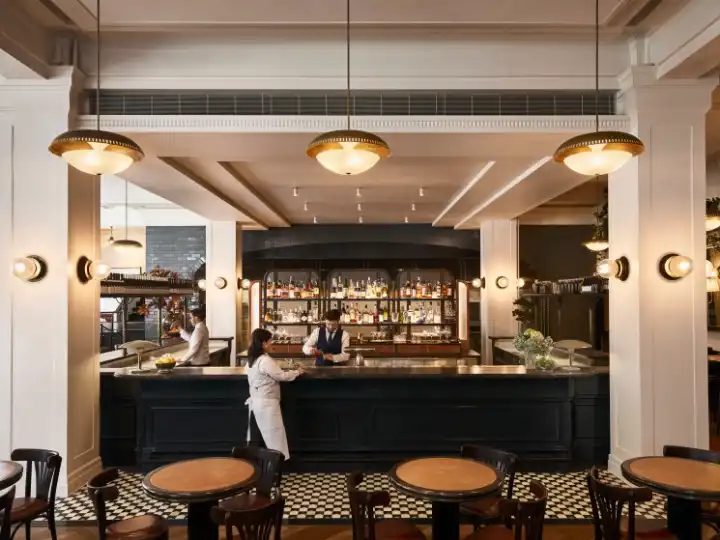
Wildflower Studios: The production company bringing Hollywood-style filmmaking to New York
Culture 2025-12-24 08:01:40

Wildflower Studios: The production company bringing Hollywood-style filmmaking to New York

“There is no other facility like this,” says Adam I Gordon, co-founder and managing partner at Wildflower Studios, the newest production lot in New York’s growing ecosystem of film and television facilities. Filming of the studio’s first project commenced in October but the idea for the site came to its founders five years ago.“It turns out that New York has been underserved for many years in terms of studio space,” Gordon tells monocle during the 30-minute drive from Manhattan to Wildflower Studios in Queens. As the owner and developer of one of the city’s most expansive networks of warehouses – whose largest client is Amazon – he started receiving enquiries from studios seeking spaces big enough to shoot their programmes in. “I started getting knocks on my door,” says Gordon. “After the fourth or fifth knock, I decided to do some research.”Adam I Gordon, co-founder of Wildflower StudiosThat entailed visiting an old friend who is well versed in making films, Robert De Niro, who today co-owns Wildflower Studios. “We have been friends for two decades,” says Gordon. “When I went to see him, I discovered that he had a strong interest in developing a film studio. He sent me on a listening tour to Los Angeles, Atlanta and New York to find out more about the cities’ stock of film studios.”During those visits, Gordon was inspired to refresh the template that film complexes were conventionally modelled on. “I felt that the design of these spaces wasn’t particularly well thought out,” he says. “There were these incredibly creative people who were spending their careers working in tired warehouses of every shape and size. But the buildings were often quite dispiriting and dull.”“I have spent my career thinking about environments that elevate us,” says Gordon, referring to the series of boutique residential properties that he has developed across New York over the past few decades. Before bringing them to market, he and his family would often move into the properties to test the renovated designs.“I have always been interested in how a place can make us feel more inspired,” he says. “And I thought, ‘What if we could combine these optimal ingredients and create a kind ofmise en placefor film production in New York – bringing together the poetry of a beautiful place with the city’s great food and a hospitality culture that elevates people and their experience of making art.”To conceive a building as complex as a film studio, Danish architect Bjarke Ingels was brought on board. His designs flip the script on how studio lots are usually laid out. Traditionally, soundstages – soundproof rooms in which films are shot – occupy hangar-like buildings on large footprints of land. Wildflower Studios is more compact. The 2.2-hectare plot was built on the former manufacturing site of piano-makers Steinway&Sons (which still operates a factory nextdoor) and houses 11 soundstages.The soundstages have been stacked vertically – a first for the design of a studio complex – and are all enclosed behind the  building’s striking, panelled edifice. “There is no such thing as an urban, vertical studio anywhere else,” says Gordon. “We have the only one in the world.”The studios contain 11 soundstagesSleek metal panels line the wallsThe goal of that design, he says, is to streamline the process of making a film. “We sat down with the people involved in the day-to-day business of filmmaking to gain a better understanding of how it works,” he says. “We asked everyone from lighting experts and actors to hair-and-make-up artists, carpenters and directors, ‘How do you like to work? What or who do you need to be working next to?’”Gordon estimates that the design of Wildflower Studios will make the facility’s output between 20 and 30 per cent more efficient than that of other production companies. This streamlined approach affects every aspect of the filmmaking process, including transport.Inside the studios, an oversized turntable allows trucks moving sets, building materials and other equipment to drive in and be rotated, before reversing the short distance to one of the six “elephant elevators”. These lifts then transport their contents upstairs to the workshop spaces that adjoin every soundstage. “People often ask us how we can provide sizeable studio facilities in a space-constrained city such as New York,” says Oscar Morales, Wildflower’s vice-president of development. “I think that we have knocked it out of the park. Not only are you able to film in a large studio but you can also access it very quickly. It’s really simple to move between one part of the building to another.”Adam I Make-up stations in the dressing roomsEach soundstage at Wildflower Studios is interconnected. Retractable walls allow for several productions to occupy different soundstages at the same time and make it easier for a single production to film across multiple rooms. This is particularly useful for TV series that require shooting scenes over more than one set at once. As part of the initial soundproofing process, bowling balls were dropped onto the floors to assess whether sound would seep from one stage to the next. It didn’t.Open for business: Retractable doors link the soundstagesGordon also took into consideration the welfare of the actors who would be working in the space when he came up with the studios’ design. At other, more spread-out complexes, paparazzi photographers are often found attempting to scale the walls or sneak in to get behind-the-scenes shots of actors. Wildflower Studios’ self-contained nature, however, allows high-profile actors to discreetly move between the stages between takes.“Everyone here is treated the same and receives the same level of service,” says executive director Cheryl Huggins, who oversees the studios’ daily operations. The dining rooms capture this sense of warmth, with handsome wooden furniture crafted by San Francisco-based studio Fyrn and paintings by Robert De Niro’s late father, the abstract expressionist painter Robert De Niro Sr. The rooms also play host to chefs from across New York’s restaurant scene, in addition to the regular menus.Private dining room featuring furniture by Fyrn and lighting by Isamu Noguchi“We want to do everything that we can to make the production staff’s day go smoothly,” says Huggins. “If that means having a coffee cart pull up to their soundstage as they’re unloading at 06.00, then we’ll do it. Many people have already walked through here – line producers, for example – and their jaws are always on the floor. They say that they can’t believe that they can work somewhere like this.”One goal of the new complex is to attract productions back to New York – a city that is often portrayed on screen through soundstages in other filmmaking hubs such as Los Angeles, Toronto, Atlanta, Calgary and London. “This type of studio has never been built before,” says Gordon. “It takes a completely different approach. It has enabled us to create an industrial building that is able to function while being beautiful in a novel way.” — Lwildflowerstudios.comBusiness benefits:While several North American metropolises have boosted their film-making ecosystems, producers often prefer locations where the cities themselves are part of the draw. “People want to be in New York,” says Gordon. The 30-minute drive from Manhattan to Queens means that the best of the Big Apple is within easy reach.Rooftop solar panels generate 1.4 megawatts of electricity


Tuned in
Culture 2025-12-26 07:04:17

Tuned in

The traditional commute may have taken a hit from flexible working, parking restrictions and people eschewing car-ownership but drive-time radio is still speaking up around the world – even if some audience members are listening on their laptops at home. Station bosses want engaged listeners, while advertisers want to connect with everyone, especially people humming along as they edge along in traffic jams. It’s a coveted slot for those behind the mic too – hosts get here only by having spent years honing their craft, perfecting a welcoming tone that’s both authoritative and relaxed. Here, we celebrate the drive-time hosts who drum up engagement and continue to reel in remarkable audience numbers. Whether in Amman, Mexico City, Singapore, Seattle or Berlin, these presenters have fine-tuned their shows to match the time of day and mood of their city – not to mention the relaying of those all-important traffic updates. It’s this spontaneity that instils drive-time radio with a unique charm that can’t be replicated by podcasts or music-streaming services, despite the rhetoric that these mediums continue an unassailable rise. These six presenters might play music, broadcast news or engage listeners with games and competitions but each has mastered how to accompany their audience at a crucial part of the day – while making breakfast, during the commute, post-pick-up with a car full of children or easing into the evening at home. What unites them all is the relationship with listeners (something that isn’t necessarily shared by podcast hosts and music makers) and a clear understanding that what they do isn’t one-sided. Instead, it’s a collaborative endeavour that’s all about bringing people along for the ride.SingaporeThe hallway that leads to the CNA938 recording studio gives guests a tour of Singapore’s radio landscape. You’ll see door after door adorned with the logos of popular English, Tamil, Malay and Chinese-language stations, while their diverse music and chatter is safely soundproofed as they broadcast live to listeners across the city-state. CNA938 is the radio station of Singapore’s multimedia news channel CNA. Its studio has large windows that overlook the open-plan newsroom. It’s relatively quiet when Andrea Heng and Hairianto Diman, hosts of the flagship English-language morning drive-time showAsia First, take to the air at 07.00. By mid-morning, though, the newsroom is bustling. “Growing up, drive-time was always on – when you’re sitting in the car with your dad as he takes you to school, that kind of stuff,” says Heng. “It’s the time when you catch up with everything that’s happened overnight around the world.” As the station’s opening show,Asia Firstsets the tone for the day. Despite its news focus, the spirit is conversational and often fun – in part due to Heng and Hairianto, whose friendly banter and natural rapport belie the fact that Hairianto only joined as a co-host in May. He and Heng are adept at handling the range of issues that come across their desk – be they wars and elections or extra legroom on aeroplanes – and flit seamlessly between the gravitas required for serious topics and the humour better suited to lighthearted ones.The duo also enlivens commutes with an interactive “Question of the Day” segment, where they ask a question on air and listeners send in responses via Whatsapp. The pair solicit opinions on everything from at-home work policies to Taylor Swift.Knowing that many listeners are alone in their cars and could be stuck in traffic, Heng and Hairianto see themselves as hosting a chatty dialogue with the audience rather than simply acting as newsreaders or staid presenters. Which is to say: they welcome dissent. “We have comments that come in saying, ‘No, we don’t agree with what you’re saying’ – and then that becomes a conversation as well,” says Hairianto. The listener submissions channel is always open and Heng and Hairianto occasionally share random messages. This spontaneity givesAsia Firstan endearing intimacy and can reveal the surprising topics that the audience want to give their two-cents on: a recent news item about dental hygiene prompted a listener to chime in with toothbrush recommendations. Fresh take.“It’s direct and personal, and we keep it that way,” says Heng. “That’s something only radio can do.”Hosts: Hairianto Diman & Andrea Heng Programme: Asia FirstStation: CNA938Frequency: 93.8 FMOn air: 07.00 to 10.00 from Monday to FridayWeekly audience: 255,000Established: 1998 (as NewsRadio 938)Studio superstition: Never say it’s a slow news day – you’ll jinx it!Amman“Getting you home and playing your favourite music” is the simple promise that rings out from Play 99.5, in between pop tunes, lively ads and the mellifluous voice of Dana Darwish. The host has been accompanying Amman on the afternoon commute on Jordan’s top English-language radio station for the past five years. It’s a demanding four-hour shift every Sunday to Thursday from 15.00 to 19.00. During that time, Darwish expects to have multiple audiences, as the average car journey in Amman lasts just 20 minutes. The journeys might be short but Darwish understands that her listeners are impatient to get home. “That’s Jordanians,” she says. “If we’re kept at a stop sign for two minutes we lose our minds.” As a result, Darwish tries to keep her tone relaxed: “I try to be as soothing as possible. Maybe one day I will shift careers and start doing sleep podcasts.” As well as playing the hits – Darwish is aware of her young audience, made up mostly of 16 to 25-years-olds – the host is keen to use her show as a force for good. “I’ve revolved my entire show around bringing other people’s stories to light,” she says. Segments such as “Under the Spotlight” call attention to the talents of ordinary people, while “Play with the Athletes” showcases the Jordanian sports stars that, according to Darwish, don’t get their dues in the country, such as the taekwondo athlete Julyana Al-Sadeq. Play 99.5 has also built a reputation for its “out-of-the-box” competitions. One in particular – sponsored by the vehicle brand Jaguar Land Rover – is “forever etched” in Darwish’s mind. “The competition was getting people to roar like a jaguar,” she says. “I sat in the studio for hours just listening to voice notes of people roaring.” The partnership isn’t just an example of the programme’s proclivity for mood-boosting silliness either. It’s one of the many brand collaborations that kept theDriveBack Showgoing as a commercial success. Similarly, Jordan Kuwait Bank has sponsored the show for almost five years. Darwish is aware that the live radio landscape is changing but she remains confident in the continued appetite for shows like hers. The live element, she posits makes every show unique and can’t be replicated. “If you think about football, whether you’re watching today or tomorrow, the game isn’t going to change,” she says. “But why do you want to watch it live? Because it’s happening now, everyone’s together and you see people’s reactions. Radio is the same. We’re in the traffic together, listening together, chatting together – it creates a community.”Host: Dana DarwishProgramme: The DriveBack Show with Dana Darwish Station: Play 99.5Frequency: 99.5 FMOn air: 15.00 to 19.00 from Sunday to Thursday Daily listeners: 200,000 Established: 2018Favourite artist: MacklemoreBerlin“I’m probably the only early morning presenter who doesn’t drink coffee,” says Marco Seiffert. Instead, the host drinks plenty of water at the break of dawn, during his drive into the Potsdam studio of Radioeins, a channel from Berlin-Brandenburg public broadcaster RBB.Der Schöne Morgen(“The Beautiful Morning”) is steered by Seiffert along with his colleague Tom Böttcher every weekday, with the pair alternating with a female duo every other week. Since Seiffert joined in 2006, it has become the most listened to morning show in Berlin, Germany’s most competitive radio market. Seiffert sees the presenter’s role as catching his audience up with what’s happened during the night and what’s going on in Berlin and Brandenburg that day – as well as playing great music, of course. Instead of prank calls and prize draws, you’ll find witty jokes from the hosts and political analysis from leading journalists on all sides of the political spectrum. There’s also economics, arts, culture and sports coverage, and listeners can ask the kind of unusual questions that they’ve always wanted answered. Listeners are also encouraged to request songs that have somehow disappeared into the ether. Rather than being a Tiktok playback station too, music onDer Schöne Morgenserves as an exploration into new and unfamiliar realms. “Our selection requires a certain tolerance,” says Seiffert. “You’re going to find gems but you’re probably not going to like every single song. In my opinion, our listeners want to be reliably informed but they also want to be constantly surprised in terms of topics and music. Spotify and podcasts can hardly offer that.”For the many listeners who tune in on their way to work – stuck in traffic or waiting at the train station – Seiffert sees the programme as a “familiar companion”. And despite serving listeners at rush hour, no one at the show is in a hurry. Live interviews often last up to four minutes, more than double the average of the show’s competitors.Der Schöne Morgenalso doesn’t shy away from an argument. “Politicians can handle it,” says Seiffert. “You have to poke them a little, otherwise it gets boring.”Overall, Seiffert puts the show’s success down to its authenticity: its hosts are allowed to be themselves, whatever their mood. “We don’t feel this inner pressure to be artificially cheerful,” he says. “I’m no different on and off air. If my favourite football team has just lost, I can be despondent. If I’ve been to a concert the night before, I might be a bit tired. It’s OK.”TheDer Schöne Morgenstyle is so unique in Germany that the show has developed a cult following far beyond the broadcasting area – and Seiffert, in particular, appreciates when listeners continue to tune in on holiday or after moving away from Berlin. “It’s always exciting for me when people take us with them wherever they go.”Host: Marco SeiffertProgramme: Der Schöne MorgenStation: Radioeins Frequency: 95.8 FMOn air: 05.00 to 10.00, from Monday to Friday (from 06.00 on the weekend)Daily listeners: 366,000Established: 1997Favourite song: Die Ärzte, “Junge”SeattleWhen the weekday clock strikes 16.00 on the US’s West Coast, a pre-recorded voice announces, “You’re listening toDrive Time with Evie Stokeson KEXP.” To avid listeners of the Seattle-based independent radio station, the name still takes some getting used to. For over 20 years, music-industry veteran Kevin Cole – who cut his teeth as a DJ at Minneapolis club First Avenue, where he counted Prince among his fans –commanded the afternoon slot.Stokes took over the prime-time post in July, having worked her way up over 17 years from pulling records as an unpaid assistant to grinding out five-hour overnight shifts and, most recently, hosting Sunday afternoons. Now she peers out of the broadcast booth’s window while the station’s popular café and record store hums with customers. Drive Timereaches 75,000 listeners weekly, according to Nielsen Media Research. While those figures are relatively modest, KEXP’s outsized influence comes from its tastemaker reputation for breaking up-and-coming artists. Touring musicians detour to Seattle so they can record one of the station’s highly coveted “Live on KEXP” sessions. Stokes has hosted the likes of psychedelic rockers Crumb, southern gothic singer-songwriter Ethel Cain and London-based Afro-electronic outfit Ibibio Sound Machine.Stokes’ promotion comes at a propitious time for KEXP, which acquired a new frequency and began broadcasting on FM radio across the San Francisco Bay Area in March. The expanded range has led to a double-digit percentage growth in listenership. Broadcasting until 19.00, Stokes soundtracks the afternoon commute on the West Coast, while remaining mindful of KEXP’s global listeners who tune in digitally. “A lot of people are winding down and settling in at home,” says Stokes. “I’ll ask them what they’re cooking for dinner. But then I have listeners in Australia going out for their morning run.”She starts each show with a rough outline but allows the day’s mood to lead her. She’s also receptive to listener requests, even oddball ones. “A listener might request a song about horses and, before you know it, I’ve played seven songs on that theme,” she says.Her empathetic voice also reaches her audience in their hour of need. A listener once requested comforting songs while lying in bed with a partner in the final moments of hospice care. “I looked for songs to bring them some peace,” she says, such as “Love is Stronger than Death” by The The.These examples reflect Stokes’ attitude to radio and its uniquely live values. While she won’t shy away from solemnity when necessary, Stokes sees the afternoon peak as an ideal time to deploy her on-air philosophy, “Radio is best when it’s unexpected, thoughtful, fun to listen to and laugh-out-loud funny.” We couldn’t agree more.Host: Evie StokesProgramme: Drive Time with Evie Stokes Station: KEXPFrequency: 90.3 FMOn air: 16.00 to 19.00 from Tuesday to FridayWeekly audience: 75,000Established: 1972Favourite song: Tears for Fears, “Everybody Wants to Rule the World”Mexico CityEight years ago, when Mexican radio presenter Gabriela Warkentin launched W Radio’s morning news show, the drive-time slot in Mexico City was tired and saturated. “We didn’t want to recreate the same hard-hitting product as other stations,” says Warkentin, who also works as a columnist for Spanish newspaperEl Paísand Mexican titleReforma.Así las Cosas(“That’s the way it is”) was the result: a grounded show that delivers the news without over-dramatising the region’s political events. “The city is characterised by a tense and often violent social landscape: W Radio wants to offer clarity about complex subjects,” says Warkentin, sitting behind her mic, surrounded by broadsheet newspapers as she readies herself to read the day’s headlines.On air between 07.00 and 10.00 every weekday,Así las Cosassets listeners up for the working day. “Morning radio is a window for real-time interaction,” says Warkentin, who gets feedback from her listeners through call-ins and the station’s Whatsapp and social media channels. “There’s a tradition of cultivating a relationship with an audience via the radio in a way that cannot be achieved with television.”On occasion, Warkentin’s excitable tone rises like that of a football commentator but it’s always tempered by her sharp insights. Loyal listeners engage in a dialogue with the presenter, offering feedback that has shaped the show. “Initially, there was criticism when we opened the broadcast with tense news stories. It’s not that listeners don’t want to know; they just don’t want to hear it as soon as they get out of bed,” says Warkentin. To create a smoother wake-up call that doesn’t demand so much of listeners, she now holds off until the second hour to cover tough topics. The programme now opens with an eight-minute news summary before Warkentin is joined by an economic or political correspondent for an in-depth conversation about the most pertinent story of the day. Warkentin wraps up the third hour with sports and science news. In between news and discussion segments, she plays upbeat Latin American music. Being one of the first voices to break domestic and international news has made Warkentin resilient. “During Mexico City’s large-scale earthquake in September 2017, W Radio kept broadcasting past midnight to try to spread information as effectively as possible. Listeners were scared – and so was I.”Warkentin’s morning programme remains a welcome daily comfort, not only for residents of Mexico but also for the nation’s expats in Dubai, Tokyo, Sydney and beyond. “The morning slot provides a cathartic social moment,” says Warkentin. As the clock strikes 09.00 and W Radio’s countdown reverberates around the studio, Warkentin has a final scan of her script to prepare to go back on air for the closing hour of the show. “The real power of radio lies in its collective companionship.”Host: Gabriela Warkentin Programme: Así las CosasStation: W RadioFrequency: 96.9 FMOn air: 07.00 to 10.00 from Monday to FridayDaily listeners: 497,000 Established: 2016Favourite topic: Current affairs

Sharp dressing at The Decorum
Fashion 2025-12-24 00:01:50

Sharp dressing at The Decorum

FashionBangkok, ThailandJanuary 9, 20243 MIN 21 SECSharp dressing at The DecorumThe Bangkok-based retailer and fashion label has been recognised as the top emerging fashion outpost in Monocle’s inaugural Retail Awards. We meet co-founder and creative director Sirapol Ridhiprasart to talk about dressing The Decorum way. The brand’s silhouettes blend Thai style with classic British footwear, Japanese tailoring and more.Editor Helena KardováSubscribeEmailiTunesYouTube

Emily in limbo: The pull of Rome causes a diplomatic stir
Culture 2025-12-24 11:00:50

Emily in limbo: The pull of Rome causes a diplomatic stir

Whovswho?FrancevsItalyWhat it’s about:Emily in Paris, the Netflix series about an annoying American woman inhabiting a clichéd simulacrum of the French capital. It has become an enormous global hit, very possibly because it permits non-American and non-French people to sneer loftily at American and French people at the same time. Rumours abound that its titular character might be heading to Rome, and French president Emmanuel Macron, for one, is not having it: “Emily in Paris in Rome,” he has declared, “doesn’t make sense.” Rome’s mayor, Roberto Gualtieri, responded: “One can’t control the heart: let’s let her choose.” More pointedly, Gualtieri wondered, “Doesn’t President Macron have more pressing matters to worry about?”Giulia Parmigiani / NetflixWhat it’s really about: All criticism of Emily in Paris aside, it has been an immense soft-power boon for France. Sales of French brands worn by the characters have spiked. A study by France’s national film centre found that about four per cent of recent visitors to France had been inspired by the show. Four per cent of France’s tourist business is a perfectly reasonable thing for the president to worry about. Even Brigitte Macron is such a fan that she made a cameo appearance during the most recent season.Likely resolution: Further wrangling over what is clearly a valuable media property, while the producers figure out how to milk this rivalry.

Step into atelier Luca Avitabile, Naples’ bespoke shirtmaker
Fashion 2026-01-15 16:42:41

Step into atelier Luca Avitabile, Naples’ bespoke shirtmaker

Calling on an expert cloth-cutter shouldn’t be reserved for special occasions or formal suiting. Skilled artisans around the world take commissions for everything from made-to-measure shirts to custom-made gloves, ties and footwear designed to last a lifetime. Booking an appointment with a local tailor or visiting a specialist atelier while on the road is a smart investment that will ensure that you feel good and look your best during professional engagements and social gatherings. The process also opens up opportunities to build relationships with the people making your clothes and to follow the process from beginning to end, a refreshing change from fast fashion and next-day deliveries.Naples is a city that’s teeming with workshops that produce one-of-a-kind items. You’ll find the best ties at Marinella, expertly cut trousers at Marco Cerrato, elegant leather gloves at Omega and the finest-quality shirts at Luca Avitabile. “A made-to-measure shirt offers almost infinite possibilities and a level of comfort that is hard to get any other way,” says Neapolitan shirtmaker Luca Avitabile, who is part of a tight circle of southern-Italiansartorieoffering bespoke shirting for discerning shoppers from around the world.Finished productsPersonal measurementsEarning your stripesThe experience of having a shirt made at Avitabile’s atelier usually starts with a walk along the streets of Naples. Connoisseurs know to steer their way to Via Toledo, a hectic shopping promenade in the city centre. Between the blinking shop signs, they duck through a discreet entryway, walk one flight up an echoing stone stairwell, ring the bell and step into Avitabile’s terrazzo-floored fitting room. After a cup of coffee and the usual pleasantries, Avitabile will pull out a tape and swiftly start taking measurements. It is a seasoned performance. Avitabile was born into the trade – his father was a shirtmaker, as were his grandparents – and also has a degree in shirt-cutting from the Instituto Secoli in Milan.The model of the shirt follows the Neapolitan custom of having slightly higher armholes than the English standard. “It allows for a snug fit without sacrificing comfort,” he says. Then it’s time to get creative and choose from an array of options: the shape and stiffness of the collar, the type of cuff, the question of front pockets. In Avitabile’s drawers, there are hundreds of fabric swatches, from striped Carlo Riva twill to Alumo’s soft Swiss cotton or even Japanese denim. And don’t forget the buttons: should the mother-of-pearl be Australian or Tahitian? Though Avitabile works with old-school rigour, his version of the tailored look is relaxed. On most days the shirtmaker wears the Friday polo, sewn from a lightweight piqué fabric, paired with a sharp overshirt. The casual models were introduced in 2020 as part of a ready-to-wear line and have proven to be just as popular custom-made. “Clients who come for a classic shirt usually add a [made-to-measure] overshirt or a polo to their order,” says Avitabile.Choosing materialsAfter the introductory appointment, Avitabile sits down to cut a shirt pattern from plain muslin. He then follows this up with a fitting. “This is the most delicate part of the whole process,” says Avitabile, who is a firm believer that there is nothing that can’t be fixed with a few pins and another turn of the sewing machine. “That is my favourite part.”After the fitting, the atelier is ready to start cutting into real fabric. Within six weeks the finished shirts land on customers’ doorsteps, wherever they are in the world. The workshop archives every customer’s personal shirt pattern, meaning that after your first order, in-person fittings are no longer essential.Of course, this decidedly old-fashioned process is far lengthier than heading to a department store and picking out a mass-produced item that’s sitting on a shelf. But it’s also a satisfying one that gives you a chance to invest in valuable craft traditions, experience exceptional service and get creative too.lucavitabile.itMonocle comment: Fast fashion is convenient but also limited and bad for the environment. Having clothes tailored puts you at the centre of the process – and the outcome. The result? A wardrobe that you’ll love for a lifetime.

The cultural agenda for autumn 2024
Culture 2026-01-10 07:23:25

The cultural agenda for autumn 2024

Q&A: FranceLambert WilsonFrench-language showLa Maisonon Apple TV+ follows two rival families as they compete for dominance in Paris’s high-fashion world. The cast includes Lambert Wilson as star designer Vincent Ledu. Here he discusses his role, his character’s taste and learning to sew. Your character is a harsh person. Did you enjoy playing Vincent?I like playing kings. Vincent reigned at a time when he only had to answer to critics in magazines, so he is not prepared for the online criticism that he receives. I understand how social media might be a struggle for people who are not used to it. What is your favourite piece from Vincent’s wardrobe?The costume designer introduced me to oversized trousers by Yohji Yamamoto, which have incredible lines that work well for tall men. They have now become an essential part of my outfit when I’m on stage. I have started dressing in all black like Vincent too. How has this show influenced your outlook on fashion?I learned the basics of lacemaking and sewing for the show, so I now pay more attention to how clothes are constructed. I have continued to hone my skills since shooting. I don’t think that I could make a whole suit but I could definitely stitch a perfect shoulder.Literature: Brazil & USABruna Dantas LobatoBruna Dantas Lobato is a writer and translator of Brazilian literature. Her translation of Stênio Gardel’s novel,The Words That Remain, won the 2023 National Book Award for Translated Literature, while her own fiction has been published inThe New Yorker.Dantas Lobato’s debut novel,Blue Light Hours, will be published this October. It focuses on the changing relationship between a mother and daughter when the latter moves from her hometown in Brazil to university in the US. Here, Dantas Lobato speaks to us about the novel’s themes, her writing process and the art of translation.How did ‘Blue Light Hours’ come to be?I really wanted to write the book and have it be an immigrant novel; a campus novel; a mother-daughter novel. But I also wanted it to be simple and focused on their relationship. I’m not one of those writers who can plan ahead. I didn’t know how to pull it off until I started writing, so I kept reshaping it and moving things around until I found out what I was actually trying to do. It is very dialogue-heavy. I love writing speech. How did you get into translation?When I moved to the US, I was reading all these wonderful books from Brazil that I couldn’t share with the people around me. So much of the writing coming out of Brazil was beautiful and no one knew. Has your work as a translator influenced your own writing practice?Being a translator is like having training wheels as a fiction writer. You constantly think about form, dramatic effects and how to construct a scene. I also had a lot of guidance from more experienced authors who knew what they were doing better than I did. I am a translator because I’m a writer – and I know I’m a writer because I’m a translator.Arts: USAKiosk culture“Are We on Air?” says the awning of Kiosk-o-thèque on Hollywood’s Sunset Boulevard. It’s the latest project by Arman Naféei, host of a monthly podcast also called Are We on Air? and founder of creative agency Studio Neu. The kiosk is opposite the Chateau Marmont. Naféei spotted it when he was the hotel’s director of ambiance, a role that tasked him with creating the perfect mood for guests.“I had my eyes on the newsstand when it shut down during the coronavirus pandemic,” Naféei tells monocle. “I knew that the location would be perfect for my kiosk. A million cars drive by every week. I call it an experiential billboard.”The kiosk is a mix of gallery, bookshop and podcast studio. It is also used for events, from a book-signing party with artist Nadia Lee Cohen to a pop-up celebration of the latest film by director Yorgos Lanthimos. “It’s anything you want it to be,” says Naféei. But among the vintage magazines and vinyl, you’ll still find the weekend papers.To hear the full interview with Arman Naféei, listen to ‘The Stack’ on Monocle Radio.Film: ThailandIndependent visions“Cinema still excites me as much now as it did when I was a child,” says Thai filmmaker Apichatpong Weera­sethakul, the writer and director of dream-inspired films such as Palme d’Or winnerUncle Boonmee Who Can Recall His Past LivesandMemoria, starring Tilda Swinton. Weerasethakul the independent auteur, who writes his own scripts and expertly secures funding from organisations in France and Germany, must split his schedule with Weerasethakul the artist, a busy man, who hosts exhibitions around the world.October sees the 54-year-old host two shows at the Centre Pompidou in Paris.Night Particlesis an exhibition of video artworks using projectors to channel Thai horror films. It’s textbook Weerasethakul.A Conversation with the Sun, meanwhile, is his first experiment with virtual reality. The videos encourage audience participation and are accompanied by a score by the late Japanese composer Ryuichi Sakamoto. But Weerasethakul has made it clear that virtual reality isn’t the future of cinema. Instead, he views it as an “open space” in which directors set a stage for the audience rather than try to control everything – as in traditional cinema. Weerasethakul is a purist about his feature films, which are intentionally shot for the big screen. His next film will be shot in Sri Lanka and loosely based on the work of British science-fiction writer Arthur C Clarke. It’s a subject close to Weerasethakul’s heart as he has read Clarke’s work from a young age. “Looking through a camera makes me feel as curious as I did when I encountered science fiction as a child.”

Behind the scenes at Studio Galazio: Challenging Greek stereotypes through regional storytelling
Culture 2026-01-11 05:16:45

Behind the scenes at Studio Galazio: Challenging Greek stereotypes through regional storytelling

It’s a clear day in Mykonos and Studio Galazio is shooting its debut feature along the Greek island’s port promenade. No one, however, has banked on the six cruise ships that have decided to show up, delivering hundreds of day-trippers onto terra firma. Crew members in hi-vis yellow gilets are trying to move through the crowd, redirecting those who have paused to take pictures. The film’s director of photography crops the shot tighter to keep the disobedient tourists – including a Spaniard who is convinced that she has spotted Paris Hilton (she hasn’t) – out of frame. “We honestly haven’t had too many difficulties,” says the film’s writer, director and co-producer, Christopher André Marks. “Shooting live at the port was always going to be a challenge because it’s so busy.”First take – and not the lastDirector of photography Christos KaramanisChristopher André Marks (wearing headphones) watching the action unfurlSporting a half-unbuttoned shirt, Marks is rarely stationary, giving advice to his actors one minute and then shifting to watching the action on a handheld screen the next. Alongside his numerous jobs on set, he’s also the founder of Studio Galazio, whose name is taken from the Greek for “light blue”. This film, which everyone on the shoot is tight-lipped about, is an as-yet-untitled feature loosely billed as a heist comedy in the vein ofOcean’s Eleven. It could see a release in late 2025.Marks is a Greek-American raised in California who spent years working in film production in New York, including for the likes of ESPN and HBO. The 36-year-old’s breakthrough moment was directingKing Otto, a 2021 documentary about Greece’s improbable triumph in the Euro 2004 football tournament under German manager Otto Rehhagel. The film was released in 75 countries and boosted the profile of Studio Galazio, whose mission to get more Greek stories on screen. “Being Greek is kind of a dominant trait; it’s an inherent part of who you are,” says Marks from a table at a nearby restaurant, as actors and crew break for lunch. “But I also see Greece as an opportunity.”Marks is the film’s writer, director and co-producerMarks is quick to recognise that Greece is already having what some might call “a moment”. The country has been steadily recovering from its 2009 economic crisis, with Athens luring investors and remote workers as a result of its relatively low cost of living and clement weather. Marks hopes to “add to the momentum” of Greek cinema, which has seen Hollywood arrive on its shores thanks to an attractive 40 per cent tax-rebate programme. There is also plenty of regional talent, from production crews to actors. TakePoor Thingsdirector Yorgos Lanthimos, who rose to prominence in 2009 following the success of his Greek-language filmDogtooth, which won the Un Certain Regard prize at Cannes Film Festival. The recent popular Greek Netflix drama seriesMaestro in Blueis further proof that the talent pool is deep. Two of the show’s leading figures, Klelia Andriolatou and Maria Kavoyianni, also happen to be in Studio Galazio’s new production. When Monocle visits, Andriolatou is shooting a scene at windmills near Mykonos’s port with celebrated actor Panos Koronis.As part of its mission to showcase Greek stories, Studio Galazio combines universal themes with Greek topics, which are neatly packaged for a global audience that’s increasingly comfortable with foreign content. Marks is keen to show that Greece is more than just a sunny setting for films. “The country makes for a beautiful backdrop; many foreign producers shoot here,” he says, referencing features such as Richard Linklater’s 2013 romantic drama,Before Midnight. “But what we’re trying to do is showcase Greece from a storytelling perspective.”Filming at Mykonos’s iconic windmillsKey movie propTakes and more takes at the windmillsGiven that the characters in Marks’s Mykonos film are from different parts of the world, English is the predominant language as the drama unfolds. But if two Greek characters are speaking, then the scene plays out in their native tongue. Most of the crew are Greek, as are some of the producers, including basketball player Giannis Antetokounmpo, who has a production role via his company Improbable Media. But there are also Italian, French, Spanish and Turkish speakers on set. They are joined by international on-screen talent including the likes of US actor Vito Schnabel and Italy’s Riccardo Scamarcio. “The ensemble aspect of the film was key for me,” says Marks. “Ocean’s Elevenwas shot with Brad Pitt, Matt Damon and Bernie Mac. I really wanted to have that same kind of team, where every single actor could carry a film on their own.” Still, Marks admits that the budget for the shoot is modest, though co-producer Ginevra Tamberi is quick to add that it is on a par with some other European films.We shift locations to the interior of one of the windmills that faces the twinkling Aegean. On the day Monocle visits, it doubles as a make-up studio. Tamberi is sitting on a sofa and keen to emphasise the tightknit nature of the crew. “They have all grown so close to Chris,” she says. “They see the project as a love letter to Greece – and they want to be a part of it.” Tamberi has known Marks for more than a decade and the pair have always said that they would make a film together. Tamberi left a job at Amazon MGM Studios before making it happen and is sure that it was the right decision. “I believe in Chris,” she says. “And I believe in storytellers. They should be given every opportunity to showcase their vision.”But Tamberi isn’t the only one to have been left with a lasting impression of Marks. The film’s production designer, Kostas Pappas, is in charge of scoping out and dressing sets, including a fishing village that we visit about a 30-minute drive from the windmills. Pappas is a colourful character who cut his teeth in New York and has worked on films such asThe Bourne Identityand Lara Croft:Tomb Raider – The Cradle of Life, both of which were shot in Greece. Standing beside one of the windmills as the sun goes down, he describes being struck by Marks’s humble demeanour when he first called him about the project. “For me, it was a comfortable job,” he says.“What was more interesting was the way that Chris approached me. I liked his story as a Greek trying to find his roots.”Scenic painter Apostolis PolychroniadisCo-producer Ginevra TamberiWhile there is a lot resting on Marks pulling off the Mykonos heist film, it hasn’t stopped him from planning future productions. He is currently laying the groundwork for two other projects: a biopic and what he calls a “prestige series”, an industry phrase used to refer to complex, big-budget content. It’s all part of an effort to build a recognisable brand for Greek film. “People know when they’re watching French or Italian cinema,” he says. “It would be great if Greece had that same kind of identity.” Perhaps his Mykonos feature will be the first step towards making it happen.Lights, camera, Athens:Projects filmed in Greece1. Mykonos (Title TBC), 2024Studio Galazio’s debut follows a group of thieves as they rob rude tourists – and a love story that crosses the divide.2.‘Maestro in Blue’, 2022-presentNetflix’s first Greek series, on the island of Paxos, taps into forbidden love.3.‘Glass Onion: A Knives Out Mystery’, 2022A murder mystery set on a billionaire’s private island.4.‘Beckett’, 2021A tourist loses his girlfriend in a car accident and is caught up in a political manhunt.5.‘Tehran’, 2020-presentThis Israeli Apple TV+ series turns parts of Athens into Iran’s capital.

Scandinavian minimalism with an inviting generosity
Fashion 2025-12-20 04:28:24

Scandinavian minimalism with an inviting generosity

In an industry as fast-paced as fashion, the value of long-term collaboration can easily be forgotten. But some creative relationships deserve to be more than just flings. Stockholm-based luxury fashion label Toteme has called on design and architecture studio Halleroed for 10 years to help create a visual identity for its offices and shops. What started as a commission to design the label’s first office in New York has flourished into a global partnership. Toteme’s co-founder Karl Lindman and Christian Halleröd, his counterpart at Halleroed, have worked together to design shops in London, New York, Los Angeles, Shanghai and Seoul, establishing a design language that is as recognisable as the brand’s signature outerwear and contrast-stitch knits. They have proven that architecture and good interior design can help to define a label. “Our shops have become the physical expression of Toteme as we develop into a global business,” says Lindman.When Monocle visits Toteme’s Stockholm headquarters in the Stureplan neighbourhood, we find Halleröd sitting across from Lindman – a position you’ll find him in whether the duo are sharing design references or plotting their next project. “With every new shop, we’re getting closer to what Toteme stands for,” says Halleröd. “As interior architects, we try to align with the brands that we partner with by following their work and putting in the research.” When the pair envision a new space, they try to capture Toteme’s aesthetic with neutral palettes and playful antique finds that add warmth and signal that this is far from your average Scandinavian minimalist label. “We want to be generous to our customers,” says Lindman (pictured, on left, with Halleröd). “Their time is important.”The first design reference that Lindman and Elin Kling, his partner and Toteme co-founder, shared with Halleröd was the work of Donald Judd, the US artist known for his clean colour palettes. “Looking back, I think that it was the first hint of what we would develop together,” says Lindman. A sense of restraint has come to define every boutique that they have since worked on, starting with the brand’s flagship on Stockholm’s Biblioteksgatan 5, designed to resemble a townhouse, complete with a lounge, a walk-in wardrobe and a bedroom. In New York, they went on to design an even more distinctive space in which metal shelving is placed next to striking patterned sofas by Austrian architect and artist Josef Frank. Customers come to replenish their denim and silk shirts but equally to see the vibrant patterns on Frank’s sofas up close and take in the interiors. “The design always remains pure and minimal to reflect Toteme,” says Halleröd.More recently, the pair worked on the brand’s first London opening. In a Queen Anne revival building on Mayfair’s Mount Street, you’ll find a marble statue from the 1900s by Swedish sculptor Carl Milles, a steel sofa by Australian industrial designer Marc Newson and various items by designers from the 1930s Swedish Grace aesthetic movement, including a coffee table by Otto Schulz and a couch by Olle Engkvist. “Every new project starts with a site visit and broad conversations about the city and Toteme’s place in it,” says Lindman. “The physical space that we work on needs to reflect where the brand is at that given moment. I’m not interested in applying a formula. Every city and neighbourhood is unique and should be treated accordingly.” For Toteme’s co-founder, this process of applying the brand’s design values and Swedish heritage in different contexts is the most exciting part of the retail-expansion process.Toteme’s next and biggest outpost will open this spring on Melrose Avenue in Los Angeles. Meanwhile, the original Stockholm flagship is currently under renovation and doubling in size. You can expect more Marc Newson pieces; the designer is a fixture in all of the brand’s flagships. For Stockholm’s, Lindman bought a sleek silver cashier desk from the 1990s that was designed for the Skoda boutique in Berlin. And he has become fond of a little ceramic statue of leaping zebras; so far, he has acquired two of these at auction and they are now installed in Stockholm and London. “If you come across another one, please get it for me,” he says.Halleröd nods, understanding what types of objects appeal to Lindman. “That’s the beauty of our collaboration,” he says. “We have built a common understanding of what we like. We share memories and references so, if I mention a zebra, for example, Christian immediately knows which one I mean.”As in any long-term relationship, the key to their success seems to be communication. “It’s our job to move different ideas forward, be it materials, techniques or architectural elements,” says Halleröd. “We’re always in dialogue.” According to Lindman, this type of open exchange between trusted partners is “part of evolving the brand while retaining our dna”. “Sometimes the best way to move forward is to be consistent,” he says.Toteme and the Halleroed studio also share a sense of pride about their Swedish roots, which, in typical Scandinavian fashion, their joint design projects express discreetly. “Eight years ago we found a sofa by functional designer Bruno Mathsson for the first Toteme flagship in Stockholm,” says Halleröd. “We are still finding new pieces from Scandinavian design history. Stockholm is quite clean in terms of lines and colour palettes. It’s not like Paris, where there are decorative layers to the interiors.” Further nods to their homeland can be found in details such as pewter railings made by Swedish ironmongers or the Milles statue in the London boutique. “We want to bring a minimalist Swedish aesthetic to different parts of the world and highlight the country’s design and art whenever we can,” says Lindman. “These shops are like embassies for us. We put our hearts into these spaces to leave room for emotions and discovery.”toteme-studio.com

Tour accessories label Cinabre’s Paris guest apartments
Fashion 2026-01-07 19:22:06

Tour accessories label Cinabre’s Paris guest apartments

In Paris’s Cité Bergère, a small and thoroughly charming pocket of the 9th arrondissement, is French brand Cinabre’s treasure trove of handmade silk ties, lapel pins, slippers and dressing gowns, showcased among vintage cocktail shakers, vinyl records, antique furniture and framed drawings. In the entrance is a marquee with blue and white stripes, and bright-red piping, which gives way to a reception area, complete with a concierge’s desk. At the back, a honey-hued, wood-panelled space houses drawers that are brimming with silk “Made in France” wonders. Look closer and you might see an embroidered image of French former footballer Zinedine Zidane on a tie.Cinabre is opulent and a little irreverent, excessive without being overwhelming. It’s high and low. “If you’re a purveyor of bow ties and dressing gowns in the 21st century, you can’t take yourself too seriously,” Alexandre Chapellier, the French-Swedish founder of Cinabre, tells MONOCLE. “I like to modernise what are considered more serious, traditional accessories – and do it with panache.”Alexandre ChapellierTake a seatHandmade tiesIndoor marqueeWhat began in 2011 as a passion project soon gained traction when one of the label’s first clients, Karl Lagerfeld, picked out Cinabre items at the now-shuttered multi-brand shop Colette. The label gained more visibility when it was added to the rails of Parisian department stores Le Bon Marché, Neiman Marcus in the US and Isetan in Japan. US musician and producer Pharrell Williams, who is currently the creative director of Louis Vuitton menswear, was then photographed wearing a textile Cinabre boutonniere fastened to his suit’s lapel.Then the label reached another milestone: in 2016 it was given the opportunity to provide a young politician called Emmanuel Macron with a tie. After winning the presidential election the following year, Macron chose Cinabre as his official purveyor of silk ties. “I thought that it was a friend of mine pranking me when I got that call,” says Chapellier. “For a small, ‘Made in France’ artisanal brand such as mine, it’s the equivalent of a presidential warrant. We went to the Élysée Palace to present our products and since then we have worked with ministers and the French delegation to the UN.” Today the president’s bailiffs, orhuissiers, can be seen in the background of the Élysée sporting Cinabre bow ties handmade from Swiss cotton.“For our small atelier in the Loir-et-Cher department, two hours outside Paris in the French countryside, it’s a huge source of pride,” says Chapellier. “We have third-generation artisans passing down their savoir-faire and the craft of making a tie, which is an extremely technical skill.” Every tie is hand-cut and made using the highest-quality Italian fabric. “We want to bring back a sense of generosity in our products. What’s nice about working with old-school accessories such as bow ties is that people are often purchasing them for an occasion, such as a black-tie wedding or birthday. We’re specialists in items that are no longer obligatory. It’s a choice to wear a bow tie today.”Muted coloursStriped coloursLoud textiles and louder speakersHästens beddingVintage piecesParisian eleganceLast November, Chapellier opened Les Suites Cinabre: two guest apartments above the shop. The brand worked with Paris-based firm Necchi Architecture to create rooms that are a natural extension of the Cinabre brand, with plenty of character, colour and charm. There, visitors are offered the opportunity to embrace the lifestyle of a Cinabre gentleman, complete with velvet-lined slippers. “We wanted to shake up the straightforward retail model,” says Chapellier. “Today a shop needs to offer more than just a product. We wanted to go a level above.” In the coming months, the company will launch a range of perfumes candles, as well as a foray into ready-to-wear with a line of shirts, jackets and trousers. If it’s fit for a president…cinabre-paris.com

The French guide to summer style
Fashion 2026-01-08 18:26:34

The French guide to summer style

Camille Romagnani wearssleeveless vest byBabaà, shirt byPatine, trousers byStudio Nicholson, ring byAgnès BMiles le Gras wearsshirt bySunnei, trousers byThe Frankie Shop, bag byRimowaZélikha Dinga wearsjumper byMiu Miu, shirt and skirt byRier, socks byFalke, shoes byMagasin Vivant!, glassesmodel’s ownTimothé Echelard wearsjacket byRier, shirt byCharvet, jeans, socks and shoes byGucciCésar Debargue wearsjacket byAndersen-Andersen, shirt byPaul Smith, trousers byMargaret Howell, socks and glassesmodel’s own, shoes byRierOscar Coop-Phane wearscoat, jumper, trousers and shoes byPrada, polo shirt byTricotGesa Hansen wearsshirt byPrada, trousers bySoeurPierre Touitou wearsshirt and jeans byBrooks Brothers, shoes byLa Botte Gardiane, cravatte and watchmodel’s ownHAIR & MAKE UP:Yoana TG

Meet the measured French society working to preserve the art form of poetry
Culture 2026-01-03 12:43:52

Meet the measured French society working to preserve the art form of poetry

Step into Toulouse’s Hôtel d’Assézat and you will find the oldest literary society in Europe. The former aristocratic residence, with its mouldings, bay windows and creaky floors, is where the Académie preserves and fosters the art of poetry written in French and in Occitan, the regional language spoken in the south of France, Monaco and parts of Italy. The first records of this quintessentially  Toulousian organisation date back to 1323, when seven minstrels were said to have competed against each other with their best verses. The winner was awarded a violet made from gold, thus the tradition of thejeux floraux(poetry contests) was born. “Our goal is to reward the best poets and encourage those who we believe are the future of this art form,” says Philippe Dazet-Brun, permanent secretary of the society since 2016. Dazet-Brun is a historian by trade; his subjects are France’s interwar period and the novelist and critic François Mauriac. But he nurtured his love of poetry in parallel to his career and was invited to join the 40-member line-up of the Académie in 2009.He now works to discover new talent through competitions and prizes that the Académie organises throughout the year in order to cultivate an interest in poetry in younger generations. “We often go to schools to talk about poetry,” he says. “Students talk to poets and write their own pieces, which makes the genre come alive. Poets are suddenly more than just dead people in their books.”The institution recently celebrated its 700th birthday, an occasion marked with the publication of a book retracing the history of thejeux floraux, a concert by the National Orchestra of the Toulouse Capitole and, most of all, lots of poetry. The overwhelmingly positive reception from the public was an encouraging sign for the members of the Académie, who hope to see the art form reclaim its spot in the Toulousian cultural scene. “Poetry is not always taught in the most dynamic way,” says Dazet-Brun. “But there are things you can express through poetry that you simply cannot say in any other way.”Philippe Dazet-BrunPerpetual secretaryDazet-Brun is an elected member who holds the highest position in the Académie. He plays a central role in organising academic work, representing the institution, and communicating the research and discoveries of its members.1.Jean-Louis ArnéLibrarianAn elected member responsible for the management and organisation of the Académie’s collection of books, manuscripts and other documents. 2.Guillaume DelvolvéTreasurerResponsible for the management, and former archivist. 3.Abbé Jean-Claude MeyerDeputy secretary for AssembliesResponsible for assisting the secretary for assemblies. He is also the perpetual secretary who organises the Académie’s meetings.4.Jean-Pierre PechFirst censorAn elected member responsible for supervising disciplinary and ethical aspects within the Académie. 5.Antoine de Lévis-MirepoixMaintainerOne of 40 members who contributes to the permanence of the Académie’s cultural and intellectual heritage.6.Bertrand DesarnautsMaintainerEnsures the continuity of the institution’s historical practices and objectives.7.Christian Saint-PaulDeputy moderatorAn elected member who assists the principal moderator in managing debates and discussions.8.Count Alain d’Antin de VaillacMaintainerResponsible for preserving the traditions, values and heritage of the Académie.9.Bertrand de ViviésArchivistAn elected member responsible for managing, preserving and showcasing the Académie’s archives.10.Marie-Pierre ReySecond censorAssists the first censor in their supervision duties.11.Abbé Georges PasseratMaintainer

British singer-songwriter Jacob Collier on defying the boundaries of genre
Culture 2025-12-28 06:12:38

British singer-songwriter Jacob Collier on defying the boundaries of genre

Jacob Collier springs through an assault course of cameras, lights, speakers and a dragnet of cables to alight at the grand piano, jolting it into life with the strutting chords of “Wherever I Go”, a choice cut from his new record. The photographer snaps away, sensing an instant win, as Collier drops his quiff to the keys and allows the riff to dissolve into some romantic Ravel, some dramatic Debussy – like a slight Liberace, pantomiming emotion, just for fun, in his trademark technicolour clobber.It’s a press day for the release ofDjesse Vol. 4, the latest in a run of albums, each an exquisite exercise in the young Londoner’s voyage through genres of pop music and beyond: self-written and self-produced but bedecked with dream duets and star collaborators. So do you just text Chris Martin or John Legend? “Oh, well, everyone’s busy,” says Collier with a chuckle. “Some are my friends, or became friends making these records. But I really seek to learn and want to jam with people who light me up.”Thinking of Collier’s journey through the music world – often seen as loaded with more booby-traps and snake pits than an Indiana Jones adventure – calls to mind, say, a line of cartoon dynamite fizzing inexorably towards a comedy explosion that spells “genius”. Collier, not yet 30 years old, has won six Grammys and, at this year’s ceremony, played with Joni Mitchell in a celebration of the great Canadian artist’s 80th birthday. Collier has also worked with singers such as Shawn Mendes, John Mayer and Oumou Sangaré, film tsar Hans Zimmer and music’s Zeus, Quincy Jones.The CV1994: Born in London2004-2010: Singing in works from Mozart to Benjamin Britten while attending Mill Hill County High School2011: Begins releasing Youtube videos of songs such as Stevie Wonder’s “Isn’t She Lovely” that feature Collier’s trademark virtuosity2016: Releases debut album “In My Room”, almost entirely composed and played by Collier2017: Wins the first of six Grammy Awards2018: Releases Djesse Vol. 1, featuring Laura Mvula and Hamid El Kasri2024: Accompanies Joni Mitchell on “Both Sides Now” at the 66th Grammy Awards and releases Djesse Vol. 4Of course, people want to search for the source of such prodigious talent. “My earliest memory is sitting on my mother’s lap, looking up and seeing the violin above me being played,” says Collier. His mother, Suzie, is a violinist, conductor and teacher, and, naturally, took her micro-Mozart to concerts as she brought up her three children. “I was probably about two years old when I’d watch my mother conduct. That feeling of someone jumping off the ground and raising their arms – and then the music would begin. Part of it is about process, accuracy, dictation, yes, but you’re also throwing around permission, joy, questions and answers,” adds Collier, conducting his own memories with sweeping hands.Collier is kinetic when he talks music. He won’t be drawn on genre (“I hadn’t really heard of genre until I was 16”) or musical terminology. Instead, Collier talks in colours, textures, weights, materials. “Yeah, I love telling an orchestra that it needs a bit morewool.” He also loves playing live – surely a good way of keeping such an insatiable musical mind limber. He’ll break off a number to improvise a piano solo or guitar riff and is now famous for his “audience choirs”, in which tens of thousands of fans, after being divided into musical parts, will provide gigantic, self-affirming choruses to the songs that they love. At least 77 dates, stretching from São Paulo to Seoul, await on Collier’s current monster world tour. No wonder he likes someone else to do the singing now and again.So how do you make a record with artists as musically diverse as your highly classically trained mum, with her arpeggios and descending minor sevenths, and the groundbreaking grime artist Stormzy? “Well, it depends,” says Collier with a shrug. “But really, as you know, they’re both legends.” Just like that. A world of grand pianos, and more Grammys, surely awaits.

Why the appeal of printed photographs is enduring through a digital age
Culture 2026-01-16 15:04:52

Why the appeal of printed photographs is enduring through a digital age

For the global photography market, 2023 was a record year in terms of sales volume. But there was a catch: the total value of those sales was $62.4m (€57.4m), marking a fall from 2022. Though the market is active, the sector’s buyers don’t necessarily have the deepest pockets. For many, photography offers an entry point to art collecting.In a world where we can take and view images with a tap of a finger on a smartphone, what does it say about the medium that we continue to collect and surround ourselves with photographs? What makes the snapshots that we choose for our walls special and how are they valued? And how does living with photographs change the way we experience a room?Over the following pages we explore the art of building a collection. We visit a Park Avenue auction, spotlight galleries across the globe and explore the history of the art form. We also enter the homes of some keen-eyed enthusiasts to take a peek at their extraordinary collections. They might inspire you to snap up a print or two of your own.At Monocle, we take the pursuit of a fantastic shot seriously. And sometimes, a good photo shouldn’t be confined to the page. — LAUCTIONS to watchNegative equityNew YorkSarah Krueger, head of photographs in New York, at PhillipsWithin seconds, Peter Hujar’s lifetime print, titled “David Wojnarowicz (Village Voice‘Heartsick: Fear and Loving in the Gay Community’)”, climbs in price from $26,000 (€24,000) to $70,000 (€64,700), before continuing upwards. The photograph takes just two minutes to be sold at a final price of $139,700 (€129,300). “It’s the only lifetime print of that image that we’ve seen,” says Sarah Krueger, Phillips’ head of photographs in New York, who is the auctioneer when monocle attends the Park Avenue event. (A “lifetime print” is one that’s produced while the photographer is still alive.)Until the Hujar print, the mood in the auction room has been relatively calm, with a small group of seated bidders and others dropping by for certain lots. Every now and then, someone will gently raise their paddle. One man in the second row bids by lifting his finger with the slightest of movements. Blink and you’d miss it. “He’s a collector who I’ve been dealing with for decades,” says Christopher Mahoney, senior international specialist, photographs, at Phillips. “I remember seeing him in the 1990s. He’s a real auction pro.”That was back when the sale rooms were full and frantic, sometimes brimming with more than 100 people. Nowadays, though the auction is still held in a physical space, most of the action takes place by phone or through the online platform, which people log into from around the world. “The technology has become so good and accessibility has expanded so much,” says Mahoney.Whether attending in person or engaging down the line, thousands of bidders from more than 40 countries have turned out for the slew of famous photos under the hammer, including Wolfgang Tillmans’ “Paper Drop Novo”, Cindy Sherman’s “Untitled Film Still #18” and Alfred Stieglitz’s “From the Back Window – 291 – Snow Covered Tree, Back-Yard”, which sells for $304,800 (€282,330).The price that a photograph achieves at auction is the result of several factors: the condition and size of the print, how many were made, how often one becomes available and how long after the negative date the work was printed. “While there are innumerable variables for our valuations, rarity and condition can be the biggest drivers,” says Krueger. Though the most common prints that she sees at auction are gelatin silver, chromogenic and pigment, many contemporary artists use traditional processes such as the 19th-century daguerreotypes.How quickly something sells depends, of course, on how decisive the bidders are. “It’s from 40 seconds to a minute when people have to make decisions,” says Krueger.Making a callLong-time collector Louis Berrick, who loves the work of William Klein, recommends going in with a plan and a sum in mind. He is less concerned with rarity and appreciates how accessible the art form can be. “If there are 40 photographs that were made and signed by the artist, that’s great,” he says. “It’s a very democratic art form.”Like most collectors, he’ll peruse the catalogue beforehand and take note of a few pieces. But he mostly chooses what to bid on through impulse. “I decide in the moment,” says Berrick. He’s glad that the online platform allows more bidders to take part but says there’s nothing like being in the room. Before the auction, Berrick will view the collection in person, sometimes asking if he can see the photographs outside the frame. “You’ll go there and realise a photograph isn’t so big. Or you’ll see something different in the picture. It changes your experience.” Mahoney also encourages collectors to engage with the collections if they can.In the auction room itself, there’s one piece of advice that everyone will tell you: unless you’re bidding, keep your hands firmly in your lap. Lifting a finger can come at a high price.The top-selling prints at Phillips’ New York photography auction on 9 October 2024Peter HujarDavid Wojnarowicz (Village Voice “Heartsick: Fear and Loving in the Gay Community”), 1983.Gelatin silver print.10⅛ inches 3 10 inches (25.7cm 3 25.4cm).Printed by the artist, with the estate’s copyright-credit reproduction limitation stamps. Signed, titled and dated by Stephen Koch, executor of the Hujar estate, in pencil.estimate: Up to $50,000 (€46,250).sold for: $139,700 (€129,300)Cindy ShermanUntitled Film Still #18, 1978.Gelatin silver print.7⅝ inches 3 9½ inches (19.4cm 3 24.1cm).Signed, dated and numbered 5/10 in pencil on the verso.estimate: $80,000 (€74,100) to $120,000 (€111,150).sold for: $101,600 (€94,110)Francesca WoodmanSelf Portrait (with Bird), 1976-78.Unique oversized gelatin silver print with applied paint and pigment.49¾ inches 3 35½ inches (126.4cm 3 90.2cm).with frame: 58⅜ inches 3 43⅛ inches (148.3cm 3 109.5cm).estimate: $150,000 (€139,000) to $250,000 (€231,570).sold for: $190,500 (€176,450)Tina ModottiTelegraph Wires, circa 1925.Platinum print.9⅜ inches 3 7⅛ inches (23.8cm 3 18.1cm).Former owner Vittorio Vidali’s “Commissar of the Fifth Regiment” stamp, a typed caption label and reduction notations in an unidentified hand in pencil on the verso.estimate: $150,000 (€139,000) to $250,000 (€231,570).sold for: $177,800 (€164,840)Alfred StieglitzFrom the Back Window – 291 – Snow Covered Tree, Back-Yard, 1915.Platinum print.95/8 inches 3 75/8 inches (24.4cm 3 19.4cm).estimate: $250,000 (€231,570) to $350,000 (€324,190).sold for: $304,800 (€282,330)Into the academyThough photography has been recognised as an art form by connoisseurs since the late 19th century, the medium took a little longer to gain wider recognition. Here, we trace its journey into the highest echelons of the art world.1940Beaumont Newhall becomes the first photography curator of Moma in New York and starts acquiring works and curating pivotal exhibitions.1971The Photographers Gallery opens in London as the first UK public institution to exhibit the medium.1972Sotheby’s London is the first international auction house to hold a regular standalone photographs auction. Its New York outpost followed suit in 1975.1978Richard Avedon becomes the first living photographer to have a retrospective at New York’s Metropolitan Museum of Art, legitimising fashion photography as a genre.1980The Association of International Photography Art Dealers holds its first annual fair in New York.1981Howard Greenberg opens his New York gallery exhibiting and selling primarily photojournalism and street photography, which have become pillars of the market.1990sThe number of photography galleries and dealers in North America and Europe grows. The focus in the markets is New York, Paris and London.1997Paris Photo – now the world’s largest and most esteemed international photography fair – is held for the first time.2008Christie’s holds the first single-owner auction of photographs from the Leon Constantiner Collection, bringing in more than $7m (€6.5m).2009The Tate in London appoints its first photography curator, Simon Baker, who forms the museum’s first Photography Acquisition Committee.2011At Christie’s New York, Gursky’s “Rhine II” sets a record as the most expensive photo ever sold, at $4.3m (€4m).2019The Rencontres d’Arles photography festival hosts its 50th birthday. Attendees include Swiss arts patron Maja Hoffman, whose Luma Foundation is completed with the Frank Gehry tower in Arles in 2021.2022Man Ray’s “Le Violon d’Ingres” smashes its pre-sale auction estimate of up to $7m (€6.5m), becoming the most expensive photograph ever sold at $12.4m (€11.5m).2024London’s v&a hosts Fragile Beauty: Photographs from the Sir Elton John and David Furnish Collection, collected over 30 years.May 2025Photo London will celebrate its 10th anniversary, cementing the city’s place as a centre for photography collecting and expertise.

The top 9 smartest workplace furniture pieces designed for comfort and collaboration
Design 2025-12-26 21:10:48

The top 9 smartest workplace furniture pieces designed for comfort and collaboration

Offices should be comfortable and inspiring, allowing for moments of both individual focus and group collaboration. As such, they need to be fitted out with furniture that facilitates this, from smart industrial shelving and ergonomic seating to chic planters and even exercise equipment. By doing so, companies can help everyone from ceos to interns stay on top of their game. Here, we survey the smartest pieces. — Lbar trolley‘WM Brown’ Bar TrolleyAnother Country, UKTo celebrate his love of adventure, Matt Hranek, founder and editor of men’s magazine Wm Brown, created a bar trolley in partnership with Another Country – a UK furniture firm that draws inspiration from the Shaker movement, Scandinavian aesthetics and Japanese woodwork. Made from oak-veneered plywood, it’s ideal for serving a midweek apéritif.anothercountry.comwork deskMDL SystemUnifor, ItalyLightness of touch characterises the design of the mdl System, a furniture collection that features desks and workstations in various shapes and sizes. Its fastening system allows it to be positioned as required, making it useful for workspaces where seating layouts might shift from project to project. Cable-management accessories, shelves and dividing panels complement this desk, which perches on industrial aluminium legs.unifor.itplanterGrowWideSquarely Copenhagen, DenmarkThis ash planter is suitable for almost any location, from outdoor terraces to conference rooms. The self-watering tub will keep plants happy with minimal human input.squarely-copenhagen.comdesk lampAspideGubi, DenmarkDesigned by Gianfranco Frattini in 1970, this luminaire is named after the Italian for a type of poisonous snake: asp. It can be twisted to create direct light for working and reading or turned towards the wall for a gentler glow.gubi.comwaiting-room sofaKite by GamFratesiPorro, ItalyThis chic sofa by GamFratesi has a slender yet sturdy tubular construction that supports plump down cushions and elegantly shaped armrests. The soft contours and generous proportions make this a welcome addition to any waiting room. Complement it with GamFratesi’s Kite armchair, with its distinctive enveloping backrest.porro.comoffice radioTechniradio 4 IRTechnisat, GermanyThis compact radio receives FM, digital dab1 and internet stations. It’s also easy to operate, using the two knobs on the front and the neatly aligned buttons on the top.technisat.comrowing machineSkillrowTechnogym, ItalyA great alternative for those who can’t get out onto open water on their lunch break, Technogym’s Skillrow machine helps to build up endurance with its Aquafeel technology, which mimics the feel of actual rowing.technogym.comroom dividerCenter CenterStringX Form Us with Love, SwedenComposed of metal boxes made from perforated sheets, this modular system comes with in-built storage and can be cleverly deployed to break up an office floor plan.formuswithlove.setask chairPalloKokuyo, JapanStoried Japanese furniture firm Kokuyo’s Pallo chair has short armrests, allowing the seat to be pulled close to a desk, while its rounded form keeps its footprint small. It also adjusts its locking strength to match the weight of the sitter, meaning that it won’t budge should you put on some extra kilos after a few trips to the izakaya.kokuyo-furniture.co.jp

What is the essence of modern luxury today?
Fashion 2025-12-27 13:55:47

What is the essence of modern luxury today?

The ExpertAlexandra CarlStylist and creative consultantWhile auction houses have long valued the importance of paintings, cars and watches, they’ve only turned their eye to fashion in recent years. “Collecting fashion is a relatively recent phenomenon,” says the Danish, London-based stylist and creative consultant Alexandra Carl. “But that is changing. Now, when you look at catalogues from Christie’s and Sotheby’s, clothes are almost on the same level as art and antiques.”Alexandra Carl, Stylist and creative consultantCarl’s new book,Collecting Fashion: Nostalgia, Passion, Obsession,surveys the wardrobes of the people who pioneered this practice, from French fashion designer Michèle Lamy’s extensive Comme des Garçons archive to Berlin showroom Endyma’s Helmut Lang collection. Carl, who has worked with photographers such as Viviane Sassen and Juergen Teller, spent three years travelling around the world to go inside the archives of the most prolific fashion collectors, including the late Azzedine Alaïa, Chanel sound director Michel Gaubert and Carla Sozzani, founder of Milanese retailer 10 Corso Como. Each collection is filled with stories of “the liaison between past and present, history and the moment, affection and consumption,” according to Italian writer Angelo Flaccavento, who contributed to the book, alongside professor and art advisor Dimitrios Tsivrikos, a specialist in consumer psychology. Together with Carl, they sought to shed light on why and how people buy and keep clothes, as well as our relationship with consumption.Ahead of the publication of her book, Carl sits down with Monocle to talk about her own interest in collecting, her visit to Zaha Hadid’s shoe archive and the process of researching her book and discovering what drives people to fall in love with clothing. When did you first become interested in collecting and in people who collect?I grew up with a mum who was a collector. Though she wasn’t collecting fashion per se, she had an interest in clothes and liked buying to invest and keep. As a child, I got to wear her clothes and her influence – along with that of my grandmother, who taught me how to make clothes – is probably where this all comes from.You are a stylist and creative consultant. Has your job shaped your understanding of collecting?I do meet amazing people who collect and have archives that I use for research when I work with fashion brands. It’s fascinating seeing their relationships with the items they own because it’s so contrary to the ways in which younger generations [treat clothing]. Nowadays, people buy things for exposure and wait 90 minutes for delivery. Everything is so readily available so you miss out on that element of desire – brands don’t really inspire that in you any more. The people I met [for the book] are interested in building relationships with brands; they are more interested in the hunt. They could wait two years, maybe three, for something. They don’t have this sense of immediate urgency.Who in particular comes to mind?Adrian Appiolaza, who is now the creative director of Moschino, was my first introduction to the phenomenon of owning many clothes and not necessarily needing to show them off. People like Appiolaza might only wear  the items they collect a few times but they’re happy to take a bank loan to acquire them or wait two years for a certain piece to be shipped in a special crate from Japan. I’m interested in individuals whose parents didn’t have access to collecting but who developed an emotional attachment to it. And it’s not about status – it’s not like they’re showing off items like Birkin bags. It’s more about dreaming of something [for a long time].How did you go about researching the book? It was commissioned just before the pandemic so I spent most of lockdown researching, even though I was also pregnant at the time. It wasn’t exactly easy getting access to homes so I spent a lot of time reaching out to people. Then we spent eight months or so travelling around. It got easier at some point as we got to meet people who knew collectors and could help out.Did any collections stick with you long after you finished researching the book?Zaha Hadid’s shoe collection was probably the wildest. Apparently there were 5,000 pairs in there but because the archive has not yet been catalogued, that number could be higher. We couldn’t even figure out what brand some of them were: we sent them to Prada and they didn’t know either so I suspect that Miuccia [Prada] had designed some items especially for her. It was very emotional stepping into someone’s life and thinking about what people leave behind.The ModernisersJoël Sraer and François-Cyrille de RendingerCEO and president, APCJoël Sraer and François-Cyrille de Rendinger, CEO and president, APCDid the experience shed any light on the psychology of why people collect? Nowadays a lot of clothes don’t make people feel anything because they don’t have a history. When people have an emotional connection to a piece of clothing and they pass it down, you feel something because [the previous owner] lived a life in it.When Jean Touitou founded French ready-to-wear label Atelier de Production et de Création (APC) in the late 1980s, the irony was that its pragmatic, understated aesthetic was considered somewhat rebellious. In an age of excess, APC was – and continues to be – a simple offering. At the heart of the label are everyday items, free from excess decoration: Japanese selvedge denim, workwear jackets and perfect cotton sweaters. For the past 37 years, APC has never veered too far from these design classics. The Paris-based brand was family-owned until 2018 when outside investor Vesper Investissement bought a minority share, helping the business to send its annual revenues above the €100m mark. Now, Touitou is aiming even higher. It’s why, last year, he sold a majority stake in his business to L Catterton, the private equity firm backed by LVMH (it also has investments in global labels such as Birkenstock and Tod’s), while he and his wife, art director Judith Touitou, are staying on.The ambition is to triple the brand’s revenues with more concerted marketing efforts and new category launches, ranging as far as limited-edition Cornishware, sunglasses and a much-anticipated beauty line called Self-Care, which consists of what Touitou calls “the best possible” cologne, bath and body-care products. “Still, this isn’t going to be a revolution – it’s an evolution,” says François-Cyrille de Rendinger, APC’s president. De Rendinger is among a number of seasoned APC executives who are staying to steer the brand in its next phase of growth, alongside CEO Joël Sraer. In a joint conversation from their Paris offices, Sraer and De Rendinger tell Monocle about their ambitions to grow APC, which is currently sold in 70 countries, into a fully fledged lifestyle brand – and how they plan to do it all without compromising the brand’s distinctly Parisian DNA. Now that APC has a new external partner, what changes have you implemented?François-Cyrille De Rendinger: People have been asking us, “What happened?” But it was a natural process after the pandemic. Jean [Touitou] is in his seventies and he wanted more time to himself. We started to meet private-equity funds and it was very important that whoever bought into APC would share the company’s values. L Catterton understood the three most important elements: the branding, the products and the team’s collective vision. It was quite an easy business plan because APC is a simple company – there’s no ego or politics. Joël Sraer: We plan to spearhead our expansion plans by cautiously finding the right balance between our wholesale and retail businesses. This year we will open four shops: one in London, one in Madrid and two in Stockholm. The company has tripled in size over the past 10 years but there’s still the spirit of the old days. APC’s public image has always been low-key. Have you had to rethink your communications?JS: In the past, the word “marketing” was forbidden at APC. But as the company grows, we understand that there’s a need to adapt so we launched our first marketing department last year. As we get bigger, there needs to be a stronger message about our products and what we stand for as a company. FDR: There has always been a mystery surrounding APC but we do recognise that it’s necessary for people to better understand what the brand represents. The social media landscape is very crowded and when it’s so noisy, we have to ask ourselves, “How can the customer discover APC?” That’s one of our challenges for the coming year: to communicate the brand’s identity without being too explicit. APC has a history of unexpected creative partnerships. How do you pick your collaborators?JS: We release four collections a year and maintain a permanent offering of items that are never discontinued, such as raw denim. On top of this, we generally have three or four “interactions” per year. They are the equivalent of a collaboration but with a more personal approach. They include partnerships with artists across the board, from musicians, designers, actors and photographers to stylists. It keeps things fresh. We’ve also been running a 14-year project with designer Jessica Ogden, who creates one-off patchwork quilts from excess fabric stock. Next, we’re collaborating with [former Chloé creative director] Natacha Ramsay-Levi.Environmental and social impact has been a priority since the brand’s inception. What initiatives are you working on now?FDR: The most challenging one is the reduction of carbon emissions. We’ve just concluded a partnership with Carbonfact, a French start-up that specialises in the fashion sector, which helped us hone our understanding of emissions at every stage of the production chain. Since 2020, APC has also provided financial sponsorship to a programme at Paris’s Sciences Po university that promotes the representation of students from underprivileged backgrounds. Members of the APC team, including myself, engage with students from the programme via a series of mentorships.What is your approach to launching new categories?JS: Last year we designed a Cornishware teapot with Jonathan Anderson [creative director at Loewe and JW Anderson] and we launched APC Self-Care with six core products. Everything is made in France and developed in-house. Next, we’re releasing a collection of sunglasses. That’s the fun part: APC has the capacity to be in almost every field; it’s becoming a lifestyle brand. We’ll never get bored of the possibilities.apcshop.comThe Brand RebootBenjamin ComarCEO, PiagetBenjamin Comar, CEO, PiagetSince becoming CEO of Piaget in 2021, all eyes have been on Benjamin Comar and his ambitious plans to restore the company to its former glory. Founded in the small Swiss village of La Côte-aux-Fées, the company was primarily a movement-maker until a turning point in 1957 when Piaget developed the ultra-thin 9P hand-wound mechanical movement. The 2mm-thick calibre revolutionised watchmaking and Piaget started setting its slim movements into daring watches and jewellery, becoming the go-to maison for the jet set of the Swinging Sixties: Miles Davis, Ursula Andress, Andy Warhol and Salvador Dalí were all fans.In more recent times, however, Piaget has notably underperformed its fellow Richemont-owned watch brands, such as Vacheron Constantin and A Lange&Söhne. According to latest report by Morgan Stanley and consultancy LuxeConsult, Piaget’s turnover is 2023 was CHF278m (€290m), which represented 3.8 per cent of sales at the group (and an implied market share of 0.7 per cent). A seasoned luxury executive, Comar is well-placed to revive the brand. The native Parisian started his career at Cartier Japan and Paris in the early 1990s, eventually rising to head of product marketing. After two years in London as deputy CEO of Dunhill, another Richemont-owned brand, he left the group for Chanel. A 12-year tenure as head of watches and jewellery saw Comar build the fashion brand’s presence in the watch and jewellery space, earning watchmaking legitimacy with successful new launches, such as the Monsieur, Chanel’s first timepiece for men. Following a stint as CEO of the LVMH-owned Repossi, Comar returned to Richemont. He has been galvanising Piaget with a specific focus on creativity – bold designs that bring together the brand’s expertise in both jewellery and watchmaking – and craftsmanship. “Creativity without craft doesn’t mean anything for me in luxury,” says Comar, who has already started attracting the attention of collectors. A new range of jewellery and cuff watches inspired by archival 1969 designs, as well as the brand’s latest high jewellery collection, sold out last year. The industry is equally seduced: in November, Piaget picked up two wins at the Grand Prix d’Horlogerie de Genève watchmaking awards – the only house to take home two gongs – in the ladies and artistic craft categories. Monocle caught up with Comar in Gstaad, where Piaget was launching the new Polo 79, a reissue of one of its most emblematic watches.You’re no stranger to reviving heritage brands. How is Piaget different? I learnt a lot at Cartier and Chanel. When it came to Piaget, I was drawn to the brand’s trajectory. It started as a very traditional movement supplier, known for being very rigorous with craftsmanship. It [was expected] to focus on traditional watchmaking but went the other way – towards creativity. When I joined Piaget, I spoke to the family and asked, “What happened to you guys?” They said that they didn’t want to be another watch brand; they wanted to do things that had never been done before. Piaget had collaborations before [they became mainstream] with the likes of Salvador Dalí. I’m fascinated by how this family, from a small village, made something that was creative, bold and audacious. What does Piaget’s 150th anniversary represent?It’s more of a kick-off, a starting point to show what Piaget is about. Not in a nostalgic way but in a forward-looking way. I always want to do more, go faster – but luxury is tradition, it takes time and we’re very happy about that. We’ve set the base for what we want to do and now we have to go and seduce our customers.Why did you choose to launch the Polo 79 now?Piaget is about paradoxes. The Polo 79 is a sports watch but very dressy at the same time; it’s a day watch but works well for evening; it’s a piece of jewellery but also a watch. It’s also a visible yet chic design – a result of our commitment to the traditions of watchmaking and the rigours of alpine culture. Rather than watchmaking’s technical features, there is a strong emphasis on image at Piaget. Why is image so important?You invest a lot when you buy a luxury piece – both money but also spirit, whether that’s love, power or another emotion. It’s about an image you want to show the world or express to yourself. The product has to be exquisite but it is also about the spirit that it represents. You’re buying an experience, a dream, a reward. It’s an emotional purchase more than a technical one. The technique is at the service of the emotion.The Polo 79 is an all-gold watch, reflecting Piaget’s broader focus on high-end, meticulously crafted designs. In a world of growing economic uncertainty, why do you think these pieces still resonate so profoundly?Luxury is steeped in tradition and craftsmanship – it has long been about the same techniques, which is reassuring in a world that’s increasingly virtual. Luxury has its roots in tradition and can act as a go-between, balancing traditional craft and innovation. I recently saw the launch of the Apple Vision Pro glasses, which was great, but at the same time you still need a traditional watch. Do you see Piaget becoming a global brand?We want to grow but we want to grow in our world. We are not a fashion brand and will never be. The values carried by Piaget are strong: this is a true connoisseur’s brand but there are more and more connoisseurs out there. People are getting more interested in luxury and what it represents: life, enjoyment, tradition. We can speak to all those needs.piaget.com

Wood intentions: A look inside Stora Enso’s HQ as the largest timber building in Finland
Design 2026-01-11 18:17:24

Wood intentions: A look inside Stora Enso’s HQ as the largest timber building in Finland

The new headquarters of Finnish forestry giant Stora Enso is a tribute to the material that’s kept the company in business for 700 years. The largest timber building in Finland, Katajanokan Laituri is a fitting home for a firm that provides wood for the construction industry and turns trees into paper, packaging and, increasingly, biomaterials. “We are among the largest private owners of forests in the world,” says Hans Sohlström, the company’s CEO, who is sitting  in one of the building’s soothing all-wooden meeting spaces overlooking Helsinki harbour. “Wood is at the heart of everything that we do.”When Monocle visits the firm’s HQ, which opened in September, the public lobby is bustling with locals stopping in to take photographs of the new building and its airy atrium. Sweeping curves of exposed timber are illuminated by a large oculus-like skylight and the space is filled with the mild but pleasant scent of freshly cut wood. Employees gather over coffee here while the large terraces are perfect for a breather after business meetings, with the sound of waves lapping on the pier below.Public foyerThe building, designed by Anttinen Oiva Architects, is constructed from more than 2,500 individually milled pieces of wood, from the laminated veneer lumber of the frame to the timber that lines the inner walls, lifts and staircases. There are trees planted in an open-air courtyard as well as in the expansive rooftop garden, which also features hammocks and a bar. All this, coupled with the building’s location, means that wherever you are in Katajanokan Laituri, your view is of wood and sea. “Being close to natural elements – so-called biophilic design – improves our wellbeing and productivity,” says Sohlström. “People are enthusiastic and inspired by working in this space. We’re already seeing more people wanting to return to the office, rather than work from home.”Oculus brings light into public spacesIt’s certainly an impressive building but the new HQ has a lot to live up to: Stora Enso’s former headquarters was a white, monolithic block designed by renowned Finnish architect Alvar Aalto and completed in 1962. It remains a landmark in the capital. The company’s new home, therefore, needed to be a striking piece of architecture but also express something about where the business is heading.The building’s curves are inspired by Alvar AaltoFor much of its long history, Stora Enso was first and foremost a paper company. Since 2023, however, rising costs and falling demand have meant that Stora Enso is in the process of divesting from paper altogether. Paper now accounts for a small part of its overall revenue, even if the company still makes everything from newsprint to book and magazine paper, advertising paper and craft paper. “Paper as a product is not going anywhere and there is a great future for print media in specialised segments where digital cannot compete,” says Sohlström, kindly citing Monocle as his example. But packaging, he explains, has replaced paper as the primary driver of growth for the business. Just think of all those delivery services that we rely on. “There is a strong push to replace plastics in how we wrap products and the best way to achieve that is to use biodegradable wood-based alternatives.”In praise of spruceAll of this is prompting the business to pivot. As it diversifies away from paper, Stora Enso is showing that wood from responsibly managed forests can be used to make many of the products that we need daily, such as tableware, cups, cosmetics containers, hygiene products and even cleaning products, in addition to packaging in its multiple forms. In part, this is about greater sustainability – putting fewer plastics derived from fossil fuels into the environment – but also a need for the company to move with the times. “Batteries, new types of construction materials, bio-based plastics,” says Sohlström as he lists just a few products derived from wood that Stora Enso has on the horizon. The company’s credo that “everything that is made from fossil-based materials today can be made from a tree tomorrow” is ambitious, perhaps even impossible. But every year a new product category is added that edges the industry closer to this goal.Wood is on the upCEO Hans SohlströmTimber lockersAnother sector in which the shift from fossil fuel-based materials to wood is making a significant environmental impact is construction. By using wood instead of concrete to build the new headquarters, Stora Enso says that it generated 35 per cent less carbon emissions during construction. That’s an area where the company sees the most growth potential in the years ahead. “In the EU alone, less than 3 per cent of all the material used in construction is renewable wood-based; the rest is almost entirely non-renewable,” says Sohlström. “In this way wooded construction can actually be a very important part of the climate solution.” Stora Enso’s new HQ embodies this thinking, he explains. “This building will store 6,000 tons of carbon for more than 100 years.”Katajanokan Laituri and its meandering façade, reminiscent of Aalto’s signature waves and his iconic Savoy vase, occupies one of the most prominent locations on the Helsinki skyline. In the otherwise stone-clad neoclassicism of Helsinki, this wooden building is certainly a statement. It shows that Stora Enso, and by extension also Finland, are confident that wood has a bright future. Sohlström doesn’t deny the fact that the building was designed to impress. “We wanted to show what wood is capable of,” he tells Monocle. “This is a country that lives off of its forests.” — Lstoraenso.comStora Enso in numbers1288: Founded as the mining company Stora Kopparbergs Bergslag in Sweden20,000: Number of employees740,000 tonnes: Annual paper production capacity20,000 sq km: Size of Stora Enso’s forests worldwide (about the size of Wales)7,600 cubic metres: Amount of wood in new HQ

Where next for luxury retail?
Fashion 2026-01-09 15:02:28

Where next for luxury retail?

The debateTowards the end of last year, luxury retail’s long-simmering problems reached boiling point. Global marketplace Farfetch was de-­listed from the New York Stock Exchange, only avoiding bankruptcy when South Korean e-commerce giant Coupang bought its assets. London-based Matchesfashion met a similar fate. Valued at $1bn (€924m) just a decade earlier, it was acquired for £52m (€61m) by the Fraser Group, a business with little background in luxury. Meanwhile, Net-A-Porter remains without a buyer and US retailer Neiman Marcus has laid off more than 100 employees while it reportedly considers a merger with Saks Fifth Avenue.At first glance, it might seem as though the luxury e-commerce sector, once known for its innovation and expert curation, fell apart overnight. Yet many of its current problems – overstocking and unhealthy discounting, for example – go back to the 2007 financial crisis and beyond. Breaking bad business habits will take time and many in the industry are taking a wait-and-see approach, as companies restructure under new owners. Yet this is also an opportunity to rethink the shopping experience, build better partnerships with brands and be more creative. Specialist retailers with a clear purpose are rising in popularity again, while labels are taking back control and experimenting with their flagship shops. We speak to experts from across the field to assess what went wrong and what lies ahead.“This is an opportunity to rethink the shopping experience, build better partnerships with brands and be more creative”Meet the panelIda PeterssonThe buyerPetersson started her career as a buyer at Harvey Nichols department store in 2002, before becoming departmental buying manager for shoes, accessories and jewellery at Net-A-Porter. She went on to become the buying director of Farfetch-owned luxury retailer Browns, leading its men’s, women’s and accessories departments.Christopher MorencyThe brand strategistMorency covered luxury fashion and retail as a reporter for The Business of Fashion and editorial director of Highsnobiety, before pivoting to become the chief brand officer of Budapest’s Vanguards Group in 2022. With fellow Highsnobiety alumnus Tom Garland, he launched new creative-growth company Edition+Partners and its sister agency, State of the Art, in January.Georgia StevensonThe investorStevenson is a partner at European private-equity firm Index Ventures, which she joined in 2019. She focuses on consumer and retail investments across the continent, with a particular focus on marketplaces. She previously worked at Deliveroo, launching the service in towns and cities across the UK.Looking at recent developments in fashion retail, what do you think led the industry to this point?Ida Petersson: The first time that I experienced major economic turmoil in my career was in 2008, after the collapse of Lehman Brothers. Everything in the US went on an 80 per cent discount. Our customers were global, so when they saw a product at full price at Harvey Nichols in London, they just went to the US. That’s when unhealthy discounting practices started and I don’t think we ever fully recovered. The second round of problems started at the height of the pandemic, when bricks-and-mortar shops were suffering and put everything on sale. That forced many brands to drop their wholesale partnerships. Meanwhile, e-commerce retailers became overexcited, thinking that they could continue to grow in double- or triple-digit numbers.Christopher Morency: In that environment, the only thing that these companies were competing on was price. They made a stab at community-building for a while but were really betting on price and speed. That’s not good enough. Discounting will only take you so far before you end up with a loss-making business and a lot of enemies. This is why luxury brands pulled out of retailers and only use the consignment model.Does e-commerce still have potential?CM: The media loves a sensational headline – “Is this the end for e-commerce?” No, this is a multibillion-dollar sector. There are so many players out there and the offer is homogeneous, so we’re seeing a consolidation that needed to happen.Georgia Stevenson: At Index Ventures, we have worked with a number of e-commerce businesses as seed investors – Farfetch, Net-A-Porter, Etsy – as well as brands with their own retail networks, such as Glossier or Anine Bing. We’re bullish on the future of e-commerce and excited about what Farfetch is doing, as well as what the partnership with Coupang will mean in terms of logistics and fulfilment. There will, of course, be challenges. In the short term, for example, there needs to be more focus on sustainable value propositions. Do you really need to deliver to the customers’ door in 10 minutes? But such re-evaluation is part of the process. We’re not the type of investors who would back off just because there are challenges.“E-commerce has so many players and the offer is homogeneous, so we’re seeing a consolidation that needed to happen”Will the changing relationship between brands and retailers continue to shape the market in 2024?CM: LVMH and Kering brands stopped discounting and engaging with wholesalers years ago because they wanted to control their stock, pricing and distribution. Now smaller brands are becoming equally fed up and focusing on direct sales and partnerships with boutiques that build more respectful relationships with them.IP: The wholesale model of doing business can create a vicious circle. Many of the big players in that space are just seeking margins. Brands don’t always fully understand what they’re getting into when they sign up to it because they get too excited by a big name. But I’ve recently seen a shift: some brands are choosing to go with more specialist retailers because they are more protective and use discounting far less. And their customer base is loyal and drawn to creativity.“The wholesale model of doing business can create a vicious circle. Many of the big players are just seeking margins”Do direct-to-consumer brands have more power today?GS: As investors, we’re excited by direct-to-consumer brands. These businesses know their customers and connect with them without having to rely on third parties. Across our portfolio, there’s a theme of going back to basics, doing less and focusing on core products. That will continue as a result of the current funding environment. Wholesalers can play a part in a brand’s distribution strategy but you can’t be a hostage to them. Look at Glossier, which has an amazing direct-to-consumer audience and successful shops but, after years of building that ecosystem, recognised that working with [French retailer] Sephora was another avenue.CM: Traditional industry power structures are breaking down. In past decades, a group of about 20 people – retail buyers, sales agents and editors – would determine which businesses would grow. But they no longer have the same influence, so many brands are doing things differently and seeing returns. That also reflects the tools that people now have at their disposal. They can whip up a Shopify page within 20 minutes and start selling.GS: Exactly. A retailer procures, curates and sells goods, and everyone can do that today. So questions around the future of retail remain open. The market is no longer just for big brands or large enterprises.As dynamics shift and brands take back control, have attitudes to investment changed? What are the benefits of raising capital?GS: It’s an opportunity to build a community and retail experience without relying on those 20 or so traditional players to give you access to their customers. End, which is in our portfolio, is a good example: it used investment to become more scalable and move in different avenues.Where do multi-brand retailers fit in this new landscape?CM: The role of retailers hasn’t changed. Wholesale has always been a great tool for brand awareness and discovery. Retailers have always done those two things better than anyone else. They just got distracted by the number of brands that they can work with: Net-A-Porter takes on and drops hundreds of brands every season. Customers don’t need that much choice.Retailers need to return to their role as curators and facilitators for new brands. And these start-ups should see wholesale as marketing channels, rather than as a cash cow. Otherwise, the retailer becomes your boss or, in effect, an unofficial investor.IP: A multi-brand retailer offers customers a way to explore a universe, which can be really magical. Very few people are loyal to one brand alone; most want to be part of the multi-brand experience. That’s why 2024 will be the year of the specialist. And that doesn’t necessarily have to be done on a small scale. It’s about having a distinctive identity. We were successful at Browns when we were clear about who we were. There’s a lesson in that for retailers: there needs to be more collective risk-taking. You can’t just set yourself apart with discounts.“A multi-brand retailer offers customers a way to explore a universe. Very few people are loyal to one brand alone”What should new owners of online retailers do to rescue the sector?IP: The most successful will allow business units to run independently. Groups often try to tie everything together and make everything fit in one box. That’s when brands lose their identity. Look at LVMH: its brands are allowed to be very different. Walk into a Dior shop and you wouldn’t think that the label has the same owner as Loewe. People are obsessed with efficiency but if you have the same team doing everything, you erase individuality and things go wrong.CM: What is it that makes e-commerce enjoyable? When I look at retailers’ “What’s new” pages, it’s often all the same. There needs to be another layer to the experience that’s tailored to today’s customer, whether it’s social commerce or live elements. It should be about more than just offering a product at a good price. You can’t be a big, faceless entity. You have to level with the people who are buying your stuff, beyond your top-spending customers.How do you achieve that?GS: Shops need to be destinations in their own right. You have to be intentional about every touchpoint with customers – online, offline, pre-purchase and post-purchase.CM: People are starting to consider what their business could look like outside of the fashion industry. They want to reach even higher, tapping into hospitality, media and design. We can see that people, including younger generations, still value shopping together. That’s where hospitality spaces come in. On high streets, fewer people are carrying shopping bags but restaurants are full. It’s about understanding how to embrace the social element of shopping: acting as a curator, not just a seller. Then a shop can become a marketing channel. Loewe does this so well: a theme runs through what’s in the shop windows, the products and even the design of the receipt, so a customer is buying into a story.What are the biggest challenges that these businesses face as they attempt to change course?GS: A key challenge will involve supply chains. There’s a lot of volatility right now. On top of that, there’s the need to meet consumer expectations in terms of where a product is made. Successful retailers have to understand how to leverage technology and build better supply chains. That encompasses everything from giving attention to payment terms, setting up new shipping infrastructures and using sustainable packaging.What about new opportunities?GS: One of the opportunities that we are excited about is personalisation. We’re only at the start of this. Brands have been concentrating on the infrastructure of operating online but now it’s about understanding what it actually means to be in this space and to provide a good experience, beyond that “What’s new” page. Artificial intelligence will offer better personalisation in the long term but, in the meantime, there’s a lot of low-hanging fruit. The general theme of being a kind of concierge has a lot of potential.IP: People are shopping very differently and it’s an exciting time to be experimenting. The way in which brands interact with male audiences has changed completely, regardless of their age. Even more traditional men – the kind who would historically come in once a season to do a big shop – have started to become more interested in fashion and be influenced by the news, TV series and social media. This has led to more impulsive shopping. There’s a big opportunity in menswear.“Traditional power structures are breaking down. They no longer have the same influence so many brands are doing things differently”Many of these issues are centered in the West, particularly the UK and US. What can we learn from other markets?IP: In Japan, for example, retailers’ commitment to the shop experience is on another level and I still don’t understand why this hasn’t come to Europe or the US. Whether it’s a boutique or a department store, the Japanese focus on the physical product but also employ things such as art, music and food to create something fully immersive. Mexico City is exciting right now, with so much new retail opening there, and India offers another huge opportunity. If you open your mind and you’re willing to listen and learn, this could be an amazing time. But you have to lose the fear.“There will, of course, be challenges but we’re bullish on the future of e-commerce”ConclusionNot so long ago, online and wholesale models of fashion retail seemed to be the future, offering scale and reach unimaginable in decades past. Yet their focus on speed and efficiency at all costs has proved to be their undoing, as major players struggle to survive and new owners sweep in, promising change. For businesses that are daring enough to reimagine the sector to meet the fast-evolving expectations of consumers, however, new opportunities abound.

The Japanese principle influencing designers with an emphasis on peace and presence
Design 2026-01-05 14:22:34

The Japanese principle influencing designers with an emphasis on peace and presence

Remember when the design world fell for feng shui? Its proliferation in the West followed Richard Nixon’s state visit to China in 1972 and it didn’t take long for people to want to apply its teachings to their immediate surroundings. After all, who doesn’t want a sprinkle of harmony in their home? Since then, various design philosophies for our domestic environments have caught our attention, from Japan’swabi sabito Denmark’shygge– as we all search for ways to make our homes more comfortable places to be.At their core, these philosophies tend to respond to something that all humans need, wherever we live: access to natural light and warm, tactile materials, such as timber. Yes, there might be more of an emphasis on cosy throws and candles here or minimalism there but these particular interiors-shaping modes of thought have caught on because they speak to a desire to make our homes a calming sanctuary. So it’s not surprising that there has been a warm response to interior designer Yoko Kloeden’s novel approach, which incorporates the Japanese principle ofyugen.London-based Kloeden came to design later in life, retraining as an interior designer after years in corporate work, intense international travel and many nights spent amid bland hotel interiors. Her wish, as a designer, was to distil the particular feeling that she had experienced while seeking shade in the temples of Kyoto, her hometown.There, she felt a sense of tranquillity that she struggled to translate into words, until she alighted onyugen, which means, roughly, a deep sense of presence and peace found in the subtle beauty of life.But how to render this ephemeral, fleeting feeling into real-world interiors? Kloeden set out to distil five principles that help her to create balanced, calm environments for her harried clients:hikari(light),nagame(view),ma(space),shizen(nature) andtaru o shiru(less is more), each one guiding her interior design choices to cultivate harmony and celebrate simplicity. “Homes should be where you can leave all your baggage at the door, completely relax and rejuvenate for the next day, without having to go to the actual temple to find that feeling,” the designer tells Monocle.For Kloeden, senses beyond the visual, such as touch and smell, are important – as is remaining aware that the materials we come in contact with can affect how we feel. “Be on the lookout for something organic and natural, and maybe a little bit imperfect, such as timber – it smells, sounds and feels nice,” she advises. Things that are not overly polished and bear the traces of the work and care taken to make them help us to reconnect to those who came before us and to feel a little more grounded. It’s a thought that’s shared by Signe Bindslev Henriksen and Peter Bundgaard Rützou, co-founders of design studio Space Copenhagen, who work on everything from private homes to hotels and restaurants, and whose approach taps into both Scandinavian and Japanese design traditions. “We live in a time when things are moving so fast,” says Bindslev Henriksen. “There’s a humanist aspect to both Danish and Japanese design, which I think deeply resonates with all people; there’s a feeling that somebody cared, that somebody spent time thinking and making that detail in wood, for instance.” A few decades ago, when we were living in a more optimistic age, we were designing with new materials, adds Bundgaard Rützou. And we might do so yet again. “There is an uncertainty that defines our times and it seems that we have this longing to reach for something that feels ancient,” he says. “But it could pivot; in 10 years’ time, we might be all about a material that doesn’t even exist yet.”In the meantime, if overhauling your entire home seems like one task too many, both Kloeden and Space Copenhagen urge you to start small. Dump the clutter, light a candle, buy a plant, embrace the imperfections and be mindful of the kind of furniture you bring into your home. As someone somewhere rightly pointed out, no doubt while stealthily shuffling their own ephemera into the recycling bin, “less is more”.About the writerZhuravlyova is a journalist based in London. She has written about homes from postmodern Italian masterpieces to British prefab structures.

Three firms demonstrating the role of architects in designing productive workspaces
Design 2026-01-07 12:29:58

Three firms demonstrating the role of architects in designing productive workspaces

Architects play a powerful role in shaping our lives and the success of companies too. Whether it’s a sprawling campus-style office or an intimate workshop space, a building’s form and function have a profound effect on employees’ morale, collaboration and overall wellbeing. Office architecture can also communicate messages about the brand and help to shape company culture. Here, we meet the teams behind three distinct workplaces that demonstrate how thoughtful design can enhance the quality and output of a business.The community-minded lawyersM127, universal design studio and ono architectuurAntwerp“It is a modest building but when you get closer, the storytelling and playfulness begin,” says architect Paul Gulati, director of Universal Design Studio, which refurbished this 1960s former police station in Antwerp. Needing more space for its office, Schoups, a law firm specialising in construction law and property, bought the building with architect and entrepreneur Chris Poulissen. Instead of occupying all eight floors, Schoups tasked Universal Design Studio with opening up the building, now named m127, to the community.The new ground floor with shapely concrete columnsTo that end, Universal worked with Antwerp-based practice Ono Architectuur to create a street-facing café for Belgian speciality roasters Caffènation and an event space for public hire on the ground floor. Two floors provide co-working desks, offices and meeting rooms, while the rest of the building is occupied by Schoups. There is also a new terrace and a cosy library, with textile wall hangings by Belgian artist Philip Aguirre y Otegui throughout.Inviting street-facing caféTo freshen up the look of the building, Universal stripped it back to expose the existing concrete structure, rebuilt the interiors to create double-height spaces and mezzanines, and updated the envelope to be more energy efficient.Law libraryThe lawyers are well accommodated on the upper floors with private rooms for confidential work, as well as an informal meeting space on the first level. The rest of the building hums with activity, with people reading in the library, freelancers in the co-working spaces and residents of the area sipping coffee downstairs. Students are welcome to use the common areas and visitors to the neighbouring church are free to wander into the garden.The project’s ethos of giving back to the community appealed greatly to Gulati and his collaborators. “But the owners get something back too,” he says. “They get to see the community coming in and caring about the building. And it’s important for them to be connected to the next generation of lawyers. They want to attract young talent who will feel that it’s not just an office building but that it’s embedded in something bigger and doing something positive for their city.”m127.be; universaldesignstudio.com; ono-architectuur.beBusiness benefits:With some workplaces still struggling to entice people back to the office, Universal Design Studio and Ono Architectuur show that the best approach, perhaps, is to invite the community in too.The vibrant life-sciences campusTorrey view, flad architectsSan Diego, USABasking in natural lightIn the hills of San Diego, on a site that looks out at the Pacific Ocean, is a cutting-edge life-sciences campus called Torrey View. The cluster of five structures is designed to boost the region’s already robust biotechnology sector and houses companies in fields including biopharmaceuticals.Conceived by the San Francisco office of US firm Flad Architects, the campus’s main building has a façade composed of tessellated stepped panels in reinforced concrete, intended to gently filter the bright Californian sunlight entering the interiors. Designing for life sciences presents unique challenges: requirements over vibration, exhaust, temperature and chemical storage are strict in order to make safe workplaces. Yet the design team aimed to do more than build state-of-the-art scientific workspaces. The goal was also to create opportunities for collaboration.“Human creativity doesn’t happen in isolation,” says Philip Ra, one of the architects behind the project, explaining that Torrey View is a compelling argument for the “office park” model of working, with multiple tenants in similar sectors, all in close proximity. According to Ra, this approach has resulted in “a creative cluster that fosters serendipitous interactions and knowledge sharing” at Torrey View. Mauricio Ortega, another architect who worked on the project, agrees, emphasising the park’s duality. “It’s important to differentiate the scientific spaces, which are more rigid, from the collaboration and social spaces in these buildings,” he says. “That balance is key.”A case in point is the large plaza that unites the entire campus and is fringed by amenities, including a café, library and lounge. “It’s a central space that provides connections for people, creating informal chance encounters with others who are outside their specific field,” says Ra. It’s just a bonus that these conversations come with views of the Pacific Ocean and refreshing sea breeze – something that links to the site’s other key quality, its green ambition.The open plaza is designed to foster serendipitous interactionsGiven the striking natural environment surrounding it, Torrey View also incorporates numerous environmentally minded features. Green roofs, drought-tolerant landscaping and smart irrigation technology all contribute to water conservation – a critical concern in Southern California. The below-grade parking structure maximises green space, reducing the heat-island effect.In short, Torrey View places a premium on its connection to the natural world, both in terms of the vistas it provides and the green features incorporated into the build. “It’s about being inspired by nature and allowing creativity when you’re trying to tackle science,” says Ra. “Emphasising a connection to nature and its surroundings is very important for these researchers as they tackle the big problems that face humankind.”flad.comBusiness benefits:Flad Architects has shown that a campus-like office park doesn’t always have to be drab and dreary. Amenities fronting onto well-curated public spaces can create a vibrant, village-like atmosphere.The wellbeing-focused HQ116 Rokeby, Figurehead and CarrMelbourne, AustraliaEvery successful business eventually needs to relocate as it grows – and few decisions are more important than where to go. When Melbourne-based developer Figurehead Group reached its latest tenancy crossroads, it had an ace up its sleeve: it would build its own perfect office. “I’m big on investing in growth first and then growing,” says Figurehead’s founder and managing director, Joe Grasso. “We’re a small company but we wanted to prepare a permanent home for generations to come. Producing the best possible workplace was front of mind.”The new home is 116 Rokeby, an arresting 11-storey building completed this year in the inner-city suburb of Collingwood. In a neighbourhood known for its low-slung early-20th-century warehouses and Federation-era workers’ cottages, this glass and concrete mid-rise is a complementary addition to the skyline despite its size.Façade designed to maximise light and thermal efficiencyIn 2019, Figurehead awarded the project to longtime collaborator Carr, a local architecture and interior design practice, which conceptualised 116 Rokeby as a “breathing space” for occupants. “Our narrative was to create a future office, where all the spaces harness the fundamental characteristics of abundant natural light and fresh air,” says Carr’s director, Stephen McGarry. “It’s all about the end user and putting tenants first.” Carr achieved this by focusing on passive, fixed architectural elements, such as the diaphanous skin that envelops the building’s northern façade. On cool days, this translucent double-exterior uses trapped warm air for heat, while on one of Melbourne’s blistering summer afternoons, it can accomplish the opposite. The hope is that for 60 per cent of the year, 116 Rokeby won’t need to use its mechanical heating and cooling systems.Focusing on workers’ comfort and wellbeing rather than surface-level bells and whistles was a priority for Figurehead and Carr. Design elements include air circulation and rainwater storage, as well as abundant third spaces and ample access to drinking water. Courtesy of its mechanical hvac systems and rooftop solar panelling, 116 Rokeby is an all-electric building. Its base build design also makes it the only structure in the area to comply with carbon neutrality. Thanks to its eco-friendly credentials, 116 Rokeby was permitted to exceed Collingwood’s 68-metre height limit and granted an extra storey.Inside, the building is brimming with thoughtful design touchpoints such as electric vehicle charging stations, spacious shower and changing facilities and communal meeting areas.City viewsGreen corners provide breathing spaceLight and bright communal areas“It’s the hub that I’ve always wanted,” says Grasso. “People are happier and there’s lots of smiling.” Carr seems to think so too. The firm is so pleased with its design that it’s moving into 116 Rokeby too. Now that’s a vote of confidence.figurehead.com.au; carr.net.auBusiness benefits:With 116 Rokeby, architecture practice Carr has demonstrated how a green building can not only boost team morale but also benefit a business’s bottom line, thanks to increased energy efficiency.

A look inside Azabudai Hills – Tokyo’s ‘city within a city’
Fashion 2025-12-30 12:41:04

A look inside Azabudai Hills – Tokyo’s ‘city within a city’

Grand in both scale and ambition, Azabudai Hills officially opened its doors for the first time in November 2023. A moment that was more than 30 years in the making, the opening marked a new phase for a mixed-use development that will eventually host approximately 20,000 employees and 3,500 residents across 8.1 hectares. The so-called “city within a city” in Tokyo’s bustling Toranomon business district will include education and healthcare facilities, along with museums, galleries, shops and restaurants. A focus on wellbeing and the environment is also set to shape the evolution of the development, which is powered entirely by renewable energy and is home to verdant public spaces.The first stage included the opening of Mori JP Tower, the largest of the development’s three towers, which offers five floors of retail and restaurants next to a central square. When Monocle visits the building on a crisp morning, Pelican Café is drawing a crowd with its freshly toastedshokupanand sandwiches, while eager shoppers wait patiently for the shops to open for business. By lunchtime, the restaurants, which range from sushi shops to Italian counter dining, are abuzz with a mix of workers and curious visitors from near and far. Casting an eye over the retail spaces on offer, Monocle presents a handful of early finds from Tower Plaza on the following pages.There will be more. Azabudai Hills Market launches in January and a wave of further openings are scheduled for spring. Pace Gallery will join a host of high-end retailers in the Heatherwick Studio-designed Garden Plaza, while Janu Tokyo, the first hotel under Aman’s new sister brand, will overlook the central plaza.Monocle comment: The grand scale of the Azabudai Hills development – not to mention its attention to detail – speaks of its ambition to have a significant impact on life in Japan’s capital. Sometimes it pays to go all in.On the way to Tower PlazaFurniture at The Conran ShopTailor-made options at Maison et VoyageWindow shoppingFlowing linesBrowse the shelvesAnother level: Inside Tower PlazaGrowth trajectoryTableware selection at The Conran ShopAll hands on deckThe Azabudai Hills crowdMaison et Voyage AzabudaiFashionLaunched in November 2023, the debut collection of Tomorrowland’s menswear brand pairs smart tailoring with a hint of nostalgia. Leather flight jackets are joined by argyle knits in soft cashmere, while a collaboration with JM Weston has yielded loafers in crocodile and box-calf leather, and suede. The brand adds its own modern touches, paying homage to the classics and respecting the good old days.On Tower Plaza’s second floor, the Maison et Voyage flagship shop brings the label to life in a space filled with hints of Paris and London, as well as antique display cases, artwork and other paraphernalia. It’s here that the brand’s offerings are presented alongside a selection of classic labels. Leather bags from Ghurka and the fine wares of Lock & Co Hatters line the shelves, while vintage eyewear, timepieces and accessories fill the showcases.“This shop was created as a place where fun-loving grown-ups can enjoy creating a more sophisticated look,” says Tomorrowland’s Kohei Sugiyama. “It’s for the kind of person who, rather than simply travelling in a pair of sweats, wants to dress up with a tuxedo jacket or loafers to match their destination.” A range of made-to-order services are offered in the in-store salon, with the selection of suits, shirts and other items bringing Tomorrowland’s expertise to the fore.“We propose a quiet luxury, based on the idea that instead of going out of our way to talk about brands, it’s simply about wearing clothes of the highest quality,” says Sugiyama.Ogaki ShotenBooksFounded in 1942, Kyoto-based bookshop Ogaki Shoten selected Azabudai Hills as the site for their first outpost in Tokyo. Spanning almost 1,000 sq m, the bookshop’s four main sections feature shelves filled with publications. Designed by Gyoken’s Naoyuki Nomura, the book-themed interior includes quiet pockets for reading, along with gallery-style displays for exhibitions. An in-store café and bar, Slow Page, serves siphon coffee made with an in-house blend, along with whisky and curry rice. “We aim to create reading spaces where people can relax, so we’re very particular about furniture and want to make the kind of shop where customers can stay for hours,” says assistant shop manager Kosuke Ogaki. “Our main concept is a bookshop that connects people with books. For example, there are many children in the Azabudai Hills area, so we decided to create a picture-book gallery. There are many children’s titles and all are individually chosen by one of our Kyoto-based staff.” Inside the gallery, the colourful line-up seesThe Very Hungry Caterpillarand other English-language titles joining works by Japanese illustrators Tupera Tupera and Noritake, while everything from the plush carpet to the low-level displays and benches are designed with readers of all ages in mind. It’s a considered approach that reinforces the role that a bookshop can play within residential developments, catering to the needs of community members young and old.The Conran Shop TokyoFurnitureThe Conran Shop continues to win fans in Japan. Following the April 2023 opening of a Daikanyama shop, the first to be locally and independently managed, the Azabudai Hills outpost adopts a similar approach, presenting another fresh take on the retailer’s wares. Known as The Conran Shop Tokyo, the 1,300 sq m space is coloured with green, red and navy hues, with bold Tajimi-made tiles and timber flooring.“The concept is standard but high quality; everyday but special,” says Shinichiro Nakahara, CEO of The Conran Shop Japan. “There’s an abundance of one-of-a-kind pieces, made in collaboration with Japanese makers and craftspeople, and made-to-order items, which are unique to Japan. We only select and present those products that [we feel] are truly essential.”The Conran Shop’s seventh location in Japan also includes a new foray into the world of dining. Inspired by the late founder Terence Conran’s passion for food and entertaining, the 45-seat Orby restaurant was born. Led by head chef Makoto Konno, owner of Tokyo’s Uguisu and Organ, the restaurant combines modern French with elements of British cuisine. Konno brings his own style to dishes such as beef wellington, Welsh rarebit and Victoria sponge, incorporating seasonal produce from across Japan. “From the natural wine we serve to the fact we make everything in-house from scratch, there is a connection to The Conran Shop’s approach to craft,” says Konno.Le Grand Closet de ParigotFashionThe idea of the world’s largest walk-in wardrobe was the thought behind this new style of select shop by Parigot, a longstanding retailer based in Onomichi, Hiroshima. Inside, visitors are surrounded by a line-up of designer womenswear sourced from Paris, Milan and beyond, along with Japanese labels such as cfcl and Toga. “Azabudai Hills attracts people from various places but many of our visitors have a keen eye for fashion, fine-tuned over many years, or are looking to rediscover the fun of fashion,” says shop manager Yuta Suetsugu. Creating a comfortable space for customers was paramount, resulting in an impressive line-up of collaborators from the world of interiors, design and music. Wonderwall’s Masamachi Katayama was tasked with the interior. “I designed it to evoke the sensation of peering into a private closet with a perfect collection, rather than a public retail space,” he says.This attention to detail also extends to the music. Created by Toshio Matsuura, a former founding member of jazz and funk trio United Future Organisation, relaxing tunes ease customers into the day, gradually shifting in style and tempo as the day unfolds.The shop’s format and premium offering marks a new retail model for the family-run company, which will celebrate its centenary in 2025. Plans are now under way to extend the concept to a men’s boutique, due to open in Ginza in spring 2024. Plenty to look forward to.

Agenda: The death of in-flight entertainment, roadtrips on paper and the cultural industrial revolution.
Culture 2025-12-21 16:29:56

Agenda: The death of in-flight entertainment, roadtrips on paper and the cultural industrial revolution.

Smartphones are revolutionising in-flight entertainment.Paul Charlesponders what will come next.More than 100 years since 11 passengers in an Aeromarine Airways plane excitedly watched the first in-flight movie – a short promotional film calledHowdy Chicago– are we witnessing the end of this travel tradition? The introduction of wi-fi on planes has made staying connected easier than ever, albeit with pesky outages, depending on your route (for some reason, the signal always drops over the Bay of Biscay, off the west coast of France). Today most people board clutching their mobile device, onto which they have downloaded their favourite films and TV shows. There’s a cost factor for airlines to consider. Onboard monitors are expensive to maintain and are often so unreliable that they periodically need to be reset by cabin crew. Turkish Airlines will soon provide free wi-fi to all passengers on every flight. Finnair, British Airways and Singapore Airlines now offer free messaging for travellers if they sign up for their respective loyalty schemes. This encourages those onboard to use their own devices for the duration of the flight, rather than rely on the larger screens installed on the plane.In the race to be as sustainable as possible, companies are also seeking to reduce aircraft weight. By reducing the size of in-flight monitors or removing them entirely, airlines can ensure that their planes weigh less and don’t need as much fuel. As in years gone by, the aircraft of the future might have tiny monitors overhead, used to display cabin safety messages or maps showing where you are and at what height. In-flight entertainment will be provided by you, the passenger, who will be left to your own devices.Paul Charles is the CEO of luxury travel consultancy The PC Agency and a former director of Virgin Atlantic.Setting the stage:London-based events company Broadwick Live is behind some of the UK’s most ambitious cultural spots, including Drumsheds, an enormous venue inside a former Ikea building in the capital’s Upper Lea Valley area. Many of its spaces have an industrial past and its latest location is no exception: New York’s Brooklyn Storehouse is a shipbuilding site on the Navy Yard industrial complex.Once a military dockyard, the building has been used for civil shipping and boat repairs for the past 50 years. “It belongs to New York’s Economic Development Corporation, which has a clear mandate to stimulate industrial jobs,” says Simeon Aldred, Broadwick Live’s director of strategy. “We believe that we can create a new cultural industrial revolution, generating employment and socioeconomic change. Shipyards, power stations, warehouses – these buildings are often loved by the community, so developers are no longer commissioned to knock things down.”For Broadwick Live, whichruns 23 venues in the UK, expansion into the US felt like a natural next step. The availability of characterful (and gigantic) properties was another factor. “New York still has swaths of amazing industrial spaces that can be reused,” says Aldred. Brooklyn Storehouse will have a mixed schedule that spans electronic gigs, fashion shows and theatre performances. “We have to make bold strides. Culture is being squeezed out of cities in the rush to build cheap housing. We want to do something to redress that.”brooklynstorehouse.comTaylor BruceEditor in chief,WildsamTaylor Bruce is the editor in chief of Wildsam, an Austin-based travel brand known for its Field Guides. Wildsam has now launched a magazine that will publish 12 issues a year. Here, Bruce tells Monocle about his fondest travel memories, his plans for the magazine and where’s next on his bucket list.Why do you love roadtrips?Some of my favourite memories are of travelling through national parks or from Austin, Texas, to Colorado and back. It’s a rite of passage: for young adults in the US, driving from coast to coast is one of life’s most exciting experiences. Roadtrips are also an important part of our heritage. Something about the expanse of our landscape captivates the imagination. What has been the reaction to Wildsam’s move into magazines?It has been great. There has been an upswell of magazines leaning into specific niches. We’re embracing the unique things that go hand in hand with roadtrips: recreational vehicles, back roads and scenic routes, and visiting small businesses along the way.Which part of the US are you most excited to explore?We’re focused on the West Coast now, looking at the redwoods in our national and state parks. Also, any region that touches the Great Lakes, such as Minnesota or Wisconsin, which are real hidden gems.

Inteview: Daniel Lalonde on merging fashion and furniture for luxury design success
Design 2026-01-06 08:03:47

Inteview: Daniel Lalonde on merging fashion and furniture for luxury design success

Daniel Lalonde’s CV makes for impressive reading. After starting his career as a management consultant in Paris, the Canadian-born businessman worked at Nespresso before spending more than 10 years in executive positions at lvmh, building brands such as Tag Heuer, Louis Vuitton, Moët&Chandon and Dom Perignon, followed by a stint at Ralph Lauren. In 2014 he became the ceo of smcp and under his leadership the French multibrand group flourished, achieving €1bn in revenues and a successful Euronext Paris listing. In 2021 he channelled this experience in the luxury-fashion sector into high-end design, taking the reins at Design Holding, a group that was founded in 2018 and whose portfolio of brands includes Flos, b&b Italia, Louis Poulsen, Maxalto, Azucena, Arclinea, Fendi Casa, Audo and Lumens. In the past year, the nine brands generated €898.6m in gmv revenues and the company changed its name to Flos b&b Italia Group. Lalonde tells us about the significance of the rebrand and the parallels between fashion and furniture.Why are groups such as Flos B&B Italia Group emerging in the design sector?If you look at the fashion and luxury space, it’s a world that has been consolidating into groups for quite some time, with the likes of lvmh and Kering evolving over the past 30 years. It has become a very concentrated sector that is doing very well. That hasn’t happened in high-end design – and that’s why we’re doing it. We are the first to consolidate these types of world-class design brands and provide them all with a platform for international growth. We’re only at the beginning of developing this design space but it is closely linked to luxury and fashion. These sectors have a lot of things in common. The first and probably most important commonality is that we share a customer: they’re someone with a Birkin bag, a Cartier watch and a pair of Louboutins, plus a sofa by b&b Italia and an Arco lamp from Flos.Why is this shift only starting to happen now?Design has been a very fragmented industry, built by family-owned companies that are successful in their home markets. Because they are usually small, they found it difficult to expand globally. But that is changing and the sector will grow with the formation of groups. And it’s a good thing because it creates interest in everyone that’s doing work in the high-end design space. It helps the industry to become more democratic too, which benefits consumers. Our job at Flos b&b Italia Group is to be better than our competition – to have superior designs, focus on sustainability and tell the story about our heritage and our icons, which are important.Explain to us the significance of your rebrand as Flos B&B Italia Group.The decision to rename the holding company Flos b&b Italia Group was driven by a desire to reference the sectors in which our brands operate and excel in more clearly and directly. We wanted to anchor the corporate name to the founding and most globally renowned brands in our portfolio. We also wanted to highlight the fact that we are a group by including the word in our name, reaffirming our solid, unified and complementary dimension. We are an ecosystem of iconic brands that share a common ethos, focused on beauty, craftsmanship, quality and sustainability, but each of them is fiercely independent, with its own strong brand identity and design dna.1874The Louis Poulsen brand is launched as a wine-importing business in Copenhagen.1925Kitchen specialist Arclinea is founded in Caldogno, Italy.1947Azucena is established in Italy.1962Dino Gavina and Cesare Cassina found Flos in Merano, Italy.1966Piero Ambrogio Busnelli and Cesare Cassina start furniture firm b&b Italia (formerly c&b) in Novedrate, Italy.1975Maxalto is established in Misinto, with furniture designers Afra and Tobia Scarpa as collaborators.1978Furniture and homewares brand Menu, now known as Audo, is launched in Copenhagen.1988Luxury fashion brand Fendi starts its first homeware collection as Fendi Casa in Rome.2001Lighting specialist Lumens is founded in San Francisco.2018Flos, Louis Poulsen and b&b Italia Group come together to form Design Holding.2021Fendi Casa and Lumens enter Design Holding.2022Design Holding acquires Audo.2024After a rebrand, Flos b&b Italia Group is born.

Spend the night: How Tallinn kept the party going through economic crisis
Culture 2025-12-28 23:37:42

Spend the night: How Tallinn kept the party going through economic crisis

Natalie Mets knew that it was only a matter of time before she became a politician. But in the end it happened “accidentally”, she says. For more than a decade, she worked in culture and music management in and around Tallinn. Mets had spoken for years about how the Estonian capital needed its own night mayor; the local government, she believed, was indifferent to the city’s nightlife and didn’t appreciate its economic and cultural benefits. Then one evening, during Tallinn Music Week, a festival-cum-industry-fair, she ended up at a party with the country’s former president Toomas Hendrik Ilves. They were still talking when the hosts had gone to bed. “He was really eagerly saying that I had to join the Social Democratic Party,” says Mets. So she did. And when the party entered Tallinn’s local government coalition in 2021, she was appointed to her dream job.Tallinn is relatively small, with a population of less than 500,000, but it punches above its weight when it comes to nightlife. Hall, its flagship techno club, hosts not only local DJs but the best from around the world, including many who usually play at Berlin behemoths Berghain and Tresor. The likes of German DJ Marcel Dettmann and Detroit collective Underground Resistance are attracted to Hall, founder Elena Natale explains, because it’s one of the few places left in the world with an authentically “diy” ethos. Tallinn’s size has encouraged the formation of a friendly, tight-knit scene. “Whenever you go into a nightlife place, it’s only a matter of minutes before you meet the owner,” Mets tells Monocle. “It all just feels like an afterparty at someone’s apartment.” (An afterparty where you might meet a former president.) “It feels like a city where you can know your neighbours,” says Jirí Mališ, a Czech transplant who moved to Tallinn in 2020 and is now assistant manager at speakeasy-style bar Whisper Sister.Paavli Kultuurivabrik founder Roman DemtšenkoNighttime advisor Natalie MetsThe city’s nightlife – more intimate than in western European club hotspots such as Berlin and Amsterdam, and still cheaper – is attractive to foreigners too, whether they’re long-term expats or simply tourists in town for a long weekend of dancing. Tallinn is well served by its airport, which flies direct to more than 50 destinations. And currently under construction is Rail Baltica, a high-speed rail line linking the Baltic states of Estonia, Latvia and Lithuania with Poland. Due to partially open in 2028, it will invigorate travel to and from the Baltics – and allow potential clubbers from abroad to get home without having to lug their sore heads and aching limbs through airport security.Mets’ appointment came as Tallinn faced a challenge: how to keep world-class nightlife going through tough economic times. Between 2011 and 2021, Tallinn’s population grew by 11.3 per cent. The city led Estonia’s tech-fuelled economic miracle – the country is now home to more billion-dollar technology “unicorns” per capita than any other European nation. The branding of one of them, the ride-sharing firm Bolt, adorns the sides of many of the cars roaming the capital. This all helped Estonian real incomes to grow by 44.8 per cent, the third-highest level in the oecd, from 2007 to 2021. Tallinn became a destination for young go-getters from the rest of Estonia and beyond – in 2020 the country even introduced a digital nomad visa, allowing anyone in the world who earns more than a certain amount a month (currently €4,500) to live and work remotely there for up to a year. All those go-getters wanted places to party. Nightlife figures talk of a golden era beginning around 2015. Roman Demtšenko, a veteran live-music promoter, says that those years heralded “a revolution in the cultural scene”. Natale, who set up Hall in 2017, says that the city’s start-up mentality “was very good for us”.But the years since the pandemic have been trickier. Estonia’s geographical position and its dependence on food and fuel imports mean that it was badly affected by the economic shockwaves from Russian’s full-scale invasion of Ukraine. Inflation hit 19.5 per cent in 2022, while the recession that started the same year isn’t forecast to end until 2025. Many nightlife venues haven’t survived this rocky period. Sveta, a much-loved club co-owned by Demtšenko, shut at the end of last year, in part due to financial pressures. It has been “one crisis after the other”, says Natale. The city is hardly unique in this regard: night-time economies around the world have been badly hit by the pandemic and more recent cost-of-living pressures.Nearly three years since her appointment, Mets’ work on precisely this issue has attracted the attention of Urbact, an EU-funded urbanism institution, which included Tallinn in a recent survey of the bloc’s nighttime economies. The city is “a great laboratory for innovation”, says Simone d’Antonio, the study’s author. “It is doing a lot of things that can set an example, not only for the other Baltic capitals but also for other medium-sized cities in Europe.” Mets spent her first six months in office “explaining [within] the city government itself why [her] position is needed” – in 2022, for example, Tallinn’s nightlife-related sectors employed 14,792 people and generated a taxable turnover of €738m. One early priority was a fund offering grants of up to €30,000 a year to live-music venues. Tallinn also used to be the only EU capital without any public transport running through the night but, after a successful 2023 pilot scheme, it now has a network of weekend night buses. In the spring sunshine, the Estonian capital is picturesque, even sleepy. Modern buildings are broken up by streets of traditional wooden houses that give some neighbourhoods a rural feel. Tourists sit in the cobbled streets of the medieval Old Town nursing tall, gleaming glasses of lager. But the city stirs to life when the sun goes down, especially in its northern quarter. Telliskivi Creative City, just northeast of the Old Town, has led the way: since 2007 a cluster of nightlife and cultural destinations has been built up in a complex of former industrial buildings.At Fono, a cosy bar in the area, Monocle meets Mark and Villiam, two 27-year-old native Tallinners. Mark, a software engineer at payments company Wise, says that the spot “is as fresh as you can get”: in May, Fono opened a dance floor, Fonoteek, in the adjoining space. Further north is Paavli Kultuurivabrik (“culture factory”), a venue set up in June 2023 by Demtšenko. It has already been admitted to Liveurope, an EU-backed association of 24 of the continent’s best concert venues. For Demtšenko, economic issues were an opportunity as well as a challenge: Paavli Kultuurivabrik occupies a former fish cannery, which he snapped up on a 10-year contract after the previous tenant, a firm that exported to Ukraine and Russia, went bankrupt after the 2022 invasion. Since then the site has hosted everything from Swedish punk to poetry readings.On the dance floor at FonoteeDJ keeping the crowd movingCrowd at Hall clubWhen Monocle visits Paavli Kultuurivabrik’s outdoor space – a riot of flowering trees and red-and-yellow tulips – Demtšenko gestures over the fence at the building projects that surround the venue on almost every side. Northern Tallinn is following the classic development arc: first the cultural venues move in, attracted by cheap rents, then come residential blocks. Hall occupies a hulking industrial building that used to serve as a clubhouse for dock workers next to Port Noblessner on the Gulf of Tallinn, where the city meets the Baltic Sea. Since the club opened, the port has filled up with smart modern apartments.Mets is currently working on measures to stop venues being shut down when residents of newly built apartments complain about noise. Not that the relationship between development and cutting-edge culture is always negative. Ivo Arro, an architect in the city government’s spatial planning and design department, points out that the developers near Hall used the area’s cultural amenities as a selling point. “Estonian people, their taste has evolved,” he says. “They’ve travelled more, seen the world more – new generations, they have different ideas of what they want in the city.”Interior of Paavli KultuurivabrikTallinn’s nightlife also has a unique political dimension. Owing to the country formerly being part of the Russian empire and the Soviet Union, about a third of the city’s population is ethnically Russian. If you clamber into a Bolt, there’s a good chance that the driver will have their app set up in Cyrillic. These Russian-speakers tend to live parallel lives to the Estonian majority; most don’t even speak Estonian. But club culture can transcend the language barrier. Mets recently wrote a master’s thesis on the topic; her research found that nightlife “is perhaps one of the best ways to integrate Russian- and Estonian-speaking youth”. Demtšenko knows this first-hand: he is ethnically Russian and became fluent in Estonian only when he started getting involved in Tallinn’s music scene. The government throws “shitloads of money” at integration, he says, but nothing is as effective as people hanging out and bonding over music.Giving temporary visitors a similarly warm welcome is one way Tallinn’s nightlife scene plans to ride out the current economic winter. Mets wants the city to become a destination for “high-quality tourists” who’ll party at the weekend but also go to museums and restaurants. Hall is diversifying its programme beyond weekend club nights by hosting concerts by the likes of the Estonian Symphony Orchestra and opening a restaurant to the public. “The way you survive is to offer a space for everything,” says Micaela Saraceno, Natale’s daughter, who DJs at the club.On the Friday night when Monocle is in town, Hall’s main room is filled with thumping techno and strobe lights. The following afternoon is a touch more relaxed: the team are setting up tables for a staff dinner on the leafy terrace, which doubles as the smoking area. Someone’s dog and someone’s toddler gambol about as trays of freshly baked focaccia are produced. It might not be typical Baltic fare but Natale is half-Italian, so good food is non-negotiable. Among those helping are Micaela and her sister, Alessia, a duty manager at Hall. The club is a family business. “It’s all very logical and natural.” Natale, who presides over Hall’s literal and metaphorical family as an affable matriarch, has even started to see the children of regulars coming to nights. “It’s a village here,” she says. “A dancing village.”Europe’s nightlife hotspotsBraga:Portugal’s third-largest city has seen its tourism business increase fivefold over the past decade. Since being named European Youth Capital in 2012, it has invested in venues that stay open into the night. A 24-hour nursery serving university and hospital employees provides for the night economy’s prosaic needs.Málaga:The southern Spanish city recently banned the sale and consumption of alcohol in public spaces between 22.00 and 08.00, drawing people back into bars and discouraging irresponsible drinking. Since 2019 the city has organised activities between 22.00 and 02.30 on Fridays and Saturdays for local youth, including museum visits.Paris:The French capital boasts more than 15,000 bars and restaurants, and more than 600 venues that stay open later than 02.00. Since 2014 its nightlife has been managed by a municipal night council, whose policies have included clamping down on non-reusable plastics in venues and campaigning for better understanding of sexual consent at clubs and festivals.

Editor’s letter: “Tales of teamwork and togetherness can uplift us all,” says Andrew Tuck
Culture 2026-01-01 12:29:59

Editor’s letter: “Tales of teamwork and togetherness can uplift us all,” says Andrew Tuck

It’s one of those epic events that we had been meaning to cover for years, yet somehow it never made it to the page. But this time, finally, we were there for the biannualcastellscompetition that’s held in the Spanish city of Tarragona. Thecastellsin question are towers constructed from tiers of people, with each level balanced on the broad shoulders of the folk below. To triumph in the competition, you need to make a tower that’s tall (the highestcastellscan reach a giddy 10 storeys) but also complex. To achieve this, you must place the sturdiest adults on the lower levels and allow the nimblest and lightest to occupy the upper tiers – often the peak position is taken by a very young child.The event has taken place since 1932 but, in recent years, the number of teams, orcolles, taking part has grown apace – in part because of the way these towers represent Catalan identity at a time when many have sought independence for the region. But whoever you are, wherever you’re from, whatever your politics, the pictures of thecastellers(taken by Julia Sellmann) are moving, uplifting (literally). It’s because those towers depend on trust, on the ability to endure, to collaborate and to rely on youth to win the day. Thecastellsare living metaphors. Those strained shoulders, those pulsating veins, those taut muscles say, “This is what we can achieve when we work together.” I am seeing acastellsworkshop for every business hoping to grow, every community in search of harmony – it would be better than some paintballing team-building exercise.The power of photography to deliver stories, to hold our attention, is also explored in our culture lead, which delivers a guide to buying photography. In a world where apps, AI and clever camera phones allow even the numptiest of us to take a reasonable picture, what makes a great work stand out? And why do images at auction command such varied prices? Our culture editor, Sophie Monaghan-Coombs, has come up with the answers.In recent months we have been slowly rethinking how the magazine works, from looking at new formats for the cover to adding new regular features. There’s another change this issue. During our Paris edition of The Quality of Life Conference, we held a session called “The Concierge”. The format was simple and fun. The editors donned sweatshirts emblazoned with the crossed-keys symbol sported by concierges worldwide, and delegates were invited to ask us any travel-related questions that came to mind – but on one condition: that they got out of their seats to bang a hotel-desk-style bell.Since then, The Concierge has been a radio series, a feature in our Weekend Edition newsletter and a returnee panel at all subsequent Quality of Life Conferences. Now it’s a section in the magazine, taking over the pages previously occupied by Inventory. It even gets a new paper stock and, importantly, the actual concierge comes to life in the style of a French illustrated comic (he’s a cool guy).The enterprise has been overseen by Monocle’s editor, Josh Fehnert, who delivers a line-up of stories that runs from Viennese sausage stands (there are many sausage puns, theWürstyou can imagine) to a guide to modern hosting. Yet the new head of The Concierge is a refusenik when it comes to getting on stage for the live sessions (he sometimes claims that this is because he’s a nervous soul; other times that the sweatshirt is too restrictive). But we’ll gloss over that as it’s a time of year when goodwill should be the go-to sentiment; when we should all find our innercastelleras we pull together for some seasonal cheer and community spirit. So from all at Monocle, here’s wishing you a great Christmas and a towering success of a new year.If you would like to send ideas, reflections, suggestions, please email me atat@monocle.com.

You’ve got male: Brands to keep an eye out for in 2024
Fashion 2025-12-29 21:59:56

You’ve got male: Brands to keep an eye out for in 2024

MaglianoItalyItaly is known for storied fashion houses but emerging designers such as Bologna-born Luca Magliano are bringing new energy to its menswear scene. After winning LVMH’s Karl Lagerfeld Prize last year, Magliano presented his new collection in Florence at Pitti Uomo.Offering a take on classic dressing updated with subtle draping, he also collaborated with some Pitti Uomo heavyweights. One was Kiton, creating a suit cut in a Neapolitan silhouette. “Kiton’s drastic hand-sewn approach allows it to reach the highest standards,” he says.magliano.websiteDrôle de MonsieurParis“It’s hard to launch a brand when you’re not in a major city but we wanted to show that it’s possible,” says Dany Dos Santos, who co-founded Drôle de Monsieur with Maxime Schwab in Dijon in 2014. Embracing their outsider status, the duo made a name for themselves with casualwear bearing slogans such as “Not from Paris Madame”, a phrase that became a rallying cry for entrepreneurs in second-tier cities across the country. In 2023, however, Drôle de Monsieur finally opened its first bricks-and-mortar shop in the heart of the French capital.The boutique evokes an elegant 1970s hotel lounge, with art deco-style walls and a till that resembles a bar counter. “Hospitality and fashion have a lot in common,” says Dos Santos. “Both aim to make clients feel at home.” Alongside casual items bearing playful graphics, you’ll find a range of more formal designs: we recommend the elegant trench coats and shearling jackets.droledemonsieur.comBrioniItalyUnder design director Norbert Stumpfl, Brioni has been quietly evolving into one of the key premium menswear labels in the market, offering meticulously crafted garments made using featherlight, natural materials and rare couture techniques. Stumpfl tends to favour minimal designs and neutral colours, letting the quality of his clothing do most of the talking. But when it comes to evening wear, he also makes a point to sprinkle the right amount of glamour on his designs. A firm believer in the power of a sharply tailored jacket, his latest evening wear creations, presented in Milan’s Circolo Filologico, included tuxedos and dinner jackets featuring elongated lapels and earthy colours, nodding to the work of Spanish artist and designer Mariano Fortuny.You’ll also find jackets in the brand’s signature herringbone cloth that feature a layer of barely visible glass beads. Then there are one-of-a-kind pieces including a silk tuxedo jacket (pictured) with glitter embroidered underneath the fabric to add a faint sheen: a testament to the Brioni artisans’ impressive skills and Stumpfl’s commitment to “the culture of the human touch”.brioni.comThe Elder StatesmanLos AngelesAt Pitti Uomo, popular looks usually make themselves clear as soon as you start approaching the Fortezza da Basso, where the event takes place. This year, there was a colourful mood when it came to attendees’ accessories. The buyers, editors and stylists still wore the tweed coats and monochrome suits they are known for but also added woollen beanies in an array of bold colours.On the runways of Milan and Paris later in the month, show guests kept their hats on to stand out and break up all-black winter uniforms. The accessory also made its way into brand showrooms – the luxurious styles by LA-based label The Elder Statesman, in mood-boosting yellow and green hues, were among our highlights.elder-statesman.comCeline X Master&DynamicGlobalFashion brands are now aspiring to connect with customers when they are eating, drinking and listening to music, not just when they are getting dressed. The result is a host of cross-sector collaborations, from Valextra’s tie-in with Bar Basso’s baristas to Bottega Veneta’s partnership with Korean kite artisans. This season, headphones were regularly spotted in brands’ showrooms, displayed next to hats or footwear. We have our eye on a pair by Celine in tan leather or black calfskin, made in collaboration with Master&Dynamic.celine.com;masterdynamic.comAcabaParisLeather gloves have become designers’ accessory of choice this season. Silvia Fendi added elegant pairs in saffron, burgundy, all-grey and khaki for Fendi – inspired by countryside living and hunting outfits worn by the UK’s Princess Anne. Giorgio Armani played with textures, juxtaposing velvet coats with padded leather gloves.This is an easy styling trick: pick an eye-catching shade, from deep red to green or yellow, pair them with wardrobe staples like denim or monochrome suits – and if you get too warm, fold them over the belt of your coat. We like stocking up at Paris-based Acaba, a storied glove-maker whose shop at the Palais Royale is filled with handmade gloves in every shade.acaba.frcommentLooks promisingNatalie TheodosiFor the menswear industry, the year starts with a medley of shows, presentations and social gatherings in Florence, Milan and Paris. The fast-paced schedule offers an opportunity to gather inspiration and take the temperature of the market. This year the mood was cautionary, with brands and retailers forecasting that, after three years of explosive growth, the luxury sector might finally find that its clients are bulging less.However, challenging economic times encourage creativity and necessary course corrections. In this case, brands are slowing down, returning to their founding values and thinking about new ways to connect with customers. Some are doing so by raising quality standards, sourcing premium materials and partnering with artisanal manufacturers. Others are increasingly thinking beyond fashion: to keep customers interested there’s a need to create richer experiences.For Gucci, for instance, success has become equated as much to people singing along to its remix of the 1970s Italian classic “Ancora, Ancora, Ancora” as buying into its new minimal aesthetic. In the same spirit, fellow Italian label Valextra joined forces with Milanese institution Bar Basso on a leather case and a pair of cocktail glasses, while in Paris, Louis Vuitton used its runway show to debut new music, including a collaboration between its creative director Pharrell Williams and folk band Mumford&Sons. This marks a new era for branding – expect to see fashion brands pursuing more partnerships with chefs, architects, musicians and hoteliers this year.How will these shifting dynamics translate into the way we dress? Given the higher stakes, designers are suggesting that we too need to raise our standards and start dressing the part. There was a collective celebration of formality and the power of dressing up: smart brogues replaced trainers, sporty parkas were swapped with tailored coats and neck ties made a firm comeback, particularly at Prada, where the catwalk was transformed into a series of chic cobalt-blue office cubicles. We round up our highlights on these pages.Theodosi is Monocle’s fashion director

Why traditional fashion thrives in Germany
Fashion 2026-01-05 22:48:39

Why traditional fashion thrives in Germany

FashionBavariaSeptember 5, 20234 MIN 1 SECWhy traditional fashion thrives in GermanyLederhosen and dirndls aren’t just donned for Oktoberfest in southern Germany; tracht has been experiencing a renaissance in recent years with many wearing these traditional clothes every day. Monocle Films travels across the region to meet the makers and retailers who are successfully keeping this traditional heritage alive while adapting it for contemporary tastes.SubscribeEmailiTunesYouTube

Moving to Mumbai? Colaba is the place where art and architecture unite
Design 2025-12-26 16:31:07

Moving to Mumbai? Colaba is the place where art and architecture unite

At the southernmost tip of Mumbai, people congregate along the shoreline, seeking respite from the tropical morning heat. This is Colaba, a former island that’s now one of four peninsulas dangling from India’s most populous megacity into the Arabian Sea. Once a haven for jackals and pirates, Colaba became a mercantile enclave that blossomed into a jewel of the British Raj in the late 19th century after colonial authorities reclaimed land in the strait separating it from the rest of what was then, and still is (for many locals at least), known as Bombay. Today, though it is integrated within the city, at least physically, its architectural splendour, old-world charm and artistic sensibility mean that it sits apart from the bustle and chaos of the wider metropolis. The light here is meek, milky – it whispers through the haze. Monsoon season has passed and Diwali is just round the corner.Colaba Causeway, the area’s main drag, has an eclectic inventory of shops, from hole-in-the-wall purveyors of bric-a-brac, where tables are piled high with silver goblets, vintage glasses and Kolhapuri sandals, to nearby high-end boutiques such as Amit Aggarwal’s flagship and international multi-brand boutique Le Mill. There are minimalist cafés and sleek wine bars reminiscent of Copenhagen or Melbourne, as well as old video shops and impossibly pokey office buildings where ceiling fans beat lazily day and night.Running off the causeway are knots of lanes, where many homes have grand Victorian façades. Pratik Perane, a city architect, points to the middle floors of the buildings as we pass by. Many used to house just one colonial administrator but following the fall of the British Empire they were bequeathed to favoured Indian families. Palm trees droop over the red Mangalore-tiled roofs typical of the area. “All the history of the place is still here,” says Perane. On the other side of the jagged spit from where we stand, meandering Marine Drive is studded with colourful art deco buildings; Mumbai has the second-largest concentration of the architectural style of any city except Miami – and many of them are found here in Colaba. Some incorporate winking allusions to the area’s seafaring history, with deck-style balconies or nautical colourways.Empress Court’s original 1936 signage was recently restoredTypical art deco beautyIn photographs, Colaba looks like a time capsule. On paper, it’s more often described as the heart of Mumbai’s burgeoning art scene. In the 1990s and early 2000s, gallerists began occupying its high-ceilinged buildings and lofty spaces. There are about 30 galleries here now – contemporary, local, traditional and international – most tucked up winding staircases on the second and third floors of old buildings that have camera shops, tailors or accountants below. One of Colaba’s most famous is Jhaveri Contemporary, housed in the historic Devidas Mansion.The view from the gallery’s wide windows is spectacular, framing the Gateway of India, Colaba’s most famous landmark, at a perfect golden ratio. In its 14 years, Jhaveri Contemporary has focused on South Asian artists from the diaspora, representing well-known figures including Simryn Gill and Lubna Chowdhary. It was a natural alignment to set up a base in Colaba. “The entire gallery world is here,” says Priya Jhaveri, one half of the sister duo that run the gallery. Her sibling, Amrita, who is now based in London, came to Mumbai in the early 1990s to set up the first Christie’s office in India.It wasn’t a glamorous time for Colaba, which had become a haven for Westerners looking to buy heroin or marijuana. The enclave’s crumbling doorways were filled with slumped, stoned tourists. But by the time the sisters were ready to open their own gallery, a smattering of others had already set up. “It was the only place, really, if you wanted to be in art,” says Amrita. More gallerists are flocking here: contemporary gallery Nature Morte opened up less than a year ago and Kolkata-based Experimenter Gallery, which focuses on multidisciplinary works, just before that. There’s a real community and intermingling between the artists and the galleries, says Amrita. “We’re all each other’s clients and friends and buyers.”If you head to the edge of Colaba in the morning, following the smell of salt and fish, you get some sense (or, perhaps, scents) of its past life. The area’s name derives from the Koli fishing communities who first inhabited its shorefront. At dawn, clusters of women wait by the water to meet the fishing boats that bob over the horizon. They are en route to Sassoon Docks, which are named after the Baghdadi Jewish family that built a business empire here in the 19th century. Today these docks house one of the country’s largest fish markets, which moves between more than 20 tonnes of fish per day. Mumbai accounts for about 30 per cent of India’s total seafood exports and Sassoon Docks makes up a key portion of that tally. Here, the women, saris knotted at their hips, are the drivers of the action, shouting and bargaining and hawking their husbands’ hauls of pomfret, prawns and bombil.The Sassoons are responsible for a great number of the grand old buildings in Colaba but the area is more closely associated with another homegrown dynasty: the Tatas. Almost everyone monocle speaks to mentions the Parsi clan whose Tata Group conglomeration is India’s most valuable company (worth about €375bn). Ratan Tata, the group’s famous ex-chairman, died in October. It was his ancestor, Jamshedji Tata, who first saw the appeal of Colaba’s quietude, building a series of mansions here in the late 19th century. Today their crumbling façades and Victorian names stand as testament to the area’s colonial past: the Radio Club, Yacht Club and Sandhurst House, to name a few. A little further along, at the waterfront’s edge, sits the strip’s grande dame, the Taj Mahal Palace Hotel, a five-star, 285-key behemoth with a foyer that has been graced by names such as John Lennon and Hillary Clinton, and on whose steps the last viceroy of India, Lord Mountbatten, proclaimed the country’s independence at the stroke of midnight on 15 August 1947. That historic balcony overlooks the Gateway of India, built to commemorate the visit of King George V in 1911 and through which the last British troops left the country in 1948.Sunrise over the domes of the Taj Mahal PalaceRuby LilowaliaThough the Tatas, and the British, have since moved on, Colaba is still home to many Parsis, a Zoroastrian community descended from Persian refugees who came to India in the seventh century. The yellow archway of Cusrow Baug, a 1,540-apartment residential compound restricted to Parsis, is another landmark. As we stand in its centre, looking up at the brutalist-style blocks, we meet two of the compound’s oldest residents, Ruby Lilowalia and her husband, Feroz, who are out on their evening stroll. Ruby’s grandmother moved to Cusrow Baug in 1935; her grandson will be the fifth generation of their family to live here. What began as free housing given to people who couldn’t afford their own has now become a redoubt for all strata of the Parsi community. Its residents began to prosper and grow wealthy but, she says, they still wanted to live here. “It’s wonderful for children – and old people,” she says, laughing. “We have everything here: a gym, a physiotherapy centre, even a school. There are many more Mercedes than when we were growing up but we’re together. It’s safe. That’s why people want to stay.”When India was finding its feet as an independent nation, the new owners of Colaba’s mansions struggled to pay for their upkeep and many buildings fell into disrepair. Now, strict regulations by local authorities and Unesco mean that they can’t be knocked down, nor repurposed. So they remain frozen in aspic as the hyperactive city around them changes rapidly. “People come here for the memory of Bombay, what it was,” says Perane, the architect.Inside Bakhtavar, a whitewashed art deco palazzo on the shorefront, Monocle takes the stairs up to the home of Ravi Jain, a former drinks company executive, who has lived in Colaba for the past 30 years. The calm of his wood-panelled apartment is a world away from the hubbub of the street below. “Once you live here, it’s hard to get out,” says Jain. “It’s greener, older, more charming.” He can only recall one of the houses in his block being sold since he moved in; everything else has moved within families. Jain’s sons will live in this building when he’s gone.“This little pocket of south Bombay has its own charm,” says Meeta Singh, an estate agent who has worked in the area for more than 10 years. “But it’s not expensive, not like people might think. There are parts of Mumbai with New York prices, Hong Kong prices. But Colaba is reasonable.” A one-bedroom apartment, says Singh, would cost just less than €300,000. Renting is a lot cheaper, especially if the house falls under the oldpagdisystem, in which tenants pay a token amount in order to be deemed co-owners and share responsibility for the property’s upkeep. This area is not the first choice for India’s burgeoning high earners in tech and finance – Singh puts this down to the fact that these people generally prefer new buildings with pools, guards and gyms rather than the quaint but high- maintenance residences found in Colaba. There are almost no high-rises here; the mod cons are serviceable rather than state of the art. “Colaba is for people who want something special, with a sense of its own character,” she says.Divya Thakur, upstairsDivya Thakur’s limewash blue wallEye contactThat character is exactly what drew designer Divya Thakur to the area 20 years ago. Her apartment, which she redesigned herself, houses a museum of curios collected from around India as well as from antiques markets in Europe. A Florentine chandelier hangs in the bathroom while a bronze bull from nearby Chor Bazaar anchors the living room. Her walls are painted in moody washes of blue, lime and dusty pink.For Thakur, Colaba is its own ecosystem. She puts much of the renewed interest in the area down to city planning: the Eastern Freeway, which connects northern Colaba to downtown Mumbai, has cut the journey time between the two from about two hours to 30 minutes. “Now if you want to pop in to see an art exhibition, it’s not a big deal,” she says. “Galleries bring the people, who bring the vibe, which brings even more culture. It’s like a cycle.” Here, a Bombayite can catch a couple of art exhibitions, stop for a canteen lunch, pick up a dress from local designer Lovebirds Studio and refuel on Subko coffee without ever getting behind the wheel of a car (humidity levels permitting). “It’s walkable, it’s easy – and that makes all the difference,” she says. But there have been periods, says Thakur, when Colaba lost its lustre. After bouncing back from being a druggy haven, there was another lull in the early 2010s as some new restaurants and boutiques migrated to younger, buzzy neighbourhoods such as Bandra and Lower Parel to the north. But the draw of Colaba, according to Thakur, is unique, maybe made even more so because of its waxing and waning. “Colaba’s character, its feeling of old Bombay and its colour and vibrancy, has not gone away,” she says. “If anything, people are appreciating it more than ever.”Irish designer Cormac Lynch directs us to his apartment with very specific instructions. “If you see a plastic chair, a half-built lift and plaster crumbling off the walls, you are in the right building,” he texts Monocle. Lynch has called Mumbai home for the past nine years. While his projects are usually modern, he wanted to lean into tradition for his own home. The main living room is painted a deep honeyed gold with buffeting curtains draped over the floor-to-ceiling windows. Whenever he mentions an artist friend or a fashion-designer acquaintance, he gestures to one of the buildings nearby, indicating the direction in which they live. “It’s an area that attracts the creative type,” he says. “It’s all this beauty around us.”As the light begins to fade, we find ourselves drawn inexorably to the shoreline. People promenade, buffeted by a cooling sea breeze, while Colaba’s art deco jewels twinkle in the gloaming. Looking out across the water at the gleaming skyscrapers of modern Mumbai, it is easy to feel as though Colaba is still an island, protected from modernity by a strip of water. Sometimes it takes standing at a distance to see more clearly. Sellers hawk peanuts in paper cones; trousers are rolled up to let ankles cool in the water. A man flies a kite in the wind then hands the reins to his son. Mumbai or Bombay? Foreigners and maps will tell you the former but the locals feel differently. They say that Bombay is the feeling; Mumbai is the geography. If that’s true, then Colaba is a perfect mixture of both.Wares at Lovebirds StudioCormac LynchColour is key in Lynch’s apartmentAfternoon sun in Cormac Lynch’s living roomColaba calling: Neighbourhood know-howThe cost of a one-bedroom flat and the estate agent to call:Approx 18,000,000 rupees – 25,000,000 rupees (€200,000-€280,000). Call Meeta Singh.The best street to live on:Merewether Road. You’re a stone’s throw from Colaba’s finest art galleries and restaurants but one step removed from the chaos. Canopies of ancient trees lend afternoon shade to the apartments lining this lovely strip.The school in which to enrol the children:In nearby Fort, the Cathedral and John Connon School is a co-ed institution that dates to the 1800s and entices parents with its promise of producing well-rounded and academically formidable citizens.The best grocer, baker and ‘vada pav’ maker:Parsi stalwart Yazdani bakery is the place for hot, soft breads and Iranian chai; the bun maska combines both with added butter. But head to Swati Snacks for Bombay’s famous afternoon pick-me-up: vada pav is a dense potato patty stuffed between fluffy bread and swipes of spiced and sweet chutney. Enjoy it with sweet coffee.The five galleries or collectors to meet:1. Sakshi Gallery for a true Colaba institution.2. Experimenter for exposed beams and something more contemporary.3. Project 88 for a taste of Brooklyn in Bombay.4. Jhaveri Contemporary for the brightest of the Indian diaspora.5. DAG Mumbai for experiential art within the hallowed halls of the Taj Mahal Palace Hotel.The running route that shows the enclave at its best:The 3km stretch of Marine Drive for its waterfront views and the unusual quiet you can experience – as long as you’re out early.Closest airport and how to get there:Fly into Mumbai’s transit hub, Chhatrapati Shivaji Maharaj International Airport, and take a ride-share southwards. After 25 minutes, Colaba is in sight.The biggest improvement in recent years:The Eastern Freeway has shortened commute times across the city by half in some instances.The area is still missing:Green spaces dedicated to leisure and play (particularly for children).One thing you’ll only find here:A generations-old Parsi silver jeweller operating out of the curved window of an art deco jewel.

A bustling Japanese market that offers a luxury shopping experience
Fashion 2025-12-25 09:35:48

A bustling Japanese market that offers a luxury shopping experience

May 2024InventoryA monthly round-up of all you needThat food in Japan is outstanding is hardly news but what really separates the average meal in Tokyo from other big cities is often the quality of the ingredients. From grapes wrapped in muslin on the vine to freshly caught fish handled with the gentlest touch, Japanese producers are on another level. And what if the humble shopper wanted to get their hands on such produce? One new food market in Tokyo is offering just that and more under one roof. This is no regular supermarket – and is priced accordingly – but it’s a fascinating stop for anyone wanting to get to the heart of why the best Japanese food is so good. Even the sushi counter here, Sushi Saito, is a Michelin-starred operation.Choose your own ‘dashi’ at Okume ShotenGet your daily catch from the best fish wholesalersThe Azabudai Hills Market – part of Mori Building’s giant new development – covers 4,000 sq m and 34 speciality shops. “We have had lots of experience with restaurant tenants but we had never done food retail,” says Masanori Tsukamoto, who developed the market with his colleague Takashi Ohgaki. “When we thought about how to do really good food retail, it was all about high-quality products,” says Tsukamoto. “We realised that great restaurants had access to the best produce so we talked to the ones we worked with about where they were getting their produce from. Sushi restaurant Saito told us that it was getting its fish from [seafood wholesaler] Yamayuki. We felt that it would be innovative if businesses that were only doing B2B became available B2C.”Serving food with finesseTraditional welcome at Maehara grilled-eel shop“We wanted to showcase the richness of Japanese food culture, so we selected retailers of the highest quality for each category,” Ohgaki tells Monocle. “And to show the variety of Japanese cuisine, not just sushi and tempura but also home cooking, from potato salad tokaraage.” Hiyama butchers’ shop has been based in Ningyocho – a quaint Tokyo neighbourhood – for more than 100 years. The Hiyama buyers favour Yonezawa wagyu from Yamagata, marbled with just the right amount of fat; the thinnest slices need only be licked by a flame and they’re good to go. Tsukiji Toritoh is another traditional wholesaler founded in 1907 on the fringes of Tsukuiji fish market; this is where the bestyakitorirestaurants are sourcing their birds – and now you can too.For fish, the team has netted top-drawer fishmongers Nezu Matsumoto and Yamayuki, which supplies many of the best restaurants in Tokyo. “I’ve been selling fish for 40 years but once I hit 60, I wanted to explore food education,” says Yukitaka Yamaguchi,  owner of Yamayuki. “It’s difficult to find an [marine] environment like Japan anywhere else. I want to show what’s out there. I don’t think farming is bad but I want people to know the natural taste of real, wild fish.” By working face to face with customers, Yamaguchi can also give advice. “We get to say, ‘It’s delicious if you eat it this way’”, he adds. One of the staff is skilfully cutting a 164kg tuna caught in Shimoda.For fresh fruit and vegetables, the market has called on Kyoto Yaoichi, a greengrocer, to handle only the best and most in season of produce: bamboo shoots (still covered in soil), the juiciest Japanese strawberries and perfectly ripemikancitrus. There are also unfurled ferns, fresh wasabi and edible flowers. This is the place for those ¥50,000 (€300) melons and presentation boxes of uniform Japanese cherries but they also have everyday vegetables – just better versions. Look at the sad, out-of-season produce in the typical urban supermarket and weep.Arranging vegetables at Kyoto YaoichiPremium fish lunchboxes There are 34 restaurants and food countersNezu Matsumoto is renowned for its fish and chirashi sushiBlend your own beans at Ogawa Coffee LaboratoryMeidi-Ya supermarketCitrus at Kyoto YaoichiSlicing tuna at YamayukiThe bread shop, Comme’N Tokyo, whose popular mother shop is in Okusawa in Tokyo, is excellent, though you might never find out. So long are the queues that only the most dedicated will be going home with one of its baguettes or pastel-coloured meringues. The young baker in charge, Shuichi Osawa, was the first Japanese to take home top prize at international bread competition Mondial du Pain. Osawa knows his audience and there are almost 100 varieties on offer. Just don’t be in a hurry.For pickles, customers will head to Nakaya, which, like so many classic food shops, originated on the outer edges of Tsukiji fish market. Nakaya is based in rural Ibaraki and specialises in vegetables pickled in rice bran. Free from additives, these pickles bear no relation to the wincingly sharp onions in a jar but allow the taste of the vegetable to shine through. Fordashistock – made frombonitoand the basis of so much Japanese cooking – the amateur chef can go to Okume Shoten, which has been selling seafood since 1871. Customers can select their owndashi. For miso, look no further than Tokyo favourite Sano.Expert counter service at Nezu Matsumoto Sealing the dealVarious cuts of fishVariety and vitality in actionNeighbourhood favourites include Hiyama butchers Baskets at the ready“The age group of our customers runs from seniors to young children,” says Ohgaki. “We have fish tanks that little kids can see, as well as a bakery dedicated for children [Comme’N Kids], so it’s a fun place for them as well.” From this month the Azabudai Hills Market Lab will host events and workshops that offer opportunities to eat the produce at pop-up sushi counters and sit-down lunch bars. Every aspect of a meal is available here, with ingredients so superb, that even the least adept cook might make the meal of a lifetime.azabudai-hills.comCase study:RiceRice is a Japanese preoccupation that potato-loving Western cultures can never quite get t o grips with. At Azabudai Hills, customers can buy from celebrated century-old Tokyo rice shop Sumidaya Shoten, which is now run by Shinichi Katayama. The rice is top quality, of course, but Katayama is also keen to teach people how to prepare it properly. “No matter how good the rice is, if it is cooked incorrectly, it will not be delicious.”Case study:WineWine is given its own space on an upper floor and run by Yamajin, a century-old wine merchant from Utsunomiya, led by Kenichi Ohashi, the only person in Japan to hold the Master of Wine title. It sells big French classics, amphora-aged wines from Georgia and a strong saké selection, and has a counter for trying the odd glass or two. For coffee lovers, emerge from the entrance (admiring the architecture by Thomas Heatherwick and architect Ai Yoshida of Japan’s Suppose Design) and pick up beans from Kyoto roasters Ogawa Coffee Laboratory. Dozens of varieties are lined up like fragrances and staff will blend according to taste.

Keeping press freedom alive in Hungary means saying no to politicians
Culture 2026-01-02 21:58:31

Keeping press freedom alive in Hungary means saying no to politicians

We are currently celebrating the 10th anniversary of our purchase of Sanoma Media Budapest, which we renamed Central Media, one of the leading magazine and online publishers in Hungary. In 2014, I was a private equity investor and I was motivated by the fact that it seemed like a good deal. Initially we wanted to sell on the assets at a nice price but we understood that if we wanted to keep independent, free media alive on a large scale in Hungary, we had to protect it. So we decided against selling to the government, aware of the effect that it might have on the country’s media landscape.We realised that, if we were going to survive, we also had to grow beyond Hungary. So that’s why we invested in Slovakia, Czechia and, last year, Poland. In the last of those three countries we became a shareholder in Gremi Media, which is the publisher of the daily Rzeczpospolita, the oldest and most respected newspaper in Poland. Slovakia is interesting for us too, because free speech is also under threat there. It’s a buying opportunity, given that we have spent the past decade learning how to fight against oppression.It is challenging at times. We have been attacked by investigations and spyware, and also faced character- assassination attempts. On the other hand, it has been good training for my mission to advocate democratic values and freedom of speech throughout the region. We gained ample experience in Hungary through being the underdog yet building a thriving independent media portfolio that informs and helps people to read news and analysis that they would not get elsewhere. We have found a way forward to counter propaganda in countries run by populists and make a free media business flourish.We have more than 50 titles in Hungary. Our bestseller is Nok Lapja, which is the oldest women’s newspaper in the country. It shifts more than 140,000 copies a week. It’s all about families and family values, and is completely free of politics. But that hasn’t stopped politicians approaching us and hoping to be covered in it. We’ve said no every time.We get absolutely no revenue from the state, which is a big deal given that the government is the biggest advertising spender. And yet we still survive. We are a profitable company because we have fantastic titles and good colleagues. And we were somehow able to adapt to the circumstances, which makes me think that we can do the same in Slovakia despite the new situation we are facing there under the current government [of populist prime minister Robert Fico].For me this is not only a business but also a mission. Press freedom, factual news coverage and commentary based on critical thinking ensure that people make informed decisions about their lives and their broader community. We have a duty to inform citizens and give them the right to have the proper information. Simply put, a nation can’t evolve without these principles.About the writer:Varga is the CEO and chairman of Hungarian media group Central Media.As told to Fernando Pacheco.

Three legacy furniture brands crafting masterpieces in a modern world
Design 2025-12-21 13:12:07

Three legacy furniture brands crafting masterpieces in a modern world

The furniture industry in Europe’s powerhouse design scenes, such as Helsinki, Copenhagen and Milan, has largely been built by family- owned companies. Many of these household names were established in the early 20th century and enjoyed enormous success in their domestic markets before expanding overseas. However, with investors and private-equity companies increasingly buying up such furniture firms, their numbers seem to be dwindling. Here, we travel to Italy, Finland and Denmark to meet three of the holdouts and find out how the current generation is continuing its predecessors’ legacy. — L1.MolteniItalyThe Molteni family: (from left) Carlo, Giovanni, Pietro, Giulia and Andrea“Our playground was the factory,” says Carlo Molteni, the octogenarian president and ceo of Italian furniture giant Molteni Group, which celebrates its 90th anniversary this year. “When I was six, we would play there after school.” Carlo, the firm’s second-generation patriarch, has been running the business for four decades: he took over the company on the day that its founder, his father, Angelo, passed away in 1984.Founded:1934Turnover:€480mEmployees:1,140Areas of growth:China, IndiaWhen monocle visits its headquarters, a verdant campus about a 45-minute drive north of Milan, we tour the Ron Gilad-designed Molteni Museum. A timeline of the group – which consists of furniture brand Molteni&C, office furniture-maker Unifor and workplace furniture and partitions firm Citterio – rolls out along a hallway. There is a photo of a four-year-old Carlo, standing in front of the original workshop with his parents and their staff. “I came here as a baby and started working as soon as I turned 18,” he says. “All of my cousins were here.”The Molteni MuseumMolteni&C was established in 1934 to create artisanal furniture. But by the mid-century, it had moved away from classically inspired pieces and embraced modern stylings. Its focus on modern furniture was reinforced in 1961 when the Molteni family helped to establish the now annual Salone del Mobile trade fair. By then, German machines had arrived that allowed high-quality pieces to be produced on an industrial scale. Today the group makes its furniture between four factories, all within a 30km radius.Gio Ponti tableGlove Chair by Patricia UrquiolaWhen monocle visits, we meet Carlo’s nephews Andrea (Molteni&C vice-president) and Pietro (UniFor cfo), as well as Carlo’s daughter Giulia (Molteni Group chief marketing officer) and son Giovanni (Molteni&C vice-president). The cousins – as well as another of his nephews, also called Carlo (UniFor ceo) – work closely and remain committed to keeping the business in family hands.The Moltenis hired Marco Piscitelli, who sits on a steering committee, as group ceo in 2014. “We have to make difficult decisions about opening in new markets and changing people,” says Giulia. “It’s faster when we have someone like Marco doing it with us.” Over the past 12 months, the group has opened 10 flagship shops across the globe, with 70 per cent of its turnover now coming from overseas.Growth is part of the family’s vision for the future. “I want to leave this company bigger and better for my kids,” says Giulia. Will photos of her own offspring land in the hallways of the Molteni Museum? “I was on holiday with my children recently. I pointed out some cargo containers at a port and told my son that his grandfather’s furniture might be inside. He was curious.”molteni.it2.HakolaFinlandAnnaleena Hakola with her father, JariMembers of the Hakola family have run their eponymous furniture brand for 61 years. Founded in 1963 by Eero Hakola in Jurva, western Finland, it has crafted its colourful sofas, armchairs, tables and shelves in the same village ever since. Both these deep roots and the virtue of keeping things in the family have been integral to the company’s success, says Annaleena Hakola, its creative director and owner (and the founder’s granddaughter). “It has given us the independence and autonomy to survive challenging times, and a certain perspective that younger companies lack,” she says, sitting on one of the brand’s green Puzzle sofas in its Helsinki showroom.Founded:1963Turnover:€4.8mEmployees:40Areas of growth:Germany, UKHer father, Jari, who ran the company for three decades after taking the reins in 1983, nods approvingly. “For us, a quarter means 25 years,” he says, suggesting that the company is focused on building a legacy, not just on its bottom line.Like many Finnish villages, Jurva has long been known for woodworking and Hakola was one of a clutch of similar companies when it was founded. But after initially flourishing, things became challenging at the turn of the 21st century, when foreign companies flooded the market with cheaper alternatives. By the 2010s, Hakola needed a rethink: its portfolio lacked focus and its made-in-Finland furniture was far pricier than the competition. “We had lived through challenging times before and I knew that a brighter day would come,” says Jari. And it came in the form of Annaleena.Button side tableMama chairMomo cabinetAfter studying international design and business management, Annaleena realised the value of storytelling, provenance and branding, and started to help her father before taking over as ceo in 2018. “For a long time, I wasn’t planning to work for Hakola,” she says. “But there was talk of closing down the brand and it made me realise that we would lose a business, a way of life and a large part of our family identity.” She realised how distinctive the company’s heritage and origin story were, and how issues such as sustainability were increasingly important to consumers. Under her stewardship, the brand started selling directly to consumers both online and at its flagship shop in Helsinki’s design district. The strategy paid off. The firm’s turnover in the past decade has grown tenfold and it has hired dozens of new employees.Hakola’s success under Annaleena is a compelling case for passing down a brand from generation to generation. She brought new energy to the firm while being grounded in a respect for its past, carefully developing that legacy. “For me, it has never been about the money but something bigger,” says Annaleena. “It’s a sense of duty towards the company, the craft tradition in the village where Hakola was born and Finnish design in general.”hakola.fi3.FredericiaDenmarkRasmus Graverson (on right), with his father, ThomasThe passing of a family business down the generations can often be a difficult  process but the Graversens – owners of 115-year-old Danish furniture company Fredericia – seem to have hit upon a successful formula. “I worked with my dad for 10 wonderful years before I took over in 1995,” says Thomas Graversen, the 62-year-old former head of the company. “I didn’t take over until he was sure that I was capable and I had achieved something in the company. It’s the same with Rasmus.”Founded:1911Turnover:dkk200m (€26.8m)Employees:90Largest overseas market:UKThomas’s son Rasmus, Fredericia’s new ceo, has been with the company since he completed his business education seven years ago. In this time, he has overseen Fredericia’s registration as a B Corp and its collaborations with designers such as Maria Bruun. He also dropped one of his father’s bestselling products, the Stingray chair, from the company’s catalogue. “It was an interesting idea when it came out but doesn’t represent the core of the company,” he says. “Though it was one of my dad’s big successes, he agreed.”Miniature of a Maria Bruun stoolInside the Copenhagen showroomThat isn’t to say that Rasmus, who took over in May 2024, isn’t respectful of Fredericia’s past. In the 1950s and 1960s, when his grandfather Andreas was at the helm, the firm found success working with in-house head designer Børge Mogensen, one of the key figures of the Danish modern style. But when Mogensen died in 1972, the company drifted until the 1990s when Thomas, by then ceo, befriended another Danish design legend, Nanna Ditzel. “She was more experimental,” says Thomas. “I realised that our collaboration would draw attention to the company.” Ditzel’s Trinidad Chair was a huge commercial success for Fredericia.Despite this legacy, Rasmus has had to negotiate a few hurdles. “The biggest was not being embarrassed about being handed a company,” he says. “I’ve worked hard to know everything about furniture.” His focus has been on rationalising production. “It would be easier for us to sell the company but it’s not about money,” says Rasmus. “An investment fund would want short-term returns but by staying in the family we can build relationships with designers who can put their mark on the company, just as Mogensen and Ditzel did.”Poul Volther’s Corona ChairRasmus is aware that Fredericia can’t just reissue old Mogensen, Klint and Ditzel pieces. That’s why the company has worked with contemporary designers such as Jasper Morrison. “Sometimes archives are being dug too deep,” he says. “There is a reason that something didn’t surface at the time.”Today, Thomas remains the majority shareholder with a seat on the board but refrains from interfering. He says that his son became ceo on merit. “Rasmus is nicer than me,” he says, laughing. “He has a better eye for this ecosystem, so if he fails, I would be surprised.”fredericia.com

Design agenda: Paris’s arrondissement culture and Miami’s public-park renaissance
Design 2026-01-15 16:19:13

Design agenda: Paris’s arrondissement culture and Miami’s public-park renaissance

Making an impressionChristophe Delcourt’s Paris showroomBefore housing Delcourt Collection’s furniture showroom, 47 Rue de Babylone in Paris’s 7th arrondissement was home to a photo-developing studio and, before that a piano factory. So it’s no wonder that, when Monocle pushes through the heavy doors leading from the street into the courtyard, there’s an instant sense that this is a space dedicated to craftsmanship.It was this ambience that attracted Christophe Delcourt when he moved his Paris studio here. “I love its 19th-century-style architecture made from wood and bricks,” says Delcourt of the building housing his office and showroom. “It’s a true atelier made for production.”It’s an appropriate space for Delcourt to have set up shop, given that he cut his teeth making his own furniture designs by hand, using mostly metal and wood. Today, however, he’s no longer on the tools. Instead, he meets clients in this space, where he draws exceptional furniture pieces and then produces them in collaboration with artisans across France.“I used to be shy as a designer – too worried about how the pieces would come together, which limited creativity,” he says. “Today I have a liberated creative process because I am supported by the techniques and know-hows of the artisans I work with; the bigger the challenge, the more they are motivated.”This love for the complex is easily seen in the pieces around the showroom. The Nin table, for instance, has a long, flat surface, with a base that echoes tree branches in a forest. “I’m lucky to live in the countryside, where there are beautiful trees that were planted 400 years ago,” says Delcourt. “For Nin, I was inspired by a cluster of Thuja trees planted so close together that, over time, the branches have all intertwined.”Though Delcourt might now live in a rural area and work with artisans across the country, Paris – the city where he was born and raised – still has an influence on his work. He tells Monocle that his vision of Parisian elegance in design is the nonchalant art of mixing pieces from different designers and decades.In reflecting this ethos, the designer doesn’t show the entirety of his collection in his Rue de Babylone space but rather displays a selection of pieces. “In Paris, we really love the idea ofmélange,” says Delcourt. “We mix eras, shapes and materials, and we aren’t afraid to blend the personal objects with signed pieces.”christophedelcourt.comComfort zonesThe prejudices of ParisiansLet’s face it, Parisians are prejudiced about many topics: clothes, food, jobs (writes Iban Raïs). But the one thing we’re most judgemental about? The arrondissements. Each of the 20 districts have their own rules, style, architecture and cultural life. And so, the arrondissement that a person chooses to live in says a lot about who they are.Do you live in the 15th? You probably work in finance and have a penchant for sleeveless puffer jackets. Did you just move to the 6th, in Saint-Germain-des-Prés? You want people to know that you enjoy art and old bookshops, and that you’re happy to pay €10 for a latte at the mythical Café de Flore.Years ago, I made the decision to move to the 11th. This eastern arrondissement is a village with huge social diversity: artists, students and creative people all live together peacefully in an area stretching from Bastille to République square. Here, you can buy the best baguette in town at Gana bakery and enjoy a delicious coffee at On Partage on Rue de Charonne. A short walk away is Mika’s barber shop, where you can gossip about footballers (he cuts the hair of footballers who play for Paris Saint-Germain).These opportunities afforded in the 11th are personally significant because they reflect my tastes. Perhaps, secretly, I want people to know that I appreciate a busy food scene and a vibrant street life, and my choice of locale does just that. It’s a reminder that where we live is as much about who we are as who we want to be – something that Paris’s varied arrondissements afford.Raïs is a writer based in Paris.Line of visionMiami’s newest linear parkThe newest phase of Miami’s The Underline is now open. Landscape architecture studio Gardner 1 Semler extended the initial stretch completed in 2021, helping to transform the vacant land beneath the city’s elevated railway into what will eventually be a 16km linear park and urban trail featuring protected bike and walking lanes, basketball courts, nature and dog parks. The goal is to reclaim an otherwise abandoned space for the city’s residents.“It’s a citizen-led movement to transform the way we live in our city,” says Meg Daly, founder of the namesake community group that conceived the project. Daly’s team prioritised community consultation to ensure that the plan serves residents. “This phase went through more single- family residential areas, so our focus became about native planting and bringing back birds, bees and butterflies.”This brief from Daly resulted in Gardner 1 Semler planting 100,000 native plants and 1,000 trees, increasing canopy cover by 36 per cent; it also added a children’s playground. These outcomes highlight the opportunity that brownfield developments present in our cities, showing how forgotten pockets of urbanity can be transformed to serve the community and wider ecosystem.theunderline.org; gsladesign.comNic Monisse on the need to embellishI’m prone to exaggeration in my personal life, hamming up stories for comic effect. Professionally, however, I’m careful to ensure that it doesn’t creep into my work (after all, as a journalist, I’m in the business of accuracy). And, when I was a designer in a past life, exaggeration was all but stamped out of me. Simplicity and understatement were the hallmarks of the timeless designs to which I aspired.But a recent conversation with John Pawson – the legendary minimalist British designer – turned everything on its head. “I am sometimes worried that I exaggerate too much,” Pawson told me, referring to a portfolio of work that, on closer inspection, includes a host of exaggerated elements. There are galleries with grand stone frontages, offices with striking white walls and, in the case of his own home, 15-metre-long Dinesen Douglas fir floorboards connecting several rooms. The latter led to the creation of a new line of furniture with Dinesen, a Danish timber specialist, featuring dining tables, benches, sofas and daybeds made from impressive lengths of Douglas fir and oak.“If you stand on these wooden floorboards that are 15 metres long and half-a-metre wide, you feel different,” says Pawson of the decision to use them. “With the furniture too, it’s not some little piece of wood but an impressive piece of timber that can change how you feel.”However, Pawson is keen to impress that exaggeration needs to be employed in the right place and at the right time. Perhaps it doesn’t have a place in my journalism but maybe I can continue to roll it out at the pub. “Did I tell you about the time I met John Pawson? No? Boy, do I have a story for you.”

Architects of ambience: Meet three firms shaping hospitality’s finest spaces
Design 2026-01-06 17:00:44

Architects of ambience: Meet three firms shaping hospitality’s finest spaces

Crucially, hospitality is also about the atmosphere cultivated by the interior design and architecture, spanning everything from material selection to furniture choice and lighting levels. These are the names making a material difference to leading hospitality operations across the globe.1.ChzonParisDorothée Meilichzon and her team“I made the choice to focus on hospitality because I’ve always enjoyed thinking about the narratives around projects,” says Dorothée Meilichzon, whose colourful design studio is nestled in a Haussmann building in Paris’s 10th arrondissement. “Who is going to sleep in this hotel? What’s the story of the building and the neighbourhood? How do we incorporate it?”  The practice, founded in 2009, works exclusively in hospitality design, with recent projects including the Experimental Chalet Val d’Isère in the French Alps.An essential part of Chzon’s work is to analyse how people eat, socialise and sleep in a determined space in order to provide customers with an experience that feels intuitive. The studio is also keen to make each project distinct. “I get the idea of people wanting a hotel to be reassuring so guests can expect similar things in a particular hotel brand,” says Meilichzon. “But travel is about exceptionality and discovery, so you have to be surprised too.”Working on introducing surprise means that no two projects look the same and each has discreet but distinct Chzon features. Shades of blue and green tend to dominate, with plenty of samples organised in labelled drawers at the studio, where a small team works in an open space bathed in the sunlight from the bay window. Meilichzon draws furniture for each project herself, which allows the designer to create something with a unique character that is still distinctly hers. The pieces are made using simple materials such as linen, cotton and wood, usually found near each project’s site. “We’re always looking to make the pieces travel as little as possible and utilise local craftsmanship traditions whenever we can,” she says.Swatches and samplesWell-organised studioIn the case of the newly opened Experimental Chalet, locally sourced pine and wool were used to make traditional Savoyard chests and textiles. Other elements play with the region’s symbols, such as crests featuring the Val d’Isère eagle, door handles imitating branches and unique plaster on the walls. In mixing these details with a building programme that includes two restaurants and a lobby lounge, it means that guests at the chalet – whether early risers who like to be the first on the peak or those more inclined to participate in après-ski activities – are guaranteed a sense of escape.Chalet ExperimentalThis attention to these seemingly insignificant features ensures that each project feels grounded in place. “I want everyone who walks into one of our rooms to feel at ease,” says Meilichzon. “I want people to see that we’ve thought of them in every detail.”chzon.comProjects of note1. Hotel ReginaBiarritzChzon blended belle époque heritage with a tribute to Japan’s links with the Basque Country at this seaside resort. The rooms are white, blue and mint green with waved, panelled doors and wardrobes covered in Japanese straw.2. Mathis RestaurantParisHand-painted marble arches, antique wall lights and custom trompe l’oeil carpets add to the mystique of this recently revived restaurant.3. La CompagnieNew YorkPaying respect to winemakers and the landscapes that they work on, this newly opened bar has a dramatic marble, leather and bronze counter.2.AcmeSydneyAcme’s Vince Alafaci and Caroline ChokerWell-designed hospitality spaces should whisk us away from reality. For Sydney-based multidisciplinary studio Acme, figuring out how to provide that escape has been central to its approach since its first venue, Sydney café The Grounds of Alexandria. “I was working on the interiors for the project and was trying to give patrons a sense of arrival, to move them through the space and take them on this experiential journey,” says Caroline Choker, interior designer and Acme co-founder. It was a challenge that prompted Choker to enlist her partner, architect Vince Alafaci, to look at the café’s master planning and think about how to knit the sprawling site’s disparate spaces into one cohesive story.The pair’s skillset – Alafaci’s big-picture architectural view and Choker’s eye for interior detail – were perfectly complementary and came to the fore at The Grounds of Alexandria in 2012, a hugely popular venture that uplifted the surrounding neighbourhood and inspired countless imitators. The duo formally founded Acme the following year and have since been responsible for some of the country’s most admired hospitality venues, from the heritage grandeur of Apollo Inn and Gimlet in Melbourne to the panoramic coastal luxury of Sydney’s Mimi’s.Gimlet’s gilded interiorsThe boutique studio has now grown to six staff and works on just eight to 10 projects a year, all of them powered by Alafaci and Choker’s shared approach. “We create solutions that integrate both disciplines, where architecture and interiors are seamless,” says Alafaci, explaining that although every Acme endeavour is unique, all of them share a vision of luxury that feels distinctly Australian, with an emphasis on context. That is why every Acme venue is characterised by abundant natural light, a multisensory approach to local textures and materials, and exteriors and colour palettes that speak to their area. “The trap for designers these days, especially in the hospitality realm, is taking inspiration from projects in other countries that don’t apply here,” says Choker. “We’re both from Sydney so we try to make sure that anything we do [in the city] is based on our experience.”As grounded as Acme’s projects are in their Australian surroundings, the mission of transporting guests away from the familiar rhythms of their everyday life is still the priority. And it begins with a story. When Acme does its initial conceptual presentation to its clients, in addition to a floor plan and 3D visualisation of the space, the designers also present a storyboarded narrative of the venue. “We almost treat it like it’s a movie,” says Alafaci. “We write this story of the place and create a fantasy of what the project could be – it helps our design to have that touchpoint and it immerses the clients in the journey that we want to take guests on.”acme-co.com.auProjects of note1. GimletMelbourneAcme brought a classic European charm to this restaurant, with leather booths and marble tabletops, and an atmosphere to rival hotspots of the Roaring Twenties to this landmark 1920s building in the city centre.2. Mimi’sSydneyAcme enhanced the restaurant’s coastal atmosphere with a pared-back interior. The arched windows, which frame views of the Pacific, are the star of the show.3. SupernormalBrisbaneThis offshoot of the Melbourne restaurant feels distinctly Brisbane, with abundant natural light and earthy tones to match the dark waters of the city’s river.3.MHOAAustinThe ideal dining room seats about 40 people. That, at least, is the consensus among the restaurateurs who work with Michael Hsu Office of Architecture (MHOA), an Austin-based firm that has made a name for itself with eye-catching restaurant design. While many such establishments can seat far more, this perceived optimal size creates the opportunity, says Hsu, “to design spaces within spaces”. Take Uchiko Plano, a sushi restaurant in a Dallas suburb, which opened in 2024. It can fit 175 guests but following that golden rule led MHOA to design different areas, from a noisy bar for a lively night out to a hushed nook in the rear of the dining room for private conversations.Uchiko Plano, a sushi restaurant in Dallas, by MHOASome of the MHOA teamThe emphasis on acoustics fits with MHOA’s philosophy that designing for dining is a multi-sensory experience. There are the obvious tastes and smells of the food but also distinctive visual techniques, such as providing sightlines to signature elements of the kitchen – say a wood-fired grill or chicken rotisserie. “Restaurants elicit a higher level of emotional response than other spaces,” says Hsu. “So we ask what we want it to feel like before we dive into what we want it to look like.”For architects, conjuring feeling is a matter of paying close attention. “We expect all of our designers to be really astute observers of the world,” says MHOA principal Maija Kreishman. “Is the lighting too bright or too dim? Is my seat too wide or too high? Hospitality is made in the inches of a table, zeroing in on the many small elements to make one larger whole.” Hsu was born in Taiwan, where his mother, a classically trained chef, ran a noodle shop. He was raised in Houston and educated in Austin. The two cities are now home to his firm’s two studios, with hotels and restaurants accounting for about one third of the portfolio. And while Hsu has carved out a name among the Michelin-aspiring set, he is just as willing to apply his sheen to labour-of-love projects, such as restoring a casual bar, Uptown Sports, in an Austin heritage building that serves shrimp po’ boys and shows sport on TV.Balboa Surf Club in HoustonFor Hsu, a year travelling in Europe as an architecture student – and talking his way into a job with Rem Koolhaas along the way – cemented the notion that a worldly designer is a better designer. He cites being inspired by places such as the Alhambra gardens or a mid-century ranch on the Californian coast. Ultimately, Hsu’s firm gravitates toward the world of food and drink because they find kindred spirits among their clients. “Restaurateurs are some of our favorite people,” says Kreishman. “We all love to travel.”hsuoffice.comProjects of note1. UchiAustinHsu launched his career by transforming this south Austin bungalow into a cross between a Texas roadhouse and a Hokkaido farmhouse in 2005. Fittingly, the sushi restaurant’s name means “house” in Japanese. 2. Balboa Surf ClubHoustonWalk across hand-glazed green tiles until you leave a Houston car park behind and enter a portal to 1960s Rio de Janeiro, where Brazilian brutalism creates a backdrop to a mature seafood menu. 3. SwayAspenThailand meets the Rocky mountains in this Aspen outpost, where teak fittings, gentle lighting and plush banquettes set the tone, complemented by lamps made from Thai mulberry paper. 

Zeus + Dione’s co-founders on reconnecting with Greek craft traditions
Fashion 2025-12-29 17:39:59

Zeus + Dione’s co-founders on reconnecting with Greek craft traditions

It shouldn’t come as a surprise that as you approach the Zeus + Dione eyewear laboratory in Kryoneri, a northern suburb of Athens, you spot goats, wild boar and the odd cow wandering around the pine-tree- dotted meadows. This is a brand born out of a desire to reconnect with craft traditions and nature, as well as forge partnerships with the best local manufacturers.Twelve years since its inception, the business co-founded by Dimitra Kolotoura and Mareva Grabowski-Mitsotakis, Greece’s current first lady, has revived abandoned silk factories and employs artisans across the country to embroider kaftans or create woven fabrics on traditional wooden looms. Naturally, the brand has always thrived on summer wear, starting with a line of handmade leather sandals and expanding to breezy linen tailoring, as well as the most elegant beachwear and cotton shirting, which immediately brings the Mediterranean sun to mind. Kolotoura, an ambitious businesswoman with global expansion plans, has always been working on developing the brand’s collections and completing the Zeus + Dione look. Handmade precisionItalian machinery, Greek designSunglasses were at the top of her agenda. The sun shines brightly year-round in Greece, so shades are as essential as your wallet or keys when you leave the house. “I always had a passion for sunglasses,” says Kolotoura. “Eight years ago, when I decided that we should expand into eyewear, everyone in the office looked at me as though I were crazy,” she says. Rigorous research and a commitment to the brand’s “Made in Greece” ethos led Kolotoura to the Nea Optiki, an Athenian artisanal factory specialising in high-end, handcrafted eyewear.The facility opened in 2013, as a response to Greece’s economic crisis of the 2010s and the closure of eyewear factories in Italy. Consulting with industry friends from across the Mediterranean, Nea Optiki co-founder Costas Destounis decided to purchase the machinery from the abandoned factories across Italy and, alongside his brother and cousin, bring luxury eyewear manufacturing to Greece. Since then the trio has assembled a team of experts – employees are trained for several months before they can join the team on the factory floor – and begun crafting eyewear that has won a reputation for its handmade qualities and green credentials. The factory roof is covered with solar panels, harnessing the sun’s energy to power the machinery in what is the only carbon-neutral factory in Greece. A pair of Leonidas“We began with 500 square metres of factory space,” says Destounis, speaking above the roaring sound of the workspace’s many tumbling machines. “Since then our production facility has tripled in size to 1,500 square metres to meet the demand we have for the eyewear that we produce.” Inside the vast hexagonal devices are thousands of perfectly polished wooden frames. They are buffed through four different types of tumbling equipment for 24 hours each time, before heading to the room next door for a final hand polish.Bold styles are key to the brand’s successThe partnership with Zeus + Dione, which includes both manufacturing and distribution of the label’s sunglasses collections, has played a key role in the factory’s expansion, allowing Destounis to employ and train even more staff. “We had an extremely good chemistry from the start,” says Destounis of his collaboration with Kolotoura. When the Apollo – their first frame design, combining acetate and metallic details – consistently sold out and prompted fast-fashion copies, he knew that he was onto a good thing. Now Zeus + Dione sunglasses are sold across Europe and the US, from department stores such as Harrods in London and Saks Fifth Avenue in New York to popular multi-brand boutiques in Athens, including Aesthet. “I proposed that Zeus + Dione design a full collection of sunglasses that we could then distribute across Europe,” he says, explaining how he works closely with Kolotoura on designing the frames. “It’s very rare to have the brand so involved in the design process but because Dimitra has such strict and high standards about the brand identity, all the design happens as a collaboration,” he adds, ordering a coffee for Kolotoura without needing to ask how she takes it.Dimitra Kolotoura in Diorane sunglassesIason sunglassesZeus framesOption called KritonSuch close-knit partnerships are rare in the eyewear industry. Fashion labels tend to licence their sunglasses collections to the conglomerates that dominate the market and often become divorced from the creation process. Instead, Kolotoura and Destounis have fostered a different type of relationship – one which is now paying off. The pair’s designs are bolder and more individualistic than anything else in the market, helping the company to attract clients in search of distinctive styles who continue to bring new business to Nea Optiki. Collections range from colour-block frames and cat-eye styles in punchy hues to elegant, geometric forms such as the “Thalassa” (Greek for sea). It is a playful, pick-and-mix of eyewear to suit a variety of situations, whether you’re looking to make a statement for your next beach holiday or opting for a more discreet item for summers in the city, there’s something for everyone. Colour one’s viewKolotoura admits she had a feeling the project would work out, as soon as she stepped inside Nea Optiki. “I went to a couple of small workshops and kept hearing, ‘No, it can’t be done,’ when I shared my ideas,” she says. “Kostas immediately liked the concept and expressed an interest, so I knew that I had found the right person.” The Zeus + Dione co-founder has come a long way since launching the brand in 2012, at a time when Greece was still grappling with financial upheaval, a global media slammed its politicians and speculation mounted about a “Grexit”. At that time, a project that celebrated the country and its traditions seemed laughable, yet Kolotoura and Grabowski-Mitsotakis (who has now exited the business) felt that it was time to get creative and shift public perception. “When the situation in Greece was bad and we were represented on the world stage in such negative light, it created an anger inside me,” says Kolotoura of her initial motivations. Even though they had never designed for a fashion label before, they had a vision that was equal parts romantic and forward-thinking, blending elements of ancient Greek and folkloric traditions with modern silhouettes. Working with an in-house design team, the pair’s initial collection of sandals quickly expanded to ready-to-wear pieces, which have now been joined with covetable collections of eyewear. All are overseen by Greek-Austrian designer Marios Schwab, who joined the brand as creative director in 2020. Kolotoura admits that Schwab had declined an earlier offer to join the company but her determination to redefine the image of Greek fashion paid off.“We were happy working women [before launching the business] but, at the same time, very passionate about our country,” says Kolotoura, as she takes Monocle on a tour around the facility, proudly admiring the team and the eye-catching frames they are working on. “Being able to support Greek crafts is the most satisfying part of the job.”zeusndione.comDione’s top modelsAn elegant rectangular-shaped design, inspired by the statement silhouettes worn by Aristotle Onassis. We are opting for the classic, midnight-blue frames, perfectly offsetting the black lenses. Odysseus: These sunglasses are as timeless as the stories of the mythological King of Ithaca they were named after. The thin square frames are suitable for any occasion and come in classic shades of dark burgundy and brown tortoiseshell. Refreshingly, they’re also logo free – aside from the label’s discreet emblem, a minuscule gold square on the temples. Leonidas: A unisex, aviator style given the Zeus + Dione treatment, with subtle engraving on the bridge that highlights the handwork the team of artisans at Nea Optiki applies on every single design. Arethusa: A style to make a statement in. These oversized, square frames are one of the top sellers in the label’s eyewear range, featuring acetate and metallic details on the frames – juxtaposed materials are one of creative director Marios Schwaab’s design signatures. Ino: Experimenting with bold, asymmetric shapes is a big part of the brand’s success formula when it comes to sunglasses. The Ino style is testament to that, featuring diagonal lines that add an element of surprise. Try the Yves Klein blue version – ideal for long days at the beach.

The summer essentials that will elevate your wardrobe this season
Fashion 2026-01-01 10:01:43

The summer essentials that will elevate your wardrobe this season

Hunza GUKLondon-based swimwear label Hunza G has found success thanks to its elegant cuts and signature crinkle fabric, which is stretchy enough to fit any body shape and to see you through a lifetime of summer dips. Now the brand is expanding beyond its popular swimsuits for the first time with the Weekend capsule collection, a line of laid-back shirt-and-shorts sets. They come in blue striped cotton, as well as black-and-white linen and work both on the beach and as loungewear.As the brand celebrates its 40th anniversary, its aim is to add even more to its offering. “The shirting capsule is just the beginning,” says creative director Georgiana Huddard.hunzag.comKlokeAustraliaBased in Melbourne, Kloke is a contemporary fashion label co-founded by partners in life and business, Amy Gallagher and Adam Coombes. Its spring/summer 2024 collection features eye-catching embroidered caps and lightweight seersucker shirts. We have our eye on this khaki number (pictured): it’s a smarter alternative to the classic T-shirt and highlights Gallagher and Coombes’ flair for breathable, warm weather-appropriate fabrics and loose silhouettes – ideal for long, sunny days at the beach.kloke.com.auVilebrequin + Inès de la FressangeFranceSitting on a light-filled patio in central Paris, Inès de la Fressange muses on what makes the perfect swimwear. “I just want to feel good in my skin and be able to wear my swimsuit in different kinds of circumstances,” she says. The 66-year-old former model created the versatile designs she had been searching for by joining forces with Vilebrequin, a label based in St Tropez known for its colourful swimming trunks for men. In 2013 it added women’s resort wear to its offer. The collection includes striped Balinese trousers and foldable sun hats – the kinds of items that De la Fressange would pack for a weekend at the beach. The collection also happens to be in the colours of the French flag – a nod to the Olympics. “The idea was to celebrate France andchic à la française,” says Roland Herlory, CEO of Vilebrequin. “Working with Inès seemed like a perfect fit.”vilebrequin.comAcqua di ParmaItalyAcqua di Parma has unveiled Chapeau, candles-cum-design objects shaped, as the name suggests, like a hat. Dorothée Meilichzon, founder of Paris-based design agency Chzon, worked on the witty new design, which consists of two ceramic candle holders, both of which feature the label’s signature Luce di Colonia scent. Its citrus and floral notes instantly evoke the smell of summer.acquadiparma.comGet onboardGlobalBoat shoes were invented in 1935 after businessman Paul Sperry fell off his sailing boat. After observing his cocker spaniel’s foot pads, he created the famous non-slip Sperry Top-Siders, featuring incised rubber soles that mimicked his dog’s paws. Since then, his lightweight, preppy designs have become the shoe of choice for everyone from US presidents to sailing enthusiasts around the world. Sperry’s shoes were always rooted in function and comfort – he never wanted to ignite a fashion trend. Still, boat shoes are now the most in-demand style of the summer, with brands such as Miu Miu designing their own.Boat shoes add the right amount of pep to summer looks, especially when paired with crisp cotton shorts for men or elegant midi skirts for women. We recommend reacquainting yourself with this wardrobe classic with Sebago’s Portland design in navy or a John Lobb pair in yellow (both pictured).sebago.co.uk,miumiu.com,johnlobb.comValextraItalyTo toast the Paris Olympic Games, Italian leather-goods specialist Valextra has created a capsule collection of limited-edition bag charms, inspired by the sports that will compete this summer. Think tennis balls, basketballs, golf balls and volleyballs transformed into 3D charms with long leather straps that can be added to keyrings or the handles of your favourite day bag. They look particularly good hanging from Valextra’s denim and raffia striped totes – a chic, playful way to channel your love of sport.valextra.comHereuSpainHereu’s new collection of leather coin purses, which come in the shape of fruit, was designed to channel the sunny spirit of the Mediterranean – and add humour to any summer outfit. The purses are made using a soft, grainy calf leather in artisanal factories across Spain in line with the label’s commitment to offer limited editions of handcrafted products and support family-owned workshops.hereustudio.comJean-Marc PontrouéCEO, Panerai, Italy & SwitzerlandSwiss-Italian watchmaker Panerai is one of the younger players in a watch market dominated by storied Swiss firms. But rather than trying to play catch-up, CEO Jean-Marc Pontroué has been focusing on carving out Panerai’s niche in the world of sailing watches and all things adventure. The label has a history of supplying the Italian Royal Navy and is best known for styles such as the water-resistant Submersible, created in partnership with Luna Rossa, the sailing team under the Prada Group. But among dedicated watch collectors, it’s known for giving its most loyal customers access to money-can’t-buy-adventures, from sailing with the Luna Rossa Prada Pirelli team to rigorous military training. Here he tells us about the power of the in-person experience.What sets Panerai apart?Panerai only started in 1987 and took off in the early 2000s. But this is a brand based on a community of dedicated collectors who watched Panerai grow; that’s its beauty. It’s Italian, it’s masculine and it has a strong technical component. What are you focusing on this year?We have one clear message and that’s our partnership with Luna Rossa and the 37th America’s Cup in Barcelona. It’s a natural playground for Panerai. What is your strategy when it comes to bricks-and-mortar retail?I believe in the power of physical retail but it has to be experiential. When people come into one of our shops, they get to learn about our story and enjoy a slice of Italy. We also make sure to follow our customers wherever they go: we built a shop aboard the [cruise ship] MSC Luxury Explora and we were one of the first watch brands to open in Saudi Arabia and in summer locations such as Capri and Santorini. We love the element of surprise.panerai.com

Editor’s letter: Andrew Tuck considers how our homes influence our lives
Design 2026-01-02 14:07:24

Editor’s letter: Andrew Tuck considers how our homes influence our lives

Sitting comfortably? Well, you certainly will be after reading our November issue, which includes not only a guide to the best in interior and residential design but also a wonderful Expo dedicated to the sofa. Nic Monisse, our design editor, who is always up for a challenge, set about persuading esteemed designers, gallerists and architects to let us into their homes to take portraits of them with their couches. While some of them live with masterpieces, one rising star is the proud owner of a sofa purchased from Ikea, which he had shipped all the way from London to Lagos.What comes across in the reporting – and this is the reason why we gave Nic this mission – is how a well-considered sofa, a seemingly modest piece of design, can shape our lives. A sofa is a place where we can read, have TV dinners and curl up with a dog or a partner. It’s where ideas are hatched and where last-minute guests can be accommodated overnight. At Monocle’s Midori House, it’s where we gather to plan the day’s radio shows, entertain visitors, interview potential staff and have meetings about upcoming issues. It was where we first wondered whether the very thing we were sitting on should become a story.The idea of the home as a refuge, as a source of inspiration and a space where our lives can unfurl, is also picked up in a special series of essays, our “interior monologues”. Josh Fehnert, Monocle’s editor, managed to wrangle a cast of screenwriters, diplomats and economists to talk about what home means to them. The film director Francis Ford Coppola, for example, tells us how he used to take the essence of his home, his children, away with him when he was abroad making movies, “sticking them in any school there was”.In our office, one of these short texts really hit, well, home. Georgina Godwin has been part of the Monocle family for many years and is perhaps best known for her wonderful voice and probing questions on Monocle Radio. She is originally from Zimbabwe but her family was forced to leave the country and she has been declared an enemy of the state so cannot return. This much – the facts – I knew. What I didn’t know was what it’s like to be from a place that still feels like home but can no longer be seen, touched or felt. “Home comes back down to people,” she says. “Of course, you can surround yourself with things. I might say I’m at home when I’m surrounded by my books, but you know, once you’ve lost material things, you realise that they don’t matter. I’ve managed to hold on to a couple of old family antiques and it’s lovely to have things but if I didn’t, it would be OK. Home, to me, is like being a tortoise – I take it with me.” It’s a sentiment that so many exiles and people who have sought refuge will identify with. Home is a special place.Being surrounded by books is also a topic picked up by Simon Bouvier, our new bureau chief in Paris, who was tasked with surveying the city’s 400 bookshops and trying to explain how it has managed to hold on to so many glorious stores. He had a bit of a head start as his uncle, who makes an appearance on our pages, is an antiquarian bookseller.It transpires that Paris has benefited from a series of literary-minded politicians who have enacted laws and developed schemes to protect this world. For example, Bertrand Delanoë, a former Paris mayor, bought up property in the city’s Latin Quarter with the specific objective of leasing it to bookshops at below the market rate. And, as Simon reports, through a gradual expansion of this policy, Paris is “now landlord to 25 per cent of all bookshops” across the city. It’s interventions such as this that have helped to keep the French capital vibrant, protecting its independent shops and allowing neighbourhoods to avoid death by chain store. If you want a good book to hunker down with on your sofa, we recommend a trip to Paris.Finally, as always, thank you for reading Monocle (whether on your couch or off) and please feel free to contact me atat@monocle.comwith any thoughts, feedback or bookshop recommendations.

December cultural updates, from Ruinart’s art-infused cellars to Finland’s national soundtrack
Culture 2025-12-23 13:55:18

December cultural updates, from Ruinart’s art-infused cellars to Finland’s national soundtrack

House ProudArt,FranceIf you find yourself at an art fair and in need of a drink, chances are that a cold glass of Ruinart will be available to quench your thirst. The champagne house – which was founded in 1729, making it France’s oldest – has long fostered close ties with the contemporary art world. This relationship is the focus of Ruinart’s newly renovated headquarters in Reims. In addition to a sparkling new pavilion designed by Japanese architect Sou Fujimoto, artworks have been peppered throughout the site. Visitors will come across the first of these works – a flag painted with a calendar by British artist Marcus Coates – after following a zigzag path flanked by steep limestone walls up to the maison. Every day, a new flag replaces the last, with a description of how nature in the Champagne region is changing with the seasons. “Most of the art pieces here are about our connection with the living world,” Maison Ruinart president Frédéric Dufour tells Monocle. “This harmony with nature is absolutely crucial for us – our product comes from nature.”Ruinart’s famous chalk cellarsCoates’s work is one of almost 20 pieces that can be seen in the Artists’ Garden. But there are also artworks inside the pavilion and the Unesco World Heritage-listed chalk cellars, where artistic duo Mouawad + Laurier has installed a giant sculptural “root” adorned with Murano-glass lamps. In response to climate data, it moves, lights up and emits sound. While ancient cellars and vineyards might be a far cry from the booths of Art Basel or Frieze, they represent a new creative iteration of Maison Ruinart and reinforce a universally known truth: that art is best observed with a glass of champagne in hand.ruinart.comArtwork by Cameroonian artist Pascale Marthine TayouFilm: USAQ&ARaMell RossDirector, ‘Nickel Boys’Adapted from a novel by Colson Whitehead, the film Nickel Boys tells the story of two African-American boys, Elwood and Turner, and their traumatic experience of a reform school in 1960s Florida. Here, director RaMell Ross describes his unusual directorial decisions and his personal association with the story.Why did you want to adapt this novel?The book is about me in a way. I guess that I’m Elwood or Turner, given the type of family that I came from in the suburbs. What happened to them could have happened to me too.The film is shot from a striking first-person perspective. Can you talk about that decision?It seemed as though it was the right approach. Coming from an arts background, I believe that the intent of any project is just as important as the result. If the film doesn’t make a big splash but people get to access Elwood and Turner’s life and Whitehead’s novel through this subjectivity, then that’s a success to me.Why did you want to use archival footage in ‘Nickel Boys’?It opens the film up. It also helps to ground it in a way. The footage allows it to be both a Hollywood production and a film that shows what’s happening and what’s at stake in the real world.Take noteMusic,FinlandIf your country were a piece of music, what would it sound like? That’s the question that the Finnish Ministry for Foreign Affairs asked before commissioning Lauri Porra, one of Finland’s most revered contemporary composers, to create the nation’s soundscape. The idea is not to present Finland’s greatest hits to the world but to capture the country’s essence through mental images of nature, which are expressed by the sounds of instruments.“It could be the colour of the sky, a forest scene or the sound of the water running in our rivers,” Porra tells monocle. “It’s not about recreating these sounds but capturing the feelings that they evoke.” The finished piece, which will be ready in time for Finland’s Independence Day on 6 December, will become the soundtrack to parties and other events thrown by Finnish embassies across the world.Porra was given creative freedom to make sure that the work felt personal and intimate, instead of turning into an idealised marketing image of the country. “I have spent a large part of my life abroad and whenever I return to Finland, I notice how the scale of things appears to change,” he says. “Humans seem smaller and nature seems bigger. That gives a beautiful perspective to life as we become  more bewildered by our surroundings. I wanted to capture that sensation through the language of music.”To hear the full report, tune in to ‘The Globalist’ on Monocle Radio.Media: ItalyTrade secretsWith top-floor views of Florence’s Duomo, the headquarters ofItaly Segretafeels like a daydream. The magazine, however, is not interested in fairy tales but rather the depiction of real life in Italy. Marina Serena Cacciapuoti, the magazine’s founder, grew up in Florence but moved to New York in 2014 to pursue a career as a photo editor. “I missed Italy,” she tells monocle. “And I hated how one-dimensionally it was perceived abroad: just pizza, prosciutto and the Amalfi coast.”Cacciapuoti was only 28 years old when she left New York. “I was thriving,” she says. “But all I was building was myself.” Returning to Italy, she envisioned a magazine that would give a platform to young writers and photographers. After launching in 2020,Italy Segretaquickly exploded, highlighting often-overlooked details of Italy, such as coffee rituals and street life.Italy Segretanow publishes a digital issue every month and, since 2023, an annual large-format print issue packed with articles on everything from essential pasta dishes to Sicilian ceramics.“Many Italians think of their country as dysfunctional,” says Cacciapuoti. “It’s partially true but we’re showing that it’s possible to create something that works here.”Novel approachBooks,SingaporeSingaporean photographer Rebecca Toh was exploring a Japanese fishing town in April when she wandered into a small library. She learned that each shelf was operated by different people, who brought their own books for others to borrow. “I couldn’t get the idea out of my head,” says Toh. She posted on social media to gauge interest in starting a similar project in Singapore and received hundreds of responses. Encouraged, she signed a lease for a shop in Bukit Merah.An architect volunteered to install wooden flooring; graphic designer friends created a logo; and almost 200 people committed to a monthly fee of s$45 (€32) to cover the space’s costs. In August the Casual Poet Library opened to the public, staffed entirely by volunteers.Membership is s$25 (€18) a year and members can borrow five books at a time. There are no late fees; mutual trust is central to the ethos of the library. One shelf is run by a class of schoolchildren, while some are curated by doctors, aspiring playwrights and couples. “People just want to share their passion for books and literature with others,” says Toh. “We have built a real community here.”

Interview: Vittorio Angelone on what makes something funny, and permission to laugh
Culture 2026-01-07 09:50:10

Interview: Vittorio Angelone on what makes something funny, and permission to laugh

After moving to London from Belfast to train as a classical musician, Vittorio Angelone made the less-than-obvious switch to stand-up. The Italian-Irish comedian has since performed all over Europe and enjoyed sell-out runs at festivals including the Edinburgh Fringe. He’s currently on tour with a new show that pushes boundaries – and buttons. “I sit in a funny place wherein old people call me a woke snowflake and on Tiktok young people call me right-wing,” he tells Monocle.Angelone is at the coalface of comedy that pushes boundaries; it’s a challenging position to be in at the moment, as puritans are policing what we say and even the most mundane celebrity can find themselves publicly humiliated for a mistimed joke. Here, he explains his philosophy behind making comments on society through comedy. If you don’t get it, maybe that’s your problem. Have we got too precious about what we can and can’t laugh about?Some think that this is the case but I don’t agree. It’s good that we’re a bit precious. Comedy doesn’t work unless there’s a sense of preciousness because all jokes are a simple formula: tension and release. For something to be funny, you need people to think, “Are we comfortable talking about this?” As with any other art form, there needs to be a little discomfort for the pay-off to be worth it. If nobody was ever tense or concerned about any topic, nothing would be funny.But a bigger concern, more than individuals being precious or getting upset, is that people might be laughing at a joke for the wrong reason. An audience, for instance, might be laughing because they agree with the thing that you’re trying to poke fun at. When you’re making fun of bigoted ideas or racist ideas by highlighting them in a certain way, some people might laugh thinking, “Finally, somebody said it.” That means that you have to be strict with yourself and know that not all laughs are the ones that you’re going for.Does a comedian have a responsibility to make sure that a joke is received in the right way?This is one of the big frustrations that I have with some big-name Netflix comedians. These comics – and people do it beyond comedy too – say trigger words that make certain audience members think, “Yeah, they’re poking the wasps’ nest.” But they’re not actually saying anything transgressive. They’re just saying the words “immigrant”, “black” or “gay” but none of it means anything because they’re pandering to this false idea of transgression. It frustrates me when comedians say, “It’s just a joke,” or “I’m not making that joke,” when they use these words. You know what sort of laugh you’re getting.Take Michael McIntyre. There’s a bit in one of his Netflix stand-up comedy specials where he talks about the Northern Irish accent, which I don’t find funny. I grew up in Belfast. He impersonates a Northern Irish person, putting on an accent and going cross-eyed, painting all Northern Irish people as stupid.Context matters. If someone like Anthony Jeselnik, a US comic who has branded himself as offensive, made that same joke, it would be funny. That’s because the whole point of Jeselnik’s jokes, the reason why people go to his shows, is that he says things that are awful, wrong, offensive and bad. In contrast, McIntyre’s shtick is his presentation of things in a way that suggests that what he’s joking about is something that we all agree on – and that’s why his Northern Irish joke landed so horribly with me. He wasn’t getting a laugh because he was saying something that’s funny for its offensiveness. Rather, he’s getting it because lots of people in the audience think that Northern Irish people are stupid and an accurate representation of them is to be cross-eyed and make noises.So are there topics that we can’t joke about?I don’t think there’s anything that I’m allowed to talk about that other people aren’t. That’s not a very interesting way to make art. A broader cultural conversation, with more voices, is always a better one. I’ve seen comedians make jokes about Northern Irish people and be very funny. I’ve seen comedians make jokes about Northern Irish people and be very offensive. It depends on what angle you’re coming from – and this applies to making jokes more broadly, not just stand-up. You need to understand where your perspective comes from and how that comes across to people.Often, when I make jokes about contentious issues or about groups of people, I’m the butt of the joke and it’s my misunderstanding, my getting it wrong, that is the point of humour. My job is to joke about topics in a way that isn’t mean, nasty or bullying. Whether you’re a comedian or not, a good rule is to ask yourself: would you tell the joke if the people it was about were in the room? If that stops you from making the joke, you shouldn’t go ahead. What’s the best way to deal with a joke not landing?It’s important to remember that you can’t determine whether a joke is funny based on one person. I have jokes about broad lgbtq issues and I have had hundreds, if not thousands, of queer audience members laugh hard at them. Still, I’ve had friends in the queer community say that they don’t like the jokes. That’s to be expected of any group of people. No social or cultural group is a monolith. Just because one queer person dislikes my joke, it doesn’t mean that they speak on behalf of the whole community, in the same way that if one person from that community does like it, you can’t assume that making the joke is OK – because they might both be idiots.Why tell jokes that might push a crowd’s buttons?People are at their funniest when an audience is taken to a place in their mind where they might be uncomfortable or nervous. It’s exciting when they think, “I’m not sure how I feel about this topic,” before having a big laugh about it. That’s what I’m trying to do. I try to take audiences to places where they might feel discomfort before making them feel good at the end, so that they can maybe think about those things with less trepidation in the future. It means that, hopefully, they’re more comfortable the next time they think about race or gender or sexuality or any number of things where they were once uncomfortable. Through comedy, I can show them that it doesn’t have to be scary and that you can get out the other side without getting it all wrong. But it’s a very hard thing to do and, as long as you’re not deliberately trying to upset someone, you need to have permission to get it wrong.What role does an audience play when it comes to finding what’s funny?The audience needs to have permission to get it wrong too. What I love about stand-up comedy is that it’s one of the only art forms where the audience takes the same risk as the performer. For example, if I say a joke that might be deemed controversial, maybe about something that most people wouldn’t admit to thinking or wouldn’t admit to experiencing or wouldn’t admit to being concerned about, then I am opening myself up to embarrassment. If nobody laughs, then I feel like an idiot and I’m ostracised in the room but if everybody laughs, then my making that joke has made the whole room go, “Oh, thank God, someone else feels like that. I was worried that it was just me.”However, if only one person in the audience laughs, which is the risk that every audience member is taking when they laugh, there are two embarrassed people in the room, me and that person. It’s risky because by laughing you’re saying, “Yes, I agree with what you said,” which means that the person laughing is taking the same risk as the person telling the joke – and that’s what makes telling a joke so exciting and why we need things to be precious about. Without this tension and release, none of it would be very fun.

Three designers who are setting the industry’s agenda, from typography to spiritual architecture
Design 2026-01-13 20:18:48

Three designers who are setting the industry’s agenda, from typography to spiritual architecture

1.The typographerMark GowingGraphic designer, Sydney, AustraliaMark Gowing is an Australian artist and designer whose 30-year career has been typified by type. His explorations of letters and language has been widely deployed across a range of fonts. He’s also a graphic designer, having worked on type for Artspace Sydney, identity and branding for Hopscotch Films and poster design for Euroluce Lighting.Mark Gowing in his studioIt’s work that has seen Gowing win a gold medal at the International Poster Biennale in Warsaw – becoming the first Australian to do so – as well as awards from type organisations in the US, Japan and Mexico. In 2013 he was welcomed into the AGI (Alliance Graphique Internationale), a global group of leading practitioners. Additionally, as an artist, Gowing’s regular pilgrimages to the edges of typographic abstraction are increasingly informing his design work.As Gowing prepares to launch his new type practice, The Letters, Monocle visits his home and studio in Newtown, Sydney, to chat about his new company, the future of design amid constant disruption and why he no longer views himself as multidisciplinary.Just my typeBuilding blocksOn the tilesWhen did you discover design?When I was about 13 or 14, my grandfather showed me the typography book he made when he studied signwriting. I still have this book full of his typography. He used to catch me drawing structural things and copying logos. He explained to me what typography was and I thought, “Yeah, that’s cool.”So being an artist was never on the cards?Growing up in country New South Wales, becoming an artist wasn’t really an option. I got work experience at a children’s book publisher on the Central Coast and just locked into it. By 16, I was hired as an apprentice and left school to start work. It was an amazing environment and the art directors just kept throwing me into the deep end and moving me around into different roles. It’s served me so well. Just get dirty and don’t be precious about your place in it all; that matters in the end but it doesn’t matter in the beginning.When did you start designing typefaces?I’ve been designing typefaces since the digital boom of the late 1980s and early 1990s. The Apple Mac changed design and there was a big rift, of digital versus analogue, that was really exciting to be around. Digital font software made designing your own fonts accessible. Before that you were drawing types by hand and you couldn’t reproduce them effectively and efficiently. Suddenly you could design a font, key it in and use it in your own work.It’s interesting, in light of the disruption facing design right now, that you saw the digital font boom as an opportunity.The one thing that’s always defined the design industry is that it’s never been the same. Change is the only constant. I’ve never known it to be anything but that. I walked in the door as computers started happening, so I saw nothing but change from day one. It’s normal, healthy and good. What matters is thinking – and if you’re really worried about machines taking your job then I’m not sure you’re actually thinking. A generation grew up casting type out of metal but I would never have been able to make type without computers. So yes, there’ll be loss along the way but you can survive by relying on your thinking rather than your mechanical output.You established Mark Gowing Studio in 1997. What will The Letters do differently?I realised that I really needed to focus on the way that I practise because it has become very diverse and difficult to manage. So the entirety of my design practice will be officially typographically led. The Letters will offer retail fonts but we’ll also help customers with their trademark, their logotypes and high-level typographic problems. We’ll work on installations, posters and publications, and assist with all the normal design challenges but from a typographic point of view.Has your expansion into fine arts changed your approach to design?For a long time, design influenced my art but now art is starting to affect how I design things. If you look at the Bauhaus movement, they taught design as an art. Kurt Schwitters and Josef Albers didn’t say, “I’m doing design now, I’m doing art now.” They just made and didn’t really differentiate. I no longer see art and design as two things; it’s not as clear-cut to me as it once was. I don’t think of myself as wearing two hats. Instead I just feel like I’m wearing one big, weird hat.theletters.co2.The craftsmanIni ArchibongIndustrial designer, Neuchâtel, SwitzerlandNigerian-American industrial designer Ini Archibong is known for work that taps into heritage and craft traditions. As part of Craft x Tech, a cross-cultural initiative that pairs craftspeople from Japan’s Tohoku region with international creators, Archibong recently collaborated with artisans who specialise intsugaru nuri, a type of layered lacquerware. “Don’t ask me about the Karaoke nights in Japan,” he laughs. The result is Artifact #VII, a playful egg-shaped piece that emits a sound when you hover your hand over it.You like to include spirituality in your design practice. Why is that?Simply put, when I started on the journey to becoming a creator it was a spiritual mission. It took me out of a more mundane perspective on what I was here [on this planet] to do. For better or worse, being a designer is more than a job. I don’t necessarily design from a place of practicality. I make functional things but the way that they come about is intuitive.Where does your inclination towards world-building come from?Fantasy, comics, movies, cartoons. As a kid, I was in church on Sunday and reading every day. I loved books by CS Lewis and L Frank Baum. When I would read them, I was in a different world; it was my escape.How does this translate to the project with the craftspeople ofTohoku?It was an amazing project to work on with the craftspeople, who went beyond lacquer: it’s the layers, the texture, all these things that give it the pattern it has. I love design that’s chaotic and that feels organic. The piece also emits sound, which reacts to your presence. It’s part of a wider series of artefacts that fit in to what I call a “mythology of the children of the diaspora”.Which diaspora are you referring to?That’s the question. It starts from the West African diaspora that I come from but there’s going to come a point, with a more globalised future, where everyone will be part of a diaspora. My goal with these pieces is to retell some of the mythology that has been told over the centuries in a new context, with a mentality focused on a globalised humanity. I keep it vague so people can fill in the gaps.designbyini.com3.The spiritualistAlison BrooksArchitect, London, UKFollowing her graduation from Ontario’s University of Waterloo, Canadian-born, London-based architect Alison Brooks worked with Ron Arad before establishing her namesake practice in 1996. “I really wanted to work on public projects and housing, which was different to what I was working on with Ron,” she tells Monocle from the ground floor of her newly finished mixed-use building, Cadence, in Kings Cross. “Housing is the critical social and civic project of architecture because it impacts daily quality of life for its residents and the public.” It’s an ambition that she has since fulfilled, working on a host of award-winning residences and multi-residential housing projects across the globe. Here, Brooks elucidates on architectural spirituality and how best to translate the intangible – community, connection, nature – into bricks and mortar.Brooks in the lobby of Cadence, Kings CrossLoping archesYou established your practice in 1996. How did your early projects inform your work?The first two commissions I had were the results of the only two letters I wrote when I first started, which is incredible. One resulted in the VXO House in London, which was the first private residence I designed. As an architect, such projects are remarkable because, when you design somebody’s private house, it must stand up to scrutiny every day from the same person – so you really have to master every detail.Tell us about your latest project, Cadence.It’s situated on an irregular shaped plot and has 163 apartments in the scheme. I always try to bring unexpected moments to my work and with Cadence it came in the form of its arches. It felt like a bit of a leap of faith because it sometimes feels like arches have been banished in contemporary architecture. The key thing with this design, though, is that the arches are at different heights and have different widths, which respond to the building’s structural irregularity and introduces dynamism. It means that Cadence looks it’s walking, in a kind of animal-like way, because there’s no order or rhythm to its arches. Its structure is more lyrical and organic, which helps make it feel more human.What other methods do you use to make architecture feel more human?The way I work is to try to respond to context in a meaningful way; context is everything in architecture. Context can be physical, cultural or even spiritual, which is something that I’ve been starting to think about more consciously. This comes partly from working in Canada and learning from its indigenous people’s worldview and way of thinking, and tapping into animism – the idea that nature is made up of beings with which we can form relationships. It also comes from spending summers in the Canadian wilderness; when you’re alone out there you really need to believe that nature is on your side.How can this outlook relate to architecture more broadly?We’re all trying to find ways of practising in a more sustainable and responsible way in response to the climate crisis but there’s also a crisis of meaning. We can start to address this by recalibrating our relationship with nature and bringing spirituality into our way of thinking about architecture. Architects talk about a sense of place a lot but there’s a spirit of place too. We also need to address social value and try to make places that help people feel like they belong to a community and place. Feeling at home somewhere is fundamental to human wellbeing.How do you translate something intangible – spirituality, community and connection – into something tangible?One of the ways this can be done is through form and materials. With Cadence, we used a particular orange-red brick which emphasised the mass of the building but also paid tribute to George Gilbert Scott and his masterful work at the nearby St Pancras Hotel and Station. A similar effect can also be achieved by tapping into both collective and personal memory. For example, by using elongated bricks and terrazzo for the public spaces in Cadence, the Venetian architecture that inspired both myself and Scott is evoked. On other projects, like Oxford’s Cohen Quad, I’ve used American black cherry, as a tribute to my mother who loved the material and sparked my interest in architecture.Given that your focus is on residential architecture, how do you feel when a project is complete and people move in?It’s like taking your child to their wedding; you kiss them goodbye and off they go to live their life. The building will change and you have to accept that. But if people are using it, it shows that they want to invest in the place.alisonbrooksarchitects.com

Richard England’s architectural world in Malta
Design 2026-01-01 01:19:32

Richard England’s architectural world in Malta

The prolific octogenarian writes poetry, draws cityscapes and is currently penning a book based on biblical characters. Over his six-decade career, he has created a captivating body of colourful, dreamy, postmodern delights. Along the way, England has reimagined religious spaces, challenged the island’s prevailing styles and breathed life into cities the world over. Monocle heads to Malta to meet the maestro and find out more about his career, ideas and inspiration“Some of my favourite music is by Eleni Karaindrou,” says Richard England, hitting play on an album by the Greek composer. The octogenarian architect is welcoming monocle into his home in St Julian’s, a small enclave on the east coast of Malta. “My grandmother introduced me to the music of Enrico Caruso as a child and it stuck. I now have a collection of 12,000 records. My family says that I suffer from a condition called ‘tenoritis’.”England is one of Malta’s most influential designers. His accolades include 11 International Academy of Architecture (iaa) Awards and the iaa Grand Prix; he was also made a Maltese Officer of the Order of Merit for his work. While we’re here to talk architecture, it’s clear that this visit will be about more than just bricks and mortar. Glasses of whisky are poured and a spread ofhobz biz-zejt(a Maltese entrée of crusty bread topped with tomatoes and olive oil) is laid out, as England describes the creative endeavours that he is currently pursuing. “If I rest, I rust,” he says.There’s his daily ritual of drawing cityscapes and landscapes (“Despite computers, the bridge between mind and paper is still best crossed by the hand”), and work to be done on a book featuring the biblical figures of Cain and Judas (“I wrote one on Lazarus, who must be the most frustrating guy in the Bible – he spends four days in the afterlife, then comes back and tells us nothing”). There are poems too and, of course, architecture – he has just completed a striking meditation garden and chapel in the Maltese town of Santa Venera for Christian organisation Dar il-Hanin Samaritan. There are similarities across his creative practices. “Both writing a poem and making architecture are about building,” he says. “With poetry, it’s using sound and silence, and with architecture, it’s using solid and void. They have the same aim: to uplift the spirit.”Mirage-like effect at the Aquasun LidoLight and shade at Villa GBorn in Sliema to an architect father, England graduated from the University of Malta’s architecture school in 1960, before continuing his studies at the Politecnico di Milano. While there, he worked as a student architect in the studio of mid-century master Gio Ponti. “I was very lucky because with Ponti, you would be at the drawing board and he would come and spend 45 minutes with you, discussing whether a detail should be this way or that,” says England. Other famous architects would also come through the studio door: Scarpa, Nervi, Neutra, Gardella, Albini.England returned to Malta in 1962 with a glowing letter of recommendation from Ponti. It was then that his father, Edwin England Sant Fournier, who was one of Malta’s best-known designers at the time, gave his son a first commission: a new church in the hamlet of Manikata. “At the age of 23, I started designing it,” says England of the project, which ultimately took 12 years to complete. “At first, the villagers didn’t like the design because they wanted a dome that was bigger than the neighbouring village’s.” They soon came around to England’s vision, which was inspired by Malta’s megalithic temples andgirna, the circular stonewalled storage structures found in the island’s agricultural fields.Striking angles at Dar il-Hanin SamaritanFinished in earthy tones and furnished with a bespoke altar, lectern and chairs, the parish church was hailed as a masterpiece of modern regionalism upon its completion in 1974. “The archbishop didn’t like it, especially the wall made from rubble and field stones behind the altar,” says England, laughing. “I told him that I would plaster it but didn’t, hoping that, at 88 years old, he would forget. When he visited the church a few weeks later, he quietly grabbed my arm and said, ‘I see that it’s difficult finding a plasterer in Malta.’”The church – and its break from the island’s baroque religious architecture – put England on the map but he was keen to evolve his practice. “My first period of architecture was about regionalism, which was of its time but also of its place. I was practising what William Blake said: you become what you behold. It was almost instinctual but such an approach needed an intellectual overlay.” This came in the form of the creatives who arrived in Malta in the 1960s, with whom England collaborated. There was architect Basil Spence of new Coventry Cathedral fame and abstract painter Victor Pasmore, along with zoologist and surrealist Desmond Morris.Dancing play of light and shadowIn addition, the architect began winning overseas commissions and requests. He was invited by Baghdad’s city architect, Rifat Chadirji, alongside others such as Robert Venturi and Ricardo Bofill, to help develop a new vision for the city in the early 1980s. There were character-building experiences associated with the project, which matched England’s rise to prominence. Flights were routinely rerouted to Oman, which would result in a 21-hour bus ride to the Iraqi capital, crammed in the vehicle with chickens and goats. On one occasion, England was dragged from a taxi when security services spotted him taking a snap of the Baghdad Conference Centre. Held at gunpoint, he was interrogated and left in a jail cell overnight before earning his release by exposing the film and thereby destroying the photos. There were similar run-ins in Saudi Arabia and Kazakhstan (in the latter’s capital,  Astana, an aide to the mayor, reminded England to be careful when disagreeing with the city’s leader, since he had been an Olympic wrestling medallist).Such experiences helped England to develop an appreciation for the character of a place. It’s an ethos embedded in the architect’s now-signature style – one that has become a benchmark for Maltese architecture. “Vitruvius said that architecture is about firmness, commodity and delight – orvenustasin Latin,” says England. “Firmness and commodity relate to construction but while many people translatevenustasto mean ‘beauty’ or ‘delight’, for me, it refers to atmosphere. It is felt by all senses – oral, aromatic, somatic and possibly also gustatory.”Exploring colours and shapes at Villa GRecurring square motifChurch of St Francis of AssisiSolidity and voidsPlaying with volume at Aquasun LidoThe curving exterior of the Church of St Joseph at ManikataColliding geometric forms at the Church of St Francis of Assisi in BugibbaBy the 1980s, England was creating unique atmospheres using surreal compositions of volumes and planar surfaces made from exposed Maltese stone and reinforced concrete. These also included pastel-coloured surfaces, punctuated by arched, rectangular and square openings.Examples of the style, which are still standing, include private gardens and residences such as 1982’s Garden for Myriam (dedicated to his wife) and Villa G in Siggiewi. His public buildings include the mirage-like Aquasun Lido hotel pool built in 1983 and the Spazju Kreattiv, a cultural centre that opened at the turn of the millennium. Places of worship feature prominently in his portfolio too, including the Church of St Francis of Assisi in Bugibba and several projects for Dar il-Hanin Samaritan.Finding shade at Aquasun LidoAtrium at Spazju KreattivThe altar and rubble wall at Parish Church of St Joseph, ManikataWhen England is quizzed on his legacy, he is carefully optimistic. “It’s not for me to judge but, hopefully, future generations will look at projects such as these as something that beautifies the island, that moves the spirit and elevates the soul.”Theatre at Spazju KreattivJudging by the numerous homeowners who opened the doors of their residences and the priests who ushered monocle in through their parish entrances at England’s request, it seems that this appreciation is already firmly established on the island. Even though many England-designed buildings have been knocked down or altered beyond recognition, there are thankfully those that are still standing, despite being something of a labour of love to maintain. “My architectural philosophy might well be defined in the words of Tennessee Williams – ‘I don’t want reality, I want magic,’” says England, reflecting on his portfolio. “Another of my favourite quotations is, ‘Those who dance are always thought insane by those who don’t hear the music.’” Rest assured that, should you visit and experience some of England’s works, you’ll feel the magic and hear these metaphorical melodies. And if you’re lucky enough to visit them with England himself, he might even play you one of his favourite tenors too.Views from VallettaRichard England’s selected Maltese portfolioParish Church of St JosephManikata, 1974A modern masterpiece, inspired by Malta’s mix of ancient and agricultural landscape.Garden for MyriamSt Julian’s, 1982Abstract forms, reminiscent of surreal paintings by Giorgio de Chirico, define this garden.Aquasun LidoPaceville, 1983Freestanding walls and follies surround this hotel pool, creating a mirage-like effect.Church of St Francis of AssisiBugibba, 1993A large geometric form rises out of the earth towards the heavens.Villa GSiggiewi, 1994A private commission.“We changed the position of two doors and then built the house.”Spazju KreattivValletta, 2000England transformed the Knights’ Period property into a spectacular cultural venue.Dar il-Hanin SamaritanSanta Venera, 2014-presentA series of projects has been completed for this religious organisation, including gardens and chapels with sculptural elements that play with light and shadow. New additions include a landscape completed with glass artworks by the architect’s son, Marc England.

All aboard The Monocle Express, redefining luxury travel one dream at a time
Design 2025-12-28 13:39:32

All aboard The Monocle Express, redefining luxury travel one dream at a time

Trains are a smart, smooth way to travel. A well-designed train can connect communities and make business and leisure a pleasure. Sadly, many railway companies are relying on old rolling stock and tired notions of onboard hospitality, occasionally excelling in one area while falling short in another (big windows but small seats, for example). That’s why we’re designing our own. If we were to chart a route, our train would offer unrivalled connections, reaching areas not readily served by routes that cross state and national borders. To make this vision a reality, we’ve enlisted a wish list of global talent to create a train that gets you where you want to go on time, and in style. So grab a ticket and hop on The Monocle Express. All aboard!1.Proper dinning carsFirst-class fareDinner service often feels dull, so The Monocle Express is reinstating the refined onboard restaurant. Our train takes inspiration from the blue dining cars found on Switzerland’s Rhätische Bahn and older carriages belong to state operator SBB. Staff, who wait tables covered with crisp linen and tableware, are trained in a finely tuned apprenticeship programme that’s the gold standard in the hospitality sector.2.Good bar carOne for the railOur bar car has an actual bar, helmed by staff trained by the team at Berlin’s Château Royal. There’s a variety of seating, including freestanding armchairs and stools by French firm Alki, ensuring that the space feels domestic and calming, while providing moments for a team drink or solitary sip on the last train home. As for the menu? We’ll be serving wines local to the route, beers and cocktails.3.Service trolleyRolling stockA trolley serving pretzels, wine and coffee ensures that passengers are always sated. To keep the peace, its wheels are smooth and quiet, and the trolley is thin so that it doesn’t bang into seats as it passes down the aisle.4.Proper cookingFlavour of the monthThe kitchen serves classics that passengers look forward to. Its bakery makes great sourdough and the spaghetti bolognese is ideal for late-night commutes. Emerging chefs also devise seasonal menus that capture the best of regional produce.5.Gentle lightingSubtle distinctionGood lighting can make or break a space. As such, the whole train is illuminated by warm-hued lights that are recessed in subtle ceiling grooves, creating a diffused glow and a relaxing atmosphere. And yes, those are real candles on the tables in the dining car.6.On-platform kioskSales pitchFor those who can’t wait until they board the train for refreshments, there’s a small kiosk on the platform, similar to the set-ups found across Japan. It’s stocked with the day’s newspapers, the best magazines and a surprising selection of pocketbooks. Depending on the station, we’re also working with the very best local coffee roasters and, of course, the baristas are always sunny.7.Later departuresRailway sleepersOur timetable also offers late departures so that you can enjoy dinner in Paris and still roll into Zürich at 04.00. Rather than a proper sleeper service, special seats go into deep recline, lights go down and there are fresh pillows and blankets for a solid four-hour sleep.8.Resort routesStation to vacationMuch like seasonal airline services connecting city dwellers with island destinations, The Monocle Express tailors its routes to passengers’ holiday preferences. A line runs across the Alps in winter and routes track Italy’s west coast in summer. Viewing carriages – inspired by Switzerland’s Bernina Express – are attached to the train for these journeys, with double-pane floor-to-ceiling windows running the length of the carriage.9.Boarding musicLaying down the tracksThe Monocle Express is known for its superior approach to audio: signature jingles for pulling into stations, kicky boarding tracks and an infectious theme song that defines the brand in slick TV, radio and digital campaigns. Also, there’s special emphasis on training our on-board staff to sound both in control and silky smooth.10.Business carriageWork in progressHigh-speed rail travel doesn’t mean that work can’t continue at pace. Those looking to continue wheeling and dealing in peace can book into our dedicated business carriage designed by Caon Design Office. The Australian studio, which specialises in transit interiors, has designed a timber-clad space that feels more like a cosy office than a charmless train compartment, offering acoustic relief and a calming space in which to get down to busines11.Family podsLetting off steamWhile many rail operators have family-themed carriages, we also offer special cabins for moments when a tantrum can unsettle the other 300 passengers on board. Just as we have call cabins for chattier passengers (see above), parents should be able to have less stressful moments when junior needs to calm down. Of course, there’s a special call button when mum and dad need a calming glass of pinot bianco.12.Phone boothChatter boxesLooking for a moment of discretion? Or just want to catch up with a friend without pouring your heart out to the whole carriage? Jump into one of our soundproof phone booths. Inspired by Spanish brand Kettal’s Kall phone pod, these have a compact footprint and a glass door that provides transparency but still allows for privacy (curtains are optional). Clad in wood, it has a warm character and comes with integrated yet silent ventilation.13.Silent carsTrain of thoughtThere’s an unspoken rule that noise should be kept to a minimum and sometimes it’s nice to sit still and simply watch the world go by. Our silent cars really are silent: no talking, no typing.14.Dimmable lightsDip, don’t dazzlePersonal reading lights should offer a gentle, direct glow – and not illuminate the carriage like a spotlight. We’ve tapped German firm Occhio to create a bespoke light system to meet this brief.15.Particular portersFriends of the linePorters line the platform. They’re there to help and organise rather than just point passengers toward seats. The porter will ensure that no stray briefcases, backpack handles or coats come tumbling onto the floor. These customer-facing staff members are also on hand to make boarding as seamless as possible, by rolling bags on and off platforms. Plus, the porter team have exceptional knowledge of the towns along the route and can provide hot tips on where to go and what to see – they’re the train’s concierge service. You’ll recognise them from their uniforms by Milan’s Older Studio.16.Soft surfacesCurtain callThere’s a reason why our homes have curtains: they ensure privacy and offer great acoustic insulation. A train is no different and the windows of The Monocle Express are dressed in fabric drapes by Danish textile specialist Kvadrat. In addition to curtains, other plush furnishings, including seats upholstered by Italian brand Dedar, are essential onboard inclusions. Hard surfaces can amplify noise, making it difficult to have a quiet conversation, so acoustic panels made from natural materials have been prioritised over metal where possible, thanks to their acoustic absorption properties.17.Spacious bathroomClean getawayEvery carriage has a bathroom, separated from passengers’ seats by the luggage storage area (so there are no unpleasant wafts). Facilities are spacious and clean, with a shelf for travellers to place their skincare products and glasses while freshening up before arrival. There’s also a custom fragrance diffused in the space, made in collaboration with London’s Perfumer H. 18.Bathroom attendantsGroom serviceThis unsung hero of The Monocle Express is our toilet attendants, who keep things running. They make sure the facilities are clean and well-stocked with grooming essentials to ensure that passengers are always looking, feeling and smelling their best. 19.Smart seatingNoble berthWe’ve turned to Marc Newson, who recently created a beautiful task chair for furniture giant Knoll, to design our bespoke seats. All are equipped with in-built phone and computer chargers, a discreet footrest and a generously proportioned timber table and reading light, which folds out from the back of every seat. With temperature controls built into the armrests, guests can warm and cool their perch, which is finished in Poltrona Frau’s Impact Less Leather.20.The right retailRevenue boosterOur investors are impressed that our retail sales account for more than 15 per cent of The Monocle Express’s turnover. The kiosk near the bar car and the well-stocked trolleys offer everything from handsomely designed souvenirs, toiletries for moments when the trip becomes an overnighter and always the best in print from Monocle’s presses.21.LoungesComfort zoneEvery journey should have a distinct starting point, which is why we’ve built a specific station for just that purpose, which also serves as a city landmark. It has dedicated passenger lounges with comfortable armchairs, complimentary newspapers and magazines, and high-speed wi-fi. For its interior design, we’ve commissioned German architecture firm Hollin 1 Radoske, after being inspired by its time-tested work on the Lufthansa First Class lounge at Frankfurt International Airport.22.Meeting roomsBusiness classTravellers require transit lounges to provide more than simply a moment of respite. They should also comprise functional spaces in which to take important calls, draft emails and even host small meetings. As such, these dedicated workrooms are fitted out with facilities enabling conference calls and presentations, allowing business to continue at pace. 23.Shower facilitiesSignal of intentDid you get the overnight from Milan and want to freshen up before that meeting in London this morning? (Yes, we charted a new route.) Our top-tier shower facilities have a spa-like atmosphere, with soft imabari towels, high-pressure shower heads from Spain’s Roca and a pamper pack that includes a skincare range that we created with South Korea’s Beauty of Joseon. All this will have guests looking fresh on arrival. This is about more than hygiene; it’s a statement of passenger care.24.Play spaceFun of the fareA train station should be a welcoming space for all, and that includes the youngest travellers. Our dedicated children’s playground transforms the potential stress point of a long wait into a joyful experience. We’ve taken inspiration from our favourite playgrounds (designed by Dutch firm Carve), with a bouldering wall and a train-shaped climbing structure. It’s a small but significant step towards inspiring and engaging the next generation of rail travellers.25.Nap roomsBed and boardingTrain travel can be an exhausting process, especially when crossing time zones or involving early departures. To help travellers feel fresher on arrival, our dedicated nap room allows passengers to grab a quick moment of shut-eye. This appropriately lit space is equipped with comfortable loungers for shorter rests and sleep pods for those in need of a longer snooze. The result? Passengers who feel refreshed and ready to embark on their next adventure.Your carriage awaits…We’ll turn to some experienced manufacturers to make The Monocle Express a reality. One of these is Nagoya-based Nippon Sharyo, which has been making rolling stock since 1896 – its Shinkansen trains for Japan’s state railways hit speeds of up to 320km/h. We’ll also partner with Switzerland’s Stadler Rail so that our train has a striking livery and aerodynamic curves. The result? A slick train that draws on the best rail solutions that the world has to offer.

How to design for severe weather and endangered species
Design 2026-01-09 04:44:43

How to design for severe weather and endangered species

The Meise Botanic Garden just north of Brussels is one of the world’s largest conservatories of endangered plants. Apart from ensuring the security of rare species, the garden also enables the public to view and enjoy these rarities, an experience enhanced by its new Green Ark Project. This new pavilion, which doubles as a learning hub, is defined by parabolic wooden slats that curve above visitors’ heads.“We were pushing the boundaries of the achievable,” says architect Armand Eeckels of NU Architectuuratelier, the Ghent-based firm behind the design. “The simple logic was that if we could build a model one tenth of the scale in wood, then we could build it in reality.”The project wasn’t exclusively about aesthetics, however. The Ark also hosts practical technological features, such as recycling the rainwater that falls on its roof for irrigation. The structure is made from a sustainable, organically modified timber called Kebony, which replicates the properties of treated hardwood.If an impressive botanical garden is to host more than 10,000 endangered plants, impressive architecture is needed to match. The Green Ark does just that.nuarchitectuuratelier.comGreenland’s capital, NuukThe brutal climate of Greenland’s capital, Nuuk, means that architecture here must not only offer shelter but be in harmony with nature; to endure winter cold, darkness and relentless winds while also embracing the transient brilliance of Arctic summers. Nuukullak 10, an apartment building in the city’s Entreprenørdalen district, rises to this challenge.Designed by Copenhagen-based studio Biosis, the project is a singular building containing 45 apartments (for young professionals and families) strategically arranged around a central courtyard, allowing for sea and mountain views. This architectural form, with visual links to nature, shouldn’t come as a surprise given that Biosis’s design philosophy advocates minimising environmental impact and creating projects that are in harmony with the natural world. In Nuukullak 10, for instance, instead of flattening the sloping site, the structure steps with its natural contours, reducing the need for rock blasting and preserving critical natural habitats. Biosis also developed the horseshoe-shaped layout to break down the fierce winds and maximise sunlight during the dark winter months.“The design was shaped by thorough studies of local wind patterns and daylight hours,” says Morten Vedelsbøl, Biosis’s co-founder. “This allowed us to map out a microclimate and refine the building’s form to respond effectively to its natural surroundings.” The result is a building that offers comfort, connection and beauty to those who call it home.biosis.dk

Schloss Fuschl is a luxury alpine retreat in The Sound of Music’s landscape
Design 2026-01-14 18:01:00

Schloss Fuschl is a luxury alpine retreat in The Sound of Music’s landscape

On the eastern shore of the Alpine lake is Schloss Fuschl, built as a hunting lodge in 1461 and once a retreat for Salzburg’s nobility. It has been a seasonal hotel since the 1940s but was recently reopened under the Rosewood banner. “It’s a legacy hotel and many regulars are happy to see ‘their’ castle back,” says Sascha Hemmann, who swapped his role as managing director of Rosewood Bermuda for the Austrian Alps. “If you take away the mountains, it’s like being in the Caribbean,” he adds, without irony, nodding to the calm turquoise waters that line the lakeside resort.Well-stocked boutiqueThe hotel’s beach clubSchloss Fuschl is a former 15th-century hunting lodgeIt’s just a 20-minute drive from Salzburg’s main train station to Lake Fuschl but the two locations feel worlds apart. Beyond the city are the lush green meadows and mountains of the Salzkammergut region: if it looks like something fromThe Sound of Music, that’s because it is: this is where the 1965 classic was filmed.Outdoor seating areaLunchtime at the Seeterrasse restaurantSchloss Fuschi’s conciergeSuite in the old towerRosewood’s latest property is its second in the country following the opening of its Vienna hotel in 2022. Fuschl’s 98 guest rooms, including its 42 suites, were fully refurbished and now feature hand-painted minibars and marble bathrooms. In the suites on the upper floors of the historic tower, old walls have been uncovered and layers of paint removed to reveal original 15th-century ornamentation. In the lobby, antlers nod to the lodge’s history, while the corridors are lined with old paintings; the hotel has the world’s largest collection of “old masters” outside a formal museum. Georg Baselitz paintingIndoor poolFrom after-hours tours to hot-air balloon rides, forest walks, herb picking and umbrella-making, Fuschl offers guests plenty to enjoy. Most people, though, are here to idle, either on a slow ride in the hotel’s own gondola or by indulging in a little pampering in the vast spa, which boasts indoor and outdoor pools, three saunas and a steam room.The hotel’s bouillabaisseWaiter in LederhosenThere’s a parlour for afternoon tea (try the pastries; you’re in Austria), a Jausenstation serving cold cuts and cheese, and a fine dining outlet that pays tribute to the region’s diverse flavours. Dishes such as Styrian mountain prawns (really) with sauerkraut beurre blanc are accompanied by more than 1,400 wines that have slept in the castle’s cellars for decades, waiting to be uncorked.Lounging area in the spaFor those who prefer to keep to themselves, the hotel’s Saint-Tropez-style beach club serves oysters and lake trout ceviche. The expansive deck, well suited to lounging and diving, is a first for the region. “We underestimated just how popular it would be,” says Hemmann. “So far, hardly anyone has left the hotel. People are at the lake from morning to night.” We can’t blame them.rosewoodhotels.comFuschl address bookEatSeehotel SchlickAs well as being the chef, the owner of Seehotel Schlick fishes daily and serves the catch in a lakeside beer garden.seehotelschlick.atDrinkCafé ZaunerSet in the picturesque spa town of Bad Ischl, about 30 minutes from Fuschl, this café offers a range of drinks and pastries – don’t miss the Zaunerstollen.zauner.atVisitGerald AichriedlerThis experienced carpenter offers workshops on how to craft skis and paddleboards.geraldaichriedler.atFuschlseerundwanderwegFollow the lakeshore trail through forests, meadows and pastures and stop for a skinny dip at a nudist beach.

Interview: Nteje Studio’s Myles Igwebuike on exploring heritage through design
Design 2026-01-05 23:03:55

Interview: Nteje Studio’s Myles Igwebuike on exploring heritage through design

Based between the UK and Nigeria, designer Myles Igwebuike works in the field of diplomacy as a World Economic Forum Global Shaper. Through his practice, Nteje Studio, he collaborates with artisans in southeastern Nigeria to explore heritage through design – be it to reimagine a workout bench for Technogym or develop his line of sculptural wooden chairs. We talk to Igwebuike about his ambition to scale craft and design as soft diplomacy and how others can learn from his work.Tell us more about Nteje Studio and working with artisans in Nigeria.I work with local artisans and young designers. I’m a futurist, a young kid with a lot of ambition who thinks that he can change the world. When I go to Nigeria, I conduct a lot of design workshops and try to move the perspective of these young designers and artists from a space of scarcity to abundance. How can we replace a limiting mindset with a mindset that knows no bounds? My workshops are to do with looking at how we use materials that we have in our environment and within our locality. I am currently researching how to scale indigenous craftsmanship, especially woodwork and sculptures. From personal experience and from information that I’ve gathered on the ground, as well as from a diasporic lens, we need to look at how to scale up manufacturing, simplify it and continuously test materiality. What does it look like to replace and reuse? My dream is to create new economies within the Nigerian design industry.Where do you position yourself within the design industry?I like to question what design looks like by using cultural heritage as a vehicle to explore it. And this is not to say that all design needs heritage or nuance. But just making more space for it. My practise is about being around southeastern Nigeria and the social dynamics that can be found there. For example, for the last stool I made, I examined mythology and musical instruments to shape its form. My work outside creating beautiful objects is to nurture a community and explore concepts that bring people together. To reconnect with culture – and not necessarily African culture. The whole point is for you to be of any ethnicity or demographic and feel that you can create your own culture, or connect with it, wherever that is and whatever that is.

Tailoring’s youthful refit
Fashion 2026-01-01 02:32:33

Tailoring’s youthful refit

FashionAugust 24, 20212 MIN 7 SECTailoring’s youthful refitThey might not fit the archetype of the high-end tailor but a new generation of smart young outfitters are now at the cutting edge of bespoke menswear. We get the measure of four such craftsmen in London, Berlin, Hong Kong and Perugia.Editor Agathe TrouetteSubscribeEmailiTunesYouTube

Le19M: Chanel’s commitment to craftsmanship
Fashion 2026-01-03 18:46:00

Le19M: Chanel’s commitment to craftsmanship

FashionParis, FranceDecember 17, 20214 MIN 35 SECLe19M: Chanel’s commitment to craftsmanshipDesigned by French architect Rudy Ricciotti, Chanel’s new creative centre in Paris is dedicated to preserving traditional skills and nurturing opportunities for a new generation. We visit the specialist ateliers to witness the savoir-faire unique to fashion in France.Editor Olivier AzpitarteNarrator Sophie GroveSubscribeEmailiTunesYouTube

Interview: Hines co-CEO Laura Hines-Pierce shows us her office of the future
Design 2026-01-05 14:28:19

Interview: Hines co-CEO Laura Hines-Pierce shows us her office of the future

When monocle walks into the lobby of Texas Tower, the pleasant scent of sandalwood and primrose wafts through the air. The Italian-marble floors and white coffee tables suggest a well-appointed living room – albeit one with numerous power outlets and task lighting at the ready. Well-dressed professionals sit and chat in richly upholstered chairs, before heading further up to one of the downtown Houston office building’s 47 storeys.Designed by Pelli Clarke&Partners, the building, which opened in 2021, is 81 per cent leased at the time of our visit. Texas Tower’s vibrancy is no mean feat at a time when the office market is sagging across North America. Both the building and its owner and developer, Hines, the global real-estate investment manager that has its headquarters here, are bright outliers. Despite a global downturn in the office market, the 67-year-old family business is riding high. Three regional headquarters – Grainhouse in London, West Edge in Los Angeles and 555 Greenwich in New York – debuted in the past year. The company has also recently opened branch offices in New Zealand and Vietnam, and announced several new trophy properties, including a 74-storey mixed-use complex in Busan.With $93bn (€87bn) in assets, Hines’ executives are confident that the company’s historic investment in top-grade buildings will ensure that it benefits from the market phenomenon in which financiers move capital into more stable assets. As companies downsize their offices because of the rise in remote working, remaining tenants are able to choose from a glut of available options and seek out only the best. This is what’s referred to as the “flight to quality”.After a whistle-stop tour across Houston to witness the property legacy of the company’s founder, Gerald D Hines, monocle ascends to the 33rd floor of Texas Tower to meet its third-generation leader, Laura Hines-Pierce. The Harvard-trained executive joined the family business in 2012 and cut her teeth as project manager for a 52-storey office tower with a park next to the Chicago river.A decade later, she was installed in the business’s upper echelons. Hines-Pierce lives in Houston with her husband and two children, and takes a hands-on approach to the company’s global portfolio. Her family spent much of last year abroad as she worked out of regional offices in Asia and Europe to better acquaint herself with her team and the cities where Hines operates.She and her father, Jeffrey Hines, now operate as co-ceos. The latter is focused on keeping the business strong; Hines-Pierce, in turn, has the luxury of planning for the future and taking on the challenge of stepping out of the shadow of her family’s legacy. Working from an office where her grandfather’s slide rule and camera are displayed like treasured museum artefacts, the 40-year-old executive represents a fresh face for this storied business.Why does Hines invest so heavily in design?It’s the area where my grandfather was a pioneer and shifted the industry. When he was pitching the opportunity to develop Shell’s North American headquarters, his first high-rise office, he didn’t have anything in his portfolio taller than 14 storeys. Other developers came with plans and models. He picked up a high-quality German-engineered doorknob that had weight and heft, and said, “I’m going to deliver quality in every aspect of the building, right down to the doorknobs.” His philosophy was that if you invest upfront in quality design, you create value by leasing a building faster. You also incur fewer operating expenses for replacing low-quality elements and fetch a higher price when you sell. That theory has been proven.Jefferson Chemical Company building, developed by Hines in 1965The Galleria in HoustonHow would you explain Hines’s appeal to a company trying to choose between you and a competitor?There has been an evolution in our industry from a focus on high-quality physical design elements alone to thinking also about the user experience. That starts on the streetscape, with how a building interacts with a community. What is the experience as you’re moving through the space? How is it positively affecting your quality of life on a day-to-day basis? Quality and design have expanded from the level of a physical asset to one of how you operate and manage.Our goal is to bring a mixed-use feel to the office, which has historically been a single-use asset class. We aspire to provide hospitality in a way that makes people’s lives easier and works for their commute. We aim to provide physical spaces that deliver a variety of different work environments and an entertainment or culinary experience if required, as well as excellent user experience that encompasses on-site services such as tailoring, dry cleaning or even vitamin and IV drips.We hired Forbes Travel Guide to advise on how to stock and display amenity kits in our restrooms and mothers’ rooms, and we train our staff in how to assist clients: if they have their hands full, offer a helping hand; if they ask for directions, offer a partial escort; if they ask about restaurants, offer to book a reservation.We call this our holistic hospitality approach. For office workers, the advancements are designed to make attendance not just necessary but desirable. Think of it as our way of saying that we care about every moment that you spend in our properties. It’s all about making those everyday tasks a bit lighter for everyone. We want our properties to be more than just workspaces. We want to create exceptional experiences.You recently toured Hines offices around the world. What did you learn about where cities are heading?We’re seeing cities with a true mix of uses performing much better than those with single-use districts. This trend is evident worldwide and there is a noticeable shift away from specific business or retail districts. Instead, we are witnessing much more integration, because people want a blend of amenities around them.Take, for example, Century City in Los Angeles, which is mostly mixed use. Class-A vacancy has never been lower, net rents have never been higher and there’s new construction under way that is 100 per cent pre-leased. Compare that with downtown LA, which is primarily single-use and a very different story, even though it’s just 12 miles away.Every property firm professes to have some kind of green or sustainability credentials but the market downturn has forced some to cut back on energy retrofits and other efficiency measures. How does Hines approach this concern?Given his mechanical-engineering background, my grandfather started us on that path because it was just good business: you can save operational costs by having better design and lower energy usage. Tenants are looking for spaces that aren’t adding to their carbon footprint.We are expanding our existing New York office into what has been called the greenest building in the city. It’s already 45 per cent below New York’s regulatory emissions target for 2030 because it uses geothermal heating and cooling. In every new investment, we are underwriting the path to net zero. It’s a very big consideration when we’re weighing up an investment.Inside the residences at La Colombe d’OrHow has Hines’s business model changed with the times?We’re increasingly integrating workspace elements into residential properties to create exceptional work-from-home set-ups, while developing dining and retail options that complement office environments. Work, leisure and living spaces are overlapping and there’s a growing need for properties to seamlessly blend these elements. As product types continue to converge and blend, the success of a project is partly determined by how well the physical structures and on-site experiences support people’s evolving needs.There’s work, play and living. And it’s important to bring those experiences together. That’s the design element that people are looking for but can’t really put their finger on.hines.com

Key highlights to expect at Art Basel 2024
Culture 2025-12-19 02:38:16

Key highlights to expect at Art Basel 2024

Art BaselBlast offVenice aside, the year’s biggest art deal (pun intended) is Art Basel. With the Swiss firm’s Miami and Hong Kong fairs long bedded in and the new Paris1 event in October circled on every collector’s calendar, Basel’s Messeplatz mothership has become an awesome arrangement of the very best there is to buy (unless it’s artefacts you’re after, in which case, see you at Maastricht’s Tefaf next March), supported by a formidable array of additional programming. It might seem like an exaggeration to regard Art Basel as mad, bad and dangerous to know, but there does seem to be a profound loosening of the tie in the expansive, enjoyable and canny curatorial extensions that bless Basel this summer.Art Basel isn’t just loosening its tie for 2024, it’s tieing it around its headThere’s a new director in town too: Maike Cruse, who, as a former head of Gallery Weekend Berlin, is an expert at herding creative cats on a citywide level. So we’ll enjoy a wider extension of the much-admired Parcours programme of public art, this year curated by New York’s Swiss Institute director Stefanie Hessler, who will be sprinkling 20 site-specific installations along Clarastrasse, connecting the fairgrounds to the Rhine (fairgrounds!). The tour, if you do it as one, will showcase work in shops, bars, a hotel and a brewery. Meanwhile, there’s a brand-new round-the-clock art space in town, the Merian, situated next to the Middle Bridge on the Rhine. Popping up throughout the Old Town, the fair will spring to life thanks to a list of vibey curators who, it appears, won’t be kicking you out at 22.00 – instead they’ll be turning up the music (or, your loss, starting on a symposium).Back in the Messeplatz, Basel welcome Agnes Denes, the Hungarian-born 93-year-old doyenne of environmental land art. She will present “Honouring Wheatfield – a Confrontation”, which will stay in situ until it’s harvested (the point presumably being that it very much depends upon the weather). In the halls, which will host 286 galleries this year, the fair welcomes 22 newbies, five of which are zinging straight into the main selection, including spaces from the US, Taiwan, China and Spain. Wow, no wonder gallerists started wearing trainers with their smart clothes. It should be a lot of legwork and a welcome blast of –what’s that?– Basel fun!Hauser&Wirth BaselIn the frameIt might come as a surprise that Hauser&Wirth has never had a permanent space in Basel – until now. The Swiss art giant has unveiled a spot on the ground floor of a 19th-century former ribbon factory in the Old Town. It was previously occupied by Galerie Knoell, whose name-above-the-door director, Carlo Knoell, has now assumed the mantle at the new venue.Why are Galerie Knoell and Hauser&Wirth a good fit? “We’ve always had a mutual interest in artists such as Méret Oppenheim, Sophie Taeuber-Arp and Georges Vantongerloo,” says Knoell. “So, though I call it contemporary art, my focus has always been historical and the secondary market.” Now all that mutual expertise is set to be pooled. “Hauser&Wirth is strong in contemporary and 20th-century art,” adds Knoell. “But it was really about this desire to enforce the historical and secondary market side – and doing this with shows, publications and projects.”Carlo Knoell, the newly installed director of Hauser & Wirth BaselThe Basel space will be Hauser&Wirth’s most petite; “intimate and not at all showy”, as Knoell says. An elegant squeeze.Fondation BeyelerMix and matchThe Fondation Beyeler has been showing world-best exhibitions in its glass-and-brick Renzo Piano galleries for 26 years – and this year it seems that even these stately walls have caught the 2024 Basel Fun Bug too. For the first time in the institution’s history, it’s being taken over. A roster of 30 contemporary artists will stage an experimental show celebrating “the complexities and uncertainties involved in bringing artists together”. That’s according to Philippe Parreno and Precious Okoyomon, two of the show’s creators, who will also display their own work.Expect to see pieces by artists such as Kenyan-British poet of figurative paint Michael Armitage, artist and guitarist Joshua Chuquimia Crampton of the American Pakajaqi nation of Aymara people, and Japanese sculptor Fujiko Nakaya. The Beyeler, rather than stuff its wonderful permanent collection in the attic, will allow these artists to interact with works by the likes of Monet, Van Gogh and Bourgeois. Call it a mash-up and they surely won’t throw you out. What’s certain is that it’s going to be busy.The Fondation Beyeler shop stocks a fine array of art books and giftsQ&A: Jaqueline Martins and Maria MonteroSão Paulo’s new galleryBrazilian dealers Jaqueline Martins and Maria Montero have teamed up to create Martins&Montero. The gallery will focus on Brazilian art’s historical trailblazers as well as its new voices. “Together, we can expand horizons and offer artists endless possibilities,” the duo tells Monocle. Artists who have piqued the gallery’s interest include figurative painter Lia D Castro, installation artist Lydia Okumura and pop-art-inspired João Loureiro.Maria Montero (on left), Yuri Olivera and Jaqueline Martins, part of the team running new gallery Martins&MonteroWhy is this a good match?This merger combines our shared dedication to celebrating Brazilian art’s historic pioneers and nurturing emerging talents. Fortunately, we’ve also built a lasting friendship, which helps to enrich collaboration and strengthen our role in the Brazilian and international art markets.How large is your team now?We have 14 people in the galleries between São Paulo and Brussels, where Yuri Olivera came with Jaqueline and will lead operations in Europe. Together we look after 32 artists.What does the new space in São Paulo look like?It’s a big, beautiful house built in the late 1950s in the Jardins district – a lush, green neighbourhood. The space can be adapted to host any kind of exposition and all the rooms [there are a lot of them!] have a welcoming ambience. The house is surrounded by a beautiful garden where people can hang out too.What does Martins&Montero have planned for the summer?In Brussels, we’ll be showing Rebecca Sharp, a fantastic surrealist painter. In Brazil, we’ll show a retrospective of Lydia Okumura, a historical conceptual artist.What are you looking forward to outside your own shows?Lygia Clark at Pinacoteca de São Paulo is a must;Corpo/Casaat Pivo Art&Research creates a dialogue between Carolee Schneemann, Diego Bianchi and Márcia Falcão; the Carmela Gross retrospective at Sesc is wonderful; Celeida Tostes at Superfície Gallery; and finally, at Masp, Lia D Castro is definitely in the diary for July.

The Agenda: Design
Design 2026-01-03 16:49:11

The Agenda: Design

Retail design: Mexico CitySeeing the lightItalian optical retailer Retrosuperfuture is bringing its collection of elegant eyewear to Latin America with the opening of its first flagship shop in Mexico City. For this new retail space in the leafy Condesa neighbourhood, Dutch design studio Cloud has created a stainless steel-clad space. “We took inspiration from the architecture of a bank vault,” says Cloud’s Paul Cournet. “The metal-cladded walls are organised for all types of storage and display, with the centre of the space left as a void.”It’s a sleek way for the brand’s customers to peruse its collection with a full-length mirror offering buyers a chance to reflect on potential purchases while also bouncing light through the space. The  atmosphere within is enhanced by a giant lightbox on the ceiling, which reflects the ambience of a sunset to create a warming retail environment. It’s a combination of features that not only makes a visit here an enjoyable shopping experience but provides Retrosuperfuture with an inviting space in which to build a community. “The central void can be turned into a dance floor, a bar or a stage for performances,” says Cournet. “It’s a new place to gather for the city and for its social experiments, all under the ethereal ceiling.”On DesignNic Monisse on: The need to embellishDo we need urban planners? This question was recently posed to me by a Geneva-based architect who had been tapped to help master-plan the last pocket of undeveloped land within the city’s limits. Explaining why he was involved in the project, he said that the authorities were looking to architects, rather than planners, to mastermind the scheme because the latter typically only operate on one scale. City hall felt that planners too often thought about the big picture, seeing cities as a series of “zones” and “movement corridors”, detached from the people inhabiting and using them.I tend to agree. A problem that I frequently encountered when I was working as a landscape architect was planners who were more focused on numbers showing how people flowed and moved across a city, rather than what the experience was like on the street. The planning departments that I worked with felt that it was enough to have a diagram that highlighted where a bike lane was and how many people were using it, rather than investigating whether people might want to ride along such a path – or if they were just doing so out of necessity. Interrogating this quality is essential for delivering friendly, liveable cities.That’s not to say that architects aren’t guilty of focusing solely on their plot (there are plenty who create insular buildings that don’t speak to the surrounding context) but rather that planning, while essential to city making, often misses a trick when those who practice it don’t think holistically and at a range of scales.Herein lies a solution – doing away with the “specialist”. A good planner, it seems, shouldn’t only be a single-minded, specialised one but a creative with an understanding of architecture, furniture design and sociology. In short, to deliver well-rounded spaces, we need fewer Robert Moses types (the big-picture planner responsible for bulldozing large swaths of Manhattan in the 1960s in the name of efficiency) and more total designers, such as mid-century master Ernesto Rogers, who once declared that he wanted to design everything from “a spoon to a city”.Taking such an approach should create cities and neighbourhoods that work on multiple levels, with consideration given to everything from the placement of furniture to the positioning of buildings. Geneva – should the architects fully execute their vision – might soon be the perfect example.Urbanism: SlovakiaNew tricksWhen architect Matúš Vallo was elected as mayor of Bratislava in 2018, he had a “blueprint” for the city that outlined which landmarks needed a revamp. On the list was the Most snp Bridge – or rather, its cavernous underbelly. A plan was hatched to turn the area crossing the Danube into an Olympic-quality skatepark and recreation area, with Czechia-based u/u Studio tasked with the pep up.“Vallo told us that the city was missing spots for outdoor exercise,” says Martin Hrouda, an architect who runs u/u Studio alongside Jirí Kotal. “The area under the bridge was a brownfield site but it had so many advantages.” However, the protected status of the bridge posed problems to the flow that a skatepark requires. “It was difficult but we incorporated the bridge’s pillars in our design,” says Kotal.As well as attracting skaters, the development has brightened up what was once a grey zone of neglect. It also underlines the fact that Vallo, now into his second tenure, might just be onto something with his blueprint.Urbanism: UKComfort zoneThe busy junction at the heart of London’s Elephant&Castle neighbourhood is the epitome of a car-centric concrete mess. But adjacent to this intersection, the newly revitalised Elephant Park, completed to the design of international firm Gillespies, is providing a much-needed moment of calm.When Gillespies started work on the project 10 years ago, the green space was surrounded by building sites, says Giacomo Guzzon, the practice’s head of planting. “At night, a gate would be locked to stop people from entering.” Now, when monocle visits on a warm autumn evening, there’s no sign of a gate, with the designers’ ambition to add permeability to the area’s urban fabric fulfilled. “We wanted to allow people to easily walk across the park, to access the shops and restaurants at the bottoms of the tower blocks that front onto it.”Highlights of the green space include verdant planting that abuts the adjacent cafés and a playground and water-play area that’s a hit with local children. The effect, despite the popularity of both, is instantly calming. “In the evenings, when the kids are gone, it’s soothing to hear the sounds of the water,” says Guzzon. Office workers can often be spotted dipping their bare feet into the water.This flow of people of all ages and walks of life is a big part of the site’s success, Guzzon explains that this is thanks to the abundance of opportunities for interaction, whether at the café or on the playground. “It’s key to creating lively cities.”Design: UKJust the ticketToo often, when a piece of furniture is made from recycled materials, it can lack the polish associated with virgin finishes. UK designer John Tree’s Billet Chair is a pioneering chair made from 100 per cent recycled post-consumer aluminium. Using material provided by Oslo-based Norsk Hydro, the chair is held together by a clip hidden on the back; its extruded-aluminium profiles are devoid of fixings or adhesives. Its sensitive use of materials and the simplicity of its construction ensure that the chair can be fully recycled again at the end of its life.johntree.netUnique aircraftIn the September print edition ofmonoclemagazine, we published an interview with Warja Borges about her brand Unique Aircraft, which, due to a regrettable editorial oversight, contained misquotations of Ms Borges and incorrect information – namely the brand name and relevant project costs. This is the corrected interview.Warja Borges holds an engineer’s degree in interior architecture. She worked at German studio Reiner Heim Aircraft Interior Design. In 2010 she founded Unique Aircraft. Working with major companies, Borges has designed all kinds of aircraft from smaller business jets to large Boeing/Airbus-type planes for private clients, governments and heads of state.What is the typical budget range for the aircraft you work on?Working on a business jet, clients’ requests are mostly refurbishments. Costs range from €500,000 to €2m, including the outfitting. My core business is one-of-a-kind interiors for large aircraft, planning the interior configuration from scratch. The range is huge, depending on the complexity of the interior, technical requirements and materials used; starting at about €30m for narrow body, up to €200m for a wide-body aircraft. The main drivers for the budget are the technology and manpower.What are the usual (and unusual) requests from clients?A usual request for a Boeing or Airbus-type aircraft would be a main lounge area with a combination of seating and dining, ensuite master bedroom, galley and crew area, guest seating or bedroom and an additional lavatory. Sometimes we do get the request to implement some beloved items or features.What is most important when designing an aircraft’s interior?The basic is to know the certification regulations and limitations and engineering constraints. The focus is on the passengers, their comfort and needs. With this in mind, my approach is holistic, stimulating senses to create an overall and unique flying experience.unique-aircraft.com

A round-up of eight architects’ vision for automobiles
Design 2025-12-31 11:48:17

A round-up of eight architects’ vision for automobiles

Architects and designers have long been entranced with the dynamic potential of the automobile. From Edwin Lutyens to Renzo Piano, many have attempted to create their own cars – with mixed success. There have been a good number of speed freaks among their ranks too: Frank Lloyd Wright had to stop driving after too many near-misses, while one of Le Corbusier’s most treasured memories was hurtling around Fiat’s rooftop test track in Turin in an open-top Balilla Sport. Here’s a round-up of some creatives and their relationship to four wheels.Norman FosterLike many architects, Foster has been fascinated by new possibilities for the internal space of cars. Among Foster’s extensive car collection is a recreation of one of Buckminster Fuller’s 1930s Dymaxions, a strange “wingless plane” which unfortunately proved fatally unstable at speed.Marc NewsonMarc Newson’s designs have often been inspired by the automotive world, perhaps most notably with his Orgone chair, which evokes the work of the great Italian coach builders of the 1950s and 1960s. But in 1999, Newson designed a complete car, the funky, orange, composite-bodied 1999 Ford 021C concept. Built by Ghia in Italy, it is one of the great “what-ifs” of recent car design history.Credit: Ford Motor Co, courtesy Marc Newson LtdLe CorbusierLe Corbusier often included his beloved Voisin (designed with the help of an architect, André Telmont) in photographs of his buildings. Inspired by a visit to the Ford plant in Detroit, Le Corbusier believed that there was much for architects to learn from automotive production lines. His 1936 sketches for his own car design – the simple, rear-engined, flat-floored Voiture Minimum, sadly never made – still look modern today.Giò PontiGiò Ponti designed a car in 1953 based on the measurements of an Alfa Romeo chassis. With its large glasshouse and plunging bonnet, the Linea Diamante, was decades ahead of its time. More a set of design principles than a car, its influence on vehicles of the 1970s – such as the Fiat 127, Volvo 340 and Saab 99 – is clear.Renzo PianoAs president of independent research institute, Idea, Piano oversaw the design of the highly influential vss experimental car, which did eventually evolve into the production Fiat Tipo.Edwin LutyensEdwin Lutyens is perhaps the last architect one would associate with the automobile. But in the 1920s he came up with an idea for a royal state limousine which blended 19th-century carriage design with modern pneumatic tyres. Thankfully it was never built.Frank Lloyd WrightFrom his first car – a 1910 Stoddard-Dayton – onwards, Frank Lloyd Wright insisted on customising the bodies for his cars (usually painted Cherokee Red) and was a big fan of convertibles. His favourite brand was the now-defunct Cord, though he also loved the Lincoln Continental and made drawings, never realised, for his own car: a wildly impractical, futuristic vehicle he called the Road Machine, which seated three abreast. Walter GropiusBauhaus director Walter Gropius collaborated with Adler in Frankfurt for four years in the 1930s. His creations were rather stolid but he did design one of the first cars whose seats could fold into a bed – echoing a common obsession of the “car-chitects” to create houses on wheels. 

In good hands: How dedicated schools are keeping luxury brands’ traditions alive
Design 2026-01-14 19:30:25

In good hands: How dedicated schools are keeping luxury brands’ traditions alive

The rise of AIand a slowdown in luxury consumption have cast a shadow over the fashion and design sectors. Yet heritage luxury businesses are taking a longer-term view. Instead of following technological trends or being discouraged by market conditions, they’re doubling down on the crafts that they have honed for decades – or even centuries.Forward-looking brands are making significant investments in education, hoping to pass down craft skills to younger generations – not only through apprenticeship schemes but by opening dedicated schools where veteran artisans are given the time and space to train the masters of the future. Here, Monocle visits some of the most prominent of these institutions – from Ligne Roset’s École de Formation outside Lyon, where students learn about upholstery, to Brioni’s Scuola di Alta Sartoria Nazareno Fonticoli in Abruzzo, where tailor Angelo Petrucci instructs young people in the fine art of making the perfect cut. These classrooms are focused on the transmission of knowledge but they’re also creating opportunities for intergenerational conversations, while helping to turn craft into an attractive career path for new cohorts. And they offer a peek at the future of luxury, which remains defined by the human touch.1.TailoringBrioniScuola di Alta Sartoria Nazareno Fonticoli, ItalyBrioni has championed the art of tailoring since 1945, when Nazareno Fonticoli founded the label in Rome. After noticing a decline in uptake for artisanal roles in the 1980s, the label took action, establishing the Scuola di Alta Sartoria Nazareno Fonticoli in the city of Penne. “Back then, we had a problem with the new generation taking up the craft because the process of making any money from it is long,” says Angelo Petrucci, Brioni’s chief master tailor and head of product design. “But for almost 40 years, the school has been transforming young people into custodians of noble traditions.”The school’s 16 professors teach classes on subjects ranging from pattern design to textiles. Students are typically aged between 23 and 28; to become one of them, applicants must complete a practical stitching test. However, the most important attributes are enthusiasm and motivation, says Emidio Fonticoli, a member of the Brioni founder’s family and Fondazione Brioni’s president. Fonticoli, who is also the school’s director, welcomes Monocle to the newly renovated institution that comprises several classrooms with views of the Abruzzi landscape. Inside, students are taught to perfect the 220 steps required to finish a Brioni suit, which are all executed manually. “The machine is a support tool and not a substitute for the hand of the artisan,” says Petrucci.On the day of Monocle’s visit, the students are in the middle of an English lesson (Italian lessons are also provided for international students). It’s one of several extracurricular activities that have turned the school into an increasingly sought-after destination for students.Fostering collaboration2.UpholsteryLigne RosetÉcole de Formation, FranceLigne Roset’s co-ceo Olivier RosetAt Ligne Roset, the transmission of craft skills had always been part of an organic mentorship process between generations of artisans, known ascompagnonage. But in 2020 the brand, which is based in the small town of Briord, decided to formalise it. “The coronavirus pandemic highlighted the risk of staff shortages, especially when the generation that had been working here for 40 years suddenly retired all at once,” says co-CEO Olivier Roset. As a result, he decided to open the École de Formation, in partnership with the Auvergne-Rhône-Alpes regional government. The school offers training in upholstery and furniture sewing.The 160-year-old brand has long required its workers to hone specific upholstery skills but these have traditionally been taught on the factory floor. “Unlike for fashion sewing, there aren’t schools that teach what we do,” says Roset. “By investing in training, we are ensuring our longevity.”The school’s 600-hour course is divided between classic and contemporary upholstery, and also teaches specialised Ligne Roset techniques. The students will soon move to a dedicated building on the brand’s campus, featuring classrooms and an atelier.“The renovations allow us to create an ecosystem where we can train young starters but also long-time employees looking to evolve their career,” says Roset. Investing in education allows the company to offer new opportunities to employees, who can then become teachers. “The best are those who know how to pass on their skills and passion with patience,” he adds. “We want to encourage these intergenerational connections.”Foam towers in the Ligne Roset factoryColourful samplesOne-to-one teaching is a key part of the programmeUpholstering a sofaPutting the final touches on a Togo chairThe future showroom 3.Footwear&leather goodsTod’sBottega dei Mestieri, ItalyIn the Brancadoro headquarters of Italian luxury house Tod’s is an old wooden worktable. It’s the table from which the brand’s founder, Filippo della Valle, started his family shoe business in the 1900s and remains a symbol of the company’s commitment to the finest handcraft.Diego della Valle, the company’s president and CEO (and Filippo’s grandson), insists that mechanical innovation and handcraft can co-exist. He launched the Bottega dei Mestieri (“craft workshop”) in 2012, offering six-month programmes training apprentices in the skills required to make the group’s footwear, leather goods and ready-to-wear collections. Spanning three campuses, the school is run by 80 tutors; nearly 300 apprentices have graduated so far, many into jobs in the company. A walk around the factory reveals the level of precision that the students are aspiring to. While they use machines as aids, they also work with the sorts of tools that the founder used a century ago.Tony Ripani is the business’s leather specialist and a mentor. “It’s touching for me to explain what I do,” says the 77-year-old Ripani, who started working for Tod’s when he was 13. “I keep at it because my goal is to teach. I have valuable experience to pass on. Otherwise, it will all disappear.”Graduate Francesco Romagnoli is part of a new generation of artisans who see a future in a career in craft. “There was a period when artisanal work wasn’t so popular,” says Romagnoli. “Today there is more fascination with luxury and the fashion world. What has changed is that young people understand that they can be a part of something and create a truly beautiful product.”Crafting solesAll in the detailsCareful use of time-tested tools4.GoldsmithingBuccellatiScuola Orafa Ambrosiana, ItalyBehind a typical Milanese building in the city’s Porta Venezia neighbourhood, you’ll find one of the Italian jewellery industry’s best-kept secrets. Opened in 1995, the Scuola Orafa Ambrosiana was founded by Luca Solari to address the lack of training courses in the goldsmithing sector. “The craft was transmitted within family businesses, so it was difficult to get into if you didn’t come from that environment,” Solari tells Monocle.The school now provides an easier point of entry, with 24 courses ranging from gemmology to stone setting. Last year it introduced the Buccellati Master in Goldsmith Arts course, after years of informal collaboration with the Italian jeweller. Up to 18 students are selected; they take nine classes, each corresponding to a speciality in the Buccellati atelier. “The course aims to preserve and perpetuate techniques such as microscope stone setting, chasing andrepoussé, and engraving,” says Solari. “By the end, our students become experts.” The highest achievers are offered a study grant and a full-time position in the Buccellati atelier.Class notesAndrea Buccellati, his family firm’s honorary president (and the grandson of its founder, Mario Buccellati), says that this partnership is designed to safeguard the brand’s future. “Investing in artisanal craftsmanship among young people is crucial,” he adds. “It’s the only way to perpetuate the Italian excellence that is admired worldwide.”The next stage in Solari’s mission to preserve the art of goldsmithing will focus on the educators. “Training teachers is a lengthy process that’s crucial to keeping these skills alive,” he says. “We need to start discussing it now, before it’s too late.”Working on a ringThe school’s branded apronsPutting theory into practiceInside the atelier5.Timber furnitureCarl Hansen&SønThe Lab, Denmark“I had been dreaming about this my whole life,” says Louise Lykkegaard, looking up from her workbench at the Carl Hansen&Søn factory in Gelsted, on the Danish island of Funen. “I had always wanted to work with natural materials and furniture of this quality. When I came here, I knew that I was in the right place.” Lykkegaard is one of 20 apprentices employed at The Lab, Carl Hansen&Søn’s in-house training workshop, founded in 2019 to preserve the uncompromising craftsmanship for which the 116-year-old, family-run company is renowned. Her dream is to one day create a new classic of Danish furniture.Here at The Lab, apprentices don’t just learn how to restore and produce the firm’s iconic pieces, which are put together in the adjacent factory. They are also involved in reintroducing designs that have long been stored in the archives. One recent project was Kaare Klint’s English Chair from 1931, an upright rattan armchair with an ash frame. Over the course of 10 weeks, the apprentices built every piece of the chair by hand. (Lykkegaard tells Monocle that she was tasked with drilling 200 holes in the chair. “That sounds boring but it was actually really satisfying.”) They also worked on Klint’s Spherical Bed, a piece defined by its distinctive curving timber frame, of which only 12 were made in the original 1938 run.Works in progress“Sometimes a black-and-white photograph is all that we have to work with,” says production supervisor Jeppe Ravn Frederiksen, who is responsible for The Lab’s apprentices. “The Spherical Bed was only designed as a single bed but they helped to turn it into a double.”Production supervisor Jeppe Ravn Frederiksen and apprentice Louise LykkegaardLykkegaard is 41 years old but most of the other Carl Hansen&Søn apprentices are in their early twenties and tend to come from the western side of Denmark, where the company is based. Their day begins at 06.30 sharp; they spend three years and nine months shifting between The Lab’s technical college and the production area, with about 50 per cent of them ultimately landing full-time roles at the company.Apprentice Chile Pedersen“I was at a smaller workshop before this and it was quite isolating,” says another apprentice, Chili Pedersen, who hails from the seaport town of Kolding. “This is a happier place for me. It’s really cool to make new designs. And, because of the company’s size, there’s less pressure and more time to properly learn.”There are two types of apprentice:møbelsnedkere, trainee furniture carpenters who concentrate on hand-building pieces, andmaskinsnedkere, who are taught to employ more of the larger equipment. These include the computer-numerical-control machine, which facilitates the automation of tools for use in series production.According to Ravn Frederiksen, some of the younger generation, who grew up watching online videos of craftspeople, initially find the latter aspect less appealing. “Though the handwork is where we put the love into our furniture, you still need the technical education to produce high-volume pieces,” he says. So, The Lab teaches programming and the latest 2D and 3D design techniques, and Ravn Frederiksen has been looking at ways to incorporate AI into their work. For Carl Hansen&Søn, the future supply of artisans seems assured.

Art collecting in an age of artificial intelligence
Culture 2025-12-19 20:22:07

Art collecting in an age of artificial intelligence

Photographers can use AI to enhance their creativity rather than eliminate it but new perspectives are needed to assess the art form in the digital age, writes Nina Roehrs.Photographers have always adapted to new technologies, whether that’s picking up digital cameras or the use of artificial intelligence (AI). Some argue that AI goes further than previous advances, reducing the need for human input in a way that threatens the essence of photography itself. Others believe it simply shifts the photographer’s role from image-taker to image-maker, blurring the lines between creation and curation.There are many ways to create a work of art, with varying degrees of assistance from others, including machines and algorithms. The true test, however, lies in demonstrating the uniqueness of one’s ideas, style and originality, and finding the delicate balance between concept and visual expression. Take Albertine Meunier’s HyperChips. The series has a distinctive visual language and humorously illustrates an ever-shifting AI output despite using the same prompt: “Albertine Meunier is eating sausages and chips.”When we look at AI art, we should be asking ourselves the following questions. Does AI serve as an assistant or a creator? How much human touch has been retained? Has the interplay between man and machine led to exceptional results? Inevitably, assessing quality in this digital context requires a nuanced understanding of the technologies involved, which will demand new skills and perspectives from curators, collectors, critics and viewers alike.AI in photography represents both continuity and change. And those who are highly skilled in navigating and exploiting these technologies have a distinct advantage. AI might not represent as radical a departure as it first appears – at least not for artists who know how to leave a lasting impression.Roehrs is a specialist in art in the digital age and the curator of the Digital Sector at Paris Photo.Best in showsThe coming year’s slate of photography fairs and festivals across the globe confirms the growing importance of the medium to the wider art world, while celebrating all areas of the practice. Here is a rundown of 2025’s coming attractions.Angkor Photo Festival, FebruaryCambodiaHosted by non-profit organisation Angkor Photo Festival and Workshops, this is Southeast Asia’s longest-established international photography event.angkor-photo.coThe Photography Show, AprilUSAThe Association of International Photography Art Dealers spearheads this event that, in 2024, returned to its historic home in New York’s Park Avenue Armory.aipad.comPhoto London, MayUKFirst held in 2004, Photo London will return to Somerset House from 15 to 18 May to celebrate its 10th edition since its relaunch as the most significant British photography event of the year.photolondon.orgPhotofairs Shanghai, MayChinaThe leading platform for contemporary photography in China has also added an inaugural fair in Hong Kong to its roster, in March 2025.photofairs-shanghai.comCopenhagen Photo Festival, JuneDenmarkThe largest festival for photography in the Nordic countries has been running in the Danish capital since 2010.copenhagenphoto festival.comLes Rencontres d’Arles, July to OctoberFranceFounded in 1970, internationally renowned Les Rencontres d’Arles photography festival represents a prime opportunity for discovering new photographers. The associated Jimei 3 Arles Festival in China has run since 2015.rencontres-arles.comBiennale Images Vevey, SeptemberSwitzerlandThis biennale judges “projects” rather than individual entries for a handsome prize fund of CHF40,000 (€42,600).images.chPinta BAphoto, OctoberArgentinaLatin America’s most important art fair specialises in photography, with galleries from the region and the US.baphoto.pinta.artLagosPhoto, OctoberBenin/NigeriaIn 2023, LagosPhoto expanded beyond Nigeria into Benin. For 2025 the fair has transitioned to a biennale and will engage curators across Africa.lagosphotofestival.comParis Photo, NovemberFranceIn 2024 the weeklong fair returned to Paris’s beautiful Grand Palais. As well as more than 200 global exhibitors, specialised sections include a book sector, which shines a light on photobooks.parisphoto.com

Coasting it: Beer-mat designs that can build your brand
Design 2025-12-30 17:31:25

Coasting it: Beer-mat designs that can build your brand

Summer in the city means enjoying more meals outdoors, so we set our correspondents a quick challenge over the past month: bring back the beer mats and coasters that catch their eye. At Monocle we’re sticklers for the way that a little canny design, a well-chosen hue or material might make the difference between creating something you see, savour and maybe even steal as a memento – and an item that blends into the background. Here are a few of our favourites.1.Straight from the Augustiner-Bräustuben in Munich2.German gem from Herzoglich Bayerisches Brauhaus3.The Cow in London’s Notting Hill4.Reininghaus brewery, Graz5.Bar Termini, London’s Soho6.Privatbrauerei Ulrich Martin in Schonungen. Translation? “It’s a shame for anyone who doesn’t drink!”7.Czech mate: Matuška brewery8.A tongue-in-cheek number from UK illustrator Mr Bingo9.Paris seafood specialist Clamato10.Madrid’s Bar Cock is always worth crowing about11.Milanese mainstay Bar Basso12.Simplicity itself: a scalloped offering from Zürich’s Kronenhalle13.The Rose Hotel in Kent14.Göss has made beer in Styria, Austria, since 186015.Roter Delfin, Zürich16.A corker from JNcQUOI Avenida in Lisbon17.Does exactly what it says on the mat, Madrid18.Zürich’s Sportsmanclub19.10 Corso Como Café Porta Garibaldi, Milan20.Mayfair’s Guinea Grill21.Panama in Zürich is a favourite with our editors when the mercury rises22.Still in Zürich with Turbinen Bräu23.This summery number is our own attempt from our café at 90 Dufourstrasse24.Companhia Cervejaria Brahma from Brazil25.Something from onboard the SBB bar26.Munich institution Schumann’s. Grab a spot in the garden at the back and enjoy

Olympiapark’s success story: How it set the gold standard in architecture
Design 2026-01-14 15:15:58

Olympiapark’s success story: How it set the gold standard in architecture

When cities splash out on infrastructure to host the Olympic Games, its potential legacy often comes as an afterthought. The fates of the stadia and neighbourhoods built for the world’s largest sporting event range from disastrous, such as the ghost towns littering Rio de Janeiro and Turin, to just so-so. An exception dates to Munich 1972. The Olympiapark is a lush spot in the city’s northwest that is so beloved today, more than 50 years after it was built, that it still serves to boost the Bavarian capital’s global image. “We really live in a 1970s utopia,” says Stefan Niese, who meets Monocle at Nadisee, the Olympiapark’s artificial lake. It’s a hot day, and children are splashing in the shallow water against a backdrop of greenery and pale-concrete high-rises. The area feels like a world in itself; a world that Niese is used to guiding visitors around on tours. The architect – a nearly two-decade resident of Olydorf, the local nickname for the neighbourhood that is the former athlete’s village inside Olympiapark – is also a partner at Weber Auer, whose founders were involved in bringing it into being between 1966 and 1972. “The intention was to show the world an image of a happy, democratic Germany,” he says. “Or to create it.”Olympic stadium with Frei Otto’s tent-like roofPlenty of leisure options outdoorsMunich had won the bid to host the 1972 Games with a masterplan that resulted in the construction of the Olympic Park in Oberwiesenfeld, a former airfield where rubble from the Second World War had been piled into hills. Germany had last hosted the Games in 1936 in Berlin and wanted to draw a clear contrast with the Nazi symbolism of that event. Designer Otl Aicher came up with a colour concept of bright blues, greens and pinks that earned the Games the nicknamedie Regenbogenspiele, or “the Rainbow Games”. The sports facilities were designed to merge with the landscape, linked by open-air walkways topped with a sinuous roof by architect Frei Otto. The athletes’ village was only a short walk north of the main stadium, aquatics centre and event hall.Terrassenhäuser at OlydorfOriginally surrounded by fences, the Olydorf is still cordoned off from the city by high, landscaped mounds along its sides. Today, within these grassy banks, the traditional hallmarks of Bavarian life vanish. Munich prides itself on manufacturing shiny bmws but, suddenly, there is not a car in sight. Thanks to a sizeable student contingent housed in dedicated buildings, an Aperol spritz is sold for €2.50 instead of the city’s customary €10. Even the mobile phone service is inexplicably choppy.The task of turning this former dumping ground into lodgings for up to 16,000 Olympians, which could then become a legitimate neighbourhood post-Games, was entrusted to the firm Heinle, Wischer und Partner. Its scheme proposed terraced high-rise housing with cars and pedestrians on split levels – a concept, pioneered by Le Corbusier, that was the urban plan du jour in the late 1960s. From above, the site appears as three fingers of high-rises – so-calledTerrassenhäuser– that fork out from a central commercial area. Between the high-rises are scattered a variety of townhouse-type homes. South of the last row of terraced houses begins the former women’s village, which is now student housing, laid out in two opposite typologies: one thin, tall tower next to a spread of low, single-person bungalows.Otl Aicher’s colours in the student high-riseThis couple shares a bungalowOlydorf life is still made for sportsColourful wayfindingNiese lives in a terraced house on Nadistrasse, the middle of Olydorf’s three main avenues, with his wife, Sandra, and two teenage daughters, whose “childhood photos are all taken against concrete or stone”, says Sandra. The home is a drive-in townhouse: stairs lead not to a basement but to a car park on the vehicle-only level that runs beneath Olydorf. The living spaces are spread across three skinny but deep floors, all with balconies overlooking a Japanese-style garden in the back. The Nieses found the house for sale through the grapevine, which is how things tend to go here. Olydorf homes almost never come on the open market, because 90 per cent of moves are internal and the rest often happen via word of mouth. “You move into a bungalow as a student, then into a townhouse with your family, and a terrace flat in old age,” says Niese. “Nobody leaves.”Olydorf initially seemed destined for the same fate as most other Olympic villages. The neighbourhood was seen as too remote and shoddily built, and Bavarians balked at living in what they dubbed aBetonwüste, or concrete desert. The project had been built in partnership with private developers but, years after the Games, with many units still standing empty, the city had to step back in to sell them off at a steep discount. It took more than a decade – roughly the time it takes for some greenery to take over – until the neighbourhood became seen as a desirable place to live.Nadisee on a hot dayConcrete curvesOlydorf home officeLounge in Eva Lang’s brother Dieter’s flatEva LangPedestrian walkwayOutdoor staircaseWhat sets Olympiapark apart from many 1970s housing projects – and from most other Olympic developments – is that even working at such speed and scale, the urban design is laid out with an extraordinary level of detail. A wayfinding system by Austrian architect Hans Hollein is maintained throughout the Olydorf, inserting Aicher’s Olympic colour in the streetscape. Each of the three avenues between the terraced houses has a park area with different themes: the northern Strasbergerstrasse is filled with playgrounds; the middle Nadistrasse is centred on water, with a lake and several fountains; and the southern Connollystrasse is built for sledding the hills of Olympiapark. “It’s too much sometimes,” says Niese, pointing out the fountains, sculptures and benches that can be found in every nook. “It’s almost baroque.”Ironically, the rushed construction that made the homes undesirable at first is today also an asset. Since every apartment hosted up to five athletes, the interiors were mostly corridors and small rooms, plus cheap in-built kitchens and bathrooms. Those who moved in had almost no choice but to tear down some walls, opening up the spaces. Today the Olympiapark is heritage protected but this applies only to the exteriors; inside, residents are free to do what they want. When the Nieses moved in, they kept the original (and slightly wobbly) metal spiral staircase but put in an open kitchen and a parquet floor. “In Munich, there’s no plot of land that an architect can buy to build their own house on,” says Niese. “Here, you can at least realise your dream within these concrete shells.” Unsurprisingly, Olydorf is particularly popular with architects. “I think we have the densest population of architects in the world,” says Sandra Niese, who adds to that statistic herself.Günther Eckert’s 1969 façadeOut for a walkNieses’ main bedroomStudents stock upKitchen at the NiesesStefan and Sandra NieseColour-coded exteriorsHard at workGood living for all agesThis, in turn, helps to ensure that everything is kept in tip-top shape. Eva Lang experienced the effect first hand when Knerer und Lang, the Dresden-based practice she founded with her partner, Thomas Knerer, was awarded the commission to refurbish the student high-rise (the former women’s village). Designed by Günther Eckert in 1969, the building is unmissable on the Olydorf skyline with its jagged top that bears no functional purpose except, Lang guesses, to emulate the Alps that can be seen in the distance on clear days. When the firm took on the commission, the 801 flats were in a bad state. The building no longer met fire-safety regulations or energy-efficiency standards.Open-plan kitchenTerrassenhaus flatIn co-ordination with the City Design Commission, Knerer and Lang developed a concept that preserved the original character of the façade, with its typical stacked balcony elements. “Of course, many members of the committee live right here,” says Lang, chuckling. The loggias were packed in a heat-insulating shell. New window elements and parapet cladding of coated metal sheets reference the materiality and façade composition of the original building, without copying it. “That was more expensive and not strictly necessary,” says Lang, who completed the project in 2013. “But the state-run student affairs organisation gave the extra money.”Lang has also joined the Olydorf architect cabal. In 2012 she and her husband bought a third-floor flat in a terraced house on Connollystrasse. The home is sunny in more ways than one: daylight streams in from a glass-walled terrace as wide as the apartment, and the colour yellow runs through the interiors down to the wall-to-wall moquette rug. A figurine of Waldi, the striped Dachshund mascot for the 1972 Games, and other Olympic paraphernalia take pride of place on the shelves. The bathroom is tiled in yellow and blue, the hues picked out from the original Olympic colour scheme, which is even matched by Knerer and Lang’s toothbrushes. Front of Olydorf churchLiving with historyThis visible sense of pride in being an Olydorf resident is widespread. The 1972 Olympics were an important moment for Germany’s self-perception – for the first time after two devastating wars, the country managed to show a side of itself that was cheerful and easy-going. But the terraced houses of Connollystrasse are marked by tragedy too, as the site of a terrorist attack that led to the deaths of 11 Israeli athletes. Residents know that they are living in a historical monument.All of this begs the question: why has it proven so difficult to repeat the success story of Munich? Part of the problem might be that as budgets for hosting Olympics have ballooned, the social vision has been lost somewhere in the mix. Too often host countries focus on one-upping each other with scale and spectacle instead of presenting a broader idea of the future, which the Olydorf, for all its concrete, certainly was. “That was a time of political and social change, when architects wanted to change how people lived together,” says Lang. “Maybe it was an experiment but this was an environment built on change hope and positivity.”

Culture agenda: How Studio Ghibli might inspire urbanists and the revival of a former factory in Ljubljana
Culture 2026-01-13 09:14:27

Culture agenda: How Studio Ghibli might inspire urbanists and the revival of a former factory in Ljubljana

Cinema,JapanBrought to lifeIdentifying the rustic locations that inspired a Studio Ghibli animation is a game that fans like to play. The picturesque fishing town inPonyois based on Tomonoura in Hiroshima prefecture. Meanwhile, the leafy forest inMy Neighbour Totorois modelled on Sayama Hills in Saitama. Sense of scaleDirector Hayao Miyazaki’s urban world is equally thrilling. His extraordinary eye for detail zooms in on the unconscious elements that make Japanese cities so distinctive. It’s less about landmarks than about the sense of scale, street signs or even the railings that skirt the road. Many of Miyazaki’s most memorable locations have been figments of his imagination. Films such asHowl’s Moving CastleandKiki’s Delivery Serviceoccupy a specific part of the Ghibli worldview; their cities are part-European, part-fantasy, and wrought with such precision that viewers could almost believe that they exist. At Ghibli Park, the studio’s theme park in Aichi, buildings from those places have been brought to life. There’s the bakery that Kiki worked in – the architectural details perfectly replicated, the baked goods real – and there’s her little attic room. And over here’s the hat shop fromHowl’s Moving Castle, recreated as though Sophie, its heroine, had just stepped away from her work. Structure from ‘Howl’s Moving Castle’Fantasy landscapeLike any good theme park, Ghibli Park is an escape from the grime of any actual city (less of a contrast in Japan where streets are low on crime and litter). Some consider Miyazaki to be an unsung urban designer, citing examples such as Koriko, the imaginary city inKiki’s Delivery Service,with its lively streets and old-fashioned low-rise buildings. Among the leavesGhibli Park opened partially in 2022 but Goro Miyazaki, Hayao’s son and the director of the park, opened the final section this spring. Even if you had never seen the films, you can enjoy the experience. Howl’s Castle clanks and steams, Kiki’s washing is hanging on the line. It’s a relaxingly analogue outing and visitors are encouraged to walk between attractions. There are no rides, apart from a merry-go-round where visitors can twirl at a stately pace to a suitably Ghibli-esque tune.The exoticism and completeness of Miyazaki’s urban vision has long piqued the interest of the Japanese viewer. Perhaps its time that some architects, urbanists and property developers took a closer look for inspiration too?Industrial magicGuy de Launey steps inside a historic former bicycle factory in Ljubljana to explore Center Rog, a new creative hub seeking to democratise a culture of making.The wheels are turning again at the old Rog bicycle factory in Ljubljana. But this is no longer the facility that provided self-powered mobility to citizens of Tito’s Yugoslavia. Today the new Center Rog is facilitating different forms of production. The city authorities have carried out an extensive and remarkably rapid transformation of the site since they controversially repossessed it in 2021 from the squat that had occupied it for 15 years. The heritage-listed façade of the original 1951 structure remains intact, facing the Ljubljanica river. But the other side is all glass, giving a clear view of the facilities within. Center Rog’s mid-century façade“It’s a place where we turn ideas into products,” says Center Rog’s director-general, Renata Zamida. “We don’t just facilitate the projects of professional creators and makers. Anyone is welcome to work here, turning their ideas into tangible objects.”The amenities include “production labs” on the ground floor, work studios on the second and third floors, and artists’ residences on the top level. The first floor houses a branch of Ljubljana’s public library that holds 20,000 items in its almost 300 sq m space; there’s a children’s section, a classroom and a newspaper reading room there too. Zamida says that this encourages people who might be unfamiliar with (or intimidated by) the idea of a “creative hub” to stumble across people and facilities that could help to unlock their creativity.Creative mindsA standard membership fee of just €15 a year opens the door to Center Rog’s nine production facilities. The FabLab has rows of 3D printers, laser cutters and soldering stations. Adventurous interior designers can “learn how to make furniture from mycelium” at the Green Lab. And the Food Lab’s offer of “experimental research and the conquest of new skills” can be tailored to anyone, from home cooks to professional chefs.The occupants of the generously sized studios, which are granted rent-free for a period of one to three years to projects deemed worthy, also take full advantage of the labs. They are currently creating everything from sustainable snacks to a high-performance electric boat and Center Rog’s version of vertical integration lets them move quickly from concept to production without so much as leaving the building.The centre welcomes all-comers“It’s perfect,” says industrial designer David Tavcar, who is creating a range of furniture from deadstock metal. “I can draw something on a computer and then go down to the workshop, where I can produce my own prototypes. I’m completely hands-on.” So far, more than 1,200 people have become members of Center Rog, well beyond the management’s five-year plan. In the old bike factory, a creative revolution is under way.

Lithuania’s Song Celebration marks a century of music, culture and unity
Culture 2025-12-27 17:33:14

Lithuania’s Song Celebration marks a century of music, culture and unity

In the car park next to Vilnius’s Twinsbet arena, boys and girls in their finest attire are balancing instruments under their arms and looking over laminated sheets of Lithuanian marching music. It’s not long before everyone is due on stage and, over at a nearby catering tent, more musicians are loading up on pancakes, yoghurt and fruit. Alongside amateur youth groups from all over Lithuania, tonight’s concert also features the Baltic state’s professional military bands. Egle Juciute, dressed in a blue-and-red 18th-century-style uniform complete with gold-trim trousers, has been playing in Lithuania’s Military Orchestra for 14 years, an ensemble normally dispatched to welcome international dignitaries. “It’s a responsibility to be here and to play,” she says, flute in hand. Crowds have gathered to watch and the show is beamed around the country via the state TV broadcaster.The wind-and-brass band evening is just one event in a huge, week-long extravaganza known as the Song Celebration, which takes place every four years. The event, which marks its centenary this year and is also observed by neighbouring Latvia and Estonia, is recognised on Unesco’s lists of intangible cultural heritage. It is known for the staggering number of participants; in Lithuania’s case, 37,000 performers are taking part this year.Folk celebrations in Kalnai ParkPerformer at the football-stadium dance dayProcession from Cathedral Square during the final day of festivitiesChoreographed dancingLithuanians from the US enjoy a tippleLithuanian Air Force Band member ready to take the stageTonight’s concert, introduced to the repertoire just over a decade ago, is an acquiescence to the growing popularity of brass bands. Under the bright lights of the indoor basketball arena, there is a mishmash of outfits, including a group of young children dressed in black, complete with yellow rain boots, who run onto the stage as bands play behind them. Primed, prepped and beaming, there are barefoot girls in flower headdresses and others in red tartan who are shaking pom-poms, making it feel a little like a US beauty pageant. But it’s a piece of music set to a video and shown on a screen behind the stage that gets to the heart of what the Song Celebration is all about. It shows the Baltic Way – the peaceful, pan-Baltic human-chain protest that was staged against Soviet occupation in 1989. It stretched for hundreds of kilometres and was part of the “Singing Revolution”. Rich in symbols and symbolism, it’s a chance for independent, democratic Lithuania to get misty-eyed and in touch with its history. To finish the night, everyone gathers for a final rendition of “Kur giria zaliuoja” – an unofficial anthem that mentions Lithuania stretching “as long as the river flows” – as the night’s TV presenters put their arms around each other and sway, one of them gesturing that she has goose bumps. The self-reflection reaches fever pitch on the last two days, when everyone dons traditional dress. First there is the football-stadium dance performance which, at one point, has 9,000 people linking arms and moving in lines and circles on the pitch at the same time. Some of the people streaming into the stadium at speed occasionally lose the grip of the dance companion next to them, causing a panic to catch and rejoin the chain. The event culminates with song night, which features several hundred choirs and 12,000 people lined up in rows on an open-air stage that was custom-built in 1960 in wooded parkland. The same stage also stands in Estonia’s capital, Tallinn. The music is often traditional and folkloric but there is also space for new compositions, which often reference Lithuania’s pagan past.During one of the choir rehearsals for what proves to be a dizzying organisational and choreographic set piece, Saulius Liausa – choir conductor and the director of the Lithuanian National Culture Centre, which runs the Song Celebration – plants an oak tree on the edge of woodland near the stage. Ripe with symbolism, it’s designed to tie in with this year’s theme, which is “May the green forest grow”. As people take turns to shovel earth around the sapling, one heralds Lithuania’s independence while another salutes the young generation and the hope that they might sing the same way for another 100 years.Liausa says that in a small country like Lithuania, with a population of about 2.8 million, it’s essential to safeguard culture. “We have all kinds of laws and documents to protect nature,” he says. “But what we sometimes forget is that culture is also a fragile thing that needs protecting and that’s what we want to draw attention to.” He says that there are hundreds of customs and traditions that have been lost. And the Soviet past, in which the Song Celebration was hijacked by the occupiers, is still fresh in memories and painfully brought back to the surface by Russia’s invasion of Ukraine. “The wars that are happening in the world, Ukraine included, are about culture,” he says. “It’s language and culture that people are fighting for, not money or land as such. What we’re seeing in Ukraine – and what we also think here in Lithuania – is that a nation that really loves its culture and itself is very, very difficult to defeat.”Traditional dress at dance dayClarinet player from PalangaBackstage at dance dayYoung dancer waiting his turnSaulius Liausa, director of the Lithuanian National Culture CentreGetting ready at the makeshift hotel in the Vilnius Liepkalnis SchoolMusic teacher and conductor Rimantas JocysAt the dance day’s evening performanceGiven that view, it’s not surprising that the state plays such a top-down role. The celebration, which costs about €5m, is paid for by the country, with almost every procurement going out to tender; the provider offering the lowest cost wins. The price of helping to support a year-round ecosystem of dance and song clubs around the country, where people practise the repertoire, is harder to estimate but it needs support. While performer numbers have managed to stay stable, the number of music groups has been declining, even if the membership within those remaining is growing.Alongside the culture ministry, education, internal affairs and foreign affairs all play a part. Municipalities send delegates and help parents to chaperone groups of children, as well as providing buses to get people to the capital. The state spends €1.1m on keeping bellies full, dishing out 250,000 portions of food, and it turns schools into accommodation, which become makeshift encampments for a week. Monocle visits Vilnius Liepkalnis School, where more than 200 children and adults, mostly from Pasvalys, a city near the Latvian border, are either playing basketball outside, resting on green camp beds or reapplying make-up ahead of the evening’s celebrations. Ruta Jaruseviciene, from the municipality, shows us around. Remarkably, given the number of people temporarily living here, all is going smoothly, she says, even though six children came down with a mysterious vomiting bug the day before. Jaruseviciene offers us home-brew from several kegs in the makeshift bedrooms (the Pasvalys flag features a bull and hops in a nod to its beer tradition), while someone else is soon proffering a plate oflasiniai– seasoned and smoked pork served in slices. “I thought that the children would be tired after a full day,” says Jaruseviciene. “But they eat and then go wild!”During the dance day, performers pack into a backstage area to sit on rugs or pass out under the sun from the excitement and exertion. A German flag tacked to net fencing and a sign for the Chicago Suktinis – a dance troupe made up of Lithuanian American teenagers – point to the 2,000 performers from Lithuania’s diaspora who flock back to the motherland to be a part of this mass showing of collective memory. After the show, Monocle meets a dance group from Scotland, which includes an Indian with no link to Lithuania and an Argentine called Santiago Markus from Berisso in Buenos Aires province, whose grandfather is the son of Lithuanian immigrants. “It’s something I do to represent him,” he says of his second Song Celebration.Backstage at the Twinsbet arenaCollective from Chicago in Vilnius’s Town Hall SquareMuch-need break ahead of the final performanceMany young people like to take part in the folk celebrationsMilling in the crowds is Simonas Kairys, Lithuania’s culture minister, who is dressed in a traditional shirt from Dzukija in the south of the country. The minister calls himself a liberal and a globalist but he says that it’s important to show where you’re from. So, given the messaging and what can be seen as an interventionist approach towards culture, is this a political event? “Visit the Venice Biennale and you’ll see how art is affected by current events,” says Kairys. “This isn’t political but it’s the basis of statehood, humanity, a peaceful world. When you’re singing, you’re not fighting with somebody.”Some have reservations about elements of the Song Celebration, which are clearly designed to rouse the nation. “Too much is made of nationalism,” says Nerija Putinaite, associate professor at the Vilnius University Institute of Political Sciences. “The focus should be on civic, not ethnic identity.” Still, you would be hard-pressed to find anyone in the crowd, from cheering family members to someone who has travelled here from abroad, who isn’t overwhelmingly enthusiastic about the event, which has an atmosphere that often verges on the euphoric. By the time the last night of celebrations approaches, the mood is festive, with people tucking into sausages from food stalls and sipping beer orkvass, a sweet malt drink. Choir music – including catchy numbers such as “Zmones ant kalnu” (“People on top of hills”), conducted by one of the evening’s 31 conductors, all greeted like rock stars – can be heard well past midnight. The thousands of choral members are visibly elated, pleased to have eyes on them. On several occasions, a Mexican wave sweeps through the choir, with songs often finished with a collective ripple of jazz hands. The crowd responds, some singing along, raising phones where once there would have been lighters and enthusiastically applauding. To arrive at the stadium, the performers had assembled in Vilnius’s Cathedral Square and walked for several kilometres in a giant procession – often accompanied by more brass bands. They were waved on by people lining the streets, some of whom were perched on grass embankments to get a better view. Inside the park just before the clearing where the stadium stands, Micheline Beniusis is sitting on a bench, wearing a lilac dress, with a crown of flowers in her hair. Born in Montréal to Lithuanian parents, she is in her late eighties, which doesn’t seem to get in the way of her flying over to join what is a physically demanding event alongside three grandchildren and two nephews.“It’s very deep-rooted,” she says of the festivities, as the procession stream past her. And then her group of maple-leaf flag-wavers arrives, a sea of lilac and flowers, ready to pick her up to join the night’s mega-choir. She’s off with a wave of her hand – ready to belt her heart out in the name of Lithuania.Mega-choir on the last evening of the Song CelebrationTired but happy

Interview: Nuria Cruelles, Loewe perfumer
Fashion 2026-01-03 01:56:22

Interview: Nuria Cruelles, Loewe perfumer

Over the past decade, Loewe has transformed from a dormant Spanish heritage brand into one of the world’s most relevant luxury houses. This is largely thanks to its creative director, Jonathan Anderson, and the many ways in which he has revitalised the house’s fashion business, with mesmerising runway shows in Paris, a growing range of accessories and a commitment to artisanal production. Now, customers are equally excited about discovering the brand’s perfume and home-scent collections. Driving the momentum is Nuria Cruelles, the nose behind Loewe Perfumes. Cruelles, who also trained as an oenologist, grew up smelling the delicate floral notes of Loewe Aire on many women in her native Spain. Today, she has been working to give the brand’s original perfumes a new lease of life, as well as creating fresh hits. Much like Anderson, she has a flair for rule-breaking and is known to experiment with the most unconventional ingredients. She tells monocle about the new formulas that she has been concocting and explains how she created one of the most sought-after home fragrance lines using nothing but the humble ingredients in her kitchen.What drew you to the world of perfumery?As a child, I always found myself trying to guess what perfumes people were wearing. Over time, it became an obsession. I started by studying chemistry because being a perfumer is all about blending different ingredients and understanding chemical reactions. A perfume is alive. I spent some time travelling around Europe and, when I returned to Spain, Loewe called. It’s a dream to work for the only luxury Spanish brand.What does Loewe and the global recognition that it has received in the past decade mean for Spain?We’re all so proud. Through Loewe, we can show the world who we are, what we can do and the crafts that we specialise in. That’s why we want to highlight ingredients from Spain in our perfumes. Tell us about the new collection that you have been working on and its ties to Spain.The idea was about having a single ingredient define a whole collection. We began by thinking about Spain and how to incorporate more of our values in the perfumes. The country is easily associated with the Mediterranean and aromatic scents but we wanted something even more special so we used rockrose from the south of Spain. It’s a very rustic, balsamic odour. It’s like discovering a rough diamond and having to polish it. When we are distilling it, we choose the cleaner, fresher facets of the ingredient to tailor it to our needs. We turned it into something sophisticated. It’s like gastronomy – a chef can take a few basic elements and create art. Do you try to keep a dialogue going between the fashion and perfume sectors of the business?Jonathan Anderson has always respected my expertise and what I can bring to the table. At the same time, his collections inspire us: the shapes, the colours and the textures of the clothes that you see on the runway all inform the perfumes. Was the process of creating home scents very different to the way that you create perfumes?We wanted to ensure a point of differentiation between the two. I wanted to use singular elements: the leaves of tomatoes, beetroot, cucumber. Translating this type of formula into candles that smell good when you burn them requires real skill. It’s like architecture: the simplest structures are usually the most complex.What scents would you recommend for different moments at home?For relaxing in a bath, try the oregano line – it’s calming, like lavender. If you’re hosting a dinner, go for one of the tomato, cucumber or sweet-pea candles, something that matches the food. For the bedroom, I recommend our wasabi candle and the honeysuckle room spray. Do broader market trends influence your work?We want to be trendy but we don’t follow trends. The key is to choose an ingredient and work around it. Dress it up and use it to create different textures and feelings. The perfume talks to you and it will tell you what it needs. You just need to listen. Could you tell us about the day-to-day process of creating new formulas?To create, you need peace and time. That’s why I recently decided to move from the centre of Barcelona to the countryside. Now I grow tomatoes in my backyard. I wake up every morning to water them and I’m always walking barefoot with my children. You might smell the soil after the rain, along with some patchouli or magnolias that happen to be behind you, and you immediately get inspired. If certain smells work together in nature, I try them in the laboratory.What’s your advice for someone who wants to find their signature scent?At Loewe, we offer a rainbow of options so you can choose different ones for different occasions. You can also combine them and create your own essence. Everyone can be an alchemist.perfumesloewe.com 

How HQs with in-built factories are keeping staff engaged and improving their products
Design 2026-01-15 20:09:15

How HQs with in-built factories are keeping staff engaged and improving their products

Big clothing, furniture and design firms today tend to make their products in locations far from where they are conceived. Perhaps it was globalisation and rampant offshoring that drove this? Or maybe it had something to do with the coronavirus pandemic, which helped workers to make the case that they could fulfil their roles from anywhere? Whatever the cause, how things are created can often feel detached from a company’s day-to-day operations.Luckily, many entrepreneurs are now seeking to bridge the gap between conception and final product by integrating manufacturing into their office spaces. Why? It offers employees opportunities to test ideas more responsively and bring better products to market at greater speed. This can help employers to cultivate a more engaged workforce, as staff are able to see the fruits of their labour almost immediately.Here, we visit design firms that chose to bring production in-house. From the pair who followed a thread that took them from the US to Morocco and the firm seeking a competitive advantage in Japan to an Italian firm that found a fresh use for some former stables, each reimagined their workplace to help them gallop ahead with their plans. — L1.Beni RugsTameslouht, MoroccoTiberio Lobo-Navia, co-founder of Beni Rugs, at work atop a Ligne Roset sofa in the brand’s Morocco HQIt’s fair to call Beni Rugs’ founders, Robert Wright and Tiberio Lobo-Navia, a tenacious pair. Back in 2015, Wright was in Morocco for a photoshoot involving the shoe brand he worked for at the time. He ended up buying several handmade rugs from a shop in Marrakech and shipping them back to New York. The rugs were an immediate hit with friends but both Wright and Lobo-Navia, who had joined him for the end of the trip, had noticed that the buying process wasn’t the smoothest. “Basically, it was hard to find a design you loved in the size you wanted,” says Lobo-Navia, who everyone calls Tibs. The couple saw a gap in the market for a beautiful product sold online that was easier to buy and came in living-room-friendly sizes. They set about turning Beni Rugs into a reality.Despite not having any experience in the rug industry and few contacts in Morocco – a country with its own set of social, cultural, religious and linguistic complexities – Wright found himself on a plane bound for Marrakech the following spring. “I found my way back to the same shop,” he says. “I approached the owner and told him we had this custom-rug idea and wanted to work with him. He said, ‘Absolutely not. This is a crazy idea! You have to understand that Moroccan weaving doesn’t work like that.’”That sort of initial knock-back would have been enough to sink an idea for many budding entrepreneurs. But not Wright and Lobo-Navia who, drawing on their wells of tenacity, weren’t put off at all. Wright says they had a “gut feeling” about the idea and it was enough to try a different tack. They approached the owner’s cousin and tasked him with convincing his family member to hear the pair out. The plan worked and Beni Rugs officially launched with six looms and 12 weavers.Weaving at a loom in the Beni Rugs HQPart of a collaboration with Lisbon-based Garcé & DimofskiThings have come a long way since the website first went live in 2018. Its founders organised the first photoshoot at a friend’s modernist home in Michigan that same year. Wright and Lobo-Navia may no longer be married but they call each other “family” and clearly share a common vision. Indeed, their shared desire to push boundaries also led to the signing of the lease for the new headquarters in 2020, rented from artist Mohamed Mourabiti. Located about half an hour’s drive outside Marrakech in the town of Tameslouht, the HQ embodies just how far the brand has travelled. Painted in a bright blood orange that contrasts with the deep blue of the cloudless Moroccan sky, stepping through the gate feels like entering a sanctuary – or perhaps a high-end rescue centre given the number of cats milling about, all of them given “Spanish old-lady names”, jokes Lobo-Navia, such as Hortensia and Jacinto. Walking past a garden full of olive trees, succulents and cacti, as well as apétanque court, you arrive at an impeccable showroom which feels influenced by Lobo-Navia’s years working in New York’s hospitality scene. There’s a red 1970s Togo sofa from Ligne Roset in front of a wood-and-marble bar with a La Marzocco coffee machine perched atop it. There are Clara Porset chairs from Luteca and a stunning locally made table in square pieces of  Thuya wood; on its surface a collection of weaving books and antique trinkets. Next door’s office has a pair of mid-century sputnik chandeliers in Murano glass from a vintage dealer in Marrakech, while the walls are covered in Moroccan cork. Everywhere you look there are soft, colour-popping rugs underfoot, arranged with such taste that you want to step around rather than over them.One of the things you notice about the rugs is that the designs are contemporary and don’t immediately nod to Moroccan aesthetics. “Part of the aim was to not appropriate traditional designs,” says Wright, who adds that the idea has always been to use Moroccan weaving talent and techniques – from flat woven to knotted – to create something different. The founders knew from early on that, for several factors including quality control and consistency, they needed to bring weaving in-house and “vertically integrate” as Lobo-Navia calls it. “We learned along the way,” he adds. “Every system we’ve built from the ground up, on our own.”Contemporary rug designs in the homely showroomAlthough slowed by the pandemic, the Tameslouht atelier, showroom and headquarters opened in May 2021 after extensive refurbishment driven by the founders’ desire to create the right working environment. “This building was dark and broken up, with the courtyard walled in,” says Wright. Windows were installed around the central external space, where a 150-year-old olive tree was planted and a fountain added. “Our whole idea was to have transparency between the business side and the weaving.”Hortencia the cat surveys the Beni Rugs showroom while shaded by Clara Porset chairs from LutecaBeni Rugs’ HQ started with about 20 weavers, all of them women, and the number has since grown to 65. A new atelier opened in Sidi Zouine at the end of September, employing 20, and with the capacity to grow to more than double that number. Wright and Lobo-Navia are also eyeing another production facility, all part of creating centres of weaving talent. And while the brand still works with the initial partner for some orders to to a growth that more than tripled in the first few years of business, and currently stands at 40 per cent year-on-year, all rugs pass through Tameslouht for final checks, as well as the washing and surface burning that are part of the cleaning and softening process. After the rugs are hosed-down, they’re left out the back of the building and on the roof to bake dry in the North African sun.Beni Rugs’ weaving team, including ‘maallema’ Rachida Ouilki (back row, third from left)Wright and Lobo-Navia’s model clearly differs from the often-extractive relationship in which Western companies come to developing countries simply because labour is cheaper. Alongside hiring people, the pair has also clearly committed to place. Both have been learning French and Moroccan Arabic, known as Darija, with Lobo-Navia renting a villa a 10-minute drive away from the HQ and Wright based in Marrakech (when he’s not in Barcelona or New York). Salma Bencheikh, sales co-ordinator for Beni RugsAfaf Chouhaidi, director of operationsBoth admit that bringing staff into the office wasn’t easy at the beginning due to cultural differences. But it has also proved a game changer. Traditionally, Moroccan weavers work at home or in small cooperatives near where they live, having to source their own yarn and find a market afterwards. At Beni, five buses a day bring people from Marrakech and villages to the office, and Beni’s founders have made sure that there is a real possibility for those coming onboard to work their way up from a beginner to amaallema (master). “In other facilities it’s hard to find young people,” says Afaf Chouhaidi, Beni’s director of operations. “But in the past few months we have had 10 young weavers join. There’s a career path.”Lobo-Navia says that the HQ is all about building a work culture. “Our vision is unusual,” he says. “It’s community, it’s collaborative.” Alongside the couscous Fridays organised for the team, and the annual go-karting attended by the hyper-competitive washing and packing men, each weaver also gets a chance to make their own rug, all part of giving back to people who are used to making for others rather than thinking about a design for their own homes. Clearly the Beni founders want people to relish coming to work and value a craft that has sometimes been under-appreciated in Morocco. Last year, the company signed with bricks-and-mortar retailer, Design Within Reach, becoming available in its 65 outlets throughout the US. Beni had to ramp up production to provide inventory when previously the model had been entirely made-to-order. And while it was stressful, they got the job done. When the shipment was finally complete in the early hours of the morning, Lobo-Navia and Wright sent adkakiya music troupe to the HQ to serenade employees as a thank you.Rugs dry in the sun at the back of the HQ after being washed and softenedMoroccan yarn, ready to be usedSome collections are hand-trimmedWith experimentation on the horizon, including a soon-to-come denser weave – and possible extension to another building in Tameslouht as the rug collection of over 240 designs grows – Beni wouldn’t be where it is without 66-year-oldmaallema Rachida Ouilki, whose quietly strong gaze suggests that she may share some of the tenacious qualities of her employers. Weaving since the age of 10, she says she is happy to teach new people coming through Beni’s doors the craft. “The weaver should love what they’re doing,” she says from a shaded area in the back patio. Does she? “Too much.”benirugs.com2.Arc’teryxTokyo, Japan“There’s such an amazing connection between the brand and Japan with regards to the simplicity, beauty and innovation that we love,” says Katie Becker, the chief creative officer of Vancouver-based outerwear company Arc’teryx. She has just overseen the opening of the brand’s new outpost in Tokyo, its first overseas. Renowned for its minimalist, high-performance design, Arc’teryx worked with Torafu Architects to reimagine a concrete-and-glass building in the Daikanyama neighbourhood. Its primary aim is to function as a base for operations and community-building in Japan.Ground-floor sewing and work area for creating prototypesPrototypes are made and trialled with athletes before going into productionBut unlike an ordinary creative workplace, the office has room for pattern makers and sewers to work on new ideas. Additionally, the basement, which doubles as an events space, contains a cutting room that’s equipped with materials and tools. Here, the Arc’teryx team can rapidly prototype and test ideas, speeding up the production process. “This is called a creation centre because we can actually make things here,” says Becker. “There are sewing machines and steam-tape machines. We can make a waterproof jacket in a day and go outside to test it right away.”Everything in its right placeThreads and toolsFreda Wang, who works in product development, in the glass-walled workshop areaFor Arc’teryx employees who aren’t out in the field exploring new concepts, the building has been designed to welcome the elements. The roof is an open garden area inspired by both the mountain landscapes of British Columbia and Japan’s rich forests. Here, seating made from Yanase cedar from Kochi prefecture has a circular form to encourage conversation and creative back-and-forth.An inspiration wall features the brand’s archive pieces alongside items of Japanese design and craft“We had this concept of creating a connection between inside and outside, the surrounding city and nature, as well as a place that is enriched by elements such as technology, culture and nature,” says Torafu architect Koichi Suzuno. The interior is filled with mountain-inspired artworks while one double-height wall is lined with Japanese craft and design, alongside vintage Arc’teryx jackets and mountain kit. “The wall is designed to provoke discussion and show the brand in context by displaying items from Japan with pieces that convey Arc’teryx’s history and philosophy,” says Suzuno.arcteryx.com; torafu.com3.Giopato&CoombesTreviso, ItalyGiopato and Coombes take a close look at the blossom-inspired Maehwa light“It was a classic romance,” says Cristiana Gio­pato, the co-founder of leading lighting company Giopato&Coombes. She tells monocle that she met her husband, UK-born Christoper Coombes, while on an Erasmus study programme in the 1990s. Today they work from an elegant 18th-century villa in the city of Treviso in northern Italy, designing and producing lighting pieces for hotel lobbies, jewellery shops and apartments worldwide.The rooms of the villa serve as show spacesThe co-founders’ officeAfter starting their careers in Milan – Giopato with Patricia Urquiola and Coombes with George Sowden – and working there for a decade, the duo felt that something was missing. “We wanted direct involvement in projects,” says Giopato. “In 2014 the time seemed right for us to bring everything in-house, to have a vertical model and become our own brand,” she adds, looking out over the villa’s lawns to a large former stable building that they have recently converted into a cavernous workshop and office space hosting 38 staff.The former stables were converted into spacious offices and a workshop in 2023From the outset, the duo were keen to experiment with their fledgling brand. “One of the first things that we learnt was the importance of a continuous learning process,” says Giopato, in a soft but self-assured voice. As such, the company has invested in showcasing the artistic, conceptual stages of its work, displaying experimental installations with titles such as “To Draw Breath”. In 2024, Giopato&Coombes exhibited in Seoul, Milan, Copenhagen and New York. “Through these experiments, we realised that there’s the idea, the market and the production,” says Giopato.Laying out pieces used to make the “Bruma” installationTaking such an approach and creating a compact lighting-design campus in Treviso, Giopato&Coombes has, in effect, cut out the middlemen. By going to the market with products that it has developed in its own workshop space – and by showing technical and craft skills directly to a broad audience – the company is receiving vital feedback from potential new clients. “We operate a little differently,” says Giopato. “We are more like a fashion atelier than an ordinary lighting manufacturer.”giopatocoombes.comThe 1751 villa was built as a summer residenceForget the naysayers. Who said starting your own business couldn’t end up in an, ahem, stable career?

Five top hospitality uniforms from our editors’ travels
Fashion 2026-01-14 17:24:19

Five top hospitality uniforms from our editors’ travels

Some shudder at the mere mention of the word “uniform”. Done badly (read: off the peg and on a budget) a staff fit-out can mean plasticky jackets and clumpy black shoes. But it needn’t be that way. A deftly cut dinner jacket, airy shirt that breathes in the midday sun or dramatic dress can add theatre and flair to proceedings. It’s these considered, well-designed outfits that inspired us to ponder the attire that sets the best tone and helps staff to stand that little bit straighter. We visit Carlyle&Co in Hong Kong, Potato Head Beach Club in Bali and the Mandarin Oriental in Bangkok, followed by pit-stops in Europe at The Largo in Porto and Château Voltaire in Paris – fine properties that commissioned a fitting welcome.1.Hot stuffMandarin Oriental Bangkok’s doormen sport silk trousers, a long-sleeved “raj pattern” shirt and silk wrap at the waist. Sometimes a green-and-gold helmet too. The cut and fabric are made for the heat.2.Something fruityIndonesian company Potato Head’s Seminyak Beach Club uniforms are made from naturally dyed batik fabric from a factory in the village of Pejeng, outside Ubud. 3.Formal offerAtelier Franck Durand helped Château Voltaire define its look, from a mid-length wrap dress for female receptionists to the bellboys’ double-breasted blazers.4.Fresh threads“Uniforms are often poly blends for durability and ease of cleaning,” says Verena Fiori of The Largo hotel. “Ours are hemp and cotton for Porto’s humid summers.”5.Something refreshing“It’s easy to wear and made locally,” says Potato Head co-founder Jason Gunawan.6.Table serviceCarlyle&Co’s get-ups come courtesy of Hong Kong firm The Armoury and are made by tailor Ascot Chang.7.Best bar noneThe gentlemen’s double-breasted blazers at Carlyle&Co come in burgundy and navy.

Pitti Uomo: 97th edition
Fashion 2025-12-29 23:46:41

Pitti Uomo: 97th edition

The year is young but the menswear industry has already wrapped up one of its key events: the autumn/winter edition of Pitti Uomo. The menswear tradeshow, which took place this week in a crisp yet sunny Florence, is now in its 31st year and continues to occupy a unique place in the fashion world: it is by far the biggest and most impressive tradeshow, for men’s or womenswear. Some 30,000 buyers and editors flocked to the hallowed halls of the Fortezza da Basso and attended off-site runway shows by Jil Sander and Stefano Pilati’s young label Random Identities. Although official figures have yet to be released, according to fair CEO Raffaello Napoleone, this season there were increased buyer numbers from every nation except Russia and Italy. (The Italian market continues its decline when it comes to internal consumption of clothing.) Here are our Top 15 picks from the fair: these items will hit shops from August but now’s as good a time as any to start making your winter wishlist.

A Bangkok food emporium’s recipe for success
Fashion 2025-12-25 08:36:42

A Bangkok food emporium’s recipe for success

Gourmet Market’s flagship in Bangkok is a giant food emporium found inside the city’s premier shopping mall, Siam Paragon. Every morning, staff form a line at the end of each aisle to greet the first customers of the day with a cheerfulsawadee. This sizeable welcoming party makes food shopping feel like a royal visit. A repeat performance after lunch involves dancing to music.“An exceptional customer experience is crucial to food retail because there are so many options,” says Ploychompu Umpujh, who heads up Gourmet Market’s 17 branches and the rest of the food department at The Mall Group, one of Bangkok’s leading mall operators. “We have to consistently improve and think beyond what the customer wants.”Supermarket shopping might have been boiled down to an exact science in many parts of the world but in Thailand the pie charts and schematics come with five-star service and lashings of entertainment. At Gourmet Market, a handful of floor staff are trained to guide customers through fresh produce and groceries, giving ordinary items the star treatment usually associated with fine wine and premium cuts of meat. Then there’s the “you hunt, we cook” scheme, with chefs on hand to whip up a recipe for customers using ingredients sourced from the supermarket.“Food appreciation is in our DNA,” says Umpujh, before rattling through a shopping list of supporting reasons. These include Thailand’s diverse cuisine and cooking styles, a service mindset, the dominance of agricultural exports and the central role of food in daily life. “Have you eaten?” is a popular way of saying hello. And the likely response is, “Yes, I have but I’m starting to get peckish.”Beyond the fun and frivolity, putting food on Thai plates is big business. The department that Umpujh leads contributes the largest slice of the Mall Group’s overall revenue and Gourmet Market plans to double in size in five years, primarily via shop expansions. It’s fair to say that Bangkok’s premium supermarkets are home to some of the freshest concepts in food retail.From left toright:1. Adithep Saomok, Sales representative, fruit,“Durian season begins in April – I can’t wait.”2. Napaporn Wongmas, Assistant general manager, Gourmet Eats,“Joined Umpujh’s team a year ago but she has been with the company for more than 15 years.”3. Thanida Limsirivallop, General manager of merchandising, Gourmet Eats,“When international food brands come to Thailand, she’s in charge of bringing them to us first.”4. Rewadee Arunyakanont, Assistant manager, Gourmet Market,“She handles promotions and the planogram system; in other words, how products are placed on the shelves.”5. Yarnintorn Temiyaputra, General manager of operation, Gourmet Market, Siam Paragon,“He looks after all of the operations at the flagship store, from customer service to controlling the area where suppliers come to drop off products every morning.”6. Pongsak Oransuwanchai, Group general manager, supermarket merchandising (food),“He goes to the local street-food stalls to convince the owners to come into malls.”7. Pakawat Chintacanun, Group general manager, supermarket merchandising,“Industry veteran who knows everything about the fresh department and seasonal products.”8. Watsakarn Pongsanguansuk, Group general manager, supermarket merchandising (grocery),“A proven executor. When asked for different merchandising from abroad, she always makes things happen.”9. Saknarin Kamphrommee, Sales representative, fruit,“Fresh fruit and vegetables generate the most sales.”10. Rapeepan Sawangchang, Section manager Gourmet Fresh,“Apples are our biggest sellers and cherries sell really well on promotion.”11. Panita Haritaworn, General manager, marketing, Gourmet Marketand Gourmet Eats,“Very creative, a good leader and not scared to try new things.”12. Chidchanok Boonchamnan, Assistant general manager, marketing, Gourmet Market,“She mainly looks after Gourmet Market’s many events. End of the year and Songkran in April are the most important.”

Architects on sofas: 12 leading creatives on the best seat in their house
Design 2026-01-03 13:19:46

Architects on sofas: 12 leading creatives on the best seat in their house

The sofa is – by many measures – the singular, most defining piece of furniture that one can own. Often the largest item in a living room, it can dictate everything from our behaviour to our selection of other pieces. Whether it’s a plush contemporary work or vintage leather number, our couches speak volumes about our personalities and lifestyles, providing somewhere to unwind, entertain and relax.Here, we visit the homes of 12 leading creatives to hear about their settees. Get comfy and read on – just don’t forget to plump the cushions when you’re done.Llisa Demetrios, curator,PetalumaEames sofa byHerman MillerLlisa Demetrios has just returned home after giving the day’s last tour at the Eames Institute of Infinite Curiosity, the non-profit exhibition space in California’s Bay Area dedicated to the work of her grandparents, designers Charles and Ray Eames. “This is my place to pause,” says Demetrios, the institute’s chief curator, leaning back into the gently reclined black leather of the Eames sofa in her home. “It holds you but you also have to sink in a little bit; you don’t perch on a truly great sofa.” This sofa – the last project her grandparents worked on together – went into production in 1984, five years after Charles had died. Demetrios bought a pair almost 20 years ago, intending to pass them down to her own children. After all, Eames furniture was designed to withstand the test of time and Charles and Ray were always fascinated by how people lived with their work. “When I was growing up, they would send my mother a lot of prototypes,” adds Demetrios. “I do wonder now if they were just testing out what five young grandchildren could do with the furniture.”Fien Muller&Hannes van Severen, designers,GhentPillow sofa byBD Barcelona“We like to live with our own pieces,” says Fien Muller, one half of Belgian design duo Muller van Severen, which she co-founded with Hannes van Severen in 2011. “We want to know how they behave in real life.” That includes the couch at their home in Ghent, which is in production with BD Barcelona. Launched at Salone del Mobile in April 2024, the Pillow Sofa was shipped directly from the showroom in Milan to take up residence in the couple’s living room. Modular and low-slung, it is upholstered in a bright, mint-green leather and informed by the best Italian mid-century designs. “Sofas are a difficult thing to design, because they have to be comfortable,” says Muller. To that end, the Pillow is passing its live-in test with flying colours. “I often fall asleep on it,” says Van Severen. “I wake up in the middle of the night thinking, ‘Where am I?’” On several occasions, the couple have even put up house guests for the night on the sofa. “Nobody has ever complained.”Marcio Kogan, architect,São PauloHorizonte sofa byMinottiFor most, the ability to design one’s own dream sofa and have it put into production lies well beyond reach. Not so for Marcio Kogan, the Brazilian architect whose perch of choice is the Horizonte seating system, which he developed with Italian furniture company Minotti. “I’m an architect and in my studio we design everything for our projects,” says Kogan, who founded Studio mk27 in the 1970s. “One day, Minotti called us and asked where we bought the furniture for our projects. I said we design it.” It was a conversation that would change the course of work for both Studio mk27 and the furniture powerhouse; after the Minotti family visited Brazil, they invited Kogan to design for them. The partnership has been ongoing since Kogan’s first collection was released in 2018 and led to this sofa in 2022. “I like the proportion – that’s the main thing,” says Kogan “And I like the bouclé fabric.” He laughs, acknowledging that white sofas are a bold move. “But comfort is what’s most important.”Wael al Awar, architect,DubaiArmchair byUnknown“I don’t know its name but I knew that it would be mine as soon as I saw it,” says Wael al Awar. The Dubai-based architect found this 1960s piece as a set of four in 1998 at a Sunday market in Beirut. “I was studying architecture and doing a module on informal economies, so looking for deals at the market was a weekend ritual,” he adds. The architect fixed up the full set, which was found in terrible condition, and brought it with him to Dubai. Today the four capacious seats sit in his family home with his wife and twin boys having their own individual perches to curl up on. “I hate today’s low-back sofas. You should feel cradled, which is why I also love the hammock-like Jangada chair by Jean Gillon.” Awar’s chair, with its inbuilt table, also forms his home office. “Tea sits on one side, with my laptop on the other. Hidden beneath these inlaid tables is a secret compartment to keep magazines and papers in order too. Designers back then challenged the idea of a sofa and I appreciate that.”Nifemi Marcus-Bello, designer,LagosÄpplaryd sofa byIkea“Ikea has always been an interesting company and one I admire from afar,” says Nifemi Marcus-Bello. “I like its transparency around production and its design process.” The founder of Lagos-based Nmbello Studio is an ardent fan of the flat-pack specialist’s Äpplaryd sofa. “We didn’t have an Ikea in Lagos, so I had to go to great lengths to ship the sofa here from London.” Marcus-Bello’s work touches on narratives of African migration and identity, interweaving Nigerian artefacts with bold accents. He says that he never works on his sofa. “I associate it with rest so I can never get any work done,” he says. On weekends, the plush perch comes into its own. “The sofa plays a huge role within my space and family dynamic. It’s the only chair that we can all sit on at the same time.” He considered the limited natural light of the sofa’s surroundings, choosing a lighter fabric and a design that is raised off the floor to allow light to pass underneath. “The sofa is very considerate to our way of life.”Tarini Jindal Handa, gallerist, MumbaiStandard sofa byEdra“The functionality and comfort are incredible,” says Tarini Jindal Handa about her favourite piece of furniture. As the founder of Aequo, India’s first collectable-design gallery, Handa knows a thing or two about good seating. What helped the Standard sofa – designed by Francesco Binfaré for Italian furniture company Edra – win her over was its impressive adaptability. “Sofas should be comfortable,” she tells monocle from her home in Mumbai. “That is their most important attribute.” The couch’s mouldable backs and sides, made using Edra’s Smart Cushion and Gellyfoam technology, make it an extremely versatile piece, which can either be set upright for comfortable chats with friends or turned into a daybed for lounging. “It’s one of those wide, white, fluffy sofas,” says Handa. Having owned it for more than 10 years, it has become integral to her home – thepièce maîtresseof the living room. Handa adds that the sofa has almost become part of the family, occupying pride of place.Malika Favre, illustrator,BarcelonaQuilton sofa byHay“There are as many definitions of a good sofa as there are people,” says Malika Favre. The French illustrator’s choice comes in the shape of an electric-blue Quilton model by designer Doshi Levien for Danish furniture firm Hay. “Blue is my favourite colour. You can find pieces of it throughout my home.” It is also common in Favre’s work, such as her recent cover illustration forThe New Yorkerand re-edition of the 2017 Montreux Jazz festival poster. Before purchasing the Quilton model in 2023, Favre, who is based in Barcelona, had kept a mid-century couch through every move. It was nicknamed “the rock” because it was beautiful but not particularly comfy. Favre enjoys curling up in the evenings on her new (and cosier) Quilton but aesthetics remain key. “I need to be surrounded by beautiful things,” she says. “A good sofa should be comfortable but not at the cost of being gorgeous,” says Favre. “It needs to be elegant but also cosy and generous.”Grant Wilkinson&Teresa Rivera, designers, LondonPeonia sofa bySCPGrant Wilkinson and Teresa Rivera opened their design and manufacturing studio in 2020, the year that their son was born, so it was only natural that young family dynamics would influence their work. “We bake purpose into our designs,” says Rivera, sitting on the mohair cord sofa, which they created for London-based design brand scp. “It’s ridiculous to have something in the home that you can’t use. With a four-year-old around, it has to be sturdy and scrubbable.” The couple are content with their elegant sofa being taken over by a preschooler. “We’re have-dinner-on-the-sofa people,” adds Wilkinson. “It’s why we made the Peonia so deep, so that we can all fit comfortably.” The couple met while studying fine art. Despite having since moved into furniture design, they still think like artists. “As soon as we put pen to paper and start sketching, we’re talking about it the same way we used to talk about sculpture back at school,” says Wilkinson. ­Daniel Libeskind, architect,New YorkLa Maquette sofa byLouis Vuitton“It was an impulse buy,” says Daniel Libeskind. The architect purchased his couch at Louis Vuitton’s 2014 Design Miami showcase, for which the French fashion house put the unrealised La Maquette collection by Pierre Paulin – including this sofa – into production. “I bought it without considering its size or scale, or the complexity of getting it up a building in New York.” But once it was placed in Libeskind’s home, its impact was immediate. “It’s the largest object that I have and has an unusual red-purple colour and an unexpected form that was clearly drawn by hand. That allows me to get away from the rectilinear modernist look that’s very prevalent in my house.” Today, it sits alongside the complementary white disc that is the La Maquette coffee table. “What makes a great sofa is not only comfort but what it looks like when you’re not sitting on it,” says Libeskind. “It’s about the views you get of it from different angles – looking down on it, looking across the room. I see La Maquette as a sculpture.”Ingegerd Råman, designer, StockholmVVP02 sofa byVerkIngegerd Råman no longer owns a sofa. And that should not come as a surprise: the octogenarian designer never stops moving – or working. When monocle talks to her, she has just left Skåne, where she has run her namesake studio since 1967, to visit Nice via Stockholm. But when pressed on where we would find her if she were to take a perch, she says it would likely be in the studio of Verk, a Swedish furniture firm that she recently designed a textile for, which now upholsters its vvp02 sofa.“The company is built on the idea that we have nice wool in Sweden and we should be using it in our homes,” says Råman, best known for her glass and ceramic work. “They approached me to make a wool textile and I developed something that is mostly grey, because sheep are mostly grey,” she says. Should she ever purchase a new couch, she would finish it in the textile too. “I can’t do anything that I can’t have myself. I couldn’t make something that I couldn’t have around for 10, 20 or 30 years.”­Joris Poggioli, designer,ParisPatrick leather sofaby Joris PoggioliThere’s a personal story behind the name of Joris Poggioli’s sofa. “Patrick is a member of the team who has helped us develop everything that we draw, in particular this sofa,” says the French-Italian designer. “Once we had it, after almost 20 prototypes, I thought that the least he deserved was to have it named after him.” Finished in black leather, it was built to be flexible and adapt to its owner’s everyday life. “I love hosting guests and enjoy lying down,” adds Poggioli. “I adore watching movies and having the option of accommodating friends who stay over.” Sleek and elegant, Patrick (the sofa, not the person) can be turned around in different ways and even endure dinner-party spills. “I’m not a big fan of colour, so black was perfect.” For Poggioli, the ideal sofa is not only a pile of pillows that you can sink into but an expression of taste. “Some people are obsessed with comfort. My vision is that you must please your eyes first, because comfort for the eyes is comfort for the brain.”Farshid Moussavi, architect,LondonOsaka sofa byLa Cividina“My living room is tall and long so I can choose pieces that wouldn’t work in a smaller space,” says Farshid Moussavi. The Iranian-born British architect’s environment calls for a sofa that can match it – and her five-metre-long version of the customisable Osaka sofa does just that. “It has metal brackets on the base, so you can shape and curve it. I was interested in this idea that I could change the look of the piece over time.” Moussavi spends much of her working day sitting down, so her spare time is spent away from the sofa. “I associate it with having company rather than relaxing alone,” she says, explaining that the sofa would be put to good use when she held birthday parties for her daughter, who grew up in the flat. The monochrome colour palette allows for some personalisation too, with Moussavi making a custom pillow inspired by one of her daughter’s drawings. And while comfort is important, the architect says it’s also critical that a sofa adds to the character of one’s home. “It’s a sculptural piece.”

Leading photography collectors on what you should buy and keep
Culture 2026-01-16 08:40:29

Leading photography collectors on what you should buy and keep

Collectors 01Darnell Moore&Yashua SimmonsLos AngelesDarnell Moore (on left) and Yashua Simmons, with ‘Untitled (Grapes)’ by Clifford Prince KingWriter and activist Darnell Moore and his partner, fashion editor and stylist Yashua Simmons, are an established presence on the Los Angeles art scene. The couple have a particular interest in photography that stems, in part, from Simmons’ work in magazines.Indeed, one of the first pieces that they brought home was an image that Simmons had worked on with photographer and filmmaker Micaiah Carter. Other acquisitions include pieces by the late Herb Ritts, Tyler Mitchell (best known for his cover image of Beyoncé for a 2018 issue ofVogue) and Illinois-based portrait photographer Bryce Batts.The couple source these works through people they meet, the city’s creative community or gallerists who understand their tastes. “It has been a beautiful experience to develop an eye and a practice together as two black queer men,” says Moore.Though identity isn’t always the driving force when it comes to the pieces that the couple acquire, it’s important to them that their collection represents black life and culture, and combines their individual tastes. “We’re at a point now where I know what [Simmons] would be moved by,” says Moore.Simmons agrees that finding art relies on an instant response. “It’s a spirit,” he says. “Nothing is grey or in the middle. They’re all just kind of emotional.”Collectors 02Isabelle von RibbentropLondonVon RibbentropIt’s no surprise that Isabelle von Ribbentrop has an impressive photography collection. She is executive director of Prix Pictet, which awards a biannual prize of chf100,000 (€106,000) to a photographer focusing on themes of sustainability and the environment.Von Ribbentrop’s lifelong relationship with photography began when she helped her grandmother, a professional photographer, in the darkroom. When she later bought her first photograph with her husband, it was a large Wolfgang Tillmans, which hangs above the sofa in their west London living room.Her fascination with the medium lies in the fact that it’s hard to be a passive observer of a photo. “I find photography so real,” she says. “You could be in this photograph or you could be the photographer.” And when it comes to the work she acquires, be it by Jeremy Deller, Jenny Holzer or Alicja Kwade, Von Ribbentrop buys what she loves. Works by Taryn SimonTo those who want to start collecting, her advice is to learn about what you like, buy photography books, visit galleries when travelling and consider what you would really like to have hanging at home, rather than its prospective value. “You need to love a piece and it doesn’t matter if it’s someone well known or not,” she says. “It’s much more interesting to buy someone who isn’t hanging in every museum.”Collectors 03Rafaël Biosse DuplanParis & LondonBiosse DuplanFor Rafaël Biosse Duplan, whose mother worked as a curator at the Louvre during his childhood in Paris, the question was never whether to hang art on the wall, but rather what. In 2005 he bought his first photograph – by German filmmaker Wim Wenders – and became hooked. “There was this extraordinary medium that produced pieces like nothing I had seen before, in its diversity, formats and techniques,” he says.One of the merits of collecting photography, he says, is that it is a “democratic medium”, likening it to literature. “You can have a version of a manuscript that also exists in paperback. It doesn’t take anything away from your collection.”Robert Frank portrait by Richard AvedonBiosse Duplan divides his collection between his homes in London and Paris, though moving works between them has become harder since Brexit. “These days there are two parts of the collection, as opposed to one full collection,” he says. What unites the two is that each photograph displayed can’t immediately be understood. “It’s not about decorating the house,” he says. “It’s about showing works that challenge and excite you, or sometimes calm you down or create strong emotions.”On the wall

This celebrated Brazilian architect finds inspiration outside of the blueprint
Design 2025-12-21 02:24:28

This celebrated Brazilian architect finds inspiration outside of the blueprint

“I don’t find any inspiration in architecture at all,” says Isay Weinfeld, reclining into an armchair with a smile. “It’s something that I’ve been practising for the past 50 years but it’s not the most important thing in my life.”The ebullient, septuagenarian Brazilian architect is talking to Monocle in London, where he’s working on the renovation of a heritage building for Brazilian hotel group Fasano. But, despite being in town to discuss this work & his approach to architecture, he first wants to talk about his favourite films. “Playtimeby Jacques Tati is the best film of all time,” he says, adding that Federico Fellini, Kantemir Balagov & Yorgos Lanthimos are among his favourite directors. “I am a very strong consumer of movies. But music is also a big passion of my life – theatre, dance, art & fashion too. And one of the strongest things about myself is an appreciation of humour.”For one of Brazil’s most celebrated contemporary architects, whose work includes the Edificio Oito, a verdant residential building in São Paulo, the Jardim on New York’s High Line & Rio de Janeiro’s Havaianas shop, it might come as a surprise to hear that his discipline of choice is not his first love. But he has always had a restless creative instinct. While studying architecture at São Paulo’s Universidade Presbiteriana Mackenzie in the mid-1970s he began making short films, eventually winning prizes at festivals in Gramado, Brazil, & Huelva, Spain. A passion for music has seen him befriend artists such as Radiohead’s Thom Yorke & has resulted in him designing sets for concerts & theatrical performances. More recently he has completed a degree in creative writing & developed a loyal social media following that regularly view his videos, which humorously highlight urban issues in São Paulo.The diverse set of interests might explain his approach to architecture, which is reflected in a portfolio that includes residences, discothèques, restaurants, hotels, office buildings & cultural centres. It’s a body of work that is as varied in typology and style. “You have to look for new solutions that will surprise you as a designer,” says Weinfeld. “Then you can surprise people.” It’s a refreshing sentiment that’s pertinent given the number of architecture studios that have developed signature styles, which are then rolled out in cities across the globe. “I always want to do something new in my work; I don’t want to have a formula & repeat myself,” he adds before doubling down with, appropriately, a cinematic analogy. “Directors such as Woody Allen, who is one of my favourites, have been doing the same films for their whole life. Then there are the likes of Stanley Kubrick, who has done many genres of film – historical, war, science-fiction – where everything is completely different. I don’t want to compare myself to him but that’s the approach to work that I enjoy.”When pressed on whether the architecture industry should step out of its comfort zone, Weinfeld is keen to point out that this is simply his personal preference. He is, however, eager to point out that humility still remains an essential architectural building block that should be the foundation of all practice. “Architecture, for me, is about taking out the ego, respecting the clients & the site,” he says. “It’s not about speaking louder to show that you’re important.” He stresses that architecture is a service industry, where practitioners shouldn’t be treated as deities. It’s an outlook that, perhaps, has been cultivated by Weinfeld’s manifold creative endeavours & where a good life is about more than simply making a nice building. “Architecture is a funnel for all my interests,” he says. “I don’t take myself seriously… but I do my work in a very serious way.”The CV1952: Born to Polish immigrants in São Paulo1973: Establishes his namesake design studio while still a student1974: Completes first short film in partnership with architect Márcio Kogan1975: Graduates with a degree in architecture from São Paulo’s Universidade Presbiteriana Mackenzie1983: Wins award at film festivals in Brazil1998: Finishes the Casa Tijucopava residence in Guarujá, Brazil2003: Completes first hotel for the Fasano group in Brazil2009: Wins Mipim AR Future Projects Awards for his 360º Building residential project in São Paulo2020: Graduates with a degree in creative writing from São Paulo’s Instituto Vera Cruz

Editor’s letter: Into autumn’s glow
Culture 2026-01-06 07:32:19

Editor’s letter: Into autumn’s glow

In the northern hemisphere the back-to-school feeling that hits after a hopefully blissful summer isn’t something that only students or their teachers experience. It permeates everything. Galleries pull up the shutters to open new shows, shops unveil their autumn wares, politicians return to parliaments – things click back into gear. While packing away the loungers and returning the sun cream to the bathroom cabinet can be a little unsettling, the new season also brings the promise of change and a renewed determination to end the year on a high, with projects completed and at least some of those January promises fulfilled. Here at monocle, there has certainly been a feeling that it’s time to switch things up, to try some new ideas to make the most of the autumn sprint. That new-season enthusiasm also, in part, explains why this issue has landed with such a thump and almost 300 pages of global reporting.Just in case you were napping poolside when that new hotel started checking in guests or when the US got an airport terminal to boast about, one of the first things that we decided to include in this issue is a guide to recent openings, launches and products that might have snuck past you. Produced by our editor Josh Fehnert, it kicks off on page 171 and, during the numerous rounds of picture selects and editing, has already encouraged several of our team to change their travel plans.Being a man with broad shoulders, Josh has also been marshalling a new to-be-regular essays section that aims to inform, challenge and entertain. One of the stories is about life on a submarine and the discipline and mindset that you need to live under the waves. Told as a long q&a, the narrator is Taylor Sheppard, who has completed eight deployments as a US Navy submarine officer. And how did we meet her? It turns out that one of her ways of coping with the weeks of isolation is to pack copies of monocle andKonfektand she took up our offer to drop us an email.This is also our style issue, in which our fashion editor, Natalie Theodosi, gets to seize a vast swath of editorial real estate. The directory of talent that she pulls together for these issues is always impressive and works on two levels. If you want to add some well-honed clothing to your wardrobe, of course, she has you covered. But the roll call of new brands is now essential reading for any fashion-shop buyer or sector investor on the talent-acquisition hunt.In the Affairs pages, there’s also a story that touches on the worlds of fashion and design – and cultural confidence, identity and joy too. A generation ago, national dress seemed to be on a slippery slope to oblivion. It was often seen as parochial, a symbol of backwardness, a weakness if you wanted to project an image of modernity for your country. No more. Now it’s seen as youthful, a powerful marker of belonging and pride. In countries around the world designers are giving national dress new relevance, allowing people to take even more pleasure from sporting theirthawbor saree. Alexis Self, our foreign editor, has marshalled a runway parade of writers to decode their country’s national dress with warmth and insight. Perhaps a kilt is in order.This year’s monocle Quality of Life Conference will be taking place in Istanbul (from 10 to 12 October, if you would care to join us – tickets for it are now available frommonocle.com/conference). We have taken our presence in the Turkish city as an excuse to dive into its design and music scenes, which reveal stories of tradition and modernity being valued, used and cleverly adapted in myriad ways. And there’s a surprising undercurrent of rule-breaking too.It’s this need to innovate that runs as a rich vein throughout this issue – knowing how to hold on to the past while embracing new ideas. It’s an autumn recipe to embrace.If you would like to drop me an email, send me ideas, point out things we might have missed, you can find me atat@monocle.com. And also in Istanbul.

The road to Denmark’s emergence as Scandinavia’s design powerhouse
Design 2026-01-13 16:51:53

The road to Denmark’s emergence as Scandinavia’s design powerhouse

Since the turn of the 20th century, design has a been a strong export for Nordic countries. Denmark, Finland and Sweden have been particularly fruitful, producing creatives such as Arne Jacobsen, Eero Saarinen and Svenskt Tenn’s Estrid Ericson, respectively. But, in recent years, Denmark has emerged as the standout leader in the region.In Sweden, the Stockholm Furniture Fair, the region’s industry gathering of choice, has in the words of Stockholm mayor Karin Wanngård, “had a couple of difficult years”, which has resulted in the city opting to sell the fairgrounds.Finland, meanwhile, after exporting the likes of Alvar and Aino Aalto, is now seeing its brands and fairs actively up the ante: heritage glassware specialists Iittala recently went through a rebrand to appeal to a more international audience. Meanwhile, Helsinki’s flagship fair, Habitare, introduced a globally focused trade section at its 2023 edition in an effort to attract visitors from across the world. All of this begs the question: in a contest to determine the Nordic’s top design powerhouse, would Denmark now win?Great DanesThe legacy names, innovative studios, visionary designers and creative agencies augmenting the country’s long-established design scene“We understand design on so many levels in Denmark,” says Maria Bruun, one of the new and award-winning stars of Danish furniture design. “It is so deeply rooted in us through everything we are exposed to, from the cycle lanes to the signage.” Monocle meets her in her Østerbro showroom, where she’s gathering pieces to send to a new exhibition in Jutland, to discuss the rise of the new generation of Danish design. “Design has been a huge part in creating good social structures here.”Over the past 20 years, there has been an explosion of talent and success in Denmark. Today, design permeates every aspect of Danish industry and society, significantly boosting the economy and the quality of life here. But where did the wave start? Was this the Danish equivalent of South Korea’s government-supported Hallyu?The country’s well-documented mid-century design heritage provided a foundation. “Danes have design in their DNA,” says Signe Byrdal Terenziani, CEO of Copenhagen’s 3 Days of Design – now the Nordics’ leading design festival.“One reason is that, long ago, our government decided to support the industry by using Danish furniture in public spaces, waiting rooms and hospitals.”3 Days of DesignFounded in 2013, this event brings together 400 exhibitors every June, including local firms Vipp and Louis Poulsen, and global brands such as Koyori. It’s Scandinavia’s flagship design event, with furniture brands and independent creatives showing in galleries, halls shops, showrooms and churches around the Danish capital.Wickie Meier Engström, director of textile recycling company Kvadrat Really, agrees. “My generation grew up with Arne Jacobsen chairs in our schools, Poul Kjaerholm in our banks. We are a whole nation brought up with very good design,” she says. “In the 1960s, using great designs in public buildings was a way for the expanding welfare state to show their citizens they were taken care of,” adds Henrik Taudorf Lorensen, who founded sustainable furniture brand Takt in 2018.There are no net curtains in Denmark, so one of the great pleasures of visiting is marvelling at how well the locals live. Or, yes, snooping. You still see mid-century classics in many homes: the soft light from a Le Klint lampshade falling on a jazzy Finn Juhl sofa that cost more than a car; a PH lamp spotlighting a Børge Mogensen Sled chair for which you would gladly exchange a kidney.SustainabilityPushing circularity and sustainability is a shared cause across the Danish design scene, with brands actively improving their green credentials. Case in point: Takt. Founded in 2018, it makes repairable or modifiable furniture with transparency over cost. It has a mark-up of two times its production cost, instead of the typical five time increaseBut you will also encounter great contemporary design elsewhere too. It’s everywhere, from the moment you land at Copenhagen’s Kastrup, cross the Hørning hardwood parquet floors of the arrivals hall and pass directly to the driverless Metro, before wafting smoothly into a city where, thanks to local urban design guru Jan Gehl, humans are prioritised over cars.Travel beyond the capital and you can enjoy the extravagance of an elegantly lit motorway bridge, visit spectacular museums such as Henning Larsen’s Moesgaard in Aarhus, or admire the clear yet characterful typography of train platform signage. Turn on the TV, meanwhile, and prime time on dr1, you can currently catch series five of one of the most hotly discussed shows of recent years:Danmarks Naeste Klassiker(Denmark’s Next Classics), in which up-and-coming designers compete to create – you guessed it – a new chair. Danes don’t just live with great design; they discuss it, fret over it, laud and applaud it. And that makes all the difference.Spend some time here and you will also experience less tangible forms of thorough-thought design at work: the systems and strategies that help the country function so well; the design that positions the Danes among the richest people in the world per capita even though they work the fewest hours of any OECD country; the kind of design that means this supposedly agricultural nation of 5.9 million is home to the world’s largest shipping, toy and pharmaceutical companies.It’s big in beer, clothing, green energy, facility management and robotics too. Their pharma giant, Novo Nordisk, is the largest company of any kind in Europe in terms of share value. Novo, whose growth almost single-handedly kept Denmark out of recession last year, reportedly employs several times more designers than any of the largest design companies. This is nothing new: the great master builder Arne Jacobsen used to design its factories, its furniture and its in-house magazine. Design seemingly pervades every aspect of business and private life here.According to public-private marketing organisation Creative Denmark, last year the combined creative industries generated a revenue of €57.1bn (total Danish GDP is €373bn). That figure has grown by 34 per cent since 2014 and more than 60 per cent is directly from design-related activities. But these days, it is more difficult than ever to properly quantify the whole contribution of design to the Danish economy because this new design boom permeates everything, from top to bottom.Heritage brandsFrom the late 19th century to the 1960s, Fritz Hansen, Fredericia, Carl Hansen & Søn and Kvadrat established Denmark as a global design destination. It’s a legacy that they’re building on, with initiatives like Kvadrat Really, which turns textile waste into hardboard for furniture production, tabletops and felt.But it wasn’t always this way. For decades those mid-century titans of design were more of a burden than an inspiration. “A discussion we had for a long time in the design community was that Arne Jacobsen was so broad that nobody could pass him,” says Bo Linnemann, founder of Kontrapunkt, arguably Denmark’s leading brand agency of the past 40 years. Monocle meets Linnemann and his son, Philip, a partner at the firm, at the former’s home (which just happens to be the house and studio that Jacobsen built for himself in Klampenborg in 1951). Linnemann, however, believes the current generation of Danish designers are finally moving beyond the legacy of Jacobsen and his peers.One visible manifestation was the rise of furniture and homeware companies such as Hay and Muuto, which brought high-quality Danish design to the high street in the 2000s (both were subsequently bought by US furniture giants). Bjarke Ingels, now a world-renowned architect, founded his studio, BIG, in 2006, with its first iconic building, 8 House, completed in 2011. Key fashion names such as Stine Goya, Henrik Vibskov and Ganni emerged, the latter pioneering mass-market sustainable fashion. Multi-disciplinary design studios such as Norm Architects and OEO, and furniture companies like&Tradition, Frama, Mater, and Menu (now Audo) redefined contemporary Danish interior style. DesignIt, Kontrapunkt, Barkas and e-Types made huge waves internationally in strategy, brand design and typography. And a shoutout, too, to Vipp, which somehow turned a pedal bin into a lifestyle.The great industrial designer Cecilie Manz came to prominence around this time too, as did Dorte Mandrup, one of the country’s most acclaimed architects of the past 20 years. And crucially, two new trade fairs blossomed that transformed the way their industries spoke about the world. The biannual Copenhagen Fashion Week (which runs alongside the Copenhagen International Fashion Fair) is a leader in sustainability in the industry. Meanwhile, furniture-focused 3 Days of Design shirked presentations in trade halls for sunny showcases in showrooms and galleries in the middle of Copenhagen’s summer.There is a consensus that the one thing we are definitely not looking at here is a government-driven Danish Hallyu. “It came from industry and creativity first,” Ditte Lysgaard Vind of the Danish Design Center tells Monocle. “We are independent, for instance – and 3 Days of Design has never had government grants.”“The government produced a growth plan for the creative industries in 2019,” says Lukas Eedes, who is responsible for fashion at the (partly government-funded) Creative Denmark. “That was a bit late, if you ask me. But the creative industries were already riding a wave by then.”The state may not have initiated anything but it has always offered financial and advisory support for small companies and start-ups in the creative fields. “The government does a lot with export initiatives around the globe,” says Jacob Nannestad, who co-founded Umage, a furniture and lighting company with an emphasis on sustainability, in 2008. He has recently been in London and Seoul with other Danish brands as part of a government promotion. “The government helps make smaller companies stronger by bringing us together in a joint export project.”Another key source of state support is the DKK29.4m (€3.94m) awarded to crafts and design annually by the Statens Kunstfond (the Danish Arts Foundation, part of the Ministry of Culture), as well as other money donated by charitable foundations, of which there is an extensive ecosystem in Denmark. The Danish welfare system plays its part too, of course. Not only are university tuition fees paid but students receive DKK5,500 (€740) a month. Upon graduation, there are decent unemployment benefits and other welfare provisions if need be. As Marie Grønkaer, co-founder of graphic design collective Alexis Mark tells Monocle on a visit to its street-level studio and event space on the edge of Nørrebro: “It’s a huge factor that you are paid to study – you have no loans to pay off. And you have the freedom to fail.”In terms of the design education itself, a dramatic change in approach at the turn of the century seems to have been another catalyst behind the boom. “From 2000, we included research in education – and that was a paradigm shift,” says Mathilde Aggebo, dean of design at the Royal Danish Academy of Architecture, Design and Conservation. Design went from being a practical, craft-based education to a more rigorously academic course. “Our superpower in Denmark is the artistic,” says Aggebo. “But it needs to be combined with the latest knowledge, and now our students know what they are talking about, they know where in the design process they are and can analyse and reflect.”This shift to a more academic-oriented design education might explain the simultaneous rise to prominence of the social sciences within design and architecture. “We think of ourselves as in the centre of the triangle of anthropological thinking, design thinking and strategic thinking,” says Louise Vang Jensen, co-CEO of Is It a Bird, a pioneering strategic design agency with ongoing partnerships with Danish giants such as Maersk, Carlsberg and Velux windows (and a very cool open-plan office in a converted garage in Valby). Is It a Bird’s work starts with the end-user – their needs, their context – using extensive social scientific research to help companies form their products. For the past decade, Is It a Bird has helped to hone Novo Nordisk’s patient-centric. “In our view, innovation doesn’t start with a great idea for a thing,” says Vang Jensen. “It starts with empathy and being curious, being aware of not knowing.”Bo Linnemann (whose Arne Jacobsen home Monocle returns to) sees that humility as a key characteristic of the Danish approach. “Something I see when we work abroad is that our designers tend to listen more to their clients. We try to understand the challenge rather than come with a solution we believe will work.” Philip Linnemann traces this back to the 1970s. “It’s rarely talked about but the co-operative design movement that was founded here became participatory design in the USA, which became design thinking,” he tells Monocle.New generationBrands such as Hay, Muuto and & Tradition are producing high-quality furniture and homeware, complemented by rising talent such as Maria Bruun, who works at the intersection between art, architecture and design.Bo Linnemann is a certified legend in Danish typography and brand design. His clients include Novo Nordisk, Lego, the Danish royal family, the government ministry identities and numerous museums and municipalities. It is he that the Danes have to thank for that wonderful train service font, Via, for instance. He also has an interesting take on what happened in Denmark to spark the new boom. “I give a lot of credit to the Dogme 95 film movement and the Noma project. Both raised awareness of creativity in Denmark and influenced the design community.”Noma, with which Kontrapunkt also worked, has been cited by many as a major catalyst for the surge in Danish design. “That passionate group of people inspired others, like the ripples on a pond,” says 3 Days of Design’s Terenziani. “There is a symbiotic relationship between food, restaurants and interior design that Noma showcased,” agrees Kristoffer Li of Alexis Mark.There was definitely something in the air in Denmark at the turn of the century, then. But there were seismic shifts happening globally too. In 2008, the economic crash and eurozone crisis disrupted an unprecedented period of growth and consumption. Around the same time, Denmark took up semi-permanent residence at the top of the United Nations’ World Happiness rankings. With rampant capitalism no longer so appealing either economically or environmentally, the whole world wanted to know the little nation’s secrets.Emerging talentDenmark’s strong social safety net inadvertently helps to nurture talent. Initiatives like Refugio, a shared studio space founded by furniture maker ReFramed and design practice Asca Studio, provide a welcome space for this young community. Designers such as US-born Cassandra Bradfield, founder of Asca Studio, and Italian-Uruguayan designer Matteo Fogale work here.Graphics, branding and strategyAlexis Mark produces award-winning typography, visual identity work and publications. There are also the likes of Is It A Bird, led by Louise Vang Jensen, which consults on strategy, and world-famous brand agencies such as Kontrapunkt.Serendipitously, around this time, other Danish creative fields such as fine arts, film and gaming stepped up to play a valuable role as a shop window for the country’s design. DR’s globally successful drama series – in particular political dramaBorgenand noir thrillerThe Bridge, a co-production with Sweden’s SVT – didn’t just depict a progressive, economic- and gender-equal society and open democracy, they also showed the world the refreshingly simple, functional, yet elegant way the Danes live. Did you happen to catch the Poul Henningsen Artichoke lamps and Mogensen sofas in fictional prime minister Birgitte Nyborg’s beautiful home and office?The future challenge is, of course, climate change. “The sustainability focus has thrown new energy into the mix,” says Charlotte Engelund Thomsen of Creative Denmark. “Danish design is still aesthetically strong and functional but many companies are adding a new layer of sustainability.” For Terenziani, it’s imperative that the future of Danish design also involves human sustainability. “I would love designers to challenge the way we live. Be open to what scares us, because that’s how we learn and move on instead of just talking about, ‘We have this new couch in this new colour’.”Aggebo also foresees a crucial role for designers in the green transition. “Good design can make sustainability high-status, it can seduce people to do differently.” It’s a point that Engström of Kvadrat Really agrees with. “Sustainability brings a new aesthetic and a new price point,” she says. “A new design language is emerging.”And it’s this new design language that is being pushed not just by those in Denmark’s design industry but also the swathe of businesses – from pharmaceutical giants to shipping firms and globally renowned architecture studios – that readily employ and engage with the nation’s designers. As a result, Denmark has pulled ahead of its Nordic neighbours, helmed by a happy blend of talent, priorities and circumstances – a position that the design-obsessed Danes look set to consolidate.

East meets west within Istanbul’s design evolution
Design 2025-12-19 14:35:58

East meets west within Istanbul’s design evolution

Plenty of ink has been poured over Istanbul’s mystique; its status as a crossroads for cultures, religions and customs is well known. So let’s get the clichés out of the way: it’s a place where East meets West, Asia meets Europe, religion meets secularism and past meets present. These clichés sometimes hold truth, with Istanbulites created in their city’s image, adept at negotiating swirling economic, social and cultural currents. Nowhere is this more apparent than in the field of design, where Istanbul-based studios demonstrate multidisciplinary nous and a can-do mentality.In this city of 16 million people, there are countless firms seamlessly shapeshifting between architecture, urbanism, print and more. Istanbul’s complex matrix and occasional chaos has fostered an agility among its designers, particularly in the central and historic neighbourhood of Beyoglu, which rises up from the port and the Galata Tower towards Taksim Square.Munevver Latifoglu, Derya Iyikul and Ece Sozer of SuperpoolHere, above a cobbled street, architecture firm Superpool has been designing offices, retail outlets, exhibitions and urban interventions since it was founded by Selva Gürdogan and Gregers Tang Thomsen in 2006. The business-and-life partners first met at Dutch architect Rem Koolhaas’ Office for Metropolitan Architecture (oma) in Rotterdam but decided to set up their practice in Istanbul where they sensed more possibility to conduct projects that would have a more meaningful effect on the built environment. “When we began, we simply could not do business as usual in the ‘starchitect’ manner that was prevalent back then,” says Tang Thomsen. “Istanbul is a very fluid place; whatever you put in needs to adapt and change,” adds Gürdogan in agreement. “It forces you to be multidisciplinary as you work with the flows of the city. It’s not perfect and that’s the beauty of it. You can imagine ways to transform it.”Office by SuperpoolBeyond architecture and interior design for commercial properties, a central part of Superpool’s practice is looking at how cities can better accommodate children. This research has led the studio to collaborate with local municipalities on urban interventions in underserved corners of the city. It’s working with the Netherlands-based Van Leer Foundation as part of its Urban95 programme, a global initiative aimed at helping city leaders and urbanists create spaces that can positively influence youth development. After successfully turning around Yali Square and Zümrütevler Square on the Asian side of the city with colourful pedestrian-focused interventions, Superpool published its findings as neat books and maps, and is now exploring how best to share its expertise further afield in Ethiopia and Jordan. What began as branching out for the practice has, in turn, led to branching out internationally.A short walk away, another team of architects is working with a similar mindset to tackle wider problems through design. Based between New York and Istanbul, Sour is a studio that has pioneered research-driven and collaborative design methods since 2015. “In Istanbul cultures live together and find a middle ground; everything becomes a negotiation,” says British-Turkish Inanc Eray, who worked at Zaha Hadid Architects in London before founding Sour. “Sometimes it can be a challenge because it’s an on-guard society that requires convincing. It keeps you on your toes – and in an agile state of mind.” Eray sees the evolution of Istanbul’s cross-functional mentality as a response to a lack of standardised rules in architecture and design in the country. It’s a status quo that requires architects to oversee everything from acoustics and insulation-thickness calculations to material selection and project ideation.Titles published by SuperpoolSharing ideas“Real creativity is making something happen within the budget and time that you have,” says American-Turkish Sour partner Pinar Guvenc. “It’s frugal innovation.” In recent years the studio has been looking into risk assessment and post-disaster urban regeneration. Sour was invited by the Türkiye Design Council to help in the aftermath of the devastating 2023 earthquake in Antakya in the southeast of the country. Working with a national organisation requires understanding Turkey’s political context but Guvenc recognises opportunities to build a strong, neutral common ground through collaborative design. “There’s something unbiased about translating the voice of the people into your work.”It’s an outlook shared by Sour’s neighbours and fellow Beyoglu-based studio Autoban. “We focus on public projects so that we can reach more people,” explains its co-founder, Seyhan Özdemir Sarper. From the top-floor terrace of Autoban’s headquarters, Istanbul sprawls out over landmarks such as the Hagia Sophia, first built around 537 AD, and the Çamlica telecommunications tower, which was finished in 2020. In between these structures lie a host of popular cafés, hotels, clubs, shops and even a supermarket that Autoban designed in 2003. “We created a new lifestyle for people; not only the interior architecture but the full picture,” Özdemir Sarper tells monocle. “The beauty of our profession is that we make our dreams real with other people’s money. We design places first for ourselves and our satisfaction.”In time, Autoban has evolved to do it all, from product and furniture design to conceptualising new city landmarks and major transportation hubs in Istanbul and further afield. One such example is the Heydar Aliyev International Airport in Baku, Azerbaijan. In 2020, on the coastline of Istanbul’s Karakoy neighbourhood, Autoban executed its vision of a modern cruise terminal that draws inspiration from the city’s antique water cisterns. “We were asked to design an underground Istanbul landmark with no daylight,” says Özdemir Sarper with a laugh. “And can you please turn it into one of the most fantastic cruise terminals in the world?” The result is a cavernous, sleek and highly functional space that can accommodate 15,000 passengers, crew and staff. It also serves as the first and last point of contact for people visiting Istanbul, creating an initial and, hopefully, lasting impression of the city.Galataport cruise terminal by AutobanA 40-minute drive (if the traffic’s good) from Beyoglu to the Maslak business district leads to design studio Sanayi313’s office, events space and emporium in a converted workshop. Brothers Enis and Amir Karavil founded the practice in 2014 and have shaped Istanbul’s contemporary design scene, working on residential projects and the interiors of shops and cafés, including Beyoglu’s sleek Petra Pera café and the Raisa Vanessa shop in upscale Akaretler. All have a minimalist starkness, topped with decorative flair and hints of Ottoman opulence. “I like heritage; combining pieces and contrast,” Enis Karavil tells monocle with his Schnauzer, Polka, on his lap. For Karavil, Istanbul is an endless source of inspiration. “It’s interesting to be in this environment, this history, the Byzantine architecture, the art deco, the art nouveau, the mosaic of churches, synagogues and mosques,” he adds. “The economy is in flux but I believe it will get better. We need to stay positive. There’s an educated young generation coming through and a bright future.”Every year, the studio also publishes its own magazine,Paper.“We like to go deep, see progression and explain ourselves through different disciplines,” says Enis Karavil. The magazine’s editor, Sidni Karavil, agrees. “We feature real Istanbulites and run interviews with artists, writers and designers on how they live in the city,” she says of the magazine, which encompasses design, travel, literature and traditional Turkish food recipes. “After every issue is printed we grow the community.”The studio is also committed to supporting the city’s craft community too, producing a line of ash veneer-and-leather furniture manufactured by theustalar, the craft masters of Istanbul. These wares, in an effort to increase the profile of collectable Turkish furniture, are sold in galleries in Geneva, London, New York and Sydney, as well as on the website 1st Dibs.Bodin Hon and Dilara Kan of Studio YellowdotStudio YellowdotAlso investing in craft, and partnering with localustalarare Turkish artist and designer Dilara Kan and American-Chinese industrial engineer Bodin Hon. Based in the upscale neighbourhood of Sisli, the duo have set up the Istanbul base for its burgeoning multidisciplinary practice, Yellowdot.After meeting in Milan at the prestigious Istituto Europeo di Design, the pair now split their time between Hong Kong and Istanbul but Turkey is where much of their product development takes place, from upholstered cabinets in a traditional Ottoman fabric to playful brass chandeliers for storing eggs (yes, really), in dialogue with the localustalar. “We work with them to understand the design process in lighting, woodworking, marble and upholstering,” says Kan with a smile. “They give us a lot of feedback. We produce everything with their direction.”As an emerging studio, Kan and Hon are gaining traction thanks to their playful eye, showcasing work during the design-fair circuit of Maison&Objet in Paris, Dubai Design Week and Milan’s Salone del Mobile. But being based outside of the EU can present its own challenges. “It’s not as easy as putting things in a truck and driving over,” says Hon. “We plan ahead and learn every time we take a trip.” Difficulties also emerge due to the instability of the Turkish lira and the hyperinflation that has plagued the country’s economy for almost a decade. “If a project lasts too long, the cost will fluctuate,” adds Hon. “It’s hard to explain this to people outside of Turkey.”For Yellowdot, persisting amid the chaos is the price to pay when it comes to benefiting from Istanbul’s local craft savoir-faire and drawing inspiration from the wealth of culture and history it offers. “We’re playful in our designs because Istanbul is already extremely chaotic,” says Kan. “We have to flow around it. We find our way through playfulness and humour.”Office of ideasIt’s an apt explanation for the broader approach of the city’s creatives, who are leaving a mark not only on Istanbul’s physical spaces but also on the fabric of its design community, showing that designers – much like the Turkish capital – can’t easily be categorised or pigeonholed. As Istanbul continues to write its complex, multilayered story and push on into the 21st century, championed by its proud and multifaceted residents, much ink remains to be spilled.Studio CVs:Sour2015: Founding of Sour.2023: Begins Antakya Urban Regeneration Project. Puts forward its floating structure proposal for the Izmir Sustainability Centre, Sal.sour.studioSanayi3132014: Founding of Sanayi313.2015: Opening of its headquarters in Maslak.2019: Launch of in-house magazine, Paper.sanayi313.comSuperpool2006: Founding of Superpool.2018: Starts working with the Van Leer Foundation on Urban95.2021: Unveils a six-month intervention on Yali Square.superpool.orgYellowdot2018: Founding of Studio Yellowdot.2023: Collaboration with Istanbul ceramics company Gorbon. Participation at Salone del Mobile.studioyellowdot.comAutoban2003: Founding of Autoban.2014: Completes Heydar Aliyev International Airport in Baku.2020: Unveiling of Istanbul’s cruise terminal, Galataport.autoban.com

Coast to clothes: Fashion labels that tailor to an island lifestyle
Fashion 2026-01-10 01:57:50

Coast to clothes: Fashion labels that tailor to an island lifestyle

1.MirèioFranceMargaux Varnavidou has spent more than a decade working for luxury groups such as LVMH and living in busy cities including New York and Paris. Her husband, Paul-Henri Bayart, meanwhile, pursued a career in finance. Both were operating at the same lightning-fast pace but, in 2020, they pressed pause. During the coronavirus lockdowns, they began spending more time in the Mediterranean, between Bayart’s native Provence and Cyprus, where Varnavidou’s maternal family is from.Coast-inspired colour paletteThe sunshine, slower pace of life and proximity to the sea inspired the couple to get creative and embark on their first joint project, Mirèio – a fashion brand inspired by their mutual Mediterranean heritage and the region’s sunny, carefree spirit. “Despite our different backgrounds, we were both passionate about clothing first and the Mediterranean second,” says Varnavidou.After nearly two years of researching, gathering inspiration from living by the sea and visiting flea markets, they debuted Mirèio with their now-signature Smock shirts. These laidback designs can be thrown over a swimsuit but also layered with a T-shirt for breezy island evenings. They’re made from a sturdy cotton fabric and feature charming Provençal prints, rendered more contemporary by their unisex, boxy silhouettes. “We love Provençal prints but everything in the market felt outdated – we wanted to rework these patterns into more modern, comfortable designs,” says Varnavidou. “The inspiration came from a traditional French sailor jacket that my husband’s grandmother used to have in her wardrobe. My husband used to wear a lot of [these jackets] too, so we created what we wanted to wear personally.” Some of the Smocks for women feature a playful, extra large sailor collar, while unisex styles feature a shorter, classic one.Paul-Henri BayartMargaux VarnavidouSpirit of the seaMoment in the sunThe south of France was the central reference point for the couple as they were dreaming up the concept for Mirèio, the Provençal form of the name Mireille. “That’s the name of my husband’s grandmother and the title of a famous Frédéric Mistral poem about two lovers coming together, which resonated with us,” says Varnavidou, reminiscing of recent roadtrips that took them from Arles to St Tropez and Marseille. The fabrics for the collections are sourced from a manufacturer in Saint-Étienne-du-Grès that has been operating since the early 19th century and specialises in traditional printed textiles.“The mission is to revive and celebrate the spirit of the Mediterranean but also its unique savoir-faire. Even if it’s expensive to produce here, we have to stay true to our ethos.”Varnavidou’s Cypriot heritage – her family is from the town of Famagusta and now lives in Larnaca – and time spent on the island also had a role to play when it came to shaping the label. After all, there’s a shared language across the region, centred on joy, generosity and openness. “We are true children of the Mediterranean and love the entire region from east to west,” says Varnavidou. “The lifestyle touches every part of our lives, from the music we like to our children’s names. It’s not just a source of inspiration for the brand.”Mirèio shoesProvençal printsIt’s why last year, the couple also chose to open Taverna, a Cypriot restaurant, in Paris’s 11th arrondissement, serving all the dishes that Varnavidou enjoys when spending summers on the island. “The two projects feed each other,” she adds. “Taverna has a stronger Cypriot identity but we wear the Smocks in the restaurant and often use Mirèio as inspiration for the decor; it’s a full Mediterranean ecosystem.” Just like the couple gave the traditional sailor jackets a modern twist, they have also been working to add their own take on traditional, almost outdated, dishes that you would only be able to taste in a Cypriot grandmother’s kitchen, such astavabaked lamb.Delicious island food, year-round sunshine and traditional cotton textiles have all helped to bring Mirèio to life and attract the interest of multi-brand boutiques, including Les Galeries Tropeziennes in St Tropez, Joyeuserie in Hong Kong and Bon in Tucson, Arizona, which now stock the label. But perhaps the most important inspiration the couple took away from living across the Mediterranean is the region’s flair for slow living – and working. They make a point not to design big seasonal collections and prefer to gradually introduce new pieces, or “surprises”, as they call them, every few months – the latest being an elegant sleeveless vest. “This isn’t a Parisian brand,” says Varnavidou, who is preparing trips to St Tropez, Cyprus and the Greek islands this summer. “We want to work at a slower pace – it’s a way to turn every piece into a signature. We always return to Cyprus as a family but also make sure that we explore other parts of the region to keep decoding the local lifestyle and inspiring our designs.”mireio-paris.com2.Cecilia SörensenMallorcaFinnish-born, Mallorca-based fashion designer Cecilia Sörensen’s clothes evoke a breeziness that’s synonymous with island life. “Being in Mallorca relaxes my designs,” she tells MONOCLE. “Everything is more laidback and slow here. If I were designing my collections in Finland, they would be more austere and stiff.” Loose dresses made from cotton muslin – ideal for throwing over a swimming suit – and kimono-inspired jackets cut to a boxy fit quickly became her signature styles. They’re romantic yet, at the same time, rooted in reality.After learning the craft of tailoring in Helsinki, Sörensen decamped to Barcelona, where she launched her namesake brand in 2002. Six years ago she relocated to Mallorca with her husband and children, and settled in a village in the Tramuntana mountain range that makes up the northwest of the Balearic island. “Mallorca is special,” says Sörensen. “It almost hurts to travel because I miss the mountains when I’m not here.” At her workshop a 20-minute drive from her home in Alaró, Sörensen works with five seamstresses to produce every item in her seasonal collections, using cotton from a family-owned mill in Barcelona, as well as linen, jacquard and wool sourced from Spain and Italy.Designer in the Alber dressShirt dress in olive-green linen“I cut the first pattern and make the prototype, then the seamstresses take it from there,” says Sörensen. There’s a lot of back-and-forth during this stage, with some designs dialled down and details, such as the internal pockets of waistcoats, tweaked to perfection.Earthy tonesSuch attention to detail is aided by her commitment to keeping operations close to home and producing everything, from start to finish, on the island. “It would be less expensive to produce in Barcelona but it’s important to do it here.” The designer has even been known to hand-deliver orders, cycling directly from her atelier to the boutique in Palma that carries her label – another attempt to work responsibly and minimise her carbon footprint.In the blackThe label is stocked beyond Mallorca, in a number of independent boutiques in Austria, Germany, Belgium and the US. Buyers are drawn to Sörensen’s carefree designs, particularly her shirt dresses and oversized blouses, all rendered in earthy terracotta and yellow tones reminiscent of Mallorcan sunsets. Even the darker knitted vests and linen overshirts carry the island ease that Sörensen has come to embody. “I’ve lived in Spain on and off for 20 years now,” she adds. “I hope that my designs can offer something that feels grounded in reality and the local community, rather than the stereotypical white linen outfits for expats sipping white wine.”ceciliasorensen.com3.Isole&VulcaniItalyFilicudi is a small island in the volcanic Aeolian chain north of Sicily, a pyramid of lava-made land where there are no cars, no streetlights and a mere 200 or so residents.Swimwear brand Isole&Vulcani was born here in 1989, when Daniela Fadda put together her first designs using just cotton and knots. Today, Cristiano Fini, Fadda’s son, maintains the brand with his wife, Sara Goldschmied, its designer and daughter of jeans pioneer Adriano Goldschmied. Naturally, the couple met and married on Filicudi. “We’re obsessed,” says Fini. “The island is our favourite place.”To respect the brand’s idyllic land of origin, Isole&Vulcani collections offer some of the most responsibly made swimwear on the market. Unlike most commercial swimwear, which is made from synthetic fibres such as Lycra, nylon and other plastics, the label uses certified Italian-made organic cotton-jersey and natural dyes, with minimal elastic. “It feels completely different on the skin to plastic materials,” says Fini.Dive right in!The natural dyes also create a palette of soft, earthy hues – marsala, berry, olive – that mirror the landscapes of the island. Most summers, the duo also release printed and special-edition styles in collaboration with other design talents, such as Marta Ferri and even Adriano Goldschmied.Boutique in FilicudiThe brand has a flagship shop in Milan but its Filicudi boutique is still going strong. Manufacturing has come a long way since Fini’s mother ran the brand. Originally, the suits lacked stitching because sewing machines and electricity were hard to come by here. Though that’s no longer an issue today, Fini and Goldschmied still ensure that only the minimum of seams are stitched with a machine – all in the name of honouring Filicudi’s raw beauty.isolevulcani.com

Why Italian furniture giant Cassina encourages disagreement
Design 2025-12-27 20:08:57

Why Italian furniture giant Cassina encourages disagreement

“If you want to do this job properly, then you really need to love the product,” says Luca Fuso. “Otherwise, there are so many other roles you can do.” Fuso, the CEO of Italian furniture giant Cassina, welcomes monocle to the company’s headquarters in Meda, a 30-minute drive from Milan, where the firm has been based since 1927. Some of the oldest buildings here date back to the 1940s and received a makeover from Cassina’s art director Patricia Urquiola in 2017.Seemingly in constant motion, Fuso glides around the near century-old campus. He meets colleagues over lunch in the canteen and talks to clients in a meeting room before coming to rest with key members of his team in an enclosed courtyard at the centre of the property. The space has a verdant green wall and is furnished with pieces from a variety of collections in the Cassina catalogue. “It reflects a new philosophy that we call the ‘Cassina perspective’, which involves combining our latest designs with classic products that we have been making for a long time, such as those designed by Gio Ponti,” says Fuso. “This creates a unique environment that reflects what people do in their own homes. You don’t just have work from one designer.”The outlook, Fuso says, informs the development of Cassina’s collection (“We’re able to work out what’s missing from a room”) and he credits Urquiola for playing a significant role in developing it. “She’s not only an incredible designer but a great mind,” he says. And while the Spanish art director is essential to his work, Fuso holds the rest of his team in similarly high esteem. “I try to surround myself with the most skilled people possible, so I know that they’re able to do what they’re supposed to do without my support.”It begs the question, is there a danger to having staff who are strong-willed, opinionated and don’t seem to need their boss? “I hope that every time I say something, somebody raises their hand and says, ‘No, I don’t agree’, because that starts a conversation to take better action.” And, ultimately, it seems, to make products that Fuso loves. — LLuca Fuso, (far left)CEO, Cassina“I had been a customer of Cassina for many years before joining,” says Fuso, who was hired as CEO in 2018. “It’s the reason why I came here.” The Italian businessman – who is also CEO of Zanotta, which Cassina acquired in 2023 – has worked in fashion, furniture and automotive, holding executive roles at the likes of Diesel, b&b Italia and Ferrari. For his day-to-day work, however, he draws inspiration from sport. “You have to make sure that the company works in order to manufacture, deliver, sell and repeat,” he says. “It’s like tennis: hit and repeat.”1.Patricia UrquiolaArt director“Plays a key role in shaping Cassina’s visual identity and ensuring that every aesthetic and creative aspect reflects the brand’s values.”2.Alberto MandelliResearch and development director“Gives shape and life to the products, playing an important role in research and development.”3.Maurizio FusettiChief financial officer“Manages the company’s financial resources, planning and financial control.”4.Stefania SgattoniHead of legal affairs“Looks after legal and regulatory matters.”5.Enrico RaggiCommercial director“Leads the wholesale channel’s growth strategy and sales management.”6.Chiara GazzolaSewing department manager“Manages operations related to the cutting of leather and fabrics.”7.Louis CirilloUpholstery department manager“Guides the production of upholstered products.”8.Camilla DichioSewing department manager“Oversees the sewing process used in the production of the collections.”9.Mario ApollonioOperations director“Oversees the supply chain as well as manufacturing, quality and logistics to ensure high standards across the board.”10.Beatrice GobbiProduct manager“Helps guide product strategy, development, and market positioning to ensure customer satisfaction.”11.Christian MedullaHead of HR“Leads talent acquisition and development, as well as organisational culture, to ensure that everything aligns with our brand values.”12.Emanuela MalataccaExecutive assistant“Supports the CEO by managing schedules and co-ordinating meetings to ensure efficient operations.”13.Lorenzo PenutiCustom interiors director“Leads project management, client relations and custom design co-ordination.”14.Sara GetiGlobal retail director“Drives Cassina’s worldwide sales strategies to ensure a high-quality experience for all of our customers.”15.Sara NosratiHead of communications“Manages press relations and fosters the luxury furniture brand’s reputation.”16.Andrea BocchiolaMarketing director“Develops brand strategies and manages product development, as well as social media and advertisement campaigns.”

Poetry is a way that people survive the fear and uncertainty that war brings
Culture 2026-01-14 01:17:09

Poetry is a way that people survive the fear and uncertainty that war brings

One Saturday last October, as we entered an elegant restaurant in downtown Beirut for lunch, my Lebanese colleague pointed out a Hezbollah minister sitting smoking shisha. He was a slim man in his early fifties, wearing a grey baseball cap and, like the other three men at the table with him, black jeans and a black T-shirt. We stopped to talk; Israel’s war against Hezbollah was at its height, with daily bombings of targets across the country. After we got to our table we laughed, slightly nervously, about whether the Israeli drone whirring overhead would drop its bomb before or after we had eaten our main course.Black humour is a staple of life in places such as Lebanon, where your destiny seems to be beyond your control. The same Lebanese colleague had been late that morning because she was stuck in a traffic jam; the Israelis had bombed a car on the road ahead, killing two people inside. I never did find out who. A Hezbollah commander and his wife? A visiting Iranian financier? It could have been either. You couldn’t know whether the person in the car you were passing, or in the house next door, or on the street as you walked by, might be a target.Poetry is another way that people survive the fear and uncertainty that war brings. Four lines by Bertolt Brecht have become an aphorism:In the dark timesWill there also be singing?Yes, there will also be singingAbout the dark times.After living through the civil war in the 1970s and 1980s, four Israeli invasions, numerous assassinations of leaders, economic collapse and, in 2020, an accidental explosion of nitrates at the Beirut port, which has been described as the most powerful non-nuclear explosion in history, Lebanese people are fed up with being praised for their resilience. A poem by the New Orleans poet Zandashé l’Orelia Brown that starts, “I dream of never being called resilient again in my life/I’m exhausted by strength”, has been circulating on social media. It resonates across borders and cultures.People often turn to poetry in times of personal grief and trauma, as well as political crisis. This is why, in my career as a reporter often covering conflict, I have always carried a volume of poetry with me. Poetry has an allusive power that journalism lacks; it picks up where we leave off. I turn to it when my own words run out.Though the TV images we see daily have a huge effect, journalistic language sometimes fails to convey the intensity of the experience. As journalists we pride ourselves on the clarity of our prose and on making complex stories simple. Our job is to explain why terrible things are happening and to challenge the euphemisms used by politicians and military spokespeople. We also try to convey the thoughts and feelings of those we meet and a sense of what it feels like to be on the ground. Yet we may lose the deeper meaning, such as the universal significance of what we have witnessed or the contradictory emotions that war engenders.On 21 October, Israel bombed, without warning, a building next to the Rafik Hariri hospital, the biggest health facility in Lebanon. Eighteen people were killed. We arrived the following morning to see a bulldozer scraping away at the wreckage. It would stop and the watching crowd would fall silent so that people could listen in case any mobile phones were ringing from inside the mountain of rubble. A man in a red baseball cap with tattooed arms scrambled up and started desperately digging with his bare hands. He was looking for his five-year-old son, Ali. Reaching into the crumbled ruins of his house, Ali’s father pulled out a multicoloured sack. He turned it upside down and a stream of plastic toys poured out, their bright pink, yellow, red and blue stark against the grey ruined concrete. “Are these the Hezbollah weapons?” he shouted. I thought of Anna Akhmatova’s poem about the siege of Leningrad, in which she compares the sound of a bomber to thunder that doesn’t bring blessed rain:My distraught perception refusedto believe it, because of the insanesuddenness with which it sounded, swelled and hit,and how casually it cameto murder my childThe shock of the last line echoed the shock I felt in the moment, watching the unspeakable pain of a father who has lost his own.The dominance of the Great War soldier-poets – Wilfred Owen, Rupert Brooke, Siegfried Sassoon, Isaac Rosenberg – in Western culture might lead to the assumption that war poetry is a male preserve, and that Western poets have a monopoly on the form. This is far from the case. The first known war poet was a Sumerian high priestess, Enheduanna, who lived in Ur, in what is now southern Iraq, in about 2,300bce. Contemporary poetry, much of it written by women, reflects the fact that modern conflicts tend to kill more civilians than soldiers. The late Irish musician Frank Harte said, “Those in power write the history; those who suffer write the songs.” A lot of songs and poems have been written in recent years.Across the Arab world, poets are revered. Poetry is not seen as an elite pastime but central to culture and identity. Poets may be as important as soldiers in other conflicts too. A statue of Taras Shevchenko, with his massive, drooping moustache, stands in nearly every town I have visited in Ukraine. The reputation of the national poet, who wrote revolutionary verse in the 19th century, has been further elevated by the 2022 Russian invasion. In Borodyanka, a small town near the Ukrainian capital Kyiv, which saw some of the worst of the early fighting, he surveys a bombed-out apartment block, the windows blackened and broken.More than 150 years on, his struggle is not yet won. A new generation of Ukrainian poets has been born of the war, writing in Ukrainian not Russian, part of an assertion of Ukrainian culture. Focusing on physical suffering, Western journalists may fail to see the importance of art to people struggling to preserve their humanity. Mental health and trauma are a focus but we are often oblivious to spiritual and religious needs, and to the yearning for the comfort of ritual and recitation that poetry provides.That yearning is increased when people are forced to flee. Refugees bring only what they can carry, which often means songs, stories, poems and prayers that they know by heart. They can’t go back, not just because it’s dangerous but because the country they grew up in no longer exists – war changes everything. They are lost in both space and time. Verses learnt on a grandmother’s knee or in school are anchors to the old life and provide a source of strength and identity that give solace in an alien and often hostile world. In TS Eliot’s words from “The Waste Land”: “these fragments I have shored against my ruins”.While we ate our lunch in Beirut, the minister’s driver leant against his black four-wheel-drive with its tinted windows, smoking and looking up at the drone, before finishing and whisking his boss away. A few minutes later a new party arrived at the table. They couldn’t have been more different: four fashionably dressed women with bee-stung Botox lips and sunglasses perched on their head. The two divergent sets of table guests are part of the complexity of contemporary Lebanon, land of chuddars and bikinis, political parties with their own militia, and multiple sects and religions. Even in the darkest of times, it’s possible to admire the glory of Lebanon’s contradictions and diversity.As the great Lebanese-American poet Khalil Gibran wrote in the 1920s:You have your Lebanon and its dilemmaI have my Lebanon and its beautyYour Lebanon is an area for men from the West and men from the EastMy Lebanon is a flock of birds fluttering in the early morning as shepherds lead their sheep into the meadow and rising in the evening as farmers return from their fields and vineyardsYou have your Lebanon and its peopleI have my Lebanon and its peoplePoets don’t have the answers but they can turn the horror of war into works of beauty. Journalism is of the moment; poetry lasts forever.About the writer:Hilsum is international editor at Channel 4 News in the UK. Her new book, I Brought the War with Me: Stories and Poems from the Front Line, is published by Chatto & Windus.

The World Meteorological Organization’s secretary-general brings a new way of leadership
Culture 2026-01-11 08:15:00

The World Meteorological Organization’s secretary-general brings a new way of leadership

Whenever a thunderstorm breaks out over Lake Geneva, Celeste Saulo is happy. The Argentinian, who has led the United Nations’ World Meteorological Organization (WMO) since the beginning of the year, is the first woman to hold the position. She researched and taught at the University of Buenos Aires, where she headed the meteorology department. “I love weather forecasting, where I can combine mathematics, physics and modelling,” says Saulo. But she realised that something was missing. “We published studies but there was no connection between the research and the weather service.” At that time, the Argentinian National Meteorological Service was under the control of the country’s air force. Together with a group of colleagues, Saulo pushed for its independence from the military, which they achieved in 2007. Soon afterwards, she was offered the position of director. “I thought, this is how I can bring these two communities together, research and weather forecasting,” she says.Scientists are sometimes reluctant to move into the field of management and finance but Saulo felt comfortable. As director of Argentina’s National Meteorological Service, she became the country’s permanent representative to the WMO and began to understand how, as a member state, Argentina could influence the organisation’s decisions. She quickly rose through the ranks, becoming a member of the executive council and, later, vice-president. In June 2023, Saulo won a landslide victory to become secretary-general, receiving 71 more votes than the runner-up, Wenjian Zhang of China.Everyone says that, since her victory, the organisation has been gripped by a spirit of optimism. She is the first person from the Americas to lead the WMO. “Argentina is a middle-income country,” says Saulo. “This means that we can speak to both industrialised and developing countries on an equal footing.” She comes from a weather service where she always had to fight for budget and that experience gives her the ability to help countries in a similar situation. One of the things that many poor countries need help with is building efficient warning systems for extreme weather events. The WMO wants to see such systems installed in all member states by the end of 2027.“You can only build a system like this if you work with stakeholders who don’t come from the meteorological world,” says Saulo. In addition to the weather service and the hydrological service, civil defence, television and the Red Cross also play an important role. Saulo wants to strengthen the role of the national weather services and the hydrological services. There are still many countries where governments do not pay much attention to these. “We want to increase their visibility because they are key to the development of countries,” she says. In order to increase economic productivity, for health and for a secure food supply, reliable information on weather, climate and water is vitally important.In her role as secretary-general, Saulo often comments on climate change. When it comes to the subject, she chooses every word carefully. Saulo recalls the early research of Japanese-American meteorologist and Nobel Prize winner Syukuro Manabe into climate change, which he published in 1969. “And nothing happened because economic power has so much more influence than science,” she says. The WMO has been contributing to climate research for a long time, and the organisation’s research programmes measure emissions of greenhouse gases, especially CO2 and methane. But there are still gaps in their knowledge. “To be honest, we don’t yet understand very well how forests store carbon,” says Saulo. “We have to measure it.” The forests in the Amazon region, for example, store carbon in a different way to those in Canada or Africa.The scientist does not want to interfere in the politics of individual countries but she does want to clearly warn about the dangers of climate change. On a cold spring day, she looks out at snowy peaks from the window of her Geneva office. The meteorologist says that she felt overwhelmed by the way Switzerland welcomed her. Geneva is great in many ways: everything works so well. “But it’s important not to forget that the world isn’t all like that,” she adds.This article was syndicated from ‘Neue Zürcher Zeitung’.

Bruno Pavlovsky on Chanel’s enduring success recipe: ‘It’s brand first’
Fashion 2025-12-28 07:51:59

Bruno Pavlovsky on Chanel’s enduring success recipe: ‘It’s brand first’

Ever since Gabrielle “Coco” Chanel designed one of her first garments in 1916 – a belted silk-jersey blouse that looks as current today as it did then – her fashion house has been shaping our understanding of modern luxury and leading the way for the rest of the industry. Its pioneering role has rarely been contested over the past century but in today’s rapidly expanding, globalised fashion ecosystem, the power of the Chanel brand has reached new heights: record-breaking revenues (the company reported a 17 per cent sales increase in 2022), a loyal clientele showing no resistance to increasing prices, a network of some of the world’s best artisans and a recent exhibition at London’s Victoria and Albert Museum (V&A) that broke all of the institution’s visitor records. Chanel moves with finesse between the highest echelons of luxury and pop culture, niche and mainstream, old and new.Hint of limeArt of the patternMany wonder how it has managed to achieve this kind of success at a time when its competitors have struggled to stay relevant and found themselves in a cycle of constant reinvention. For Bruno Pavlovsky, Chanel’s president of fashion since 2002, it all comes down to people: those making collections using age-old craft techniques, the experts selling them, the customers who appreciate them enough to spend money on them and the designers – led by the label’s inimitable creative director, Virginie Viard – weaving new ideas and dreams into every garment. That’s why Pavlovsky has stayed committed to the in-person experience at every level, from the company’s retail strategy and its continued investment in artisan workshops to its ambitious runway shows that celebrate not just new collections but also art, culture and the power of social gatherings. It is Chanel’s respect for fashion’s traditional values that has made it one of the world’s fastest-growing luxury businesses.Bruno Pavlovsky, Chanel’s president of fashionOver the past two years, Pavlovsky and Viard have doubled down on Chanel’s belief in the value of in-person gatherings, flying clients to unexpected destinations around the world and making substantial investments in the cities that host them. The house has always taken its collections on the road but at the end of 2022 it opened a new chapter by flying editors, ambassadors and clients to Dakar to present its Métiers d’art collection. “We are embracing new destinations that we don’t know about,” says Pavlovsky. “And we are clear about the need to understand a place, speak to locals and learn. By going on this adventure, we have also been able to evolve our designs and take more risks. This is important for our customers. Otherwise, our shows would start to look alike and things would feel mechanical. You have to push boundaries and be audacious.”In December 2023 the journey continued to Manchester, where the brand hosted a literary event with novelist Jeanette Winterson, treated guests to a Manchester United match at Old Trafford football stadium and put on a runway show on Thomas Street. The team even went as far as to embroider teapots on lace and scouted young Mancunians from the street to walk the show. “Given the history of manufacturing in the city, its links to music and its creative energy, we thought, ‘Why not?’” says Pavlovsky. “When we speak about energy, we’re not only talking about luxury and beauty but the energy coming from the people, the city and the social changes happening.”This May the house moved on to the French port city of Marseille to present its new cruise collection, an annual range dedicated to all things sunny. “After Manchester, we couldn’t go back to somewhere like St Tropez,” says Pavlovsky. “That would have been too easy, too obvious. It doesn’t mean that we’re not interested in the usual cities but there’s something intriguing about going off the beaten track and connecting with local creatives to build something new together.”In this spirit of togetherness, Chanel and Le19M, the home of the Métiers d’art, held an exhibition in Marseille to highlight local artists, host workshops and spark discussions about the ties between the city’s creative scene and the artisanal practices that inform the brand’s collections. It took place at the Fort Saint-Jean, one of the sites of the Mucem (Museum of the Civilisations of Europe and the Mediterranean), while a runway show was held at the Le Corbusier-designed Cité Radieuse, celebrating the new cruise collection, as well as Marseille’s ties to modernist architecture, its creative spirit and its Mediterranean landscapes.Marseille’s Château Borély, where Chanel hosted a welcome dinnerSuch gatherings build momentum for the cities that they spotlight, with immediate financial rewards. Chanel’s three-day visit resulted in an £8m (€9.4m) boost for Manchester, while local creatives, from chefs to music producers and artists, were given extra visibility. It illustrated how luxury firms can use fashion’s soft power and give back to communities.Pavlovsky, who is also the president of the Fédération de la Haute Couture et de la Mode, French fashion’s governing body, is committed to championing the house’s heritage, which is inextricably linked to the cultural life of Paris and the traditions of haute couture. Twice a year, Chanel hosts the most in-demand show in the city’s haute-couture calendar, with clients flying in from across the globe to place orders. It’s a full schedule and every event has its own purpose in the well-oiled Chanel machine.Backstage preparationsRunway rhythm“Couture represents the brand of yesterday, the brand of today and the brand of tomorrow,” Pavlovsky tellsmonoclefrom his black-and-white Paris office. The house has just staged its spring haute-couture show, an elegant homage to dance and a grand production that included a huge Chanel button descending from the ceiling. “Couture is pure creation,” he says. “It’s instinctive. It’s about doing the best you can. Everything is special: the trailer, the music, the way in which people are welcomed. Though it’s a business that’s limited in nature, it’s huge in terms of its effect on our image, the transmission of craft and our relationship-building with customers. There’s nothing nostalgic about it. You can project the idea of couture onto the future. Chanel wouldn’t be Chanel without it.”Respecting this tradition is also a way for the company to honour its founder, who only used to design haute couture. “You need to understand the beginning of the story,” says Pavlovsky. “There’s always something new to discover, even for us.” He adds that interest in the history of the house has recently infiltrated the mainstream, as proven by the record ticket sales for theV&A’sGabrielle Chanel: Fashion Manifestoexhibition, which explored the founder’s story. There has also been an increasing number of biopics about Paris’s leading couturiers, Chanel included. “There’s interest in our origins,” says Pavlovsky. “There’s a gap where we can share a lot more about the roots of the brand.”He is, however, acutely aware of the macroeconomic challenges facing the sector. “Luxury isn’t protected from geopolitical crises,” says Pavlovsky. But he has no intention of scaling down the house’s ambitions. His aim is to safeguard its future by thinking beyond sales and deepening its relationships with its customers and ambassadors, who range from rapper Kendrick Lamar to actor Tilda Swinton. “It’s about people and finding the right creative synergies,” he says, adding that the company had no commercial ties to any of the cities that it recently started relationships with. “There’s no boutique in Dakar, Manchester or Marseille.”On air at La Cité RadieusePutting commercial interests second might seem too idealistic for a brand in the business of selling luxury goods but Pavlovsky is sure that it’s the right way to go. Chanel has repeatedly proven that it has no issues when it comes to moving product (there are waiting lists for the classic 2.55 flap bags, for example, and its beach and ski collections are always in high demand) so its teams can focus on staying creative. “If the customers feel comfortable, they’ll shop,” says Pavlovsky. “The first objective of a boutique is to help them engage with our collections, develop relationships with our shop staff and understand why our products are unique, why they are sophisticated – and why they’re expensive. Selling comes second.”La Cité RadieuseApartment inside Le Corbusier’s modernist havenThis is also why he has stayed committed to the physical boutique experience, forgoing online retail, even when the latter model was at its zenith. Pavlovsky must surely feel vindicated now that the cracks in the e-commerce sector are showing and companies are rushing back to physical sales. “Going into a shop gives you the opportunity to talk to our experts and better understand what our products are about,” he says. “That can’t be replicated on a screen. When you’re selling bags at €10,000, this is crucial. You need to be able to talk about the craft, the design and the sophistication. If you just go online and click a few buttons, you’re not respecting the work that went into the product.”Customers of all ages have embraced the in-store experience, visiting Chanel shops in every city that they travel to, and many are willing to wait in long queues to enter. “It’s a good problem to have but I’m not sure that it’s the best experience,” says Pavlovsky. “We want our customers to feel privileged, so we’re talking with our teams around the world to understand what we’re doing right and what needs to be improved. The way to address issues in London won’t necessarily work in Hong Kong or New York: you’re dealing with different numbers, crowds and cultural preferences.” The answer might lie in new service propositions, rather than simply rolling out new boutiques. “A shop is the physical representation of the brand,” says Pavlovsky. “We often talk about the idea of ‘one boutique, one story’, which is something that takes a lot of effort to achieve. We want to protect that, rather than opening a lot of doors and becoming accessible everywhere.”Reclaiming the streetsChanel’s temporary roof over a section of Thomas StreetThe opening of Le19M in 2022 gave Chanel another way to engage with its audience in a physical space. The new building in Aubervilliers, on the outskirts of Paris, was designed by Marseillais architect Rudy Riccioti. It houses 12 artisan workshops that Chanel has acquired over the years, including embroiderer Lesage, specialist shoemaker Massaro and milliner Maison Michel. There’s also a gallery space where visitors can sign up to attend craft workshops and view exhibitions.“It was the right moment to establish a unique location where you can see all of the different crafts that support the creation of fashion,” says Pavlovsky. “In just two years, we have been able to recruit more than 200 people, train even more and start a dialogue with other countries [about craft]. People can come into the gallery, feel welcome and participate. It’s a place with good vibes. And after such a successful opening, we have been thinking even more about what comes next and the transmission of these skills.”Catwalk at DakarCelebrating Senegal’s craft traditionsThe future is looking bright for Chanel and its many ventures. It’s only a matter of time before more artisans move into Le19M, more memories are created in cities around the world and more clients go on the hunt for the perfect quilted leather handbag. Pavlovsky makes it all look effortless but running “a place with good vibes” is no mean feat, especially today, when brands across the industry are grappling with issues such as excess inventory, overexposure and executive exits.But just as it did in the early 20th century, when it championed the jersey over stiff corsetry, Chanel is charting its own path, offering a different perspective on what it means to be a brand of the future – it has to do with treating people well, committing to quality and opening up to the world. “People are changing and the world is too,” says Pavlovsky. “So you have to respond with creativity, and by being the best that you can possibly be.”chanel.com

Culture agenda: New art spaces from Guadalajara to Warsaw and what’s next for the Australian Ballet
Culture 2026-01-13 17:10:10

Culture agenda: New art spaces from Guadalajara to Warsaw and what’s next for the Australian Ballet

Media: DubaiQ&AIsabella CraddockEditor, ‘Near+Far’New Dubai-based publication Near+Far offers a Middle Eastern perspective on hospitality and travel. Its stories range from those on the Palestinian art scene to coverage of Dubai’s latest hotel openings. The magazine’s founder and editor, Isabella Craddock, tells Monocle about its audience, the tourism industry and her aim to dispel regional clichés.Why is Dubai a fitting place to launch this title?There’s space here for a homegrown, independent title such as mine. I have worked in publishing for more than 10 years but it’s still exciting to launch a new magazine.What’s the main aim of your publication?As the title suggests, I want to go near and far. The first part of the magazine is all about the Middle East. The second is about other places but with travellers from this region in mind – though anyone can read it.Is tourism booming across the region?Tourism numbers are very positive. Great hotels are opening, not only in Dubai. Saudi Arabia is also an exciting place for tourism. In Near+Far, I try to dispel the clichéd image of the region as one of camels and desert dunes. There’s more to it.To hear the full interview with Isabella Craddock, click here.Art: PolandTo those who waitMuzeum Sztuki Nowoczesnej (MSN) has been a long time coming. “There are newspaper articles from the 1950s arguing for a dedicated modern-art museum in Warsaw,” says Sebastian Cichocki, its chief curator. Now it has finally arrived.The museum was originally slated to open 10 years ago. In 2005 planning began in earnest for the new building on Plac Defilad, the capital’s central square, next to the Stalinist-era Palace of Culture and Science. The project, however, was beleaguered by several false starts and delays.After such a long wait, it seemed that the only appropriate way to celebrate the museum’s launch was with a three-week party. In October, the MSN’s curators lined up more than 160 events over 16 days, including performances by US musician Kim Gordon and Lebanese contemporary artist Tarek Atoui. The festivities and a rich public programme will carry on until the full opening in February, when visitors will be able to see the full extent of the collection, which focuses on art made since 1989.“Much of this space was handmade by craftsmen from Warsaw,” says Thomas Phifer of the 20,000 sq m building. The New York-based architect’s design is a minimalist box in white concrete. “There’s a sense of abstraction,” he says. “It’s very simple, very heavy and all about the light.”The MSN’s ground floor is open to the public and serves as a shortcut across the square, where the city is building a performing-arts theatre (also designed by Phifer) and a park. A symmetrical staircase takes visitors up to the galleries, which range from compact rooms to vast, skylit spaces. Resisting the trend for flexible exhibition spaces, the MSN has opted for a fixed floor plan. On every floor, windows and balconies overlook the Palace of Culture on one side and a shopping centre on the other. “Moving through the building, you have different framed views of the city,” says Phifer.The location of the MSN is fitting, as it sits between structures from Warsaw’s communist past and its subsequent commercial boom. “Poland was the best student in the class after 1989,” says Cichocki, referring to the country’s embrace of capitalism after the fall of the Iron Curtain. “But it always lacked a magnet.” It might be a few decades overdue but Polish art finally has a venue that stands on its own.artmuseum.plArt: MexicoCentre of attentionWhen José Noé Suro discovered a former funeral home in Guadalajara’s Americana district, he knew at once that it was where he would open the city’s latest art space, Plataforma. Not only was it central and in a creative area but the 1970s modernist site would also provide ample exhibition space. “The bones were perfect,” says Suro, who called on the expertise of architect Sergio Ortiz for the project.Suro had long dreamt of an art hub that could provide a platform for the burgeoning regional talent that he already knew and worked with in his ceramics business. His collaborations have also included international designers and architects, such as Kelly Wearstler; he has welcomed artists in residence from across the globe too.At Plataforma, Suro has brought in renowned curators – including Madrid-based Agustín Pérez Rubio, former director of Museo de Arte Contemporáneo de Castilla y León – to develop exhibitions with artists from Guadalajara and Mexico’s interior. Also on display are pieces from Suro’s private collection. Meanwhile, a bar just opened and a restaurant is in the works. “We will show visitors what is happening in the region,” he says.Ballet: AustraliaQ&ADavid HallbergArtistic director,Australian BalletThe Australian Ballet’s new production, Oscar, reimagines the life and work of Oscar Wilde through dance. It’s an ambitious commission that celebrates love in all of its forms. Here, David Hallberg, the company’s artistic director, tells Monocle about using Wilde’s life as source material, the power of storytelling and choreographer Christopher Wheeldon’s brilliance.Why did you and Wheeldon bring this story to life?The life and writings of Oscar Wilde have been explored before but never really in the ballet world. I want to tell bold stories that people can relate to.Do you feel that you have broken new ground?People have said so but that wasn’t the intention. Wilde wrote beautiful stories and also had a troubled existence. He was tried for gross indecency with young men, served two years of hard labour and died not too long after he got out of prison. We wanted to tell this honest story. I hope that this paves a new path for more courageous storytelling.How do you create the building blocks of a character through dance?It takes a great choreographer such as Wheeldon to evoke the wit and character of Oscar Wilde through movement. He has told Wilde’s story not through the words that he wrote but through the life that he led.Music: UKPlaying it by earThe Marquee Moon in northeast London is a bar of two halves. At ground level, you’ll see traces of its past life as a pub: an oak parquet floor, leaded windows with streaks of green stained glass. The formidable array of DJ equipment dotted around the building signals its new function as a listening bar. The downstairs space was once a club with “a little 60-capacity dance floor”, says co-founder Eugene Wild. Now it’s a sleek, seductive world of mid-century lamps and stools, half-moon booths made from teak and sapele, and banquettes, tiles and speaker grills in shades of deep orange.The listening-bar concept has its roots in the jazzkissa– bars or cafés playing US jazz records that emerged in Japan in the late 1920s. Many of these venues banned talking, such was the veneration towards the perfect sound. In recent years, more relaxed interpretations of the idea have spread across the world.Wild and his business partner Stuart Glen have worked together since 2018 and today run five businesses in London. The Marquee Moon was partly inspired by the fact that its customers were increasingly going to late night bars. “As they’re maturing, so are we,” says Wild.The DJs who play here are briefed to steer clear of “run-of-the-mill” electronic dance music. “We know that these DJs have amazing record collections. So, we want to encourage them to play like they would in their living room to a bunch of mates.” The downstairs area is acoustically treated and the JBL speakers are rigged for quality, not volume. Unlike a traditional Japanesekissa, conversation is encouraged. And Wild promises the occasional airing of punk band Television’s 1977 albumMarquee Moon, the bar’s namesake.themarqueemoon.uk

advertisement
H5PROJECT
  • Privacy Policy
  • Terms
Copyright © 2025-2026 All rights reserved | tide.h5project.top
  • About Us
  • Contact Us

Join our Newsletter

  • facebook
  • twitter
  • instagram
  • youtube