advertisement

Recent Posts











Most Read
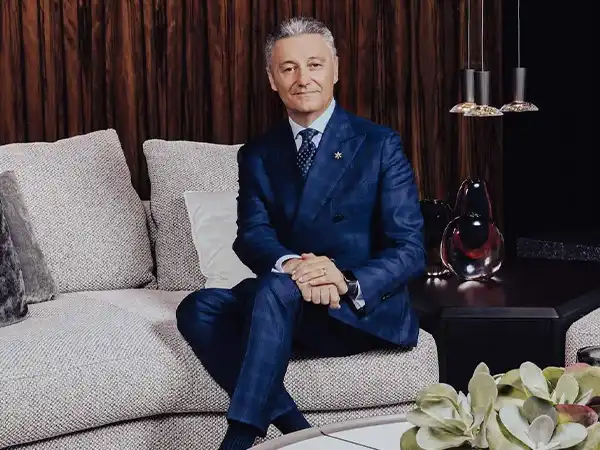
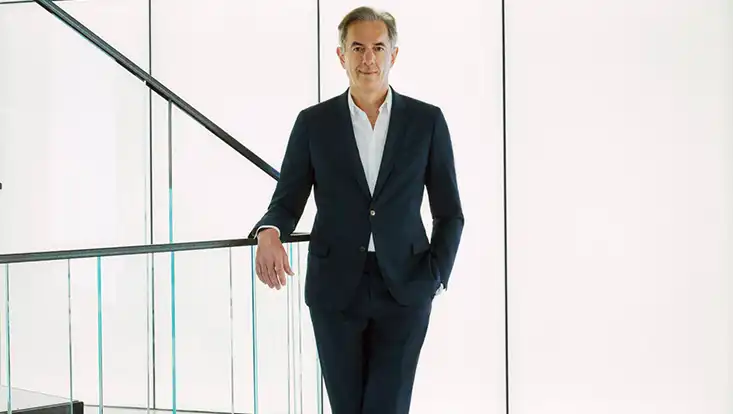
Interview: Giovanni del Vecchio on Giorgetti’s journey from classic to contemporary
Despite its 126-year history, Brianza-based furniture maker Giorgetti is anything but complacent. The Italian firm is continuing its transformation from a more classical design brand to one rooted in the contemporary. We asked its CEO, Giovanni del Vecchio, about this transformation.Giorgetti has talked about a contemporary evolution. What does that mean?Evolution – and not revolution – has been one of the pillars of our strategy since the company was acquired [by Italian private equity fund Progressio] in 2015. Back then it was probably thought to have a higher attention from the Asian markets than the European or American ones. This is the reason why we have tried to let the company evolve into more contemporary design but it’s also part of our tradition. Even in the early 1980s, Giorgetti launched the Matrix collection: an incredible, out-of-context range made up of colourful pieces and innovative shapes. This need for continuous evolution has always been part of our make-up.How do you continue to build on this legacy?One of the directions that we have been taking is to keep collaborating with some of the designers who have been working with us for many, many years. When we start a collaboration, our objective is for it to be long-term because when you learn how to design a Giorgetti piece, we want you to keep doing it.How do you ensure that Giorgetti doesn’t only look to the past?We have two other directions. One of these is to collaborate with young designers. This is a commitment that the company must make – giving opportunities to young designers to approach established brands and use the research and development competencies that we have in order to grow their expertise and their design proposals. And the other direction we have is to work with architects who are not really into product design but are helping us to identify how product can become a tool to develop architectural solutions.Want more stories like these in your inbox?Sign up to Monocle’s email newsletters to stay on top of news and opinion, plus the latest from the magazine, radio, film and shop.Your EmailSubscribe

Design agenda: Sydney’s Studio Prineas, London-based Hût Architecture and the revival of the Memphis waterfront
Urbanism: USAWalking in MemphisThe city of Memphis, Tennessee, was founded on the banks of the Mississippi river in the 19th century but its modern waterfront has long been defined by unremarkable swaths of turf abutting the famous waterway. Now, a 12.5-hectare portion called Tom Lee Park has opened as a dynamic public and natural space, refreshing the city’s most prominent landscape.“The redesign was inspired by a desire for Memphians to come to the river to reconnect with each other and with the Mississippi,” says Kate Orff, founder of New York-based design studio Scape. “It’s also inspired by the story of Tom Lee, an African-American river worker who became a hero after risking his own life to save 32 people from a capsized steamboat in 1925. The space celebrates Lee’s legacy of generosity, while still confronting difficult and unfinished conversations about justice.”Brought to life by Scape and architecture firm Studio Gang, the new design has organised the parkland into a series of zones that mimic the sediment flows of the Mississippi. Boasting structures made from timber, a river-themed playground, sports and recreation courts, as well as picnic areas, the park also works to strengthen the connection between downtown Memphis and the river, with locals now having a reason to venture towards the water.More than 1,000 new trees and native plants have also been added to the space, helping to replenish and restore the local ecosystem.The transformation has added a new civic common space where Memphis residents are welcome to gather, exercise, relax and attend events alongside the ecologically revitalised river corridor. “Our job was to design a park that aspires to meet Tom Lee’s spirit of generosity,” concludes Orff. “Communities in Memphis are so vibrant. We wanted to make a park that enables that grit and love and creativity to come together in one place – at the river’s edge.”Design: EuropeCharged upFrankfurt-based design firm E15 and Australian brand Zetr have joined forces to create a new flush-finished socket set-up to subtly incorporate power sources in office furniture. Called System 25, it can be fitted to E15’s own tables or integrated into products from other manufacturers. The nifty little gadget is composed of two parts: a power box which is fitted to the underside of desks and contains electrical charge, and a flush metal faceplate from which only essential cables, such as phone or computer chargers, emerge. Available in brass, bronze, steel or black steel finishes, there’s a host of options available to ensure that a table’s silhouette is no longer interrupted visually by clunky outlets.e15.com, zetr.com.auArchitecture: UKEast-end makeoverLondon-based Hût Architecture have transformed a former military drill hall into a new mixed-use development in the UK capital’s East End. The property, which has been largely undisturbed since the 1930s, when it served the Royal Army Service Corps 1st Anti-Aircraft division, had seemingly been doomed to a gloomy future of use as a storage space and the dilapidated backdrop for grunge fashion shoots. But the restoration has breathed new life into the building in the form of new offices, apartments and a coffee shop.Roof lights and translucent block walls ensure that natural light glows across the exposed structure and brickwork, while also illuminating the forest-green accent colour that defines the renovation. From sheets of corrugated iron and steel beams that cross the lofty ceilings, to plants and vines that tumble down the exterior walls, the redesign’s juxtaposition with the original industrial feel brings a sense of purpose to a neglected urban relic.hutarchitecture.comFor more on Drill Hall, click through to our feature here, where the project sets the scene for a fine selection of sofas, chairs and lighting.Design: AustraliaQ&AEva-Marie PrineasFounder, Studio PrineasSince 2004 the Australian architect Eva-Marie Prineas’s projects have focused on building on Sydney’s historic architectural legacy, “thinking more and building less”. We asked her about her responsible approach to building and the peculiarities of work in Australia.How does a ‘building less’ approach end up improving your practice?It’s the most responsible way for architecture to move forward. When you’re working with existing buildings, you have to think about what you need to keep and what you might not necessarily have to keep; these are the decisions that are important moving forward, so that you’re doing as little as possible, but with as much impact as necessary. Why is ‘responsibility’ your word of choice when describing your projects?I feel that the word sustainable is almost an oxymoron in construction. Everything that we do is creating more of a carbon footprint. So it’s about being responsible about our choices and minimising the impact as much as possible. How do you create architecture that is grounded in place?With a recent project, we developed the landscaping as a reference ecology for the local area. We went for a bush walk with our clients and looked at all the planting, then we came up with a beautiful scheme. Once the garden started to grow, beautiful fauna were coming to the site.studioprineas.com.au
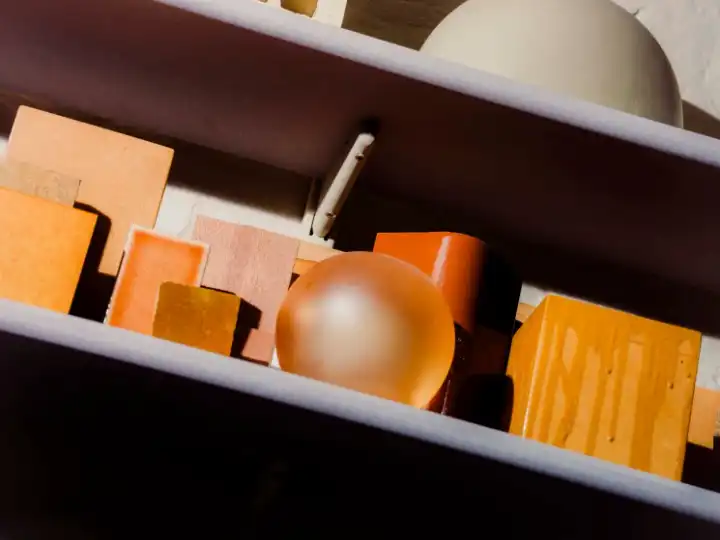
Toying with convention in the House of Toogood
If you’ve been on the design-fair circuit over the past 12 months, there’s a strong likelihood that you have encountered the work of Faye Toogood. Whether it’s being named guest of honour at the Stockholm Furniture Fair and designer of the year at Paris’s Maison&Objet, working with Italian manufacturers including Cc-Tapis, Tacchini and Poltrona Frau, collaborating on an installation for Danish brand Frama’s Copenhagen flagship or working on the Toogood fashion line with her sister Erica, the British designer has, of late, been unavoidable. “Sorry about that,” Toogood tells Monocle when we meet at her London studio, where she heads up a team of 25. “Something seems to have clicked and it’s amazing to be riding that wave.” Toogood with models of her Bread and Butter collectionSketches for Faye Toogood’s collaboration with NoritakeAs we sit down, Toogood posits that this surge in popularity is linked to her work’s emotive content. “I’ve been putting more of myself into my work without worrying about how it sits in the context of design,” she says. “I’m working intuitively and allowing space for experimentation.” When she founded her studio in 2008, Toogood came from a background in fine art and sculpture, and had been working as a stylist atThe World of Interiorsfor eight years. “I didn’t set out to be a designer, so I started quite apologetically,” she adds. “Because I was on the fringes of design, art and fashion, I was seen as not being serious, as dabbling. But I’ve formed a place for myself on these fringes.” Inside the House of ToogoodMaterial samples in Toogood’s studioNow firmly established in the industry, Toogood is regularly tapped by manufacturers looking to work with modern designers. When we meet, she has just returned from Nagoya, where she spent a week hand-painting pots with roses for Japanese ceramics company Noritake. The resulting collection of limited-edition pieces, called Rose, will be shown at Milan Design Week this year, with scaled-up production of the pieces slated for 2026. Toogood is also returning to Milan this April to launch her second line of furniture with Brianza-based manufacturer Tacchini, after the success of her Cosmic collection of a sofa, shelves, mirrors and pendant lights, unveiled at last year’s fair. Titled Bread and Butter, the new collaboration revolves around a modular sofa rendered in a soft, light yellow leather. “I like looking to food for inspiration; it’s a smack of reality,” she says. “It’s about rejoicing in the everyday, in the food I grew up with, in the food I give to my children.”As a designer, Toogood infuses her work with a tenderness rarely spoken about in the design industry. Her Roly Poly chair’s voluptuous shape draws inspiration from her personal experience of pregnancy and motherhood. To sit in her Gummy armchair is to receive an upholstered hug. “I’m quite a tactile person, an emotional person,” she says. “I often feel like a thermometer because I’m hypersensitive to the energy of what’s going on around me. A lot of my designs are autobiographical but they’re also out of genuine care for others.”Playful structuresAccording to Toogood, this need to put society over the self is the reason she became a designer and not an artist – albeit in her own experimental manner. Every new project often begins with a word, a song title or even a poem, providing a starting point to shape the identity of each piece. She makes early miniature models using materials such as sheets of aluminium or pieces of clay, allowing her to play around and see what comes out. And during the editing stages, Toogood will begin to search for tension between the soft and the hard, the precious and the raw, the industrial and the handmade, before finding a balance. When it comes to the actual production of these pieces, Toogood mostly works with carpenters and upholsterers based in the UK. It’s a far cry from intricately drawn sketches or computer-assisted design – but her divergent method for design is now at a stage in which it is being welcomed by the very industry that sets the norms. “It’s my role to break down boundaries, agitate, open doors, question, blur,” says Toogood. “I might not have achieved everything I wanted to achieve but I’ve opened up the conversation through my own experimentation. I’ve helped to widen the lens of what design is. For that, I’m proud.”As Monocle leaves the serenity of House of Toogood, the designer changes into a pair of paint-splattered overalls to tackle a mobile and table. For Toogood, there’s no time to rest but always plenty of time to play. The CV1977Born in the UK1998Graduates with an art history degree from the University of Bristol1999-2007Works as decoration editor forThe World of Interiors2008Founds her studio2010Designs Spade chair, stool and bar stool2012Launches Toogood clothing with her sister, Erica2014Designs the Roly Poly chair 2019Collaborates with Cc-Tapis on the Doodles collection2021Creates the Puffy ottoman for Hem2022Phaidon publishesFaye Toogood: Drawing, Material, Sculpture, Landscape2024Releases Gummy armchair and collaborates with Vaarnii, Cc-Tapis, Tacchini and Poltrona Frau2025Named Maison&Objet designer of the year and Stockholm Furniture Fair guest of honour. Launches collaborations with Tacchini and Noritake
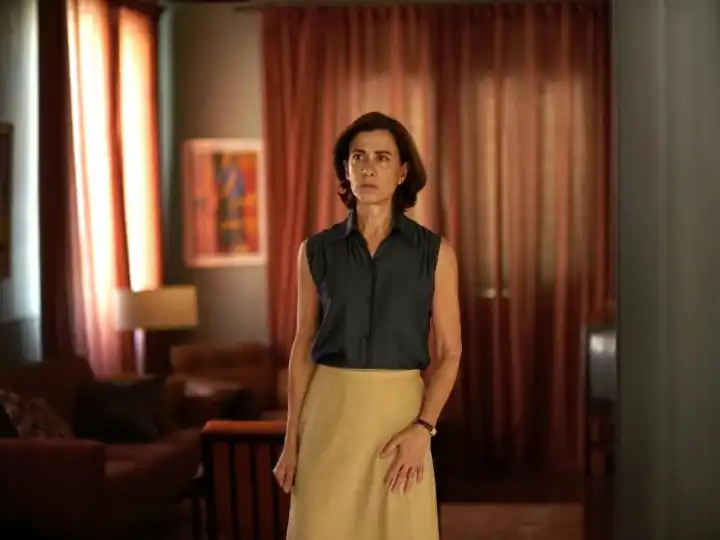
Interview: Brazilian actress Fernanda Torres on bringing resilience to life in ‘I’m Still Here’
In 1986, Fernanda Torres became a Brazilian icon after winning the best actress award at Cannes for her role in Arnaldo Jabor’s Love Me Forever or Never. Here, she tells Monocle Radio about her latest film, I’m Still Here, set during Brazil’s military dictatorship. The film is already one of Brazil’s most successful-ever features and has been nominated for three Oscars, including Best Picture and Best Actress for Torres.The film tells the story of Eunice Paiva, who became an activist after her husband disappeared during the country’s military dictatorship.When did you first learn about Eunice Paiva?It was through her son Marcelo Rubens Paiva’s 2015 book [I’m Still Here is based on his memoir of the same name]. I watched interviews too. She was persuasive but always gentle and intelligent.You have just won a Golden Globe for your performance in the film. How important was the recognition?It was made [during the Bolsonaro years] at a time when the arts were under attack in Brazil. I’m so happy that people of all religions and political beliefs are proud of our culture and going to cinemas to see it.You’re well known for your comedy roles. Did you enjoy returning to drama?I thought I was lost to drama! No, not really, I don’t separate genres that way. I’ve done theatre, musicals, and comedy, but of course, my recent TV roles made me widely known as a comedian. Then Walter gave me this incredible gift: a role in a deeply humanistic, profound drama.What’s special is that a new generation of Brazilian teenagers is watching this film and learning about the dictatorship, often for the first time. They’re discovering history through a family that could be their own. That humanistic approach to storytelling is rare. It might take another 25 years for a film like this to happen again.‘I’m Still Here’ is out now in Brazil and the US, and will soon be released across Europe. For the full interview with Fernanda Torres and Walter Salles, listen to Monocle Weekly above, or on Apple Podcasts and Spotify.Want more stories like these in your inbox?Sign up to Monocle’s email newsletters to stay on top of news and opinion, plus the latest from the magazine, radio, film and shop.Your EmailSubscribe
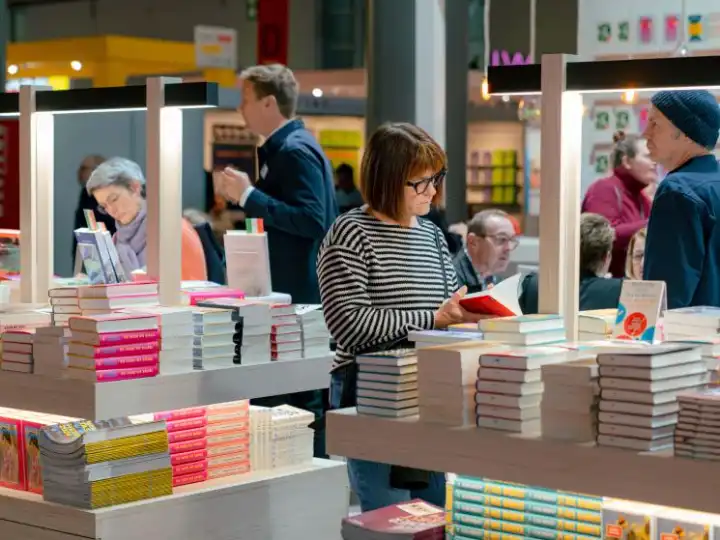
Three literary leaders share their predictions for the book industry in 2025
Every October, Frankfurt becomes a hive of activity with the arrival of the annual Frankfurter Buchmesse. Once upon a time, publishers, agents and authors would hold back-to-back meetings here, the air fizzing with new ideas and high-stakes negotiations. Many still talk about the time when an agent could slap a manuscript on the table for an editor to read overnight before striking a deal the next morning.Networking at the Frankfurter Buchmesse<Author conversations are a key feature of the fairToday, most of the decision-making takes place in conference rooms or via video calls beforehand but the fair still serves as a marketplace for industry leaders to talk shop and it is still the world’s largest book fair in terms of business conducted, if not size.“There’s a very positive vibe in the industry,” says the fair’s ceo, Juergen Boos. “In publishing we tend to be quite pessimistic but this year on the ground it feels like a party.” Among many areas of evolution, Boos mentions young-adult fiction and the rise of #BookTok (a social-media movement that focuses on literature). AI also featured in many conversations and talks, often in a positive light. “On the one hand, it helps us to organise our workflows in the publishing houses,” says Boos. “It helps us to translate, market and reach target groups. But it also poses a big threat because we have not yet sorted out content ownership and legislation.”Not everyone sees blue skies ahead for the future of books, particularly in the current socio-political climate. What is clear is that the state of the world is influencing readers’ choices: political books with answers and fantastical fiction with heroes and villains are on the rise.“The economy is not good, we have political challenges and we have wars,” says Boos. “The books that we want to read now ask questions, give answers and they entertain.”We speak to three industry leaders to hear their predictions for the industry in 2025. Here’s what they have to say.1.The editorMichael Reynolds, Europa EditionsNew York, USA“Non-fiction, at least in the American context, has struggled this year. There has been more desire on the part of readers to centre themselves, to find greater meaning and more significance, and they might find that more readily through fiction. In terms of which types of books readers are buying, I’m seeing a little bit of everything: romance, cosy mysteries, literary fiction. And perhaps the boundaries are now becoming more porous.In many ways it’s a good time for the small, nimble, mid-sized publisher, because the larger companies have shareholders and tend to play it safe and many better, more interesting books feel too risky. As a smaller publishing house, we can take more risks with less predictable books.”Reynolds’ title to look out for in 2025‘Gabriële’ by Anne and Claire Berest2.The agentJuliet Mushens, Mushens EntertainmentLondon, UK“We’re finding that readers are responding well to escapist fiction. I suppose the state of the world can be horrifying enough that people want to escape into something which transports them to a different time and place. Crime thrillers are still successful, because you catch the bad guy right at the end of it, you know who the villain is and there’s some kind of resolution.Fantasy is also much more successful than it has been. I’m president of the British Fantasy Society and have represented fantasy for my whole career. We’re seeing lots of publishers who have never bought fantasy before starting to acquire it for their lists. We’re seeing authors who have been published for years suddenly getting a new jacket, or people rediscovering old books written by them years ago. Fantasy has seen big growth over the past couple of years and I think that will continue.”Mushens’ title to look out for in 2025‘Bitter Sweet’ by Hattie Williams3.The audiobook expertCarlo Carrenho, Carrenho Publishing ConsultingTrosa, Sweden“We’re getting to a point where books are being voiced by AI-generated actors and writers are being influenced by the audio format, which is changing the way books are being written. Would Gabriel García Márquez have writtenOne HundredYears of Solitudetoday? That story would not do well as an audiobook.In a more positive light, we’ve had a huge milestone in audiobooks this year with Spotify introducing the subscription model to the English-speaking markets. Now it’s expanding to France, Belgium and the Netherlands. I think in the coming year we will see more and more people listening to audiobooks. In Sweden, 60 per cent of purchased books are audio, so in many places people are already listening more than they’re reading.In terms of what types of audiobooks people are listening to, it depends on geography. In Scandinavia, fiction is popular; it’s about storytelling; people just want to travel, be distracted. But if you go to southern Europe and Mexico, people are listening to non-fiction books, mostly business and self-help.”Carrenho’s audiobook to look out for in 2025‘The Intruder’ by Freida McFadden
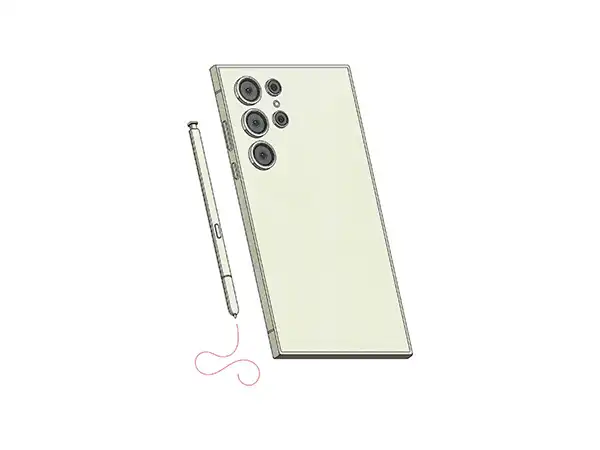
Tech corner: Three releases to keep on your radar
From sleek new smartphones to high-tech accessories, this roundup features some of the latest innovations that combine style with cutting-edge functionality.Whether it’s Samsung’s revamped Galaxy with improved AI and photography, Technics’ impressive in-ear headphones with seamless connectivity, or Oura’s slimmed-down ring with advanced health tracking, these gadgets are designed to elevate your everyday life.From left to right:Samsung Galaxy S25 Ultra smartphoneThe rounded corners of this phone give it a welcoming new look but the tower of cameras on its back remains in place last year’s S24 Ultra. There’s now a faster processor, better photographic sensors and the next version of Galaxy AI, including the Now Bar, which shows apps on the lock screen and can even tell you when to leave home to catch that flight.samsung.comTechnics EAH-AZ100 Technics describes these new in-ear wireless headphones as reference class and they do sound impressive, with direct, clean and balanced audio. They also have a cute design and active noise-cancelling, and pair with three different gadgets so you can connect them as you move from your phone to your laptop, for instance.technics.comOura Ring 4Finnish firm Oura’s new ring is slick and slim with sensors that are flush, making it comfier. Sleep tracking remains key and Symptom Radar can even alert you if you’re coming down with a cold before you’ve even sniffed.ouraring.com
Green rooms: Isabel Duprat’s flora-first garden designs
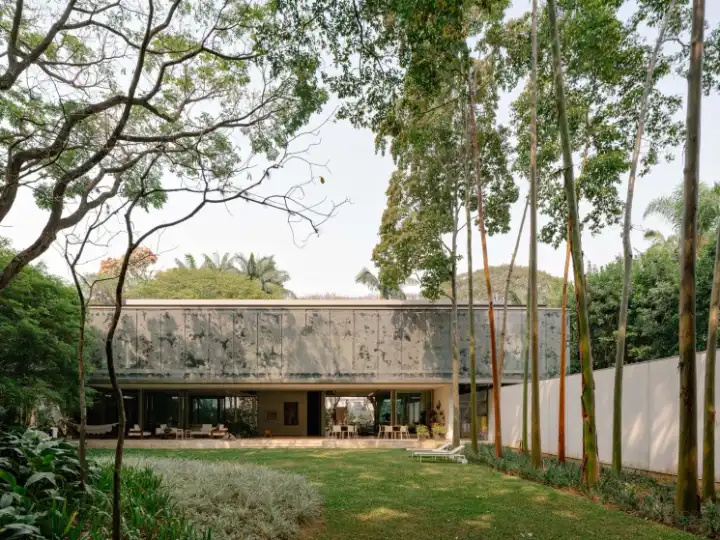
“Garden design in Brazil is still not as respected as it should be,” says Isabel Duprat. It is a balmy day in São Paulo when Monocle meets the country’s pre-eminent landscape architect, who lays bare her feelings about the state of the discipline in her home nation. She is well placed to comment on the topic. Having earned her stripes under legendary Brazilian landscape architect Roberto Burle Marx, Duprat collaborates with some of architecture’s biggest names today, from Marcio Kogan to Moshe Safdie. And she has a 45-year pedigree that makes her well equipped to fly the flag for the discipline in her home country.Born in São Paulo in 1954, Duprat says that she was destined to design gardens and landscapes from a young age. “I always had this intimacy with planting and I would get all muddied up from playing on the land as a child,” says Duprat, referencing time spent at her family’s small farm in the countryside near São Paulo. Encouraged by her mother’s enthusiasm for gardening, Duprat dreamed of studying botany before ultimately pivoting to architecture. “In high-school, I said, ‘I think I will go and study architecture, so I can do landscape design.’ Brazil didn’t have a school for landscape architecture at the time.”Outside looking inDespite never wanting to create buildings, Duprat graduated with an architecture degree in 1978, from the Mackenzie School in São Paulo. This institution is renowned for producing a host of multi-disciplinary talents, from modern painter Anita Malfatti to architect Paulo Mendes da Rocha, and Duprat made up for the lack of landscape classes by reading extensively on the subject. “At the beginning of my career, because of Brazil’s military dictatorship, it was really hard to get hold of any international books about my field of interest,” says Duprat. She also attended botany classes at the University of São Paulo. It was a self-imposed education that was soon enhanced by an internship with Burle Marx.Greenery envelops the house from all anglesOften referred to as the Oscar Niemeyer of Brazilian landscape architecture, Burle Marx began changing the public’s perception of Brazilian garden design since the 1930s. His work on high-profile public projects in Brasília, particularly gardens at the Ministry of Army and Itamaraty Palace, shifted expectations away from the Renaissance and Baroque forms associated with the gardens of the former Portuguese colony. Burle Marx’s works were abstract and organic, inspired by modern art and the native landscapes. He also replaced European species with the lush tropical plants that are indigenous to the country. Burle Marx’s effect on landscape architecture in Brazil – and on Duprat – was profound. “I was very influenced by him,” she says. “He had a richness inside him. He was, for instance, [not only an excellent designer] but also an excellent opera singer. And we once travelled to the coastal region of Angra dos Reis to research new plants in person. It was a very important time for me, where I absorbed a lot of things that I still use in my work today.”That work stepped up a notch in 1983, when Duprat opened her garden design studio and a plant shop (she moved to her current office in 2003). Early clients were based in Rio de Janeiro and included the Marinho family – owners of Globo, the country’s largest broadcaster – and the Moreira Salles banking dynasty. Both commissioned Duprat to work on their private residences. Despite being a proud Paulistana, her experience working elsewhere and her field trips with Burle Marx expanded her conception of what good design could be.“It freed my work,” she says. “Just looking at the Rio landscape with its mountains, I let myself go in a very positive way. Life there is lived outside, unlike in São Paulo.” Intending to share what she had learned from her work by leaving the city, Duprat hosted a garden history and landscape design tutorial at the gardening school in São Paulo’s Ibirapuera Park (which, appropriately enough, was designed by Burle Marx and Niemeyer). Albert Einstein Education and Research CentreStudying among the greeneryToday, Duprat has clients across Brazil, from Rio de Janeiro to coastal towns in the state of Bahia. Working with architect Nathalia Fonseca and her husband, Manoel Leão – a musician and agricultural engineer who helps to co-ordinate the studio’s garden designs delivery – the landscape architect has instant name recognition in her hometown. Her namesake practice, which employs eight people, is in the leafy neighbourhood of Jardins. The office where Monocle meets to discuss her recent projects is striking, lined with sucupira wood panelling.Like Burle Marx, Duprat’s portfolio includes everything from private gardens to public works. There are plans afoot for a park in the mountainous city of Campos do Jordão and a new roof garden for São Paulo’s Iguatemi shopping centre. The most significant recent civic commission was the Albert Einstein Education and Research Centre, a medical school in São Paulo designed by Safdie Architects: Duprat was tasked with bringing flora to the skylit atrium. Planting 149 native trees and palms, she designed the space in such a way that the greenery would survive in an environment with 50 per cent less light than outdoors. “It was a very complex project,” says Duprat. “The plants spent two years acclimatising in a vivarium [a controlled terrarium-like environment].” As with many of her projects, this was pioneering work in Brazil and it was meticulously researched through consultations with UK-based Kew Gardens botanist Sue Minter and State University of Campinas professor Rafael Ribeiro.A place to relaxNeutral tones contrast with the lush landscapeWhen it comes to working with residential architects and their clients, Duprat is particularly demanding. “When you want to have a garden, you will have to care for it for life,” she says, expressing her outlook regarding these residential projects. “I never think of a garden that my client will not tend to.” It’s an exacting vision that comes to the fore on projects such as the Ramp House. For this home, designed by Brazilian architect Marcio Kogan, Duprat created a landscape that includes fruiting, flowering and bird-attracting trees such as jaboticabas and jacarandas, as well as a pool lined with vegetation. The effect, for those who take a dip, is like swimming in the middle of a tropical rainforest. “I drew the pool as a body of water that was surrounded by vegetation,” says Duprat. “It’s almost like a flowerbed that has the ability to reflect and illuminate.”For another property, Jardim Brasileiro (a name that simply means, “Brazilian garden”), Duprat subverted the typical residential formula by prioritising a larger front garden over creating a more private space at the back of the house. The result is a grand, verdant gesture of welcome for those arriving to the property, a dramatic experience for those entering the home. “I wanted to bring my own interpretation of Brazil’s native forests to this garden,” says Duprat. “You can’t imitate forests, of course, but I wanted to create a sensation that we experiment when we go deep into one.”Flora is the focus of Casa M3An inviting entranceThis sense of discovery is important for Duprat’s work. In another of her projects, Casa 3M, the garden has been laid out to limit sightlines and so create a sense of intrigue. “The pool in this house can’t be seen from the living room and terrace,” says Duprat. “A garden shouldn’t be unveiled in only one look. Instead, you should be encouraged to discover it through its fluidity and its empty and full spaces. That feeling of discovery is exciting and attracts us to the place. I drew inspiration from the Japanese for this, who do it like no one else.”In all three cases, her work enhances the architecture. And in many ways, she has allowed the gardens to become perhaps the defining feature of each plot. The buildings, without the lush landscaping framing structures of concrete, glass and brick, would lack their particular visual impact. “I don’t see the work I do as an add-on to architecture,” says Duprat. “But I feel that for most in Brazil today, it is an after-thought. And it’s a shame, because the eye of the landscape architect is different from that of the architect. We work on different scales, with the sky as a reference, and that changes our perceptions completely. We work with the surroundings, with the wider landscape.”It’s an outlook on her discipline that feels appropriate for a country so aligned with the outdoors. Its biggest cities have warm and balmy year-round temperatures and are home to plants such as bougainvilleas and bromelias, spaces that are bright and uplifting – all traits that make Brazil an appealing place for living with beautiful gardens and being more in touch with nature. And that particular Brazilian stamp can be seen in the gardens, dense with native species, that Duprat designs. It is also part of her wider vision to fight the urban heat-island effect and add greenery to São Paulo. In fact, Duprat’s passion for vegetation is so intense that during the planning process for a home, she once requested that the structure be moved by 50cm to make space for a large native tree. “In São Paulo, the trees gives the city a dignified look,” she says. The same too could be said of her landscape architecture, whether civic or residential, whether in her hometown, in Rio de Janeiro or elsewhere across Brazil. “For me, it’s difficult to define the work I do. But there is an implicit Brazilian touch to it.”isabelduprat.comOffshootsFrom her studio in São Paulo’s Jardins neighbourhood (meaning, appropriately, “gardens”), Duprat has been delivering some of the city’s finest residential and civic projects. Here are four of our favourite properties.Albert Einstein Education and Research CentreArchitect:Safdie Architects Completed:2022An innovative research building. An atrium through the centre of the structure features an indoor garden that spills from the roof to the basement, bringing the outdoors in.Casa 3MArchitect:Marcio KoganCompleted:2020An open-plan home made with natural materials: timber ceilings and volcanic rock floors. Its connection with the natural world continues outdoors, where a garden features greenery planted in patterns.Ramp HouseArchitect:Marcio Kogan, Studio MK27Completed:2015This residence in the centre of São Paulo feels as though it could be in a Brazilian rainforest. Native plants surround an outdoor pool that’s perfect for the warmer months.Jardim BrasileiroArchitect:Andrade MorettinCompleted:2009A house surrounded by tiered garden beds that follow the site’s contours, blurring the lines between indoors and out. The residence presents itself as a continuous exploration of textures and colours.
advertisement