advertisement
Exploring Edge House: Tom Wood’s founder’s minimalist masterpiece

Exploring Edge House: Tom Wood’s founder’s minimalist masterpiece

On a rocky outcrop near central Oslo, an unconventional house looks out over Kolbotn, a residential area of otherwise conventional wooden houses and low-rise brutalist apartments. Nicknamed Edge House, the distinctive edifice is the family home of Mona Jensen and Morten Isachsen, the duo behind Norwegian jewellery brand Tom Wood, which was founded in 2013 and is known for its simple, elegant designs.Access is via a narrow stairway, which has 52 steps that cut through rough granite boulders glinting with quartz crystals. As you ascend, the seven load-bearing pillars that support the house – which sits entirely over the stony slope – loom close, with pine saplings seeding into the nooks and crannies of the surrounding rock. Then, at the top, 12 metres above street level, you reach even ground as the stairway opens out into a garden.Built into the rockView looking out over KolbotnEdge House was an ambitious undertaking for Jensen and Isachsen. After living in apartments in central Oslo, they were spurred by a desire to move to a home where their children would have more space to run around among greenery. For the couple, who grew up in bucolic Stord and Tromsø, it was also about regaining a connection to nature.Mona Jensen and Morten IsachsenTo do so, they enlisted Oslo-based architects Einar Jarmund&Co, to whom they submitted a somewhat unorthodox initial brief in 2006. “We sent them the James Bond theme song and asked, ‘Can you make us a house like this?’” says Jensen. “They were our dream architects at that time but we were very young and couldn’t really afford them. So they told us to save up some more money. We did and came back a year later but still had a very limited budget.”Exterior of Edge HouseSeen from street levelUltimately, Jensen and Isachsen wanted to build a home that, much like their clean-lined jewellery, wouldn’t age in terms of style or integrity. “Building a house is a significant project, something that most individuals or families do only once in their lifetime,” says Isachsen. “It prompted us to ask what kind of footprint we wanted to leave on this planet. Is building a house truly necessary? And if the answer is yes, how can I design a home that will not only stand the test of time but remain relevant and sustainable for many decades – perhaps even a century?”In response to these questions, rudimentary raw materials were chosen for their hardiness, cost efficiency and durability. The exterior of the house is clad in fibre cement panels that, like a giant Meccano set, are screwed in place, allowing easy access to the structure of the building for repairs. It was a relatively new technique at the time of construction; the couple had heard of its use in The Oslo School of Architecture and Design, which was also built by Einar Jarmund&Co. “If one panel gets damaged, you can change it and don’t need to tear down the whole façade,” says Jensen. “You don’t have to paint it or do anything to it for 100 years,” adds Isachsen. “It just stays and looks the same.”There’s a practical simplicity to the home’s interiors too, with the walls clad entirely with birch veneer, with no paint or wallpaper, and no skirting boards or highly finished edges. A sizable steel bench-counter is the heart of the kitchen – both in terms of activity (Jensen and Isachsen like to cook) and in presence. Appropriately, the finishes match the look of Tom Wood’s Oslo flagship shop, where similarly steely surfaces create a common visual thread that links the couple’s home and creative venture – even though Jensen says that her work as a jeweller didn’t influence the house directly. The home’s concrete terrazzo floors, reminiscent of those found in Venetian piano nobile, are also found at the Tom Wood office, which was opened after the house was built. (Perhaps it was the residence that influenced the brand.)Set across one floor, almost every room in the house is oriented towards – and opens out onto – the garden. Cultivated by a Japanese landscaper with particular attention given to the seasonality of its vegetation, it has copses of trees and flower beds that bloom in the warmer seasons. “In summer especially, the house becomes twice as big because it’s all on one level, with windows towards the garden,” says Isachsen. “We constantly move from indoors to outdoors.”Built in 16 months on a 900 sq m plot of land (an area about the size of 3.5 tennis courts), the house was designed to work in harmony with the landscape. “When the architects came here, they got the idea to put the house on the edge of the plot, destroying as little of the existing vegetation as possible and creating this very private garden,” says Isachsen. “There was very little demolishing that had to be done.”Birch-clad wallsDespite its imposing appearance on its rocky perch, the house isn’t a behemoth. It was originally just 210 sq m with three bedrooms. Following a 2018 extension, it now occupies 258 sq m, when an extra bedroom and a study-cum-entertainment room were added after the couple’s children complained of living on top of each other. The addition is marked by a transition from light to dark as you walk from the luminous open-plan living and dining area towards the bedrooms through a softly lit birch-panelled corridor, evoking a winding down of energy and indicating that you are heading to a place of relaxation.The furnishings, meanwhile, reflect the couple’s personal tastes and their journey through life. There’s a big collection of vinyl (Isachsen is a former DJ) and a larger-than-life portrait of Norwegian musician Turbonegro, taken by Aleksander Nordahl, which presides over the living space. A colossal suar-wood coffee table that the couple brought back from Bali takes centre stage in the living room. Throughout the home, you’ll find a mix of modernist, postmodernist and contemporary furniture from designers such as Terje Ekstrøm and Andreas Engesvik, and brands including Fjordfiesta and Italy’s Flos.A bespoke “thinking bench”, cushioned with Norwegian woollen textiles, starts at the end of the steel kitchen counter and extends into the living space, butting up against the plate-glass window and defining a clear sightline to the undulating neighbourhood beyond – it’s a psychotherapist’s couch with a view.Jensen and Isachsen are part of a wave of now-established Nordic creatives who are breaking out of the mid-century mould that has come to define design in the region. Their home is reflective of this: it’s exactly what one would expect from cool industry leaders. Appropriately, when monocle visits, both are dressed head to toe in black, with Jensen drifting elegantly in a vintage Celine shirt and Hermès loafers and Isachsen wearing an asymmetrical-zip White Mountaineering top and capacious slacks. They appear totally at ease in their natural habitat but they’re quick to explain that there were times when they didn’t always have such confidence in the home’s creative form. “I cried when I saw the mock-up model of the house,” says Jensen. “I thought it was horrible. I expected something practical and easy to understand. This was hypermodern. There were so many angles and corners – it was entirely new.”Isachsen, on the other hand, thought that it was exciting. “He said, ‘It’s only four walls and a roof – it’s a house,’” Jensen tells monocle. She explains that she soon came around to the originality of the design. Now, she can’t imagine living anywhere else – at least for the foreseeable future.The architecture, says Jensen, has enriched their lives over the past 16 years. She explains that one of the keys to its success was that it reflected their ideals. “To me, a home is a place that holds a family together and needs to work with its different phases. We spent a lot of time thinking about which rooms and functions a house needed to have, to work for us the way we like to live.” For Jensen and Isachsen, it turned out that living on the edge doesn’t mean having to be totally out of your comfort zone.tomwoodproject.com

Interview: Giovanni del Vecchio on Giorgetti’s journey from classic to contemporary

Interview: Giovanni del Vecchio on Giorgetti’s journey from classic to contemporary

Despite its 126-year history, Brianza-based furniture maker Giorgetti is anything but complacent. The Italian firm is continuing its transformation from a more classical design brand to one rooted in the contemporary. We asked its CEO, Giovanni del Vecchio, about this transformation.Giorgetti has talked about a contemporary evolution. What does that mean?Evolution – and not revolution – has been one of the pillars of our strategy since the company was acquired [by Italian private equity fund Progressio] in 2015. Back then it was probably thought to have a higher attention from the Asian markets than the European or American ones. This is the reason why we have tried to let the company evolve into more contemporary design but it’s also part of our tradition. Even in the early 1980s, Giorgetti launched the Matrix collection: an incredible, out-of-context range made up of colourful pieces and innovative shapes. This need for continuous evolution has always been part of our make-up.How do you continue to build on this legacy?One of the directions that we have been taking is to keep collaborating with some of the designers who have been working with us for many, many years. When we start a collaboration, our objective is for it to be long-term because when you learn how to design a Giorgetti piece, we want you to keep doing it.How do you ensure that Giorgetti doesn’t only look to the past?We have two other directions. One of these is to collaborate with young designers. This is a commitment that the company must make – giving opportunities to young designers to approach established brands and use the research and development competencies that we have in order to grow their expertise and their design proposals. And the other direction we have is to work with architects who are not really into product design but are helping us to identify how product can become a tool to develop architectural solutions.Want more stories like these in your inbox?Sign up to Monocle’s email newsletters to stay on top of news and opinion, plus the latest from the magazine, radio, film and shop.Your EmailSubscribe

Design agenda: Sydney’s Studio Prineas, London-based Hût Architecture and the revival of the Memphis waterfront

Design agenda: Sydney’s Studio Prineas, London-based Hût Architecture and the revival of the Memphis waterfront

Urbanism: USAWalking in MemphisThe city of Memphis, Tennessee, was founded on the banks of the Mississippi river in the 19th century but its modern waterfront has long been defined by unremarkable swaths of turf abutting the famous waterway. Now, a 12.5-hectare portion called Tom Lee Park has opened as a dynamic public and natural space, refreshing the city’s most prominent landscape.“The redesign was inspired by a desire for Memphians to come to the river to reconnect with each other and with the Mississippi,” says Kate Orff, founder of New York-based design studio Scape. “It’s also inspired by the story of Tom Lee, an African-American river worker who became a hero after risking his own life to save 32 people from a capsized steamboat in 1925. The space celebrates Lee’s legacy of generosity, while still confronting difficult and unfinished conversations about justice.”Brought to life by Scape and architecture firm Studio Gang, the new design has organised the parkland into a series of zones that mimic the sediment flows of the Mississippi. Boasting structures made from timber, a river-themed playground, sports and recreation courts, as well as picnic areas, the park also works to strengthen the connection between downtown Memphis and the river, with locals now having a reason to venture towards the water.More than 1,000 new trees and native plants have also been added to the space, helping to replenish and restore the local ecosystem.The transformation has added a new civic common space where Memphis residents are welcome to gather, exercise, relax and attend events alongside the ecologically revitalised river corridor. “Our job was to design a park that aspires to meet Tom Lee’s spirit of generosity,” concludes Orff. “Communities in Memphis are so vibrant. We wanted to make a park that enables that grit and love and creativity to come together in one place – at the river’s edge.”Design: EuropeCharged upFrankfurt-based design firm E15 and Australian brand Zetr have joined forces to create a new flush-finished socket set-up to subtly incorporate power sources in office furniture. Called System 25, it can be fitted to E15’s own tables or integrated into products from other manufacturers. The nifty little gadget is composed of two parts: a power box which is fitted to the underside of desks and contains electrical charge, and a flush metal faceplate from which only essential cables, such as phone or computer chargers, emerge. Available in brass, bronze, steel or black steel finishes, there’s a host of options available to ensure that a table’s silhouette is no longer interrupted visually by clunky outlets.e15.com, zetr.com.auArchitecture: UKEast-end makeoverLondon-based Hût Architecture have transformed a former military drill hall into a new mixed-use development in the UK capital’s East End. The property, which has been largely undisturbed since the 1930s, when it served the Royal Army Service Corps 1st Anti-Aircraft division, had seemingly been doomed to a gloomy future of use as a storage space and the dilapidated backdrop for grunge fashion shoots. But the restoration has breathed new life into the building in the form of new offices, apartments and a coffee shop.Roof lights and translucent block walls ensure that natural light glows across the exposed structure and brickwork, while also illuminating the forest-green accent colour that defines the renovation. From sheets of corrugated iron and steel beams that cross the lofty ceilings, to plants and vines that tumble down the exterior walls, the redesign’s juxtaposition with the original industrial feel brings a sense of purpose to a neglected urban relic.hutarchitecture.comFor more on Drill Hall, click through to our feature here, where the project sets the scene for a fine selection of sofas, chairs and lighting.Design: AustraliaQ&AEva-Marie PrineasFounder, Studio PrineasSince 2004 the Australian architect Eva-Marie Prineas’s projects have focused on building on Sydney’s historic architectural legacy, “thinking more and building less”. We asked her about her responsible approach to building and the peculiarities of work in Australia.How does a ‘building less’ approach end up improving your practice?It’s the most responsible way for architecture to move forward. When you’re working with existing buildings, you have to think about what you need to keep and what you might not necessarily have to keep; these are the decisions that are important moving forward, so that you’re doing as little as possible, but with as much impact as necessary. Why is ‘responsibility’ your word of choice when describing your projects?I feel that the word sustainable is almost an oxymoron in construction. Everything that we do is creating more of a carbon footprint. So it’s about being responsible about our choices and minimising the impact as much as possible. How do you create architecture that is grounded in place?With a recent project, we developed the landscaping as a reference ecology for the local area. We went for a bush walk with our clients and looked at all the planting, then we came up with a beautiful scheme. Once the garden started to grow, beautiful fauna were coming to the site.studioprineas.com.au

Toying with convention in the House of Toogood

Toying with convention in the House of Toogood

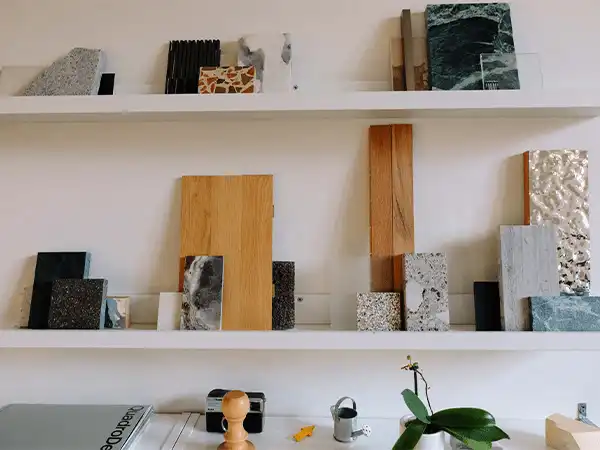
If you’ve been on the design-fair circuit over the past 12 months, there’s a strong likelihood that you have encountered the work of Faye Toogood. Whether it’s being named guest of honour at the Stockholm Furniture Fair and designer of the year at Paris’s Maison&Objet, working with Italian manufacturers including Cc-Tapis, Tacchini and Poltrona Frau, collaborating on an installation for Danish brand Frama’s Copenhagen flagship or working on the Toogood fashion line with her sister Erica, the British designer has, of late, been unavoidable. “Sorry about that,” Toogood tells Monocle when we meet at her London studio, where she heads up a team of 25. “Something seems to have clicked and it’s amazing to be riding that wave.” Toogood with models of her Bread and Butter collectionSketches for Faye Toogood’s collaboration with NoritakeAs we sit down, Toogood posits that this surge in popularity is linked to her work’s emotive content. “I’ve been putting more of myself into my work without worrying about how it sits in the context of design,” she says. “I’m working intuitively and allowing space for experimentation.” When she founded her studio in 2008, Toogood came from a background in fine art and sculpture, and had been working as a stylist atThe World of Interiorsfor eight years. “I didn’t set out to be a designer, so I started quite apologetically,” she adds. “Because I was on the fringes of design, art and fashion, I was seen as not being serious, as dabbling. But I’ve formed a place for myself on these fringes.” Inside the House of ToogoodMaterial samples in Toogood’s studioNow firmly established in the industry, Toogood is regularly tapped by manufacturers looking to work with modern designers. When we meet, she has just returned from Nagoya, where she spent a week hand-painting pots with roses for Japanese ceramics company Noritake. The resulting collection of limited-edition pieces, called Rose, will be shown at Milan Design Week this year, with scaled-up production of the pieces slated for 2026. Toogood is also returning to Milan this April to launch her second line of furniture with Brianza-based manufacturer Tacchini, after the success of her Cosmic collection of a sofa, shelves, mirrors and pendant lights, unveiled at last year’s fair. Titled Bread and Butter, the new collaboration revolves around a modular sofa rendered in a soft, light yellow leather. “I like looking to food for inspiration; it’s a smack of reality,” she says. “It’s about rejoicing in the everyday, in the food I grew up with, in the food I give to my children.”As a designer, Toogood infuses her work with a tenderness rarely spoken about in the design industry. Her Roly Poly chair’s voluptuous shape draws inspiration from her personal experience of pregnancy and motherhood. To sit in her Gummy armchair is to receive an upholstered hug. “I’m quite a tactile person, an emotional person,” she says. “I often feel like a thermometer because I’m hypersensitive to the energy of what’s going on around me. A lot of my designs are autobiographical but they’re also out of genuine care for others.”Playful structuresAccording to Toogood, this need to put society over the self is the reason she became a designer and not an artist – albeit in her own experimental manner. Every new project often begins with a word, a song title or even a poem, providing a starting point to shape the identity of each piece. She makes early miniature models using materials such as sheets of aluminium or pieces of clay, allowing her to play around and see what comes out. And during the editing stages, Toogood will begin to search for tension between the soft and the hard, the precious and the raw, the industrial and the handmade, before finding a balance. When it comes to the actual production of these pieces, Toogood mostly works with carpenters and upholsterers based in the UK. It’s a far cry from intricately drawn sketches or computer-assisted design – but her divergent method for design is now at a stage in which it is being welcomed by the very industry that sets the norms. “It’s my role to break down boundaries, agitate, open doors, question, blur,” says Toogood. “I might not have achieved everything I wanted to achieve but I’ve opened up the conversation through my own experimentation. I’ve helped to widen the lens of what design is. For that, I’m proud.”As Monocle leaves the serenity of House of Toogood, the designer changes into a pair of paint-splattered overalls to tackle a mobile and table. For Toogood, there’s no time to rest but always plenty of time to play. The CV1977Born in the UK1998Graduates with an art history degree from the University of Bristol1999-2007Works as decoration editor forThe World of Interiors2008Founds her studio2010Designs Spade chair, stool and bar stool2012Launches Toogood clothing with her sister, Erica2014Designs the Roly Poly chair 2019Collaborates with Cc-Tapis on the Doodles collection2021Creates the Puffy ottoman for Hem2022Phaidon publishesFaye Toogood: Drawing, Material, Sculpture, Landscape2024Releases Gummy armchair and collaborates with Vaarnii, Cc-Tapis, Tacchini and Poltrona Frau2025Named Maison&Objet designer of the year and Stockholm Furniture Fair guest of honour. Launches collaborations with Tacchini and Noritake 

Tech corner: Three releases to keep on your radar

Tech corner: Three releases to keep on your radar

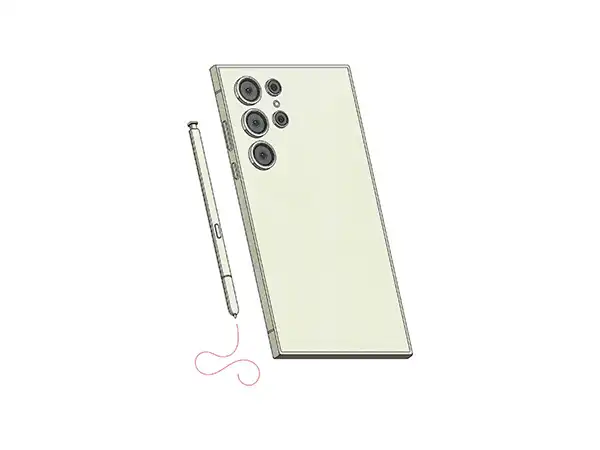
From sleek new smartphones to high-tech accessories, this roundup features some of the latest innovations that combine style with cutting-edge functionality.Whether it’s Samsung’s revamped Galaxy with improved AI and photography, Technics’ impressive in-ear headphones with seamless connectivity, or Oura’s slimmed-down ring with advanced health tracking, these gadgets are designed to elevate your everyday life.From left to right:Samsung Galaxy S25 Ultra smartphoneThe rounded corners of this phone give it a welcoming new look but the tower of cameras on its back remains in place last year’s S24 Ultra. There’s now a faster processor, better photographic sensors and the next version of Galaxy AI, including the Now Bar, which shows apps on the lock screen and can even tell you when to leave home to catch that flight.samsung.comTechnics EAH-AZ100 Technics describes these new in-ear wireless headphones as reference class and they do sound impressive, with direct, clean and balanced audio. They also have a cute design and active noise-cancelling, and pair with three different gadgets so you can connect them as you move from your phone to your laptop, for instance.technics.comOura Ring 4Finnish firm Oura’s new ring is slick and slim with sensors that are flush, making it comfier.  Sleep tracking remains key and Symptom Radar can even alert you if you’re coming down with a cold before you’ve even sniffed.ouraring.com

Green rooms: Isabel Duprat’s flora-first garden designs

Green rooms: Isabel Duprat’s flora-first garden designs

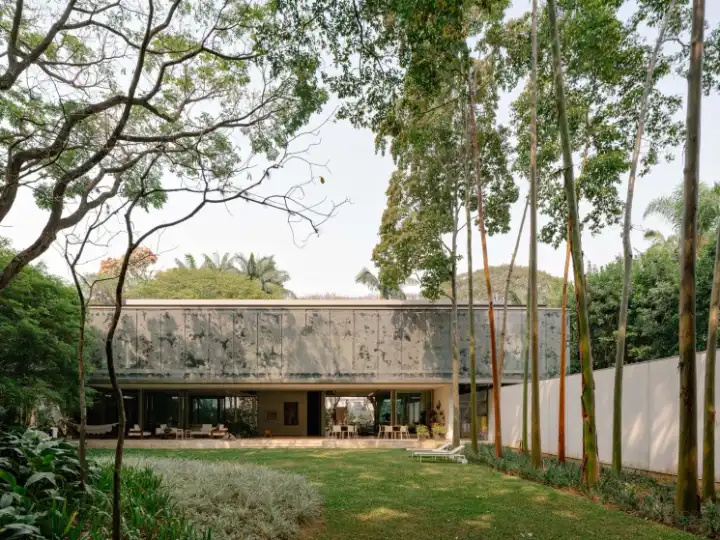
“Garden design in Brazil is still not as respected as it should be,” says Isabel Duprat. It is a balmy day in São Paulo when Monocle meets the country’s pre-eminent landscape architect, who lays bare her feelings about the state of the discipline in her home nation. She is well placed to comment on the topic. Having earned her stripes under legendary Brazilian landscape architect Roberto Burle Marx, Duprat collaborates with some of architecture’s biggest names today, from Marcio Kogan to Moshe Safdie. And she has a 45-year pedigree that makes her well equipped to fly the flag for the discipline in her home country.Born in São Paulo in 1954, Duprat says that she was destined to design gardens and landscapes from a young age. “I always had this intimacy with planting and I would get all muddied up from playing on the land as a child,” says Duprat, referencing time spent at her family’s small farm in the countryside near São Paulo. Encouraged by her mother’s enthusiasm for gardening, Duprat dreamed of studying botany before ultimately pivoting to architecture. “In high-school, I said, ‘I think I will go and study architecture, so I can do landscape design.’ Brazil didn’t have a school for landscape architecture at the time.”Outside looking inDespite never wanting to create buildings, Duprat graduated with an architecture degree in 1978, from the Mackenzie School in São Paulo. This institution is renowned for producing a host of multi-disciplinary talents, from modern painter Anita Malfatti to architect Paulo Mendes da Rocha, and Duprat made up for the lack of landscape classes by reading extensively on the subject. “At the beginning of my career, because of Brazil’s military dictatorship, it was really hard to get hold of any international books about my field of interest,” says Duprat. She also attended botany classes at the University of São Paulo. It was a self-imposed education that was soon enhanced by an internship with Burle Marx.Greenery envelops the house from all anglesOften referred to as the Oscar Niemeyer of Brazilian landscape architecture, Burle Marx began changing the public’s perception of Brazilian garden design since the 1930s. His work on high-profile public projects in Brasília, particularly gardens at the Ministry of Army and Itamaraty Palace, shifted expectations away from the Renaissance and Baroque forms associated with the gardens of the former Portuguese colony. Burle Marx’s works were abstract and organic, inspired by modern art and the native landscapes. He also replaced European species with the lush tropical plants that are indigenous to the country. Burle Marx’s effect on landscape architecture in Brazil – and on Duprat – was profound. “I was very influenced by him,” she says. “He had a richness inside him. He was, for instance, [not only an excellent designer] but also an excellent opera singer. And we once travelled to the coastal region of Angra dos Reis to research new plants in person. It was a very important time for me, where I absorbed a lot of things that I still use in my work today.”That work stepped up a notch in 1983, when Duprat opened her garden design studio and a plant shop (she moved to her current office in 2003). Early clients were based in Rio de Janeiro and included the Marinho family – owners of Globo, the country’s largest broadcaster – and the Moreira Salles banking dynasty. Both commissioned Duprat to work on their private residences. Despite being a proud Paulistana, her experience working elsewhere and her field trips with Burle Marx expanded her conception of what good design could be.“It freed my work,” she says. “Just looking at the Rio landscape with its mountains, I let myself go in a very positive way. Life there is lived outside, unlike in São Paulo.” Intending to share what she had learned from her work by leaving the city, Duprat hosted a garden history and landscape design tutorial at the gardening school in São Paulo’s Ibirapuera Park (which, appropriately enough, was designed by Burle Marx and Niemeyer). Albert Einstein Education and Research CentreStudying among the greeneryToday, Duprat has clients across Brazil, from Rio de Janeiro to coastal towns in the state of Bahia. Working with architect Nathalia Fonseca and her husband, Manoel Leão – a musician and agricultural engineer who helps to co-ordinate the studio’s garden designs delivery – the landscape architect has instant name recognition in her hometown. Her namesake practice, which employs eight people, is in the leafy neighbourhood of Jardins. The office where Monocle meets to discuss her recent projects is striking, lined with sucupira wood panelling.Like Burle Marx, Duprat’s portfolio includes everything from private gardens to public works. There are plans afoot for a park in the mountainous city of Campos do Jordão and a new roof garden for São Paulo’s Iguatemi shopping centre. The most significant recent civic commission was the Albert Einstein Education and Research Centre, a medical school in São Paulo designed by Safdie Architects: Duprat was tasked with bringing flora to the skylit atrium. Planting 149 native trees and palms, she designed the space in such a way that the greenery would survive in an environment with 50 per cent less light than outdoors. “It was a very complex project,” says Duprat. “The plants spent two years acclimatising in a vivarium [a controlled terrarium-like environment].” As with many of her projects, this was pioneering work in Brazil and it was meticulously researched through consultations with UK-based Kew Gardens botanist Sue Minter and State University of Campinas professor Rafael Ribeiro.A place to relaxNeutral tones contrast with the lush landscapeWhen it comes to working with residential architects and their clients, Duprat is particularly demanding. “When you want to have a garden, you will have to care for it for life,” she says, expressing her outlook regarding these residential projects. “I never think of a garden that my client will not tend to.” It’s an exacting vision that comes to the fore on projects such as the Ramp House. For this home, designed by Brazilian architect Marcio Kogan, Duprat created a landscape that includes fruiting, flowering and bird-attracting trees such as jaboticabas and jacarandas, as well as a pool lined with vegetation. The effect, for those who take a dip, is like swimming in the middle of a tropical rainforest. “I drew the pool as a body of water that was surrounded by vegetation,” says Duprat. “It’s almost like a flowerbed that has the ability to reflect and illuminate.”For another property, Jardim Brasileiro (a name that simply means, “Brazilian garden”), Duprat subverted the typical residential formula by prioritising a larger front garden over creating a more private space at the back of the house. The result is a grand, verdant gesture of welcome for those arriving to the property, a dramatic experience for those entering the home. “I wanted to bring my own interpretation of Brazil’s native forests to this garden,” says Duprat. “You can’t imitate forests, of course, but I wanted to create a sensation that we experiment when we go deep into one.”Flora is the focus of Casa M3An inviting entranceThis sense of discovery is important for Duprat’s work. In another of her projects, Casa 3M, the garden has been laid out to limit sightlines and so create a sense of intrigue. “The pool in this house can’t be seen from the living room and terrace,” says Duprat. “A garden shouldn’t be unveiled in only one look. Instead, you should be encouraged to discover it through its fluidity and its empty and full spaces. That feeling of discovery is exciting and attracts us to the place. I drew inspiration from the Japanese for this, who do it like no one else.”In all three cases, her work enhances the architecture. And in many ways, she has allowed the gardens to become perhaps the defining feature of each plot. The buildings, without the lush landscaping framing structures of concrete, glass and brick, would lack their particular visual impact. “I don’t see the work I do as an add-on to architecture,” says Duprat. “But I feel that for most in Brazil today, it is an after-thought. And it’s a shame, because the eye of the landscape architect is different from that of the architect. We work on different scales, with the sky as a reference, and that changes our perceptions completely. We work with the surroundings, with the wider landscape.”It’s an outlook on her discipline that feels appropriate for a country so aligned with the outdoors. Its biggest cities have warm and balmy year-round temperatures and are home to plants such as bougainvilleas and bromelias, spaces that are bright and uplifting – all traits that make Brazil an appealing place for living with beautiful gardens and being more in touch with nature. And that particular Brazilian stamp can be seen in the gardens, dense with native species, that Duprat designs. It is also part of her wider vision to fight the urban heat-island effect and add greenery to São Paulo. In fact, Duprat’s passion for vegetation is so intense that during the planning process for a home, she once requested that the structure be moved by 50cm to make space for a large native tree. “In São Paulo, the trees gives the city a dignified look,” she says. The same too could be said of her landscape architecture, whether civic or residential, whether in her hometown, in Rio de Janeiro or elsewhere across Brazil. “For me, it’s difficult to define the work I do. But there is an implicit Brazilian touch to it.”isabelduprat.comOffshootsFrom her studio in São Paulo’s Jardins neighbourhood (meaning, appropriately, “gardens”), Duprat has been delivering some of the city’s finest residential and civic projects. Here are four of our favourite properties.Albert Einstein Education and Research CentreArchitect:Safdie Architects Completed:2022An innovative research building. An atrium through the centre of the structure features an indoor garden that spills from the roof to the basement, bringing the outdoors in.Casa 3MArchitect:Marcio KoganCompleted:2020An open-plan home made with natural materials: timber ceilings and volcanic rock floors. Its connection with the natural world continues outdoors, where a garden features greenery planted in patterns.Ramp HouseArchitect:Marcio Kogan, Studio MK27Completed:2015This residence in the centre of São Paulo feels as though it could be in a Brazilian rainforest. Native plants surround an outdoor pool that’s perfect for the warmer months.Jardim BrasileiroArchitect:Andrade MorettinCompleted:2009A house surrounded by tiered garden beds that follow the site’s contours, blurring the lines between indoors and out. The residence presents itself as a continuous exploration of textures and colours.

Interview: Sara Zewde on how she is designing for a changing climate

Interview: Sara Zewde on how she is designing for a changing climate

Landscape architecture is often viewed as a “nice to have” design discipline, one that’s focused on making projects look pretty once architects have finished their work. It’s a notion that Sara Zewde is turning on its head. The New York-based landscape architect’s work for Studio Zewde – the practice she founded in 2018 – merges her work with social and environmental causes.The young designer has been earmarked as a generational talent thanks to projects such as the installation of temporary public spaces in Seattle and a winning commission to shape the gardens of the Dia Art Foundation’s gallery in Beacon, New York. Here she tells us about the importance of one of design’s lesser-heralded fields.The visionary designer, Sara ZewdeHow did you arrive at the decision to practise landscape architecture?Architects often say, “I started drawing houses when I was five.” But landscape architects typically don’t have a straight career trajectory. I initially studied sociology, statistics and urban planning but landscape architecture emerged, for me, as a discipline that could take on some of the major challenges of our society and engage culture at the same time. I also cite 2005 as a shift in my thinking, when Hurricane Katrina hit the Gulf Coast, where I’m from. It affected me deeply and awakened me to the importance of design and urban planning.Stone samplesWhat can the discipline do better?Historically, landscape architecture hasn’t necessarily been practised to its full potential. It has been seen as a sub-discipline, as a new field relative to architecture. But people have been shaping land for all of history. There’s a lot of latent genius in indigenous histories of land design and management from across the planet that could lend itself to contemporary landscape architecture.Tell us about your planned work on the Dia Art Foundation’s Dia Beacon site and why the museum approached you to redesign its grounds.Dia Beacon is in the town of Beacon on the Hudson river. At the moment, visitors can’t access the eight acres [3.2 hectares] of land to the south of the gallery buildings, where there’s a flat lawn ringed by trees and a railway running past. This landscape needed to be addressed because when Hurricane Sandy hit in 2012 there was flooding on the site. Nothing disastrous happened to the collection but it showed just how vulnerable it is to climate change. Before the railway was built, separating the site from the river, this property was a part of the floodplain. That is why the flooding happened – and will continue happening.Sara Zewde sketchingArchitectural modelWhat can visitors expect when it opens in 2025?We’ve designed sculptural landforms that highlight the historic pattern of water moving from east to west on the site. These landforms also serve as basins for water when it does rain or flood. Aside from relieving some of this environmental pressure, those basins are a way for people to engage with a changing climate. One hundred years from now, when we have very different levels of precipitation, the experience of visiting the site will be different. We’re also converting more than four acres [1.6 hectares] of lawn into native meadow. There’s an emphasis on seasonal expression across the planting palettes of the meadow, so there will be a lot in the landscape in terms of texture, colour and seasonality.Is landscape architecture as a field going in the right direction when engaging with social and environmental issues?Frederick Law Olmsted, who’s often understood to be the founder of our profession, spent time travelling the southern states in the 1850s, where he was commissioned byThe New York Timesto write about conditions of slavery. He came back with strong views about the role that public space plays in a democracy. From there, he launched the profession of landscape architecture. So these aren’t new ideas; they’re the origin of the profession. We need to keep making progress in terms of thinking about the role of public space in a civic society.

Iberian furniture brands are driving shifts in the global interiors industry

Iberian furniture brands are driving shifts in the global interiors industry

Brands from Italy and Scandinavia have long dominated the global furniture market. The latter has become renowned for producing work under the banner of “democratic design”, creating functional contemporary furniture that is also excellent value for money. But it might soon face some stiff competition – at least, if brands and industry bodies on the Iberian Peninsula get their way.In a sector where durability and wellbeing are becoming increasingly crucial to consumers, Spain is emerging as a country that is redefining what functional quality furniture looks and feels like. Established luxury firms such as Andreu World, Kettal and Vondom are being joined by some more accessibly priced direct-to-consumer brands including Kave Home, The Masie and Sklum. There are newly emerging forces too: think fashion brand turned homeware and furniture specialists Zara Home.According to the Spanish National Association of Furniture Manufacturers and Exporters (Anieme), international sales in the Spanish sector grew by 3 per cent in 2023, surpassing €3bn. Firms in Catalonia, where the likes of Kave Home are based, and the Valencian Community account for more than 50 per cent of these exports. Galicia, where Zara Home is headquartered, also stands out with sales from brands in the territory growing by a notable 10.5 per cent over the past year. In short, these regions, deeply rooted in craft and tradition, are producing furniture brands that are catching the eye of an increasingly broad and international client base. Here, we meet three of the key players – the fashion brand, the family firm and the fair – that are driving these shifts in the industry and new growth in Spain.The fashion brandZara HomeA CoruñaTraditional furniture manufacturers are not the only companies responding to a global surge in demand for Spanish furniture. For years, fashion retailers have been slowly expanding into the homeware market, blurring the lines between clothing and interiors. Now they’re eyeing up furniture too.Homeware on showA case in point is Inditex, Spain’s most valuable company and the world’s largest apparel and accessories retailer, best known for fast-fashion juggernaut Zara. Its home décor and furnishings division, Zara Home, has been quietly growing, with its revenue increasing by 7.2 per cent to €18.1bn in the first half of 2024.A complete offering in A CoruñaPlanning a takeoverEstablished as a division of Zara in 2003, Zara Home’s model for growth starkly contrasts with the fast-fashion ethos. Instead of throwaway trends, it has embraced a concept closer to what some are calling “affordable luxury”, offering high-quality homeware as well as furniture by top designers. This shift is perfectly encapsulated in its collaboration with Vincent Van Duysen, which has been ongoing since 2022. Perhaps best known as the creative director of Italian furniture powerhouse Molteni&C, the Belgian designer has created collections for Zara Home that include elegant sofas, desks and rugs, with pieces crafted from materials such as oak and solid brass. Many of these are produced in Spain and available at accessible price points. A Van Duysen-designed Zara Home armchair will set you back €1,200 – much less than the eye-watering “price on request” tags used by high-end furniture brands working with designers of the same ilk.Wooden armchairNo half measuresZara Home is also investing in bricks-and-mortar retail. It recently made waves with a new flagship shop on rue du Bac, an iconic street on Paris’s Left Bank – a short distance across the river from Kave Home (see next spread). The shop’s crown jewel is its mezzanine, dubbed “the Apartment”, where Van Duysen’s plush sofas sit alongside vintage furniture. “We wanted to create a space where people could imagine living with these pieces,” Lorena Mosquera, director of Zara Home, tells Monocle when we tour Inditex’s HQ in A Coruña. Here, the firstApartamentooccupies the top floor of Zara’s home city flagship. “It’s about offering something people want to touch, feel and keep for a long time,” she says.Honest materialsZara Home showing its coloursPlaces to lay your headThis move towards high-end yet accessibly priced furniture speaks to the broader evolution of the brand. No longer content with just offering stylish, affordable fashion, Zara is now aiming to provide a complete lifestyle. The collaboration with Van Duysen is not just a collection but rather a statement that Zara Home is ready to compete in the luxury and furniture space. “We want to offer pieces that communicate calmness and durability,” adds Mosquera. “It should last over time.” And consumers seem to be responding. Zara Home has enjoyed a significant increase in its annual sales in recent years, reaching about €630m in 2023. Meanwhile, works by the likes of Van Duysen for Zara Home are becoming collectable pieces of furniture, suggesting that this is much more than a mere flash in the pan. zarahome.comThe family firmKave HomeGironaFrancesc Julià AmetllerMany of Spain’s furniture industry stalwarts began as family businesses and have been passed down through the generations. For some, the secret to continued familial success lies in combining a humble, homegrown approach with a product that doesn’t break the bank. Take Kave Home, a furniture-maker based in Catalonia disrupting the market with a mix of craftsmanship, digital innovation and bricks-and-mortar retail.Founded by Francesc Julià Gelabert in the 1980s, the company began as a mattress distributor before expanding into furniture. It embraced e-commerce early and became one of the first in Europe to launch a digital B2B shopping portal. This investment in digitisation paid off, allowing it to control distribution and expand its mattress services internationally, before launching its own design brand in 2013. Following impressive growth through its first six years, Kave Home opened its first shops in Spain in 2019.While its online sales continue to boom, momentum has not slowed for its physical outposts either, with the brand expanding its retail operations abroad. Its first shop in Paris, a short walk from the Louvre, opened in October, while there are plans afoot for more in Milan and Rome. This expansion has been complemented by the successful launch of franchise establishments in locations as far afield as Guatemala, Bulgaria, Iceland and Singapore, giving Kave Home more than 100 additional points of sale across 50 countries. All of this helped the company to finish the most recent financial year with an impressive 30 per cent growth, driving its revenue beyond €200m.Vessels for designKave Home’s distribution centre in CataloniaThough the accessibility of its direct-to-consumer and retail operations is important, the Catalan brand still relies on its ability to deliver high-quality furniture. “The focus has always been on having our own designs and a quality-price ratio that is attractive,” says Julià Gelabert’s son, Francesc Julià Ametller, who leads the company as CEO while his father focuses on design operations. “We want to make excellent products accessible to as many people as possible.”It’s not just about affordability either, says Julià Ametller. Like many other Spanish brands, Kave Home is riding the wave of the pandemic-driven desire for more refined home environments. “Many of us, especially us southern Europeans, used to live with our backs to our homes because we spent more time outside,” he adds. “But people are now more willing to invest in the best pieces.”kavehome.comThe fairFeria Hábitat ValènciaValenciaPerhaps the best place to take the temperature of this Spanish surge is the annual interior-design and furniture fair Feria Hábitat. Founded in 1963 in a region known for innovating bentwood furniture in the early 20th century, the showcase has a history of highlighting the best in Spanish design. This year’s event, held in the 96,000 sq m Feria València, hosted nearly 1,000 exhibitors (80 per cent of them Spanish) showcasing interiors, textiles and kitchen industries.Daniel Marco, the fair’s director, sees the event as more than a display of products – it’s a manifestation of a growing movement. “Spanish design has been around for many years,” he tells Monocle. “But what we’re seeing now is a consolidation of what it means to express the Mediterranean lifestyle. It’s about sustainability, wellbeing and a deep connection to natural materials.”Valencia-based furniture firm Omelette EditionsProspective buyers at the fairThis year’s trade show featured an installation by Héctor Ruiz Velázquez. The Madrid-based architect created a conceptual hotel within the fairground, furnished with Feria Hábitat brands that have solid sustainability credentials. “We’re seeing design that is timeless, functional and sustainable, and seeks a sense of wellbeing,” says Marco. At the fair, this was seen in the form of soft wooden textures, stone accents and colours that evoke the warmth of the Mediterranean coast. “Some are calling it ‘warm minimalism’. Companies are looking for furniture that fits with the minimalism that new generations are looking for but that is also welcoming and says something about you.”Things are stacked in the Spanish furniture industry’s favourCreative display at Feria HábitatIn addition to defining a new look and feel for furniture makers, the fair plays a role in generating business opportunities for Spanish brands. Feria Hábitat’s work connects the Spanish furniture industry with overseas buyers, developers and architects in a bid to facilitate creative exchange and commercial expansion for brands. Of the 45,000 industry professionals who attend, 15 per cent come from abroad, many from Europe and North America.Warm and robust materials typify Spanish furniture designThe colours of “warm minimalism”Successful international business partnerships have been forged through the fair. At the 2023 edition, leading US architecture firms were scoping out furniture to kit out a host of different projects, while a Valencian exhibitor signed off on a deal to furnish thousands of rooms in a new hotel complex. “Buyers do not come from just Spain but from all over the world,” says Marco. “We have buyers and others of an exceptionally high level who now see what our industry is capable of.”feriahabitatvalencia.comThree brands to watch:1.SklumValenciaSklum produces a wide range of home furnishings, from sofas and dining tables to lighting. As its Nordic-sounding name suggests, the brand’s distinctive style blends Scandinavian minimalism with Mediterranean warmth.sklum.com2.DecowoodCataloniaSpecialising in pieces made from reclaimed wood, Decowood offers a unique collection of dining and coffee tables, and shelving units. Its environmentally minded approach to home furnishing has made it a hit with eco-conscious buyers.decowood.com3.The MasieValenciaWith a focus on e-commerce, The Masie offers a well-curated collection of sofas, armchairs and coffee tables. Defined by clean lines, natural textures and bold pops of colour, the Valencia-based outfit is beloved for its playful take on home furnishing.themasie.com

The new Ginza Sony Park is as radical as its 1966 predecessor

The new Ginza Sony Park is as radical as its 1966 predecessor

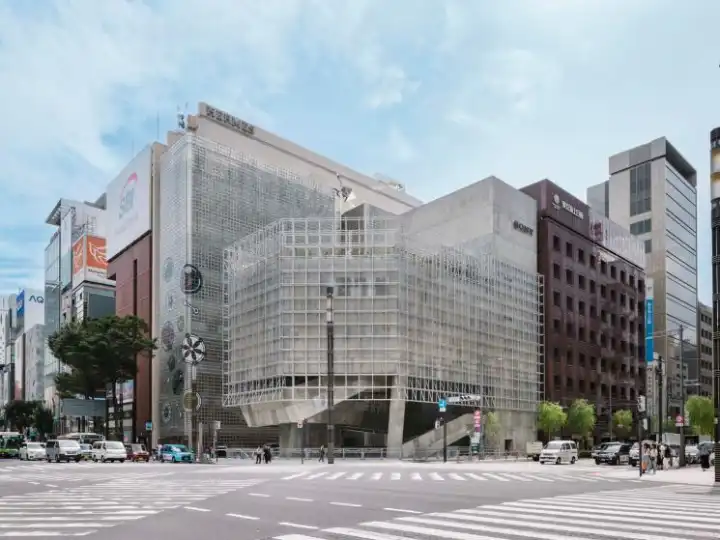
To witness a prime example of how corporate giants can meaningfully insert themselves into the life of a city without plastering their branding all over the place, make your way to Tokyo’s Ginza district. If you’ve visited at any time over the past eight years, you might have observed the transformation of one of its most prominent corners, Sukiyabashi Crossing, once the most expensive piece of real estate in the city. First came the demolition in 2017 of the Sony Building, a towering slice of futurism that originally had 2,300 cathode-ray tubes on its façade. Built in 1966 by architect Yoshinobu Ashihara, the then state-of-the-art structure defined the vision of its creator, Sony co-founder Akio Morita, and announced the ambition of one of Japan’s greatest brands.Take a strollOnce the old building had gone, Sony turned the blank space into a temporary site for events and pop-ups, as well as somewhere to take a breather. With its lush plants, it was an arresting sight that drew eight and a half million people over three years. Now a new landmark has emerged: Ginza Sony Park, an intriguing hunk of raw concrete open to the street and the elements.Sony Enterprise president Daisuke NaganoOpen to the streets“The previous Sony Building was a showcase for electronics,” says Sony Enterprise president Daisuke Nagano, who has overseen the process. “But our business is now more diversified – music, movies, games, electronics. The challenge was to create something that matched where we are now.” In recent years the streets of Ginza have become a forest of high-rise towers designed for global luxury brands by the world’s finest architects. Ginza Sony Park is different: about half the height of its neighbours and with almost no branding. Nagano didn’t have to worry about the usual commercial pressures – there are no tenants – and the design was a team effort rather than the work of one famous architect. “People remember the Walkman, not who designed it,” he says. “That’s very Sony.”The structure is not a conventional showroom and has no offices. It’s a free public space that will be a platform for exhibitions, music and ideas. “The building is not meant to be a big showpiece,” says Nagano. “It’s more like a smartphone, which depends on the apps that are added.” The team also thought hard about the meaning of a park. “We felt that it should be considered basic infrastructure, like a bridge or a highway, and we wanted the materials – raw concrete and steel – to reflect that.” The building is open to the street above ground and connects to the subway and underground car park below below. Fragments of the Sony Building have been retained in the underground entrance as a reminder of the site’s past life.Car park kioskGinza Sony Park gives back to the Tokyo public the tradition of wandering around the Ginza district and echoes the staggered-petal design of the old Sony Building as it spirals down, allowing visitors a vertical stroll from top to bottom. It isn’t sealed off from the world: the central stairwell is uncovered, so when it rains, you can feel it. It also enjoys theshakkei(borrowed scenery) of Renzo Piano’s remarkable glass-brick building for Hermès next door and has an open rooftop with a bird’s-eye view of the district.Construction was completed last summer and the pre-opening phase featuredArt in the Park, an exhibition of new works by three Japanese artists. Nagano sees potential for the building to be used for social messaging too – the chunky exterior metal grid has already exhibited giant images of endangered animals. Following the grand opening on 26 January, the first event is the Sony Park Exhibition 2025, designed to show six core Sony themes via interactive installations that reference everything from music and gaming to cinema.Art for allJapanese corporations have a long history of cultural engagement but these endeavours are increasingly under pressure from bossy shareholders who seem to know the price of everything and the value of nothing. Where, they ask, is the return on an art museum? Ginza Sony Park shows that there doesn’t have to be a quantifiable financial return but, as an exercise in showing Sony as an innovative creative force, it works on its own terms.In its own way, Ginza Sony Park is as radical as its 1966 predecessor and sets out the company’s mission in the 21st century to be collaborative and open to ideas. Nagano hopes that it will inspire Sony’s creatives too. — Lsonypark.com

The science behind Japan’s perfectly crafted vending machine drinks

The science behind Japan’s perfectly crafted vending machine drinks

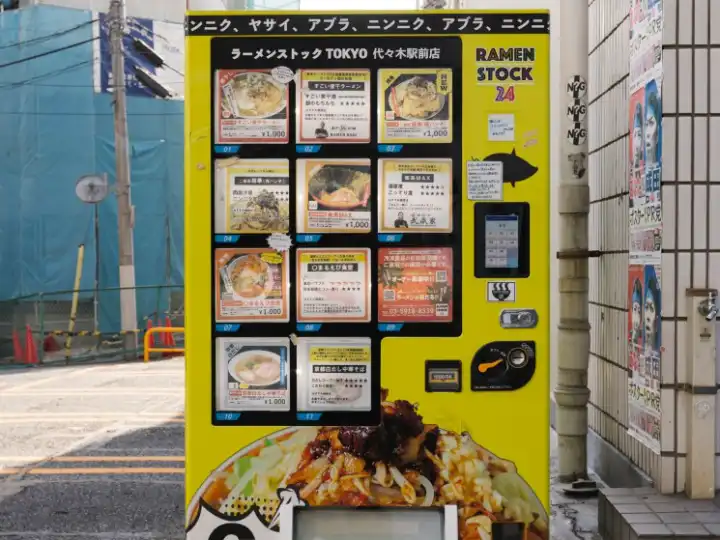
From the top of Mount Fuji to the gates of the holiest shrines, it isn’t much of an exaggeration to say that vending machines are everywhere in Japan: at the last count, there were 2.64 million of them. They light up every street corner and station platform; there’s hardly an office or a public building without one standing sentry. Most service the country’s voracious thirst for beverages, particularly ready-to-drink coffee and tea. A vast industry has been built around the idea of developing hot and cold drinks that can be housed in a can or plastic bottle, dispensed from a machine and still satisfy the precise palate of the Japanese consumer.Creating drinkable tea in a plastic bottle took years of research and development (Kirin won that race in 1986 with itsGogo no Kocha, or “Afternoon Tea”). When Suntory bought French drinks brand Orangina, its bulbous glass bottle was redesigned in plastic for its new life in a vending machine.Seemingly unloved in other countries, these machines are as seasonal as traditional food menus in Japan and often switch from dispensing cold drinks to hot in the cooler months. There are regional variations too. A vending machine in Okinawa will offer chilled bottles ofshikuwasacitrus squash and pineapple-flavoured Bireley’s that you won’t find in Tokyo.Japanese consumers crave novelty – a quick glance at one of these machines will reveal what is popular, whether that’s fat-busting health drinks or cold green teas that almost rival a fresh brew. Unsurprisingly, vending machines have also moved far beyond just drinks: ice cream (Seventeen Ice is the classic in that genre), frozen food, bags of rice, hangover cures and clean underwear are just some of the array of products on offer. Of course, it helps that the machines aren’t troubled by vandals in low-crime Japan.Innovation in the technology has been slow but steady. The energy-saving period (setsuden) that followed the tsunami and nuclear meltdown in Fukushima in 2011 pushed developers to create more sustainable versions. Asahi Beverages recently developed a machine that absorbs carbon dioxide and artificial intelligence is having its own impact – one coffee machine now determines which beans to use based, apparently, on the customer’s preferences.Crucially, vending machines also double as mini-billboards for brands and are likely to be festooned with the latest campaigns. Tea company Ito En has hired the services of baseball player Shohei Ohtani, Japan’s biggest sports star, to bolster its market-leading bottled green tea, Oi Ocha. Perhaps peak vending machine has been reached in Akihabara, Tokyo’s electronics and anime district, where you will find a machine that sells cans of air for ¥500 (€3). Rarefied air, indeed.

How heritage brand Tolix’s revival reflects the boom in traditional luxury design

How heritage brand Tolix’s revival reflects the boom in traditional luxury design

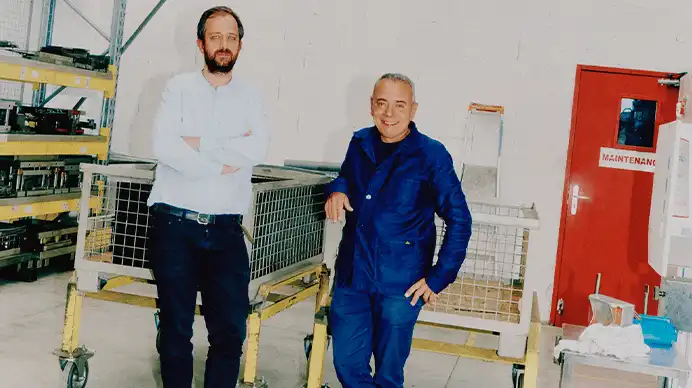
There’s something afoot in the peaceful Burgundian town of Autun. Among the vineyards and the vestiges of Roman temples, design brand Tolix has been undergoing what could be described as a fashion makeover since Antoine Bejui and Emmanuel Diemoz took over the company in October 2022. After meeting at Parisian couture house Balmain, where they held executive roles and helped to save the firm from bankruptcy, Bejui and Diemoz worked at fashion brands Anya Hindmarch and Carven, respectively. But when the opportunity to turn around a French heritage brand arrived, the pair sensed that it was time for an industry sidestep. Now, nearly two years since they bought the company, they have helped Tolix to get its groove back.Silhouette of a stoolRaw steel reissue of the 1958 UD chairFounded in 1927, Tolix produces sturdy steel chairs and stools that you’ll spot in many parks, terraces and cafés across France. Despite this, it has long flown under the radar. The arrival of cheap made-in-China imitations in the 2010s resulted in a challenging time for the company. “Tolix occupies a space in the French collective consciousness without many of us realising it,” Bejui tells monocle at the company’s industrial headquarters in Autun. “The brand was losing esteem. It’s like we’ve taken over a vineyard that hasn’t been tended to for a couple of decades but no real damage has happened. It just needs some attention and care to bear fruit again.”Bejui and Diemoz’s priority after purchasing Tolix was to streamline its catalogue. Initially, only a small selection of its most emblematic pieces were produced, including the t37 chair, which the brand’s founder, Xavier Pauchard, designed in 1937, and the UD chair by his son Jean, originally made for the University of Dijon in 1958. From there, new designs have gradually been introduced in a more cohesive manner. “While we wanted to establish some house codes, we didn’t want to get stuck on the same three chairs,” says Bejui. “So Tolix asked French designer Pauline Deltour to add pieces such as a high-chair and a bench to her outdoor patio collection [which launched in 2020].” With the brand’s offerings tightly controlled, the materials and colours were also reworked and a more restrained palette introduced. Finally, the duo’s background in fashion came into play as the logo, image and branding were given a contemporary refresh.Bench from the Patio collection by Pauline DeltourMaxime de AlmeidaTolix’s new ownership reflects a wider trend that has been gaining momentum in recent years: fashion crowds have serious designs on… well, design. Luxury brands including Prada, Bottega Veneta and Hermès are now regular fixtures at Milan Design Week. New Parisian design salon Matter&Shape made waves in March when it launched during the French capital’s fashion week. Finnish heritage brand Iittala’s new creative director, Janni Vepsäläinen, made the switch to design from UK label JW Anderson. France, where the luxury industry employs more than a million people, presents itself as fertile ground for this type of aesthetically minded cross-pollination, helped by a general appreciation for and investment in smaller-scale manufacturing.When Bejui and Diemoz took over Tolix, they inherited a factory staffed with talented craftspeople who specialise in the production of its metal pieces. Autun and the surrounding Sâone-et-Loire region were once bastions of the French metalworking industry and many of the tools used to make Tolix’s designs date back to the mid-20th century. As we make our way across the factory floor, sheets of steel are being cut, moulded, hand-hammered and checked. One chair is being customised with an engraving as a wedding gift for an employee. “We keep our production as artisanal as possible,” says Maxime de Almeida, who is responsible for development at Tolix. “By continuing to use the techniques that have been inherited from our ancestors, we’re keeping our savoir-faire alive. Today we employ 30 people who can produce as many as 300 products per day.”Boxed up and ready to goWelding expertiseTolix has been designated by the French state as a Living Heritage Company – a prestigious label that comes with the responsibility to transmit know-how to young apprentices. On the factory tour, a stop is made so we can watch a new addition to the team, Samuel, weld a chair with a thin brass brazing rod. The choice of brass rather than copper or aluminium is a Tolix signature. It also helps to distinguish the genuine article from imitations, as the welding process leaves behind gold-coloured marks.Once the pieces are cut, moulded, assembled and welded, they are cleaned and galvanised or powder-coated. The hazmat-suit-clad team responsible for this process carefully examines every newly coated piece as it’s hung upside-down from a revolving conveyor belt. If a paint coat isn’t quite up to scratch, it will be sanded down for another round. In the stock room, colour labels point to a restrained palette going form jet black to brown green and oyster white. For those who are more partial to the industrial look of metal, a simple coat of varnish is also an option.Luckily for Bejui and Diemoz, metal furniture has been enjoying a renaissance, with aluminium and steel designs taking over bars and restaurants in cities such as Paris and Sydney. This year, as part of their plan to broaden Tolix’s international appeal, the company has been cropping up at design fairs including Matter&Shape and Milan Design Week (at the latter, in Finnish firm Marimekko’s temporary café Bar Unikko). A new flagship on Paris’s Boulevard Saint-Germain is helping Tolix to establish itself as a premium brand. As for global retail, the company works with select shops and stockists to reach a demographic that has an appreciation for French manufacturing and industrial history.“We’re here to save a piece of national heritage and make sense of it,” says Bejui. The entrepreneurial duo now split their time between Paris and Burgundy to be close to the manufacturing team. “It’s a source of pride for Frenchmen that we have these extraordinary companies such as Tolix. I feel a civic duty to tell people about the marvels that take place here.” — Ltolix.comTolix timeline:1917Xavier Pauchard sets up a factory making steel household items.1927Pauchard trademarks Tolix.1937The Pauchard-designed T37 chair is launched.1958The UD chair is released.2000Emmanuel Diemoz joins fashion firm Balmain.2011Antoine Bejui joins Balmain as CFO.2012Diemoz becomes Balmain’s CEO.2017The pair leave Balmain, after growing annual revenue to more than €120m.2020Tolix releases the Patio collection by Pauline Deltour.2022Bejui and Diemoz buy Tolix.

How 1940s-era bungalows of the Mar Vista Tract are nurturing the community

How 1940s-era bungalows of the Mar Vista Tract are nurturing the community

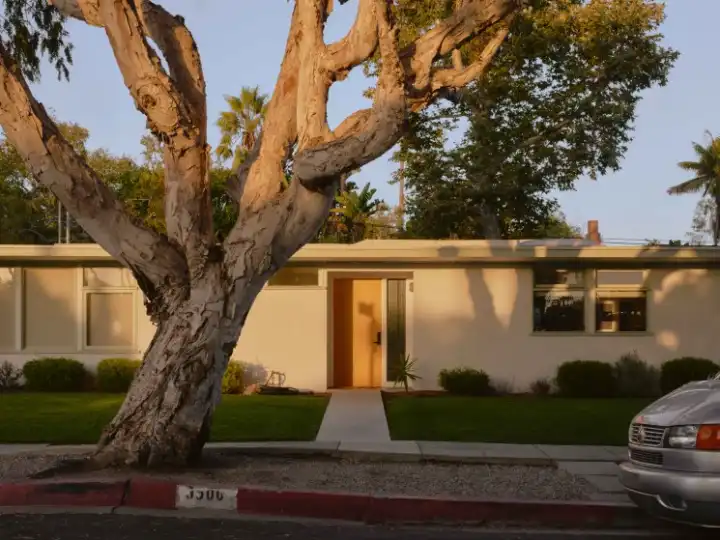
When Gillian Tennant and Steven Summers started house hunting in Los Angeles for their family of four, they had the goal of any reasonable Aussie transplants: a modern home not too far from the beach. They happened to be driving past a stretch of low bungalows on Beethoven Street, just off Venice Boulevard, when they were stopped in their tracks. The houses would probably have passed unnoticed had it not been for the gathering that was taking place out front. “In someone’s yard, there was a live band playing, with people sitting on the lawn listening,” says Tennant. “That’s something you don’t see anywhere. We said to each other that this is where we want to live.”This scene of 1950s-era neighbourhood bonhomie that Tennant and Summers had stumbled on is typical for the Mar Vista Tract. A grouping of 52 houses that runs three streets deep (Beethoven, Moore and Meier Street, from west to east), this modernist enclave is easily missed when driving through the flat suburbia that sprawls out east of Venice Beach. The main decoration on the small, colourful bungalows are slim, V-shaped trusses that hold up awnings over garage doors and entrance walkways. But when Tennant and Summers fixed their mind on living in one, they had to get in line. Mar Vista Tract residents hardly ever leave; when a house does go up for sale, bids can exceed $2m (€1.8m).In Southern California’s modernist architectural heritage, which mostly consists of the ritzy and secluded single-family villa, the Mar Vista Tract is a misfit. So was its architect, Gregory Ain, the child of a socialist Polish émigré who grew up partly on a commune. Ain viewed architecture as a “social art” that should address the “common architectural problems of common people”. After working in the drafting room of Austrian master Richard Neutra, he opened his own office in the late 1930s. By the mid-1940s, together with associates Joseph Johnson and Alfred Day, he started planning the Mar Vista houses.Ain himself referred to his masterplan as a tract – a term connoted with a kind of repetitive, characterless suburbia. In Ain’s design, the houses have the same basic layout and average just 98 sq m but every millimetre was carefully considered. The architect developed a plan that maximises space and flexibility using sliding doors and an open kitchen. By flipping and rotating this floorplan, and varying the position of the garage, he made every home slightly unique. Just as much thought was given to the surrounding green spaces. Ain’s frequent collaborator, Harvard-educated landscape architect Garrett Eckbo, drew up fenceless, communal gardens planted with species from six continents. Each parallel street had its own plant-lined walkway: ficus for Beethoven, melaleuca for Moore and magnolia for Meier. Backyards were dotted with loquat, mulberry, plum and guava trees to encourage fruit trading and socialising between neighbours.The houses were completed in 1948 and christened the Modernique Homes (“Modern in design, unique in liveability!”). While keeping mum about Ain’s socialist leanings, the advertising material emphasised his innovative design solutions. “Check these features against homes twice the cost” it urged, followed by a 10-point list ticking off all that Ain had squeezed in, including folding and sliding doors that made space for one, two or three bedrooms, floor-to-ceiling windows and a dining table between the kitchen and living room that doubled as a buffet or a bar.The design was progressive for the 1940s but prospective buyers, alas, did not take in Ain’s nuanced vision. Though the houses started at a reasonable $12,400 (just over $160,000 in today’s money), they were in a blue-collar area where homes sold for a third of that sum. The neighbouring property was a shooting range. The mainstream reaction to the development is captured in the 1949 film noirTension, where a newlywed couple arrive in Mar Vista and the husband proudly presents the home he has picked out for them. Behind Ain’s unadorned design, barren fields stretch into the distance. “It’s 30 minutes from nowhere,” says the wife, sliding into the driver’s seat and taking off.Though the Mar Vista Tract was a commercial failure, it attracted residents who saw the value of Ain’s design, many of them architects and designers. Early occupants included the founders of Architectural Pottery, the company that pioneered modernist ceramics in the US. The tract has also had an LA-appropriate share of intrigue (including one murder mystery) and makes several unexpected cameos in the city’s cultural history (empty pools in the tract informed early designs of skateparks).When Amanda Seward and Hans Adamson moved in on Moore Street in 1994, they had never heard of Gregory Ain. “This was the only house that we could both agree on,” says Seward. The couple only had a lay interest in architecture: Seward, who grew up in Santa Monica, is a lawyer, while Swedish-born Adamson produces music software. But when they began work on the fixer-upper, which needed a new roof, they started digging into the neighbourhood’s history. The previous owner had left behind the tract’s original blueprints. “He had been an enthusiast of these buildings and I inherited that with the house,” says Adamson, who started researching the original planting schemes and colour palettes of the homes. “It took years of detective work.”By that time, in the late 1990s, Mar Vista was becoming a desirable place to live in LA, and the first McMansions had started popping up in the area. Eventually somebody submitted a planning application for adding a second floor to their Ain house but the neighbours did not acquiesce.Angela Caputo, Ken Kook&Maya Cook“We moved from Chicago to Los Angeles and happened to cycle by here and saw a ‘for sale’ sign out front – we put a bid in and got it,” says Angela Caputo, who has lived on Moore Street since 2020. “This is a very welcoming neighbourhood. People are so warm here. It would be tough if that atmosphere were lost. Hopefully, many of the neighbours’ children will stay. We hope that our daughter will one day have this place.”Ken Kook and Angela Caputo with their daughter, Maya CookThe family’s expanded living roomGillian Tennant&Steven Summers“We have been surprised by how safe this neighbourhood is, especially for this part of Los Angeles,” says Gillian Tennant, who has lived on Meier Street with her partner, Steven Summers, and their young family since 2023. “We thought we couldn’t let the children out the front door but there are kids running up and down the street. They love it here. The only odd thing is how many people take photos of the house while driving by.”Secluded back yardGillian Tennant and Steven SummersChildren’s roomKitchen table with Paul McCobb chairsTakashi Yanai“I made an offer on a house here 20 years ago and didn’t get it but I always thought that someday I would live in one of these houses,” says Takashi Yanai, whose vision became a reality when he bought a house on Meier Street in 2023. “I want to make it possible for more people to experience this architecture. I have hosted dance performances and art exhibitions; next up is a karate performer. I am thinking about starting an informal artist residency.”Architect Takashi YanaiOpen dining roomHiroshi Sugimoto photo and Eames wooden splintYanai has been editing the home down to its original featuresIsamu Noguchi lampRuth Handel&Lloyd Scott“Living in these houses makes you appreciate time in a different way,” says Ruth Handel, who has lived on Moore Street since 1999. “I’m working on a book about life in the tract and have been gathering stories and photos from previous residents. In one stack of photos I received, the first photo was of someone sitting in exactly the same spot I was in. It was a strange moment. You realise that you’re just passing through.”Ruth Handel and Lloyd ScottOriginal Ain kitchen tableMaster bedroom, a later expansionCastiglioni’s Arco lamp and Saarinen’s Tulip and Womb chairs in the living roomBonnie Jones&Anni Michaelsen“We moved in 54 years ago, six months apart,” says Bonnie Jones, who has lived on Meier Street since 1970, with Anni Michaelsen across the street. “We both had children and became friends. In most houses at the time, the kitchen was in the back and you looked out through a tiny window. Here everything is open. We have never wanted to change our homes. The architect knew what he was doing.”Longtime neighbours Anni Michaelsen and Bonnie JonesEntrance to Bonnie’s kitchenOriginal floor-to-ceiling windowsDining table is from Michaelsen’s Danish furniture shopHans Adamson&Amanda Seward“While we were waiting for our bank to finalise the sale, the Los Angeles earthquake hit,” says Hans Adamson, who bought a place on Moore Street, with Amanda Seward, in 1994. “Buildings collapsed everywhere and we came over here to see if our home was still standing. But there was no damage anywhere in the tract. The construction is so light. We often get estate agents knocking on our door but we will never sell.”Hans Adamson&Amanda Seward with Seward’s 1994 Alfa RomeoLiving room with original fireplaceThis room can be closed off with a folding doorA grassroots movement of residents including Seward and Adamson began pushing to make the Mar Vista Tract a Historic Preservation Overlay Zone, or HPOZ, which blocks outward changes to a historically significant district. The move was unprecedented – no other postwar modernist buildings were protected by the programme. In 2003, after years of campaigning, 50 of 52 homeowners voted in favour.“These houses are small and people think that they need to live in a palace,” says Anni Michaelsen, a resident since 1970 who went door-to-door cajoling signatures in favour of the HPOZ. Danish-born Michaelsen opened her impeccably furnished home for campaign meetings and cocktail receptions. “I wanted to show what people wanted to tear up,” she said. “If we hadn’t done that, these houses would have disappeared.” Now any changes to the street-facing façades are off limits and most renovation work must pass approval of a five-person board made up of residents and at least one architect.Mar Vista turned out to be the last large-scale housing project completed by Ain. The architect was hounded by the FBI as a suspected communist, and commissions dried up. It is a fortunate twist that the community spirit that Ain set out to create in Mar Vista is also what enabled this nook of LA to be preserved. “This architecture has a simplicity, openness and democracy to it,” says Seward. “Those are things that I am still attracted to.”When Tennant and Summers first placed an offer for an Ain house, they were outbid; likewise with a second, a few years later. “We almost gave up,” says Tennant. But last year a house came up for sale on Meier Street and the third time proved the charm. The sunset-facing home was one of the best-kept in the neighbourhood, with welcome extra living space thanks to a tasteful 1960s expansion. The couple have created an LA-meets-Sydney idyll in warm wood and earthy tones, with pieces by mid-century designers Paul McCobb and Bror Boije.Having settled into life in Mar Vista, the family’s first impression has held up. The tract’s residents all correspond on a reply-all email chain, where there are frequent invitations to barbecues and events. “We don’t have family here, so we really appreciate that,” says Tennant. “If anything happens, you’ll be looked after.” The Australians also feel at home thanks to the amount of wildlife that resides in Eckbo’s 75-year-old scheme. Coyotes, raccoons and squirrels all pass by the front porch, while a stately redwood in their yard hosts a family of hawks.Across the street from Tennant and Summers is the house of Takashi Yanai, a Japanese-born architect who uses the home as a studio, salon and event space. This summer he invited an LA-based dance company to stage a show around the homes. Suddenly, his new neighbours found themselves at the centre of precisely the kind of event that had first drawn them here. “The performers moved down the street and then stopped in our front yard,” says Summers. “The whole neighbourhood came.”

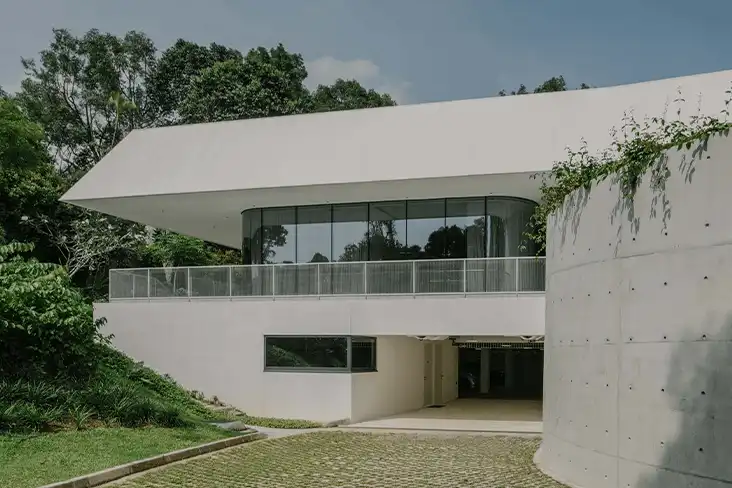
The architectural diplomacy of Swiss embassies in Singapore, Cuba and the UK

The architectural diplomacy of Swiss embassies in Singapore, Cuba and the UK

Embassies are more than just outposts in foreign lands. They serve as diplomatic hubs and cultural centres, playing a role that extends beyond waving flags and displaying national emblems. We visit three Swiss embassies to see how the confederation’s ambassadorial outposts are not only functional buildings but architectural ambassadors, projecting values and fostering understanding between nations.1.Raising the standardSingaporeThe newly renovated Swiss Embassy in Singapore is striking yet unassuming. Its entrance is a low-slung white gate flanked by pale concrete walls separating it from a quiet, tree-fringed road. An unobservant passer-by could mistake the structure for an art gallery or the home of a contemporary architect.From the street, a gently sloping path leads to a bright white, single-storey building wrapped in floor-to-ceiling windows with one side of its roof jutting tent-like over the front doors, a corner stretching towards the sky. The impact is simple but dramatic. From outside, the effect is akin to that of a welcome mat. Heading up the drive, the visitor feels that they are being invited in. Inside, the result is abundant natural light – a perk for the embassy’s staff.Switzerland’s embassy in Singapore“The idea was to have a bungalow in nature and that means we needed to open the building up as much as possible,” says Jaime Rodriguez, who oversaw the construction as part of the team from Berrel Kräutler Architekten, the Swiss firm that carried out the project. As is standard practice for all public building projects in Switzerland, the job went to the winner of an open competition, which was held in 2019. Berrel Kräutler Architekten’s vision for the embassy beat 53 others and the architects got to work. The Swiss Embassy had occupied the same building in Singapore’s Bukit Timah district for 35 years when the time came for an update. Decades of fierce equatorial sun and storms had weathered the building but its foundations were sound. Rather than tear it down and start again, the embassy opted for an environmentally friendly renovation. “We kept 90 per cent of the old concrete structure,” says Rodriguez. “It’s important not only to be sustainable with materials, but to keep as much as possible. That’s what we did for this embassy.”Swiss and Singaporean flagsOffice spaceThe total office space was expanded to accommodate 35 people, from a previous maximum of about 10. Solar panels were added to the new roof, helping the embassy to generate a substantial part of its energy in-house and powering the new EV charging stations in the garage. The renovation was completed at the end of 2023. “I am proud that we did a lot to reduce our energy consumption,” says ambassador Frank Grütter. Stepping into the building, visitors find themselves in the light-filled public area for consular services; staff sit behind glass-fronted booths, and a secure door leads to the main office, which is laid out in an open-plan format and ringed around a courtyard where plants sprout abundantly.The ambassador occupies a corner office with glass walls; he says his favourite part of the renovation is its transparent design. “The open glass walls are a sign of the Swiss government’s willingness to be transparent and close to its citizens,” says Grütter. This is echoed by Sarah Theus-Clausen, a consular officer and interior designer. “We’re approachable as an embassy and that’s something that people enjoy,” she says. Open-plan nookStaff pantryThe building embodies a blend of values from Switzerland and Singapore. One challenge for the architects was how to fuse an authentically Swiss aesthetic with Singaporean architectural traditions and the local environment. They achieved it with a minimalist spin on the colonial black-and-white houses of Singapore and a careful integration of the surrounding tropical flora. Swissness is evoked in the clean lines and modernist furniture – and subtle nods to patriotism, such as the coat of arms in light relief on the walls outside. The white walls do well in the year-round sunshine and the architects constructed the windows with three layers of insulated glass and UV filters to ensure that the ambassador and his colleagues can enjoy the rays without suffering from their heat. “Being able to work in this environment every day really gives me pleasure,” says Theus-Clausen.2.Home from homeHavana, CubaSwitzerland’s ambassadors to Cuba have occupied a revered piece of modernist architecture – by late Austrian-American designer Richard Neutra – for almost 70 years. Built in 1956 in Havana’s leafy Cubanacan neighbourhood, the house was commissioned as a family home by Swiss banker Alfred de Schulthess. Ater the onset of Cuba’s socialist revolution three years later, it was sold to the Swiss government, which has accommodated its representatives there since 1961. “People love this house,” Switzerland’s current ambassador to Cuba, Stefano Vescovi, tells Monocle. Here, he explains the value of high design in a diplomatic setting and tells us about the restoration of the embassy’s gardens by Brazilian landscape architect Roberto Burle Marx. Gardens by Roberto Burle MarxWhat role does your official residence play in Switzerland’s diplomatic presence in Cuba?There is a convening power to this house; everybody is welcome. It’s helpful to be able to meet colleagues and people from different countries, who might have different perspectives on the world, in a setting like this. While we do it in different ways, both Switzerland and Cuba have a power to convene diplomatically. There are about 120 foreign bilateral embassies here – more than almost any North American city, second only to Washington (and Brasília in the Americas). Additionally, very important people have met in this house. As ambassadors and diplomats, it is critical to have conversations that are quieter, in a venue that feels relaxed. It’s important to have a place where you can look somebody in the eye and discuss and listen, and not just engage in diplomacy that is public. How is the house designed to host this broad range of conversation?The southern façade has wood panelling along the exterior of the first floor and was designed to offer privacy. It depends on the politics, of course, but generally speaking we like to think of Swiss embassies as open houses with Chatham House Rules. Reception areaStefano Vescovi, Switzerland’s ambassador to CubaHow valuable is the residence as a showcase of Swiss design?The design is really thought-through. It is very functional and there is wood throughout the house because the De Schulthess family wanted it to feel like their home in Switzerland. In 2000 the Swiss Confederation changed the furnishing concept, in keeping with the broader tradition of classical modernism. Today it is finished with pieces by Mies van der Rohe, Eero Saarinen, Le Corbusier, and pieces of art from the Swiss government’s collection, as well as rotating, smaller exhibits of art by Cuban creatives.What relationship do the house and garden have to each other?This was the only project that Neutra and Burle Marx worked on together in the Caribbean. To have these big names in one setting is extraordinary. It’s also the only surviving garden that Burle Marx ever made in the Caribbean. The result is that you have this visual contract between the rectangular house and the first part of the garden, which is thought-out in a rational way – like a Mondrian flower garden, where everything is very angular, complementing the swimming pool area where we host official events. There are 70 varieties of plants from across Cuba here, which bloom and flower at different times of the year. So it feels natural.Living roomDo you think the two designers mettheir ambition with this project?The combination they had in mind was a synthesis of two concepts. And it works nicely. There are fruit trees and a vegetable garden where we grow the ingredients that we use for the official receptions that we host. When our Cuban colleagues who come to enjoy the garden are here, I sometimes joke that “around this table, we might not all be Marxists but we are all Burle Marxists”. That seems to go down very well.3.Mission to moderniseLondonAlun Jones and Biba Dow of Dow Jones Architects are leading the renovation of the Swiss Embassy in London. Together with Bern-based Studio DIA, they have been tasked with bringing the building into the 21st century. The current embassy, which juxtaposes a heritage-listed Georgian-style mansion façade with a modernist annexe, was completed by Swiss architect Jacques Schader in 1971. What are the key changes of the renovation?Alun Jones:Currently the middle of the plot is occupied by the visa centre but the embassy no longer needs such a large space for this. The idea is to make this space an external courtyard so that we can drop natural light and ventilation into the building’s heart.Biba Dow:The embassy’s representational spaces, visa hall, offices and the residence all have different entrances. We’re bringing a certain democracy to the building by renovating these entrances with a similar level of clarity and detail.Can designing for diplomacy be a challenge?BD:Any Swiss embassy project is the expression of the relationship between Switzerland and the host country. This needs to be embodied in everything, from sourcing the materials to the construction and furnishing of the space.How does this project in London represent contemporary Swiss values?AJ:The Swiss government included specific decarbonisation requirements in the brief. That’s unusual, as a lot of our UK clients will want to reduce their carbon but have no precise implementations.dowjonesarchitects.com

The Welsh mill securing its future by becoming an employee-owned enterprise

The Welsh mill securing its future by becoming an employee-owned enterprise

From the outside, the whitewashed stone workshops nestled in the Welsh countryside look remarkably similar to how they appeared a century or so ago, when the Melin Tregwynt wool mill was established. But step inside the facility, where some of Wales’s most striking fabric designs are made, and you’ll see that a quiet transformation has taken place – and a new yarn on how to overhaul the business model of a heritage brand is being spun.Melin Tregwynt’s 40-plus employees recently became the mill’s indirect owners, when it was transferred from the Griffiths family’s ownership to that of a trust for employees. “They weren’t quite sure what they were letting themselves in for,” says Eifion Griffiths, the third generation to run his family’s mill. “We knew that we were getting ready to retire,” says Eifion, who took over the company from his father with his wife, Amanda, in 1986.“We don’t have children so we haven’t got anybody to pass it on to,” he says. “It is a big deal passing a family business on.” Selling the company outright felt like the wrong decision. “It would have been very difficult to see it being run by somebody else,” says Amanda. “This is a sparsely populated area so we are a focal point in terms of employment. We’re knitted into the community.”The restructuring has allowed production to continue uninterrupted (five looms produce more than 1km of fabric per month), while ensuring that there is flexibility and time to develop new designs, collaborations and additional products, such as a collection of premium Melin Tregwynt yarn for home-knitters to weave with, which is currently under development.“It is very important to evolve all the time because you don’t ever want your business to turn into a museum piece,” says Eifion. “In the world of smaller businesses such as ours, there has to be some room for natural growth and this feels like a better, more modern way of passing our business on.”melintregwynt.co.uk

Adrenaline meets architectural wonder at Snowbird’s maverick ski resort

Adrenaline meets architectural wonder at Snowbird’s maverick ski resort

A dusting of powder blows over Utah State Route 210 as Monocle drives up the canyon from Salt Lake City. Mountains loom above, covered in white snow and dark trees. Bound for Snowbird ski resort, a 1971 gem of modernist architecture hidden high in the Rocky mountains’ Wasatch Range, this stretch of highway is among the most avalanche-prone in the US. Road closures are frequent and the 30-minute drive from the Utah state capital is best navigated with sturdy vehicles (Monocle opts for an enormous, chauffeured black GMC Yukon).“Snowbird is the first studiously modern American ski resort,” says Jack Smith. The Fellow of the American Society of Architects, now 92, was instrumental in the design of this pioneering destination, as an original member of the Snowbird Design Group. More than 50 years after opening, its bold concrete architecture – which includes several large, multi-purpose lodges, a hotel and conference centre, resort operations facilities and even a fire station – still feels contemporary. “Concrete is a miracle,” explains Smith. “You mix gravel, sand and water and get the hardness of stone. You can use it to make something special that has not been seen before.” Indeed, when it was completed, nothing like Snowbird had been seen before in the US, with its angular, modernist buildings emerging from the contours of the rocky, mountainous landscape.“It erupts from nature, rather than imposing on it,” adds Smith, explaining that Snowbird’s building forms and materials suit the character of the mountains. But perhaps this shouldn’t come as a surprise. Little Cottonwood Canyon, where Snowbird is located, was formed by the immense force of millennia-old glaciers, carving out exceptionally steep slopes that have made its ski runs some of the world’s most thrilling – and conditions that make this landscape very difficult to build on.One of the resort’s entry gatesSnow piles beside the central driveBut it’s this tough terrain that first drew Snowbird’s founder, Ted Johnson, to the area in the mid-1960s, when he took a job at the neighbouring Alta Ski Resort. Known as the “Silver Fox” for his good looks and mane of light-grey hair, Johnson was a thrill-seeker on skis and appeared in now-classic Warren Miller-directed ski movies and on the cover ofSports Illustrated(twice). But he also carried a similarly adventurous streak in his business dealings, as evidenced by his moves at Snowbird.Fuelled by a desire to create a truly unique ski experience in Utah, on terrain so steep that it initially seemed impossible to develop, Johnson and his wife, Wilma, began to research the prospect of building a resort in the canyon. After identifying that the landscape where Snowbird is located amid US Forest Service land, crossed by a host of different historical mining claims (land titles that allow private development), the duo set about trying to collect all of the claims.“Wilma went to the records office in Salt Lake County to research the claims,” says Neil Cohen, Snowbird’s official historian and retired 52-year-old veteran manager of the resort’s Golden Cliff Restaurant. The Johnsons slowly bought the claims and, in 1964, approached Smith, a friend and fellow avid skier, to start design work. Initial consultations took place in secret (to avoid others laying claim to the, well, claims) and the Snowbird Design Group was formed – a motley crew of architects and others passionate about skiing and striking gold with a new kind of resort.In addition to tapping Smith, Johnson also hired Ted Nagata early in the process to give Snowbird its graphic identity. The Japanese-American graphic designer’s “wing” logo, with Snowbird printed in Helvetica above it, is now a classic example of 1960s American graphic design. This branding was instrumental in developing “the black box”, a paper pitch deck for investors that Johnson used to raise the first $400,000 needed to start the development.By 1967 the Snowbird Design Group had created the first master plan. And from the outset, it was clear that the resort was designed to be different. “Ted Johnson said, ‘I’m not going to have that European chalet motif,’” says Cohen. The resulting designs were bold and angular, influenced by modernist masters such as Mies van der Rohe and Le Corbusier and the pragmatic utility of the illustrious US Army 10th Mountain Division, who had brought recreational skiing back to the US after the Second World War.Like Marcel Breuer’s 1969 modernist masterwork Flaine Ski Resort in the French Alps – an inspiration to everyone involved – Snowbird developed its own design language. Dictated by a topography that left little room for buildings, the design group prioritised structures that fit into the terrain rather than fighting it. With no space to sprawl in the steep canyon, initial construction in the early 1970s saw buildings rise taller than other typical ski resort architecture. But careful siting below the interstate highway and along the contour lines ensured hat the massive structures seem smaller than they are.Key to this approach was the master modernist landscape architect Dan Kiley, a mentor to Smith, who provided key input in suggesting the “skiers’ bridge” over Little Cottonwood Creek, which divides the canyon. The bridge seamlessly connects the ski slopes directly with the centrepiece Snowbird Center, one of the first spate of buildings completed for the opening day on 23 December 1971. The megastructure contains ski facilities and dining, alongside the base station of the Snowbird Tram.Also among the facilities open at Snowbird’s inception was the now-beloved aerial tram. One of the first of its kind in the US, its blue-and-red cars travel 884 vertical metres to the top of the resort – an area known as Hidden Peak – in 13 minutes. Built by workers from Swiss lift company Garaventa (who brought their own liquor to Salt Lake’s dry Mormon country), it was – and still is – the most efficient option for transporting skiers to the peak.This foundational work proved to be (unsurprisingly) expensive, and Johnson needed more cash to make his vision a reality. The most significant investors was Texan rancher, oilman and adventurer Dick Bass. Initially coming on board in 1969, Bass spending more than $13m on the resort by opening day. Development continued at pace, with the constellation of architects responsible for Snowbird evolving to include the likes of James Christopher and Ray Kingston. Bass became patron saint of Snowbird, buying Jonhnson out in 1974.The finest expression of Snowbird’s architecture is The Iron Blosam, a lodge that was finished in 1975. Its intricate concrete, steel and wood façade used one of the first staggered transverse construction systems in the US: each concrete floor slab both hangs and supports the next element. It’s a method of building that allowed the creation of double-height living rooms in all units as well as a multi-levelled common space, built around a large central hearth (entering the space today, one is reminded of a gentler age in hospitality, with wooden details including mail cubbies tucked behind a bell desk).The façade of Iron Blosam lodgeIron Blosam’s lobbyThis way to the rooftop poolConcrete and wood constructionAtrium of the Cliff LodgeSlightly uphill from the Blosam and other central buildings is the 12-storey Cliff Lodge, which was finished in 1974, itself complemented by a sizeable extension in 1986. It is Snowbird’s largest and most iconic building, crowned with a bright-blue heated outdoor pool and hot tub. The original Cliff Lodge condo units are angled at 45 degrees, providing views, balconies and wonderful articulation in the façade. This contrasts with the smoked-black 1980s hotel addition, which features an expansive 11-storey open atrium and a swooping mezzanine detailed in cedar. The Atrium Café sits at the bottom, opening early to serve coffee and flaky ham-and-cheese croissants for guests aiming to take the first tram up.Floor-to-ceiling windows offer spectacular snowy viewsSnowbird is still operated independently, a growing rarity in the US. Bass continued as sole owner until 2014, when he sold to Ian Cumming of Powdr Corp, a small seven-resort group based in neighbouring Park City, Utah. A decade later, it’s clear that they understand the resort’s need to be different, if not the need for excellence in architecture. Recent structures, such as the Summit Restaurant and proposals for the replacement of the on-slope Mid-Gad restaurant (a masterpiece of wooden trussing) suggest a more modest contemporary design aspiration.Luckily, the snow still falls. “We receive an average of 500 inches of snow every winter and in 2023 we hit almost 900 inches – the canyon record,” Dave Fields, Snowbird’s president and general manager, tells Monocle with glee. The ski season roughly runs from November to May, with Utah powder – trademarked as “The Greatest Snow on Earth” – revered for being extremely dry, meaning that skiers can float in it chest-deep. (Snowbird is also a tree-skiing paradise, impressing Monocle’s Swiss ski instructor and fixer, Roger Mogg. “You move through the forest in wild steep turns,” says Mogg. “That’s hard to find in Switzerland.”) Snowbird’s current terrain map also shows off its enduring appeal as a complex ski zone, with many black lines. “It challenges people and they’re forced to progress,” says Fields. The blacks are often double black and the blues are very dark blue. The names of the runs reference Snowbird culture, from “Bassackwards” (Dick Bass) and “Silver Fox” (Ted Johnson) to “Junior’s Powder Paradise”, named for the now 99-year-old former Snowbird ski school director Junior Bounous, who helped design trails – and who still gets out on the mountain.Trail names reflect the history of the resortChicadee LiftSupergraphic wayfindingPowder poles are essentialThe iconic Snowbird aerial tramSki patroller Sam Chovan with avalanche dog MabelWhile the excessive powder, which can be up to 20 metres deep and on steep slopes, is appealing to skiers, it presents an extreme avalanche risk. All the buildings are, as a result, made from 5,000 PSI reinforced concrete. (“Nuclear plants are 6,000 PSI,” says Smith.) In fact, securing the resort requires triggering controlled snowslides. “We use artillery, we use remote avalanche control devices, we use helicopters,” says Fields.Such activities can lead to a unique phenomenon called “interlodge”, where everyone at Snowbird becomes building-bound. “It’s declared when avalanches could surround the resort,” says Sarah Sherman, Snowbird’s communications manager. “It’s actually illegal to leave the buildings during interlodge.” Bright red warning signs are posted on locked doors during such events, which can last multiple days.The summit of Hidden PeakSkier in avalanche trainingLeading the way downhillSnowbird is, in short, not a place for the ski-to-lunch-then-après crowd – and, given its steep landscape, remote location and free-spirited foundation, this is perhaps to be expected. Snowbird is about the pure love of big mountain skiing and landscapes, from the architecture they inspire to the personalities they attract. “I’ve never met someone who’s neutral about Snowbird,” says Sherman. “You love it or you hate it.”On Monocle’s last day on the slopes a figure in orange catapults off a boulder, flipping on a 10-metre drop. The entire slow-moving chairlift audience goes wild. There’s a collective, vocal, American welcome at Snowbird. “That’s only the second time that line has ever been skied,” the woman next to Monocle yells out. From its creators to its fans, Snowbird is made for the mavericks.snowbird.com

Australia’s laneways investment is breathing new life into its cities

Australia’s laneways investment is breathing new life into its cities

Australian cities don’t have panoramic piazzas like in Italy, nor do their streets rival the grandeur of France’s finest boulevards. But the treatment of laneways here contains lessons that any municipality can learn from. For the better part of 30 years, players from both the private and public sector have been turning the country’s small-scale thoroughfares into vibrant urban places.So what is the appeal of investing in such spaces? These alleys were typically built to service buildings and were frequented by delivery and waste-management vehicles. But when they are reoriented to serve pedestrians, they bring to a city a potent blend of lifestyle and economic benefits. As well as improving the permeability of city grids, the friendlier proportions of laneways (which feel more intimate than a city’s main arteries) making for comfortable and desirable spaces for walking, shopping and dining.Angel Place connects to George Street, Sydney’s main thoroughfareTake Fish Lane in Brisbane, for instance, which hosts several significant city-shaping projects that symbolise the Queensland capital’s recent ambitions to become a bigger player on the world stage. “Brisbane is changing quickly and is infinitely different now to what it was when we started revitalising Fish Lane more than a decade ago,” says Michael Zaicek, commercial manager for developer Aria Property Group, which acquired a building on Fish Lane in 2012 – an underused former service street in South Brisbane – and began redeveloping. “At the time, we saw such a strong appetite for a sophisticated placemaking project in the public realm.”When it reopened in 2015, brandishing a new residential offering and three hospitality venues, it garnered instant acclaim – and foot traffic. Following this initial success Aria pressed on, bringing in public art, acquiring more buildings along the laneway for adaptive reuse, and installing street lighting throughout the area’s public spaces. It’s a combination that has proven so successful that Fish Lane now has a full-time precinct co-ordinator, who is responsible for organising public events, from markets to concerts. “There wasn’t a master plan, it’s just evolved organically into a positive feedback loop,” says Zaicek. “The more we invest in the laneway, the better the outcome for everyone.”On the terraces of one of the city’s many laneway barsSydney’s historic pubs have laneway accessToday, South Brisbane is the city’s fastest-growing residential area and more than two million people pass through Fish Lane annually. Brisbane’s laneways were nearly extinguished in the 1980s; now they’re some of the most sought-after addresses in town. “Ten years ago Fish Lane was a very uninviting place,” says Zaicek. “We’ve reclaimed those nooks, crannies and otherwise unusable spaces and now I see opportunities everywhere.”It’s a lesson that Melbourne is intimately familiar with. In the 1990s, confronting a precipitous decline in commerce and visitation, the city centre decided to rethink itself. “Growing up in Melbourne in the 1980s, you could literally see tumbleweed blowing down the streets of the city,” says Jocelyn Chiew, Melbourne’s director of city design. “So the City of Melbourne decided to use its laneways to attract a critical mass of visitors and residents.” In 1994 just 300 metres of the lanes within its urban grid were accessible. Now, following a decades-long effort to convert, reactivate and reinterpret its alleys, there’s more than 3km of traversable laneways.The roots of this transformation in the Victorian capital can be traced to Postcode 3000, a programme that incentivised developers to build in the city, beautified and greened up streetscapes and boosted the city centre’s residential population. Once the laneways had been cleaned up and repopulated, a host of red-tape-cutting changes, such as small-bar licences, lower rents, active street frontage requirements and retail footprint limits, encouraged fledgling bar owners, retailers and creative entrepreneurs to move in, injecting round-the-clock vibrancy into the network. And the work hasn’t stopped: Chiew and her 50-strong multidisciplinary design team are constantly tinkering with the laneways, from increasing safety through better lighting to ensuring that each one feels distinct and different. Documents, such as the Central Melbourne Design Guide, inform designers, architects and developers working on the city’s built form. “But you also want to maintain consistency and curation across the whole network. It’s an ongoing investment,” says Chiew.Meanwhile, Sydney, which has always had a complicated relationship with its heritage spaces, is still recuperating from the state’s controversial, now abolished, lockout laws, which saw entry to bars (and the potential for nightlife) stop at 01.30 in the city centre. Despite those challenges, several long-term infrastructural bets, from the new metro line to the pedestrianisation of George Street, one of the city’s busiest thoroughfares, have recently been delivered to instantaneous success.Ash Street in Sydney is a little Parisian pocketThese landmark city-making projects, and the dynamism that they’ve returned to the city, have assisted with another of Sydney’s key goals: reviving and rediscovering its historic laneways. Since 2008 the City of Sydney-backed Live Laneways revitalisation strategy has brought dozens of alleys – including Ash Street, Angel Place, Tank Stream Way and Bulletin Place – back to their best. Throughout town, with funding through Live Laneways, sculptures, projections and even native micro-forests have been installed on laneways to transform them into pleasant refuges between Sydney’s busier, broader streets. With government-supported business alliances, such as YCK Laneways (a consortium of small bars in Sydney), and a new plan to spruce up Chinatown and its warren of lanes, these small streets are becoming a big part of the agenda.Grand dining room hidden in plain sightSydney’s private sector is pitching in too. By the harbour, mixed-use precinct Quay Quarter Lanes, completed in 2021, is a seamless blend of new and heritage buildings across an entire city block, all interwoven with a cross stitch of laneways. Previously dead-end lanes have been unblocked; apartments on the upper floors ensure a residential character and a mix of street-level businesses, from a handmade-pasta shop to a beloved banh mi spot, cater to hungry office workers. Miniature plazas and recesses encourage anyone who stumbles upon these laneways to sit down and take a beat.“Australians like to abbreviate things so no wonder that we like laneways,” says Adam Haddow, director of Sydney architecture studio SJB, one of the firms that worked on Quay Quarter. “As shortcuts through our cities, they’re like a physical abbreviation but we want to make sure that they’re also places where you can linger.”View of Island Radio, one of Wunderlich Lane’s most exciting restaurantsWunderlich Lane is woven into the surrounding areaWhile projects like Quay Quarter Lanes relied on existing laneways, its success in Sydney is inspiring a new approach: making new laneways the focal point of new developments. That’s the brief for SJB’s latest project, Wunderlich Lane, in the inner-city neighbourhood of Redfern. The precinct’s centrepiece is a long laneway thronged by high-end restaurants and shops. But just like the historic laneways that it is based on, Wunderlich Lane improves liveability and vibrancy for everyone in the area. “When we do a private project, we always think about how we can generate public good,” says Haddow. “So we built the lane around the existing supermarket and kept that key community infrastructure.” Wunderlich now draws crowds from around Sydney without displacing long-time locals.Tapas on tapOne more scoopBig names, like Gelato Messina, have arrivedBulletin Place, one of Sydney’s oldest lanesAustralia’s successful laneway love affair isn’t slowing down. It’s a sign that sometimes focusing on our most forgettable streets can have the most memorable impact. Perhaps, if we want to get a real sense of a city’s trajectory, we should examine how it treats its least glamorous and lowest-visibility spaces, as opposed to its most conspicuous ones. And laneways are a great place to start – if you can find them.How to design an Antipodean lanewayAustralian cities have a knack for transforming laneways into thriving urban pockets. Here are some design and policy moves that can replicate this success.1. People firstLaneways should favour comfortable walking and easy talking, with limited vehicle access. Remove obstacles, bollards and curbs, and add good lighting.2. Use the finest finishesInvest in custom street furniture, signage and visually rich, tactile materials, rather than painted concrete or cheap off-the-shelf seating. A laneway’s unique sense of identity will draw in the curious.3. Activate building frontagesMany laneways are lined with blank façades so create visual interest by adding windows or shopfronts. Invite retail and small hospitality ventures, particularly cafés, to take up tenancy.4. Mix the offeringWhere possible, create opportunities for people to live and work on the laneway, combining residential use with retail and hospitality.5. Loosen the licenseRelaxing licensing laws and incentivising longer opening hours secures a laneway’s reputation as somewhere fun too.

The finest new furniture, lighting and homeware to curate your dream space

The finest new furniture, lighting and homeware to curate your dream space

1.Oru ChairAndreu WorldSpainFully circular and sustainable in its production methods, Andreu World uses responsibly harvested timber to craft bold designs such as the Oru Chair. The firm’s expert craftsmanship is evident in the elegant curves of this solid ash frame, which wraps around a seat that can be upholstered in an array of colours.andreuworld.com2.Helium lampDe PadovaItalyDesigned by Elisa Ossino for De Padova, this lamp’s sculptural form makes it a statement piece for any living space. It can be composed of one, two or three glass components, and comes in two finishes that gently diffuse light: textured granular glass or an etched surface with a velvety appearance.depadova.com3.Clori armchairGiorgettiItalyNo cosy lounge or office is complete without a comfortable armchair – and this swivel wing chair and ottoman is the perfect design-minded addition. Made by Brianza-based Giorgetti, the Clori model is defined by its five-spoke metal base, finished with solid Canaletto walnut inserts.giorgettimeda.com4.Stopper lampDaniel SchofieldUKDesigned on the back of an apéritif napkin at Milanese establishment Bar Basso, this lamp takes inspiration from a wine bottle stopper. Composed of a smooth opal glass shade and a cork body, it’s light and warm in appearance, with a subtly indented button for adjusting light levels and finding the perfect cocktail-hour glow.daniel-schofield.com5.Ayon dining chairLemaItalyItalian designers and architects Gabriele and Oscar Buratti’s leather-clad Ayon is the perfect perch for dinner parties. Its slender frame is made from ash, with upholstery in several hues. It celebrates the slight natural imperfections of wood and leather, adding character to a well thought-out seat.lemamobili.com6.Origata console tablePorroItalyCreated with designer Nao Tamura and made from thin aluminium sheets, the Origata’s construction is informed by kimono-making techniques, whereby materials are cut and folded to take striking forms. The table is available in a range of glossy colours but we’re partial to the warm glow of arancio siena.porro.com7.Base StoolOriginUKDesigned by Giles Pearson for Origin (and stocked by the likes of scp), this seat is a minimalist take on the ubiquitous plastic stool. Pearson’s careful refinement of a well-known form ensures the perch is suited to a range of environments. Origin is currently experimenting with a host of wavy new colourways.originfurniture.com8.VLA62 Radio House MirrorCarl Hansen&SønDenmarkThe VLA62 was originally designed in 1945 by Vilhelm Lauritzen for Copenhagen’s Radio House. Re-released by Carl Hansen&Søn, it has a deep, concave frame that adds warmth to any space.carlhansen.com9.F2 floor lampMinimaluxUKMade from partly recycled aluminium, the slender F2 enriches the atmosphere of any room. Its cylindrical shade gently diffuses light without bulb glare.minimalux.com10.Arcade ChairSmithMatthiasUKThis new piece strikes the balance between comfort and beauty. Its curving profiles complement a wide rotating backrest, which adapts to its user’s seating position.smithmatthias.com11.Lauren armchairFlexformItalyAntonio Citterio’s design appears to be inspired by a director’s chair. The base is composed of solid wood while its armrest, seat and backrest are made from metal that’s clad in cowhide.flexform.it12.Ridge VaseMuutoDenmarkAs the name suggests, a subtle sculptural ridge adds visual interest to this vase, while propping up floral arrangements and offering a handle for manoeuvrability.muuto.com13.Isles Side TableJacob MarksUKThe compact Isles Side Table is made from a mix of sustainably grown timber and is an ode to natural British materials. A playful addition to any home, it’s finished in a natural hard wax oil. The jigsaw of light oak and dark alder, crafted using modern marquetry techniques, ensures that every iteration of the piece is unique.jacobmarks.co.uk14.Facet CabinetHayDenmarkDutch designer Stefan Scholten has created this portable piece in the reductionist style for which he has become a flag bearer. The ridged surface means that the storage unit can act as a bedside table or office organiser if your workspace needs colour. Made from recycled polymers, it’s executed with characteristic Danish flair.hay.dk15.Fonte side tableMolteni&CItalyThis side table from Belgian designer Vincent Van Duysen would make an excellent addition to any living room or bedroom. A pragmatic work, it rests on three oak-stained, solid-wood legs, with the circular table top available in a range of finishes, including marble, glass and this dramatic black-stained oak.molteni.it16.Additional SystemTacchiniItalyDesigned by Joe Colombo in 1967, this lounge chair and ottoman has been newly re-released by Tacchini. The retro-futurist piece is made from a series of arching cushions.tacchini.it17.Seto StoolFredericiaDenmarkThis solid oak and canvas stool’s H-shape structure is inspired by the form of Japan’s longest bridge, Seto Ohashi.fredericia.com18.Anagram SofaVitraSwitzerlandThis Panter&Tourron-designed sofa can be configured to suit any space, thanks to its range of backrests and side panels.vitra.com19.Ren magazine rackPoltrona FrauItalyKeep reading matter tidy with this handy addition to Poltrona Frau’s Ren line by Neri&Hu.poltronafrau.com20.Profile StoolCaseUKMade from solid wood, this stool has a soft upholstered leather seat and a recessed back for comfort.casefurniture.com21.Wassily ChairKnollUSAMarcel Breuer’s famous design has been refreshed as a new edition available in a host of Bauhaus-inspired colours.knoll.com22.Daystak Table and Chair&TraditionDenmarkTo own a table or a chair by Robin Day, who helped to shape the look and feel of postwar Britain, is to have a piece of design history in your home. The striking Daystak collection from 1951 has just been reissued by&Tradition and exemplifies Day’s attention to detail and love of timber.andtradition.com23.Jepara ShelfReddieAustraliaMade from 100 per cent reclaimed teak wood, the Jepara shelving system is an impressive work by Reddie, a brand established by Caroline and Andrew Olah. Highlights of this design include the sleek metal corners that connect the shelves to the frame and provide a striking contrast with the solid wood.reddie.com.au24.PR Link speakerLa BoiteFranceLa Boite’s multiroom speaker, created in collaboration with Micromega, has a touch of the mid-century about it. Stocked by Silvera, it combines digital with tactile analogue features in a clean, compact form. The walnut-coloured front grille protects the speakers, creating a minimalist musical marvel.laboiteconcept.com25.Tortello armchairB&B ItaliaItalyFor an armchair with personality, look no further than design duo Edward Barber and Jay Osgerby’s playfully plump Tortello. Recently unveiled by B&B Italia, the name of the curvaceous piece derives from tortello, a folded pasta shape associated with the Lombardy region of Italy.bebitalia.com

How AIM Studio applies its creative vision to brand-building

How AIM Studio applies its creative vision to brand-building

In the initial stages of a residential project, Milan-based architecture and interiors firm AIM Studio likes to ask their clients for references that extend beyond architecture and design. This means cultural picks such as movies and books, but also favourite travel destinations and information about their family lives. Gathering clues about people’s ways of living and translating them into their homes is integral to being a mindful residential architect.“We have a strong visual language, but we can’t impose it on our clients,” AIM Studio’s founder and creative director, Claudio Tognacca, tells Monocle when we visit his office in the north of Milan. “We need to create open conversations and understand needs.”Claudio Tognacca and Anna de RoseSince founding AIM Studio in 2012, Tognacca and his team have worked on interior design and architecture but also creative direction for brands and product development. However, the bread and butter of the studio is their expertise in creating clean-cut, minimal homes that hinge on superlative materials. “We love the textures that natural materials create,” says Tognacca. His colleague, architect and interior designer Anna de Rose, agrees. “Working with the same craftspeople and the same stone suppliers is thefil rougeof our practice.”In the studio, a library of material samples has pride of place. As we talk, Tognacca pulls down different squares of chiseled stone to show variations in finishes (glossy, rough-cut, matte, and so on) that he offers his clients. “This one is calledceppo di gré; it can only be found in the north of Italy,” he says. “It was used to build a lot of Milan’s façades.” It’s a geologically minded approach to design that has the potential to create sensorial havens for residents. For example, one client from Sardinia’s apartment features limestone walls that evoke the sand found on the southern shores of his native Mediterranean island.Samples of materialsAnother source of inspiration for Tognacca is the architecture and interiors found in Nordic countries and Japan. Both regions demonstrate expertise in stylistic restraint and a focus on functionality, especially in the context of smaller apartments with spaces that need to serve multiple functions, from guest room to home office. “I like the Japanese philosophy ofwabi sabi. I like imperfect marble, for example, because it’s unique,” adds Tognacca, recalling that the studio once found a slab of marble with a dark spot that turned out to be a fossil. “It’s crazy to think that I can put a piece of the mountain or forest in my house.”All in the detailsBy the bookAIM Studio’s quiet confidence stands out in Milan, a city better known for gold, glitz, and glamour rather than considered minimalism. (Perhaps unsurprisingly, most of the firm’s clients are transplants to the city, not born-and-bred Milanese.) “Our clients are usually less Dolce&Gabbana, more Sunnei,” adds Tognacca, citing the local fashion brands to illustrate the different facets of the city. “And Milan is in constant evolution, at the crossroads of culture, fashion, and design.”Those looking to renovate their apartments in the Italian city now have the option to infuse their homes with a sensibility inspired by Nordic and Japanese design—albeit with a proudly Italian focus on materiality.aim-studio.com

Our top 25 furniture picks to purchase at Salone del Mobile

Our top 25 furniture picks to purchase at Salone del Mobile

1.Roè armchair by FastItalyDesigner Francesco Meda and interior designer David López Quincoces wanted to blur the lines between the indoors and the outdoors for their collaboration with Fast. This dining chair is a stylish option for a summer aperitivo or alfresco dinner.fastspa.com2.Stelo chair by MattiazziItalyLondon-based design consultancy Industrial Facility reinterprets the typology of an all-wooden English Windsor chair. With a curved back that extends into relaxed armrests, it embodies Mattiazzi’s dedication to craft, with its components seamlessly assembled in batches by artisans.mattiazzi.eu3. The Boxed Collection side table by SCPUKSwiss-French designer Julie Richoz teamed up with SCP to create a side table that fits into the confines of a standard shipping container. Its burnt-orange hollow box shape features curved pillars and exposed screws that lend a subtle industrial edge.scp.co.uk4.Passage chair by KettalSpainFrench designer Ronan Bouroullec’s piece might look simple at first glance but it boasts technical innovation and attention to detail. With an aluminium frame and an extruded backrest, the chair is available in all-aluminium or with seat in materials including rope and papiro fibre.kettal.com5.Boltons lamp by ArtemideItalyThis playful lighting element consists of a metal disk that rests on a pyramidal clear-glass base, courtesy of Swiss architecture firm Herzog&De Meuron. Its lightweight form is a masterclass in the technical art of light design.artemide.com6.Dezza armchair by Poltrona FrauItalyOriginally designed by Gio Ponti in 1965, the Dezza armchair is turning 60 this year. To celebrate, a limited run of 60 pieces is being released, featuring unpublished illustrations of hands by the Italian design maestro.poltronafrau.com7. Cygnet chandelier by Michael AnastassiadesUKUnveiled at the Fondazione Danese, this geometric lighting system by London-based Cypriot designer Michael Anastassiades was inspired by childhood memories of flying paper kites. Thanks to its paper shades, it diffuses a soft glow.michaelanastassiades.com8.Reformer by TechnogymItalyThis Pilates reformer machine was developed in collaboration with renowned instructors to ensure performance through controlled movement. It’s crafted from wood, aluminium and vegan leather – the sandstone colourway is our top pick for workout spaces.technogym.com9.Chaise longue à réglage by CassinaItalyIt’s 60 years since Cassina began issuing this familiar chaise longue by Le Corbusier, Charlotte Perriand and Pierre Jeanneret. To celebrate, the Italian manufacturer is releasing an electric-blue iteration that provides a jolt of joy.cassina.com10.Seeds table by EthimoItalyItalian designer Cristina Celestino’s Seeds collection of furniture for outdoors-focused producer Ethimo features earthy tones and organic elements. This table’s combination of brass legs, pastel-green hue and wooden top is a sophisticated option for your garden or terrace.ethimo.com11.Auro table by De PadovaItalyNow for a design that commands attention. Crafted primarily from marble, this table is a feat of natural material beauty. Available in elliptical and round iterations, it brings a sculptural presence to interiors.depadova.com12.Touch cabinet by ZanatBosnia and HerzegovinaUK-based Studioilse’s Touch collection of furniture for Zanat includes this cabinet made from solid wood. With deep shelves, slim legs and delicate handmade carvings on its doors, it combines Balkan manufacturing expertise with London flair.zanat.org13. Diffrient Lounge Chair and Stool by HumanscaleUSAAmerican industrial designer Niels Diffrient has given his name to the first lounge chair produced by New York-based Humanscale. Reflecting the brand’s commitment to comfort in the office, an integrated work surface and adaptable back and headrest make it an appealing workstation.humanscale.com14.Twin sideboard by PorroItalyDordoni Studio interprets constructivist geometry with this sideboard table, made from black-stained ash and mirrorpieces. The low, elongated structure connects two contrasting volumes: one side features a hollow form, while the other is topped with a mirror.porro.com15.Africa chair by TacchiniItalyTacchini is diving into its rich archive to reissue this chair by designer-couple Tobia and Afra Scarpa. Its rounded shapes and split backrest are unpretentiously spectacular. We’re grateful to see it back in production.tacchini.it16.Planetario Giove loveseat by Dolce&Gabbana CasaItalyThis season the Italian luxury brand seeks some sunny inspiration from the coastal landscapes of southern Italy. This inviting armchair captures the warmth of the region’s hospitality, with a welcoming rounded seat, curved backrest and oakwood base.dolcegabbana.com17.Grid shelf by Time&StyleJapanThe Grid shelf by Japanese furniture brand Time & Style’s is available in a multitude of different configurations, with the possibility to add (or subtract) shelves, draws and cubby holes. A standout storage system to organise your life.timeandstyle.com18.Porthole mirror by No-GaSwedenA designer of many talents, Willo Perron’s collection for Scandinavian brand No-Ga demonstrates his expertise in theatrical designs with a modular approach to interiors, making your home a stage. This mirror, with its four-piece glossy frame and fluid edges, is futuristic in looks but hand-crafted every step of the way.no-ga.com19.Giano table by LuxenceItalyLuxury Living Group’s own furniture brand Luxence is a celebration of Italian expertise and craftsmanship. Made from marble, with a distinct red lacquer finish, the sculptural Giano dining table is an ode to the Italianarte della tavola.luxurylivinggroup.com20.Lambda table by RimadesioItalyThe latest in Italian industrial architect and designer Giuseppe Bavusio’s 39-year collaboration with furniture-maker Rimadesio is an impressive dining table made of Verde Lepanto – a type of green marble quarried in Turkey. Its intricate lines strike the balance between practical object and piece of art.rimadesio.it21.Cycad sconces by Joe ArmitageUKThis double-sconce lamp by Joe Armitage is part of a collection commissioned by Milan’s design doyenne Nina Yashar for Nilufar Gallery. Showcased during Milan Design Week, the wall lamp is made from walnut and brass with recycled plastic shades.joearmitage.com22.Great sofa by HemSwedenA name that promises all a sofa needs to be. British-Canadian designer Philippe Malouin’s modular sofa for Hem boasts the perfect ratio of softness and firmness. Its Kvadrat upholstery stays tucked in thanks to elasticated corners, a functional touch that doesn’t compromise on aesthetics.hem.com23.Biboni Sofa by KnollUSADesigned by Californian architecture firm Johnston Marklee, this sofa is an ode to anthropomorphic design. The seating system features sculptural curves that mimic the human form with soft, puffy folds that provide comfort and support. Its exterior is intended to evoke human skin.knoll.com24.Treetops lamp by MemphisItalyThis lamp doesn’t only light up a room, it also lifts the mood thanks to its playful colours and composition. Piedmont-based brand Memphis (a revival project of the unconventional and fun-tastic design movement of the 1980s) is bringing back this postmodern interpretation of a tree branch on a breezy day.memphis.it25.Atollo lounge chair by StudioutteItalyMilan-based multidisciplinary practice Studioutte’s Atollo collection consists of furniture crafted from solid glossy wood. This low armchair is made up of four upholstered blocks that also allow for negative space. Its muted monochromatic exterior exudes refined simplicity.studioutte.com

Nic Monisse on why Dubai designers are the future of the Middle East’s creative scene

Nic Monisse on why Dubai designers are the future of the Middle East’s creative scene

At the turn of the century, when the likes of Norman Foster, Zaha Hadid and Rem Koolhaas began designing buildings in Dubai, the Emirate faced criticism for importing talent rather than nurturing it. But things have changed. The city’s design scene is growing in confidence and nowhere is that clearer than at Dubai Design Week. The most recent edition of the annual event, which took place in November 2024, made local talent the headline act (even key international draws such as India Mahdavi have Middle Eastern roots).“There has been a shift recently,” says Dubai native Omar Al Gurg, guest curator of the 2024 event’s uae Designer Exhibition and founder of furniture and lifestyle brand Modu Method. “A lot of people in the Emirates are now looking for regional designers to be able to actually design furniture and places for people to live the way we’re supposed to be living in this region. We’re not bringing in as much design from Europe, which is great. It’s becoming much more contextual.”But what’s perhaps most impressive about the event is the way these local talents have been made the stars of the show. Rather than the majority of works on display being commercially ready for production or produced by designers without any financial support (as is often the case at design events across the globe), Dubai Design Week commissions new and experimental structures and installations. In November, there was a cardboard pavilion made to experiment with new building forms by Dubai-based studio Deond, unconventional furniture by Iraq-based architect Ola Saad Znad, crafted from reeds using ancient techniques and much more. In short, it’s a showcase focused on innovation and potential rather than sales.“It’s about the designers who are willing to enter this space of experimentation making themselves vulnerable and leaving room for failure,” says Natasha Carella, director of Dubai Design Week. “It’s only by being inventive that we can move forward.” This event is one of the most impressive in the industry – and it’s cultivating an equally strong community.Want more stories like these in your inbox?Sign up to Monocle’s email newsletters to stay on top of news and opinion, plus the latest from the magazine, radio, film and shop.Your EmailSubscribe

Design round up: The new Finnair lounge at Helsinki Airport, Japanese townhouses and more

Design round up: The new Finnair lounge at Helsinki Airport, Japanese townhouses and more

Finnair commissioned Helsinki-based designer Joanna Laajisto to create a new 440-seat Finnair lounge at Helsinki-Vantaa Airport. The recently opened space, which is located on the Schengen side, is influenced by Finnish nature and features local wood, stone, leather and woollen fabrics. “I wanted to create an environment that gives your senses a moment of rest from the hectic world of travel, the type of positive feeling you get when you collapse in your own bed,” Laajisto tells Monocle. The materials are complemented by Finnish furniture, including Artek’s Domus chairs, Made by Choice’s Goma bar stool by Thomas Sandell and Centenniale coffee tables designed by Laajisto for Finnish furniture maker Nikari. “I used round shapes as a nod to the cabin experience and to create a cosy atmosphere in what is a busy environment,” says Laajisto (pictured).The lounge features separate yet subtly demarcated areas for a range of uses. “A great lounge caters to various use cases,” says Meri Järvinen, Finnair’s head of airport customer experience, as she walks Monocle through the lounge’s quiet zone, where dark blue seats reminiscent of Finnair’s award-winning AirLounge Business Class seat have been laid out in a two-by-two configuration. “Some people want to freshen up and relax; others want to celebrate and socialise, while we also have a lot of commuting passengers who need a space to work before or after their flight.” Järvinen adds that Finnair also went to great lengths to address acoustics. Laajisto’s team soundproofed spaces for conference calls and meetings, to ensure that those taking a short nap after their 13-hour inbound flight from Haneda are not woken by a cacophony of voices from someone’s laptop. The only downside is the potential that one might snooze past their departure time – they will, at least, wake up comfortable and well fed.Little and large in ZürichPassengers looking out onto Zürich airport’s runways might well be intrigued by a new sight: small, bubble-like cars zipping between aircraft. Three of these two-seater electric vehicles, made by Swiss brand Microlino, are now ferrying the staff of Switzerland’s flag carrier, Swiss, between tasks on the tarmac. A partnership was signed between the two brands this summer. “Bigger cars can do other jobs, such as transporting maintenance teams, luggage and tools around the grounds,” says Swiss’s project manager Marcus di Laurenzio. “But Microlino offered us exactly what weneeded for other members of our team: the car is designed to travel short distances with a maximum of two people, which is perfect for our staff moving between meetings at our headquarters, a 10-minute drive away, and logistics operations at the airport hangars.”Di Laurenzio explains that the decision to work with Microlino was in part about kick-starting a collaboration that speaks to the power of a country’s best transport brands coming together. “We want to promote Swissness and send a message to Zürich Airport passengers looking on,” he says. “It has a bit ofBeauty and the Beastabout it – the biggest people-mover in Switzerland meets the smallest people-mover in Switzerland.”Character revivalThere is an abundance of older building stock in Japan’s rural prefectures and smaller cities, from traditional folk houses tomachiyatownhouses – and many of them are ripe for renovation. The restoration of such structures is essential to protecting the country’s distinct architectural character – work that has become a key focus for architect Yoshihiro Yamamoto and his Kansai-based firm Yoshihiro Yamamoto Architects Atelier (YYAA). “Working throughout Nara, Kyoto and Osaka, there is such an abundance of historic architecture,” says the 47-year-old architect. “While new buildings are great, I also want to play a role in cherishing the old ones.”When it comes to these renovation, restoration and repair projects, Yamamoto believes in the value of not imposing himself too heavily on the design. Instead, he develops uniqueness by listening to the client’s needs and finding optimal solutions. Case in point is his work on Mederu House, which has been home to the Kimura family for more than 30 years. As Noriko and husband Keisuke Kimura approached retirement, they enlisted YYAA to rework their beloved residence for their next chapter.The couple’s affection for their home saw Yamamoto focus on ways to improve their quality of life. The first step was a reconfiguration that saw the dining room relocated so it is adjacent to the kitchen, which was redesigned to make the preparation and enjoyment of food an experience to share and savour. With garden views and ample natural light, aided by the addition of two skylights, the space was soon at the centre of daily life.The architect also countered a lack of storage by creating built-in shelves, which are used for the display of art and antiques dating back to the eighth century. “I spent time showing Yamamoto-san every single piece I wanted to have on show,” says Noriko, with a laugh. “He measured them one by one, then designed the space and fixtures to fit them perfectly.”Yamamoto’s focus on balancing practical measures with charming touches extended to the traditional tearoom and gallery, where functional issues were addressed alongside additions including Yoshino cedar floors and Makoto Kagoshima-designed paper on the slidingfusumapanels. The renewal inspired Noriko to restart tea-ceremony lessons. “Since the renovation, my mood has brightened and we can enjoy a more relaxed way of life.” The project shows the power of a renovation to not only preserve the architectural character of a place but also to support the ambitions of its residents. Yves BéharChief designer, FuseprojectSwiss-American designer and entrepreneur Béhar is founder and chief designer of San Francisco-based Fuseproject. His practice is guided by the belief that design is a tool for not only showing us the future, but bringing us to it. What is design to you?Design has always been about the opportunities to be diverse, to try new things, to learn. I’m currently working on a truck for US electric vehicle manufacturer Telo. We’re hoping to present full-size, functioning versions by the end of the year.How do your Swiss roots influence your work?I have a Swiss inclination for engineering and precise realisation. An idea might initially seem impossible but it requires good thinking, good manufacturing and good engineering. So I’m never afraid of taking risks – it’s part of the thrill of design.What’s next?There’s a lot in the works. The past three years have been interesting because I have an office in Lisbon [after buying Portuguese digital design agency Mindshaker] and my office in San Francisco. I reacquired Fuseproject in 2023, so it’s an exciting time. And there is a forthcoming boom in San Francisco. A lot of people are surprised when I say that but a lot of human-centric technologies are being developed there that we, as designers, will have access to, which I find very exciting.

Interview: Cecilie Manz on design with a purpose

Interview: Cecilie Manz on design with a purpose

Since founding her studio in 1998, Danish designer Cecilie Manz has contributed to the catalogues of manufacturers including Fritz Hansen, Bang&Olufsen, Kasthall, Maruni and Hermès. Considering how prolific she is, it’s peculiar that the lasting impression that she leaves is one of restraint or, rather, compelling discretion.“I like to balance output and inspiration,” Manz tells Monocle in her studio in Sølvgade, Copenhagen. Sitting across an oak table that she designed for Fritz Hansen in 2009, she is cradling a cup ofhojichaand wearing a pair of pleated black trousers by Japanese designer Issey Miyake. Surrounding us are stacks of paper weighed down by stones, cardboard prototypes and tchotchkes that she brought back from her trips across the globe, all neatly displayed on shelves.Here, projects start as paper sketches or cardboard mock-ups before being refined in the workshop. Manz believes that function is the driving force of design, which means that all the pieces that she creates require considered examination. “I want to be involved in every step of the process, not just the part where you draw nice doodles,” she says. Manz employs two assistants to help with her work, including creating all the digital 3D models so that she can maintain her personal creative process as a strictly analogue affair. “With furniture, you can’t skip making mock-ups. You need to see how something interacts with your body.”Born to ceramicist parents in Odsherred, about an hour’s drive from Copenhagen, Manz knew from early on that she would pursue a creative career. “I picked furniture design to do something different from my parents,” she says with a smile. “That was my crazy teenage rebellion.” Manz was admitted to the Royal Danish Academy of Fine Arts and went on to found her eponymous studio soon after graduating.The CV1972: Born in Odsherred.1997: Graduates from the Royal Danish Academy of Fine Arts.1998: Founds Cecilie Manz Studio in Copenhagen.2007: Receives the Finn Juhl Prize.2018: Named designer of the year at Paris design fair Maison & Objet.2019: Named Chevalier des Arts et des Lettres by French Ministry of Culture.2024: Launches products with manufacturers Maruni, Fritz Hansen, Kasthall and Elvang.2024: Named designer of the year at the Scandinavian Design Awards.Grants from art foundations initially helped to keep her afloat but then her designs were picked up for production. From there, she began to receive commissions for tables, chairs, lights, glass objects and even the occasional hat stand – all crafted with perfect clean lines and a purity of purpose. Awards including the Finn Juhl Prize in 2007 followed. She was named designer of the year at Maison&Objet in 2018 and again at the Scandinavian Design Awards in 2024. Today her work can be found in the permanent collections of the Design Museum Denmark and New York’s Moma.Manz now has an extensive back catalogue. Does she ever run out of inspiration? “No, I have never had that problem,” she says after a short pause. “It’s just work. I just get on with it. Maybe you’ll draw some bad sketches but you can always destroy those. You have to produce and, at some point, you might find something interesting that you can dig into.” With a pragmatism and straightforwardness, Manz has quietly cut through the noise of the design industry, negotiating its evolving tastes.Her pet peeves include the word “trends”, using a material because it’s popular rather than questioning its purpose and the art world creeping into the realm of design to sell decorative pieces with little to no function. “When I entered this field, I worried and felt guilty about bringing more stuff into the world,” says Manz. “But I design functional objects that last a long time. It justifies my practice if they are at least of a good quality and have nice design – parameters that you might call old-fashioned design virtues, right?” Sometimes, it’s as simple as that.ceciliemanz.com

The top 9 smartest workplace furniture pieces designed for comfort and collaboration

The top 9 smartest workplace furniture pieces designed for comfort and collaboration

Offices should be comfortable and inspiring, allowing for moments of both individual focus and group collaboration. As such, they need to be fitted out with furniture that facilitates this, from smart industrial shelving and ergonomic seating to chic planters and even exercise equipment. By doing so, companies can help everyone from ceos to interns stay on top of their game. Here, we survey the smartest pieces. — Lbar trolley‘WM Brown’ Bar TrolleyAnother Country, UKTo celebrate his love of adventure, Matt Hranek, founder and editor of men’s magazine Wm Brown, created a bar trolley in partnership with Another Country – a UK furniture firm that draws inspiration from the Shaker movement, Scandinavian aesthetics and Japanese woodwork. Made from oak-veneered plywood, it’s ideal for serving a midweek apéritif.anothercountry.comwork deskMDL SystemUnifor, ItalyLightness of touch characterises the design of the mdl System, a furniture collection that features desks and workstations in various shapes and sizes. Its fastening system allows it to be positioned as required, making it useful for workspaces where seating layouts might shift from project to project. Cable-management accessories, shelves and dividing panels complement this desk, which perches on industrial aluminium legs.unifor.itplanterGrowWideSquarely Copenhagen, DenmarkThis ash planter is suitable for almost any location, from outdoor terraces to conference rooms. The self-watering tub will keep plants happy with minimal human input.squarely-copenhagen.comdesk lampAspideGubi, DenmarkDesigned by Gianfranco Frattini in 1970, this luminaire is named after the Italian for a type of poisonous snake: asp. It can be twisted to create direct light for working and reading or turned towards the wall for a gentler glow.gubi.comwaiting-room sofaKite by GamFratesiPorro, ItalyThis chic sofa by GamFratesi has a slender yet sturdy tubular construction that supports plump down cushions and elegantly shaped armrests. The soft contours and generous proportions make this a welcome addition to any waiting room. Complement it with GamFratesi’s Kite armchair, with its distinctive enveloping backrest.porro.comoffice radioTechniradio 4 IRTechnisat, GermanyThis compact radio receives FM, digital dab1 and internet stations. It’s also easy to operate, using the two knobs on the front and the neatly aligned buttons on the top.technisat.comrowing machineSkillrowTechnogym, ItalyA great alternative for those who can’t get out onto open water on their lunch break, Technogym’s Skillrow machine helps to build up endurance with its Aquafeel technology, which mimics the feel of actual rowing.technogym.comroom dividerCenter CenterStringX Form Us with Love, SwedenComposed of metal boxes made from perforated sheets, this modular system comes with in-built storage and can be cleverly deployed to break up an office floor plan.formuswithlove.setask chairPalloKokuyo, JapanStoried Japanese furniture firm Kokuyo’s Pallo chair has short armrests, allowing the seat to be pulled close to a desk, while its rounded form keeps its footprint small. It also adjusts its locking strength to match the weight of the sitter, meaning that it won’t budge should you put on some extra kilos after a few trips to the izakaya.kokuyo-furniture.co.jp

Wood intentions: A look inside Stora Enso’s HQ as the largest timber building in Finland

Wood intentions: A look inside Stora Enso’s HQ as the largest timber building in Finland

The new headquarters of Finnish forestry giant Stora Enso is a tribute to the material that’s kept the company in business for 700 years. The largest timber building in Finland, Katajanokan Laituri is a fitting home for a firm that provides wood for the construction industry and turns trees into paper, packaging and, increasingly, biomaterials. “We are among the largest private owners of forests in the world,” says Hans Sohlström, the company’s CEO, who is sitting  in one of the building’s soothing all-wooden meeting spaces overlooking Helsinki harbour. “Wood is at the heart of everything that we do.”When Monocle visits the firm’s HQ, which opened in September, the public lobby is bustling with locals stopping in to take photographs of the new building and its airy atrium. Sweeping curves of exposed timber are illuminated by a large oculus-like skylight and the space is filled with the mild but pleasant scent of freshly cut wood. Employees gather over coffee here while the large terraces are perfect for a breather after business meetings, with the sound of waves lapping on the pier below.Public foyerThe building, designed by Anttinen Oiva Architects, is constructed from more than 2,500 individually milled pieces of wood, from the laminated veneer lumber of the frame to the timber that lines the inner walls, lifts and staircases. There are trees planted in an open-air courtyard as well as in the expansive rooftop garden, which also features hammocks and a bar. All this, coupled with the building’s location, means that wherever you are in Katajanokan Laituri, your view is of wood and sea. “Being close to natural elements – so-called biophilic design – improves our wellbeing and productivity,” says Sohlström. “People are enthusiastic and inspired by working in this space. We’re already seeing more people wanting to return to the office, rather than work from home.”Oculus brings light into public spacesIt’s certainly an impressive building but the new HQ has a lot to live up to: Stora Enso’s former headquarters was a white, monolithic block designed by renowned Finnish architect Alvar Aalto and completed in 1962. It remains a landmark in the capital. The company’s new home, therefore, needed to be a striking piece of architecture but also express something about where the business is heading.The building’s curves are inspired by Alvar AaltoFor much of its long history, Stora Enso was first and foremost a paper company. Since 2023, however, rising costs and falling demand have meant that Stora Enso is in the process of divesting from paper altogether. Paper now accounts for a small part of its overall revenue, even if the company still makes everything from newsprint to book and magazine paper, advertising paper and craft paper. “Paper as a product is not going anywhere and there is a great future for print media in specialised segments where digital cannot compete,” says Sohlström, kindly citing Monocle as his example. But packaging, he explains, has replaced paper as the primary driver of growth for the business. Just think of all those delivery services that we rely on. “There is a strong push to replace plastics in how we wrap products and the best way to achieve that is to use biodegradable wood-based alternatives.”In praise of spruceAll of this is prompting the business to pivot. As it diversifies away from paper, Stora Enso is showing that wood from responsibly managed forests can be used to make many of the products that we need daily, such as tableware, cups, cosmetics containers, hygiene products and even cleaning products, in addition to packaging in its multiple forms. In part, this is about greater sustainability – putting fewer plastics derived from fossil fuels into the environment – but also a need for the company to move with the times. “Batteries, new types of construction materials, bio-based plastics,” says Sohlström as he lists just a few products derived from wood that Stora Enso has on the horizon. The company’s credo that “everything that is made from fossil-based materials today can be made from a tree tomorrow” is ambitious, perhaps even impossible. But every year a new product category is added that edges the industry closer to this goal.Wood is on the upCEO Hans SohlströmTimber lockersAnother sector in which the shift from fossil fuel-based materials to wood is making a significant environmental impact is construction. By using wood instead of concrete to build the new headquarters, Stora Enso says that it generated 35 per cent less carbon emissions during construction. That’s an area where the company sees the most growth potential in the years ahead. “In the EU alone, less than 3 per cent of all the material used in construction is renewable wood-based; the rest is almost entirely non-renewable,” says Sohlström. “In this way wooded construction can actually be a very important part of the climate solution.” Stora Enso’s new HQ embodies this thinking, he explains. “This building will store 6,000 tons of carbon for more than 100 years.”Katajanokan Laituri and its meandering façade, reminiscent of Aalto’s signature waves and his iconic Savoy vase, occupies one of the most prominent locations on the Helsinki skyline. In the otherwise stone-clad neoclassicism of Helsinki, this wooden building is certainly a statement. It shows that Stora Enso, and by extension also Finland, are confident that wood has a bright future. Sohlström doesn’t deny the fact that the building was designed to impress. “We wanted to show what wood is capable of,” he tells Monocle. “This is a country that lives off of its forests.” — Lstoraenso.comStora Enso in numbers1288: Founded as the mining company Stora Kopparbergs Bergslag in Sweden20,000: Number of employees740,000 tonnes: Annual paper production capacity20,000 sq km: Size of Stora Enso’s forests worldwide (about the size of Wales)7,600 cubic metres: Amount of wood in new HQ

The Japanese principle influencing designers with an emphasis on peace and presence

The Japanese principle influencing designers with an emphasis on peace and presence

Remember when the design world fell for feng shui? Its proliferation in the West followed Richard Nixon’s state visit to China in 1972 and it didn’t take long for people to want to apply its teachings to their immediate surroundings. After all, who doesn’t want a sprinkle of harmony in their home? Since then, various design philosophies for our domestic environments have caught our attention, from Japan’swabi sabito Denmark’shygge– as we all search for ways to make our homes more comfortable places to be.At their core, these philosophies tend to respond to something that all humans need, wherever we live: access to natural light and warm, tactile materials, such as timber. Yes, there might be more of an emphasis on cosy throws and candles here or minimalism there but these particular interiors-shaping modes of thought have caught on because they speak to a desire to make our homes a calming sanctuary. So it’s not surprising that there has been a warm response to interior designer Yoko Kloeden’s novel approach, which incorporates the Japanese principle ofyugen.London-based Kloeden came to design later in life, retraining as an interior designer after years in corporate work, intense international travel and many nights spent amid bland hotel interiors. Her wish, as a designer, was to distil the particular feeling that she had experienced while seeking shade in the temples of Kyoto, her hometown.There, she felt a sense of tranquillity that she struggled to translate into words, until she alighted onyugen, which means, roughly, a deep sense of presence and peace found in the subtle beauty of life.But how to render this ephemeral, fleeting feeling into real-world interiors? Kloeden set out to distil five principles that help her to create balanced, calm environments for her harried clients:hikari(light),nagame(view),ma(space),shizen(nature) andtaru o shiru(less is more), each one guiding her interior design choices to cultivate harmony and celebrate simplicity. “Homes should be where you can leave all your baggage at the door, completely relax and rejuvenate for the next day, without having to go to the actual temple to find that feeling,” the designer tells Monocle.For Kloeden, senses beyond the visual, such as touch and smell, are important – as is remaining aware that the materials we come in contact with can affect how we feel. “Be on the lookout for something organic and natural, and maybe a little bit imperfect, such as timber – it smells, sounds and feels nice,” she advises. Things that are not overly polished and bear the traces of the work and care taken to make them help us to reconnect to those who came before us and to feel a little more grounded. It’s a thought that’s shared by Signe Bindslev Henriksen and Peter Bundgaard Rützou, co-founders of design studio Space Copenhagen, who work on everything from private homes to hotels and restaurants, and whose approach taps into both Scandinavian and Japanese design traditions. “We live in a time when things are moving so fast,” says Bindslev Henriksen. “There’s a humanist aspect to both Danish and Japanese design, which I think deeply resonates with all people; there’s a feeling that somebody cared, that somebody spent time thinking and making that detail in wood, for instance.” A few decades ago, when we were living in a more optimistic age, we were designing with new materials, adds Bundgaard Rützou. And we might do so yet again. “There is an uncertainty that defines our times and it seems that we have this longing to reach for something that feels ancient,” he says. “But it could pivot; in 10 years’ time, we might be all about a material that doesn’t even exist yet.”In the meantime, if overhauling your entire home seems like one task too many, both Kloeden and Space Copenhagen urge you to start small. Dump the clutter, light a candle, buy a plant, embrace the imperfections and be mindful of the kind of furniture you bring into your home. As someone somewhere rightly pointed out, no doubt while stealthily shuffling their own ephemera into the recycling bin, “less is more”.About the writerZhuravlyova is a journalist based in London. She has written about homes from postmodern Italian masterpieces to British prefab structures.

Three firms demonstrating the role of architects in designing productive workspaces

Three firms demonstrating the role of architects in designing productive workspaces

Architects play a powerful role in shaping our lives and the success of companies too. Whether it’s a sprawling campus-style office or an intimate workshop space, a building’s form and function have a profound effect on employees’ morale, collaboration and overall wellbeing. Office architecture can also communicate messages about the brand and help to shape company culture. Here, we meet the teams behind three distinct workplaces that demonstrate how thoughtful design can enhance the quality and output of a business.The community-minded lawyersM127, universal design studio and ono architectuurAntwerp“It is a modest building but when you get closer, the storytelling and playfulness begin,” says architect Paul Gulati, director of Universal Design Studio, which refurbished this 1960s former police station in Antwerp. Needing more space for its office, Schoups, a law firm specialising in construction law and property, bought the building with architect and entrepreneur Chris Poulissen. Instead of occupying all eight floors, Schoups tasked Universal Design Studio with opening up the building, now named m127, to the community.The new ground floor with shapely concrete columnsTo that end, Universal worked with Antwerp-based practice Ono Architectuur to create a street-facing café for Belgian speciality roasters Caffènation and an event space for public hire on the ground floor. Two floors provide co-working desks, offices and meeting rooms, while the rest of the building is occupied by Schoups. There is also a new terrace and a cosy library, with textile wall hangings by Belgian artist Philip Aguirre y Otegui throughout.Inviting street-facing caféTo freshen up the look of the building, Universal stripped it back to expose the existing concrete structure, rebuilt the interiors to create double-height spaces and mezzanines, and updated the envelope to be more energy efficient.Law libraryThe lawyers are well accommodated on the upper floors with private rooms for confidential work, as well as an informal meeting space on the first level. The rest of the building hums with activity, with people reading in the library, freelancers in the co-working spaces and residents of the area sipping coffee downstairs. Students are welcome to use the common areas and visitors to the neighbouring church are free to wander into the garden.The project’s ethos of giving back to the community appealed greatly to Gulati and his collaborators. “But the owners get something back too,” he says. “They get to see the community coming in and caring about the building. And it’s important for them to be connected to the next generation of lawyers. They want to attract young talent who will feel that it’s not just an office building but that it’s embedded in something bigger and doing something positive for their city.”m127.be; universaldesignstudio.com; ono-architectuur.beBusiness benefits:With some workplaces still struggling to entice people back to the office, Universal Design Studio and Ono Architectuur show that the best approach, perhaps, is to invite the community in too.The vibrant life-sciences campusTorrey view, flad architectsSan Diego, USABasking in natural lightIn the hills of San Diego, on a site that looks out at the Pacific Ocean, is a cutting-edge life-sciences campus called Torrey View. The cluster of five structures is designed to boost the region’s already robust biotechnology sector and houses companies in fields including biopharmaceuticals.Conceived by the San Francisco office of US firm Flad Architects, the campus’s main building has a façade composed of tessellated stepped panels in reinforced concrete, intended to gently filter the bright Californian sunlight entering the interiors. Designing for life sciences presents unique challenges: requirements over vibration, exhaust, temperature and chemical storage are strict in order to make safe workplaces. Yet the design team aimed to do more than build state-of-the-art scientific workspaces. The goal was also to create opportunities for collaboration.“Human creativity doesn’t happen in isolation,” says Philip Ra, one of the architects behind the project, explaining that Torrey View is a compelling argument for the “office park” model of working, with multiple tenants in similar sectors, all in close proximity. According to Ra, this approach has resulted in “a creative cluster that fosters serendipitous interactions and knowledge sharing” at Torrey View. Mauricio Ortega, another architect who worked on the project, agrees, emphasising the park’s duality. “It’s important to differentiate the scientific spaces, which are more rigid, from the collaboration and social spaces in these buildings,” he says. “That balance is key.”A case in point is the large plaza that unites the entire campus and is fringed by amenities, including a café, library and lounge. “It’s a central space that provides connections for people, creating informal chance encounters with others who are outside their specific field,” says Ra. It’s just a bonus that these conversations come with views of the Pacific Ocean and refreshing sea breeze – something that links to the site’s other key quality, its green ambition.The open plaza is designed to foster serendipitous interactionsGiven the striking natural environment surrounding it, Torrey View also incorporates numerous environmentally minded features. Green roofs, drought-tolerant landscaping and smart irrigation technology all contribute to water conservation – a critical concern in Southern California. The below-grade parking structure maximises green space, reducing the heat-island effect.In short, Torrey View places a premium on its connection to the natural world, both in terms of the vistas it provides and the green features incorporated into the build. “It’s about being inspired by nature and allowing creativity when you’re trying to tackle science,” says Ra. “Emphasising a connection to nature and its surroundings is very important for these researchers as they tackle the big problems that face humankind.”flad.comBusiness benefits:Flad Architects has shown that a campus-like office park doesn’t always have to be drab and dreary. Amenities fronting onto well-curated public spaces can create a vibrant, village-like atmosphere.The wellbeing-focused HQ116 Rokeby, Figurehead and CarrMelbourne, AustraliaEvery successful business eventually needs to relocate as it grows – and few decisions are more important than where to go. When Melbourne-based developer Figurehead Group reached its latest tenancy crossroads, it had an ace up its sleeve: it would build its own perfect office. “I’m big on investing in growth first and then growing,” says Figurehead’s founder and managing director, Joe Grasso. “We’re a small company but we wanted to prepare a permanent home for generations to come. Producing the best possible workplace was front of mind.”The new home is 116 Rokeby, an arresting 11-storey building completed this year in the inner-city suburb of Collingwood. In a neighbourhood known for its low-slung early-20th-century warehouses and Federation-era workers’ cottages, this glass and concrete mid-rise is a complementary addition to the skyline despite its size.Façade designed to maximise light and thermal efficiencyIn 2019, Figurehead awarded the project to longtime collaborator Carr, a local architecture and interior design practice, which conceptualised 116 Rokeby as a “breathing space” for occupants. “Our narrative was to create a future office, where all the spaces harness the fundamental characteristics of abundant natural light and fresh air,” says Carr’s director, Stephen McGarry. “It’s all about the end user and putting tenants first.” Carr achieved this by focusing on passive, fixed architectural elements, such as the diaphanous skin that envelops the building’s northern façade. On cool days, this translucent double-exterior uses trapped warm air for heat, while on one of Melbourne’s blistering summer afternoons, it can accomplish the opposite. The hope is that for 60 per cent of the year, 116 Rokeby won’t need to use its mechanical heating and cooling systems.Focusing on workers’ comfort and wellbeing rather than surface-level bells and whistles was a priority for Figurehead and Carr. Design elements include air circulation and rainwater storage, as well as abundant third spaces and ample access to drinking water. Courtesy of its mechanical hvac systems and rooftop solar panelling, 116 Rokeby is an all-electric building. Its base build design also makes it the only structure in the area to comply with carbon neutrality. Thanks to its eco-friendly credentials, 116 Rokeby was permitted to exceed Collingwood’s 68-metre height limit and granted an extra storey.Inside, the building is brimming with thoughtful design touchpoints such as electric vehicle charging stations, spacious shower and changing facilities and communal meeting areas.City viewsGreen corners provide breathing spaceLight and bright communal areas“It’s the hub that I’ve always wanted,” says Grasso. “People are happier and there’s lots of smiling.” Carr seems to think so too. The firm is so pleased with its design that it’s moving into 116 Rokeby too. Now that’s a vote of confidence.figurehead.com.au; carr.net.auBusiness benefits:With 116 Rokeby, architecture practice Carr has demonstrated how a green building can not only boost team morale but also benefit a business’s bottom line, thanks to increased energy efficiency.

Inteview: Daniel Lalonde on merging fashion and furniture for luxury design success

Inteview: Daniel Lalonde on merging fashion and furniture for luxury design success

Daniel Lalonde’s CV makes for impressive reading. After starting his career as a management consultant in Paris, the Canadian-born businessman worked at Nespresso before spending more than 10 years in executive positions at lvmh, building brands such as Tag Heuer, Louis Vuitton, Moët&Chandon and Dom Perignon, followed by a stint at Ralph Lauren. In 2014 he became the ceo of smcp and under his leadership the French multibrand group flourished, achieving €1bn in revenues and a successful Euronext Paris listing. In 2021 he channelled this experience in the luxury-fashion sector into high-end design, taking the reins at Design Holding, a group that was founded in 2018 and whose portfolio of brands includes Flos, b&b Italia, Louis Poulsen, Maxalto, Azucena, Arclinea, Fendi Casa, Audo and Lumens. In the past year, the nine brands generated €898.6m in gmv revenues and the company changed its name to Flos b&b Italia Group. Lalonde tells us about the significance of the rebrand and the parallels between fashion and furniture.Why are groups such as Flos B&B Italia Group emerging in the design sector?If you look at the fashion and luxury space, it’s a world that has been consolidating into groups for quite some time, with the likes of lvmh and Kering evolving over the past 30 years. It has become a very concentrated sector that is doing very well. That hasn’t happened in high-end design – and that’s why we’re doing it. We are the first to consolidate these types of world-class design brands and provide them all with a platform for international growth. We’re only at the beginning of developing this design space but it is closely linked to luxury and fashion. These sectors have a lot of things in common. The first and probably most important commonality is that we share a customer: they’re someone with a Birkin bag, a Cartier watch and a pair of Louboutins, plus a sofa by b&b Italia and an Arco lamp from Flos.Why is this shift only starting to happen now?Design has been a very fragmented industry, built by family-owned companies that are successful in their home markets. Because they are usually small, they found it difficult to expand globally. But that is changing and the sector will grow with the formation of groups. And it’s a good thing because it creates interest in everyone that’s doing work in the high-end design space. It helps the industry to become more democratic too, which benefits consumers. Our job at Flos b&b Italia Group is to be better than our competition – to have superior designs, focus on sustainability and tell the story about our heritage and our icons, which are important.Explain to us the significance of your rebrand as Flos B&B Italia Group.The decision to rename the holding company Flos b&b Italia Group was driven by a desire to reference the sectors in which our brands operate and excel in more clearly and directly. We wanted to anchor the corporate name to the founding and most globally renowned brands in our portfolio. We also wanted to highlight the fact that we are a group by including the word in our name, reaffirming our solid, unified and complementary dimension. We are an ecosystem of iconic brands that share a common ethos, focused on beauty, craftsmanship, quality and sustainability, but each of them is fiercely independent, with its own strong brand identity and design dna.1874The Louis Poulsen brand is launched as a wine-importing business in Copenhagen.1925Kitchen specialist Arclinea is founded in Caldogno, Italy.1947Azucena is established in Italy.1962Dino Gavina and Cesare Cassina found Flos in Merano, Italy.1966Piero Ambrogio Busnelli and Cesare Cassina start furniture firm b&b Italia (formerly c&b) in Novedrate, Italy.1975Maxalto is established in Misinto, with furniture designers Afra and Tobia Scarpa as collaborators.1978Furniture and homewares brand Menu, now known as Audo, is launched in Copenhagen.1988Luxury fashion brand Fendi starts its first homeware collection as Fendi Casa in Rome.2001Lighting specialist Lumens is founded in San Francisco.2018Flos, Louis Poulsen and b&b Italia Group come together to form Design Holding.2021Fendi Casa and Lumens enter Design Holding.2022Design Holding acquires Audo.2024After a rebrand, Flos b&b Italia Group is born.

Moving to Mumbai? Colaba is the place where art and architecture unite

Moving to Mumbai? Colaba is the place where art and architecture unite

At the southernmost tip of Mumbai, people congregate along the shoreline, seeking respite from the tropical morning heat. This is Colaba, a former island that’s now one of four peninsulas dangling from India’s most populous megacity into the Arabian Sea. Once a haven for jackals and pirates, Colaba became a mercantile enclave that blossomed into a jewel of the British Raj in the late 19th century after colonial authorities reclaimed land in the strait separating it from the rest of what was then, and still is (for many locals at least), known as Bombay. Today, though it is integrated within the city, at least physically, its architectural splendour, old-world charm and artistic sensibility mean that it sits apart from the bustle and chaos of the wider metropolis. The light here is meek, milky – it whispers through the haze. Monsoon season has passed and Diwali is just round the corner.Colaba Causeway, the area’s main drag, has an eclectic inventory of shops, from hole-in-the-wall purveyors of bric-a-brac, where tables are piled high with silver goblets, vintage glasses and Kolhapuri sandals, to nearby high-end boutiques such as Amit Aggarwal’s flagship and international multi-brand boutique Le Mill. There are minimalist cafés and sleek wine bars reminiscent of Copenhagen or Melbourne, as well as old video shops and impossibly pokey office buildings where ceiling fans beat lazily day and night.Running off the causeway are knots of lanes, where many homes have grand Victorian façades. Pratik Perane, a city architect, points to the middle floors of the buildings as we pass by. Many used to house just one colonial administrator but following the fall of the British Empire they were bequeathed to favoured Indian families. Palm trees droop over the red Mangalore-tiled roofs typical of the area. “All the history of the place is still here,” says Perane. On the other side of the jagged spit from where we stand, meandering Marine Drive is studded with colourful art deco buildings; Mumbai has the second-largest concentration of the architectural style of any city except Miami – and many of them are found here in Colaba. Some incorporate winking allusions to the area’s seafaring history, with deck-style balconies or nautical colourways.Empress Court’s original 1936 signage was recently restoredTypical art deco beautyIn photographs, Colaba looks like a time capsule. On paper, it’s more often described as the heart of Mumbai’s burgeoning art scene. In the 1990s and early 2000s, gallerists began occupying its high-ceilinged buildings and lofty spaces. There are about 30 galleries here now – contemporary, local, traditional and international – most tucked up winding staircases on the second and third floors of old buildings that have camera shops, tailors or accountants below. One of Colaba’s most famous is Jhaveri Contemporary, housed in the historic Devidas Mansion.The view from the gallery’s wide windows is spectacular, framing the Gateway of India, Colaba’s most famous landmark, at a perfect golden ratio. In its 14 years, Jhaveri Contemporary has focused on South Asian artists from the diaspora, representing well-known figures including Simryn Gill and Lubna Chowdhary. It was a natural alignment to set up a base in Colaba. “The entire gallery world is here,” says Priya Jhaveri, one half of the sister duo that run the gallery. Her sibling, Amrita, who is now based in London, came to Mumbai in the early 1990s to set up the first Christie’s office in India.It wasn’t a glamorous time for Colaba, which had become a haven for Westerners looking to buy heroin or marijuana. The enclave’s crumbling doorways were filled with slumped, stoned tourists. But by the time the sisters were ready to open their own gallery, a smattering of others had already set up. “It was the only place, really, if you wanted to be in art,” says Amrita. More gallerists are flocking here: contemporary gallery Nature Morte opened up less than a year ago and Kolkata-based Experimenter Gallery, which focuses on multidisciplinary works, just before that. There’s a real community and intermingling between the artists and the galleries, says Amrita. “We’re all each other’s clients and friends and buyers.”If you head to the edge of Colaba in the morning, following the smell of salt and fish, you get some sense (or, perhaps, scents) of its past life. The area’s name derives from the Koli fishing communities who first inhabited its shorefront. At dawn, clusters of women wait by the water to meet the fishing boats that bob over the horizon. They are en route to Sassoon Docks, which are named after the Baghdadi Jewish family that built a business empire here in the 19th century. Today these docks house one of the country’s largest fish markets, which moves between more than 20 tonnes of fish per day. Mumbai accounts for about 30 per cent of India’s total seafood exports and Sassoon Docks makes up a key portion of that tally. Here, the women, saris knotted at their hips, are the drivers of the action, shouting and bargaining and hawking their husbands’ hauls of pomfret, prawns and bombil.The Sassoons are responsible for a great number of the grand old buildings in Colaba but the area is more closely associated with another homegrown dynasty: the Tatas. Almost everyone monocle speaks to mentions the Parsi clan whose Tata Group conglomeration is India’s most valuable company (worth about €375bn). Ratan Tata, the group’s famous ex-chairman, died in October. It was his ancestor, Jamshedji Tata, who first saw the appeal of Colaba’s quietude, building a series of mansions here in the late 19th century. Today their crumbling façades and Victorian names stand as testament to the area’s colonial past: the Radio Club, Yacht Club and Sandhurst House, to name a few. A little further along, at the waterfront’s edge, sits the strip’s grande dame, the Taj Mahal Palace Hotel, a five-star, 285-key behemoth with a foyer that has been graced by names such as John Lennon and Hillary Clinton, and on whose steps the last viceroy of India, Lord Mountbatten, proclaimed the country’s independence at the stroke of midnight on 15 August 1947. That historic balcony overlooks the Gateway of India, built to commemorate the visit of King George V in 1911 and through which the last British troops left the country in 1948.Sunrise over the domes of the Taj Mahal PalaceRuby LilowaliaThough the Tatas, and the British, have since moved on, Colaba is still home to many Parsis, a Zoroastrian community descended from Persian refugees who came to India in the seventh century. The yellow archway of Cusrow Baug, a 1,540-apartment residential compound restricted to Parsis, is another landmark. As we stand in its centre, looking up at the brutalist-style blocks, we meet two of the compound’s oldest residents, Ruby Lilowalia and her husband, Feroz, who are out on their evening stroll. Ruby’s grandmother moved to Cusrow Baug in 1935; her grandson will be the fifth generation of their family to live here. What began as free housing given to people who couldn’t afford their own has now become a redoubt for all strata of the Parsi community. Its residents began to prosper and grow wealthy but, she says, they still wanted to live here. “It’s wonderful for children – and old people,” she says, laughing. “We have everything here: a gym, a physiotherapy centre, even a school. There are many more Mercedes than when we were growing up but we’re together. It’s safe. That’s why people want to stay.”When India was finding its feet as an independent nation, the new owners of Colaba’s mansions struggled to pay for their upkeep and many buildings fell into disrepair. Now, strict regulations by local authorities and Unesco mean that they can’t be knocked down, nor repurposed. So they remain frozen in aspic as the hyperactive city around them changes rapidly. “People come here for the memory of Bombay, what it was,” says Perane, the architect.Inside Bakhtavar, a whitewashed art deco palazzo on the shorefront, Monocle takes the stairs up to the home of Ravi Jain, a former drinks company executive, who has lived in Colaba for the past 30 years. The calm of his wood-panelled apartment is a world away from the hubbub of the street below. “Once you live here, it’s hard to get out,” says Jain. “It’s greener, older, more charming.” He can only recall one of the houses in his block being sold since he moved in; everything else has moved within families. Jain’s sons will live in this building when he’s gone.“This little pocket of south Bombay has its own charm,” says Meeta Singh, an estate agent who has worked in the area for more than 10 years. “But it’s not expensive, not like people might think. There are parts of Mumbai with New York prices, Hong Kong prices. But Colaba is reasonable.” A one-bedroom apartment, says Singh, would cost just less than €300,000. Renting is a lot cheaper, especially if the house falls under the oldpagdisystem, in which tenants pay a token amount in order to be deemed co-owners and share responsibility for the property’s upkeep. This area is not the first choice for India’s burgeoning high earners in tech and finance – Singh puts this down to the fact that these people generally prefer new buildings with pools, guards and gyms rather than the quaint but high- maintenance residences found in Colaba. There are almost no high-rises here; the mod cons are serviceable rather than state of the art. “Colaba is for people who want something special, with a sense of its own character,” she says.Divya Thakur, upstairsDivya Thakur’s limewash blue wallEye contactThat character is exactly what drew designer Divya Thakur to the area 20 years ago. Her apartment, which she redesigned herself, houses a museum of curios collected from around India as well as from antiques markets in Europe. A Florentine chandelier hangs in the bathroom while a bronze bull from nearby Chor Bazaar anchors the living room. Her walls are painted in moody washes of blue, lime and dusty pink.For Thakur, Colaba is its own ecosystem. She puts much of the renewed interest in the area down to city planning: the Eastern Freeway, which connects northern Colaba to downtown Mumbai, has cut the journey time between the two from about two hours to 30 minutes. “Now if you want to pop in to see an art exhibition, it’s not a big deal,” she says. “Galleries bring the people, who bring the vibe, which brings even more culture. It’s like a cycle.” Here, a Bombayite can catch a couple of art exhibitions, stop for a canteen lunch, pick up a dress from local designer Lovebirds Studio and refuel on Subko coffee without ever getting behind the wheel of a car (humidity levels permitting). “It’s walkable, it’s easy – and that makes all the difference,” she says. But there have been periods, says Thakur, when Colaba lost its lustre. After bouncing back from being a druggy haven, there was another lull in the early 2010s as some new restaurants and boutiques migrated to younger, buzzy neighbourhoods such as Bandra and Lower Parel to the north. But the draw of Colaba, according to Thakur, is unique, maybe made even more so because of its waxing and waning. “Colaba’s character, its feeling of old Bombay and its colour and vibrancy, has not gone away,” she says. “If anything, people are appreciating it more than ever.”Irish designer Cormac Lynch directs us to his apartment with very specific instructions. “If you see a plastic chair, a half-built lift and plaster crumbling off the walls, you are in the right building,” he texts Monocle. Lynch has called Mumbai home for the past nine years. While his projects are usually modern, he wanted to lean into tradition for his own home. The main living room is painted a deep honeyed gold with buffeting curtains draped over the floor-to-ceiling windows. Whenever he mentions an artist friend or a fashion-designer acquaintance, he gestures to one of the buildings nearby, indicating the direction in which they live. “It’s an area that attracts the creative type,” he says. “It’s all this beauty around us.”As the light begins to fade, we find ourselves drawn inexorably to the shoreline. People promenade, buffeted by a cooling sea breeze, while Colaba’s art deco jewels twinkle in the gloaming. Looking out across the water at the gleaming skyscrapers of modern Mumbai, it is easy to feel as though Colaba is still an island, protected from modernity by a strip of water. Sometimes it takes standing at a distance to see more clearly. Sellers hawk peanuts in paper cones; trousers are rolled up to let ankles cool in the water. A man flies a kite in the wind then hands the reins to his son. Mumbai or Bombay? Foreigners and maps will tell you the former but the locals feel differently. They say that Bombay is the feeling; Mumbai is the geography. If that’s true, then Colaba is a perfect mixture of both.Wares at Lovebirds StudioCormac LynchColour is key in Lynch’s apartmentAfternoon sun in Cormac Lynch’s living roomColaba calling: Neighbourhood know-howThe cost of a one-bedroom flat and the estate agent to call:Approx 18,000,000 rupees – 25,000,000 rupees (€200,000-€280,000). Call Meeta Singh.The best street to live on:Merewether Road. You’re a stone’s throw from Colaba’s finest art galleries and restaurants but one step removed from the chaos. Canopies of ancient trees lend afternoon shade to the apartments lining this lovely strip.The school in which to enrol the children:In nearby Fort, the Cathedral and John Connon School is a co-ed institution that dates to the 1800s and entices parents with its promise of producing well-rounded and academically formidable citizens.The best grocer, baker and ‘vada pav’ maker:Parsi stalwart Yazdani bakery is the place for hot, soft breads and Iranian chai; the bun maska combines both with added butter. But head to Swati Snacks for Bombay’s famous afternoon pick-me-up: vada pav is a dense potato patty stuffed between fluffy bread and swipes of spiced and sweet chutney. Enjoy it with sweet coffee.The five galleries or collectors to meet:1. Sakshi Gallery for a true Colaba institution.2. Experimenter for exposed beams and something more contemporary.3. Project 88 for a taste of Brooklyn in Bombay.4. Jhaveri Contemporary for the brightest of the Indian diaspora.5. DAG Mumbai for experiential art within the hallowed halls of the Taj Mahal Palace Hotel.The running route that shows the enclave at its best:The 3km stretch of Marine Drive for its waterfront views and the unusual quiet you can experience – as long as you’re out early.Closest airport and how to get there:Fly into Mumbai’s transit hub, Chhatrapati Shivaji Maharaj International Airport, and take a ride-share southwards. After 25 minutes, Colaba is in sight.The biggest improvement in recent years:The Eastern Freeway has shortened commute times across the city by half in some instances.The area is still missing:Green spaces dedicated to leisure and play (particularly for children).One thing you’ll only find here:A generations-old Parsi silver jeweller operating out of the curved window of an art deco jewel.

Three legacy furniture brands crafting masterpieces in a modern world

Three legacy furniture brands crafting masterpieces in a modern world

The furniture industry in Europe’s powerhouse design scenes, such as Helsinki, Copenhagen and Milan, has largely been built by family- owned companies. Many of these household names were established in the early 20th century and enjoyed enormous success in their domestic markets before expanding overseas. However, with investors and private-equity companies increasingly buying up such furniture firms, their numbers seem to be dwindling. Here, we travel to Italy, Finland and Denmark to meet three of the holdouts and find out how the current generation is continuing its predecessors’ legacy. — L1.MolteniItalyThe Molteni family: (from left) Carlo, Giovanni, Pietro, Giulia and Andrea“Our playground was the factory,” says Carlo Molteni, the octogenarian president and ceo of Italian furniture giant Molteni Group, which celebrates its 90th anniversary this year. “When I was six, we would play there after school.” Carlo, the firm’s second-generation patriarch, has been running the business for four decades: he took over the company on the day that its founder, his father, Angelo, passed away in 1984.Founded:1934Turnover:€480mEmployees:1,140Areas of growth:China, IndiaWhen monocle visits its headquarters, a verdant campus about a 45-minute drive north of Milan, we tour the Ron Gilad-designed Molteni Museum. A timeline of the group – which consists of furniture brand Molteni&C, office furniture-maker Unifor and workplace furniture and partitions firm Citterio – rolls out along a hallway. There is a photo of a four-year-old Carlo, standing in front of the original workshop with his parents and their staff. “I came here as a baby and started working as soon as I turned 18,” he says. “All of my cousins were here.”The Molteni MuseumMolteni&C was established in 1934 to create artisanal furniture. But by the mid-century, it had moved away from classically inspired pieces and embraced modern stylings. Its focus on modern furniture was reinforced in 1961 when the Molteni family helped to establish the now annual Salone del Mobile trade fair. By then, German machines had arrived that allowed high-quality pieces to be produced on an industrial scale. Today the group makes its furniture between four factories, all within a 30km radius.Gio Ponti tableGlove Chair by Patricia UrquiolaWhen monocle visits, we meet Carlo’s nephews Andrea (Molteni&C vice-president) and Pietro (UniFor cfo), as well as Carlo’s daughter Giulia (Molteni Group chief marketing officer) and son Giovanni (Molteni&C vice-president). The cousins – as well as another of his nephews, also called Carlo (UniFor ceo) – work closely and remain committed to keeping the business in family hands.The Moltenis hired Marco Piscitelli, who sits on a steering committee, as group ceo in 2014. “We have to make difficult decisions about opening in new markets and changing people,” says Giulia. “It’s faster when we have someone like Marco doing it with us.” Over the past 12 months, the group has opened 10 flagship shops across the globe, with 70 per cent of its turnover now coming from overseas.Growth is part of the family’s vision for the future. “I want to leave this company bigger and better for my kids,” says Giulia. Will photos of her own offspring land in the hallways of the Molteni Museum? “I was on holiday with my children recently. I pointed out some cargo containers at a port and told my son that his grandfather’s furniture might be inside. He was curious.”molteni.it2.HakolaFinlandAnnaleena Hakola with her father, JariMembers of the Hakola family have run their eponymous furniture brand for 61 years. Founded in 1963 by Eero Hakola in Jurva, western Finland, it has crafted its colourful sofas, armchairs, tables and shelves in the same village ever since. Both these deep roots and the virtue of keeping things in the family have been integral to the company’s success, says Annaleena Hakola, its creative director and owner (and the founder’s granddaughter). “It has given us the independence and autonomy to survive challenging times, and a certain perspective that younger companies lack,” she says, sitting on one of the brand’s green Puzzle sofas in its Helsinki showroom.Founded:1963Turnover:€4.8mEmployees:40Areas of growth:Germany, UKHer father, Jari, who ran the company for three decades after taking the reins in 1983, nods approvingly. “For us, a quarter means 25 years,” he says, suggesting that the company is focused on building a legacy, not just on its bottom line.Like many Finnish villages, Jurva has long been known for woodworking and Hakola was one of a clutch of similar companies when it was founded. But after initially flourishing, things became challenging at the turn of the 21st century, when foreign companies flooded the market with cheaper alternatives. By the 2010s, Hakola needed a rethink: its portfolio lacked focus and its made-in-Finland furniture was far pricier than the competition. “We had lived through challenging times before and I knew that a brighter day would come,” says Jari. And it came in the form of Annaleena.Button side tableMama chairMomo cabinetAfter studying international design and business management, Annaleena realised the value of storytelling, provenance and branding, and started to help her father before taking over as ceo in 2018. “For a long time, I wasn’t planning to work for Hakola,” she says. “But there was talk of closing down the brand and it made me realise that we would lose a business, a way of life and a large part of our family identity.” She realised how distinctive the company’s heritage and origin story were, and how issues such as sustainability were increasingly important to consumers. Under her stewardship, the brand started selling directly to consumers both online and at its flagship shop in Helsinki’s design district. The strategy paid off. The firm’s turnover in the past decade has grown tenfold and it has hired dozens of new employees.Hakola’s success under Annaleena is a compelling case for passing down a brand from generation to generation. She brought new energy to the firm while being grounded in a respect for its past, carefully developing that legacy. “For me, it has never been about the money but something bigger,” says Annaleena. “It’s a sense of duty towards the company, the craft tradition in the village where Hakola was born and Finnish design in general.”hakola.fi3.FredericiaDenmarkRasmus Graverson (on right), with his father, ThomasThe passing of a family business down the generations can often be a difficult  process but the Graversens – owners of 115-year-old Danish furniture company Fredericia – seem to have hit upon a successful formula. “I worked with my dad for 10 wonderful years before I took over in 1995,” says Thomas Graversen, the 62-year-old former head of the company. “I didn’t take over until he was sure that I was capable and I had achieved something in the company. It’s the same with Rasmus.”Founded:1911Turnover:dkk200m (€26.8m)Employees:90Largest overseas market:UKThomas’s son Rasmus, Fredericia’s new ceo, has been with the company since he completed his business education seven years ago. In this time, he has overseen Fredericia’s registration as a B Corp and its collaborations with designers such as Maria Bruun. He also dropped one of his father’s bestselling products, the Stingray chair, from the company’s catalogue. “It was an interesting idea when it came out but doesn’t represent the core of the company,” he says. “Though it was one of my dad’s big successes, he agreed.”Miniature of a Maria Bruun stoolInside the Copenhagen showroomThat isn’t to say that Rasmus, who took over in May 2024, isn’t respectful of Fredericia’s past. In the 1950s and 1960s, when his grandfather Andreas was at the helm, the firm found success working with in-house head designer Børge Mogensen, one of the key figures of the Danish modern style. But when Mogensen died in 1972, the company drifted until the 1990s when Thomas, by then ceo, befriended another Danish design legend, Nanna Ditzel. “She was more experimental,” says Thomas. “I realised that our collaboration would draw attention to the company.” Ditzel’s Trinidad Chair was a huge commercial success for Fredericia.Despite this legacy, Rasmus has had to negotiate a few hurdles. “The biggest was not being embarrassed about being handed a company,” he says. “I’ve worked hard to know everything about furniture.” His focus has been on rationalising production. “It would be easier for us to sell the company but it’s not about money,” says Rasmus. “An investment fund would want short-term returns but by staying in the family we can build relationships with designers who can put their mark on the company, just as Mogensen and Ditzel did.”Poul Volther’s Corona ChairRasmus is aware that Fredericia can’t just reissue old Mogensen, Klint and Ditzel pieces. That’s why the company has worked with contemporary designers such as Jasper Morrison. “Sometimes archives are being dug too deep,” he says. “There is a reason that something didn’t surface at the time.”Today, Thomas remains the majority shareholder with a seat on the board but refrains from interfering. He says that his son became ceo on merit. “Rasmus is nicer than me,” he says, laughing. “He has a better eye for this ecosystem, so if he fails, I would be surprised.”fredericia.com

Design agenda: Paris’s arrondissement culture and Miami’s public-park renaissance

Design agenda: Paris’s arrondissement culture and Miami’s public-park renaissance

Making an impressionChristophe Delcourt’s Paris showroomBefore housing Delcourt Collection’s furniture showroom, 47 Rue de Babylone in Paris’s 7th arrondissement was home to a photo-developing studio and, before that a piano factory. So it’s no wonder that, when Monocle pushes through the heavy doors leading from the street into the courtyard, there’s an instant sense that this is a space dedicated to craftsmanship.It was this ambience that attracted Christophe Delcourt when he moved his Paris studio here. “I love its 19th-century-style architecture made from wood and bricks,” says Delcourt of the building housing his office and showroom. “It’s a true atelier made for production.”It’s an appropriate space for Delcourt to have set up shop, given that he cut his teeth making his own furniture designs by hand, using mostly metal and wood. Today, however, he’s no longer on the tools. Instead, he meets clients in this space, where he draws exceptional furniture pieces and then produces them in collaboration with artisans across France.“I used to be shy as a designer – too worried about how the pieces would come together, which limited creativity,” he says. “Today I have a liberated creative process because I am supported by the techniques and know-hows of the artisans I work with; the bigger the challenge, the more they are motivated.”This love for the complex is easily seen in the pieces around the showroom. The Nin table, for instance, has a long, flat surface, with a base that echoes tree branches in a forest. “I’m lucky to live in the countryside, where there are beautiful trees that were planted 400 years ago,” says Delcourt. “For Nin, I was inspired by a cluster of Thuja trees planted so close together that, over time, the branches have all intertwined.”Though Delcourt might now live in a rural area and work with artisans across the country, Paris – the city where he was born and raised – still has an influence on his work. He tells Monocle that his vision of Parisian elegance in design is the nonchalant art of mixing pieces from different designers and decades.In reflecting this ethos, the designer doesn’t show the entirety of his collection in his Rue de Babylone space but rather displays a selection of pieces. “In Paris, we really love the idea ofmélange,” says Delcourt. “We mix eras, shapes and materials, and we aren’t afraid to blend the personal objects with signed pieces.”christophedelcourt.comComfort zonesThe prejudices of ParisiansLet’s face it, Parisians are prejudiced about many topics: clothes, food, jobs (writes Iban Raïs). But the one thing we’re most judgemental about? The arrondissements. Each of the 20 districts have their own rules, style, architecture and cultural life. And so, the arrondissement that a person chooses to live in says a lot about who they are.Do you live in the 15th? You probably work in finance and have a penchant for sleeveless puffer jackets. Did you just move to the 6th, in Saint-Germain-des-Prés? You want people to know that you enjoy art and old bookshops, and that you’re happy to pay €10 for a latte at the mythical Café de Flore.Years ago, I made the decision to move to the 11th. This eastern arrondissement is a village with huge social diversity: artists, students and creative people all live together peacefully in an area stretching from Bastille to République square. Here, you can buy the best baguette in town at Gana bakery and enjoy a delicious coffee at On Partage on Rue de Charonne. A short walk away is Mika’s barber shop, where you can gossip about footballers (he cuts the hair of footballers who play for Paris Saint-Germain).These opportunities afforded in the 11th are personally significant because they reflect my tastes. Perhaps, secretly, I want people to know that I appreciate a busy food scene and a vibrant street life, and my choice of locale does just that. It’s a reminder that where we live is as much about who we are as who we want to be – something that Paris’s varied arrondissements afford.Raïs is a writer based in Paris.Line of visionMiami’s newest linear parkThe newest phase of Miami’s The Underline is now open. Landscape architecture studio Gardner 1 Semler extended the initial stretch completed in 2021, helping to transform the vacant land beneath the city’s elevated railway into what will eventually be a 16km linear park and urban trail featuring protected bike and walking lanes, basketball courts, nature and dog parks. The goal is to reclaim an otherwise abandoned space for the city’s residents.“It’s a citizen-led movement to transform the way we live in our city,” says Meg Daly, founder of the namesake community group that conceived the project. Daly’s team prioritised community consultation to ensure that the plan serves residents. “This phase went through more single- family residential areas, so our focus became about native planting and bringing back birds, bees and butterflies.”This brief from Daly resulted in Gardner 1 Semler planting 100,000 native plants and 1,000 trees, increasing canopy cover by 36 per cent; it also added a children’s playground. These outcomes highlight the opportunity that brownfield developments present in our cities, showing how forgotten pockets of urbanity can be transformed to serve the community and wider ecosystem.theunderline.org; gsladesign.comNic Monisse on the need to embellishI’m prone to exaggeration in my personal life, hamming up stories for comic effect. Professionally, however, I’m careful to ensure that it doesn’t creep into my work (after all, as a journalist, I’m in the business of accuracy). And, when I was a designer in a past life, exaggeration was all but stamped out of me. Simplicity and understatement were the hallmarks of the timeless designs to which I aspired.But a recent conversation with John Pawson – the legendary minimalist British designer – turned everything on its head. “I am sometimes worried that I exaggerate too much,” Pawson told me, referring to a portfolio of work that, on closer inspection, includes a host of exaggerated elements. There are galleries with grand stone frontages, offices with striking white walls and, in the case of his own home, 15-metre-long Dinesen Douglas fir floorboards connecting several rooms. The latter led to the creation of a new line of furniture with Dinesen, a Danish timber specialist, featuring dining tables, benches, sofas and daybeds made from impressive lengths of Douglas fir and oak.“If you stand on these wooden floorboards that are 15 metres long and half-a-metre wide, you feel different,” says Pawson of the decision to use them. “With the furniture too, it’s not some little piece of wood but an impressive piece of timber that can change how you feel.”However, Pawson is keen to impress that exaggeration needs to be employed in the right place and at the right time. Perhaps it doesn’t have a place in my journalism but maybe I can continue to roll it out at the pub. “Did I tell you about the time I met John Pawson? No? Boy, do I have a story for you.”

Architects of ambience: Meet three firms shaping hospitality’s finest spaces

Architects of ambience: Meet three firms shaping hospitality’s finest spaces

Crucially, hospitality is also about the atmosphere cultivated by the interior design and architecture, spanning everything from material selection to furniture choice and lighting levels. These are the names making a material difference to leading hospitality operations across the globe.1.ChzonParisDorothée Meilichzon and her team“I made the choice to focus on hospitality because I’ve always enjoyed thinking about the narratives around projects,” says Dorothée Meilichzon, whose colourful design studio is nestled in a Haussmann building in Paris’s 10th arrondissement. “Who is going to sleep in this hotel? What’s the story of the building and the neighbourhood? How do we incorporate it?”  The practice, founded in 2009, works exclusively in hospitality design, with recent projects including the Experimental Chalet Val d’Isère in the French Alps.An essential part of Chzon’s work is to analyse how people eat, socialise and sleep in a determined space in order to provide customers with an experience that feels intuitive. The studio is also keen to make each project distinct. “I get the idea of people wanting a hotel to be reassuring so guests can expect similar things in a particular hotel brand,” says Meilichzon. “But travel is about exceptionality and discovery, so you have to be surprised too.”Working on introducing surprise means that no two projects look the same and each has discreet but distinct Chzon features. Shades of blue and green tend to dominate, with plenty of samples organised in labelled drawers at the studio, where a small team works in an open space bathed in the sunlight from the bay window. Meilichzon draws furniture for each project herself, which allows the designer to create something with a unique character that is still distinctly hers. The pieces are made using simple materials such as linen, cotton and wood, usually found near each project’s site. “We’re always looking to make the pieces travel as little as possible and utilise local craftsmanship traditions whenever we can,” she says.Swatches and samplesWell-organised studioIn the case of the newly opened Experimental Chalet, locally sourced pine and wool were used to make traditional Savoyard chests and textiles. Other elements play with the region’s symbols, such as crests featuring the Val d’Isère eagle, door handles imitating branches and unique plaster on the walls. In mixing these details with a building programme that includes two restaurants and a lobby lounge, it means that guests at the chalet – whether early risers who like to be the first on the peak or those more inclined to participate in après-ski activities – are guaranteed a sense of escape.Chalet ExperimentalThis attention to these seemingly insignificant features ensures that each project feels grounded in place. “I want everyone who walks into one of our rooms to feel at ease,” says Meilichzon. “I want people to see that we’ve thought of them in every detail.”chzon.comProjects of note1. Hotel ReginaBiarritzChzon blended belle époque heritage with a tribute to Japan’s links with the Basque Country at this seaside resort. The rooms are white, blue and mint green with waved, panelled doors and wardrobes covered in Japanese straw.2. Mathis RestaurantParisHand-painted marble arches, antique wall lights and custom trompe l’oeil carpets add to the mystique of this recently revived restaurant.3. La CompagnieNew YorkPaying respect to winemakers and the landscapes that they work on, this newly opened bar has a dramatic marble, leather and bronze counter.2.AcmeSydneyAcme’s Vince Alafaci and Caroline ChokerWell-designed hospitality spaces should whisk us away from reality. For Sydney-based multidisciplinary studio Acme, figuring out how to provide that escape has been central to its approach since its first venue, Sydney café The Grounds of Alexandria. “I was working on the interiors for the project and was trying to give patrons a sense of arrival, to move them through the space and take them on this experiential journey,” says Caroline Choker, interior designer and Acme co-founder. It was a challenge that prompted Choker to enlist her partner, architect Vince Alafaci, to look at the café’s master planning and think about how to knit the sprawling site’s disparate spaces into one cohesive story.The pair’s skillset – Alafaci’s big-picture architectural view and Choker’s eye for interior detail – were perfectly complementary and came to the fore at The Grounds of Alexandria in 2012, a hugely popular venture that uplifted the surrounding neighbourhood and inspired countless imitators. The duo formally founded Acme the following year and have since been responsible for some of the country’s most admired hospitality venues, from the heritage grandeur of Apollo Inn and Gimlet in Melbourne to the panoramic coastal luxury of Sydney’s Mimi’s.Gimlet’s gilded interiorsThe boutique studio has now grown to six staff and works on just eight to 10 projects a year, all of them powered by Alafaci and Choker’s shared approach. “We create solutions that integrate both disciplines, where architecture and interiors are seamless,” says Alafaci, explaining that although every Acme endeavour is unique, all of them share a vision of luxury that feels distinctly Australian, with an emphasis on context. That is why every Acme venue is characterised by abundant natural light, a multisensory approach to local textures and materials, and exteriors and colour palettes that speak to their area. “The trap for designers these days, especially in the hospitality realm, is taking inspiration from projects in other countries that don’t apply here,” says Choker. “We’re both from Sydney so we try to make sure that anything we do [in the city] is based on our experience.”As grounded as Acme’s projects are in their Australian surroundings, the mission of transporting guests away from the familiar rhythms of their everyday life is still the priority. And it begins with a story. When Acme does its initial conceptual presentation to its clients, in addition to a floor plan and 3D visualisation of the space, the designers also present a storyboarded narrative of the venue. “We almost treat it like it’s a movie,” says Alafaci. “We write this story of the place and create a fantasy of what the project could be – it helps our design to have that touchpoint and it immerses the clients in the journey that we want to take guests on.”acme-co.com.auProjects of note1. GimletMelbourneAcme brought a classic European charm to this restaurant, with leather booths and marble tabletops, and an atmosphere to rival hotspots of the Roaring Twenties to this landmark 1920s building in the city centre.2. Mimi’sSydneyAcme enhanced the restaurant’s coastal atmosphere with a pared-back interior. The arched windows, which frame views of the Pacific, are the star of the show.3. SupernormalBrisbaneThis offshoot of the Melbourne restaurant feels distinctly Brisbane, with abundant natural light and earthy tones to match the dark waters of the city’s river.3.MHOAAustinThe ideal dining room seats about 40 people. That, at least, is the consensus among the restaurateurs who work with Michael Hsu Office of Architecture (MHOA), an Austin-based firm that has made a name for itself with eye-catching restaurant design. While many such establishments can seat far more, this perceived optimal size creates the opportunity, says Hsu, “to design spaces within spaces”. Take Uchiko Plano, a sushi restaurant in a Dallas suburb, which opened in 2024. It can fit 175 guests but following that golden rule led MHOA to design different areas, from a noisy bar for a lively night out to a hushed nook in the rear of the dining room for private conversations.Uchiko Plano, a sushi restaurant in Dallas, by MHOASome of the MHOA teamThe emphasis on acoustics fits with MHOA’s philosophy that designing for dining is a multi-sensory experience. There are the obvious tastes and smells of the food but also distinctive visual techniques, such as providing sightlines to signature elements of the kitchen – say a wood-fired grill or chicken rotisserie. “Restaurants elicit a higher level of emotional response than other spaces,” says Hsu. “So we ask what we want it to feel like before we dive into what we want it to look like.”For architects, conjuring feeling is a matter of paying close attention. “We expect all of our designers to be really astute observers of the world,” says MHOA principal Maija Kreishman. “Is the lighting too bright or too dim? Is my seat too wide or too high? Hospitality is made in the inches of a table, zeroing in on the many small elements to make one larger whole.” Hsu was born in Taiwan, where his mother, a classically trained chef, ran a noodle shop. He was raised in Houston and educated in Austin. The two cities are now home to his firm’s two studios, with hotels and restaurants accounting for about one third of the portfolio. And while Hsu has carved out a name among the Michelin-aspiring set, he is just as willing to apply his sheen to labour-of-love projects, such as restoring a casual bar, Uptown Sports, in an Austin heritage building that serves shrimp po’ boys and shows sport on TV.Balboa Surf Club in HoustonFor Hsu, a year travelling in Europe as an architecture student – and talking his way into a job with Rem Koolhaas along the way – cemented the notion that a worldly designer is a better designer. He cites being inspired by places such as the Alhambra gardens or a mid-century ranch on the Californian coast. Ultimately, Hsu’s firm gravitates toward the world of food and drink because they find kindred spirits among their clients. “Restaurateurs are some of our favorite people,” says Kreishman. “We all love to travel.”hsuoffice.comProjects of note1. UchiAustinHsu launched his career by transforming this south Austin bungalow into a cross between a Texas roadhouse and a Hokkaido farmhouse in 2005. Fittingly, the sushi restaurant’s name means “house” in Japanese. 2. Balboa Surf ClubHoustonWalk across hand-glazed green tiles until you leave a Houston car park behind and enter a portal to 1960s Rio de Janeiro, where Brazilian brutalism creates a backdrop to a mature seafood menu. 3. SwayAspenThailand meets the Rocky mountains in this Aspen outpost, where teak fittings, gentle lighting and plush banquettes set the tone, complemented by lamps made from Thai mulberry paper. 

Editor’s letter: Andrew Tuck considers how our homes influence our lives

Editor’s letter: Andrew Tuck considers how our homes influence our lives

Sitting comfortably? Well, you certainly will be after reading our November issue, which includes not only a guide to the best in interior and residential design but also a wonderful Expo dedicated to the sofa. Nic Monisse, our design editor, who is always up for a challenge, set about persuading esteemed designers, gallerists and architects to let us into their homes to take portraits of them with their couches. While some of them live with masterpieces, one rising star is the proud owner of a sofa purchased from Ikea, which he had shipped all the way from London to Lagos.What comes across in the reporting – and this is the reason why we gave Nic this mission – is how a well-considered sofa, a seemingly modest piece of design, can shape our lives. A sofa is a place where we can read, have TV dinners and curl up with a dog or a partner. It’s where ideas are hatched and where last-minute guests can be accommodated overnight. At Monocle’s Midori House, it’s where we gather to plan the day’s radio shows, entertain visitors, interview potential staff and have meetings about upcoming issues. It was where we first wondered whether the very thing we were sitting on should become a story.The idea of the home as a refuge, as a source of inspiration and a space where our lives can unfurl, is also picked up in a special series of essays, our “interior monologues”. Josh Fehnert, Monocle’s editor, managed to wrangle a cast of screenwriters, diplomats and economists to talk about what home means to them. The film director Francis Ford Coppola, for example, tells us how he used to take the essence of his home, his children, away with him when he was abroad making movies, “sticking them in any school there was”.In our office, one of these short texts really hit, well, home. Georgina Godwin has been part of the Monocle family for many years and is perhaps best known for her wonderful voice and probing questions on Monocle Radio. She is originally from Zimbabwe but her family was forced to leave the country and she has been declared an enemy of the state so cannot return. This much – the facts – I knew. What I didn’t know was what it’s like to be from a place that still feels like home but can no longer be seen, touched or felt. “Home comes back down to people,” she says. “Of course, you can surround yourself with things. I might say I’m at home when I’m surrounded by my books, but you know, once you’ve lost material things, you realise that they don’t matter. I’ve managed to hold on to a couple of old family antiques and it’s lovely to have things but if I didn’t, it would be OK. Home, to me, is like being a tortoise – I take it with me.” It’s a sentiment that so many exiles and people who have sought refuge will identify with. Home is a special place.Being surrounded by books is also a topic picked up by Simon Bouvier, our new bureau chief in Paris, who was tasked with surveying the city’s 400 bookshops and trying to explain how it has managed to hold on to so many glorious stores. He had a bit of a head start as his uncle, who makes an appearance on our pages, is an antiquarian bookseller.It transpires that Paris has benefited from a series of literary-minded politicians who have enacted laws and developed schemes to protect this world. For example, Bertrand Delanoë, a former Paris mayor, bought up property in the city’s Latin Quarter with the specific objective of leasing it to bookshops at below the market rate. And, as Simon reports, through a gradual expansion of this policy, Paris is “now landlord to 25 per cent of all bookshops” across the city. It’s interventions such as this that have helped to keep the French capital vibrant, protecting its independent shops and allowing neighbourhoods to avoid death by chain store. If you want a good book to hunker down with on your sofa, we recommend a trip to Paris.Finally, as always, thank you for reading Monocle (whether on your couch or off) and please feel free to contact me atat@monocle.comwith any thoughts, feedback or bookshop recommendations.

Three designers who are setting the industry’s agenda, from typography to spiritual architecture

Three designers who are setting the industry’s agenda, from typography to spiritual architecture

1.The typographerMark GowingGraphic designer, Sydney, AustraliaMark Gowing is an Australian artist and designer whose 30-year career has been typified by type. His explorations of letters and language has been widely deployed across a range of fonts. He’s also a graphic designer, having worked on type for Artspace Sydney, identity and branding for Hopscotch Films and poster design for Euroluce Lighting.Mark Gowing in his studioIt’s work that has seen Gowing win a gold medal at the International Poster Biennale in Warsaw – becoming the first Australian to do so – as well as awards from type organisations in the US, Japan and Mexico. In 2013 he was welcomed into the AGI (Alliance Graphique Internationale), a global group of leading practitioners. Additionally, as an artist, Gowing’s regular pilgrimages to the edges of typographic abstraction are increasingly informing his design work.As Gowing prepares to launch his new type practice, The Letters, Monocle visits his home and studio in Newtown, Sydney, to chat about his new company, the future of design amid constant disruption and why he no longer views himself as multidisciplinary.Just my typeBuilding blocksOn the tilesWhen did you discover design?When I was about 13 or 14, my grandfather showed me the typography book he made when he studied signwriting. I still have this book full of his typography. He used to catch me drawing structural things and copying logos. He explained to me what typography was and I thought, “Yeah, that’s cool.”So being an artist was never on the cards?Growing up in country New South Wales, becoming an artist wasn’t really an option. I got work experience at a children’s book publisher on the Central Coast and just locked into it. By 16, I was hired as an apprentice and left school to start work. It was an amazing environment and the art directors just kept throwing me into the deep end and moving me around into different roles. It’s served me so well. Just get dirty and don’t be precious about your place in it all; that matters in the end but it doesn’t matter in the beginning.When did you start designing typefaces?I’ve been designing typefaces since the digital boom of the late 1980s and early 1990s. The Apple Mac changed design and there was a big rift, of digital versus analogue, that was really exciting to be around. Digital font software made designing your own fonts accessible. Before that you were drawing types by hand and you couldn’t reproduce them effectively and efficiently. Suddenly you could design a font, key it in and use it in your own work.It’s interesting, in light of the disruption facing design right now, that you saw the digital font boom as an opportunity.The one thing that’s always defined the design industry is that it’s never been the same. Change is the only constant. I’ve never known it to be anything but that. I walked in the door as computers started happening, so I saw nothing but change from day one. It’s normal, healthy and good. What matters is thinking – and if you’re really worried about machines taking your job then I’m not sure you’re actually thinking. A generation grew up casting type out of metal but I would never have been able to make type without computers. So yes, there’ll be loss along the way but you can survive by relying on your thinking rather than your mechanical output.You established Mark Gowing Studio in 1997. What will The Letters do differently?I realised that I really needed to focus on the way that I practise because it has become very diverse and difficult to manage. So the entirety of my design practice will be officially typographically led. The Letters will offer retail fonts but we’ll also help customers with their trademark, their logotypes and high-level typographic problems. We’ll work on installations, posters and publications, and assist with all the normal design challenges but from a typographic point of view.Has your expansion into fine arts changed your approach to design?For a long time, design influenced my art but now art is starting to affect how I design things. If you look at the Bauhaus movement, they taught design as an art. Kurt Schwitters and Josef Albers didn’t say, “I’m doing design now, I’m doing art now.” They just made and didn’t really differentiate. I no longer see art and design as two things; it’s not as clear-cut to me as it once was. I don’t think of myself as wearing two hats. Instead I just feel like I’m wearing one big, weird hat.theletters.co2.The craftsmanIni ArchibongIndustrial designer, Neuchâtel, SwitzerlandNigerian-American industrial designer Ini Archibong is known for work that taps into heritage and craft traditions. As part of Craft x Tech, a cross-cultural initiative that pairs craftspeople from Japan’s Tohoku region with international creators, Archibong recently collaborated with artisans who specialise intsugaru nuri, a type of layered lacquerware. “Don’t ask me about the Karaoke nights in Japan,” he laughs. The result is Artifact #VII, a playful egg-shaped piece that emits a sound when you hover your hand over it.You like to include spirituality in your design practice. Why is that?Simply put, when I started on the journey to becoming a creator it was a spiritual mission. It took me out of a more mundane perspective on what I was here [on this planet] to do. For better or worse, being a designer is more than a job. I don’t necessarily design from a place of practicality. I make functional things but the way that they come about is intuitive.Where does your inclination towards world-building come from?Fantasy, comics, movies, cartoons. As a kid, I was in church on Sunday and reading every day. I loved books by CS Lewis and L Frank Baum. When I would read them, I was in a different world; it was my escape.How does this translate to the project with the craftspeople ofTohoku?It was an amazing project to work on with the craftspeople, who went beyond lacquer: it’s the layers, the texture, all these things that give it the pattern it has. I love design that’s chaotic and that feels organic. The piece also emits sound, which reacts to your presence. It’s part of a wider series of artefacts that fit in to what I call a “mythology of the children of the diaspora”.Which diaspora are you referring to?That’s the question. It starts from the West African diaspora that I come from but there’s going to come a point, with a more globalised future, where everyone will be part of a diaspora. My goal with these pieces is to retell some of the mythology that has been told over the centuries in a new context, with a mentality focused on a globalised humanity. I keep it vague so people can fill in the gaps.designbyini.com3.The spiritualistAlison BrooksArchitect, London, UKFollowing her graduation from Ontario’s University of Waterloo, Canadian-born, London-based architect Alison Brooks worked with Ron Arad before establishing her namesake practice in 1996. “I really wanted to work on public projects and housing, which was different to what I was working on with Ron,” she tells Monocle from the ground floor of her newly finished mixed-use building, Cadence, in Kings Cross. “Housing is the critical social and civic project of architecture because it impacts daily quality of life for its residents and the public.” It’s an ambition that she has since fulfilled, working on a host of award-winning residences and multi-residential housing projects across the globe. Here, Brooks elucidates on architectural spirituality and how best to translate the intangible – community, connection, nature – into bricks and mortar.Brooks in the lobby of Cadence, Kings CrossLoping archesYou established your practice in 1996. How did your early projects inform your work?The first two commissions I had were the results of the only two letters I wrote when I first started, which is incredible. One resulted in the VXO House in London, which was the first private residence I designed. As an architect, such projects are remarkable because, when you design somebody’s private house, it must stand up to scrutiny every day from the same person – so you really have to master every detail.Tell us about your latest project, Cadence.It’s situated on an irregular shaped plot and has 163 apartments in the scheme. I always try to bring unexpected moments to my work and with Cadence it came in the form of its arches. It felt like a bit of a leap of faith because it sometimes feels like arches have been banished in contemporary architecture. The key thing with this design, though, is that the arches are at different heights and have different widths, which respond to the building’s structural irregularity and introduces dynamism. It means that Cadence looks it’s walking, in a kind of animal-like way, because there’s no order or rhythm to its arches. Its structure is more lyrical and organic, which helps make it feel more human.What other methods do you use to make architecture feel more human?The way I work is to try to respond to context in a meaningful way; context is everything in architecture. Context can be physical, cultural or even spiritual, which is something that I’ve been starting to think about more consciously. This comes partly from working in Canada and learning from its indigenous people’s worldview and way of thinking, and tapping into animism – the idea that nature is made up of beings with which we can form relationships. It also comes from spending summers in the Canadian wilderness; when you’re alone out there you really need to believe that nature is on your side.How can this outlook relate to architecture more broadly?We’re all trying to find ways of practising in a more sustainable and responsible way in response to the climate crisis but there’s also a crisis of meaning. We can start to address this by recalibrating our relationship with nature and bringing spirituality into our way of thinking about architecture. Architects talk about a sense of place a lot but there’s a spirit of place too. We also need to address social value and try to make places that help people feel like they belong to a community and place. Feeling at home somewhere is fundamental to human wellbeing.How do you translate something intangible – spirituality, community and connection – into something tangible?One of the ways this can be done is through form and materials. With Cadence, we used a particular orange-red brick which emphasised the mass of the building but also paid tribute to George Gilbert Scott and his masterful work at the nearby St Pancras Hotel and Station. A similar effect can also be achieved by tapping into both collective and personal memory. For example, by using elongated bricks and terrazzo for the public spaces in Cadence, the Venetian architecture that inspired both myself and Scott is evoked. On other projects, like Oxford’s Cohen Quad, I’ve used American black cherry, as a tribute to my mother who loved the material and sparked my interest in architecture.Given that your focus is on residential architecture, how do you feel when a project is complete and people move in?It’s like taking your child to their wedding; you kiss them goodbye and off they go to live their life. The building will change and you have to accept that. But if people are using it, it shows that they want to invest in the place.alisonbrooksarchitects.com

Richard England’s architectural world in Malta

Richard England’s architectural world in Malta

The prolific octogenarian writes poetry, draws cityscapes and is currently penning a book based on biblical characters. Over his six-decade career, he has created a captivating body of colourful, dreamy, postmodern delights. Along the way, England has reimagined religious spaces, challenged the island’s prevailing styles and breathed life into cities the world over. Monocle heads to Malta to meet the maestro and find out more about his career, ideas and inspiration“Some of my favourite music is by Eleni Karaindrou,” says Richard England, hitting play on an album by the Greek composer. The octogenarian architect is welcoming monocle into his home in St Julian’s, a small enclave on the east coast of Malta. “My grandmother introduced me to the music of Enrico Caruso as a child and it stuck. I now have a collection of 12,000 records. My family says that I suffer from a condition called ‘tenoritis’.”England is one of Malta’s most influential designers. His accolades include 11 International Academy of Architecture (iaa) Awards and the iaa Grand Prix; he was also made a Maltese Officer of the Order of Merit for his work. While we’re here to talk architecture, it’s clear that this visit will be about more than just bricks and mortar. Glasses of whisky are poured and a spread ofhobz biz-zejt(a Maltese entrée of crusty bread topped with tomatoes and olive oil) is laid out, as England describes the creative endeavours that he is currently pursuing. “If I rest, I rust,” he says.There’s his daily ritual of drawing cityscapes and landscapes (“Despite computers, the bridge between mind and paper is still best crossed by the hand”), and work to be done on a book featuring the biblical figures of Cain and Judas (“I wrote one on Lazarus, who must be the most frustrating guy in the Bible – he spends four days in the afterlife, then comes back and tells us nothing”). There are poems too and, of course, architecture – he has just completed a striking meditation garden and chapel in the Maltese town of Santa Venera for Christian organisation Dar il-Hanin Samaritan. There are similarities across his creative practices. “Both writing a poem and making architecture are about building,” he says. “With poetry, it’s using sound and silence, and with architecture, it’s using solid and void. They have the same aim: to uplift the spirit.”Mirage-like effect at the Aquasun LidoLight and shade at Villa GBorn in Sliema to an architect father, England graduated from the University of Malta’s architecture school in 1960, before continuing his studies at the Politecnico di Milano. While there, he worked as a student architect in the studio of mid-century master Gio Ponti. “I was very lucky because with Ponti, you would be at the drawing board and he would come and spend 45 minutes with you, discussing whether a detail should be this way or that,” says England. Other famous architects would also come through the studio door: Scarpa, Nervi, Neutra, Gardella, Albini.England returned to Malta in 1962 with a glowing letter of recommendation from Ponti. It was then that his father, Edwin England Sant Fournier, who was one of Malta’s best-known designers at the time, gave his son a first commission: a new church in the hamlet of Manikata. “At the age of 23, I started designing it,” says England of the project, which ultimately took 12 years to complete. “At first, the villagers didn’t like the design because they wanted a dome that was bigger than the neighbouring village’s.” They soon came around to England’s vision, which was inspired by Malta’s megalithic temples andgirna, the circular stonewalled storage structures found in the island’s agricultural fields.Striking angles at Dar il-Hanin SamaritanFinished in earthy tones and furnished with a bespoke altar, lectern and chairs, the parish church was hailed as a masterpiece of modern regionalism upon its completion in 1974. “The archbishop didn’t like it, especially the wall made from rubble and field stones behind the altar,” says England, laughing. “I told him that I would plaster it but didn’t, hoping that, at 88 years old, he would forget. When he visited the church a few weeks later, he quietly grabbed my arm and said, ‘I see that it’s difficult finding a plasterer in Malta.’”The church – and its break from the island’s baroque religious architecture – put England on the map but he was keen to evolve his practice. “My first period of architecture was about regionalism, which was of its time but also of its place. I was practising what William Blake said: you become what you behold. It was almost instinctual but such an approach needed an intellectual overlay.” This came in the form of the creatives who arrived in Malta in the 1960s, with whom England collaborated. There was architect Basil Spence of new Coventry Cathedral fame and abstract painter Victor Pasmore, along with zoologist and surrealist Desmond Morris.Dancing play of light and shadowIn addition, the architect began winning overseas commissions and requests. He was invited by Baghdad’s city architect, Rifat Chadirji, alongside others such as Robert Venturi and Ricardo Bofill, to help develop a new vision for the city in the early 1980s. There were character-building experiences associated with the project, which matched England’s rise to prominence. Flights were routinely rerouted to Oman, which would result in a 21-hour bus ride to the Iraqi capital, crammed in the vehicle with chickens and goats. On one occasion, England was dragged from a taxi when security services spotted him taking a snap of the Baghdad Conference Centre. Held at gunpoint, he was interrogated and left in a jail cell overnight before earning his release by exposing the film and thereby destroying the photos. There were similar run-ins in Saudi Arabia and Kazakhstan (in the latter’s capital,  Astana, an aide to the mayor, reminded England to be careful when disagreeing with the city’s leader, since he had been an Olympic wrestling medallist).Such experiences helped England to develop an appreciation for the character of a place. It’s an ethos embedded in the architect’s now-signature style – one that has become a benchmark for Maltese architecture. “Vitruvius said that architecture is about firmness, commodity and delight – orvenustasin Latin,” says England. “Firmness and commodity relate to construction but while many people translatevenustasto mean ‘beauty’ or ‘delight’, for me, it refers to atmosphere. It is felt by all senses – oral, aromatic, somatic and possibly also gustatory.”Exploring colours and shapes at Villa GRecurring square motifChurch of St Francis of AssisiSolidity and voidsPlaying with volume at Aquasun LidoThe curving exterior of the Church of St Joseph at ManikataColliding geometric forms at the Church of St Francis of Assisi in BugibbaBy the 1980s, England was creating unique atmospheres using surreal compositions of volumes and planar surfaces made from exposed Maltese stone and reinforced concrete. These also included pastel-coloured surfaces, punctuated by arched, rectangular and square openings.Examples of the style, which are still standing, include private gardens and residences such as 1982’s Garden for Myriam (dedicated to his wife) and Villa G in Siggiewi. His public buildings include the mirage-like Aquasun Lido hotel pool built in 1983 and the Spazju Kreattiv, a cultural centre that opened at the turn of the millennium. Places of worship feature prominently in his portfolio too, including the Church of St Francis of Assisi in Bugibba and several projects for Dar il-Hanin Samaritan.Finding shade at Aquasun LidoAtrium at Spazju KreattivThe altar and rubble wall at Parish Church of St Joseph, ManikataWhen England is quizzed on his legacy, he is carefully optimistic. “It’s not for me to judge but, hopefully, future generations will look at projects such as these as something that beautifies the island, that moves the spirit and elevates the soul.”Theatre at Spazju KreattivJudging by the numerous homeowners who opened the doors of their residences and the priests who ushered monocle in through their parish entrances at England’s request, it seems that this appreciation is already firmly established on the island. Even though many England-designed buildings have been knocked down or altered beyond recognition, there are thankfully those that are still standing, despite being something of a labour of love to maintain. “My architectural philosophy might well be defined in the words of Tennessee Williams – ‘I don’t want reality, I want magic,’” says England, reflecting on his portfolio. “Another of my favourite quotations is, ‘Those who dance are always thought insane by those who don’t hear the music.’” Rest assured that, should you visit and experience some of England’s works, you’ll feel the magic and hear these metaphorical melodies. And if you’re lucky enough to visit them with England himself, he might even play you one of his favourite tenors too.Views from VallettaRichard England’s selected Maltese portfolioParish Church of St JosephManikata, 1974A modern masterpiece, inspired by Malta’s mix of ancient and agricultural landscape.Garden for MyriamSt Julian’s, 1982Abstract forms, reminiscent of surreal paintings by Giorgio de Chirico, define this garden.Aquasun LidoPaceville, 1983Freestanding walls and follies surround this hotel pool, creating a mirage-like effect.Church of St Francis of AssisiBugibba, 1993A large geometric form rises out of the earth towards the heavens.Villa GSiggiewi, 1994A private commission.“We changed the position of two doors and then built the house.”Spazju KreattivValletta, 2000England transformed the Knights’ Period property into a spectacular cultural venue.Dar il-Hanin SamaritanSanta Venera, 2014-presentA series of projects has been completed for this religious organisation, including gardens and chapels with sculptural elements that play with light and shadow. New additions include a landscape completed with glass artworks by the architect’s son, Marc England.

All aboard The Monocle Express, redefining luxury travel one dream at a time

All aboard The Monocle Express, redefining luxury travel one dream at a time

Trains are a smart, smooth way to travel. A well-designed train can connect communities and make business and leisure a pleasure. Sadly, many railway companies are relying on old rolling stock and tired notions of onboard hospitality, occasionally excelling in one area while falling short in another (big windows but small seats, for example). That’s why we’re designing our own. If we were to chart a route, our train would offer unrivalled connections, reaching areas not readily served by routes that cross state and national borders. To make this vision a reality, we’ve enlisted a wish list of global talent to create a train that gets you where you want to go on time, and in style. So grab a ticket and hop on The Monocle Express. All aboard!1.Proper dinning carsFirst-class fareDinner service often feels dull, so The Monocle Express is reinstating the refined onboard restaurant. Our train takes inspiration from the blue dining cars found on Switzerland’s Rhätische Bahn and older carriages belong to state operator SBB. Staff, who wait tables covered with crisp linen and tableware, are trained in a finely tuned apprenticeship programme that’s the gold standard in the hospitality sector.2.Good bar carOne for the railOur bar car has an actual bar, helmed by staff trained by the team at Berlin’s Château Royal. There’s a variety of seating, including freestanding armchairs and stools by French firm Alki, ensuring that the space feels domestic and calming, while providing moments for a team drink or solitary sip on the last train home. As for the menu? We’ll be serving wines local to the route, beers and cocktails.3.Service trolleyRolling stockA trolley serving pretzels, wine and coffee ensures that passengers are always sated. To keep the peace, its wheels are smooth and quiet, and the trolley is thin so that it doesn’t bang into seats as it passes down the aisle.4.Proper cookingFlavour of the monthThe kitchen serves classics that passengers look forward to. Its bakery makes great sourdough and the spaghetti bolognese is ideal for late-night commutes. Emerging chefs also devise seasonal menus that capture the best of regional produce.5.Gentle lightingSubtle distinctionGood lighting can make or break a space. As such, the whole train is illuminated by warm-hued lights that are recessed in subtle ceiling grooves, creating a diffused glow and a relaxing atmosphere. And yes, those are real candles on the tables in the dining car.6.On-platform kioskSales pitchFor those who can’t wait until they board the train for refreshments, there’s a small kiosk on the platform, similar to the set-ups found across Japan. It’s stocked with the day’s newspapers, the best magazines and a surprising selection of pocketbooks. Depending on the station, we’re also working with the very best local coffee roasters and, of course, the baristas are always sunny.7.Later departuresRailway sleepersOur timetable also offers late departures so that you can enjoy dinner in Paris and still roll into Zürich at 04.00. Rather than a proper sleeper service, special seats go into deep recline, lights go down and there are fresh pillows and blankets for a solid four-hour sleep.8.Resort routesStation to vacationMuch like seasonal airline services connecting city dwellers with island destinations, The Monocle Express tailors its routes to passengers’ holiday preferences. A line runs across the Alps in winter and routes track Italy’s west coast in summer. Viewing carriages – inspired by Switzerland’s Bernina Express – are attached to the train for these journeys, with double-pane floor-to-ceiling windows running the length of the carriage.9.Boarding musicLaying down the tracksThe Monocle Express is known for its superior approach to audio: signature jingles for pulling into stations, kicky boarding tracks and an infectious theme song that defines the brand in slick TV, radio and digital campaigns. Also, there’s special emphasis on training our on-board staff to sound both in control and silky smooth.10.Business carriageWork in progressHigh-speed rail travel doesn’t mean that work can’t continue at pace. Those looking to continue wheeling and dealing in peace can book into our dedicated business carriage designed by Caon Design Office. The Australian studio, which specialises in transit interiors, has designed a timber-clad space that feels more like a cosy office than a charmless train compartment, offering acoustic relief and a calming space in which to get down to busines11.Family podsLetting off steamWhile many rail operators have family-themed carriages, we also offer special cabins for moments when a tantrum can unsettle the other 300 passengers on board. Just as we have call cabins for chattier passengers (see above), parents should be able to have less stressful moments when junior needs to calm down. Of course, there’s a special call button when mum and dad need a calming glass of pinot bianco.12.Phone boothChatter boxesLooking for a moment of discretion? Or just want to catch up with a friend without pouring your heart out to the whole carriage? Jump into one of our soundproof phone booths. Inspired by Spanish brand Kettal’s Kall phone pod, these have a compact footprint and a glass door that provides transparency but still allows for privacy (curtains are optional). Clad in wood, it has a warm character and comes with integrated yet silent ventilation.13.Silent carsTrain of thoughtThere’s an unspoken rule that noise should be kept to a minimum and sometimes it’s nice to sit still and simply watch the world go by. Our silent cars really are silent: no talking, no typing.14.Dimmable lightsDip, don’t dazzlePersonal reading lights should offer a gentle, direct glow – and not illuminate the carriage like a spotlight. We’ve tapped German firm Occhio to create a bespoke light system to meet this brief.15.Particular portersFriends of the linePorters line the platform. They’re there to help and organise rather than just point passengers toward seats. The porter will ensure that no stray briefcases, backpack handles or coats come tumbling onto the floor. These customer-facing staff members are also on hand to make boarding as seamless as possible, by rolling bags on and off platforms. Plus, the porter team have exceptional knowledge of the towns along the route and can provide hot tips on where to go and what to see – they’re the train’s concierge service. You’ll recognise them from their uniforms by Milan’s Older Studio.16.Soft surfacesCurtain callThere’s a reason why our homes have curtains: they ensure privacy and offer great acoustic insulation. A train is no different and the windows of The Monocle Express are dressed in fabric drapes by Danish textile specialist Kvadrat. In addition to curtains, other plush furnishings, including seats upholstered by Italian brand Dedar, are essential onboard inclusions. Hard surfaces can amplify noise, making it difficult to have a quiet conversation, so acoustic panels made from natural materials have been prioritised over metal where possible, thanks to their acoustic absorption properties.17.Spacious bathroomClean getawayEvery carriage has a bathroom, separated from passengers’ seats by the luggage storage area (so there are no unpleasant wafts). Facilities are spacious and clean, with a shelf for travellers to place their skincare products and glasses while freshening up before arrival. There’s also a custom fragrance diffused in the space, made in collaboration with London’s Perfumer H. 18.Bathroom attendantsGroom serviceThis unsung hero of The Monocle Express is our toilet attendants, who keep things running. They make sure the facilities are clean and well-stocked with grooming essentials to ensure that passengers are always looking, feeling and smelling their best. 19.Smart seatingNoble berthWe’ve turned to Marc Newson, who recently created a beautiful task chair for furniture giant Knoll, to design our bespoke seats. All are equipped with in-built phone and computer chargers, a discreet footrest and a generously proportioned timber table and reading light, which folds out from the back of every seat. With temperature controls built into the armrests, guests can warm and cool their perch, which is finished in Poltrona Frau’s Impact Less Leather.20.The right retailRevenue boosterOur investors are impressed that our retail sales account for more than 15 per cent of The Monocle Express’s turnover. The kiosk near the bar car and the well-stocked trolleys offer everything from handsomely designed souvenirs, toiletries for moments when the trip becomes an overnighter and always the best in print from Monocle’s presses.21.LoungesComfort zoneEvery journey should have a distinct starting point, which is why we’ve built a specific station for just that purpose, which also serves as a city landmark. It has dedicated passenger lounges with comfortable armchairs, complimentary newspapers and magazines, and high-speed wi-fi. For its interior design, we’ve commissioned German architecture firm Hollin 1 Radoske, after being inspired by its time-tested work on the Lufthansa First Class lounge at Frankfurt International Airport.22.Meeting roomsBusiness classTravellers require transit lounges to provide more than simply a moment of respite. They should also comprise functional spaces in which to take important calls, draft emails and even host small meetings. As such, these dedicated workrooms are fitted out with facilities enabling conference calls and presentations, allowing business to continue at pace. 23.Shower facilitiesSignal of intentDid you get the overnight from Milan and want to freshen up before that meeting in London this morning? (Yes, we charted a new route.) Our top-tier shower facilities have a spa-like atmosphere, with soft imabari towels, high-pressure shower heads from Spain’s Roca and a pamper pack that includes a skincare range that we created with South Korea’s Beauty of Joseon. All this will have guests looking fresh on arrival. This is about more than hygiene; it’s a statement of passenger care.24.Play spaceFun of the fareA train station should be a welcoming space for all, and that includes the youngest travellers. Our dedicated children’s playground transforms the potential stress point of a long wait into a joyful experience. We’ve taken inspiration from our favourite playgrounds (designed by Dutch firm Carve), with a bouldering wall and a train-shaped climbing structure. It’s a small but significant step towards inspiring and engaging the next generation of rail travellers.25.Nap roomsBed and boardingTrain travel can be an exhausting process, especially when crossing time zones or involving early departures. To help travellers feel fresher on arrival, our dedicated nap room allows passengers to grab a quick moment of shut-eye. This appropriately lit space is equipped with comfortable loungers for shorter rests and sleep pods for those in need of a longer snooze. The result? Passengers who feel refreshed and ready to embark on their next adventure.Your carriage awaits…We’ll turn to some experienced manufacturers to make The Monocle Express a reality. One of these is Nagoya-based Nippon Sharyo, which has been making rolling stock since 1896 – its Shinkansen trains for Japan’s state railways hit speeds of up to 320km/h. We’ll also partner with Switzerland’s Stadler Rail so that our train has a striking livery and aerodynamic curves. The result? A slick train that draws on the best rail solutions that the world has to offer.

How to design for severe weather and endangered species

How to design for severe weather and endangered species

The Meise Botanic Garden just north of Brussels is one of the world’s largest conservatories of endangered plants. Apart from ensuring the security of rare species, the garden also enables the public to view and enjoy these rarities, an experience enhanced by its new Green Ark Project. This new pavilion, which doubles as a learning hub, is defined by parabolic wooden slats that curve above visitors’ heads.“We were pushing the boundaries of the achievable,” says architect Armand Eeckels of NU Architectuuratelier, the Ghent-based firm behind the design. “The simple logic was that if we could build a model one tenth of the scale in wood, then we could build it in reality.”The project wasn’t exclusively about aesthetics, however. The Ark also hosts practical technological features, such as recycling the rainwater that falls on its roof for irrigation. The structure is made from a sustainable, organically modified timber called Kebony, which replicates the properties of treated hardwood.If an impressive botanical garden is to host more than 10,000 endangered plants, impressive architecture is needed to match. The Green Ark does just that.nuarchitectuuratelier.comGreenland’s capital, NuukThe brutal climate of Greenland’s capital, Nuuk, means that architecture here must not only offer shelter but be in harmony with nature; to endure winter cold, darkness and relentless winds while also embracing the transient brilliance of Arctic summers. Nuukullak 10, an apartment building in the city’s Entreprenørdalen district, rises to this challenge.Designed by Copenhagen-based studio Biosis, the project is a singular building containing 45 apartments (for young professionals and families) strategically arranged around a central courtyard, allowing for sea and mountain views. This architectural form, with visual links to nature, shouldn’t come as a surprise given that Biosis’s design philosophy advocates minimising environmental impact and creating projects that are in harmony with the natural world. In Nuukullak 10, for instance, instead of flattening the sloping site, the structure steps with its natural contours, reducing the need for rock blasting and preserving critical natural habitats. Biosis also developed the horseshoe-shaped layout to break down the fierce winds and maximise sunlight during the dark winter months.“The design was shaped by thorough studies of local wind patterns and daylight hours,” says Morten Vedelsbøl, Biosis’s co-founder. “This allowed us to map out a microclimate and refine the building’s form to respond effectively to its natural surroundings.” The result is a building that offers comfort, connection and beauty to those who call it home.biosis.dk

Schloss Fuschl is a luxury alpine retreat in The Sound of Music’s landscape

Schloss Fuschl is a luxury alpine retreat in The Sound of Music’s landscape

On the eastern shore of the Alpine lake is Schloss Fuschl, built as a hunting lodge in 1461 and once a retreat for Salzburg’s nobility. It has been a seasonal hotel since the 1940s but was recently reopened under the Rosewood banner. “It’s a legacy hotel and many regulars are happy to see ‘their’ castle back,” says Sascha Hemmann, who swapped his role as managing director of Rosewood Bermuda for the Austrian Alps. “If you take away the mountains, it’s like being in the Caribbean,” he adds, without irony, nodding to the calm turquoise waters that line the lakeside resort.Well-stocked boutiqueThe hotel’s beach clubSchloss Fuschl is a former 15th-century hunting lodgeIt’s just a 20-minute drive from Salzburg’s main train station to Lake Fuschl but the two locations feel worlds apart. Beyond the city are the lush green meadows and mountains of the Salzkammergut region: if it looks like something fromThe Sound of Music, that’s because it is: this is where the 1965 classic was filmed.Outdoor seating areaLunchtime at the Seeterrasse restaurantSchloss Fuschi’s conciergeSuite in the old towerRosewood’s latest property is its second in the country following the opening of its Vienna hotel in 2022. Fuschl’s 98 guest rooms, including its 42 suites, were fully refurbished and now feature hand-painted minibars and marble bathrooms. In the suites on the upper floors of the historic tower, old walls have been uncovered and layers of paint removed to reveal original 15th-century ornamentation. In the lobby, antlers nod to the lodge’s history, while the corridors are lined with old paintings; the hotel has the world’s largest collection of “old masters” outside a formal museum. Georg Baselitz paintingIndoor poolFrom after-hours tours to hot-air balloon rides, forest walks, herb picking and umbrella-making, Fuschl offers guests plenty to enjoy. Most people, though, are here to idle, either on a slow ride in the hotel’s own gondola or by indulging in a little pampering in the vast spa, which boasts indoor and outdoor pools, three saunas and a steam room.The hotel’s bouillabaisseWaiter in LederhosenThere’s a parlour for afternoon tea (try the pastries; you’re in Austria), a Jausenstation serving cold cuts and cheese, and a fine dining outlet that pays tribute to the region’s diverse flavours. Dishes such as Styrian mountain prawns (really) with sauerkraut beurre blanc are accompanied by more than 1,400 wines that have slept in the castle’s cellars for decades, waiting to be uncorked.Lounging area in the spaFor those who prefer to keep to themselves, the hotel’s Saint-Tropez-style beach club serves oysters and lake trout ceviche. The expansive deck, well suited to lounging and diving, is a first for the region. “We underestimated just how popular it would be,” says Hemmann. “So far, hardly anyone has left the hotel. People are at the lake from morning to night.” We can’t blame them.rosewoodhotels.comFuschl address bookEatSeehotel SchlickAs well as being the chef, the owner of Seehotel Schlick fishes daily and serves the catch in a lakeside beer garden.seehotelschlick.atDrinkCafé ZaunerSet in the picturesque spa town of Bad Ischl, about 30 minutes from Fuschl, this café offers a range of drinks and pastries – don’t miss the Zaunerstollen.zauner.atVisitGerald AichriedlerThis experienced carpenter offers workshops on how to craft skis and paddleboards.geraldaichriedler.atFuschlseerundwanderwegFollow the lakeshore trail through forests, meadows and pastures and stop for a skinny dip at a nudist beach.

Interview: Nteje Studio’s Myles Igwebuike on exploring heritage through design

Interview: Nteje Studio’s Myles Igwebuike on exploring heritage through design

Based between the UK and Nigeria, designer Myles Igwebuike works in the field of diplomacy as a World Economic Forum Global Shaper. Through his practice, Nteje Studio, he collaborates with artisans in southeastern Nigeria to explore heritage through design – be it to reimagine a workout bench for Technogym or develop his line of sculptural wooden chairs. We talk to Igwebuike about his ambition to scale craft and design as soft diplomacy and how others can learn from his work.Tell us more about Nteje Studio and working with artisans in Nigeria.I work with local artisans and young designers. I’m a futurist, a young kid with a lot of ambition who thinks that he can change the world. When I go to Nigeria, I conduct a lot of design workshops and try to move the perspective of these young designers and artists from a space of scarcity to abundance. How can we replace a limiting mindset with a mindset that knows no bounds? My workshops are to do with looking at how we use materials that we have in our environment and within our locality. I am currently researching how to scale indigenous craftsmanship, especially woodwork and sculptures. From personal experience and from information that I’ve gathered on the ground, as well as from a diasporic lens, we need to look at how to scale up manufacturing, simplify it and continuously test materiality. What does it look like to replace and reuse? My dream is to create new economies within the Nigerian design industry.Where do you position yourself within the design industry?I like to question what design looks like by using cultural heritage as a vehicle to explore it. And this is not to say that all design needs heritage or nuance. But just making more space for it. My practise is about being around southeastern Nigeria and the social dynamics that can be found there. For example, for the last stool I made, I examined mythology and musical instruments to shape its form. My work outside creating beautiful objects is to nurture a community and explore concepts that bring people together. To reconnect with culture – and not necessarily African culture. The whole point is for you to be of any ethnicity or demographic and feel that you can create your own culture, or connect with it, wherever that is and whatever that is.

Interview: Hines co-CEO Laura Hines-Pierce shows us her office of the future

Interview: Hines co-CEO Laura Hines-Pierce shows us her office of the future

When monocle walks into the lobby of Texas Tower, the pleasant scent of sandalwood and primrose wafts through the air. The Italian-marble floors and white coffee tables suggest a well-appointed living room – albeit one with numerous power outlets and task lighting at the ready. Well-dressed professionals sit and chat in richly upholstered chairs, before heading further up to one of the downtown Houston office building’s 47 storeys.Designed by Pelli Clarke&Partners, the building, which opened in 2021, is 81 per cent leased at the time of our visit. Texas Tower’s vibrancy is no mean feat at a time when the office market is sagging across North America. Both the building and its owner and developer, Hines, the global real-estate investment manager that has its headquarters here, are bright outliers. Despite a global downturn in the office market, the 67-year-old family business is riding high. Three regional headquarters – Grainhouse in London, West Edge in Los Angeles and 555 Greenwich in New York – debuted in the past year. The company has also recently opened branch offices in New Zealand and Vietnam, and announced several new trophy properties, including a 74-storey mixed-use complex in Busan.With $93bn (€87bn) in assets, Hines’ executives are confident that the company’s historic investment in top-grade buildings will ensure that it benefits from the market phenomenon in which financiers move capital into more stable assets. As companies downsize their offices because of the rise in remote working, remaining tenants are able to choose from a glut of available options and seek out only the best. This is what’s referred to as the “flight to quality”.After a whistle-stop tour across Houston to witness the property legacy of the company’s founder, Gerald D Hines, monocle ascends to the 33rd floor of Texas Tower to meet its third-generation leader, Laura Hines-Pierce. The Harvard-trained executive joined the family business in 2012 and cut her teeth as project manager for a 52-storey office tower with a park next to the Chicago river.A decade later, she was installed in the business’s upper echelons. Hines-Pierce lives in Houston with her husband and two children, and takes a hands-on approach to the company’s global portfolio. Her family spent much of last year abroad as she worked out of regional offices in Asia and Europe to better acquaint herself with her team and the cities where Hines operates.She and her father, Jeffrey Hines, now operate as co-ceos. The latter is focused on keeping the business strong; Hines-Pierce, in turn, has the luxury of planning for the future and taking on the challenge of stepping out of the shadow of her family’s legacy. Working from an office where her grandfather’s slide rule and camera are displayed like treasured museum artefacts, the 40-year-old executive represents a fresh face for this storied business.Why does Hines invest so heavily in design?It’s the area where my grandfather was a pioneer and shifted the industry. When he was pitching the opportunity to develop Shell’s North American headquarters, his first high-rise office, he didn’t have anything in his portfolio taller than 14 storeys. Other developers came with plans and models. He picked up a high-quality German-engineered doorknob that had weight and heft, and said, “I’m going to deliver quality in every aspect of the building, right down to the doorknobs.” His philosophy was that if you invest upfront in quality design, you create value by leasing a building faster. You also incur fewer operating expenses for replacing low-quality elements and fetch a higher price when you sell. That theory has been proven.Jefferson Chemical Company building, developed by Hines in 1965The Galleria in HoustonHow would you explain Hines’s appeal to a company trying to choose between you and a competitor?There has been an evolution in our industry from a focus on high-quality physical design elements alone to thinking also about the user experience. That starts on the streetscape, with how a building interacts with a community. What is the experience as you’re moving through the space? How is it positively affecting your quality of life on a day-to-day basis? Quality and design have expanded from the level of a physical asset to one of how you operate and manage.Our goal is to bring a mixed-use feel to the office, which has historically been a single-use asset class. We aspire to provide hospitality in a way that makes people’s lives easier and works for their commute. We aim to provide physical spaces that deliver a variety of different work environments and an entertainment or culinary experience if required, as well as excellent user experience that encompasses on-site services such as tailoring, dry cleaning or even vitamin and IV drips.We hired Forbes Travel Guide to advise on how to stock and display amenity kits in our restrooms and mothers’ rooms, and we train our staff in how to assist clients: if they have their hands full, offer a helping hand; if they ask for directions, offer a partial escort; if they ask about restaurants, offer to book a reservation.We call this our holistic hospitality approach. For office workers, the advancements are designed to make attendance not just necessary but desirable. Think of it as our way of saying that we care about every moment that you spend in our properties. It’s all about making those everyday tasks a bit lighter for everyone. We want our properties to be more than just workspaces. We want to create exceptional experiences.You recently toured Hines offices around the world. What did you learn about where cities are heading?We’re seeing cities with a true mix of uses performing much better than those with single-use districts. This trend is evident worldwide and there is a noticeable shift away from specific business or retail districts. Instead, we are witnessing much more integration, because people want a blend of amenities around them.Take, for example, Century City in Los Angeles, which is mostly mixed use. Class-A vacancy has never been lower, net rents have never been higher and there’s new construction under way that is 100 per cent pre-leased. Compare that with downtown LA, which is primarily single-use and a very different story, even though it’s just 12 miles away.Every property firm professes to have some kind of green or sustainability credentials but the market downturn has forced some to cut back on energy retrofits and other efficiency measures. How does Hines approach this concern?Given his mechanical-engineering background, my grandfather started us on that path because it was just good business: you can save operational costs by having better design and lower energy usage. Tenants are looking for spaces that aren’t adding to their carbon footprint.We are expanding our existing New York office into what has been called the greenest building in the city. It’s already 45 per cent below New York’s regulatory emissions target for 2030 because it uses geothermal heating and cooling. In every new investment, we are underwriting the path to net zero. It’s a very big consideration when we’re weighing up an investment.Inside the residences at La Colombe d’OrHow has Hines’s business model changed with the times?We’re increasingly integrating workspace elements into residential properties to create exceptional work-from-home set-ups, while developing dining and retail options that complement office environments. Work, leisure and living spaces are overlapping and there’s a growing need for properties to seamlessly blend these elements. As product types continue to converge and blend, the success of a project is partly determined by how well the physical structures and on-site experiences support people’s evolving needs.There’s work, play and living. And it’s important to bring those experiences together. That’s the design element that people are looking for but can’t really put their finger on.hines.com

The Agenda: Design

The Agenda: Design

Retail design: Mexico CitySeeing the lightItalian optical retailer Retrosuperfuture is bringing its collection of elegant eyewear to Latin America with the opening of its first flagship shop in Mexico City. For this new retail space in the leafy Condesa neighbourhood, Dutch design studio Cloud has created a stainless steel-clad space. “We took inspiration from the architecture of a bank vault,” says Cloud’s Paul Cournet. “The metal-cladded walls are organised for all types of storage and display, with the centre of the space left as a void.”It’s a sleek way for the brand’s customers to peruse its collection with a full-length mirror offering buyers a chance to reflect on potential purchases while also bouncing light through the space. The  atmosphere within is enhanced by a giant lightbox on the ceiling, which reflects the ambience of a sunset to create a warming retail environment. It’s a combination of features that not only makes a visit here an enjoyable shopping experience but provides Retrosuperfuture with an inviting space in which to build a community. “The central void can be turned into a dance floor, a bar or a stage for performances,” says Cournet. “It’s a new place to gather for the city and for its social experiments, all under the ethereal ceiling.”On DesignNic Monisse on: The need to embellishDo we need urban planners? This question was recently posed to me by a Geneva-based architect who had been tapped to help master-plan the last pocket of undeveloped land within the city’s limits. Explaining why he was involved in the project, he said that the authorities were looking to architects, rather than planners, to mastermind the scheme because the latter typically only operate on one scale. City hall felt that planners too often thought about the big picture, seeing cities as a series of “zones” and “movement corridors”, detached from the people inhabiting and using them.I tend to agree. A problem that I frequently encountered when I was working as a landscape architect was planners who were more focused on numbers showing how people flowed and moved across a city, rather than what the experience was like on the street. The planning departments that I worked with felt that it was enough to have a diagram that highlighted where a bike lane was and how many people were using it, rather than investigating whether people might want to ride along such a path – or if they were just doing so out of necessity. Interrogating this quality is essential for delivering friendly, liveable cities.That’s not to say that architects aren’t guilty of focusing solely on their plot (there are plenty who create insular buildings that don’t speak to the surrounding context) but rather that planning, while essential to city making, often misses a trick when those who practice it don’t think holistically and at a range of scales.Herein lies a solution – doing away with the “specialist”. A good planner, it seems, shouldn’t only be a single-minded, specialised one but a creative with an understanding of architecture, furniture design and sociology. In short, to deliver well-rounded spaces, we need fewer Robert Moses types (the big-picture planner responsible for bulldozing large swaths of Manhattan in the 1960s in the name of efficiency) and more total designers, such as mid-century master Ernesto Rogers, who once declared that he wanted to design everything from “a spoon to a city”.Taking such an approach should create cities and neighbourhoods that work on multiple levels, with consideration given to everything from the placement of furniture to the positioning of buildings. Geneva – should the architects fully execute their vision – might soon be the perfect example.Urbanism: SlovakiaNew tricksWhen architect Matúš Vallo was elected as mayor of Bratislava in 2018, he had a “blueprint” for the city that outlined which landmarks needed a revamp. On the list was the Most snp Bridge – or rather, its cavernous underbelly. A plan was hatched to turn the area crossing the Danube into an Olympic-quality skatepark and recreation area, with Czechia-based u/u Studio tasked with the pep up.“Vallo told us that the city was missing spots for outdoor exercise,” says Martin Hrouda, an architect who runs u/u Studio alongside Jirí Kotal. “The area under the bridge was a brownfield site but it had so many advantages.” However, the protected status of the bridge posed problems to the flow that a skatepark requires. “It was difficult but we incorporated the bridge’s pillars in our design,” says Kotal.As well as attracting skaters, the development has brightened up what was once a grey zone of neglect. It also underlines the fact that Vallo, now into his second tenure, might just be onto something with his blueprint.Urbanism: UKComfort zoneThe busy junction at the heart of London’s Elephant&Castle neighbourhood is the epitome of a car-centric concrete mess. But adjacent to this intersection, the newly revitalised Elephant Park, completed to the design of international firm Gillespies, is providing a much-needed moment of calm.When Gillespies started work on the project 10 years ago, the green space was surrounded by building sites, says Giacomo Guzzon, the practice’s head of planting. “At night, a gate would be locked to stop people from entering.” Now, when monocle visits on a warm autumn evening, there’s no sign of a gate, with the designers’ ambition to add permeability to the area’s urban fabric fulfilled. “We wanted to allow people to easily walk across the park, to access the shops and restaurants at the bottoms of the tower blocks that front onto it.”Highlights of the green space include verdant planting that abuts the adjacent cafés and a playground and water-play area that’s a hit with local children. The effect, despite the popularity of both, is instantly calming. “In the evenings, when the kids are gone, it’s soothing to hear the sounds of the water,” says Guzzon. Office workers can often be spotted dipping their bare feet into the water.This flow of people of all ages and walks of life is a big part of the site’s success, Guzzon explains that this is thanks to the abundance of opportunities for interaction, whether at the café or on the playground. “It’s key to creating lively cities.”Design: UKJust the ticketToo often, when a piece of furniture is made from recycled materials, it can lack the polish associated with virgin finishes. UK designer John Tree’s Billet Chair is a pioneering chair made from 100 per cent recycled post-consumer aluminium. Using material provided by Oslo-based Norsk Hydro, the chair is held together by a clip hidden on the back; its extruded-aluminium profiles are devoid of fixings or adhesives. Its sensitive use of materials and the simplicity of its construction ensure that the chair can be fully recycled again at the end of its life.johntree.netUnique aircraftIn the September print edition ofmonoclemagazine, we published an interview with Warja Borges about her brand Unique Aircraft, which, due to a regrettable editorial oversight, contained misquotations of Ms Borges and incorrect information – namely the brand name and relevant project costs. This is the corrected interview.Warja Borges holds an engineer’s degree in interior architecture. She worked at German studio Reiner Heim Aircraft Interior Design. In 2010 she founded Unique Aircraft. Working with major companies, Borges has designed all kinds of aircraft from smaller business jets to large Boeing/Airbus-type planes for private clients, governments and heads of state.What is the typical budget range for the aircraft you work on?Working on a business jet, clients’ requests are mostly refurbishments. Costs range from €500,000 to €2m, including the outfitting. My core business is one-of-a-kind interiors for large aircraft, planning the interior configuration from scratch. The range is huge, depending on the complexity of the interior, technical requirements and materials used; starting at about €30m for narrow body, up to €200m for a wide-body aircraft. The main drivers for the budget are the technology and manpower.What are the usual (and unusual) requests from clients?A usual request for a Boeing or Airbus-type aircraft would be a main lounge area with a combination of seating and dining, ensuite master bedroom, galley and crew area, guest seating or bedroom and an additional lavatory. Sometimes we do get the request to implement some beloved items or features.What is most important when designing an aircraft’s interior?The basic is to know the certification regulations and limitations and engineering constraints. The focus is on the passengers, their comfort and needs. With this in mind, my approach is holistic, stimulating senses to create an overall and unique flying experience.unique-aircraft.com

A round-up of eight architects’ vision for automobiles

A round-up of eight architects’ vision for automobiles

Architects and designers have long been entranced with the dynamic potential of the automobile. From Edwin Lutyens to Renzo Piano, many have attempted to create their own cars – with mixed success. There have been a good number of speed freaks among their ranks too: Frank Lloyd Wright had to stop driving after too many near-misses, while one of Le Corbusier’s most treasured memories was hurtling around Fiat’s rooftop test track in Turin in an open-top Balilla Sport. Here’s a round-up of some creatives and their relationship to four wheels.Norman FosterLike many architects, Foster has been fascinated by new possibilities for the internal space of cars. Among Foster’s extensive car collection is a recreation of one of Buckminster Fuller’s 1930s Dymaxions, a strange “wingless plane” which unfortunately proved fatally unstable at speed.Marc NewsonMarc Newson’s designs have often been inspired by the automotive world, perhaps most notably with his Orgone chair, which evokes the work of the great Italian coach builders of the 1950s and 1960s. But in 1999, Newson designed a complete car, the funky, orange, composite-bodied 1999 Ford 021C concept. Built by Ghia in Italy, it is one of the great “what-ifs” of recent car design history.Credit: Ford Motor Co, courtesy Marc Newson LtdLe CorbusierLe Corbusier often included his beloved Voisin (designed with the help of an architect, André Telmont) in photographs of his buildings. Inspired by a visit to the Ford plant in Detroit, Le Corbusier believed that there was much for architects to learn from automotive production lines. His 1936 sketches for his own car design – the simple, rear-engined, flat-floored Voiture Minimum, sadly never made – still look modern today.Giò PontiGiò Ponti designed a car in 1953 based on the measurements of an Alfa Romeo chassis. With its large glasshouse and plunging bonnet, the Linea Diamante, was decades ahead of its time. More a set of design principles than a car, its influence on vehicles of the 1970s – such as the Fiat 127, Volvo 340 and Saab 99 – is clear.Renzo PianoAs president of independent research institute, Idea, Piano oversaw the design of the highly influential vss experimental car, which did eventually evolve into the production Fiat Tipo.Edwin LutyensEdwin Lutyens is perhaps the last architect one would associate with the automobile. But in the 1920s he came up with an idea for a royal state limousine which blended 19th-century carriage design with modern pneumatic tyres. Thankfully it was never built.Frank Lloyd WrightFrom his first car – a 1910 Stoddard-Dayton – onwards, Frank Lloyd Wright insisted on customising the bodies for his cars (usually painted Cherokee Red) and was a big fan of convertibles. His favourite brand was the now-defunct Cord, though he also loved the Lincoln Continental and made drawings, never realised, for his own car: a wildly impractical, futuristic vehicle he called the Road Machine, which seated three abreast. Walter GropiusBauhaus director Walter Gropius collaborated with Adler in Frankfurt for four years in the 1930s. His creations were rather stolid but he did design one of the first cars whose seats could fold into a bed – echoing a common obsession of the “car-chitects” to create houses on wheels. 

In good hands: How dedicated schools are keeping luxury brands’ traditions alive

In good hands: How dedicated schools are keeping luxury brands’ traditions alive

The rise of AIand a slowdown in luxury consumption have cast a shadow over the fashion and design sectors. Yet heritage luxury businesses are taking a longer-term view. Instead of following technological trends or being discouraged by market conditions, they’re doubling down on the crafts that they have honed for decades – or even centuries.Forward-looking brands are making significant investments in education, hoping to pass down craft skills to younger generations – not only through apprenticeship schemes but by opening dedicated schools where veteran artisans are given the time and space to train the masters of the future. Here, Monocle visits some of the most prominent of these institutions – from Ligne Roset’s École de Formation outside Lyon, where students learn about upholstery, to Brioni’s Scuola di Alta Sartoria Nazareno Fonticoli in Abruzzo, where tailor Angelo Petrucci instructs young people in the fine art of making the perfect cut. These classrooms are focused on the transmission of knowledge but they’re also creating opportunities for intergenerational conversations, while helping to turn craft into an attractive career path for new cohorts. And they offer a peek at the future of luxury, which remains defined by the human touch.1.TailoringBrioniScuola di Alta Sartoria Nazareno Fonticoli, ItalyBrioni has championed the art of tailoring since 1945, when Nazareno Fonticoli founded the label in Rome. After noticing a decline in uptake for artisanal roles in the 1980s, the label took action, establishing the Scuola di Alta Sartoria Nazareno Fonticoli in the city of Penne. “Back then, we had a problem with the new generation taking up the craft because the process of making any money from it is long,” says Angelo Petrucci, Brioni’s chief master tailor and head of product design. “But for almost 40 years, the school has been transforming young people into custodians of noble traditions.”The school’s 16 professors teach classes on subjects ranging from pattern design to textiles. Students are typically aged between 23 and 28; to become one of them, applicants must complete a practical stitching test. However, the most important attributes are enthusiasm and motivation, says Emidio Fonticoli, a member of the Brioni founder’s family and Fondazione Brioni’s president. Fonticoli, who is also the school’s director, welcomes Monocle to the newly renovated institution that comprises several classrooms with views of the Abruzzi landscape. Inside, students are taught to perfect the 220 steps required to finish a Brioni suit, which are all executed manually. “The machine is a support tool and not a substitute for the hand of the artisan,” says Petrucci.On the day of Monocle’s visit, the students are in the middle of an English lesson (Italian lessons are also provided for international students). It’s one of several extracurricular activities that have turned the school into an increasingly sought-after destination for students.Fostering collaboration2.UpholsteryLigne RosetÉcole de Formation, FranceLigne Roset’s co-ceo Olivier RosetAt Ligne Roset, the transmission of craft skills had always been part of an organic mentorship process between generations of artisans, known ascompagnonage. But in 2020 the brand, which is based in the small town of Briord, decided to formalise it. “The coronavirus pandemic highlighted the risk of staff shortages, especially when the generation that had been working here for 40 years suddenly retired all at once,” says co-CEO Olivier Roset. As a result, he decided to open the École de Formation, in partnership with the Auvergne-Rhône-Alpes regional government. The school offers training in upholstery and furniture sewing.The 160-year-old brand has long required its workers to hone specific upholstery skills but these have traditionally been taught on the factory floor. “Unlike for fashion sewing, there aren’t schools that teach what we do,” says Roset. “By investing in training, we are ensuring our longevity.”The school’s 600-hour course is divided between classic and contemporary upholstery, and also teaches specialised Ligne Roset techniques. The students will soon move to a dedicated building on the brand’s campus, featuring classrooms and an atelier.“The renovations allow us to create an ecosystem where we can train young starters but also long-time employees looking to evolve their career,” says Roset. Investing in education allows the company to offer new opportunities to employees, who can then become teachers. “The best are those who know how to pass on their skills and passion with patience,” he adds. “We want to encourage these intergenerational connections.”Foam towers in the Ligne Roset factoryColourful samplesOne-to-one teaching is a key part of the programmeUpholstering a sofaPutting the final touches on a Togo chairThe future showroom 3.Footwear&leather goodsTod’sBottega dei Mestieri, ItalyIn the Brancadoro headquarters of Italian luxury house Tod’s is an old wooden worktable. It’s the table from which the brand’s founder, Filippo della Valle, started his family shoe business in the 1900s and remains a symbol of the company’s commitment to the finest handcraft.Diego della Valle, the company’s president and CEO (and Filippo’s grandson), insists that mechanical innovation and handcraft can co-exist. He launched the Bottega dei Mestieri (“craft workshop”) in 2012, offering six-month programmes training apprentices in the skills required to make the group’s footwear, leather goods and ready-to-wear collections. Spanning three campuses, the school is run by 80 tutors; nearly 300 apprentices have graduated so far, many into jobs in the company. A walk around the factory reveals the level of precision that the students are aspiring to. While they use machines as aids, they also work with the sorts of tools that the founder used a century ago.Tony Ripani is the business’s leather specialist and a mentor. “It’s touching for me to explain what I do,” says the 77-year-old Ripani, who started working for Tod’s when he was 13. “I keep at it because my goal is to teach. I have valuable experience to pass on. Otherwise, it will all disappear.”Graduate Francesco Romagnoli is part of a new generation of artisans who see a future in a career in craft. “There was a period when artisanal work wasn’t so popular,” says Romagnoli. “Today there is more fascination with luxury and the fashion world. What has changed is that young people understand that they can be a part of something and create a truly beautiful product.”Crafting solesAll in the detailsCareful use of time-tested tools4.GoldsmithingBuccellatiScuola Orafa Ambrosiana, ItalyBehind a typical Milanese building in the city’s Porta Venezia neighbourhood, you’ll find one of the Italian jewellery industry’s best-kept secrets. Opened in 1995, the Scuola Orafa Ambrosiana was founded by Luca Solari to address the lack of training courses in the goldsmithing sector. “The craft was transmitted within family businesses, so it was difficult to get into if you didn’t come from that environment,” Solari tells Monocle.The school now provides an easier point of entry, with 24 courses ranging from gemmology to stone setting. Last year it introduced the Buccellati Master in Goldsmith Arts course, after years of informal collaboration with the Italian jeweller. Up to 18 students are selected; they take nine classes, each corresponding to a speciality in the Buccellati atelier. “The course aims to preserve and perpetuate techniques such as microscope stone setting, chasing andrepoussé, and engraving,” says Solari. “By the end, our students become experts.” The highest achievers are offered a study grant and a full-time position in the Buccellati atelier.Class notesAndrea Buccellati, his family firm’s honorary president (and the grandson of its founder, Mario Buccellati), says that this partnership is designed to safeguard the brand’s future. “Investing in artisanal craftsmanship among young people is crucial,” he adds. “It’s the only way to perpetuate the Italian excellence that is admired worldwide.”The next stage in Solari’s mission to preserve the art of goldsmithing will focus on the educators. “Training teachers is a lengthy process that’s crucial to keeping these skills alive,” he says. “We need to start discussing it now, before it’s too late.”Working on a ringThe school’s branded apronsPutting theory into practiceInside the atelier5.Timber furnitureCarl Hansen&SønThe Lab, Denmark“I had been dreaming about this my whole life,” says Louise Lykkegaard, looking up from her workbench at the Carl Hansen&Søn factory in Gelsted, on the Danish island of Funen. “I had always wanted to work with natural materials and furniture of this quality. When I came here, I knew that I was in the right place.” Lykkegaard is one of 20 apprentices employed at The Lab, Carl Hansen&Søn’s in-house training workshop, founded in 2019 to preserve the uncompromising craftsmanship for which the 116-year-old, family-run company is renowned. Her dream is to one day create a new classic of Danish furniture.Here at The Lab, apprentices don’t just learn how to restore and produce the firm’s iconic pieces, which are put together in the adjacent factory. They are also involved in reintroducing designs that have long been stored in the archives. One recent project was Kaare Klint’s English Chair from 1931, an upright rattan armchair with an ash frame. Over the course of 10 weeks, the apprentices built every piece of the chair by hand. (Lykkegaard tells Monocle that she was tasked with drilling 200 holes in the chair. “That sounds boring but it was actually really satisfying.”) They also worked on Klint’s Spherical Bed, a piece defined by its distinctive curving timber frame, of which only 12 were made in the original 1938 run.Works in progress“Sometimes a black-and-white photograph is all that we have to work with,” says production supervisor Jeppe Ravn Frederiksen, who is responsible for The Lab’s apprentices. “The Spherical Bed was only designed as a single bed but they helped to turn it into a double.”Production supervisor Jeppe Ravn Frederiksen and apprentice Louise LykkegaardLykkegaard is 41 years old but most of the other Carl Hansen&Søn apprentices are in their early twenties and tend to come from the western side of Denmark, where the company is based. Their day begins at 06.30 sharp; they spend three years and nine months shifting between The Lab’s technical college and the production area, with about 50 per cent of them ultimately landing full-time roles at the company.Apprentice Chile Pedersen“I was at a smaller workshop before this and it was quite isolating,” says another apprentice, Chili Pedersen, who hails from the seaport town of Kolding. “This is a happier place for me. It’s really cool to make new designs. And, because of the company’s size, there’s less pressure and more time to properly learn.”There are two types of apprentice:møbelsnedkere, trainee furniture carpenters who concentrate on hand-building pieces, andmaskinsnedkere, who are taught to employ more of the larger equipment. These include the computer-numerical-control machine, which facilitates the automation of tools for use in series production.According to Ravn Frederiksen, some of the younger generation, who grew up watching online videos of craftspeople, initially find the latter aspect less appealing. “Though the handwork is where we put the love into our furniture, you still need the technical education to produce high-volume pieces,” he says. So, The Lab teaches programming and the latest 2D and 3D design techniques, and Ravn Frederiksen has been looking at ways to incorporate AI into their work. For Carl Hansen&Søn, the future supply of artisans seems assured.

Coasting it: Beer-mat designs that can build your brand

Coasting it: Beer-mat designs that can build your brand

Summer in the city means enjoying more meals outdoors, so we set our correspondents a quick challenge over the past month: bring back the beer mats and coasters that catch their eye. At Monocle we’re sticklers for the way that a little canny design, a well-chosen hue or material might make the difference between creating something you see, savour and maybe even steal as a memento – and an item that blends into the background. Here are a few of our favourites.1.Straight from the Augustiner-Bräustuben in Munich2.German gem from Herzoglich Bayerisches Brauhaus3.The Cow in London’s Notting Hill4.Reininghaus brewery, Graz5.Bar Termini, London’s Soho6.Privatbrauerei Ulrich Martin in Schonungen. Translation? “It’s a shame for anyone who doesn’t drink!”7.Czech mate: Matuška brewery8.A tongue-in-cheek number from UK illustrator Mr Bingo9.Paris seafood specialist Clamato10.Madrid’s Bar Cock is always worth crowing about11.Milanese mainstay Bar Basso12.Simplicity itself: a scalloped offering from Zürich’s Kronenhalle13.The Rose Hotel in Kent14.Göss has made beer in Styria, Austria, since 186015.Roter Delfin, Zürich16.A corker from JNcQUOI Avenida in Lisbon17.Does exactly what it says on the mat, Madrid18.Zürich’s Sportsmanclub19.10 Corso Como Café Porta Garibaldi, Milan20.Mayfair’s Guinea Grill21.Panama in Zürich is a favourite with our editors when the mercury rises22.Still in Zürich with Turbinen Bräu23.This summery number is our own attempt from our café at 90 Dufourstrasse24.Companhia Cervejaria Brahma from Brazil25.Something from onboard the SBB bar26.Munich institution Schumann’s. Grab a spot in the garden at the back and enjoy

Olympiapark’s success story: How it set the gold standard in architecture

Olympiapark’s success story: How it set the gold standard in architecture

When cities splash out on infrastructure to host the Olympic Games, its potential legacy often comes as an afterthought. The fates of the stadia and neighbourhoods built for the world’s largest sporting event range from disastrous, such as the ghost towns littering Rio de Janeiro and Turin, to just so-so. An exception dates to Munich 1972. The Olympiapark is a lush spot in the city’s northwest that is so beloved today, more than 50 years after it was built, that it still serves to boost the Bavarian capital’s global image. “We really live in a 1970s utopia,” says Stefan Niese, who meets Monocle at Nadisee, the Olympiapark’s artificial lake. It’s a hot day, and children are splashing in the shallow water against a backdrop of greenery and pale-concrete high-rises. The area feels like a world in itself; a world that Niese is used to guiding visitors around on tours. The architect – a nearly two-decade resident of Olydorf, the local nickname for the neighbourhood that is the former athlete’s village inside Olympiapark – is also a partner at Weber Auer, whose founders were involved in bringing it into being between 1966 and 1972. “The intention was to show the world an image of a happy, democratic Germany,” he says. “Or to create it.”Olympic stadium with Frei Otto’s tent-like roofPlenty of leisure options outdoorsMunich had won the bid to host the 1972 Games with a masterplan that resulted in the construction of the Olympic Park in Oberwiesenfeld, a former airfield where rubble from the Second World War had been piled into hills. Germany had last hosted the Games in 1936 in Berlin and wanted to draw a clear contrast with the Nazi symbolism of that event. Designer Otl Aicher came up with a colour concept of bright blues, greens and pinks that earned the Games the nicknamedie Regenbogenspiele, or “the Rainbow Games”. The sports facilities were designed to merge with the landscape, linked by open-air walkways topped with a sinuous roof by architect Frei Otto. The athletes’ village was only a short walk north of the main stadium, aquatics centre and event hall.Terrassenhäuser at OlydorfOriginally surrounded by fences, the Olydorf is still cordoned off from the city by high, landscaped mounds along its sides. Today, within these grassy banks, the traditional hallmarks of Bavarian life vanish. Munich prides itself on manufacturing shiny bmws but, suddenly, there is not a car in sight. Thanks to a sizeable student contingent housed in dedicated buildings, an Aperol spritz is sold for €2.50 instead of the city’s customary €10. Even the mobile phone service is inexplicably choppy.The task of turning this former dumping ground into lodgings for up to 16,000 Olympians, which could then become a legitimate neighbourhood post-Games, was entrusted to the firm Heinle, Wischer und Partner. Its scheme proposed terraced high-rise housing with cars and pedestrians on split levels – a concept, pioneered by Le Corbusier, that was the urban plan du jour in the late 1960s. From above, the site appears as three fingers of high-rises – so-calledTerrassenhäuser– that fork out from a central commercial area. Between the high-rises are scattered a variety of townhouse-type homes. South of the last row of terraced houses begins the former women’s village, which is now student housing, laid out in two opposite typologies: one thin, tall tower next to a spread of low, single-person bungalows.Otl Aicher’s colours in the student high-riseThis couple shares a bungalowOlydorf life is still made for sportsColourful wayfindingNiese lives in a terraced house on Nadistrasse, the middle of Olydorf’s three main avenues, with his wife, Sandra, and two teenage daughters, whose “childhood photos are all taken against concrete or stone”, says Sandra. The home is a drive-in townhouse: stairs lead not to a basement but to a car park on the vehicle-only level that runs beneath Olydorf. The living spaces are spread across three skinny but deep floors, all with balconies overlooking a Japanese-style garden in the back. The Nieses found the house for sale through the grapevine, which is how things tend to go here. Olydorf homes almost never come on the open market, because 90 per cent of moves are internal and the rest often happen via word of mouth. “You move into a bungalow as a student, then into a townhouse with your family, and a terrace flat in old age,” says Niese. “Nobody leaves.”Olydorf initially seemed destined for the same fate as most other Olympic villages. The neighbourhood was seen as too remote and shoddily built, and Bavarians balked at living in what they dubbed aBetonwüste, or concrete desert. The project had been built in partnership with private developers but, years after the Games, with many units still standing empty, the city had to step back in to sell them off at a steep discount. It took more than a decade – roughly the time it takes for some greenery to take over – until the neighbourhood became seen as a desirable place to live.Nadisee on a hot dayConcrete curvesOlydorf home officeLounge in Eva Lang’s brother Dieter’s flatEva LangPedestrian walkwayOutdoor staircaseWhat sets Olympiapark apart from many 1970s housing projects – and from most other Olympic developments – is that even working at such speed and scale, the urban design is laid out with an extraordinary level of detail. A wayfinding system by Austrian architect Hans Hollein is maintained throughout the Olydorf, inserting Aicher’s Olympic colour in the streetscape. Each of the three avenues between the terraced houses has a park area with different themes: the northern Strasbergerstrasse is filled with playgrounds; the middle Nadistrasse is centred on water, with a lake and several fountains; and the southern Connollystrasse is built for sledding the hills of Olympiapark. “It’s too much sometimes,” says Niese, pointing out the fountains, sculptures and benches that can be found in every nook. “It’s almost baroque.”Ironically, the rushed construction that made the homes undesirable at first is today also an asset. Since every apartment hosted up to five athletes, the interiors were mostly corridors and small rooms, plus cheap in-built kitchens and bathrooms. Those who moved in had almost no choice but to tear down some walls, opening up the spaces. Today the Olympiapark is heritage protected but this applies only to the exteriors; inside, residents are free to do what they want. When the Nieses moved in, they kept the original (and slightly wobbly) metal spiral staircase but put in an open kitchen and a parquet floor. “In Munich, there’s no plot of land that an architect can buy to build their own house on,” says Niese. “Here, you can at least realise your dream within these concrete shells.” Unsurprisingly, Olydorf is particularly popular with architects. “I think we have the densest population of architects in the world,” says Sandra Niese, who adds to that statistic herself.Günther Eckert’s 1969 façadeOut for a walkNieses’ main bedroomStudents stock upKitchen at the NiesesStefan and Sandra NieseColour-coded exteriorsHard at workGood living for all agesThis, in turn, helps to ensure that everything is kept in tip-top shape. Eva Lang experienced the effect first hand when Knerer und Lang, the Dresden-based practice she founded with her partner, Thomas Knerer, was awarded the commission to refurbish the student high-rise (the former women’s village). Designed by Günther Eckert in 1969, the building is unmissable on the Olydorf skyline with its jagged top that bears no functional purpose except, Lang guesses, to emulate the Alps that can be seen in the distance on clear days. When the firm took on the commission, the 801 flats were in a bad state. The building no longer met fire-safety regulations or energy-efficiency standards.Open-plan kitchenTerrassenhaus flatIn co-ordination with the City Design Commission, Knerer and Lang developed a concept that preserved the original character of the façade, with its typical stacked balcony elements. “Of course, many members of the committee live right here,” says Lang, chuckling. The loggias were packed in a heat-insulating shell. New window elements and parapet cladding of coated metal sheets reference the materiality and façade composition of the original building, without copying it. “That was more expensive and not strictly necessary,” says Lang, who completed the project in 2013. “But the state-run student affairs organisation gave the extra money.”Lang has also joined the Olydorf architect cabal. In 2012 she and her husband bought a third-floor flat in a terraced house on Connollystrasse. The home is sunny in more ways than one: daylight streams in from a glass-walled terrace as wide as the apartment, and the colour yellow runs through the interiors down to the wall-to-wall moquette rug. A figurine of Waldi, the striped Dachshund mascot for the 1972 Games, and other Olympic paraphernalia take pride of place on the shelves. The bathroom is tiled in yellow and blue, the hues picked out from the original Olympic colour scheme, which is even matched by Knerer and Lang’s toothbrushes. Front of Olydorf churchLiving with historyThis visible sense of pride in being an Olydorf resident is widespread. The 1972 Olympics were an important moment for Germany’s self-perception – for the first time after two devastating wars, the country managed to show a side of itself that was cheerful and easy-going. But the terraced houses of Connollystrasse are marked by tragedy too, as the site of a terrorist attack that led to the deaths of 11 Israeli athletes. Residents know that they are living in a historical monument.All of this begs the question: why has it proven so difficult to repeat the success story of Munich? Part of the problem might be that as budgets for hosting Olympics have ballooned, the social vision has been lost somewhere in the mix. Too often host countries focus on one-upping each other with scale and spectacle instead of presenting a broader idea of the future, which the Olydorf, for all its concrete, certainly was. “That was a time of political and social change, when architects wanted to change how people lived together,” says Lang. “Maybe it was an experiment but this was an environment built on change hope and positivity.”

How HQs with in-built factories are keeping staff engaged and improving their products

How HQs with in-built factories are keeping staff engaged and improving their products

Big clothing, furniture and design firms today tend to make their products in locations far from where they are conceived. Perhaps it was globalisation and rampant offshoring that drove this? Or maybe it had something to do with the coronavirus pandemic, which helped workers to make the case that they could fulfil their roles from anywhere? Whatever the cause, how things are created can often feel detached from a company’s day-to-day operations.Luckily, many entrepreneurs are now seeking to bridge the gap between conception and final product by integrating manufacturing into their office spaces. Why? It offers employees opportunities to test ideas more responsively and bring better products to market at greater speed. This can help employers to cultivate a more engaged workforce, as staff are able to see the fruits of their labour almost immediately.Here, we visit design firms that chose to bring production in-house. From the pair who followed a thread that took them from the US to Morocco and the firm seeking a competitive advantage in Japan to an Italian firm that found a fresh use for some former stables, each reimagined their workplace to help them gallop ahead with their plans. — L1.Beni RugsTameslouht, MoroccoTiberio Lobo-Navia, co-founder of Beni Rugs, at work atop a Ligne Roset sofa in the brand’s Morocco HQIt’s fair to call Beni Rugs’ founders, Robert Wright and Tiberio Lobo-Navia, a tenacious pair. Back in 2015, Wright was in Morocco for a photoshoot involving the shoe brand he worked for at the time. He ended up buying several handmade rugs from a shop in Marrakech and shipping them back to New York. The rugs were an immediate hit with friends but both Wright and Lobo-Navia, who had joined him for the end of the trip, had noticed that the buying process wasn’t the smoothest. “Basically, it was hard to find a design you loved in the size you wanted,” says Lobo-Navia, who everyone calls Tibs. The couple saw a gap in the market for a beautiful product sold online that was easier to buy and came in living-room-friendly sizes. They set about turning Beni Rugs into a reality.Despite not having any experience in the rug industry and few contacts in Morocco – a country with its own set of social, cultural, religious and linguistic complexities – Wright found himself on a plane bound for Marrakech the following spring. “I found my way back to the same shop,” he says. “I approached the owner and told him we had this custom-rug idea and wanted to work with him. He said, ‘Absolutely not. This is a crazy idea! You have to understand that Moroccan weaving doesn’t work like that.’”That sort of initial knock-back would have been enough to sink an idea for many budding entrepreneurs. But not Wright and Lobo-Navia who, drawing on their wells of tenacity, weren’t put off at all. Wright says they had a “gut feeling” about the idea and it was enough to try a different tack. They approached the owner’s cousin and tasked him with convincing his family member to hear the pair out. The plan worked and Beni Rugs officially launched with six looms and 12 weavers.Weaving at a loom in the Beni Rugs HQPart of a collaboration with Lisbon-based Garcé & DimofskiThings have come a long way since the website first went live in 2018. Its founders organised the first photoshoot at a friend’s modernist home in Michigan that same year. Wright and Lobo-Navia may no longer be married but they call each other “family” and clearly share a common vision. Indeed, their shared desire to push boundaries also led to the signing of the lease for the new headquarters in 2020, rented from artist Mohamed Mourabiti. Located about half an hour’s drive outside Marrakech in the town of Tameslouht, the HQ embodies just how far the brand has travelled. Painted in a bright blood orange that contrasts with the deep blue of the cloudless Moroccan sky, stepping through the gate feels like entering a sanctuary – or perhaps a high-end rescue centre given the number of cats milling about, all of them given “Spanish old-lady names”, jokes Lobo-Navia, such as Hortensia and Jacinto. Walking past a garden full of olive trees, succulents and cacti, as well as apétanque court, you arrive at an impeccable showroom which feels influenced by Lobo-Navia’s years working in New York’s hospitality scene. There’s a red 1970s Togo sofa from Ligne Roset in front of a wood-and-marble bar with a La Marzocco coffee machine perched atop it. There are Clara Porset chairs from Luteca and a stunning locally made table in square pieces of  Thuya wood; on its surface a collection of weaving books and antique trinkets. Next door’s office has a pair of mid-century sputnik chandeliers in Murano glass from a vintage dealer in Marrakech, while the walls are covered in Moroccan cork. Everywhere you look there are soft, colour-popping rugs underfoot, arranged with such taste that you want to step around rather than over them.One of the things you notice about the rugs is that the designs are contemporary and don’t immediately nod to Moroccan aesthetics. “Part of the aim was to not appropriate traditional designs,” says Wright, who adds that the idea has always been to use Moroccan weaving talent and techniques – from flat woven to knotted – to create something different. The founders knew from early on that, for several factors including quality control and consistency, they needed to bring weaving in-house and “vertically integrate” as Lobo-Navia calls it. “We learned along the way,” he adds. “Every system we’ve built from the ground up, on our own.”Contemporary rug designs in the homely showroomAlthough slowed by the pandemic, the Tameslouht atelier, showroom and headquarters opened in May 2021 after extensive refurbishment driven by the founders’ desire to create the right working environment. “This building was dark and broken up, with the courtyard walled in,” says Wright. Windows were installed around the central external space, where a 150-year-old olive tree was planted and a fountain added. “Our whole idea was to have transparency between the business side and the weaving.”Hortencia the cat surveys the Beni Rugs showroom while shaded by Clara Porset chairs from LutecaBeni Rugs’ HQ started with about 20 weavers, all of them women, and the number has since grown to 65. A new atelier opened in Sidi Zouine at the end of September, employing 20, and with the capacity to grow to more than double that number. Wright and Lobo-Navia are also eyeing another production facility, all part of creating centres of weaving talent. And while the brand still works with the initial partner for some orders to to a growth that more than tripled in the first few years of business, and currently stands at 40 per cent year-on-year, all rugs pass through Tameslouht for final checks, as well as the washing and surface burning that are part of the cleaning and softening process. After the rugs are hosed-down, they’re left out the back of the building and on the roof to bake dry in the North African sun.Beni Rugs’ weaving team, including ‘maallema’ Rachida Ouilki (back row, third from left)Wright and Lobo-Navia’s model clearly differs from the often-extractive relationship in which Western companies come to developing countries simply because labour is cheaper. Alongside hiring people, the pair has also clearly committed to place. Both have been learning French and Moroccan Arabic, known as Darija, with Lobo-Navia renting a villa a 10-minute drive away from the HQ and Wright based in Marrakech (when he’s not in Barcelona or New York). Salma Bencheikh, sales co-ordinator for Beni RugsAfaf Chouhaidi, director of operationsBoth admit that bringing staff into the office wasn’t easy at the beginning due to cultural differences. But it has also proved a game changer. Traditionally, Moroccan weavers work at home or in small cooperatives near where they live, having to source their own yarn and find a market afterwards. At Beni, five buses a day bring people from Marrakech and villages to the office, and Beni’s founders have made sure that there is a real possibility for those coming onboard to work their way up from a beginner to amaallema (master). “In other facilities it’s hard to find young people,” says Afaf Chouhaidi, Beni’s director of operations. “But in the past few months we have had 10 young weavers join. There’s a career path.”Lobo-Navia says that the HQ is all about building a work culture. “Our vision is unusual,” he says. “It’s community, it’s collaborative.” Alongside the couscous Fridays organised for the team, and the annual go-karting attended by the hyper-competitive washing and packing men, each weaver also gets a chance to make their own rug, all part of giving back to people who are used to making for others rather than thinking about a design for their own homes. Clearly the Beni founders want people to relish coming to work and value a craft that has sometimes been under-appreciated in Morocco. Last year, the company signed with bricks-and-mortar retailer, Design Within Reach, becoming available in its 65 outlets throughout the US. Beni had to ramp up production to provide inventory when previously the model had been entirely made-to-order. And while it was stressful, they got the job done. When the shipment was finally complete in the early hours of the morning, Lobo-Navia and Wright sent adkakiya music troupe to the HQ to serenade employees as a thank you.Rugs dry in the sun at the back of the HQ after being washed and softenedMoroccan yarn, ready to be usedSome collections are hand-trimmedWith experimentation on the horizon, including a soon-to-come denser weave – and possible extension to another building in Tameslouht as the rug collection of over 240 designs grows – Beni wouldn’t be where it is without 66-year-oldmaallema Rachida Ouilki, whose quietly strong gaze suggests that she may share some of the tenacious qualities of her employers. Weaving since the age of 10, she says she is happy to teach new people coming through Beni’s doors the craft. “The weaver should love what they’re doing,” she says from a shaded area in the back patio. Does she? “Too much.”benirugs.com2.Arc’teryxTokyo, Japan“There’s such an amazing connection between the brand and Japan with regards to the simplicity, beauty and innovation that we love,” says Katie Becker, the chief creative officer of Vancouver-based outerwear company Arc’teryx. She has just overseen the opening of the brand’s new outpost in Tokyo, its first overseas. Renowned for its minimalist, high-performance design, Arc’teryx worked with Torafu Architects to reimagine a concrete-and-glass building in the Daikanyama neighbourhood. Its primary aim is to function as a base for operations and community-building in Japan.Ground-floor sewing and work area for creating prototypesPrototypes are made and trialled with athletes before going into productionBut unlike an ordinary creative workplace, the office has room for pattern makers and sewers to work on new ideas. Additionally, the basement, which doubles as an events space, contains a cutting room that’s equipped with materials and tools. Here, the Arc’teryx team can rapidly prototype and test ideas, speeding up the production process. “This is called a creation centre because we can actually make things here,” says Becker. “There are sewing machines and steam-tape machines. We can make a waterproof jacket in a day and go outside to test it right away.”Everything in its right placeThreads and toolsFreda Wang, who works in product development, in the glass-walled workshop areaFor Arc’teryx employees who aren’t out in the field exploring new concepts, the building has been designed to welcome the elements. The roof is an open garden area inspired by both the mountain landscapes of British Columbia and Japan’s rich forests. Here, seating made from Yanase cedar from Kochi prefecture has a circular form to encourage conversation and creative back-and-forth.An inspiration wall features the brand’s archive pieces alongside items of Japanese design and craft“We had this concept of creating a connection between inside and outside, the surrounding city and nature, as well as a place that is enriched by elements such as technology, culture and nature,” says Torafu architect Koichi Suzuno. The interior is filled with mountain-inspired artworks while one double-height wall is lined with Japanese craft and design, alongside vintage Arc’teryx jackets and mountain kit. “The wall is designed to provoke discussion and show the brand in context by displaying items from Japan with pieces that convey Arc’teryx’s history and philosophy,” says Suzuno.arcteryx.com; torafu.com3.Giopato&CoombesTreviso, ItalyGiopato and Coombes take a close look at the blossom-inspired Maehwa light“It was a classic romance,” says Cristiana Gio­pato, the co-founder of leading lighting company Giopato&Coombes. She tells monocle that she met her husband, UK-born Christoper Coombes, while on an Erasmus study programme in the 1990s. Today they work from an elegant 18th-century villa in the city of Treviso in northern Italy, designing and producing lighting pieces for hotel lobbies, jewellery shops and apartments worldwide.The rooms of the villa serve as show spacesThe co-founders’ officeAfter starting their careers in Milan – Giopato with Patricia Urquiola and Coombes with George Sowden – and working there for a decade, the duo felt that something was missing. “We wanted direct involvement in projects,” says Giopato. “In 2014 the time seemed right for us to bring everything in-house, to have a vertical model and become our own brand,” she adds, looking out over the villa’s lawns to a large former stable building that they have recently converted into a cavernous workshop and office space hosting 38 staff.The former stables were converted into spacious offices and a workshop in 2023From the outset, the duo were keen to experiment with their fledgling brand. “One of the first things that we learnt was the importance of a continuous learning process,” says Giopato, in a soft but self-assured voice. As such, the company has invested in showcasing the artistic, conceptual stages of its work, displaying experimental installations with titles such as “To Draw Breath”. In 2024, Giopato&Coombes exhibited in Seoul, Milan, Copenhagen and New York. “Through these experiments, we realised that there’s the idea, the market and the production,” says Giopato.Laying out pieces used to make the “Bruma” installationTaking such an approach and creating a compact lighting-design campus in Treviso, Giopato&Coombes has, in effect, cut out the middlemen. By going to the market with products that it has developed in its own workshop space – and by showing technical and craft skills directly to a broad audience – the company is receiving vital feedback from potential new clients. “We operate a little differently,” says Giopato. “We are more like a fashion atelier than an ordinary lighting manufacturer.”giopatocoombes.comThe 1751 villa was built as a summer residenceForget the naysayers. Who said starting your own business couldn’t end up in an, ahem, stable career?

Architects on sofas: 12 leading creatives on the best seat in their house

Architects on sofas: 12 leading creatives on the best seat in their house

The sofa is – by many measures – the singular, most defining piece of furniture that one can own. Often the largest item in a living room, it can dictate everything from our behaviour to our selection of other pieces. Whether it’s a plush contemporary work or vintage leather number, our couches speak volumes about our personalities and lifestyles, providing somewhere to unwind, entertain and relax.Here, we visit the homes of 12 leading creatives to hear about their settees. Get comfy and read on – just don’t forget to plump the cushions when you’re done.Llisa Demetrios, curator,PetalumaEames sofa byHerman MillerLlisa Demetrios has just returned home after giving the day’s last tour at the Eames Institute of Infinite Curiosity, the non-profit exhibition space in California’s Bay Area dedicated to the work of her grandparents, designers Charles and Ray Eames. “This is my place to pause,” says Demetrios, the institute’s chief curator, leaning back into the gently reclined black leather of the Eames sofa in her home. “It holds you but you also have to sink in a little bit; you don’t perch on a truly great sofa.” This sofa – the last project her grandparents worked on together – went into production in 1984, five years after Charles had died. Demetrios bought a pair almost 20 years ago, intending to pass them down to her own children. After all, Eames furniture was designed to withstand the test of time and Charles and Ray were always fascinated by how people lived with their work. “When I was growing up, they would send my mother a lot of prototypes,” adds Demetrios. “I do wonder now if they were just testing out what five young grandchildren could do with the furniture.”Fien Muller&Hannes van Severen, designers,GhentPillow sofa byBD Barcelona“We like to live with our own pieces,” says Fien Muller, one half of Belgian design duo Muller van Severen, which she co-founded with Hannes van Severen in 2011. “We want to know how they behave in real life.” That includes the couch at their home in Ghent, which is in production with BD Barcelona. Launched at Salone del Mobile in April 2024, the Pillow Sofa was shipped directly from the showroom in Milan to take up residence in the couple’s living room. Modular and low-slung, it is upholstered in a bright, mint-green leather and informed by the best Italian mid-century designs. “Sofas are a difficult thing to design, because they have to be comfortable,” says Muller. To that end, the Pillow is passing its live-in test with flying colours. “I often fall asleep on it,” says Van Severen. “I wake up in the middle of the night thinking, ‘Where am I?’” On several occasions, the couple have even put up house guests for the night on the sofa. “Nobody has ever complained.”Marcio Kogan, architect,São PauloHorizonte sofa byMinottiFor most, the ability to design one’s own dream sofa and have it put into production lies well beyond reach. Not so for Marcio Kogan, the Brazilian architect whose perch of choice is the Horizonte seating system, which he developed with Italian furniture company Minotti. “I’m an architect and in my studio we design everything for our projects,” says Kogan, who founded Studio mk27 in the 1970s. “One day, Minotti called us and asked where we bought the furniture for our projects. I said we design it.” It was a conversation that would change the course of work for both Studio mk27 and the furniture powerhouse; after the Minotti family visited Brazil, they invited Kogan to design for them. The partnership has been ongoing since Kogan’s first collection was released in 2018 and led to this sofa in 2022. “I like the proportion – that’s the main thing,” says Kogan “And I like the bouclé fabric.” He laughs, acknowledging that white sofas are a bold move. “But comfort is what’s most important.”Wael al Awar, architect,DubaiArmchair byUnknown“I don’t know its name but I knew that it would be mine as soon as I saw it,” says Wael al Awar. The Dubai-based architect found this 1960s piece as a set of four in 1998 at a Sunday market in Beirut. “I was studying architecture and doing a module on informal economies, so looking for deals at the market was a weekend ritual,” he adds. The architect fixed up the full set, which was found in terrible condition, and brought it with him to Dubai. Today the four capacious seats sit in his family home with his wife and twin boys having their own individual perches to curl up on. “I hate today’s low-back sofas. You should feel cradled, which is why I also love the hammock-like Jangada chair by Jean Gillon.” Awar’s chair, with its inbuilt table, also forms his home office. “Tea sits on one side, with my laptop on the other. Hidden beneath these inlaid tables is a secret compartment to keep magazines and papers in order too. Designers back then challenged the idea of a sofa and I appreciate that.”Nifemi Marcus-Bello, designer,LagosÄpplaryd sofa byIkea“Ikea has always been an interesting company and one I admire from afar,” says Nifemi Marcus-Bello. “I like its transparency around production and its design process.” The founder of Lagos-based Nmbello Studio is an ardent fan of the flat-pack specialist’s Äpplaryd sofa. “We didn’t have an Ikea in Lagos, so I had to go to great lengths to ship the sofa here from London.” Marcus-Bello’s work touches on narratives of African migration and identity, interweaving Nigerian artefacts with bold accents. He says that he never works on his sofa. “I associate it with rest so I can never get any work done,” he says. On weekends, the plush perch comes into its own. “The sofa plays a huge role within my space and family dynamic. It’s the only chair that we can all sit on at the same time.” He considered the limited natural light of the sofa’s surroundings, choosing a lighter fabric and a design that is raised off the floor to allow light to pass underneath. “The sofa is very considerate to our way of life.”Tarini Jindal Handa, gallerist, MumbaiStandard sofa byEdra“The functionality and comfort are incredible,” says Tarini Jindal Handa about her favourite piece of furniture. As the founder of Aequo, India’s first collectable-design gallery, Handa knows a thing or two about good seating. What helped the Standard sofa – designed by Francesco Binfaré for Italian furniture company Edra – win her over was its impressive adaptability. “Sofas should be comfortable,” she tells monocle from her home in Mumbai. “That is their most important attribute.” The couch’s mouldable backs and sides, made using Edra’s Smart Cushion and Gellyfoam technology, make it an extremely versatile piece, which can either be set upright for comfortable chats with friends or turned into a daybed for lounging. “It’s one of those wide, white, fluffy sofas,” says Handa. Having owned it for more than 10 years, it has become integral to her home – thepièce maîtresseof the living room. Handa adds that the sofa has almost become part of the family, occupying pride of place.Malika Favre, illustrator,BarcelonaQuilton sofa byHay“There are as many definitions of a good sofa as there are people,” says Malika Favre. The French illustrator’s choice comes in the shape of an electric-blue Quilton model by designer Doshi Levien for Danish furniture firm Hay. “Blue is my favourite colour. You can find pieces of it throughout my home.” It is also common in Favre’s work, such as her recent cover illustration forThe New Yorkerand re-edition of the 2017 Montreux Jazz festival poster. Before purchasing the Quilton model in 2023, Favre, who is based in Barcelona, had kept a mid-century couch through every move. It was nicknamed “the rock” because it was beautiful but not particularly comfy. Favre enjoys curling up in the evenings on her new (and cosier) Quilton but aesthetics remain key. “I need to be surrounded by beautiful things,” she says. “A good sofa should be comfortable but not at the cost of being gorgeous,” says Favre. “It needs to be elegant but also cosy and generous.”Grant Wilkinson&Teresa Rivera, designers, LondonPeonia sofa bySCPGrant Wilkinson and Teresa Rivera opened their design and manufacturing studio in 2020, the year that their son was born, so it was only natural that young family dynamics would influence their work. “We bake purpose into our designs,” says Rivera, sitting on the mohair cord sofa, which they created for London-based design brand scp. “It’s ridiculous to have something in the home that you can’t use. With a four-year-old around, it has to be sturdy and scrubbable.” The couple are content with their elegant sofa being taken over by a preschooler. “We’re have-dinner-on-the-sofa people,” adds Wilkinson. “It’s why we made the Peonia so deep, so that we can all fit comfortably.” The couple met while studying fine art. Despite having since moved into furniture design, they still think like artists. “As soon as we put pen to paper and start sketching, we’re talking about it the same way we used to talk about sculpture back at school,” says Wilkinson. ­Daniel Libeskind, architect,New YorkLa Maquette sofa byLouis Vuitton“It was an impulse buy,” says Daniel Libeskind. The architect purchased his couch at Louis Vuitton’s 2014 Design Miami showcase, for which the French fashion house put the unrealised La Maquette collection by Pierre Paulin – including this sofa – into production. “I bought it without considering its size or scale, or the complexity of getting it up a building in New York.” But once it was placed in Libeskind’s home, its impact was immediate. “It’s the largest object that I have and has an unusual red-purple colour and an unexpected form that was clearly drawn by hand. That allows me to get away from the rectilinear modernist look that’s very prevalent in my house.” Today, it sits alongside the complementary white disc that is the La Maquette coffee table. “What makes a great sofa is not only comfort but what it looks like when you’re not sitting on it,” says Libeskind. “It’s about the views you get of it from different angles – looking down on it, looking across the room. I see La Maquette as a sculpture.”Ingegerd Råman, designer, StockholmVVP02 sofa byVerkIngegerd Råman no longer owns a sofa. And that should not come as a surprise: the octogenarian designer never stops moving – or working. When monocle talks to her, she has just left Skåne, where she has run her namesake studio since 1967, to visit Nice via Stockholm. But when pressed on where we would find her if she were to take a perch, she says it would likely be in the studio of Verk, a Swedish furniture firm that she recently designed a textile for, which now upholsters its vvp02 sofa.“The company is built on the idea that we have nice wool in Sweden and we should be using it in our homes,” says Råman, best known for her glass and ceramic work. “They approached me to make a wool textile and I developed something that is mostly grey, because sheep are mostly grey,” she says. Should she ever purchase a new couch, she would finish it in the textile too. “I can’t do anything that I can’t have myself. I couldn’t make something that I couldn’t have around for 10, 20 or 30 years.”­Joris Poggioli, designer,ParisPatrick leather sofaby Joris PoggioliThere’s a personal story behind the name of Joris Poggioli’s sofa. “Patrick is a member of the team who has helped us develop everything that we draw, in particular this sofa,” says the French-Italian designer. “Once we had it, after almost 20 prototypes, I thought that the least he deserved was to have it named after him.” Finished in black leather, it was built to be flexible and adapt to its owner’s everyday life. “I love hosting guests and enjoy lying down,” adds Poggioli. “I adore watching movies and having the option of accommodating friends who stay over.” Sleek and elegant, Patrick (the sofa, not the person) can be turned around in different ways and even endure dinner-party spills. “I’m not a big fan of colour, so black was perfect.” For Poggioli, the ideal sofa is not only a pile of pillows that you can sink into but an expression of taste. “Some people are obsessed with comfort. My vision is that you must please your eyes first, because comfort for the eyes is comfort for the brain.”Farshid Moussavi, architect,LondonOsaka sofa byLa Cividina“My living room is tall and long so I can choose pieces that wouldn’t work in a smaller space,” says Farshid Moussavi. The Iranian-born British architect’s environment calls for a sofa that can match it – and her five-metre-long version of the customisable Osaka sofa does just that. “It has metal brackets on the base, so you can shape and curve it. I was interested in this idea that I could change the look of the piece over time.” Moussavi spends much of her working day sitting down, so her spare time is spent away from the sofa. “I associate it with having company rather than relaxing alone,” she says, explaining that the sofa would be put to good use when she held birthday parties for her daughter, who grew up in the flat. The monochrome colour palette allows for some personalisation too, with Moussavi making a custom pillow inspired by one of her daughter’s drawings. And while comfort is important, the architect says it’s also critical that a sofa adds to the character of one’s home. “It’s a sculptural piece.”

This celebrated Brazilian architect finds inspiration outside of the blueprint

This celebrated Brazilian architect finds inspiration outside of the blueprint

“I don’t find any inspiration in architecture at all,” says Isay Weinfeld, reclining into an armchair with a smile. “It’s something that I’ve been practising for the past 50 years but it’s not the most important thing in my life.”The ebullient, septuagenarian Brazilian architect is talking to Monocle in London, where he’s working on the renovation of a heritage building for Brazilian hotel group Fasano. But, despite being in town to discuss this work & his approach to architecture, he first wants to talk about his favourite films. “Playtimeby Jacques Tati is the best film of all time,” he says, adding that Federico Fellini, Kantemir Balagov & Yorgos Lanthimos are among his favourite directors. “I am a very strong consumer of movies. But music is also a big passion of my life – theatre, dance, art & fashion too. And one of the strongest things about myself is an appreciation of humour.”For one of Brazil’s most celebrated contemporary architects, whose work includes the Edificio Oito, a verdant residential building in São Paulo, the Jardim on New York’s High Line & Rio de Janeiro’s Havaianas shop, it might come as a surprise to hear that his discipline of choice is not his first love. But he has always had a restless creative instinct. While studying architecture at São Paulo’s Universidade Presbiteriana Mackenzie in the mid-1970s he began making short films, eventually winning prizes at festivals in Gramado, Brazil, & Huelva, Spain. A passion for music has seen him befriend artists such as Radiohead’s Thom Yorke & has resulted in him designing sets for concerts & theatrical performances. More recently he has completed a degree in creative writing & developed a loyal social media following that regularly view his videos, which humorously highlight urban issues in São Paulo.The diverse set of interests might explain his approach to architecture, which is reflected in a portfolio that includes residences, discothèques, restaurants, hotels, office buildings & cultural centres. It’s a body of work that is as varied in typology and style. “You have to look for new solutions that will surprise you as a designer,” says Weinfeld. “Then you can surprise people.” It’s a refreshing sentiment that’s pertinent given the number of architecture studios that have developed signature styles, which are then rolled out in cities across the globe. “I always want to do something new in my work; I don’t want to have a formula & repeat myself,” he adds before doubling down with, appropriately, a cinematic analogy. “Directors such as Woody Allen, who is one of my favourites, have been doing the same films for their whole life. Then there are the likes of Stanley Kubrick, who has done many genres of film – historical, war, science-fiction – where everything is completely different. I don’t want to compare myself to him but that’s the approach to work that I enjoy.”When pressed on whether the architecture industry should step out of its comfort zone, Weinfeld is keen to point out that this is simply his personal preference. He is, however, eager to point out that humility still remains an essential architectural building block that should be the foundation of all practice. “Architecture, for me, is about taking out the ego, respecting the clients & the site,” he says. “It’s not about speaking louder to show that you’re important.” He stresses that architecture is a service industry, where practitioners shouldn’t be treated as deities. It’s an outlook that, perhaps, has been cultivated by Weinfeld’s manifold creative endeavours & where a good life is about more than simply making a nice building. “Architecture is a funnel for all my interests,” he says. “I don’t take myself seriously… but I do my work in a very serious way.”The CV1952: Born to Polish immigrants in São Paulo1973: Establishes his namesake design studio while still a student1974: Completes first short film in partnership with architect Márcio Kogan1975: Graduates with a degree in architecture from São Paulo’s Universidade Presbiteriana Mackenzie1983: Wins award at film festivals in Brazil1998: Finishes the Casa Tijucopava residence in Guarujá, Brazil2003: Completes first hotel for the Fasano group in Brazil2009: Wins Mipim AR Future Projects Awards for his 360º Building residential project in São Paulo2020: Graduates with a degree in creative writing from São Paulo’s Instituto Vera Cruz

The road to Denmark’s emergence as Scandinavia’s design powerhouse

The road to Denmark’s emergence as Scandinavia’s design powerhouse

Since the turn of the 20th century, design has a been a strong export for Nordic countries. Denmark, Finland and Sweden have been particularly fruitful, producing creatives such as Arne Jacobsen, Eero Saarinen and Svenskt Tenn’s Estrid Ericson, respectively. But, in recent years, Denmark has emerged as the standout leader in the region.In Sweden, the Stockholm Furniture Fair, the region’s industry gathering of choice, has in the words of Stockholm mayor Karin Wanngård, “had a couple of difficult years”, which has resulted in the city opting to sell the fairgrounds.Finland, meanwhile, after exporting the likes of Alvar and Aino Aalto, is now seeing its brands and fairs actively up the ante: heritage glassware specialists Iittala recently went through a rebrand to appeal to a more international audience. Meanwhile, Helsinki’s flagship fair, Habitare, introduced a globally focused trade section at its 2023 edition in an effort to attract visitors from across the world. All of this begs the question: in a contest to determine the Nordic’s top design powerhouse, would Denmark now win?Great DanesThe legacy names, innovative studios, visionary designers and creative agencies augmenting the country’s long-established design scene“We understand design on so many levels in Denmark,” says Maria Bruun, one of the new and award-winning stars of Danish furniture design. “It is so deeply rooted in us through everything we are exposed to, from the cycle lanes to the signage.” Monocle meets her in her Østerbro showroom, where she’s gathering pieces to send to a new exhibition in Jutland, to discuss the rise of the new generation of Danish design. “Design has been a huge part in creating good social structures here.”Over the past 20 years, there has been an explosion of talent and success in Denmark. Today, design permeates every aspect of Danish industry and society, significantly boosting the economy and the quality of life here. But where did the wave start? Was this the Danish equivalent of South Korea’s government-supported Hallyu?The country’s well-documented mid-century design heritage provided a foundation. “Danes have design in their DNA,” says Signe Byrdal Terenziani, CEO of Copenhagen’s 3 Days of Design – now the Nordics’ leading design festival.“One reason is that, long ago, our government decided to support the industry by using Danish furniture in public spaces, waiting rooms and hospitals.”3 Days of DesignFounded in 2013, this event brings together 400 exhibitors every June, including local firms Vipp and Louis Poulsen, and global brands such as Koyori. It’s Scandinavia’s flagship design event, with furniture brands and independent creatives showing in galleries, halls shops, showrooms and churches around the Danish capital.Wickie Meier Engström, director of textile recycling company Kvadrat Really, agrees. “My generation grew up with Arne Jacobsen chairs in our schools, Poul Kjaerholm in our banks. We are a whole nation brought up with very good design,” she says. “In the 1960s, using great designs in public buildings was a way for the expanding welfare state to show their citizens they were taken care of,” adds Henrik Taudorf Lorensen, who founded sustainable furniture brand Takt in 2018.There are no net curtains in Denmark, so one of the great pleasures of visiting is marvelling at how well the locals live. Or, yes, snooping. You still see mid-century classics in many homes: the soft light from a Le Klint lampshade falling on a jazzy Finn Juhl sofa that cost more than a car; a PH lamp spotlighting a Børge Mogensen Sled chair for which you would gladly exchange a kidney.SustainabilityPushing circularity and sustainability is a shared cause across the Danish design scene, with brands actively improving their green credentials. Case in point: Takt. Founded in 2018, it makes repairable or modifiable furniture with transparency over cost. It has a mark-up of two times its production cost, instead of the typical five time increaseBut you will also encounter great contemporary design elsewhere too. It’s everywhere, from the moment you land at Copenhagen’s Kastrup, cross the Hørning hardwood parquet floors of the arrivals hall and pass directly to the driverless Metro, before wafting smoothly into a city where, thanks to local urban design guru Jan Gehl, humans are prioritised over cars.Travel beyond the capital and you can enjoy the extravagance of an elegantly lit motorway bridge, visit spectacular museums such as Henning Larsen’s Moesgaard in Aarhus, or admire the clear yet characterful typography of train platform signage. Turn on the TV, meanwhile, and prime time on dr1, you can currently catch series five of one of the most hotly discussed shows of recent years:Danmarks Naeste Klassiker(Denmark’s Next Classics), in which up-and-coming designers compete to create – you guessed it – a new chair. Danes don’t just live with great design; they discuss it, fret over it, laud and applaud it. And that makes all the difference.Spend some time here and you will also experience less tangible forms of thorough-thought design at work: the systems and strategies that help the country function so well; the design that positions the Danes among the richest people in the world per capita even though they work the fewest hours of any OECD country; the kind of design that means this supposedly agricultural nation of 5.9 million is home to the world’s largest shipping, toy and pharmaceutical companies.It’s big in beer, clothing, green energy, facility management and robotics too. Their pharma giant, Novo Nordisk, is the largest company of any kind in Europe in terms of share value. Novo, whose growth almost single-handedly kept Denmark out of recession last year, reportedly employs several times more designers than any of the largest design companies. This is nothing new: the great master builder Arne Jacobsen used to design its factories, its furniture and its in-house magazine. Design seemingly pervades every aspect of business and private life here.According to public-private marketing organisation Creative Denmark, last year the combined creative industries generated a revenue of €57.1bn (total Danish GDP is €373bn). That figure has grown by 34 per cent since 2014 and more than 60 per cent is directly from design-related activities. But these days, it is more difficult than ever to properly quantify the whole contribution of design to the Danish economy because this new design boom permeates everything, from top to bottom.Heritage brandsFrom the late 19th century to the 1960s, Fritz Hansen, Fredericia, Carl Hansen & Søn and Kvadrat established Denmark as a global design destination. It’s a legacy that they’re building on, with initiatives like Kvadrat Really, which turns textile waste into hardboard for furniture production, tabletops and felt.But it wasn’t always this way. For decades those mid-century titans of design were more of a burden than an inspiration. “A discussion we had for a long time in the design community was that Arne Jacobsen was so broad that nobody could pass him,” says Bo Linnemann, founder of Kontrapunkt, arguably Denmark’s leading brand agency of the past 40 years. Monocle meets Linnemann and his son, Philip, a partner at the firm, at the former’s home (which just happens to be the house and studio that Jacobsen built for himself in Klampenborg in 1951). Linnemann, however, believes the current generation of Danish designers are finally moving beyond the legacy of Jacobsen and his peers.One visible manifestation was the rise of furniture and homeware companies such as Hay and Muuto, which brought high-quality Danish design to the high street in the 2000s (both were subsequently bought by US furniture giants). Bjarke Ingels, now a world-renowned architect, founded his studio, BIG, in 2006, with its first iconic building, 8 House, completed in 2011. Key fashion names such as Stine Goya, Henrik Vibskov and Ganni emerged, the latter pioneering mass-market sustainable fashion. Multi-disciplinary design studios such as Norm Architects and OEO, and furniture companies like&Tradition, Frama, Mater, and Menu (now Audo) redefined contemporary Danish interior style. DesignIt, Kontrapunkt, Barkas and e-Types made huge waves internationally in strategy, brand design and typography. And a shoutout, too, to Vipp, which somehow turned a pedal bin into a lifestyle.The great industrial designer Cecilie Manz came to prominence around this time too, as did Dorte Mandrup, one of the country’s most acclaimed architects of the past 20 years. And crucially, two new trade fairs blossomed that transformed the way their industries spoke about the world. The biannual Copenhagen Fashion Week (which runs alongside the Copenhagen International Fashion Fair) is a leader in sustainability in the industry. Meanwhile, furniture-focused 3 Days of Design shirked presentations in trade halls for sunny showcases in showrooms and galleries in the middle of Copenhagen’s summer.There is a consensus that the one thing we are definitely not looking at here is a government-driven Danish Hallyu. “It came from industry and creativity first,” Ditte Lysgaard Vind of the Danish Design Center tells Monocle. “We are independent, for instance – and 3 Days of Design has never had government grants.”“The government produced a growth plan for the creative industries in 2019,” says Lukas Eedes, who is responsible for fashion at the (partly government-funded) Creative Denmark. “That was a bit late, if you ask me. But the creative industries were already riding a wave by then.”The state may not have initiated anything but it has always offered financial and advisory support for small companies and start-ups in the creative fields. “The government does a lot with export initiatives around the globe,” says Jacob Nannestad, who co-founded Umage, a furniture and lighting company with an emphasis on sustainability, in 2008. He has recently been in London and Seoul with other Danish brands as part of a government promotion. “The government helps make smaller companies stronger by bringing us together in a joint export project.”Another key source of state support is the DKK29.4m (€3.94m) awarded to crafts and design annually by the Statens Kunstfond (the Danish Arts Foundation, part of the Ministry of Culture), as well as other money donated by charitable foundations, of which there is an extensive ecosystem in Denmark. The Danish welfare system plays its part too, of course. Not only are university tuition fees paid but students receive DKK5,500 (€740) a month. Upon graduation, there are decent unemployment benefits and other welfare provisions if need be. As Marie Grønkaer, co-founder of graphic design collective Alexis Mark tells Monocle on a visit to its street-level studio and event space on the edge of Nørrebro: “It’s a huge factor that you are paid to study – you have no loans to pay off. And you have the freedom to fail.”In terms of the design education itself, a dramatic change in approach at the turn of the century seems to have been another catalyst behind the boom. “From 2000, we included research in education – and that was a paradigm shift,” says Mathilde Aggebo, dean of design at the Royal Danish Academy of Architecture, Design and Conservation. Design went from being a practical, craft-based education to a more rigorously academic course. “Our superpower in Denmark is the artistic,” says Aggebo. “But it needs to be combined with the latest knowledge, and now our students know what they are talking about, they know where in the design process they are and can analyse and reflect.”This shift to a more academic-oriented design education might explain the simultaneous rise to prominence of the social sciences within design and architecture. “We think of ourselves as in the centre of the triangle of anthropological thinking, design thinking and strategic thinking,” says Louise Vang Jensen, co-CEO of Is It a Bird, a pioneering strategic design agency with ongoing partnerships with Danish giants such as Maersk, Carlsberg and Velux windows (and a very cool open-plan office in a converted garage in Valby). Is It a Bird’s work starts with the end-user – their needs, their context – using extensive social scientific research to help companies form their products. For the past decade, Is It a Bird has helped to hone Novo Nordisk’s patient-centric. “In our view, innovation doesn’t start with a great idea for a thing,” says Vang Jensen. “It starts with empathy and being curious, being aware of not knowing.”Bo Linnemann (whose Arne Jacobsen home Monocle returns to) sees that humility as a key characteristic of the Danish approach. “Something I see when we work abroad is that our designers tend to listen more to their clients. We try to understand the challenge rather than come with a solution we believe will work.” Philip Linnemann traces this back to the 1970s. “It’s rarely talked about but the co-operative design movement that was founded here became participatory design in the USA, which became design thinking,” he tells Monocle.New generationBrands such as Hay, Muuto and & Tradition are producing high-quality furniture and homeware, complemented by rising talent such as Maria Bruun, who works at the intersection between art, architecture and design.Bo Linnemann is a certified legend in Danish typography and brand design. His clients include Novo Nordisk, Lego, the Danish royal family, the government ministry identities and numerous museums and municipalities. It is he that the Danes have to thank for that wonderful train service font, Via, for instance. He also has an interesting take on what happened in Denmark to spark the new boom. “I give a lot of credit to the Dogme 95 film movement and the Noma project. Both raised awareness of creativity in Denmark and influenced the design community.”Noma, with which Kontrapunkt also worked, has been cited by many as a major catalyst for the surge in Danish design. “That passionate group of people inspired others, like the ripples on a pond,” says 3 Days of Design’s Terenziani. “There is a symbiotic relationship between food, restaurants and interior design that Noma showcased,” agrees Kristoffer Li of Alexis Mark.There was definitely something in the air in Denmark at the turn of the century, then. But there were seismic shifts happening globally too. In 2008, the economic crash and eurozone crisis disrupted an unprecedented period of growth and consumption. Around the same time, Denmark took up semi-permanent residence at the top of the United Nations’ World Happiness rankings. With rampant capitalism no longer so appealing either economically or environmentally, the whole world wanted to know the little nation’s secrets.Emerging talentDenmark’s strong social safety net inadvertently helps to nurture talent. Initiatives like Refugio, a shared studio space founded by furniture maker ReFramed and design practice Asca Studio, provide a welcome space for this young community. Designers such as US-born Cassandra Bradfield, founder of Asca Studio, and Italian-Uruguayan designer Matteo Fogale work here.Graphics, branding and strategyAlexis Mark produces award-winning typography, visual identity work and publications. There are also the likes of Is It A Bird, led by Louise Vang Jensen, which consults on strategy, and world-famous brand agencies such as Kontrapunkt.Serendipitously, around this time, other Danish creative fields such as fine arts, film and gaming stepped up to play a valuable role as a shop window for the country’s design. DR’s globally successful drama series – in particular political dramaBorgenand noir thrillerThe Bridge, a co-production with Sweden’s SVT – didn’t just depict a progressive, economic- and gender-equal society and open democracy, they also showed the world the refreshingly simple, functional, yet elegant way the Danes live. Did you happen to catch the Poul Henningsen Artichoke lamps and Mogensen sofas in fictional prime minister Birgitte Nyborg’s beautiful home and office?The future challenge is, of course, climate change. “The sustainability focus has thrown new energy into the mix,” says Charlotte Engelund Thomsen of Creative Denmark. “Danish design is still aesthetically strong and functional but many companies are adding a new layer of sustainability.” For Terenziani, it’s imperative that the future of Danish design also involves human sustainability. “I would love designers to challenge the way we live. Be open to what scares us, because that’s how we learn and move on instead of just talking about, ‘We have this new couch in this new colour’.”Aggebo also foresees a crucial role for designers in the green transition. “Good design can make sustainability high-status, it can seduce people to do differently.” It’s a point that Engström of Kvadrat Really agrees with. “Sustainability brings a new aesthetic and a new price point,” she says. “A new design language is emerging.”And it’s this new design language that is being pushed not just by those in Denmark’s design industry but also the swathe of businesses – from pharmaceutical giants to shipping firms and globally renowned architecture studios – that readily employ and engage with the nation’s designers. As a result, Denmark has pulled ahead of its Nordic neighbours, helmed by a happy blend of talent, priorities and circumstances – a position that the design-obsessed Danes look set to consolidate.
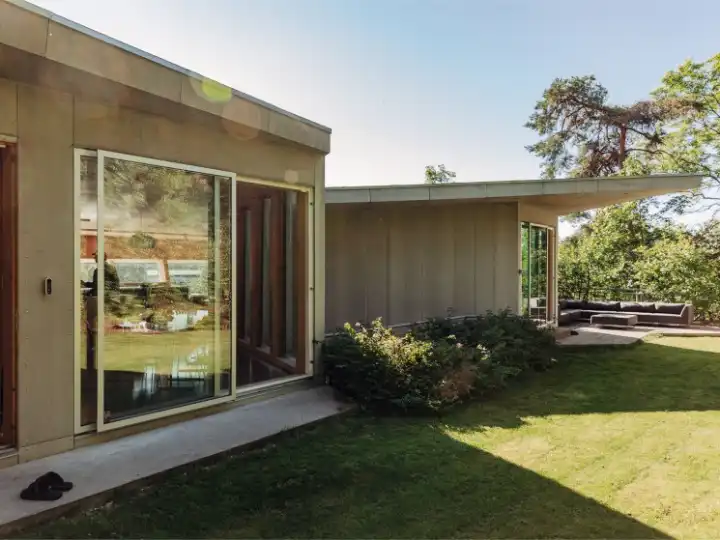
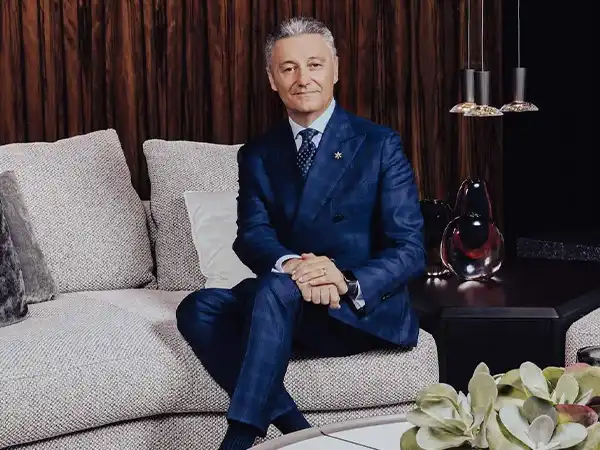
East meets west within Istanbul’s design evolution

East meets west within Istanbul’s design evolution

Plenty of ink has been poured over Istanbul’s mystique; its status as a crossroads for cultures, religions and customs is well known. So let’s get the clichés out of the way: it’s a place where East meets West, Asia meets Europe, religion meets secularism and past meets present. These clichés sometimes hold truth, with Istanbulites created in their city’s image, adept at negotiating swirling economic, social and cultural currents. Nowhere is this more apparent than in the field of design, where Istanbul-based studios demonstrate multidisciplinary nous and a can-do mentality.In this city of 16 million people, there are countless firms seamlessly shapeshifting between architecture, urbanism, print and more. Istanbul’s complex matrix and occasional chaos has fostered an agility among its designers, particularly in the central and historic neighbourhood of Beyoglu, which rises up from the port and the Galata Tower towards Taksim Square.Munevver Latifoglu, Derya Iyikul and Ece Sozer of SuperpoolHere, above a cobbled street, architecture firm Superpool has been designing offices, retail outlets, exhibitions and urban interventions since it was founded by Selva Gürdogan and Gregers Tang Thomsen in 2006. The business-and-life partners first met at Dutch architect Rem Koolhaas’ Office for Metropolitan Architecture (oma) in Rotterdam but decided to set up their practice in Istanbul where they sensed more possibility to conduct projects that would have a more meaningful effect on the built environment. “When we began, we simply could not do business as usual in the ‘starchitect’ manner that was prevalent back then,” says Tang Thomsen. “Istanbul is a very fluid place; whatever you put in needs to adapt and change,” adds Gürdogan in agreement. “It forces you to be multidisciplinary as you work with the flows of the city. It’s not perfect and that’s the beauty of it. You can imagine ways to transform it.”Office by SuperpoolBeyond architecture and interior design for commercial properties, a central part of Superpool’s practice is looking at how cities can better accommodate children. This research has led the studio to collaborate with local municipalities on urban interventions in underserved corners of the city. It’s working with the Netherlands-based Van Leer Foundation as part of its Urban95 programme, a global initiative aimed at helping city leaders and urbanists create spaces that can positively influence youth development. After successfully turning around Yali Square and Zümrütevler Square on the Asian side of the city with colourful pedestrian-focused interventions, Superpool published its findings as neat books and maps, and is now exploring how best to share its expertise further afield in Ethiopia and Jordan. What began as branching out for the practice has, in turn, led to branching out internationally.A short walk away, another team of architects is working with a similar mindset to tackle wider problems through design. Based between New York and Istanbul, Sour is a studio that has pioneered research-driven and collaborative design methods since 2015. “In Istanbul cultures live together and find a middle ground; everything becomes a negotiation,” says British-Turkish Inanc Eray, who worked at Zaha Hadid Architects in London before founding Sour. “Sometimes it can be a challenge because it’s an on-guard society that requires convincing. It keeps you on your toes – and in an agile state of mind.” Eray sees the evolution of Istanbul’s cross-functional mentality as a response to a lack of standardised rules in architecture and design in the country. It’s a status quo that requires architects to oversee everything from acoustics and insulation-thickness calculations to material selection and project ideation.Titles published by SuperpoolSharing ideas“Real creativity is making something happen within the budget and time that you have,” says American-Turkish Sour partner Pinar Guvenc. “It’s frugal innovation.” In recent years the studio has been looking into risk assessment and post-disaster urban regeneration. Sour was invited by the Türkiye Design Council to help in the aftermath of the devastating 2023 earthquake in Antakya in the southeast of the country. Working with a national organisation requires understanding Turkey’s political context but Guvenc recognises opportunities to build a strong, neutral common ground through collaborative design. “There’s something unbiased about translating the voice of the people into your work.”It’s an outlook shared by Sour’s neighbours and fellow Beyoglu-based studio Autoban. “We focus on public projects so that we can reach more people,” explains its co-founder, Seyhan Özdemir Sarper. From the top-floor terrace of Autoban’s headquarters, Istanbul sprawls out over landmarks such as the Hagia Sophia, first built around 537 AD, and the Çamlica telecommunications tower, which was finished in 2020. In between these structures lie a host of popular cafés, hotels, clubs, shops and even a supermarket that Autoban designed in 2003. “We created a new lifestyle for people; not only the interior architecture but the full picture,” Özdemir Sarper tells monocle. “The beauty of our profession is that we make our dreams real with other people’s money. We design places first for ourselves and our satisfaction.”In time, Autoban has evolved to do it all, from product and furniture design to conceptualising new city landmarks and major transportation hubs in Istanbul and further afield. One such example is the Heydar Aliyev International Airport in Baku, Azerbaijan. In 2020, on the coastline of Istanbul’s Karakoy neighbourhood, Autoban executed its vision of a modern cruise terminal that draws inspiration from the city’s antique water cisterns. “We were asked to design an underground Istanbul landmark with no daylight,” says Özdemir Sarper with a laugh. “And can you please turn it into one of the most fantastic cruise terminals in the world?” The result is a cavernous, sleek and highly functional space that can accommodate 15,000 passengers, crew and staff. It also serves as the first and last point of contact for people visiting Istanbul, creating an initial and, hopefully, lasting impression of the city.Galataport cruise terminal by AutobanA 40-minute drive (if the traffic’s good) from Beyoglu to the Maslak business district leads to design studio Sanayi313’s office, events space and emporium in a converted workshop. Brothers Enis and Amir Karavil founded the practice in 2014 and have shaped Istanbul’s contemporary design scene, working on residential projects and the interiors of shops and cafés, including Beyoglu’s sleek Petra Pera café and the Raisa Vanessa shop in upscale Akaretler. All have a minimalist starkness, topped with decorative flair and hints of Ottoman opulence. “I like heritage; combining pieces and contrast,” Enis Karavil tells monocle with his Schnauzer, Polka, on his lap. For Karavil, Istanbul is an endless source of inspiration. “It’s interesting to be in this environment, this history, the Byzantine architecture, the art deco, the art nouveau, the mosaic of churches, synagogues and mosques,” he adds. “The economy is in flux but I believe it will get better. We need to stay positive. There’s an educated young generation coming through and a bright future.”Every year, the studio also publishes its own magazine,Paper.“We like to go deep, see progression and explain ourselves through different disciplines,” says Enis Karavil. The magazine’s editor, Sidni Karavil, agrees. “We feature real Istanbulites and run interviews with artists, writers and designers on how they live in the city,” she says of the magazine, which encompasses design, travel, literature and traditional Turkish food recipes. “After every issue is printed we grow the community.”The studio is also committed to supporting the city’s craft community too, producing a line of ash veneer-and-leather furniture manufactured by theustalar, the craft masters of Istanbul. These wares, in an effort to increase the profile of collectable Turkish furniture, are sold in galleries in Geneva, London, New York and Sydney, as well as on the website 1st Dibs.Bodin Hon and Dilara Kan of Studio YellowdotStudio YellowdotAlso investing in craft, and partnering with localustalarare Turkish artist and designer Dilara Kan and American-Chinese industrial engineer Bodin Hon. Based in the upscale neighbourhood of Sisli, the duo have set up the Istanbul base for its burgeoning multidisciplinary practice, Yellowdot.After meeting in Milan at the prestigious Istituto Europeo di Design, the pair now split their time between Hong Kong and Istanbul but Turkey is where much of their product development takes place, from upholstered cabinets in a traditional Ottoman fabric to playful brass chandeliers for storing eggs (yes, really), in dialogue with the localustalar. “We work with them to understand the design process in lighting, woodworking, marble and upholstering,” says Kan with a smile. “They give us a lot of feedback. We produce everything with their direction.”As an emerging studio, Kan and Hon are gaining traction thanks to their playful eye, showcasing work during the design-fair circuit of Maison&Objet in Paris, Dubai Design Week and Milan’s Salone del Mobile. But being based outside of the EU can present its own challenges. “It’s not as easy as putting things in a truck and driving over,” says Hon. “We plan ahead and learn every time we take a trip.” Difficulties also emerge due to the instability of the Turkish lira and the hyperinflation that has plagued the country’s economy for almost a decade. “If a project lasts too long, the cost will fluctuate,” adds Hon. “It’s hard to explain this to people outside of Turkey.”For Yellowdot, persisting amid the chaos is the price to pay when it comes to benefiting from Istanbul’s local craft savoir-faire and drawing inspiration from the wealth of culture and history it offers. “We’re playful in our designs because Istanbul is already extremely chaotic,” says Kan. “We have to flow around it. We find our way through playfulness and humour.”Office of ideasIt’s an apt explanation for the broader approach of the city’s creatives, who are leaving a mark not only on Istanbul’s physical spaces but also on the fabric of its design community, showing that designers – much like the Turkish capital – can’t easily be categorised or pigeonholed. As Istanbul continues to write its complex, multilayered story and push on into the 21st century, championed by its proud and multifaceted residents, much ink remains to be spilled.Studio CVs:Sour2015: Founding of Sour.2023: Begins Antakya Urban Regeneration Project. Puts forward its floating structure proposal for the Izmir Sustainability Centre, Sal.sour.studioSanayi3132014: Founding of Sanayi313.2015: Opening of its headquarters in Maslak.2019: Launch of in-house magazine, Paper.sanayi313.comSuperpool2006: Founding of Superpool.2018: Starts working with the Van Leer Foundation on Urban95.2021: Unveils a six-month intervention on Yali Square.superpool.orgYellowdot2018: Founding of Studio Yellowdot.2023: Collaboration with Istanbul ceramics company Gorbon. Participation at Salone del Mobile.studioyellowdot.comAutoban2003: Founding of Autoban.2014: Completes Heydar Aliyev International Airport in Baku.2020: Unveiling of Istanbul’s cruise terminal, Galataport.autoban.com
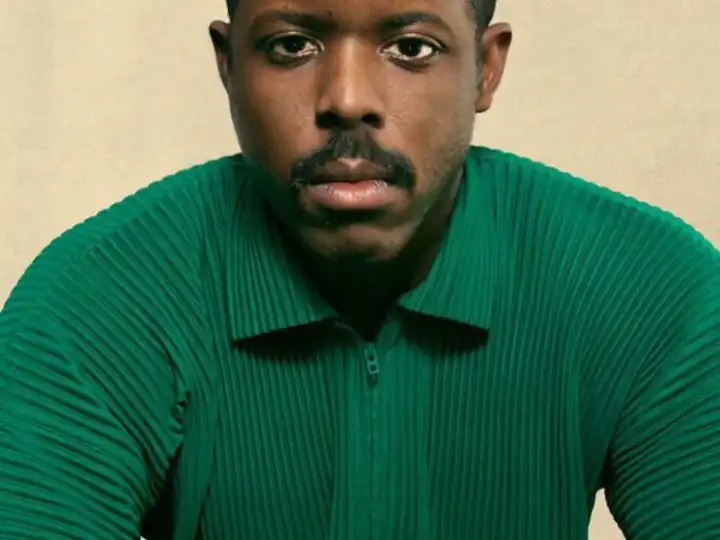

Why Italian furniture giant Cassina encourages disagreement

Why Italian furniture giant Cassina encourages disagreement

“If you want to do this job properly, then you really need to love the product,” says Luca Fuso. “Otherwise, there are so many other roles you can do.” Fuso, the CEO of Italian furniture giant Cassina, welcomes monocle to the company’s headquarters in Meda, a 30-minute drive from Milan, where the firm has been based since 1927. Some of the oldest buildings here date back to the 1940s and received a makeover from Cassina’s art director Patricia Urquiola in 2017.Seemingly in constant motion, Fuso glides around the near century-old campus. He meets colleagues over lunch in the canteen and talks to clients in a meeting room before coming to rest with key members of his team in an enclosed courtyard at the centre of the property. The space has a verdant green wall and is furnished with pieces from a variety of collections in the Cassina catalogue. “It reflects a new philosophy that we call the ‘Cassina perspective’, which involves combining our latest designs with classic products that we have been making for a long time, such as those designed by Gio Ponti,” says Fuso. “This creates a unique environment that reflects what people do in their own homes. You don’t just have work from one designer.”The outlook, Fuso says, informs the development of Cassina’s collection (“We’re able to work out what’s missing from a room”) and he credits Urquiola for playing a significant role in developing it. “She’s not only an incredible designer but a great mind,” he says. And while the Spanish art director is essential to his work, Fuso holds the rest of his team in similarly high esteem. “I try to surround myself with the most skilled people possible, so I know that they’re able to do what they’re supposed to do without my support.”It begs the question, is there a danger to having staff who are strong-willed, opinionated and don’t seem to need their boss? “I hope that every time I say something, somebody raises their hand and says, ‘No, I don’t agree’, because that starts a conversation to take better action.” And, ultimately, it seems, to make products that Fuso loves. — LLuca Fuso, (far left)CEO, Cassina“I had been a customer of Cassina for many years before joining,” says Fuso, who was hired as CEO in 2018. “It’s the reason why I came here.” The Italian businessman – who is also CEO of Zanotta, which Cassina acquired in 2023 – has worked in fashion, furniture and automotive, holding executive roles at the likes of Diesel, b&b Italia and Ferrari. For his day-to-day work, however, he draws inspiration from sport. “You have to make sure that the company works in order to manufacture, deliver, sell and repeat,” he says. “It’s like tennis: hit and repeat.”1.Patricia UrquiolaArt director“Plays a key role in shaping Cassina’s visual identity and ensuring that every aesthetic and creative aspect reflects the brand’s values.”2.Alberto MandelliResearch and development director“Gives shape and life to the products, playing an important role in research and development.”3.Maurizio FusettiChief financial officer“Manages the company’s financial resources, planning and financial control.”4.Stefania SgattoniHead of legal affairs“Looks after legal and regulatory matters.”5.Enrico RaggiCommercial director“Leads the wholesale channel’s growth strategy and sales management.”6.Chiara GazzolaSewing department manager“Manages operations related to the cutting of leather and fabrics.”7.Louis CirilloUpholstery department manager“Guides the production of upholstered products.”8.Camilla DichioSewing department manager“Oversees the sewing process used in the production of the collections.”9.Mario ApollonioOperations director“Oversees the supply chain as well as manufacturing, quality and logistics to ensure high standards across the board.”10.Beatrice GobbiProduct manager“Helps guide product strategy, development, and market positioning to ensure customer satisfaction.”11.Christian MedullaHead of HR“Leads talent acquisition and development, as well as organisational culture, to ensure that everything aligns with our brand values.”12.Emanuela MalataccaExecutive assistant“Supports the CEO by managing schedules and co-ordinating meetings to ensure efficient operations.”13.Lorenzo PenutiCustom interiors director“Leads project management, client relations and custom design co-ordination.”14.Sara GetiGlobal retail director“Drives Cassina’s worldwide sales strategies to ensure a high-quality experience for all of our customers.”15.Sara NosratiHead of communications“Manages press relations and fosters the luxury furniture brand’s reputation.”16.Andrea BocchiolaMarketing director“Develops brand strategies and manages product development, as well as social media and advertisement campaigns.”

advertisement