advertisement
New perspectives: Brave openings and what to catch at the Venice Biennale and Art Basel

New perspectives: Brave openings and what to catch at the Venice Biennale and Art Basel

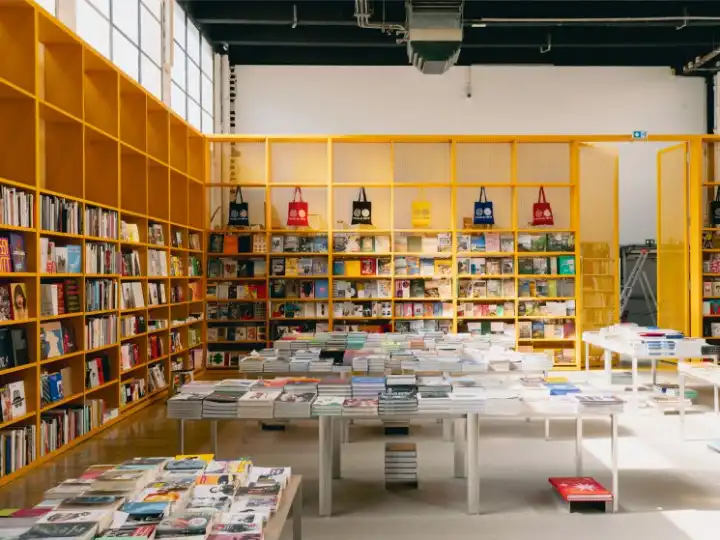
The Culture pages of Monocle’s June issue include a dab of inspiration, a splatter of fresh ideas and a rather fetching art special. First, our editors whisk you around three bold new openings, from the gallery making Carthage cool again (and rallying Tunisian talent) and a Valencian palace-turned-nightclub that’s welcoming an altogether artsier crowd, to the canny conversion of a military building aiming to put Kristiansand in Norway on the contemporary art map.Elsewhere in these pages, we offer a not-to-be-missed preview of Art Basel, the 10 things to see at the Venice Biennale and share come secrets from a Canadian art collector par excellence. Sometimes the hardest thing about making a masterpiece is knowing when it’s finished – we hope that you enjoy our portrait of the best to see, buy and inspire this summer.Emerging art sceneCarthage coolTunisGallerist Selma FerianiSelma Feriani took a gamble when she decided to open a contemporary art gallery in Tunis’s commercial district Le Kram, far from the city’s arts neighbourhood. “When you take the initiative, other people follow your lead,” says Feriani, who is perched on an orange George Nelson sofa on the vast third floor of her industrial gallery, which was designed by Tunisian architect Chacha Atallah. The space, the largest of its kind in the country, deliberately feels out of place. Feriani wanted to redefine the city’s arts boundaries by positioning her gallery downtown, rather than in the bourgeois neighbourhood of La Marsa, where you’ll find the residence of the French ambassador and the whitewashed bohemian village of Sidi Bou Saïd, which Paul Klee came to paint in 1914.It’s a bold move but this is Feriani’s third outpost (she first opened in London’s Mayfair in 2010 before inaugurating a smaller space in Sidi Bou Saïd in 2013, now closed) and she isn’t afraid to take risks when it comes to championing her country’s art. More challenging, however, has been finding Tunisian artists who remain in the country. Under the dictatorship of Zine El Abidine Ben Ali, Tunisian creatives emigrated en masse to Europe in the 1980s in search of freedom of expression and, since his overthrow in 2011, their return has been slow and gradual. But Feriani intends to do everything she can to keep them here.Exhibition opening at Selma Feriani’s galleryTunisia gained independence from France in 1956 and the European population that had settled in Tunis under the French protectorate dissipated. “The identity of the arts and culture scenes experienced a vigorous Arabisation as a result,” says Atallah. That Feriani’s eponymous gallery has moved from a location in a converted convent in Sidi Bou Saïd to a slick white cube in Le Kram in the time since the dictatorship was dismantled is a useful barometer for measuring how the country’s changed politics have given the arts space to flourish.Nevertheless, ever a product of its time, art here remains politically charged. Wider social tensions have calmed but the sector is experiencing significant growing pains. As a result of heavy taxes imposed on importing and exporting artworks, as well as the weakness of Tunisia’s currency, making a living as an artist in Tunis can be complicated and arduous. Relocating elsewhere is not an option for most. The US, for example, only offers 55,000 visas to Tunisians seeking to emigrate via an annual lottery.Sculptures by Nidhal Chamekh at the Selma Feriani GalleryPainter Fares ThabetBut the community is persistent and is making headway at home. “In Tunis, you always have to have a plan B because nothing comes without a fight,” says Feriani. “As Tunisians, we know never to ask anything of the government. Instead we support each other.” In a country that dedicates a tiny percentage of its budget to the arts, the scale of the new Selma Feriani Gallery sets a precedent for a city with a distinct absence of space for exhibitions.Feriani’s aim isn’t just to contribute to her native city’s burgeoning art market; she wants to take it to the next level. “I looked to build a gallery that would become a reference point for the region and for the continent as a whole,” says Feriani, who hopes that by exhibiting works by Latin American and Middle Eastern artists, alongside the domestic output (which remains the focus), she can create a cultural mix, harnessing renewed links, particularly within the Middle East and North Africa. She wants to channel her energy into bringing art to Tunis, rather than sending it away. “I don’t want to be everywhere and nor do my artists,” she says. “When artists from here become international, they’re no longer accessible to the Tunisian market, which disenfranchises the industry further.”One way of doing this has been to create an artist-in-residence programme. “We want to invite international and Tunisian players to spend time in Tunis, to integrate into the tight-knit community and to produce site-specific projects,” she says. In a converted garage in Bhar Lazreg, a rural area in the northern suburbs, Franco-Tunisian visual artist Férielle Doulain-Zouari, who studied at the École Duperré Paris, is currently using the programme to hone her craft. “In Bhar Lazreg, it’s much easier to engage with people who don’t find the city’s art to be very accessible,” she says, motioning to curious onlookers peering in, including a flock of sheep – a reminder of how recently this area has become home to an artistic community. Industrial workshops here make raw materials that Doulain-Zouari, who uses scraps from an ironmonger and a Syrian glassblower based nearby, can easily access to celebrate what she refers to as the behind-the-scenes Tunis.Bohemian village of Sidi Bou SaïdBehind the scenes at Selma’s galleryFeriani’s dynamic artist-in-residence programme is nurturing local talent and helping to democrtise the industry. “Before the Tunisian Revolution, the art world was reserved for those who could afford to study in Paris. Now emerging creatives are being granted the space to get involved, challenging the Western idea of the art world as elitist,” says sculptor and filmmaker Malek Gnaoui, who is also the artistic director of the video art section of the Gabes Film Festival. The trope of documentation appears in one form or another across much of Tunis’s modern artwork. “Our government is still very secretive when it comes to archiving,” says Gnaoui.Bookshop in Selma’s galleryCopper work in the MedinaEstablished in 2007, the work of cultural ngo L’Art Rue is another driving force behind the opening up of the city’s artistic spaces. Tucked away in the Unesco-protected medieval Medina, L’Art Rue’s lively programme runs workshops funded largely by the French and Swiss ministries of culture. “We’re trying to break down barriers, in terms of the spaces themselves but also economically: some of the most marginalised people live in the Medina, which is home to one tenth of the population,” says production manager Aicha Zaied. Cultural centre 32bis, which is in the former Philips HQ in downtown Tunis, offers free access to its media library to make arts publications more accessible. “We don’t publish enough art books in Tunis,” says Feriani, who has a budget to produce one publication a year. Removed from the pressurised environment of Europe’s most lucrative markets, artists choosing to return to Tunis feel some sense of relief. “Here my work has the space to breathe,” says landscape painter Fares Thabet, who studied fine art in Madrid before returning to Tunis in 2016 to take over his father’s ceramics workshop. “In Madrid, the art world has become very intellectual.” As we sip fresh mint tea on the studio balcony overlooking the coastal fishing village of La Goulette, it is clear why Thabet feels calmer away from the noise of Madrid.Exhibition at 32BISFérielle Doulain-ZouariThe same goes for other key European centres. “Paris is a bubble,” says photographer and calligrapher Nicène Kossentini, who studied fine arts at the Sorbonne University and whose calligraphy poetically preserves medieval Arabic texts, the language tha forms the bedrock of her Maghrebi identity. After exhibiting in Algiers, Tehran and Alexandria, Kossentini found the most fertile artistic territory in her native North African nation, returning in 2010 despite her family’s base in the French capital. It’s a familiar feeling that Feriani wants to harness. “In Tunis, your work won’t be judged. That’s very refreshing,” she says.Views of Sidi Bou SaïdBut without a comparable proliferation of arts institutions throughout Tunis, the new generation will continue to migrate. “It’s still the norm to study abroad because we only have 12 art schools,” says Kossentini. This has led to an undervalued Tunisian market. “Art here isn’t always meritocratic because people are still scared to give native artists a platform,” says Benjamin Perrot, co-founder of El Warcha design studio in Le Kram. “Until we fully commit to investing in the art produced within our borders, the scene here will lag behind.”Sculptor and filmmaker Malek GnaouiThough Tunis’s arts infrastructure continues to be hampered by political, economic and logistical constraints, there is a fresh sense of optimism pulsing through the city, which is still suffering from post-revolutionary trauma. Organised by L’Art Rue, the city’s biennial art festival was exported to Brussels for the first time in April. It is a clear indicator that there is a growing European appreciation for North Africa’s rich artistic offering, a trend that Feriani intends to nurture. The festival is aptly named Dream City – a reminder that Tunis has always dared to dream.selmaferiani.comTunis address bookstayLa Villa BleueArab-Andalusian architecture draped in bougainvillea looms large over the Gulf of Tunis.lavillableuesidibousaid.comeat & drinkBen RahimArab coffee culture is ingrained in Tunisia’s first speciality coffee shop, which is open late.benrahim.tnLe GolfeAn elegant spot overlooking the Mediterranean: sample the boutargue (mullet roe), a delicacy of the city’s Italian diaspora.restaurantlegolfe.comKonbiniJapanese-Mediterranean fusion cuisine inspired by Tokyo’s convenience store culture.Rue de Phosphate, MarsashopBleue DeliSidi Bou Saïd’s only concept store-cum-café: pick up a jar of locally made harissa or try the signature shakshuka.8 Rue Habib Thameur, Sidi Bou SaïddoPhosphor Design DistrictA creative area in the city’s industrial neighbourhood, which is home to 12 studios.Rue Phosphate, Bhar LazregLe Violon BleuSet up by Selma Feriani’s mother, Essia Hamdi, in 2004, this gallery promotes the modern artists of L’École de Tunis.16 Rue de la Gare, Sidi Bou SaïdThe palatial galleryHortensia Herrero Art CentreValenciaThe museum used to be a nightclubArt collector Hortensia Herrero’s plan to establish a museum that would be the pride of her hometown, Valencia, has been a decade in the making. Herrero, a part-owner of Mercadona, Spain’s biggest supermarket chain, wanted to create a world-class venue for cutting-edge international artists and worked with curator Javier Molins, her advisor and artistic director of the project, to make the museum come to life.“We had to think about what would be good for Valencia,” says Molins as he shows Monocle around the Hortensia Herrero Art Centre, obviously excited by the opening day ahead. “It’s about bringing together artists who would normally only exhibit in London or New York. By having this art here, we are making Valencia more beautiful and international than before,” he adds, peering out of a window towards the sun glinting off the golden roofs of the historical centre.Curator Javier MolinsThe Mediterranean city is already home to a clutch of well-pitched commercial galleries – among them, Luis Adelantado, Vangar and Ana Serratosa. But, until now, there were few hallmark spaces dedicated to bringing contemporary art into the public sphere. From works by Alexander Calder, Eduardo Chillida and Anselm Kiefer to Georg Baselitz, Olafur Eliasson and David Hockney, the collection is a hit list of modern visual art. The building is inviting, with the works presented against a deliberately accessible backdrop of whitewashed walls.Sean Scully’s rethought chapelFor some Valencianos, the structure is part of the pull. Many hadn’t stepped foot inside the building since its time as a club in the 1980s, when the owners are said to have kept lions in the basement (Monocle is still trying to find out whether this is apocryphal). The property was originally built as a palace in the 17th century but also served as a printing press forLas Provinciasnewspaper from the early 1890s until the 1970s. By the time the architects at Erre studio were tasked with reimagining the space in 2016, the building had been abandoned for decades. “It had completely deteriorated; it was in ruins,” says Amparo Roig, a partner at Erre and Herrero’s daughter, while standing in the light-filled inner courtyard. “But you could see that it was magical. We were sure that it would be great in the end.”The light-flooded former granaryPlaying with perspectivesRemarkably, it is the only place in town where you can catch a glimpse of the city’s ancient Roman circus, the remains of which are hidden beneath the streets. During the renovation work, the architects uncovered a medieval oven, Moorish fountains and a tiled passageway from the former Jewish ghetto. All of these signs of the city’s past are now displayed alongside the gallery’s main collection. “You know that you’re going to find a prize when you start digging in the centre of Valencia,” says Roig with a chuckle. “There are so many layers of history.”Olafur Eliasson’s iridescent corridorThe biggest challenge for the studio was to adapt the residence to displaying art. The team decided to build a vast, hidden elevator platform to bring hefty works all the way up to the top floor, as well as a new wing to house multimedia projects. Much of the debate between the architectural and curatorial teams centred on whether it was possible to keep all of the original windows in place – or whether it might be better to cover them up to create more wall space on which to hang the art.Work in situ Amparo Roig of architecture studio Erre 6The former idea – and seemly fenestration – prevailed. The refit feels more sensitive and airy as a result. The team was keen to involve artists in shaping the structure from the beginning of the process, commissioning six site-specific installations to maximise all the display space.Space to lingerArgentine artist Tomás Saraceno’s bulbous glass sculptures give the brick-lined courtyard an iridescent glare, while Cristina Iglesias’s “Transito Mineral” – a reproduction of large tree trunks in stone – creates a seamless passageway between the museum’s two wings. The building’s former chapel was given to Sean Scully, who produced a striped painting and two colourful stained-glass panels to add to the space’s sense of solemnity.British artist Mat Collishaw’s video installation, “Left in Dust”, plays a seemingly infinite loop of galloping horses that eventually reveals itself to be a chariot race. For him, the project was an opportunity to connect with the location and showcase its layers of history. “It’s good to evoke some of the ghosts of this spot,” he says, surveying his piece’s final placement. “In a lot of my work, I explore primal impulses and I am also interested in celebrating spectacle.”Artist Blanca MuñozBritish artist Mat CollishawMadrid-based artist Blanca Muñoz has a small sculpture on show in the building’s most atmospheric room – the former granary, under the old roof – and has collaborated with Herrero on a number of bespoke projects in other locations. She appreciates the value of a patron. “Working with a collector is the best thing that you can do,” she says, taking a seat on the breezy terrace. “It’s great to adapt your inner world to a concrete space.” Thanks to these artists’ efforts to fit in, the Fundacíon Hortensia Herrero is all the better for it. fundacionhortensiaherrero.orgThe museumKunstsiloKristiansand, NorwayStaircase inside a former silo cylinderA bird’s eye view of Kristiansand, a city on Norway’s southern tip, only a short ferry ride from Denmark, reveals a neat settlement nestled on a rugged coastline. A smattering of red, yellow and white wooden houses perch on the waterfront opposite a port where cruise ships from the UK and Germany dock and disperse little crowds at intervals throughout the day.Beyond the fish restaurants, wine bar and ice-cream parlour lies what is putting this city of nearly 117,000 people on the map: art, specifically Kunstsilo, a new quayside museum on the island of Odderøya, a former naval base in southwest Kristiansand. The space houses the Sørlandssamlingen (the South Collection), the Christianssands Picture Gallery and the Tangen Collection, the world’s largest, most comprehensive body of 2oth-century Nordic art. The last of these takes its name from Nicolai Tangen, the manager of the Norwegian Sovereign Wealth Fund, who bequeathed his collection of Nordic art to Kristiansand, his hometown, in 2015.As custodian of the donation, Kunstsilo received more than 3,000 ceramics, paintings, photographs, installations and conceptual works. Tangen believes that the new museum will make Kristiansand a more interesting place to live. “I love that this small place will be able to challenge some of the big national museums,” Tangen tells Monocle from Olso. “The museum will be important for the children who grow up there. It will also be good for visitors.”Magnus Wåge of Mestres Wåge ArquitectesExhibition rooms being readied for opening dayKunstsilo is within a former grain silo that was designed by renowned Norwegian architects Arne Korsmo and Sverre Aasland in 1936. The structure had stood unused for almost 20 years. And now Mestre Wåge Arkitekter, the practice that won the international competition to repurpose the silo – beating more than 100 other proposals – has breathed new life into it. Entrance to the museumKunstsilo’s industrial space feels akin to a cathedral. Its soaring silo cylinders have been cut open to enable free passage around the building. Monocle visits a month before its opening on 11 May. The atmosphere is giddy: everyone seems excited and not yet stressed about any last-minute snags. New staff are being ferried around to get the feel of the place. The menu for the downstairs café and rooftop restaurant is being sampled. Workers busily finish the plaza outside the building’s harbourside entrance.When the museum gave out passes for its opening day, they were snapped up within hours. “It was like selling tickets to a rock concert,” says Kunstsilo’s CEO, Reidar Fuglestad, who joined the project in 2017 having previously run a nearby theme park for 17 years.Modernist Nordic paintings on displayThe opening exhibition,Passions of the North, comprises 600 works from the Tangen Collection. It was curated by Åsmund Thorkildsen, who previously worked with Norway’s Drammens Museum, in consultation with Norwegian art historian Steinar Gjessing, and showcases significant pieces of Nordic modernism, including Swedish impressionist Isaac Grünewald and Danish surrealist Rita Kernn-Larsen.Curator Åsmund Thorkildsen“We have had a lot of fun developing this exhibition,” says Thorkildsen as he directs us through the exhibition rooms, some of which are painted in inviting hues of yellow, green, blue and pink. “We’ve done away with the neutral way of showing art,” he says, pointing at a group of paintings that hang close together as if in a huddle. He then stands next to a work that’s hung high up on the wall. “The placement does something to how you view the art,” he says with a mischievous glint in his eye. “The exhibition should be a bodily, as well as visual, experience.”Solen’ by Synnøve Anker AurdalHanne Silje Dovland, head of project management (left), and Else-Brit Kroneberg, head of collectionsBut the process of showing the Tangen Collection in a functionalist grain silo hasn’t been fun and games from start to finish. “We endured six-and-a-half years of political opposition and only six months of support,” says CEO Fuglestad.Kunstsilo’s exteriorHe explains that scores of Kristiansand’s residents opposed tax payers’ money going to the art museum. Kunstsilo became such a hot potato that local politics shifted against the project. However, once interest from beyond Norway’s borders started to trickle in, Fuglestad noticed a significant change in people’s attitudes and the positives of having the museum there became apparent. “Now it is a source of pride that residents can show to visitors,” he says. “I joined this project because I believe in it and I am convinced that it will bring real benefits to the people who live here.”kunstsilo.no

Home truths: 15 essays on the meaning of home

Home truths: 15 essays on the meaning of home

1.The war reporterYaroslav Trofimov on: Why a place can still be your home, even when you’re far awayDubai“Dubai wasn’t meant to be home when I moved here. It was meant to be a transit point, a convenient place from which to go and cover the world. But I’ve been here 10 years now and over time, places become homes. So it’s home now, and when I’m travelling, I do miss it and I do want to come back.Coronavirus was a turning point. We were stuck here for nearly a year, so we went hiking and diving, and started to appreciate the city as more than somewhere to be between trips.We have an apartment on a very high floor. It’s a change, as before Dubai I was living in Kabul in a house with a garden and goats and chickens: we were growing our own tomatoes and greens. Me and my colleagues all came from cities, so we were living the dream of a rural idyll. But I lived on the ninth floor in Kyiv when I was a child, so where I am now feels normal. Looking out now, I can see the port, the airport and, on a clear day, all the way to the mountains of Oman. Life is quite vertical in Dubai but there are neighbourhoods enabled for pedestrian life. I can walk underground in the summer or above ground in winter to various malls and restaurants.I used to have a lot of things from reporting trips but my partner is an architect and designer, so now I have to negotiate where my Afghan war trinkets can and cannot hang. But in the living room we have an Afghan war carpet and a bronze of a Boko Haram fighter with a Kalashnikov that I brought from Africa. And lots of books, obviously. But we’ve also bought a lot of art together in Ukraine, mostly by contemporary Ukrainian artists.I still feel a great deal of emotional attachment to my native Ukraine. When I was a child, we lived on a very famous street in Kyiv called Andrew’s Descent. It goes from the upper town of Kyiv down to what used to be the Jewish quarter of Podil. When I was a student in art school in Kyiv, we would go there every weekend and make some money selling our paintings. So that street is very much part of my identity.I have thought of Ukraine differently since 2022. I left in 1990 and lived in the US and Italy for a long time. My passport is Italian, I spoke Italian and when people asked where I was from, I’d say I was an Italian of Ukrainian origin. After 2022 my answer is: I’m Ukrainian. You feel a much more visceral attachment when your country is under attack. Covering Ukraine as a journalist, I’ve taken much greater risks than I did covering Iraq, Afghanistan or the Middle East. When the city where you grew up, where every piece of geography is connected to your childhood, is under threat of being destroyed, of course you take it personally.”As told to Andrew Mueller.Biography:Trofimov is a journalist and chief foreign affairs correspondent atThe Wall Street Journal. His latest book is the novelNo Country For Lovepublished by Abacus.2.The galleristNina Yashar on: How childhood memories can shape your taste and even your career trajectoryMilan“My earliest memories of home are in Tehran, where we lived until I moved to Milan at the age of six. I have this very clear image of overlapping carpets in our home in Iran and how they would create these small, distinct environments within a larger space.These Persian rugs were everywhere in our home, hanging on the walls as well as on the floor. Today this idea of layering and creating different zones is my signature as a gallerist.It’s not just about filling the room with beautiful objects; it’s also about creating a dialogue between the different pieces, letting them complement and challenge each other. I feel this need to create conversations between different pieces – all on top of a rug. I never create something without a carpet on the floor because it has this power to create unity and a harmony between the things.The common denominator in my home and my spaces is my taste; it’s my point of view. I don’t like everything to be totally in harmony. I like to create a personal and unique environment where different pieces with their own stories and characteristics come together to have a conversation. I have things that I really like – and this is important to say because not everything that I have in my gallery I would buy for myself. I like unexpected pieces that aren’t positioned in a conventional way, such as a very low chair next to a high table. For example, at home I have two unique console pieces by Gio Ponti for the Parco dei Principi Hotel in Sorrento and I didn’t know where to put two ‘Due Più’ armchairs by Nanda Vigo for Acerbis – so I put them together. It’s nonsense but I like it; it’s this idea of challenging conventions.I have pieces at home connected to travel I did 20 years ago. I was in Copenhagen and I bought these tube vases with hand-made, steam-curved wooden bases from a Danish designer from the 1950s named Peder Moos. They were originally made as a 60th birthday present for a friend of his and there are 60 little tubes in glass. Whenever I receive friends at home, I put 60 flowers in them and place them on the dining table. I also have two candelabra that are from the Victorian period – so around the 1850s – that I bought in London. I put them on the table alongside the mid-century tube vases.I love my neighbourhood, Risorgimento, here in Milan because it also has one foot in the past, with its little old shops and bars. It’s incredible but every time I come back to Milan from abroad, I feel like I’m in secure territory. I am very attached to the city – even its provincial side.”As told to Ed Stocker.Biography:Milan-based Yashar has been in the design business for more than 40 years. The collector, dealer and gallerist is founder of Nilufar Gallery. In 2015 she founded Nilufar Depot in a former silverware factory and in 2023 launched a new line of furniture called Nilufar Open Edition.3.The magazine publisherRebecca Wesson Darwin on: How you can rediscover your roots – and turn it to your advantageCharleston, South Carolina“We’ve lived in our house for more than 20 years. It was built in the 1850s and has survived hurricanes, fires and earthquakes. There’s not a straight wall left in the place and I love that about it. It’s a home with deep memories for us as a family.This house is what’s called a ‘Charleston single’, which has ‘piazzas’ [balconied porches] on two sides of the house. Sitting on the piazza in the sunlight is a very special place for me. Porches play an important role in southern US culture because of the heat and humidity we get here. We like to open all the doors and let the breeze blow through the house. So, for me, home is the smell of jasmine because we have an entire wall of it growing in our garden outside.I was born in South Carolina but for a long time New York was my home. I was the publisher ofThe New Yorker, and I loved the city: whenever I’d step out of my front door, I always felt that I could take on the world. Looking back, I think my ‘southern-ness’ – which is about having a bit of grit and a lot of grace – meant that I was able to achieve certain things in New York that I wouldn’t otherwise have been able to do, especially as a woman at that time [in the 1980s].When my husband wanted to retrain to become a pastor in the church, we moved back to South Carolina and I began to think about how the southern states were represented elsewhere in the US. There are so many clichés about this part of the country – that we all sit around drinking sweet iced tea, for instance – whereas I wanted to celebrate the great, sophisticated things that were happening all over the region: the rise of a food scene, for example, and lots of music being made.In 2007, I co-foundedGarden & Gunmagazine to celebrate the soul of the South, from its sporting life to its culture. The initial team was all southerners like me who had been working elsewhere and had come home to make this magazine. We now have readers all over the country. Many come to us, I think, because they’re longing for a sense of home that they can connect with; the South has that strong draw for a lot of people.InGarden & Gunwe write about beautiful houses all over the region, but these don’t tend to be the biggest homes. We’re especially interested in that little home in Louisiana that has been brought back to life. Or the tiny place hidden away up in the mountains that somebody has put their heart and soul into.”As told to Christopher Lord.Biography:Darwin had a long career in magazines that saw her become the first female publisher ofThe New Yorkerand marketing director ofFortune. In 2007 she co-founded the Allée Group to publishGarden & Gun, a successful publication about the contemporary life, culture and taste of the US southern states.4.The Hollywood veteranFrancis Ford Coppola on: Family, the power of personal creativity and why he’s happy to be getting olderNapa, California“Human beings are at their best when they play with their kids. That’s when everything gets invented. I once heard that the word ‘family’ is related to a German word that means ‘friend’. The meaning of ‘freedom’ shares its roots with ‘friend’. In Indo-European and Germanic languages, ‘family’ has another root that’s interesting in a darker sense. The Latin root,famulus, means a house slave. Our word for family, then, contains the germ of slavery.We are in a joyous moment in time. We should talk about division and everything that’s happening to the world, and use our great talents to solve its problems, which we’re capable of doing. How many babies and children are dying every day? It’s not only unacceptable but also unnecessary. We can solve these problems beautifully with the talent that we have been given.I’m not only a grandfather but also a great grandfather. Children are your jewels and grandchildren are dividends; my great-grandchildren are immortality itself. I’m comfortable with where I am. I’m not like Faust – I don’t want to be young but I want young people to have a beautiful world when I’m gone. And that’s what I’m trying to say in [the 2024 film]Megalopolis.I have always had a rule while making films. Whenever I had to go away to work on something for more than 10 days, I pulled my kids out of school and brought them with me, sticking them in any school there was. My little Sophia was put in a Chinese school when she was five. She did not speak Chinese but they got the idea. The kids were around movie-making all the time. What I tell them is, ‘You’re unique. So whatever work you do, make it personal. Everyone here is a million-to-one shot and there’s no two of you.’I made a film based on a story by John Grisham,The Rainmaker, in 1998. After that, I wanted to take 10 years off and see what I could learn if I wasn’t a professional film director. I went to different countries. I experimented a lot with acting. I recommend creative work because, in the future, we’re going to make robots do all the toil. We’re just going to play together.Megalopolishas a lot of personal detail – it’s got every movie I ever loved in it.My father always said that he was a composer. He said, ‘Steal from the best. Poor artists borrow; great artists steal.’ We are on the shoulders of the extraordinary, talented people who came before us. The young are talented – more talented – because they are always an improvement on the previous generation: that’s human. The world has a lot of trouble and people are worried but if we could understand who we really are, there’s nothing we can’t solve. That’s a hopeful thought.”As told to Tom Webb.Biography:Born in 1939, Francis Ford Coppola is one of Hollywood’s most celebrated directors, with a career spanning seven decades and countless accolades, including five Academy Awards. His 23 feature films include milestones of cinema such as theGodfathertrilogy andApocalypse Now. His latest release isMegalopolis.5.The book maestroIrma Boom on: The importance of rigour and how books speak volumes about usAmsterdam“I live in Amsterdam now but I grew up in the countryside, in the eastern part of the Netherlands. It was a big, old house – we had no central heating; it always was a very cold house but a warm family. I’m child number nine of nine. My memories are of long tables with lots of people: not only my brothers and sisters and my parents but also lots of friends – because if you can cook for nine children, you can cook for 12. There were always people who wanted to come to our house because it was very friendly. In Dutch the word isgezellig.My mother was always cooking – fresh vegetables for the whole family and, of course, apple pie. It was a very organised family life – if you have so many children, you have to be – so my mother ruled as a sort of general. Everything was on time: 08.00 was breakfast, midday was lunch and 18.00 for dinner. It was all very strict but that was good; it gave structure to our life.I now live in the south of Amsterdam. It’s a very high house with five storeys and steep stairs. The office is in the same house, on the ground floor. So I only have to go downstairs to get to work, which is super convenient. At the beginning I thought, ‘Oh, working and living in the same building is terrible,’ but now I really love it.I trained as a painter and in the last year of art school, I found out that I wasn’t so good; at least, that’s what I thought. I had this romantic idea of being alone in my studio and painting. But in the end, it was not my thing at all. So I checked out other disciplines. Every week, one of my teachers showed us books and how you can create a new world with type and that you work with a ‘commissioner’. That was exactly what I was looking for: to collaborate on projects. Making books is a collaborative effort: you work with an author, artists, photographers, architects, printers and binders.I love seeing [US artist] Sheila Hicks’s book in people’s homes. It always makes me a smile. Making books is a big responsibility. It’s very time-consuming and you use a lot of resources – water, wood, ink and people’s labour – so I try to do my best.If you go to younger peoples’ houses, they often don’t have books anymore, which I think is sad as books are an integral part of our culture and knowledge. It’s important to have books in the house, I have them on every floor. They’re my friends. But if I had to save one thing in my home, it would be [my] photos and my ancient Roman wedding rings. My partner was very ill and we got married on the last day of his life. One of our friends brought us these Roman rings that they got at an auction, which I now wear. They’ve really changed my life, because I now think differently about time. It’s beautiful to have something so old on my hands; I’m connected to eternity, which gives a good feeling.”As told to Sonia Zhuravlyova.Biography:Dutch graphic designer Boom is a specialist in books and has contributed to, commissioned, made and designed more than 300 titles.6.The serial entrepreneurRamdane Touhani on: How you can make a home anywhere and with anything, as long as it contains a good bedParis“I grew up amid the apple trees on the farm where my father worked. We were living in a very poor place and our home then wasn’t really meant to be a house. It was in the middle of the field, next to a castle – well, a little château, where my mother did the cleaning – deep in the countryside of Tarn-et-Garonne, southwest France. I’m not bourgeois but my life is very different from that of my parents. Honestly speaking, my wife and I live in another world.I moved into my first flat when I was 17 but I don’t remember what I bought first – I didn’t care about houses for a long time. I was always out. I just needed a good bed and maybe a table. I wasn’t concerned about the interiors but the first item I did care about was a double Technics SL-1200 turntable and a pair of speakers – that was in the mid-1990s.In my life I’ve lived in 17 houses, from India to the US to Japan to Morocco. Really, home for me is where my wife and children live; it could be anywhere in the world. I’m not a materialistic guy. Even if I have a beautiful home in Paris with a garden, houses are still more of a logistical thing to me. Yes, it has to be beautiful first but the most important things are really the bed and the kitchen. What touches me physically matters too: mattress, bed, sheets, towels. I know people find art very important; we have art but it’s not an obsession. I try to use my house like a tool.A new thing that’s important for my wife is the pool. We have a pool in Paris; not everyone has that. But I would rather have a very tiny home that’s comfortable than a very big one that’s not.I don’t like too many people in my house. I have a guest room for friends but having them stay for two or three days is enough. It’s too intrusive. When I have a guest at home, they tend to always talk to me – I like to be by myself. Tonight, for instance, I have dinner with a friend at ours and, even though I’ll enjoy it, I’m already hoping that it’s not going to go on too late.Designing my home was nothing like my work in retail: they’re totally different ways to do things. The light is different. Everything is different. The only thing in common is the fact that you have to design it but a store is all about efficiency: it’s not about the pleasure of staying somewhere. If people want to stay in a shop but spend nothing, that’s problematic.Home is where you want to be at home. Sometimes that’s Tokyo but I can feel at home anywhere in the world. I don’t [always] like France but I live here because my wife wants to be here near her mother. But one day our home could be somewhere else.”As told to Simon Bouvier.Biography:Touhami is a serial entrepreneur. His business triumphs include revamping the fragrance brand Officine Universelle Buly 1803 and selling it to LVMH. He recently opened the Hotel Drei Berge in the Swiss Alps and a hiking supply shop in Paris.7.The filmmakerFelix Chong on: How the violence surrounding his childhood homes went on to inspire an acclaimed movie careerHong Kong“My first home in Hong Kong was in a legendary building in North Point called Kiu Kwan Mansion. The colonial government labelled it a communist stronghold and when I was five or six I would often see police raids.The most memorable was when they lined up a group of suspected communists and made them kneel in front of this huge steel wall made out of mailboxes. When someone did something the police didn’t like, they’d get kicked in the back of their head and their face would smash against the metal. The sounds, the smells, the blood: that stuck with me all my life.We shared that apartment with two other families; 10 people squeezed into a tiny space. By the time I was 17, my dad had found success selling soda and popcorn in cinemas, so we moved into our own apartment in Fortress Hill. I had to help in the shops every weekend and during holidays. It was so hot that I’d sneak to the air-conditioned cinema to cool down: that meant watching the same movie five times a day. A big hit could run for two months, so I started to learn about editing, camera placement and designing my kung fu choreography. I left my degree in industrial engineering after the first year and enrolled in the only film school that existed back then.Hong Kong directors shoot on the street a lot because only real people and traffic can reflect this city. It’s hard, though, because the old city is disappearing. I now have to spend a lot on CGI. Each time a building is going to be pulled down it’s a kind of tradition for filmmakers to think of a scene that can be captured there. Hong Kong people are always charging towards the future, but we also want to stay where we are. It’s quite contradictory.I now live in a historical building in Happy Valley and have fond memories of the old HSBC building in Central. My father would let me sit on the stone lions outside. I loved all of the buildings on that street but only the Bank of China still stands. I moved out of my parents’ home in Fortress Hill with my wife when we got married. I was planning to go to China to write TV scripts because it made a lot of money but whenInfernal Affairsbecame a hit and my wife was pregnant, we decided to stay.I like to have a silent space at home to work in but every home we’ve lived in has been next to a school. Only in our last one in Happy Valley was that deliberate. It’s next to my daughters’ old school because I wanted them to be able to walk there. I walked to my school as a child and I saw a lot of things: drug deals, violence, Triad members chopping each other up on the street. Hong Kong in the 1970s was a very different place.”As told to James Chambers.Biography:Chong is an award-winning Hong Kong screenwriter, film director and actor who is best known for depicting his hometown in acclaimed crime thrillers includingInfernal Affairs,OverheardandThe Goldfinger.8.The historianAlex von Tunzelmann on: Why dwellings are improved by pets and even big cities have nice neighboursLondon“Having tried several compass points, I’ve settled in east London, in Bethnal Green. It’s part of the old East End. It has a huge amount of historic character but has also had waves of interesting migration and change, and now gentrification, another wave of change on top of the others.I’m always struck by the extraordinary pace of it. In the 1950s it was a very Jewish area, more recently a Bengali one. A while ago I saw a retrospective of Don McCullin’s photography at the Tate. Bethnal Green in the 1970s and 1980s looked like a war zone and now flats can cost a million quid. As a historian, it’s inspiring: you see the layers like sediment that has built up – and those layers don’t go entirely, they just accrete on top of each other.We live with two cats, both named after obscure characters in 1980s movies – Bixby Snyder and Martha Dumptruck. You can have 10 points if you can name either movie. I grew up with parents who were quite resistant to pets, so this is my first venture and now I would find a house without pets a bit empty. It is sort of magical, having two miniature tigers wandering around the place. And it makes you relate to your home differently because you’re sharing it voluntarily.There is a lot of art, to the point where it is now one in, one out. It’s probably all 20th and 21st century but it’s also very eclectic. I have a great love for Cuban film posters from the mid-20th century – they’re graphically very beautiful. I also have a poster from an exhibition of the work of Berthold Lubetkin, the architect. My mother was his lodger in Bristol, and there are buildings near us that he was involved in designing, so there is deeper significance than just liking it as a piece of art.My husband grew up in northern Scotland and I grew up mostly in Brighton. Though we’re fond of those places, I don’t think we commemorate them. It’s probably significant that we’ve chosen to live very much in a city. People think of London as cold and impersonal but if you make the effort, it’s absolutely possible to get to know the neighbours. I love having people over but I like a bit of notice.The biggest feature is books. The thing which drew us to our flat was the fact that it was double-height, so my fantasies of a double-height bookcase with the ladder have come to fruition. We have our own books in a cabinet which you can’t see through, so as to make our mothers sufficiently happy but without creating too much of a wall of [personal] achievement. I wouldn’t want people thinking they had to pay homage.”As told to Andrew Mueller.Biography:Von Tunzelmann is a historian, screenwriter and author. Her latest book isFallen Idols, a study of the theory and practice of statue-toppling. She lives in London.9.The career diplomatPetri Tuomi-Nikula on: How a diplomat’s home represents more than just their countryHelsinki“When I think now of my earliest childhood memories, I realise that they were a precursor to what life had in store for me. My childhood home was by a river in Ostrobothnia, western Finland. Less than a 100 metres from my bedroom window, rapids roared: that sound is my strongest memory from then. Long ago, ships would sail down that river to the Gulf of Bothnia and from there to the world’s ocean. Another memory – also a sound – is the whistle of train horns; those thoughts of a world far away that I wanted to explore.My parents, both of whom were teachers, pushed me toward the rest of the world. They encouraged me to study languages and to travel. My father was a Francophone; my mother spoke German. During the summer holidays there were always friends from abroad at our dining table: it certainly influenced my career choice.A home is not just a physical place to live in; it’s a state of mind. For me, it’s the Finnish language, my mother tongue. It’s the language that allows me to express myself most clearly but also the language that best allows to me understand others. I’ve spent a large part of my life living abroad and speak at least five languages but it is my mother tongue that provides me a sanctuary and renewal through reading and listening.There’s a proverb that feels a bit old-fashioned these days but that has great wisdom in it for us diplomats: ‘A man builds a house, a woman makes it a home.’ It’s about the role of a spouse – man or woman – in creating a cosy, personal and unique home. Of course, a diplomat’s home is more than just their home. It’s also a state residence and is expected to reflect the diplomat’s home country and culture. This is especially true for the ambassador. However, it doesn’t mean that it should look like a showroom; it should look and feel authentic. It does this when you see the inhabitants feeling comfortable in it, surrounded by familiar things and objects, regardless of where those items originated. Diplomats’ homes are often furnished with objects and furniture from the countries where the family has lived, rather than items brought from home. In my case, Italy is strongly present but there are also items from my first posting more than 40 years ago in Germany.For a diplomat, home is where you host, which is an important part of the job. My spouse and I have always invited people with different political views to gather around the same table. The best and most constructive conversations happen between people with different backgrounds and opinions. There’s less to talk about with those who share views. I guess you could say that for a diplomat, home is more than just a home.Finally, home is nothing without music. After long dinners with colleagues from various countries, I find myself retreating to it. Music is a language of its own. My favourite is soft jazz, slow and classical. That’s the kind I fall asleep to.”As told to Petri Burtsoff.Biography:Tuomi-Nikula is a retired senior diplomat who was Finland’s ambassador to Rome and Budapest. His recent bookErilaista diplomatiaa(A Different Kind of Diplomacy) is one of Finland’s best-selling non-fiction books of the autumn.10.The restaurateurPierre Touitou on: How a workplace can become a second home – and keeping things tasteful while you’re awayParis“It might sound weird coming from a chef but for many years, I only had two pots and pans at home. Most days, I’d eat at the restaurant [I worked at] and on my days off, I’d try new places. It wasn’t until coronavirus that I started properly cooking at home. There’s a lot of value in it though: anything I put on my menu has to be good enough for you to want to eat a full plate of it, just like when you’re cooking for yourself.I’ve lived in a very small Parisian studio for the past 11 years, so hosting at home hasn’t really been an option. It’s a place to sleep and rest. That’s why many friends haven’t seen my apartment but they’ve all been to my restaurant. My restaurant is my second home; it’s where I spend the majority of my time and keep many familiar items – my favourite books. My job is about more than food; it’s about hosting people.I recently bought a bigger apartment. It’s very minimal for now but maybe I’ll have more friends over when I’m more settled in. If there were a fire, what would I grab? My most prized possession is probably a pair of leather boots. I’ve been wearing them for a decade; they are so tough to break in but once they’re worn in, they become incredibly comfortable. Aside from that, I don’t own much: books and some clothes.If home weren’t Paris, it would be Japan. I’m not into manga or anything but the general mindset – particularly the attention to detail – has resonated with me ever since I first visited as a child. My parents [APC founder Jean Touitou and art director Agnès Chemetoff] spent a lot of time there for work and would always bring me back things like crayons, backpacks and toys.My girlfriend is French-Japanese and we go to Japan every May. I wish I had more time to travel but I also like the familiarity of revisiting places I know. Every New Year’s Eve, I go to our family house in Normandy. I have this flannel shirt there: as soon as I wear it, it feels like I’ve arrived home. It’s funny how you have different rituals in different places. Italy, where I go every summer, is the only place on Earth where I have breakfast. I look forward to it.When people ask what the best meal I ever had was, I say it’s not just about the food but the where, when and who – the elements that make it feel right. That makes me think back to when I was working in a tiny village in Uruguay. One day we drove to buy food and guess what the three things I bought were? Société roquefort, a bottle of Evian and a baguette. I didn’t have much French food growing up but when you’re on the other side of the world, the food from your home takes on a new significance.As told to Annick Weber.Biography:Touitou is a French restaurateur and the chef-patron of the unmissably good 19 Saint Roch restaurant in Paris’s 1st arrondissement.11.The architectJeanne Autran-Edorh on: The importance of bringing a little bit of home with you wherever you may goBerlin & Lomé, Togo“I grew up in the south of France, close to Marseille. It’s a beautiful region but what was most formative for me was the fact that I grew up between two cultures. My dad is from Togo and my mother is French. They separated when I was young, so I was always in between two households and these two different traditions. For me this was really rich because it allowed me to feel at home in different contexts, making me adaptable and flexible.I spent a lot of time in my mother’s house when I was young, where we also lived with my grandmother. It was an old farmhouse that was always in a state of transformation because my mother was an artist. She worked with textiles initially, making decor and theatre costumes. Our place was always filled with material and art, and the sound of home was a sewing machine – even today it’s a noise that I find really relaxing because I would fall asleep with it as a child. When I was a teenager, my mother changed disciplines and became a ceramicist. She kept a studio at home which meant that there was always a creative space to retreat to. For me, even now, an atelier always goes with a home.Today I’m based in Berlin but it’s not the only place I call home. I’m often in Lomé, Togo’s capital, and in France too. I share time between these three locations but the thing that unites these environments are crafts and materials inspired by my childhood. I furnish my spaces with objects and fabrics – there’s always texture and colour. This provides me with inspiration.If I’m not at home in a big, blank and neutral place, I will always try to add things to make it feel like home and inspire me. As such, when I travel I always have textiles in my luggage, which I will place on things like the hotel couch to make it feel like part of my universe. I’m drawn to African woven fabrics such askente, a type of silk and cotton fabric, that can serve as a blanket on the bed or couch – or even as a towel. I like the fact that it’s multifunctional.As an architect, if I’m designing a home for someone else, I work really hard to understand their character, as well as their taste and what inspires them. I also like to ask what their ideal day looks like. This is different to asking what your daily routine is. I’m more interested in what your dream is. In an ideal world, how would you want to start your day? Where would you want to spend your time? What would you want to look at?By answering these questions you can create a space that’s inspiring beyond your everyday life. It’s nice to think about the role that your home can play in creating your future.”As told to Nic Monisse.Biography:Berlin-based Autran-Edorh is the co-founder of Studio Neida, a multi-disciplinary design practice, working between Europe and West Africa.12.The homemakerJohanna Gullichsen on: How a designer’s home doesn’t have to be perfect. It’s sometimes a space to experimentHelsinki“As a designer of home textiles, I see a lot of homes. In Finland, where I live, the climate is cold and people spend a lot of time indoors. This means that people put considerable effort into making their homes feel cosy and nice.But what makes for a good home? Many people follow trends and commission interior architects to design a perfect home for them. But at the end of the day it is about adding that personal touch that can only come from you. People need to find their own sense of style instead of letting someone else impose stylistic choices on them. If I think about my own home in Helsinki, I have a large collection of books and design items that I have accumulated over the years. They have travelled with me from home to home, and without them my home would feel empty. That said, they are still just things; they’re not holy to me. If I had to grab just one thing to salvage from my home, it would probably be my beloved woollen Ruskovilla sweater.I think about things that remind me of home when I travel; it would probably be the smell and taste of rye bread, which is something quintessentially Finnish. Travelling a lot makes me sometimes think of why I don’t feel at home in hotels. I really don’t like them. There’s something impersonal and I feel constrained in an environment that I cannot shape.I’ve been exposed to great design ever since I was a child. My grandmother, Maire Gullichsen, was a close friend of Alvar and Aino Aalto, and lived in Villa Mairea, one of Aalto’s most acclaimed buildings. I spent a lot of time there as a child, surrounded by wonderful design and architecture. Of course, as a child you don’t think about those things but with hindsight, I admit that it probably had something to do with the fact that I became a designer myself. My grandmother founded the Finnish furniture company Artek together with the Aaltos, and I grew up around Aalto furniture – both prototypes and the classics. In fact, one of the earliest things I remember from my childhood is sleeping in a wooden children’s bed that either Aino or Alvar had designed. That’s where my love of natural materials also comes from. As a child, I was barefoot a lot, and I still remember the tactility of the wooden floor and the rugs I walked on, as well as the scent of wood. If I look at my home now, there are a lot of surfaces and textures that are pleasant to touch, such as the indigo batik from Japan and the sisal rug that covers the floors – and, of course, my own woven textiles.People often believe that designers’ homes look like showrooms. But just like great chefs don’t always cook Michelin-star dinners at home, a designer’s home can at times look chaotic and disorderly. We are creatives and the freedom, which is an essential part of the creative process, cannot and should not be constrained. That’s what my home means to me: freedom.”As told to Petri Burtsoff.Biography:Gullichsen is the founder of the eponymous Finnish design brand known for its woven home textiles and fashion accessories.13.The UN housing chiefAnacláudia Rossbach on: The housing deficit and how crucial it is to offer a sense of home to everyoneNairobi“Even though I move cities every few years, at any moment I could return home – I have the key to my place in São Paulo. When I think of my home, I think of sitting down with my children and dear friends on my brown sofa. It’s so comfortable and it reclines so you can stretch your feet out. I grew up in the Pinheiros neighbourhood. Our apartment building was on a dead-end street. I knew the neighbours and we played in the street, which is very rare in São Paulo. The city was safer then too. We went back and forth to each other’s houses. Having that sense of community in a big city like São Paulo was important to me.My father was in the army and when I was eight years old we moved to a town without much infrastructure on the border of Brazil and Paraguay. There were indigenous tribes and rural people: a very different experience from São Paulo. It was remote but also on the border of another country. We would cross the river by boat almost every day to go into Paraguay.One time there was an enormous flood that nearly wiped out the whole town. We had to flee our house. We came back with a boat to reach the second floor and gather whatever we had stockpiled upstairs. We lived in a temporary house for a while. I watched other families go through the resettlement process too. The experience created a sensation of vulnerability, that at any moment your house could be destroyed. And ours was a solid one – brick, two storeys – compared to the others in town.Whether working with my NGO in São Paulo, or at the World Bank where I advised the Brazilian government, I visited lots of communities where we designed and built social housing. In Osasco, on the outskirts of São Paulo, I got to know several families who moved from wooden shacks to proper flats. I’ve followed their lives for 20 years and seen how this transition changed their lives, especially the children. Now they go to school, even university, and earn better wages. When they were living in shacks, they didn’t want to go to school because they were bullied for living in a slum. Plus, they had no place to do their homework.Making their lives better was not only about the house. We also made sure that these families have access to a cultural centre, recreation facilities, green space and better connectivity – it’s important to have a robust home but also to enjoy the city and public spaces. These experiences inform how I think about the global housing crisis. I have two children and I couldn’t imagine them growing up without a house. Being a mother creates a feeling of urgency. We need to act now.”As told to Gregory Scruggs.Biography:São Paulo-born, Nairobi-based Rossbach is an economist and the executive director of UN-Habitat. She took office in August 2024.14.The chefElena Reygadas on: The importance of dining tables and how their significance can span generationsMexico City“In my childhood, just as it does today, family life centred around the dining table.As a child, my family had two: one informal in the kitchen where we would laugh, chat and argue, and another for larger family gatherings, where, once again, we would laugh, chat and argue. Dinners were always prolonged at home; it’s where we reunited after long days. At my restaurant, Rosetta [in Mexico City’s Colonia Roma], I still enjoy watching the tables who stay late as they chat over their food and treat the place like their own.At home I have two daughters who are used to the fact that, as a chef, I can’t always be home for dinner. The table, however, is where we congregate. Yesterday it was over a quick avocado salad. Despite my daughters being teenagers, challenging me and being occasionally, let’s say, provocative, these moments are always special. These table scenes are the reason I became a chef.Years back, when I lived in London, I missed gatherings with family: I noticed the tastes and smells I missed, too. I cravedtamalesandpan dulce– two things always painfully missing from Mexican menus there. However, I loved visiting pubs whose warmth, carpets and chatter always remind me of home. On the colder evenings I would think ofchile relleno– poblano chilli stuffed with cheese and black beans. Hearty meals like this evoke so much more than something light or intricate. You’ll never see a tasting menu at Rosetta: no one feels at ease or warm with them.While tables and people made me a chef, I am sure of the exact reason I became a baker. I remember taking a long walk every afternoon with my cousins to a bakery in Velasco, the town just outside of Mexico City where I grew up. An old man and his two sons would be kneading dough and pulling fresh loaves from the wood oven. This region is a lot cooler than the rest of Mexico; I recall the bread’s warmth as we would walk back for dinner. Naturally, a taste would prove irresistible. Even with the words of warning from my mother repeating in my head – the bread was for everyone to share – I could never resist tearing off some small pieces to fuel my journey home. When we got back, some of the bread that we had fetched would be dipped in hot chocolate oratoleat teatime, while the rest would sit at the centre of the table for dinner. It always pleased me to see my family enjoying the bread that I had brought them.Recently, I went back to Velasco and back to that bakery. The old man was no longer there but his son was working the wood oven. Thirty-five years on, we both remembered one another and the bread has remained unchanged. I took a few loaves for the journey back.”As told to Jack Simpson.Biography:Reygadas is the chef-patron of Rosetta and Panadería Rosetta in Mexico City. She also runs the sought-after Lardo, Café Nin and Bella Aurora restaurants.15.The enemy of the stateGeorgina Godwin on: How being disowned by your country can trigger a different sense of belongingLondon via Harare“Zimbabwe has always been home to me and remained so, even though I’m not allowed back. In my thirties I started an independent radio station in Harare and now I am an enemy of the state. I have this complete visceral love for the place and a total antipathy for the politics and the way that it’s run. My family lost everything when we were forced to leave. I arrived in London with nothing and started again. In the UK, I still don’t feel British. I do, however, feel like a Londoner, which I think is something completely different. I really have no idea where I belong.Home comes back to people. Of course, you can surround yourself with things. I might say I’m at home when I’m surrounded by my books but once you’ve lost material things, you realise that they don’t matter. I’ve managed to hold on to a couple of old family antiques and it’s lovely to have things but if I didn’t, it would be OK. Home to me is like being a tortoise with its shell – I take it with me.My earliest memories are of wearing no shoes a lot of the time. It’s warm in Zimbabwe, though we have torrential rain: it’s extreme weather, which is wonderful. I grew up on an estate that grew wattle trees and tea and coffee. We were right up in the Chimanimani mountains between Mozambique and Zimbabwe. There were lots of waterfalls, so those sounds are evocative. Later, I lived in cities but cities in the 1980s that still felt like they were stuck in the 1950s. I’ve worked in radio since I was 16 years old and so in the background there’s always kind of different jingles going on and time checks and things for the various stations that I’ve worked for throughout my life.In a fire I’d grab a book calledWhen Hitler Stole Pink Rabbitby Judith Kerr, a story about a child needing to move home set against the backdrop of the Holocaust. She was born in Berlin and her family moved when the war came. When I was growing up, I had no idea that my father’s family were killed in the Holocaust. My father completely reinvented himself. The book had been given and inscribed to my older sister by some relatives. My sister, in turn, was killed during the Rhodesian war. It was the one book I took from Zimbabwe with me. Years later, I interviewed Judith Kerr and I took it to her house. I told her the story and she wrote in my copy. Now this book has my sister’s name in it and Judith’s name in it. Honestly, when I think about it, it makes me want to cry.My brother has just written a memoir. It’s calledExit Woundsand it examines the thought of home. Like me, he grew up in Zimbabwe, came to the UK but now lives in America: he really kind of pulls apart what it means to come from somewhere. He uses the allegory, if that’s the right word, of migratory birds and talks about how the swallows return in spring. It’s just a very beautiful way of examining and teasing apart where we really belong. And I think the answer is that we don’t really know.”As told to Carlota Rebelo.Biography:Zimbabwe-born Godwin is a London-based broadcaster and fellow of the Royal Society of Literature who was exiled from her home country. She hosts Monocle Radio’sMeet the Writerspodcast.

Five veteran journalists discuss the future of news in the face of tech failures and election

Five veteran journalists discuss the future of news in the face of tech failures and election

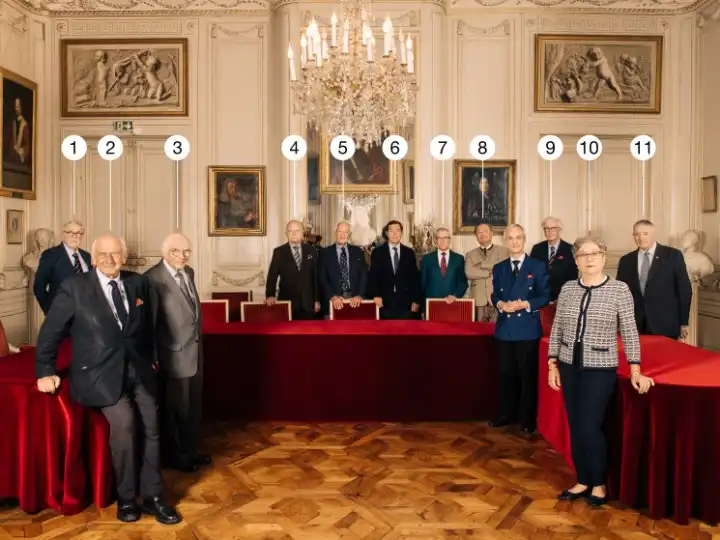
When former US president Donald Trump sat down with the billionaire Elon Musk for an interview earlier this year, things didn’t quite go to plan. Livestreaming on X, the feed wasn’t accessible for most viewers for the first 40 minutes. Then the two participants were stuck on mute. Ultimately, the whole thing ran to a rambling two hours. Musk blamed the glitches on a cyberattack, which is certainly possible. Yet the ad hoc production and discursive chat also underlined the teething troubles of these new, supposedly disruptive sources of where people get their news and views.With a month to go until the US decides its next president, monocle spoke to five veteran journalists about how to cover such a twisting, turning election. We often hear that it is a tricky moment for legacy broadcasters and news outlets. That audiences are leaking to influencer interviewers and chatty online anchors, and trust in the trade is at an all-time low. Yet the journalists and teams we spoke to still command vast audiences, week-in-week-out, and they do so using old-school principles. We travelled from newsrooms in the American South to studios in Washington via the Democratic National Convention in Chicago to see these journalists at work. There’s no doubt that news is changing, and many of our interviewees have also branched out into personal platforms like podcasts and newsletters. But, for now, much of the news is still as we knew it.1.Local heroLeroy Chapman JrEditor in chief, ‘Atlanta Journal Constitution’Atlanta is among the fastest-growing cites in the US, while Georgia, where Joe Biden won by 11,000 votes last time, is among the swingiest of the swing states. This gives the local paper outsize influence in this election. “This is also one of the fastest diversifying counties,” says Chapman. “This is what America’s going to look like in years to come.”Chapman describes himself as a ‘rabid non-partisan’. “Our job is to bring light but not heat,” he says. “We can bring light to what makes the parties dysfunctional; what gets in the way of them serving the country.” Ahead of this election, theAJCopened three new bureaux and is offering voter guides to the candidate options on local ballots across the state. “We have elections in 159 Georgia counties – for the sheriff, the district attorney, officials who stand a chance of having more impact on [Georgians’] lives than who ends up president,” says Chapman. With the loss or hollowing out of so many local outlets, people simply do not know who they’re voting for or who’s funding their campaigns. “There’s a lot of opportunity and public desire for that very basic information. It’s also what our democracy demands.”The facts‘Atlanta Journal Constitution’ founded: 1868 [as The Atlanta Constitution]Circulation: 80,000-100,000 for weekday editionMotto: “The Substance and Soul of the South”2.Cool headBret BaierChief political anchor, Fox NewsAfter Donald Trump was shot in the ear in July, Bret Baier was one of a select few reporters the former president called. Not that the long-standing Fox anchor is a toad for the former president; in fact, Baier was on the sharp end of a Trumpian online tirade last year after a grilling interview. “What you’re going to get from me is fair, respectful, but sometimes tough,” says Baier, whose face still has a hint of pancake makeup after recording hisSpecial Report, which airs every weeknight at 18:00 Eastern time. “To do that with [Trump], who’s perceived to be more aligned with [Fox’s] opinion is, I think, a good thing for news.”Baier has anchored the nightly slot since 2009. Among the network’s on-air talent, he has carved out a niche for doing less of the editorialising – and virulent anti-Democrat monologues – that characterises much of Fox’s output. “I’m trying to take the temperature down,” he says. Once the network of conservatives, Fox executives say that in this election cycle more Democratic politicians want to come on air to reach crucial swing voters.Common Ground– a format that Baier himself came up with – brings together politicians from opposing sides of the House to talk through a piece of bipartisan legislation that they’re working through together. “Covering both sides [in this election], with the structure that we do, is a comfort for some folks and for that we [attract an] audience,” says Baier. He always presents the evening news in a starched collar and never drifts into the kind of animated outrage of some of his Fox colleagues. There is something pleasantly throwback about Baier’s evening news show: “I think there is hunger for the more formal way,” he says. Baier has written extensively about former president Dwight D Eisenhower and the transition of power to the Kennedy administration that kicked off the 1960s and changed America forever. The most recent transition in 2021 was fraught, as Donald Trump famously refused to accept the result. How can the media do better if that happens again? “I was on air that day and we did a pretty good job,” says Baier. “I think we could speak less to the extremes and get to that middle ground where people agree. There is a lot of space there.”The facts‘Special Report’ viewers: 2.9 million every night (July)Increase in Democrats appearing on Fox this year: 41 per centNightly sign-off: “Fair, Balanced and Unafraid”3.Trusted hostKatty KayUS special correspondent, BBC, and host, ‘The Rest is Politics: US’ Much like her current title at the BBC, Katty Kay’s role as US special correspondent, and her broader position in the American media ecosystem, is, well, somewhat special. It is rare for a non-American news broadcaster (Kay is British-Swiss), working for a foreign newsroom, to be as close to a household name as Kay has become, since she began reporting from Washington in 1996. Kay’s journalism has cut across the loose partisan lines that characterise much of the US broadcast news landscape. This, she says, is because her reporting and analysis is tethered to her deep contacts with political figures on either side of the political divide, rather than being informed by a political agenda of any given stripe. “Maybe it is because I’m an outsider; I actually don’t have an American passport,” she tells monocle. “But I’ve been covering American politics for 20 years, and it has taken a long time, but I have built up a reservoir of trust with the people that I speak to. And whether I talk to people through podcasts, on television, or in print, I know that my audience is following me where I am going.”It is in that spirit of seeking trustworthy perspectives on the upheavals of a dramatic US presidential election that has drawn listeners in their millions to Kay’s latest venture, weekly politics podcastThe Rest is Politics: US. The show is produced by the UK-based podcast studio Goalhanger, and Kay acts as co-host alongside former White House communications director Anthony Scaramucci.“It’s interesting with podcasts, because everyone bemoaned the fact that we had an attention deficit disorder – yet here are people happy to listen to a discussion for 30 or 40 minutes,” says Kay. “And these are young audiences who are happy to take the time to listen to something deeply and thoughtfully. We’ve broken down some of the hierarchy of the media – it’s gone.” Listeners respond to a format that allows discussions to flow more freely. “The days where somebody could just sit behind a desk and present the dry facts – that’s not good enough anymore. The onus is on us to deliver information in a way that our audiences want. And they want to know that they’re spending their time with someone they trust.” The factsFirst international posting: Zimbabwe in 1990 before postings in London, Tokyo and WashingtonNumber of US elections covered: Nine‘The Rest is Politics: US’ downloads: 18 million since launch4.Latino voiceMaria HinojosaExecutive producer of ‘Latino USA’ and founder of Futuro MediaWhen the Pulitzer-prize winning radio host and producer Maria Hinojosa emigrated to the US from Mexico as a child in the 1960s, the US’s southern border was not as politically fraught as it is today. “I grew up at a time when immigrants were actually sought-after in this country,” Hinojosa says. Her father Raúl, a doctor, was invited to join a research team at the university of Chicago, which would go on to devise the world’s first cochlear implants. “It was a time when the brain drain of other countries was a ‘brain gain’ for the United States,” she adds.Among the rituals the Hinojosa family adopted upon their arrival in Chicago’s south side was to tune in to the nightly news. “Television was our source of understanding the US as new immigrants,” Hinojosa says. “But I never saw myself reflected [on, or in, the news] in any way.”So, in 1992, when Hinojosa was invited to hostLatino USA– the first English-language news programme devoted to Hispanic affairs on US public radio – she jumped at the chance. Broadcast each week on more than 240 public radio stations across the country,Latino USAis now America’s longest-running radio programme of its kind. The show’s stories and investigations reflect multiple aspects of life among the US’s second-largest demographic group. Hinojosa’s deftness during interviews, plus her ability to move nimbly between subjects, attracts high-profile guests – including vice president Kamala Harris, who sat down with her for an interview last September. But despite also being one of the fastest-growing demographics, Hinojosa argues that the US’s Latino communities are still covered in broad brushstrokes in much of the mainstream press. Shows likeLatino USA, as well as the documentaries and podcasts produced by Futuro Media, the production studio Hinojosa established in 2010, aim to chronicle the US’s Latino populations with a nuance often absent from news coverage elsewhere. “This is a danger, because Latinos and Latinas are the swing votes within the swing states. To not acknowledge the power of those votes, and to not help educate Latino voters and, indeed, the entire country, about the power of the Latino vote – that is a problem. And it’s just bad journalism.” The factsLaunch of ‘Latino usa’: 1993Recent reports: Press freedom in Venezuela; Mexico’s election; and Palestinian solidarity movements in Latin AmericaOn air greeting: “Now, dear listener…”5.Calm handsMary HagerExecutive producer of ‘Face the Nation’ at CBSThe mantra atFace the Nation’s first editorial meeting of the week is, “It’s only Wednesday.” This means that everything is still to play for until showtime on Sunday morning: never settle on a lead interview too early, hold your nerve, be prepared to rip up the running order on Saturday night. It’s a crucial news instinct in an election of handbrake turns and is instilled in the team by executive producer Mary Hager. She has shepherded the show for the last 14 years and has been at cbs for 30 years. Alongside her team of producers, Hager decides who gets grilled each week – usually one or two politicians – and which news lines to pursue along with in-house analysis. “The bottom line is this: how are Americans going to vote and what do we need to do – what do they need to know – to help them make up their minds?” It’s been a rocky few years for America’s news networks amid declining audiences and shrinking newsrooms. cbs was not immune to this. YetFace the Nation, 70 years on since it first aired, remains the most-watched show in the crucial Sunday morning spot. As networks battle for attention with discursive podcasts and livestreamed influencer chat shows, the programme has not budged from its undiluted format that typically puts newsmakers in a tight spot. Armfuls of lanyards hang from a hook on the wall of Hager’s office in Washington, alongside the relics, flags and flyers of past conventions and caucuses. Colleagues say the EP embodies her own mission statement of “News not noise.” While many journalists talk about the unprecedented nature of what’s currently unfolding in American politics, Hager has seen dramatic upsets before: “The biggest challenge has been staying away from what we call the ‘bright shiny objects’,” she explains. “These are the grenades that are thrown by either campaign: the campaign staff shakeups and all the insider stuff.” She says this election is happening while public distrust in government is increasing. “Our role is to present [officials] as government, push them, challenge and question them but still respect them,” says Hager. “It builds trust in us. If we’re going to take elected officials seriously and give them respect, then hopefully that will trickle down to the public.” The factsFirst aired: 1954‘Face the Nation’ viewers: 2.8 million per yearHow many elections Mary Hager has covered: 17

Meet the Annecy creatives redrawing the animation industry

Meet the Annecy creatives redrawing the animation industry

At a screening of an AI-generated music video, there are blank faces in the audience. Moments later, boos fill the hall. It is the first sign of discontent at the Annecy International Animation Film Festival. About 16,000 people from 102 countries have gathered for the flagship event of the animation industry, which is projected to grow by €200bn in the next decade. Despite these positive numbers, mass layoffs at major studios and the arrival of generative AI have left animators fearing that human artistry could soon be left behind. But Monocle finds a wave of artists who are redrawing the industry by blending traditional craft with new technology.“I love the artistic possibilities of animation and the breadth of trades that you encounter on set,” says Argentinian director Rosario Carlino, who has come to pitch her film Karetabla as part of Women in Animation, a programme promoting animators from the Global South. There’s a growing confidence among artists who are embracing their heritage through animation, not least thanks to the booming export of Japanese anime to the rest of the world. “With streaming, animation has become a more global movement,” says Mitchel Berger, the senior vice-president of global commerce at Crunchyroll, who is credited with distributing almost half of the top-grossing anime films in North America. “What people once thought of as uniquely Japanese now has an audience everywhere.”Among those present is Pakistan-based Mano Animation Studios, which entered The Glassworker, its first hand-drawn feature. “In the beginning, people said that we were crazy,” says film director Uzman Riaz. “Why would you do animation by hand when you can do it with the click of a mouse?”However, this mouse-clicking mentality misses the point of what inspires many animators. “We put in all of this work out of our love for the art form and the audience can feel that,” says Canadian filmmaker Denver Jackson, who wrote, directed and painstakingly animated his new film, The Worlds Divide, by himself. “I won’t deny that some audiences will watch AI content,” says the film’s producer, Nicole Sorochan. “But is this algorithmic ‘more of more’ approach really what we need to be focusing on?”Investing in craft in an industry fast becoming automated might not be as naive as it seems. “Because of AI, things that are handmade are more appreciated,” says Australian stop-motion director Adam Elliot, this year’s Annecy Cristal prize winner for best film, with Memoir of a Snail. “Films that used to be niche are reaching more people through digital technologies such as streaming.” Swiss director, producer and writer Claude Barras also believes that digital advances have benefited the creative process of stop-motion filmmaking, including his award- winning film My Life as a Courgette. “I think that 3D printing and digital cameras have removed a lot of barriers by making the process more affordable and fluid,” he says.It’s a paradoxical claim often repeated at the festival: technological advances are allowing independent artists to preserve traditional animation approaches long abandoned by legacy studios. Smaller studios are now on track to snatch about half of the market from industry giants in the next few years. The success of these outsiders should be a reminder that, in this medium, the people who are doing the drawing are often the ones drawing in the audiences.

Balancing act: Catalonia’s castells, or human towers, offer a lesson in sharing the load

Balancing act: Catalonia’s castells, or human towers, offer a lesson in sharing the load

On one Saturday in October,colles– groups consisting of people of all ages from all over Catalonia and beyond – parade down the streets of Tarragona accompanied by bands playing Catalan music. Dressed in white trousers, colourful shirts, sashes and bandannas, they make their way to the Tarraco Arena, an amphitheatre in the heart of town. Boys and girls play thegralla, a double-reed instrument, and drums calledtimbals. Their progress announces the 29th edition of the biggest gathering ofcastells, Catalonia’s human towers, which are a feat of collaboration and focus.The human towers are the work of amateur groups that meet for rehearsals twice a week in sports halls across the region. The aim is to build towers that can reach up to 10 people high. “It’s nerve-wracking but also exciting,” says Santi Pie, leader of the Castellers de Sant Cugat, from the eponymous town just north of Barcelona. Pie’s group is one of 30 that has qualified to compete in Tarragona over the weekend in this biannual extravaganza. His job today is to co-ordinate almost 300 people as they aim to create the tallest, most intricate tower possible in order to gain a place, alongside 12 othercolles, in the finals of the championship, which take place over the weekend. Monocle joins an audience of 11,000 people, a figure that doesn’t include the thousands ofcastellerstaking part.Over the past half-century thesecastells, once the result of a relatively marginal activity, have become one of the most potent symbols of Catalan identity. The tradition was declared a Masterpiece of the Oral and Intangible Heritage of Humanity by Unesco in 2010 and, since then, the number ofcolleshas doubled. The pastime originated in the 18th century in the town of Valls in the Tarragona region. Thecollesare thought to have developed from a popular dance tradition called Ball de Valencians; music remains central to the activity. Eachcollahas its own band that starts playing once the base of the tower – thepinya(pine cone) – has been built, and carries on as people climb up to form the upper tiers. The song “El Toc de Castells” guides participants to co-ordinate their movements with the melody, while those at the bottom are able to estimate the tower’s progression via the music.Castellscan be found at festivities across Catalonia, where the towers are often built in front of town halls and not necessarily competitive, though the activity is inherently ambitious.As competitors slowly pile into the centre of the Tarraco Arena Plaça, a former bullfighting ring that has heldcastellscompetitions since 1932, a voice on the loudspeakers introduces eachcolla, many of which have names that hint at the important role played by children: the Xiquets del Serrallo (Kids of El Serrallo); Marrecs de Salt (Brats from Salt); Nens del Vendrell (Children of El Vendrell). Children as young as five or six, whose job it is to climb up to the top of the tower, wear mouthguards and helmets. In pairs, participants help each other to wrap the all-important sash tightly around their waists. This crucial part of their outfit supports the lower back and provides grip for climbers on the ascent. A banner hanging on the edge of the arena reads, “Fent pinya, fas poble.” (“When you huddle together, you make a village.”)Surveying the crowds from the top floor of the arena is Pere Ferrando, president of the jury. He is surrounded by several screens showing all the action. Allcollesreceive a score based on the difficulty of their constructions, and alongside six other jurors, Ferrando will be marking the performances. There are about 40 different types ofcastells, each of which is only complete when theenxaneta(one of the smallestcastellers) reaches the top of the tower and raises one hand. Extra points are given for a safe dismantling. But today is not only about rivalry. “What makes it interesting is that you don’t necessarily need to compete with anothercolla,” says Ferrando. “It’s also about surpassing yourself.” That said, he will be keeping a close eye on the tug of war between the two teams angling for the tallestcastells: the Castellers de Vilafranca and the Colla Vella dels Xiquets de Valls. The former has dominated the competition since the mid-1990s, winning 11 of the past 13 editions, while the latter is the team threatening this dominance.It’s mid-afternoon, and the time has come for the Castellers de Sant Cugat to attempt their first tower – an eight-storey construction with fourcastellersper tier. Pie, the group leader, calls out instructions from the bottom as the stadium watches on. Every step is perfectly synchronised to complete the tower as quickly and safely as possible. As soon as the fourth storey is complete, eight-year-old Candela Casas begins her ascent, stepping on a sea of arms and heads. “I climb up by holding on to sashes, grabbing shoulders and legs,” she says when Monocle meets her backstage. She’s not scared of heights, she says, but it’s important to not look down and to stay focused. When she reaches the top and lifts up her left hand, the stadium breaks into applause. But it’s only when it’s clear that the tower will not crumble, and that everyone is safe, that thecastellersbegin to jump up and down, exchanging hugs and kisses. When asked what the best thing aboutcastellsis, Casas replies without hesitation, “To enjoy yourself!”Many participants liken the experience to being part of a huge family. For Maricarmen Álvarez, who is watching nervously from her front-row seat, that is quite literally the case. She is here to support her two daughters and six grandchildren, ranging between the ages of 12 and 23. They are all taking part in the competition with the blue-shirted Xiquets del Serrallo from the Tarragona fishing neighbourhood. “It’s very hard for me to watch,” says Álvarez, pausing to point out every family member as they take their positions in the tower. “Come on, you’re almost there,” she says, cheering on as the youngest reaches the top. “Oh God, please don’t let them fall.”Of course, not every tower can defy gravity. Though thepinyadoes act as a cushion and serious accidents are rare, the risk involved incastellsis what makes the feat of collaboration so enthralling. Álvarez is acutely aware that this is the price to pay for the strong sense of belonging and community thatcastellsprovide. She knows that it’s the collective bravery and unconditional trust placed in others that has kept the tradition alive. “My late husband was acastellerand my great-grandchildren will probably becastellers,” she says with a sigh. “It’s passed down from generation to generation; it’s in their blood.”Making his way through the crowd is Tarragona’s mayor, Rubén Viñuelas. When you grow up here, he says,castellsare never far away. “Part of daily life is going out for a vermouth and watchingcastells,” he says, referencing the celebrations of Sant Magí and the Santa Tecla Festival, which take place in August and September. “Tarragona is the capital ofcastells, so this event means a lot to us. We pay homage to this way of life. Those of us who grew up here understand what this means and we love to see people from around the world watch on with excitement.”As a strong expression of Catalan identity,castellsoften go hand in hand with a sense of regional pride that can be tied to Catalonia’s independence movement, which came to a head with an ultimately unsuccessful declaration of independence in 2017. The competition begins with everyone singing “Els Segadors”, Catalonia’s national anthem, with hands on hearts and fists in the air. Inevitably, this is followed by calls for “Independència!” Some seecastellsas a metaphor for the region’s strong sense of unity. “There’s the cultural aspect of makingcastells– it’s about looking after our language and the traditions that have been around for hundreds of years,” says Víctor Biete, president of the Castellers de Sant Cugat. Of course, that doesn’t mean that the activity is incompatible with wanting to remain in a united Spain. And whilecastellshave grown in popularity in recent years, the push for independence has suffered some setbacks. For the first time in more than a decade, the Catalan nationalist parties failed to secure a majority of seats in the regional parliament earlier this year. The pro-union Socialist Party, of which Viñuelas is a member, now leads the Catalan government after years in opposition.A few streets away, a parallel event is taking place in front of the town hall. In recent decades,castellshave expanded beyond Catalonia’s borders. Today several internationalcolles– from London, Paris, Berlin and Copenhagen – have gathered here before heading to the arena to support the Catalan teams. The Xiquets de Copenhagen were founded in the Danish capital in 2014, and Marta Trius, a PhD student, joined them a year ago. “When you’re abroad, the social dimension becomes even more important,” she says. “When you move abroad you have to find your family and this is like having a family.”Back in the arena, Viñuelas says that the global appeal ofcastellsis due to the teamwork and inclusivity involved. “It’s a piece of Catalonia that we are exporting to the rest of the world, with all its symbolism,” he says. “Everyone has a function in society – the elderly, men, women, children – just like incastells. And in the end, everything depends on the youngsters; on little boys or girls who rise high above everyone else to complete the tower.” In the end, the Castellers de Vilafranca triumphed, taking home its 13th title. For the other, there’s always next time: you’re only as good as your lastcastell.

Interview: Brazilian actress Fernanda Torres on bringing resilience to life in ‘I’m Still Here’

Interview: Brazilian actress Fernanda Torres on bringing resilience to life in ‘I’m Still Here’

In 1986, Fernanda Torres became a Brazilian icon after winning the best actress award at Cannes for her role in Arnaldo Jabor’s Love Me Forever or Never. Here, she tells Monocle Radio about her latest film, I’m Still Here, set during Brazil’s military dictatorship. The film is already one of Brazil’s most successful-ever features and has been nominated for three Oscars, including Best Picture and Best Actress for Torres.The film tells the story of Eunice Paiva, who became an activist after her husband disappeared during the country’s military dictatorship.When did you first learn about Eunice Paiva?It was through her son Marcelo Rubens Paiva’s 2015 book [I’m Still Here is based on his memoir of the same name]. I watched interviews too. She was persuasive but always gentle and intelligent.You have just won a Golden Globe for your performance in the film. How important was the recognition?It was made [during the Bolsonaro years] at a time when the arts were under attack in Brazil. I’m so happy that people of all religions and political beliefs are proud of our culture and going to cinemas to see it.You’re well known for your comedy roles. Did you enjoy returning to drama?I thought I was lost to drama! No, not really, I don’t separate genres that way. I’ve done theatre, musicals, and comedy, but of course, my recent TV roles made me widely known as a comedian. Then Walter gave me this incredible gift: a role in a deeply humanistic, profound drama.What’s special is that a new generation of Brazilian teenagers is watching this film and learning about the dictatorship, often for the first time. They’re discovering history through a family that could be their own. That humanistic approach to storytelling is rare. It might take another 25 years for a film like this to happen again.‘I’m Still Here’ is out now in Brazil and the US, and will soon be released across Europe. For the full interview with Fernanda Torres and Walter Salles, listen to Monocle Weekly above, or on Apple Podcasts and Spotify.Want more stories like these in your inbox?Sign up to Monocle’s email newsletters to stay on top of news and opinion, plus the latest from the magazine, radio, film and shop.Your EmailSubscribe

Three literary leaders share their predictions for the book industry in 2025

Three literary leaders share their predictions for the book industry in 2025

Every October, Frankfurt becomes a hive of activity with the arrival of the annual Frankfurter Buchmesse. Once upon a time, publishers, agents and authors would hold back-to-back meetings here, the air fizzing with new ideas and high-stakes negotiations. Many still talk about the time when an agent could slap a manuscript on the table for an editor to read overnight before striking a deal the next morning.Networking at the Frankfurter Buchmesse<Author conversations are a key feature of the fairToday, most of the decision-making takes place in conference rooms or via video calls beforehand but the fair still serves as a marketplace for industry leaders to talk shop and it is still the world’s largest book fair in terms of business conducted, if not size.“There’s a very positive vibe in the industry,” says the fair’s ceo, Juergen Boos. “In publishing we tend to be quite pessimistic but this year on the ground it feels like a party.” Among many areas of evolution, Boos mentions young-adult fiction and the rise of #BookTok (a social-media movement that focuses on literature). AI also featured in many conversations and talks, often in a positive light. “On the one hand, it helps us to organise our workflows in the publishing houses,” says Boos. “It helps us to translate, market and reach target groups. But it also poses a big threat because we have not yet sorted out content ownership and legislation.”Not everyone sees blue skies ahead for the future of books, particularly in the current socio-political climate. What is clear is that the state of the world is influencing readers’ choices: political books with answers and fantastical fiction with heroes and villains are on the rise.“The economy is not good, we have political challenges and we have wars,” says Boos. “The books that we want to read now ask questions, give answers and they entertain.”We speak to three industry leaders to hear their predictions for the industry in 2025. Here’s what they have to say.1.The editorMichael Reynolds, Europa EditionsNew York, USA“Non-fiction, at least in the American context, has struggled this year. There has been more desire on the part of readers to centre themselves, to find greater meaning and more significance, and they might find that more readily through fiction. In terms of which types of books readers are buying, I’m seeing a little bit of everything: romance, cosy mysteries, literary fiction. And perhaps the boundaries are now becoming more porous.In many ways it’s a good time for the small, nimble, mid-sized publisher, because the larger companies have shareholders and tend to play it safe and many better, more interesting books feel too risky. As a smaller publishing house, we can take more risks with less predictable books.”Reynolds’ title to look out for in 2025‘Gabriële’ by Anne and Claire Berest2.The agentJuliet Mushens, Mushens EntertainmentLondon, UK“We’re finding that readers are responding well to escapist fiction. I suppose the state of the world can be horrifying enough that people want to escape into something which transports them to a different time and place. Crime thrillers are still successful, because you catch the bad guy right at the end of it, you know who the villain is and there’s some kind of resolution.Fantasy is also much more successful than it has been. I’m president of the British Fantasy Society and have represented fantasy for my whole career. We’re seeing lots of publishers who have never bought fantasy before starting to acquire it for their lists. We’re seeing authors who have been published for years suddenly getting a new jacket, or people rediscovering old books written by them years ago. Fantasy has seen big growth over the past couple of years and I think that will continue.”Mushens’ title to look out for in 2025‘Bitter Sweet’ by Hattie Williams3.The audiobook expertCarlo Carrenho, Carrenho Publishing ConsultingTrosa, Sweden“We’re getting to a point where books are being voiced by AI-generated actors and writers are being influenced by the audio format, which is changing the way books are being written. Would Gabriel García Márquez have writtenOne HundredYears of Solitudetoday? That story would not do well as an audiobook.In a more positive light, we’ve had a huge milestone in audiobooks this year with Spotify introducing the subscription model to the English-speaking markets. Now it’s expanding to France, Belgium and the Netherlands. I think in the coming year we will see more and more people listening to audiobooks. In Sweden, 60 per cent of purchased books are audio, so in many places people are already listening more than they’re reading.In terms of what types of audiobooks people are listening to, it depends on geography. In Scandinavia, fiction is popular; it’s about storytelling; people just want to travel, be distracted. But if you go to southern Europe and Mexico, people are listening to non-fiction books, mostly business and self-help.”Carrenho’s audiobook to look out for in 2025‘The Intruder’ by Freida McFadden

“I despise the idea of comfort for an artist” – Audrey Diwan on eroticism in film

“I despise the idea of comfort for an artist” – Audrey Diwan on eroticism in film

Early in the morning, as Paris begins to wake, Audrey Diwan likes to draw the curtains in her living room and watch a film. “It’s the best time of day for it,” she says, welcoming Monocle into her 9th-arrondissement apartment. She projects films directly onto a niche in the wall. On the floor next to the fireplace are piles of DVDs. “There are only two shops in Paris where you can still rent them. I go to Le Vidéo Club de la Butte in Montmartre, which is a magical place. It has films that you can’t find anywhere else.”Diwan shot to fame in 2021 when she won the Golden Lion at the Venice Film Festival forL’Événement(released internationally asHappening), based on French writer Annie Ernaux’s 2000 memoir of the same name. It chronicles the author’s experience of struggling to get an abortion in the 1960s.L’Événementcaptured the zeitgeist, sparking conversations about a topic that remains taboo for many. The decision to adapt the book at that moment now feels prescient. In 2022, less than four months after the US Supreme Court overturned Roe vs Wade – the landmark ruling that had made abortion a constitutional right in America – Ernaux became the first French woman to win the Nobel Prize in Literature. Then, in March 2024, France revised its 1958 constitution to enshrine the right to terminate a pregnancy as a guaranteed freedom.Diwan’s deft ability to address societal issues originates, in part, from her work before film. She studied journalism and political science, and began her career as an editor at Éditions Denoël. She then worked at magazines such asGlamourandStylist. She has also published several novels, includingLa Fabrication d’un mensonge(“The Making of a Lie”) andDe l’autre côté de l’été(“On the Other Side of Summer”). Today she continues to write as well as direct. She recently worked on the screenplay forThe Stronghold, a Cédric Jiménez-directed film about Marseille’s criminal underworld, as well as Valérie Donzelli’s romantic comedyJust the Two of Us.In 2024, Diwan became one of 11 people selected to join France’s newly revamped Oscar selection committee. The overhaul came as the country sought to win an Academy Award in the best international feature category for the first time in more than 30 years. “Deciding on a film was a heavy weight on our shoulders,” says Diwan. “How do you know what the right choice is?” The committee eventually selectedEmília Perez, a musical by Jacques Audiard, for this year’s awards. “Watching films and talking about them is my life,” she says. “Audiard is a giant of French cinema. To win best picture would be great but we would love to receive best international picture because it’s symbolic. Many filmmakers here deserve more attention.”Audrey Diwan’s pick of new films to watch:1.‘L’Histoire de Souleymane’Boris LojkineThis immigration story will “change your whole perception of the world”, says Diwan. “You can’t look at people on the street in the same way after seeing it.”2.‘September Says’Ariane LabedLabed’s directorial debut explores the bond between two teenage sisters.3.‘Misericordia’Alain Guiraudie“It’s an unexpected piece that sets itself up as a thriller in the French countryside,” says Diwan. “It is unlike anything you’ve seen before.”Diwan’s third directorial feature,Emmanuelle, is a remake of Just Jaeckin’s 1974 softcore hit, which was based on a book by Thai-French novelist Emmanuelle Arsan. Unlike Jaeckin’s version, Diwan presents her film from the titular character’s point of view, restoring Arsan’s focus on female agency. It’s a brave choice but Diwan doesn’t shy away from a challenge. “I despise the idea of comfort for an artist,” she says. “When I find the right project, I have to feel as much fear as desire. Those are my two essential ingredients.” She couldn’t finish watching Jaeckin’s film adaptation. “I obviously wasn’t the intended audience,” she says. In her reinterpretation, Noémie Merlant, known forPortrait of a Lady on FireandParis, 13th District, steps into the role of an older Emmanuelle who roams the halls of a luxury Hong Kong hotel in search of a way to reconnect with her lost sense of pleasure.“When I read the book, I thought, ‘What is eroticism nowadays – does it still exist?’” says Diwan. She began to see the project as an opportunity to explore how young people relate to one another in the digital age. In many ways,Emmanuelleis a natural continuation of her work onL’Événement. Both films challenge cultural taboos about women’s rights, sexuality and the struggle to reclaim control over their bodies. “There is a strong feeling of shame in the films,” says Diwan. “I talk about bodies that are broken.” The making ofEmmanuellealso shows how things are changing on French film sets in the wake of the MeToo movement. Diwan and Merlant worked with an intimacy co-ordinator, a role that is now common in Hollywood but is still new in France.On-screen intimacy is frequently treated with a frustrating lack of nuance and Diwan is determined to change this. “I’ve read so many screenplays that simply state, ‘And then they have sex,’” she says. “That’s where the problem is. You would never say, ‘And then they have dinner.’ You would explain what’s going on during that dinner, what kind of interactions you expect.” Too often, she says, filmmakers avoid discussing these scenes with the cast and crew, which leads to improvisation. It’s a risky approach that can create superficial results or even dangerous situations. “When you don’t know what you’re looking for – when a scene is only included because you want to see people having sex – you’re in trouble,” she says.Diwan thrives on films that spark meaningful discussions. “It’s always good to challenge people’s expectations,” she says. “Those are the journeys that I prefer when I’m in the audience. You can love it or hate it but a strong reaction means that you can have a conversation. An open discussion – that’s what cinema should be.” — L

A cultural renaissance in Salzkammergut is reviving art and history

A cultural renaissance in Salzkammergut is reviving art and history

Stretching east of Salzburg to the Dachstein mountains, Austria’s Salzkammergut region, once renowned for salt-mining, has a new currency: culture. Under the banner town of Bad Ischl, the Salzkammergut’s 23 municipalities are one of this year’s three European Capitals of Culture; for the first time, a region, rather than a city, was awarded the coveted title. Buoyed by this vote of confidence from the EU, and with €30m in funding, it is busily reviving its artistic heritage.“We’re using this impetus to understand how the region can be attractive globally,” says the programme’s artistic director, Elisabeth Schweeger. As part of the yearlong initiative, about 300 projects, including art exhibitions, concerts, operas and operettas, panel discussions, guided hikes and public installations, will come to fruition. It’s a feat spearheaded by Schweeger’s efforts to revive the Salzkammergut’s postindustrial spaces and defunct railway infrastructure.“We don’t have an impressive opera house or a vast state-owned museum so we must think outside of the box,” Schweeger tells monocle in Bad Ischl’s Trinkhalle, the town’s classical-style concert hall that was once a place for mineral water thermal baths. She has her work cut out: following its illustrious peaks during the imperial era, the town’s cultural clout dramatically faded over time.In the 19th century, Bad Ischl was considered somewhat avant-garde. Artists and well-heeled Austrians seeking to escape the heat of the capital during theSommerfrische, the summer holidays, would flock to the Salzkammergut’s mountains. Among them were members of the Austro-Hungarian monarchy, who brought Vienna’s cultural prowess with them in the 1850s. One of the aims of this year’s events is to distribute tourism more evenly around the region. “We’re a team of 38 based across the area, looking at its cultural deficits but also at the possibilities of the Salzkammergut as a model rural region. This isn’t about urbanising the countryside. It’s about reviving dormant cultural facets, on behalf of the Salzkammergut and for Europe as a whole.”Elisabeth SchweegerArtistic directorBorn in Vienna, Schweeger studied comparative literature and philosophy in Innsbruck, Vienna and the Sorbonne in Paris. Since then, she has curated at the Akademie der bildenden Künste in Vienna and the Venice Biennale. Between 2014 and 2022, she was the artistic director of the Academy of Performing Arts Baden-Wuerttemberg and of the Salzkammergut Capital of Culture programme in November 2021.1.JanaLüthje, Head of dramaturgy,“Lüthje incorporates diverse international perspectives into her theatre, dance and discursive projects.”2.ChristinaJaritsch, Head of ecology, agriculture and social affairs,“Jaritsch returned to the region after studies in Vienna, Nancy and Havana. Her focus is on climate change and gender diversity.”3.EvaMair, Head of building culture and crafts,“Mair is responsible for areas involving the culture of buildings.”4.Lisa Neuhuber, Head of programme, remembrance culture, history and museums,“Neuhuber focuses on the Second World War and remembrance.”5.Maria Neumayr-Wimmer, Head of production,“The lead producer of the official opening ceremony this year.”6.StefanHeinisch, Head of communications and marketing,“He helms the Tavern Culture Reloaded project, offering chefs a way to reimagine the regional gastronomy.”7.Christian Haselmayr, Head of music, youth and community building,“A former music curator at Linz’s Crossing Europe Film Festival, Haselmayr leads experimental digital art festival New Salt.”8.Martina Rothschädl, Head of performing arts and literature,“Rothschädl worked for Salzburg State Exhibitions and the European Art Forum before joining us in Salzkammergut.”9.SimoneBarlian, Head of visual arts,“As an artist and curator from Gmunden, Barlian is interested in sociopolitical interaction through the medium of art.”10.Gottfried Hattinger, Curator for visual arts, performance and sound,“Hattinger curated the ‘Art Your Village’ series, exploring the artistic gaze placed on local communities, traditions and rituals.”

Meta’s news ban in Canada is disrupting the country’s media outlets

Meta’s news ban in Canada is disrupting the country’s media outlets

Earlier this year I joined the judging panel of a journalism prize to assess submissions from across Canada. It was a particularly interesting time to review the country’s news output, not only because of the sheer range of stories covered – from record-breaking wildfires to the end of a prime-ministerial marriage and the run-up to a general election – but because of the additional hurdle that its newsrooms have faced in publishing their work online.This August will mark a year since California-based technology conglomerate Meta, which owns Facebook and Instagram, began blocking access to news stories on those platforms in Canada. The move was in response to the Online News Act, which Justin Trudeau’s government passed last June with the intention of compelling Big Tech companies to pay for the journalism that is shared on their platforms. At time of writing, it’s a stalemate: neither Ottawa nor Meta seem willing to relent.“The ban has created an internet news blind spot for Canadians,” says Brett Caraway, a professor of media economics at the University of Toronto. “Many of the smaller news publishers in this country were heavily reliant on Facebook and Instagram to drive traffic to their websites, which allowed them to generate both subscription and advertising revenues.” That model – for now, at least – is no longer an option.However, while some outlets continue to suffer, particularly smaller ones, several independent newsrooms have worked around the ban in nimble and imaginative ways. It has energised publishers to engage more meaningfully with their readers – through live talks and events, additional or special editions of their publications and thoughtful editorial campaigns – rather than simply viewing them as points in a social-media dataset. Audiences have noted and rewarded the effort.As wildfires approached the city of Yellowknife in the Northwest Territories last August, its 20,300 residents were ordered to evacuate. In the absence of reliable local information on Meta’s platforms, independent outlets filled the gap. Founded by five journalists in 2017, Cabin Radio, which is funded by advertisers in the city, decided to broadcast wildfire updates 24 hours a day. Eight months later, it was receiving 700,000 visits to its website every month in a province with a population of 44,000. Plans for an additional FM service, intended to reach more remote audiences, are now in motion.Other outlets, such asThe West End Phoenix, a monthly paper based in Toronto, and The Tyee, a website launched 20 years ago that covers the Pacific province of British Columbia, have experienced growth in their readerships too. “Visits to our website have recovered since the ban,” says Jeanette Aegeson, The Tyee’s publisher. “We have long thought that owning our channels of engagement is the best strategy and this experience has just strengthened that conviction.”The direct revenue that The Tyee has generated, she says, has allowed it to add journalists to its team and broaden the scope of its coverage. “Social-media platforms can be useful when it comes to reaching new readers. But we should be trying to establish more direct connections with our audiences, on channels that can’t get ripped out from under us. It’s never a good thing when a trillion- dollar US corporation invites another country’s news media to weave itself into its social-media platforms and then dumps them.”It will take time to assess the full effect of Meta’s Canadian news ban. But it is clear that the standoff cannot continue indefinitely, particularly in an already-delicate media environment. If a resolution to the dispute feels elusive, the story of how some independent newsrooms have not only survived but thrived is an instructive one.Lewis is Monocle’s Toronto correspondent.

How Canadian art patron Bruce Bailey is uplifting next-generation talents

How Canadian art patron Bruce Bailey is uplifting next-generation talents

Bruce Bailey cuts a striking figure in front of the Chiesa di San Samuele on the opening day of his new exhibition,Beati pacifici: The Disasters of War and the Hope for International Peace,which runs at the same time as this year’s Venice Biennale. Wearing a red suit and vintage Saint Laurent silver loafers, the Toronto-based collector and philanthropist is unafraid to stand out. Though his attire is conspicuous, Bailey has been quietly working to support the Canadian cultural scene and revive the lost practice of the art salon over the past few decades. The 200 works inside the church are from Bailey’s personal collection, which is usually housed in Ontario, and are illustrative of his wide-ranging taste. The exhibition’s focus on war art was not only intended to document the dark side of human nature. “I want to show that we must take the responsibility to stand up to evil and oppression,” says Bailey. The curation begins with a series of chilling 17th-century etchings by Jacques Callot based on the Thirty Years’ War. “There weren’t any war correspondents in those days,” he adds. “Callot went to the source to depict brutality. He also wrote text below his works, so they’re almost like early versions of comic books.”From here, Bailey’s selection travels forward in time, passing by some of the greatest envoys armed with paint and a brush, including Francisco Goya and Otto Dix. Visitors are then brought up to the present with Peter Doig’s depiction of Toronto’s famous Rainbow Tunnel and a work by Tyler Bright Hilton, a Canadian artist who Bailey has been supporting. Art didn’t feature in Bailey’s upbringing. His life changed when he went on a school trip to Europe as a teenager. “I was transfixed when I saw Théodore Géricault’s ‘The Raft of the Medusa’ at the Louvre,” says Bailey. “I didn’t see any other artwork that day.” It was not until he was studying to become a lawyer at university that a small scholarship enabled him to make his first foray into collecting. “I bought three prints by Eric Fischl, Michael Snow and Christopher Pratt for a total of CA$5,000,” he says. “I framed them and put them in my student house. I felt terribly sophisticated.” During his subsequent careers as a lawyer and an investment banker, Bailey was able to add to his collection. It now includes everything from sculpture and film to photography and painting. Ever since his first purchase, however, he has maintained a particular fondness for prints and their collectors. “I find that print buyers are more passionate than other people at art fairs, who are often only there in order to buy trophy pieces by established names.”Bailey believes that it is important for all budding collectors to look at as much art as possible. “I poke my head into contemporary art galleries no matter where I am in the world,” he says. “For me, the process is not to listen with my ears but to look with my eyes and my heart.” He tries to make decisions about a piece before learning about the artist. By acting on this impulse and buying from artists’ first shows, Bailey was able to become an early collector of work by Thomas Demand, Kiki Smith and Marlene Dumas. “It wasn’t that I was smarter than anyone else,” he says. “I could only afford to buy from artists before they became more well-known and, thankfully, I was able to do this before the game changed.” Bailey laments the recent rise in intermediaries who create a distance between the buyer and an artwork. These frustrations led Bailey to invest more time into his philanthropic endeavours, including the financial support of the Montréal Museum of Fine Arts and creation of his own arts incubator. The programme champions lesser-known Canadian artists by giving them their first show and pushing them to receive commercial gallery representation. Bailey credits this work with helping to launch the career of Canadian First Nations painter and performance artist Kent Monkman.Bailey also believes in the power of art to forge connections and aid dialogue between nations. In 2011, the National Gallery of Canada became the official commissioner of the country’s pavilion in Venice. “This shows that the state uses art and music as forms of diplomacy,” he says. While his collection might have started as a group of artworks that captured his imagination, it has evolved to become a gathering point for the community. His art-salon summer garden parties, orfêtes champêtres, aim to build bridges between English- and French-speaking parts of Canada through a shared experience of culture and nature. “It’s a neutral ground where people can enter into conversation and discuss their personal history,” he says. These interactions help assuage Bailey’s worries about his legacy and the as-yet-unknown future destination of his art. He is reassured by how the collection has brought people together in Canada – and elsewhere in the world. “We all want to seek meaning in our lives,” he says. “Being a collector is not only a question of accumulating art but also how you can then use it to create a better society.” In a similar vein, Bailey believes that you can give people who you pass on the street a “visual treat” by way of a thoughtful or surprising outfit. With his opening dinner at the Venice Biennale approaching, Bailey gets up to return to his hotel. He has, of course, a dramatic costume change to make.‘Beati pacifici: The Disasters ofWar and the Hope for International Peace’ runs at Chiesa di San Samuele in Venice until 29 September.

How to stage an art heist

How to stage an art heist

In many ways, a contemporary art gallery has a lot in common with a courtroom. Both are places of high spectacle, of lofty judgement, enforced decorum and politesse. People dress up to attend both and often leave owing vast sums of money (possibly overcast with fear or shame). It has always seemed odd to me, therefore, that when art dealers end up on trial, they do such a good job of looking out of place, of seeming shocked to be there. A good blue suit, it seems, will only get you so far.Art dealers are synonymous in the public imagination with big money and dastardly behaviour. (I once briefly dated a woman whose family beseeched her to break up with me solely because I owned an art gallery.) And so, when considering how to pull off a fine-art swindle, it can be a little difficult to choose from the bright and varied palette of available criminality. Cicero wrote, “To be ignorant of what came before you is to remain forever a child.” Fortunately, the history of art-market criminality provides us with plenty of lessons in deception and scurrility.When I tell people that I’ve recently published a book about fraud in the art market, their questions tend to go straight to art forgery. They picture a little old man in a remote Tuscan village, painstakingly putting the finishing touches on an as yet “undiscovered” Leonardo. This new-old painting then makes its way to market via a network of beret-wearing scallywags, all of whom smoke ominously and from the sides of their mouths, despite the conflagratory risk to their precious cargo.This image comes, of course, from Patricia Highsmith novels and Hollywood movies starring hirsute billionaires, but it does have roots. One such forger (Dutch rather than Italian) was Han van Meegeren, the most prolific and successful forger of Vermeer paintings. Van Meegeren was canny in his choice: not only were Vermeer paintings incredibly valuable and sought-after but there were also very few of them (there are probably only 35 in existence). The discovery of “new” works by the Dutch master was welcome news to gullible buyers. Working from the basement of his house on the French Riviera, Van Meegeren used Bakelite to form an authentic-looking craquelure on his paintings.Van Meegeren is remembered in the Netherlands as something of a national hero. During the Second World War, Hermann Göring traded 137 looted Dutch paintings for just one of Van Meegeren’s fake Vermeers. Van Meegeren thereby helped to safeguard precious national heritage – and got one over on the Nazis. After making and selling more than a dozen fakes (and becoming hugely wealthy in the process), Van Meegeren was caught and put on trial. He died in 1947, months into his prison sentence, at the age of 58.What Van Meegeren did right was to select an artist to forge whose work was scarce. Half a century later, however, Iranian-American Ely Sakhai pulled off a fraud scheme with a brazenness that employed the opposite approach. Sakhai, who speaks fluent Japanese, knew that what most concerned new collectors in Japan was authenticity. So he trawled the auction houses of Europe and America, exclusively buying minor works by major impressionist artists, from Monet to Renoir, that came with certificates of authenticity. He would then have the painting expertly copied and sell the facsimile, along with its original’s certificate, to a Japanese collector. This went on until one of the buyers decided to sell, and a sharp-eyed auction-house employee in New York spotted what appeared to be the same Gauguin painting for sale in two different auctions, continents apart.What elevated Sakhai’s scheme above that of a forger such as Van Meegeren was that it exploited a weakness in the art market of its day. Collectors, especially new ones, knew next to nothing, and with no internet databases available, they were flying blind, forced to trust their dealers. These days, with the price of practically every artwork that sells at auction available online, you must become ever more creative if you’re going to pull off something lucrative.Perhaps part of the reason why forgery is the art crime that first comes to people’s minds is that it at least involves some artistry. But contemporary art, which is where the money is, is too tricky to fake; for one thing, the artists are often still alive. Nowadays, art crime has gone the way of the market, and it is increasingly financialised. As Damien Hirst once said, “Art’s about life; the art world’s about money.” Today art is all about the money.All this is to say that art fraud today is, by necessity, a far trickier beast; one that is more contractual sleight of hand than imitated brushstroke. Take my former friend and business partner Inigo Philbrick. His fraud scheme, which clocked in at more than €79m, is thought to be the largest in US history. The swindle was wildly complex – like a Hollywood bank heist but carried out over emails and Whatsapp. The simplified version is that he would sell the same painting, or shares in that painting, to multiple people. In one instance, Philbrick sold 220 per cent of one multimillion-dollar painting – obviously 120 per cent more painting than exists.There are several things to analyse here. Since art has become an asset class of its own, dealers and collectors have begun to buy works that they have no intention of hanging in their galleries or penthouses. Instead, the artworks languish in tax-haven warehouses until they have increased sufficiently in value. These kinds of buyers also often buy percentages in paintings to mitigate risk. Philbrick kept physical control of these paintings, ostensibly so that he would be able to arrange a client viewing at the drop of a (top) hat, but in reality so that he could sell the same work over and over. And what happened when two buyers both wanted control of a painting they owned (or thought they owned)? Philbrick simply sent them a blank canvas in a crate to their Swiss warehouse, where it remained unopened.There are many different ways in which you can pull a fast one in the art market, though as with many get-rich-quick schemes, you’re more likely to end up counting the bars on your prison-cell door than your fortune. We’re fascinated by hucksters and villains but to me this seems a great sadness when it comes to the art world. When we obsess over fraudsters and their grimy actions, we forget ourselves. But perhaps our preoccupation with art crime also tells us how important art really is, how it can enrich us far more than mere lucre. We would do well to remember that.

Culture round up: A thrilling Japanese crime drama, a cult Norwegian novel and a New York exhibition

Culture round up: A thrilling Japanese crime drama, a cult Norwegian novel and a New York exhibition

MusicGirlCoco & Clair ClairAfter their successful 2022 album,Sexy, Atlanta duo Coco&Clair Clair are back with another playful mix of hip-hop and electronica. The new record takes inspiration from UK groups such as Saint Etienne and Everything but the Girl. Highlights include the incessant electro undercurrent of “My Girl” and lead single “Aggy”, a breathy, synthy track that will do wonders on the dance floor.‘Girl’ is released on 30 AugustMilton+ EsperanzaMilton Nascimento and Esperanza SpaldingBrazilian singer Milton Nascimento and American vocalist and bassist Esperanza Spalding – friends for 15 years – celebrate their rapport by reworking some of Nascimento’s classic songs, including “Outubro” and “Cais”, with Spalding’s glorious vocals. There are plenty of original tracks too, such as the joyful “Wings for the Thought Bird”. An inspired meeting of musical minds.‘Milton+ Esperanza’ is out nowIn WavesJamie xxThe long-awaited second solo album by English musician Jamie xx does not disappoint with its line-up of club-ready delights.In Wavesis a beautiful mix of 1990s house and sunny optimism. The song “Life” went down a treat at this year’s Glastonbury Festival when performed live with its featured guest, Swedish singer Robyn. “Treat Each Other Right” is a more nostalgic highlight.‘In Waves’ is released on 20 SeptemberTVTokyo SwindlersNetflixOn paper, a crime drama about an elaborate property scam might not sound the most engrossing but the stakes involved here (¥10bn; €59.8m) create a high-octane drama full of suspense, explosions, intrigue and murder. This seven-part Japanese series is an adaptation of the acclaimed book by Ko Shinjo and stars award-winning actors Etsushi Toyokawa (Love Letter) and Go Ayano (Gatchaman).Pachinko (season two)Apple TV+For the many fans ofPachinko, it has been a long two-year wait for the epic family saga to return to screens. Based on the best-selling 2017 novel by Min Jin Lee,Pachinkofollows a Korean immigrant family over 70 years told, in the series, through two parallel storylines. Look forward to bold plots, excellent cinematography and exceptional attention to detail.La MaisonApple TV+Streaming series that examine the world of high fashion are all the rage. This fictional French show takes us behind the scenes of a fashion house and explores what happens when creative ambition collides with family politics. Expect a deep dive into French couture, with sage reflections on reinvention and creativity.FilmKneecapRich PeppiattReal-life Irish hip-hop band Kneecap play themselves in this madcap coming-of-age comedy about their (largely fictionalised) origin story. There’s street fighting, romance, robbery, interrogations and a lot of swearing.Spice Worldfor rap fans.‘Kneecap’ is released on 23 August Sing SingGreg KwedarOscar nominee Colman Domingo leads this drama about a group of inmates at infamous maximum-security prison Sing Sing, as they stage their own theatre production. Through the foibles of theatre-making, they find a humanity that seemed lost to them in the harsh conditions of their everyday lives. The cast of professional actors and former inmates imbues this drama with palpable emotion.‘Sing Sing’ is released on 30 August In CameraNaqqash KhalidFilmmaker Naqqash Khalid’s fierce debut is about an actor, played by Nabhaan Rizwan, striving to create a new role for himself while fed up with endless rejections and the reductive roles that he is asked to audition for.In Cameradissects who’s doing the looking and who’s being looked at, both in fiction and real life.‘In Camera’ is released on 13 SeptemberArtChiharu Shiota: I to EyeNakanoshima Museum of Art, OsakaThe Nakanoshima Museum of Art’s six-metre-high ceilings will be put to good use in Chiharu Shiota’s first major exhibition in her hometown for 16 years. Now based in Berlin, the Japanese artist creates immersive installations where the scale is matched by the conceptual ambition, as bright blood-red yarns evoke thoughts of life and death. Paintings, drawings and video work will add further context to this welcome mid-career survey.‘Chiharu Shiota: I to Eye’ runs from 14 September to 1 DecemberVan Gogh: Poets and LoversThe National Gallery, LondonFrom spiralling starry nights to idealised asylum gardens, Vincent van Gogh had many unlikely visions during the final two years of his life. This landmark exhibition, which is part of The National Gallery’s 200th-anniversary celebrations, focuses on the Dutch artist’s period in Provence and makes good on one of those unrealised visions – a triptych comprised of a portrait flanked by two of his “Sunflowers”. A curatorial coup, the show reaffirms that the creator of some of the world’s most enduring single paintings also had one eye on the bigger picture.‘Van Gogh: Poets and Lovers’ runs from 14 September to 19 January 2025BooksPlanes Flying Over a Monster: EssaysDaniel Saldaña París, translated by Christina MacSweeney & Philip K ZimmermanIn this beautifully translated collection, Daniel Saldaña París – the novelist whom American author Ottessa Moshfegh called “the Mexican Philip Roth” – considers the cities that formed him. From trying to be a writer in Mexico City to attending NA meetings in Montréal, Saldaña París draws in the reader as “a witness capable of compassion and laughter”.‘Planes Flying Over a Monster’ is out now If OnlyVigdis Hjorth, translated by Charlotte BarslundFirst published in Norway in 2001, this diary of a passionate but ultimately destructive love affair is considered cult author Vigdis Hjorth’s most important novel. Now out in English for the first time,If Onlyexposes the tragedy of both longing for and attaining one’s love object – it’sA Sport and a PastimemeetsAnna Karenina.‘If Only’ is released on 3 SeptemberA Complicated Passion: The Life and Work of Agnès VardaCarrie RickeyA female filmmaker in the boys’ club of French New Wave, Agnès Varda (1928-2019) was underappreciated for most of her life. In this definitive biography, the first in English, film critic and historian Carrie Rickey traces Varda’s trajectory, which included genre-defying films such asCléo from Five to Seven(1962),Vagabond(1985) andFaces Places(2017).‘A Complicated Passion’ is released on 27 SeptemberPhotographyWe Are Here: Scenes from the StreetsInternational Center of Photography, New YorkStreet photography came of age in a less self-aware era, prior to the ubiquity of smartphones. The 30 contemporary practitioners who are featured here, including Iran’s Farnaz Damnabi and Cairo-based Randa Shaath, must work harder to capture authentic moments that stand out from the crowd. It will be interesting to see how curator Isolde Brielmaier incorporates fashion-focused portraits and documentary shots from global protests into this expanded definition of street photography.‘We Are Here: Scenes from the Streets’ runs from 26 September to 6 January 2025

Reel potential: Is Uruguay South America’s next cinema hotspot?

Reel potential: Is Uruguay South America’s next cinema hotspot?

Facundo Ponce de León is a man on the move. The president of the Uruguayan Film and Audiovisual Agency has just landed back in Montevideo after a whistle-stop tour of Europe, touting his country at the London Film Festival as the place to make movies in 2025 and learning how the UK and Germany built their national film archives. “We’ve never had a film win a Palme d’Or in Cannes or even be in the main festival,” says Ponce de León. “But we are creating the conditions to get there in the next two or three years.”Uruguay came on the radar of many film-location scouts during the pandemic, when it became the first country in Latin America to open its borders to working film crews. It might lack the snowy peaks of Patagonia or the grandeur of Lake Titicaca but Uruguay is drawing the big streaming networks and studios with its generous tax and cash rebates. In 2024 there were 35 co-productions made in Uruguay, 12 of which were feature fiction films. In December 2024, Uruguay will host the Ventana Sur, Latin America’s biggest market for film and television, which is usually held in Argentina.“Our offer to Netflix, Amazon, Paramount and others is that we give back up to 25 per cent of whatever they invest [in making a film here],” says Ponce de León. “If they hire a Uruguayan script writer or directors, even as a second unit, we will give them 5 per cent more.” That was the case withAmia, a slick series with a Uruguayan director on the crew, telling the story of the terror attacks on Israel’s embassy in Buenos Aires in the 1990s with Montevideo’s art deco centre standing in for the Argentine capital.Uruguay is tapping into its larger neighbour’s stardom. Since Argentine president Javier Milei slashed public budgets, the state’s longstanding backing for cinema has sharply declined but in Montevideo a strategy to support film production is now a part of public policy that’s expected to continue into the next administration. At a tumultuous moment across Latin America, with political upheaval and shaky economies, the so-called “Switzerland of the Americas” looks relatively steady.There are about 1,000 companies in the audiovisual sector in Uruguay, which international productions can tap into. “The field of people working in media here is enormous, given that it’s a population of just three million people,” says Pablo Casacuberta, a filmmaker and director of Montevideo’s Gen Centre for Arts and Sciences. His business partner, film producer Juan Ciapessoni, agrees. “For many years, Uruguay was a place to leave if you wanted to find investment,” he says. “But now it is becoming an island of stability.”Want more stories like these in your inbox?Sign up to Monocle’s email newsletters to stay on top of news and opinion, plus the latest from the magazine, radio, film and shop.Your EmailSubscribe

Three trailblazing photography dealers in LA, Hong Kong and Amsterdam

Three trailblazing photography dealers in LA, Hong Kong and Amsterdam

Gallery 01The West Coast pioneerWebber 939,Los AngelesAfter more than 20 years of running photographic and creative agency Webber Represents, as well as a London gallery, Chantal Webber (pictured) moved to Los Angeles in 2019, just as the city’s art scene was luring galleries from across the world. “The creative energy reminds me of New York in the 1990s,” she says from her east-side space. “But for a city steeped in photographic history, there aren’t many photo-led galleries.”Webber’s gallery, which opened in 2023, has made its mark by spotlighting future greats such as Daniel Shea and dusting off long-unseen works including those by feminist photo legend Tee A Corinne. Performance, film and ephemera are often integrated into shows and the gallery also has a public reading library, lined with photography books.Enticing some LA collectors out to the grittier east side and asking them to take the leap into buying photography is a “work in progress”, says Webber. “It’s important for us to take risks with what we show. For a younger, contemporary collector, we’re at the right price point.”webberrepresents.comGallery 02The local heroBlue Lotus Gallery, Hong KongSarah Greene at Blue Lotus Gallery in Hong KongIn 2007 ship-broker Sarah Greene opened Blue Lotus Gallery in an industrial building in Hong Kong. It was a side project: Greene, who hails from Belgium, tells monocle that she was more interested in creating a space where emerging artists could showcase their work than in “sales or making money”. In 2012, she narrowed the gallery’s scope to photography – especially work that took Hong Kong’s identity as its theme. “I’m happy that I found a special corner focusing on photography and crafting a unique programme,” says Greene. “A lot of the artists who we represent will be very difficult to find elsewhere.”Blue Lotus now occupies a street-level shopfront in Sheung Wan. Its roster includes the late street photographer Fan Ho and Hong Kong-based French artist Romain Jacquet-Lagreze. Greene is now expanding her remit across Asia, where young photographers often struggle to find galleries that will champion their work. Blue Lotus was an early exhibitor of Japan’s Yasuhiro Ogawa and Greene is excited to build a list of the best practitioners from across Asia. “There’s still a lot of talent that needs to be shown.”bluelotus-gallery.comGallery 03The talent spottersHomecoming,AmsterdamNadine van Asbeck and Karlijn Bozon at Homecoming in AmsterdamFounders Nadine van Asbeck and Karlijn Bozon (pictured, on right, with Van Asbeck) describe Homecoming Gallery as “a space to discover rising stars in photography, ahead of the curve”. And now, having previously popped up in spaces around the world and online over the past four years, their gallery has a permanent home.When monocle visits the central Amsterdam space, there are works on show by US artist Mia Weiner, who makes hand-weavings based on intimate photos. Kunstmuseum Den Haag modern art gallery has already snapped one up. In the back room, we find vibrant abstract prints by Dutch-German photographer Johnny Mae Hauser.The aim of Van Asbeck and Bozon, who met while working in fashion, is to present photography-focused work that doesn’t usually make it into traditional galleries. “We started this space because we felt that a lot of galleries were very focused on the same art schools,” says Bozon. “A whole generation of artists was being overlooked.”The duo are particularly focused on promoting female artists and hope to appeal to new audiences. “We wanted to show a little bit more of the person behind the art,” says Bozon. “We are drawn to work that ignites something in you. There needs to be a personal bond.”homecoming.galleryWho to buyThese five visionaries from across the globe are producing innovative, often highly personal work that is not only setting the standard when it comes to original contemporary photography but is exceptionally collectable too.1.Noémie GoudalParis-born visual artist Goudal works across various media, from film and photography to installations. Her ambitious work explores questions of ecology and anthropology.noemiegoudal.com2.Johnny Mae HauserThe Dutch-German artist’s abstract photographs have a painterly quality and have gained a strong following in Amsterdam, London, Taipei and Tokyo.johnnymaehauser.cargo.site3.Daniel SheaNew York-based Shea has a wide-ranging photographic CV, which includes shooting for fashion magazines and documenting the lives of working people. His images are known for their thrilling specificity and sense of humanity.danielpshea.com4.Daniel ObasiThe Lagos-based stylist, photographer and art director’s Afro-futuristic work addresses themes of masculinity, identity and gender in often theatrical ways.danielobasi.com5.Mohamad AbdouniBased between Beirut and Istanbul, photographer, filmmaker and curator Abdouni often works for fashion publications. His personal photography focuses on the rise of Beirut’s queer culture scene.mohamadabdouni.com

Lausanne’s Capitole cinema shines once again

Lausanne’s Capitole cinema shines once again

Lausanne’s Capitole cinema has reopened after being renovated for the third time since it was built at the end of the 1920s. Switzerland’s largest movie theatre owes its longevity to its longtime owner, Lucienne Schnegg, who died at the age of 90 in 2015. An ardent cinephile from the Jura region, Schnegg was hired as the cinema’s secretary in 1949, before being appointed as its manager seven years later. When its former owner, Luxembourgian confectioner Matthias Köhn, died in 1981, he left the business to Schnegg but his children successfully challenged the bequest in court. Undeterred, Schnegg bought thelausannoisinstitution in 1996.The Capitole’s name in neon lights on the building’s exteriorAffectionately known as “la petite dame du Capitole” (“the little lady of the Capitole”), Schnegg ran the cinema for almost 60 years. She also worked there as a cashier, usherette and ice-cream seller. As the era of online streaming platforms took hold, she was determined to ensure that the Capitole would remain a dedicated movie theatre, rather than being redeveloped for other commercial purposes. That’s why, when she decided to sell the building in 2010, she made a deal with the city authorities to safeguard its future. The Cinémathèque Suisse, the national film archives, was brought in to manage the venture, with the mission of protecting works that are considered part of Switzerland’s film heritage, as well as the buildings in which they were shown.The renovation has been carried out by Montreux-based practice Architecum at a cost of CHF21.6m (€22.5m). “Today most of Lausanne’s 18 historic cinemas have been repurposed as bars or supermarkets,” says Marion Zahnd, one of the project’s lead architects, when Monocle meets her in the Capitole’s sumptuous foyer. “We had the opportunity not only to salvage the historic building but to restore it for its original purpose.”At first glance, beyond a 500 sq m extension, little seems to have changed. Many of the original art deco features, as well as those added during a smaller-scale renovation in 1959, have been painstakingly restored. But behind the scenes, the Capitole has received a significant upgrade. “We wanted to make the demands of modern technology work around the restored structure, rather than compromising the architecture,” says Zahnd, pointing to the state-of-the-art projection room above.Projection boothArchitecum has added an intimate subterranean screening room named after Schnegg that seats an audience of 144. This complements the original 731-seat auditorium whose vast theatrical structure has remained largely unchanged since its inception. The additional room will show the works of emerging film-makers and the main screen will focus on international blockbusters.Stairs to the newly excavated lower levelsBehind the scenesThe Capitole was originally designed by Swiss architect Charles Thévenaz and inaugurated in 1928, towards the tail end of the silent-film era. At the time, it featured a glitzy melange of gilded marble columns and pink-velvet sofas. Between the 1930s and 1940s, however, it developed into a more versatileciné-concertand conference venue, incorporating an orchestra pit, organ and dressing rooms. These features broadened the scope of the Capitole’s offering and the venue welcomed the likes of Russian ballet dancer Anna Pavlova and Geneva’s Orchestre de la Suisse Romande for performances. In 1946, Jean-Paul Sartre declared his existentialist manifesto inside the cinema’s packed auditorium. Then, in 1953, Switzerland’s first panoramic screen was installed here.In 1959, architect Gérald Pauchard was brought in to update the Capitole’s architecture, partly in a bid to lure audiences back to the big screen as domestic television sets soared in popularity. Pauchard made several significant decorative alterations: he emblazoned the cinema’s name in neon on the façade, for example, and introduced red upholstery, fabric-lined ochre walls and Murano-glass lighting fixtures.Fast-forward to the cinema’s third renovation, which began in 2021. Zahnd’s team restored the evocative art deco features with Schnegg in mind. Every intricate 1950s chandelier was painstakingly cleaned to eliminate ancient stains caused by cigarette smoke. When the panoramic screen was removed, Zahnd found a frayed sample of the original 1950s blue-grey carpet, allowing her to replicate its precise shade. The new corrugated-aluminium walls in the foyer imitate the folds of the velvet screen curtains that Pauchard installed in the grand auditorium.“We wanted to preserve the texture of the velvet as much as possible. Velvet is synonymous with the opulence of art deco cinema”The screening room, which was luxuriously lined with crimson velvet in 1959 to improve its acoustics, has been left untouched. “Removing it all would have spoilt its lustre, so we brought in a consortium of textile restorers to maintain the humidity of the auditorium during the works,” says Zahnd. “We wanted to preserve the texture as much as possible because velvet is synonymous with the opulence of art deco cinema. Heritage and art form had to cohabit.” A media library belonging to the Cinémathèque Suisse replaces what was once the building’s barbershop, while a specialist bookshop and a café-cum-bar have also been added.Vintage film postersUnderground foyerThe restoration, which draws deeply on Switzerland’s artistic, architectural and technical capabilities, is evidence that the country’s appetite for the silver screen remains healthy. “There has been a noticeable shift in the way in which we consume movies,” says Christophe Bolli, the Cinémathèque Suisse’s communications director. “But in this country we have also seen an increased demand for our heritage pictures, many of which are found exclusively in our film library.”Restored art deco auditoriumThough Schnegg passed away before she could witness the renewed splendour of her beloved picture house, the new screen honours both her name and her legacy as a champion of the art form’s timelessness and power to entertain. “The magnificence of the Capitole’s interior helps to re-establish Schnegg’s idea that a trip to the cinema should be a celebratory experience,” says Bolli. “I like to think that she would have been satisfied with the job that we have done here.”cinematheque.ch

The independent Toronto retailer keeping magazine culture alive

The independent Toronto retailer keeping magazine culture alive

Back in 2021, Nicola Hamilton, an award-winning art director for several Canadian magazines, noticed something missing from Toronto’s media ecosystem. Despite being Canada’s largest city and home to the country’s biggest print, broadcast and media-production hubs, it seemed to lack a specialist shop dedicated to selling print. “I have worked in magazines for a decade,” says Hamilton. “But I realised that Toronto hadn’t had an independent kiosk of its own in a very long time.”That set in motion a career shift, from designing magazines to selling them. In the summer of 2022, she established her own magazine shop, Issues, in the city’s Dundas West neighbourhood, an area already rich in independent retail. “It’s really fascinating to be on the other side of this industry,” says Hamilton, who firmly believes that magazines will continue to enrich and entertain future generations of people. “I’m used to putting a title together but seeing what customers are interested in reading and what they get excited about in the shop has taught me a lot.”It was one piece of advice in particular, offered by Jeremy Leslie, founder of MagCulture in London, that guided her initial steps into magazine retail: begin by bringing in five copies of every title that you want to stock, assess what sells, then build up the inventory from there. “I’m the first Canadian retailer for a lot of these titles so that felt very exciting,” she adds.The pared-back space was designed by Toronto-based Company Company as a shop and also as a gathering spot for the city’s creative folk. Issues hosts live talks with editors, writers and publishers, as well as magazine launches and other events. Demand has been so high for some of these that Issues now hosts pop-up shops and live talks in other parts of the country too.“I believe in independent media,” says Hamilton. “We encourage people to linger, browse, take a seat and ask questions. I hope that there’s plenty of inspiration to be found here.”issuesmagshop.comInk big: Monetising magazine retailConsider your inventory: Manage your stock when you start out. This will give you a clearer sense of what sells.Expand your offering: Pop-up shops, live events, collaborations and subscriptions to monthly magazine bundles will help to broaden your customer base.Champion harder-to-find titles: Stock familiar publications next to independent newcomers – people want to be inspired.

Brand image, urban geese, and the perfect shot – stories of city life and corporate culture

Brand image, urban geese, and the perfect shot – stories of city life and corporate culture

Tyler Brûlé on why brands need to take back control of their imageIn the past few weeks, uniforms and guidelines have become leading topics among clients. Over dinner in Zürich, a ceo asked me to find out how a competitor was able to keep staff looking so well groomed while he was fighting a running battle about whether or not female staff should have to shave their legs or if male staff could wear jangly earrings. Meanwhile, in Toronto, a global hospitality group told me that it was struggling to define itself as premium because too many staff members were resisting guidance about what to wear. I keep hearing the same questions: “How did we let things get so baggy? When did we lose our courage to fight for our brand?”I usually interject with the reminder that the uniform is alive and well in many parts of the world. “But how do we get back to where we were 10 years ago?” clients would ask. In the case of the company in Toronto, I said that it would require its board to jettison some inclusivity initiatives in favour of brand preservation. Such advice used to be met with spasms of wincing but it’s now clear to most that something has to give. Many companies are weighing up how to bolster their customer base and build brand loyalty through superior products and service delivery rather than political gestures. The Toronto executive summed it up best. “We have lost our best people because they were embarrassed by colleagues showing up for their shift in slippers,” he said. “It all happened on our watch.”Waste not…Anyone who has recently ventured into a park or spent a day at the beach in Helsinki knows that the city has a problem. Or 5,338 problems, to be precise. That’s how many geese the authorities say have made their home  in the city and its leisure areas. Not only can these geese get aggressive but their faeces litter much of Helsinki’s coastline. To make matters trickier, this particular species, the barnacle goose, is protected by the EU, meaning that Helsinki has had to come up with some rather innovative ways to deter them…This summer, the Finnish capital experimented with fencing in, not birds, but humans. It turns out that the urban geese, despite having wings to fly with, opt to walk in cities rather than become airborne. However, by installing fences just high enough so that the geese can’t be bothered to jump over them has meant Helsinki has turned to enclosing areas in parks en masse for people to enjoy without the birds bothering them. And, so spoiled are these urban geese that show a preference for manicured lawns, that this has also resulted in the city to curb cutting the grass in certain parks. Some have suggested a softer strategy: adaptation. If we are to coexist with the geese, let’s at least have better tools. Helsinki recently launched an open competition to design a more effective shovel for the 45 city officials tasked with collecting the geese’s waste. We’re waiting for those results to drop soon.The government has promised to help as well. In its policy programme, it says it will allow people to hunt for barnacle geese. Some skilful EU-level diplomacy is needed first, but in a country that boasts more than 300,000 active hunters, it would be an effective solution. We’re just not sure how many people would enjoy hanging out in parks with bullets flying around.Perfect shotA fleeting visit to the verdant Alpine Austrian town of Bad Ischl might sound like an idyllic trip to the land ofThe Sound of Music,but reporting trips are never as tranquil as one might imagine. Coordinating the calendars of 12 members of the region’s cultural programme to find a convenient time for a group shot (see page 44) is a challenge in and of itself. The selected time for the photoshoot happened to be during rush hour and the location – chosen for its quaint Austrian spires to create an atmospheric backdrop – happened to be a through road. It made for an amusing episode of role play as a school crossing patrol officer when I found myself halting residents on their way to work, apologising in broken German for blocking their way. Meanwhile the photographer, perched on a rickety stepladder for a privileged viewpoint, took the 10-second break in the traffic to snap as many pictures as possible. When it comes to getting that perfect shot for a monocle feature, we’re prepared to move mountains – and a number of cars.

The unseen influence of Fathia Elaouni in Moroccan public discourse

The unseen influence of Fathia Elaouni in Moroccan public discourse

Fathia Elaouni has a voice that often gets her recognised. The Radio 2M presenter has been on the airwaves since she was 17 years old. “I got involved in a local station in France, where I grew up, and was told I had a radio-friendly voice,” she says. “What started as a hobby soon became an addiction.” After working at several French stations, she moved to Morocco in the early 1990s and is now the antenna director and editor in chief of its biggest public radio station, on which she appears as a host.Elaouni and her team report on the daily news and the topics preoccupying the nation and the hosts of the weekly showsFaites Entrer L’Invité(Let the Guest In) andL’Hebdo(The Weekly). Radio is an intimate medium: only a microphone stands between a host and the two-and-half-million listeners that Radio 2M attracts each day. “We’re in people’s homes, their cars and their ears when they take public transport,” she says. “It’s extraordinary because with just our voice we transmit information as well as our emotions. ”Radio plays a central role in Moroccan people’s lives. It follows the oral tradition of the Africanconteurs, storytellers who passed down information from generation to generation through folktales, fables, proverbs and riddles. It also benefits from its ability to reach even the remotest areas of the country. Radio 2M broadcasts in the three major languages spoken across the country: Arabic, French and Tamazight.Beyond the linguistic diversity, it’s also the content of Elaouni’s work that has earned the broadcaster a loyal listenership. Along with her team, she works to provide accurate information in a media landscape shaped by social media and evolving AI technologies that make it difficult to discern the truth. “People trust us,” she says. “If something makes it onto our shows, then it’s true. We have an immense sense of responsibility.”The CV1988: Begins working as a journalist for Europe 2 in Auxerre, France.1990: Moves to Morocco, first to Tangier then to Casablanca, to work for Medi1. Obtains her official press card.1991: Founds her first radio station in La Rochelle as part of the Skyrock media conglomerate.2009: Joins the 2M media conglomerate.2013: Becomes editor in chief at Radio 2M.2015: Is appointed head of radio at Radio 2M.Radio 2M also invites the public to call in to its shows. Through these conversations, topics that might be considered taboo in Moroccan public life, such as domestic violence or poverty, can be broached. “Our lines are open from 07.00 until midnight and people call in every day to share their most personal stories,” says Elaouni. On one of Radio 2M’s shows,Kilma Likoum(The Floor Is Yours), public figures face questions live on air. “We recently had a minister on for two uninterrupted hours. It wasn’t us asking the questions – it was the Moroccan people.” For the country’s elite, from politicians to medical specialists, successfully navigating appearances on the show is a badge of honour. For members of the audience, it’s proof that their voices matter. “Being able to speak openly is important,” says Elaouni. “I often get told, ‘I didn’t think that you would have let me say that,’ but as journalists that’s what we’re here for.” This year, Morocco moved up 15 spots in Reporters Without Borders’ Press Freedom Index Ranking, from 144th to 129th. Though there’s still work to be done to protect Moroccan journalists, Elaouni is hopeful. “There’s more freedom of speech and that can be seen by how much our listeners make their voices heard on our shows. This has opened the media’s eyes to subjects that we didn’t tackle enough in the past.”

The Pentax 17 film camera is bringing a digital generation back to analogue

The Pentax 17 film camera is bringing a digital generation back to analogue

When camera designer Takeo Suzuki first suggested to his bosses at Ricoh Imaging that they make a new Pentax film camera, he was met with an awkward silence. Ricoh had acquired the iconic Japanese camera brand from the optical-glass company Hoya Corporation in 2011 but film-camera production had been abandoned in Japan; there hadn’t been a new Pentax model since 2003 and Ricoh’s focus was now fully on digital. “I just remember everyone seemed to freeze,” says Suzuki from the Pentax Clubhouse in Tokyo. Despite his colleagues being unsure, Suzuki managed to win them over. He persuaded them that they would be doing something completely fresh: making a film camera for the modern era, aimed primarily at a young smartphone-literate generation who don’t have a clue how to load film, let alone have the patience to wait for photographs to be developed. “I was one of those people who froze,” says Makoto Iikawa, an engineer. He started out as a sceptic but ended up leading the development team of the Pentax Film Camera Project, which created the Pentax 17, the company’s first film camera in 21 years.Suzuki and Iikawa were joined by Yoichi Nomura, a lens whizz, and Shinichiro Sanada, whose job was initially to turn dog-eared technical drawings for film cameras into a more usable 3D format. Suzuki had some older cameras in mind for inspiration – the Ricoh Auto Half from the 1960s and the Pentax Espio – but there was no existing mould for this new camera. “We had to start from zero,” says Suzuki.Suzuki made some key design decisions that set the Pentax 17 apart from other film cameras on the market. Unless turned on its side, it takes pictures vertically, which is good for viewing and sharing on smartphones (Suzuki knew that this would be a must for younger users); it has a simple fixed lens with manual focusing, which offers autonomy without demanding too much technical know-how, and it uses a half-frame film format (it takes two shots per frame, which doubles the number of pictures that can be taken on each roll of 35mm film). “Half-format cameras were big in the 1960s and 1970s when every family only had one camera – they were just more economical,” says Suzuki.Suzuki was certain about one thing: having a manual advance mechanism. Sanada took advice from the one person at Ricoh who had worked in film cameras and then dedicated himself to perfecting the length of the lever and the satisfying sound as it winds the film forward. “It took a few attempts to get it just right,” he says. The Pentax 17 has blown open the possibilities for film cameras and shown that film photography can co-exist with, and even take inspiration from, smartphone cameras. “You can get the perfect shot with a smartphone but a film camera allows you to explore and mess up,” says Suzuki. “There’s a good synergy in having both.” — Lricoh-imaging.co.jpInstant gratificationRicoh isn’t alone in combining smartphone-inspired features with film. Here are three other models taking instant snaps to the next level.1.I-2 CameraPolaroidPolaroid has recently introduced the I-2, which has an ultra-sharp lens, manual controls and Bluetooth to link up with printers and photo apps.polaroid.com2.Instax Wide 400FujifilmThe Instax Wide 400 is twice the size of the popular Instax Mini. It offers instant high-quality prints and features a manual timer for easy group shots.instax.com3.Lomo’Instant Wide BostonLomographyInstant cameras were once limited by a single lens. The Wide Boston comes with three lens attachments, offering flexibility on instant film.lomography.com

Playlist: 50 cosy songs for long, dark nights

Playlist: 50 cosy songs for long, dark nights

Morning sunThere’s nothing like the sunlight on a crisp winter morning. Allow these tracks to provide a gentle, warming accompaniment.1.Todo Dia SantoMarcos ValleBrazilian legend Marcos Valle delights with his breezy, effortlessly cool bossa sound.Marcos ValleBrazilian singer and producerWhat are you listening to currently?On the road, I like to listen to playlists that I’ve made. I’m also listening to Céu’s new album, Novela, which is very nice, very beautiful. She wrote lyrics for a song on my album, which I love. And to tell you the truth, I listen to Ravel and Debussy in the quiet moments.What are your plans for 2025?I recently released a new album, Túnel Acústico, so I’ll continue touring it in Brazil, Europe and the US. We’re also planning to tour in China. Another project that I’ve been working on is a music series by [the late] French composer Henri Salvador, which I artistically directed, produced and did arrangements for. It’s becoming an album and will also be turned into a show, which will be toured. Beyond that, I don’t know. I can only to wait and see what will happen.Do you have any New Year’s traditions?I prefer to stay at home with my wife, Patricia, and our little dog, Merlot. If I’m performing on New Year’s Eve, it’s got to be something very special. Otherwise, I prefer to relax. I think that’s the way to be prepared for a new year.2.Moonlit FloorLisaA member of K-pop group Blackpink, Thai singer Lisa shines in this track that riffs on 1990s classic “Kiss Me” by Sixpence None the Richer.3.Cinnamon and CloveSérgio Mendes & Brasil ’66Another bossa nova classic, selected in tribute to the late Sérgio Mendes, who passed away in September.4.Sinking BoatInfinity SongSoft rock from four talented New York siblings.5.Crockett’s ThemeJan HammerThe iconicMiami Vicetheme.6.TurboSunni ColónMornings are always smoother with a little Sunni Colón.7.Rosário do DesejoAyomA sunny blend of lusophone styles, from Brazilianfrevosto Cape Verdeancoladeiras.8.Love Me JejeTemsThis Tems track revamps Seyi Sodimu’s 1997 Nigerian Afro-pop hit of the same name.9.Amor em JacumãLucas SanttanaLet cool Brazilian dub beats ease you into the day ahead.10.Erase/RewindThe CardigansWe never get tired of this one.Walk in the parkWant to blow off the cobwebs with a walk? Grab your headphones…1.Somente o SolDeborah BlandoThe Italo-Brazilian legend delivers a stirring cover of 10cc’s “I’m Not in Love”.2.Cruz de NavajasMecanoA Spanish new-wave classic.3.Amar Pela MetadeCalemaKizomba pop from a duo with São Tomé and Príncipe roots.4.Sciura MilanesePopaA slick synth-pop tribute to thesciuras– the name given to chic older ladies in Milan.5.OrtakMelike SahinNew soulful pop from one of Turkey’s biggest stars.6.PowerTelenovaAlt-indie from the Melbourne trio’s 2024 debut album,Time Is a Flower.7.Si Antes Te Hubiera ConocidoKarol GThe Colombian singer dominated this year’s charts with this bouncy track.8.Leh BenkhabyTul8teThis masked singer and producer blends pop with bossa nova and Egyptian sounds.9.AcidenteJãoMelancholic pop by the young Brazilian singer-songwriter.10.Cool BreezeThe Jeremy Spencer BandLet this cinematic yacht-rock track whisk you to the 1970s.Aperitivo hourWhether you’re enjoying an aperitivo at home or après-ski on the slopes, these songs will kick-start your evening.1.I Forget (I’m So Young)Sofie RoyerShimmering up-tempo electro-pop from the Austrian singer.2.DeslizaAna MouraShort, sultry and infectious, this new track from the Portuguese fado artist will get you moving.3.NenupharPolo & PanThe French duo’s electro-disco track is inspired by Mexico City and its grooves are guaranteed to spice up your evening.4.AirCrystal MurrayEmotional pop-r&b from the Franco-American singer.5.Una Notte SpecialeAliceThis dreamy synth track became a classic upon its release in 1981.6.Total NormalMichael CretuTop synth-pop by the Romanian-German music producer.7.Diet PepsiAddison RaeSimply a perfect pop song.8.Veridis QuoDaft PunkLuca Guadagnino selected this for his new Chanel No 5 ad.9.Esperar Pra VerEvinhaPure bossa nova brilliance.10.Uciekaj!LorExciting Polish folk-pop.Hedonistic nightEscape the cold and lose (or find) yourself on the dance floor with these club-ready songs.1.Ô traversZaho de SagazanThe acclaimed star combines French chanson with electro.2.Galactic RomanceJaakko Eino Kalevi(Kiva Kiva Versio)Italo-disco collides with Finnish melancholy – and it works.3.Serotonin MoonbeamsThe Blessed MadonnaA love letter to 1990s rave.4.Acid in My BloodChannel TresTechno to get lost in.5.Pump It UpEndorFeatured on the soundtrack of one of the year’s buzziest films,The Substance.6.NightcallKavinsky, Angèle & PhoenixRevived when it was performed at the 2024 Olympic Games closing ceremony.7.TabooKylie MinogueClassic Kylie from this year.8.Dancing IslandAngelina PetrosovaThe Uzbek diva in full flow.9.LifeJamie xx, RobynLet optimism banish the blues.10.Mystery of LoveMr FingersA famed Chicago house track.New Year’s celebrationsRaucously ring in 2025.1.Tout Pour MoiClara LucianiAn uplifting song from new albumMon Sang.2.FantasyJadeThe former Little Mix member turns disco diva.3.Bafana BafanaProfessor RhythmRecorded at the end of Apartheid.4.Nandakke?AiliDelicious electro-pop by the Belgian-Japanese duo.5.Somebody to LoveKazy LambistIt’s all about love in this gem.6.Time for CelebrationDov’è LianaIndie with an Italian twist from the French trio.7.La BohèmeMauvais OeilPop inspired by Arab divas.8.Promised LandJoe SmoothStart your year by bouncing.9.Ti VoglioOrnella Vanoni, Elodie, DitonellapiagaA new version of a classic track by Italian icon Ornella Vanoni.10.Rescue MeMadonnaGospel for the dance floor.Monocle RadioTo listen to the playlist, search “Monocle Radio” on Spotify or tune in live. Our radio station broadcasts around the clock, seven days a week. You’ll find more music alongside a daily mix of comment, analysis and news shows across the schedule. Head to monocle.com/radio or download the programmes as podcasts wherever you get your audio.

State of the art: Six important new museums to visit in 2025

State of the art: Six important new museums to visit in 2025

1.Museu de Arte Contemporânea Armando MartinsLisbon, PortugalLisbon’s new cultural hotspot, the Museu de Arte Contemporânea Armando Martins (Macam), is housed in the 18th-century Palácio Condes da Ribeira Grande a five-star hotel. It is both a gallery and a hotel – the first of its kind in Europe. Founder Armando Martins’s private collection of 600 artworks decorates the walls of both the exhibition areas and the hotel rooms. “This creates an immersive cultural experience,” says Macam director Adelaide Ginga. A night spent in the deconsecrated-chapel-turned-bar before jumping into bed with a masterpiece is an experience indeed.macam.pt2.FenixRotterdam, NetherlandsFenix, a new museum devoted to telling stories of migration through art, will open in May in a former warehouse in the Katendrecht district. While the collection will include chastening photography of refugee camps, lighter pieces will also be scattered throughout. One such example is American artist Red Grooms’s mixed-media, soft-sculpture New York bus, in which visitors will be encouraged to take a seat alongside brightly painted passengers made from foam. “It’s important that the museum stays grounded,” says director Anne Kremers. “And it’s essential that people embrace it locally, in addition to being an international museum.”fenix.nl3.Naoshima New Museum of ArtNaoshima, JapanIf art is meant to inspire and revive, what better setting for a gallery than a hilltop perch overlooking the waters of Japan’s Seto Inland Sea? This new Tadao Ando-designed museum, which will open as part of the Benesse Art Site Naoshima, will focus on contemporary Asian art, with its inaugural exhibition featuring works by Takashi Murakami and Cai Guo-Qiang. “It’s not about one museum but an integrated collective of museums sitting in harmony with the islands’ nature and community,” says Benesse Art Site Naoshima’s international artistic director Akiko Miki. “That’s what makes it unique.”benesse-artsite.jp4.The Hip Hop MuseumNew York, USAA museum to celebrate hip hop could only ever have one proper home: the Bronx. “This authenticity can’t be replicated elsewhere,” executive director Rocky Bucano tells monocle. With MCs, DJs, breakers, graffiti artists and other cultural leaders at the helm, the museum will honour pioneers of the art form. As well as showcasing memorabilia and rare artefacts, The Hip Hop Museum will have an in-house radio studio and a theatre for performances from emerging talent and well-known artists. “It’s not just about commemorating the past,” says Bucano. “It’s about grounding the story in its original soil; inspiring the youth who still call these streets home.”thhm.org5.Museum of West African ArtBenin City, NigeriaThe tangle of buildings that make up the Museum of West African Art (Mowaa) are clean-lined, low and surrounded by trees. As well as exhibition spaces, the campus hosts a science lab, research facilities and a guesthouse. Though its location in Nigeria’s Benin City might provoke debate about returning the Benin bronzes to Nigeria, Mowaa has not been built as the artefacts’ future home. Crucial to the project is creating practical infrastructure for research, while also serving contemporary artists’ needs. “Mowaa is a statement to the world,” says director Phillip Ihenacho. “It is a vehicle to more firmly ensure that West Africa is part of global art practice and recognised for its contributions.”wearemowaa.org© 2025 Museum of West African Art6.TeamLab PhenomenaAbu Dhabi, UAEFounded in Tokyo in 2001, TeamLab is an art collective that is represented internationally by Pace Gallery, placing it in the esteemed company of artists such as David Hockney and Mark Rothko. While TeamLab’s digital installations lack the tactile qualities of a Rothko canvas, they are similarly immersive, using cutting-edge technologies to create renderings of larger concepts. The collective’s vast new 17,000 sq m space will provide these artworks with a home in Abu Dhabi’s Saadiyat Cultural District – an island destination that also includes branches of the Louvre and Guggenheim. By embracing innovation, TeamLab might just steal the spotlight from these established institutions.teamlab.art

Istanbul musician Melike Sahin’s literary lyrics and stage presence have helped create a modern diva

Istanbul musician Melike Sahin’s literary lyrics and stage presence have helped create a modern diva

Turkey’s music scene is so vibrant and eclectic that many Western stars are unheard of here. This homegrown dominance became even more unassailable in the mid-2010s when a period of political turbulence led to international acts cancelling their tour dates in the country. And while some notable international artists are creeping back to the country’s concert venues, it is still locals who dominate the music scene. Artists who merge the sounds of old Anatolian folk music and psychedelia, along with the artistic vision of a new generation and the occasional input of international collaborators, have the market singing to their tune. Melike SahinWhile mid-20th century Turkish pop stars confined themselves to producing covers of international hits, today the Turkish sound is distinctive and already popular across the Middle East and Eastern Europe. Now that sound is starting to reach Western audiences. A boom in Turkish film and television – spurred by the success of hit series including the 2020 Netflix dramaEthosand the bbc’s recentThe Turkish Detective– is giving Turkish music global visibility. Acts such as Altın Gün, a Turkish-Dutch rock group, and Hey! Douglas, the stage name of Ankara-born DJ Emin Yasin Vural, have already found global success. Melike Sahin is poised to be the next breakout star. Her forthcoming show in London in November will be her first time performing in front of a UK audience. “I hope that I can explain something about Turkish music and show the audience that it is easy to catch onto,” says the 35-year-old Sahin when monocle visits her at her home, a traditional wooden villa overlooking the Bosphorus. Sahin’s crystal vocals and ethereal style have propelled her to the forefront of a new wave of musicians who are bringing Turkish music to the world. “I want audiences to see a young, modern Turkish diva who has hopes of becoming a global name.”Sahin’s concert will come shortly after the release of her albumAkkor, which was recorded in London, New York and Istanbul, alongside a cast of guest stars – including drummer Sterling Campbell, best known for his work with David Bowie. The album is produced by Martin Terefe, a Swede who has collaborated with artists including Beverley Knight and Coldplay. “The main connection between East and West happened in London,” says Sahin. “I was abroad with new musicians and new ideas, and that gave me inspiration. When those musicians arrived, a new fusion happened.” Akkoris still an unmistakably Turkish album. The opening track,Sag Salim, announces itself with a bar of pounding drumbeats and then a set of bold minor chords, before giving way to Sahin’s vocals. But it is also pared-back and elegant, stripped of the rococo flourishes that adorn more traditional Turkish songs, and reminiscent of the minimalism of London Grammar. There are the sounds of classic eastern instruments such as theoud, a stringed instrument that looks something like a lute, but also choral backing vocals that add a euphoric quality to the closing bars of songs such asIfsa. You can even sense a hint of drum’n’bass in the rhythms of the track “Beni Ancak”. Sahin’s lyrics and performances elevate the music with the kind of theatricalism and storytelling that is a hallmark of Kate Bush and, like the legendary UK singer, she says that she takes much of her inspiration from literature. “Sometimes, when I am reading a novel, one word inspires me and I start to write a song based on that. My main inspiration is to explain the inexplicable.”Where to startFive Melike Sahin songs to get you moving.1. Olur Mu (with Gazapizm)2. Durma Yürüsene3. Diva Yorgun4. Ortak5. Düldül (with Mabel Matiz)In turn, Sahin’s lyrics are inspiring a generation of Turkish women. In recent years, her words have been appearing on placards at women’s-rights demonstrations. One of her lyrics has become iconic: “I deserve each and every inch of this smile.” In a country where, in 2014, the deputy prime minister said that women should not laugh out loud in public – and where rates of femicide appear to be rising – this is more than an abstract statement. In 2021, Turkey withdrew from the Istanbul Convention, an international treaty designed to combat gender-based violence. Protests in opposition to the withdrawal were met with violent police crackdowns. Sahin has leant into her feminism withAkkor, an album that she says is centred on the themes of rebirth and survival.“I enjoy writing things that I am not able to shout on the streets,” she says. “The problems in Turkey are serious. We are not talking about wage differences; the number of murders of women is huge. It is our job as artists to say that this is wrong. I feel useful when I see my lyrics on the placards. When I first saw that, my eyes were full of tears of pride for being their sister.”Sahin first entered the spotlight as a frontwoman with Baba Zula, a group formed in 1996 that features a changing cast of musicians and spans genres from folk to electronica. With them Sahin honed her vocal style, which she has been developing since she first started singing at family gatherings as a child.Sahin was born in Istanbul to a family originally from Sivas in eastern Anatolia and attended high school in the affluent district of Besiktas. While she was a teenager, she took singing lessons from Timur Selçuk, a legendary Turkish composer and vocal coach who twice participated in the Eurovision Song Contest. The outcome was Sahin’s signature: lilting, melancholy moments in which she hits several notes within one syllable. She continued to sing in choirs as a hobby while studying for a degree in sociology at Istanbul’s prestigious Bogaziçi University, adding Latin choral music to her repertoire. Then, on graduating, she went straight into music.After six years fronting Baba Zula, Sahin decided to set out as a solo artist in 2018. It seemed a bold move at the time: she was a relatively new voice, leaving an institution to go it alone. But Sahin says that she knew it was the right moment. “It was my time to fly.” Her first album,Merhem, which she released in 2021, was an instant hit. Off the back of the release, she played more than 100 shows in Turkey and around the world. She has had more than 460 million downloads as a solo artist, her first hit being “Olur Mu”, a duet with Turkish rapper Gazapizm. The video for the next and biggest, “Diva Yorgun”, is a camp pastiche of Turkey’s club culture that plays on Sahin’s diva stage persona.In person, Sahin is slight and diminutive, and speaks with a friendliness that is rare among well-known musicians. Onstage, however, she is unrecognisable. Her costumes and styling match those of the most flamboyant Turkish legends and she stalks the stage, conversing with her audiences. Her favourite Istanbul venue is the Cemil Topuzlu theatre in Harbiye, a huge open-air arena with a 4,500 capacity and which has been the setting for some of the most iconic performances in Turkish music history. “It was my childhood dream to perform there,” she says. In London, her stage will be more intimate: Earth has a capacity of 1,200 and hosts some of the UK’s most loved DJs and alternative artists. At a time when live music seems to be swinging towards huge, impersonal (and prohibitively expensive) stadium shows, it promises to be an antidote. Every part of Sahin’s performance is intentional and planned out months ahead. “Right now we are designing the new stage and I am going to the costume fittings. As a control freak, I am there for every part. I consider the emotional flow of my shows. I start with the serious emotions and by the end I am making them dance. It’s not just about the singing or the costumes. It’s about opening my heart to my audience.”Turkish pop timeline1940s: Artists including Suat Sayın and Haydar Tatlıyay popularise Arabesque, a style of music with Arabic roots and a lyrical focus on nostalgia and longing.1950: Zeki Müren wins trt Istanbul Radio’s music competition and performs live on the station a year later, kick-starting a four-decade music career.1968: Ajda Pekkan, Turkey’s first modern pop megastar, releases her debut LP. Many of her early releases are Turkish-language covers of classic tracks, including “I Will Survive”. Now 78, Pekkan still releases music and performs stadium shows.1973: Anatolian psychedelic star Barıs Manço makes Turkey’s first music video to accompany his single “Hey Koca Topçu”, eight years before the launch of mtv popularised the concept of music videos globally.1980: A military junta overthrows the government and imposes strict cultural censorship until the restoration of democratic elections three years later.1997: Tarkan’s Sımarık becomes a smash and its riff is widely sampled. Five years on, Holly Valance’s English cover goes to number one in the UK.2003: Sertab Erener wins the Eurovision Song Contest with Every Way That I Can.2008: Mabel Matiz becomes the first Turkish pop star to break out on Myspace.2018: The head of trt says that Turkey is unlikely to compete in Eurovision again in the near future.2022: Arabesque singer Ibrahim Tatlıses breaks Turkey’s live music record, playing to 120,000 people in four days.

10 of the best bookshops in Paris

10 of the best bookshops in Paris

The richness of Paris’s reputation as a centre of literary creation veers close to being a trope. It was here, in 1791, that one of the first-ever copyright laws, designed to protect authors, was enacted. FromNotre Dame de ParistoLes Misérables, the capital is also the setting of many of French literature’s best-known exports.With its 400 bookshops, Paris has succeeded not only in ensuring their survival but enabling them to thrive as the economy of bookselling has undergone a transformation around the world. Ultra-competitive pricing from online marketplaces and skyrocketing commercial real-estate leases have combined to put bookshops in major cities in a difficult spot. But booksellers in Paris have two key advantages.The first is France’s “Loi Lang”, named after president Francois Mitterrand’s culture minister, Jack Lang. This 1981 legislation, originally intended to protect independent bookshops from aggressive wholesaler pricing, outlawed discounts of more than five per cent on new releases, ensuring equal book prices nationwide. So even in the age of online retail, France is the country with the most bookshops per capita and is home to 3,500 independent bookshops. The second policy is one for which Parisian booksellers have former mayor Bertrand Delanoë to thank. The city of Paris started buying up Latin Quarter real estate with the objective of leasing it to bookshops at below market rate. The city is now landlord to 25 per cent of all bookshops across Paris.Here, we visit 10 bookshops that exemplify Paris’s literary prowess. From preserving 15th-century manuscripts to feeding the appetite forbandes dessinées, these are the stores turning over new pages in the city’s literary history.To enjoy Monocle’s full Paris City Guide, click here.1.7LKarl Lagerfeld’s voracious appetite for books was legendary. One story involves his chauffeur loading up a car full of books after the fashion designer visited a single bookshop. It seemed only natural, then, for Lagerfeld to start his own bookstore, 7L, at number seven Rue de Lille in 1999.While the studio housing his personal book collection is sadly not open to the public, the bookshop at the front of the building offers one of Paris’s sleekest collections of coffee-table books on the visual arts, from architecture to street photography. Booksellers at 7L also offer a service that builds collections for clients seeking to fill shelves with works in tune with their personal literary and aesthetic interests.After Lagerfeld’s death in 2019, Chanel acquired 7L and has big plans for its book club, the Salon 7L. It meets on the first Wednesday of every month for readings and cultural events as diverse as its founder’s artistic pursuits. “I wanted 7L to continue being a place of living creation, celebrating Karl Lagerfeld’s love of books and photography,” Laurence Delamare, 7L’s director, tells Monocle.librairie7l.comDate founded: 1999Recommended book: Journal d’un Peintre suivi de Lettres Provencales (selected writings of arts patron Marie Laure de Noailles)Number of titles: 2,5002.La ProcureOf the handful of Parisian bookshops that have been open for more than 100 years, La Procure on Place Saint- Sulpice might be the most successful today. Originally a supplier of goods to the Catholic church – from pews to pipe organs – La Procure has become the European leader on religious books, with a thriving network of 26 shops and franchises across France.When Monocle visits, Elie Khonde, a priest from the Democratic Republic of Congo, is stocking up on volumes to take home after completing a summer seminary near Paris. But, over time, La Procure has expanded beyond prayer books, religious art and sculpture. More than half of the shop’s space is dedicated to a general audience, from political memoirs tobandes dessinées.“We might advise others against it but we will order any book a customer requests,” says La Procure’s CEO, Thomas Jobbé-Duval (pictured above). “It’s in bookshops, including ours, that the diversity of points of view is best fostered. We are almost the opposite of social media. Rather than narrowing down viewpoints, we facilitate openness and exchange.”laprocure.comDate founded: 1919Other items on sale: Groceries made in monasteries or conventsAnnual turnover: €8m3.Librairie Paul JammesLibrairie Paul Jammes is not the place for you to pick up an ephemeral beach read. Instead, every rare book inside is a piece of our collective history. The shop, which specialises in rare tomes and typography, proves that these objects aren’t a thing of the past – the digital world has made them more important.Esther Jammes (pictured above) is the fourth generation of Jammes booksellers to take over the family business. When Monocle visits, she picks up a 1485 vellum astronomy book detailing lunar and solar eclipses in colour – its glaring red and yellow charts as bright as they must have been 500 years ago. Nearby, a statue of Gutenberg gazes approvingly at a printing press from the era of the French Revolution.“People who come in out of curiosity sometimes ask whether this is a museum,” says Jammes. “I tell them that the difference is, for a price, you can leave with the exhibits you like.”To be surrounded by these books, from typography catalogues to a first edition ofMadame Bovary, is to be reminded that human progress – even in the age of smartphones and AI – owes a lot to books. That fact permeates France’s bookshop culture and its proud custodians, Jammes included.librairiejammes.comDate founded:1925Oldest book in the shop:1485 edition ofDe Sphaera Mundiby Johannes de Sacro BoscoNumber of employees:14.ArtazartIn July 2000 journalists across Paris received a bright orange, Artazart-branded hard hat. Balled up inside was an invitation to attend the construction- site-themed opening party of a new bookshop and cultural space on the Canal Saint Martin: “Artazart, the bookstore of creation.” Next year,the shop will celebrate 25 years of housing graphic design publications and events.“When we started, we would host up to two events a week,” says Jérôme Fournel, co-founder of Artazart. Sitting beside fellow founder Carl Huguenin, he recalls a time when running Artazart involved a lot of white paint and elbow grease to allow one graffiti artist after another to use the bookshop walls as a celebration of creativity. “We were never strictly a bookshop,” says Huguenin. “There isn’t really another structure like ours that intrinsically mixes illustration and books.”Artazart’s offering, which ranges from magazines to limited-run artist books, is selected by Laetitia de la Laurencie, Artazart’s book curator. Her meticulous attention to paper quality, layouts and typographic choices when picking books earned her a place running Artazart alongside Huguenin and Fournel. “People come from around the world,” she says. “They are delighted to discover in France places with this kind of richness.”artazart.comDate founded:2000Recommended books:Homelandby Harry Gruyaert (Carl);Viaggiby Luigi Ghirri (Laetitia);Ishimoto, Lines and bodies– a monograph of late Japanese photographer Yasuhiro Ishimoto (Jérôme)Number of staff:95.Palais de TokyoAlongside its dynamic contemporary art space – complete with a nightclub and gourmet café – Palais de Tokyo also boasts one of the coolest bookshops in Paris. Created in partnership with German art-books publisher Walther König and French literary magazineCahiers d’Art, the store blends König’s expert eye and the magazine’s 1920s style to create a unique space that carries the biggest selection of art books in Paris.“We have a big and luminous space where the public is not only attracted to the books on the tables and yellow shelves but also our colourful design objects and our magazines section,” says bookshop manager Arnaud Fremaux. Among the trinkets that visitors can purchase, along with their favourite artists’ catalogues or the latest issue ofLes Inrockuptiblesmagazine, are solar-powered lamps by Olafur Eliasson and tongue-in-cheek pills, by artist Dana Wyse, that promise profound improvements to your life or personality upon swallowing.Arnaud FremauxBeyond the curated selection and prime location in the heart of the Trocadéro, Fremaux considers the museum’s clientele the key ingredient that makes the bookshop such a vibrant space. “The Palais de Tokyo’s programme always attracts an interesting crowd, and the store is the place to spend a moment of relaxation after seeing an exhibition,” he says.palaisdetokyo.comNumber of titles:1,500Recommended book:Donald Judd Furnitureby the Judd Foundation and MackbooksNumber of staff:66.Yvon LambertWhether or not you live up to your family’s legacy is a classic French plot found in stories by writers from Roger Martin du Gard to Balzac. Perhaps that is why Ève Lambert, daughter of legendary Parisian gallerist Yvon Lambert, felt compelled to create a different legacy all together.The sleek and cosy result is the Librairie Yvon Lambert, which offers publications on fine arts and photography, a well-stocked magazine wall and an art gallery. “We wanted to continue having a space to organise exhibitions, both with new artists and artists that Yvon has a history with,” Ève tells Monocle.Ève continues to manage the space alongside her father. The pair also run the Yvon Lambert publishing house, which releases limited edition books featuring original works by artists who the Lamberts are close to. “Matisse and Picasso made such books, where there was a relationship between the artist and the author,” says Yvon. “That is the tradition I am carrying on.”This combination of activities has been a hit with serious art aficionados as well as digital natives. “We have a very young audience that has always known smartphones – and they buy books,” says Ève. “It shows that there is continued affection for the book as an object.”yvon-lambert.comDate founded:2017Recommended book:Motel 42by Éloïse Labarbe-LafonRecent exhibition:Allegoria Con Ortaggi, Pollame, Cesti E Vasellame, a sculpture exhibition by Luca RestaProtecting books in a digital ageLibrairie Michel BouvierEvery visit to my uncle Michel Bouvier’s rare-books shop in Saint Germain des Prés yields a captivating new tale about a recent acquisition (writes Simon Bouvier). Prints of Soviet-era propaganda photos taken by Ukrainian photographer Yevgeny Khaldei. A handwritten letter by a young Claude Monet breathlessly recounting a recent visit to an exhibition. A tiny medieval prayer book with a golden clasp. Every object carries meaning beyond its message. Whether glossy paper or pristine vellum, its form holds a snapshot of human interactions.Practical, economic and strategic considerations have shifted the attention of consumers and policymakers to the digital realm. But bookshops have something that the efficiency-driven economy of algorithms and convenience can’t replicate.“On the internet, you find what you seek,” says my uncle (pictured). “But in a bookshop, you find what you weren’t looking for.” This sense of discovery doesn’t just result in a potential sale. It also fosters the community and awareness that are the lifeblood of civic life.Thanks to my uncle, I know that bookshops matter. Whether you are a powerful mayor or humble reader, support for them shouldn’t merely be a political afterthought or a hip badge of honour. They require serious investment that pays priceless dividends.Simon Bouvier is Monocle’s Paris bureau chief7.GalignaniItalian publisher Giovanni Antonio Galignani of Lombardy established the Librairie Française et Étrangère bookshop in Paris in 1801. Today a stone plaque outside the door reads: “The first English bookshop established on the continent.” An astute businessman, Galignani also started an English newspaper widely read by the anglophone movers and shakers of the time, including Lord Byron and the Marquis de Lafayette. More than 200 years since its founding, the bookshop – now known simply as Galignani – is back in the hands of its founder’s descendants, with Anne Jeancourt-Galignani at the helm. “Our family had moved away from the profession of bookselling for a few generations,” says Jeancourt-Galignani. “I took over the leadership of the bookshop a few months ago, which has allowed me to reconnect with this family tradition.”Inside the bookshop’s main room, browsing can require some athleticism. Accessing the titles on the upper shelves involves climbing tall ladders, while nearby stands are stacked with heavy volumes on art and photography. The selection is a testament to the bookshop’s history of adaptation: during the German occupation of Paris, a Nazi command post set up shop next door. With English books banned and unyielding enforcers close by, the shop pivoted to fine-arts books to survive.galignani.frDate founded:1801Recommended book:Hourisby Kamel Daoud. “A violent but necessary book.”Annual turnover:€3.8m8.Le Bon MarchéThe most visited section of Le Bon Marché in the 7th arrondissement features neither handbags nor night creams. The historic department store’s foot-traffic crown instead goes to its vast bookshop, on the top floor, under the original glass roof designed by architects Louis-Charles Boileau and Gustave Eiffel. “Even more than the rest of the store, we have a clientèle that comes very often,” head buyer Noëlle Chini tells Monocle. “We have also had a more international clientele drawn by our books on art, decoration, architecture and fashion.”The selection of literature, cookbooks andbandes dessinéescovers all bases but under Chini, who got her start at Le Bon Marché selling postcards nearly 30 years ago, the bookshop has emphasised what she calls “beautiful books”. “Fashion and culture have always carried the store, so we wanted to translate that to the bookshop,” she says.As well as a well-chosen selection of reading materials, you’ll also find a luxury stationery shop, where patrons can customise notebooks and pens from brands such as Caran d’Ache and Leuchtturm1917. “This is a neighbourhood of publishers,” says Chini. “For us, it makes sense to talk about both reading and writing at the same time.”lebonmarche.comDate founded:2010 in its current form, but Christmas-time book sales date back to the 1880sRecommended book:Cabaneby Abel QuentinNumber of book events per year:About 309.Librairie VignettesComic books are too often considered the province of children or anoraks. In France and Belgium, however,bande dessinée(BD) is rightly recognised as a bone fide art form, on the same level as music, architecture or poetry. It’s also a thriving business: in 2023, 75 million BDs were sold in France, the third-best year ever for the industry. “France has a very unique BD culture,” Charlotte Foucault, one of the three partners of Librairie Vignettes, tells Monocle. “We are open to allbande dessinéesgenres, which isn’t the case for Americans or the Japanese.”Foucault, Ariane Roland and Roxane Pingal had been booksellers together at a larger BD specialist when they decided to strike out on their own in 2020 and open Librairie Vignettes. They offer edgier, more on-the-pulse works and less merchandise now that they are in charge. “Back then, we used to sell a lot of action figures,” says Foucault. “Our idea ofbande dessinéeis to showcase every genre, including stuff that we don’t like.”At Vignettes, classics featuring characters such as Tintin and Asterix have their place beside thornier contemporary explorations of topics including feminism or the Israel-Gaza war. This selection reflects the medium’s place in France – as cultural canon with an appeal that continues to bridge the generations.canalbd.net/vignettesDate founded:2020Recommended book:Madeleine, Résistante,a BD series about historic Résistance figure Madeleine RiffaudRecent author event:Brothers Ulysse& Gaspard Vry for the release ofUn Monde en Pièces10.ChantelivreGreat readers are not born but places like Chantelivre help to make them. “The original idea was to create a space where you would learn reading through fun, discovery and emotions, and where everyone felt welcome, no matter their previous approach to books,” Alexandra Flacsu, co-director of Chantelivre, tells Monocle. Founded in 1974 as the first specialised children’s bookshop in France, Chantelivre revolutionised the literary landscape with its playful approach to reading. “There were comfortable spaces with pillows for children to read in and things were built to fit their height, something that hadn’t really been done before,” says Flacsu.The 6th arrondissement store was renovated in 2023, and now boasts a complete reading lounge for kids and “la maison des histoires” (the stories house), a dedicated place where children can play and reading sessions with authors and actors are held. Through these activities, books are used not only as mediums for learning but for discovery and moments of sharing. “It’s our way to make reading come alive,” says Flacsu. Today a quarter of Chantelivre’s books are for adults, a choice that she considers to be more inclusive. “We wanted to create a family bookshop. People can come with their toddlers or teens and enjoy a moment together.”chantelivre-paris.comNumber of titles:30,000Recommended books:Lettres d’amour de 0 à 10by Susie Morgenstern;Graines de Cheffesby Lily LaMotte;Bandes de Boucanby Anais SautierNumber of employees:19To enjoy Monocle’s full city guide to Paris, click here.

Why national dress is back in fashion

Why national dress is back in fashion

The Great Male Renunciation is a term used to describe a phenomenon in the late 18th century whereby European men all began to dress the same. Out went almost any form of ostentation (wigs, gold braids or high heels) and in came the dull lounge suit. Since then, the Western way has been hegemonic. Indeed, at the end of the 20th century the suit and its female counterpart, the ball gown, had become the comportment of choice for almost any formal setting anywhere in the world. It appeared as though Western-led globalisation had succeeded in not only homogenising the world of trade but that of dress too. Twenty or so years later, the foundations of this bland new world look shaky. As was the case in the late 1700s, such phenomena are difficult to identify at the time (the term “Great Male Renunciation” was coined in the 1930s) but it seems that in many countries there has been a re-embracing of national dress. Some may ascribe this trend to the dark forces of nationalism but it’s worth noting that it has also coincided with the retreat of another shoddy Western invention: cultural appropriation. At about the same time as the grand panjandrums of globalisation were smugly surveying their spoils, a subset of people in Western academia were, like po-faced Gok Wans, decreeing what was and wasn’t acceptable to wear. National dress became smothered by the censorious: a dead thing meant for museums rather than real life. The joy and generosity involved in the mutual exchange of cultures were now fraught with guilt. Of course, there have been times in the past when people have donned national dress in order to ridicule and belittle others, but this too, thankfully, has for the most part been consigned to the bin. Today, people from all corners of the globe see the wearing of another’s national dress as an act underpinned by admiration. It is in this spirit that the following feature has been put together. From Nigeria to Malaysia, via Bavaria, Ukraine and the Arabian Gulf, we look at how national dress is making a comeback for a variety of reasons: political, economic and, yes, sartorial. We have also included an illustrated chart such as readers might remember from classroom walls of yore – made with love for eyes that wish to learn and appreciate, not roll.1.Desert dressThawb and abayaThe GulfThe Emirati ‘kandora’To the untrained eye, the garments worn by men across the Gulf region might seem indiscernible: a white ankle-length dress paired with a headscarf in either white or a red-and-white checkered pattern. But each of the seven states in the region has its own distinctive male robe, known as akandora,thawbordishdasha, and headscarf, known as aghutraorshmagh.The Gulf states (especially Qatar, Saudi Arabia and the UAE) have undergone an astounding transformation over the past half-century. The UAE, for example, was only established in 1971 and moved from being a country dependent on farming, fishing and pearl-diving into one of the most technologically advanced and richest urban societies in the world. Here and in other Gulf states, traditional attire has acted as an anchor to the past, tempering the lightning-quick changes happening elsewhere in society. Looking to traditionSo, what are the differences between men’s dress in the Gulf? In the UAE and Oman, men wear a collarlesskandorawith atarbooshorfarakah, long tassels roughly analogous to a Western tie. The Emiratitarbooshaextends from the neck to the belly button, while in Oman, it hangs just below the collarbone. In the UAE, men either tie their headscarf around the head like a turban (known as thehamdaniyahoressama) or wear it in the formal style with theagal, the black crown common across the Gulf. In Oman, the formal headgear is a turban called themassar, while akumma, a cap without a visor, is a less formal option. The Kuwaiti, Saudi, Qatari and Bahrainidishdashaorthawb, which all feature a collar, are almost identical. The Saudi one is more of a tight fit with a two-button collar and shirt sleeves designed to accommodate cufflinks, while the Kuwaitithawbhas a one-button collar and wide sleeves without cufflinks. The Bahraini and Qatarithawbsare looser, with pockets on the right chest and softer collars.These garments evolved over centuries to suit nomadic lifestyles: white fabrics helped their wearer survive the region’s heat, while theghutraorsifrah(a wrap worn around the head) protected against dust and sunlight. Theagalwas once used to secure a camel’s legs at night and worn on the head when not in use. Though the vast majority of the region’s people now live in air-conditioned cities, these garments still serve a utilitarian purpose while providing and enforcing a common identity. The Gulf’s leaders and public figures have played a crucial role in the latter regard. By choosing to exclusively wearthawbsandghutrasat public events, they signal their intention to preserve these cultural traditions. Indeed, traditional dress is compulsory for many who work in government-run institutions in Saudi Arabia, Oman and Qatar.Wearing a Kuwaiti ‘dishdasha’Speaking off the cuffYoung Emiratis, many of whom are more likely to wear Western dress on a casual basis, often come to cherish the time they spend in thethawborabaya(its female equivalent) at work. Saaed AlMheiri, a business development manager in Dubai, believes it reinforces an intergenerational bond that’s important as young Emiratis are exposed to Western mores. “It reflects where I come from and the upbringing that shaped me,” he says. “Traditional clothing perfectly balances timeless elegance and a deep connection to values passed down through generations. It seamlessly blends into both business and casual settings, making it a symbol of continuity and solidarity.”An ‘essama’ turbanRinging endorsementThe ‘abaya’ female garment2.United in styleBatik and kebayaMalaysia Nellie Song wearing ‘sarong kebaya’ at home with her dog in Kuala LumpurDuring coronavirus lockdowns in 2020, Malaysian dressmaker Nellie Song began sewing clothes for her daughter. She decided to experiment withbatik, a colourful textile with wax-resistant dye patterns that originated in Java and has become a staple of Malaysian traditional wear. Song’s daughter received so many questions from friends about her mother’s designs that the duo decided to start their own tailoring business, Batik by Nell. “It all started with thekebaya,” says Song. Thekebayais a traditional garment worn by women, an intricately detailed blouse accompanied by a wraparound sarong. In a country as multicultural as Malaysia, with large Malay, Chinese and Indian populations as well as numerous smaller ethnic groups and indigenous tribes, there is no single national dress – there are dozens. At the National Textile Museum in Kuala Lumpur, a line of mannequins, each sporting a different traditional outfit, stretches across the room – a Chinese silk jacket here, a headdress made of tree bark there. Amid such diversity, thekebayais a rare cross-cultural garment. “Women of all ethnicities and social classes in Malaysia, from royal families to commoners, have worn thekebaya. It holds a special place in Malaysian culture,” says Tengku Intan Rahimah binti Tengku Mat Saman, the director of the National Textile Museum. “Thekebayahas evolved to reflect Malaysia’s unique cultural identity, incorporating elements of Chinese, Indian and Malay cultures.”It has also become a border-crossing, soft-power wielding sartorial ambassador. Pre-colonial and colonial migrations of different populations across the Southeast Asian archipelago brought thekebayaalong for the ride. In 2023, Malaysia, Indonesia, Thailand, Singapore and Brunei jointly nominated thekebayafor Unesco’s Intangible Cultural Heritage list, an admirable show of regional unity in a part of the world that loves to bicker about whose version of a certain noodle dish is the most authentic. Soon after she launched Batik by Nell, Song was rushing to fulfil orders for modern spins onbatikand classic sarongkebayaand even the occasionalbatiktie or pocket square. She has designed custom versions of various traditional garb – abatikChinesecheongsam,batikIndian bridal wear and Malay-stylebatiksets for Ramadan celebrations. Many customers are young Malaysians like Song’s daughter, Wong Ann Jee, and her friends. “We’re so used to the Western idea of dressing but I feel that, as we grow older, people start to be more open and receptive towards wearing local textiles,” says Wong, who is 27. Some Batik by Nell customers are Malaysians living abroad who want traditional outfits to wear to weddings and parties in the UK and Australia. “People are just getting more comfortable with representing their culture.” Wong often wore sarongkebayawhen she had to deliver presentations at university. “That’s one of the nice things about Southeast Asian traditional wear: it’s considered formal attire now,” she adds. “I was so sick of wearing boring corporate clothes and a button-up shirt!”3.Pride of placeVyshyvankaUkraine Gathering with friends to celebrate her 26th birthday in Kyiv, Ada Wordsworth chose to wear the Ukrainian national dress, known as avyshyvanka. It was a hot August evening in 2024 and the venue a shady, wild beach on the banks of the Dnipro River. Packing a picnic and bottles of prosecco, Wordsworth donned her outfit for the evening: a linenvyshyvankadress embroidered with sheaves of wheat and chestnut leaves, symbols of Ukraine’s capital.Wordsworth came to the country in March 2022, abandoning a master’s in Slavonic studies at Oxford University to set up a charity, Kharpp, which helps to repair buildings damaged by war, in the northeast Kharkiv region. She was immediately drawn to thevyshyvanka. “In the early months of the full-scale invasion, everyone was wearing the dress all the time and I started to, too,” says Wordsworth. “I’ve been travelling around the country and love buyingvyshyvankasin different regions. Each has a different use of colour, patterns and embroidery; you can tell where it has come from just by looking at it.” Maria Gavrilyuk in a black ‘vyshyvanka’Though British and a relative newcomer to the country, Wordsworth has tapped into a feeling that many Ukrainians have had since the country gained independence from the Soviet Union in the early 1990s. In 2017, designers Natalia Kamenska and Maria Gavryluk founded Gunia, a Kyiv-based fashion and homeware brand that has become a go-to for stylish, modern takes on thevyshyvanka. “Our journey began in the Ivan Honchar Museum, Ukraine’s national centre of folk culture,” says Gavryluk. “We started working in their archives in preparation for launching Gunia, and it sparked journeys across the country, visiting different collections and libraries.” Gavryluk describes a yearning common across a nation whose heritage was violently suppressed under Russian rule. “In school, we were taught about Ukrainian folk tradition in a very limited and uninspiring way,” she says. “Walking into that museum, I realised how varied my country’s culture really is.” Strolling down Kyiv’s trendiest streets, many passers-by can now be seen in Gunia’s designs, with symbols and details taken from visits to workshops and villages across the country. It is a far cry from the Soviet era, when people were jailed for wearing theirvyshyvankain public. But it is Kamenska’s work as a stylist to Ukraine’s first lady, Olena Zelenska, that has helped show off thevyshyvankaon the international stage. “Cultural diplomacy through fashion is extremely important, especially in Ukraine’s current situation,” says Kamenska. “The clothes signal national belonging. They convey who we are, showing Ukraine’s importance and history to the world.” Representing her country on foreign visits, Zelenska is often greeted by émigrés of Ukrainian descent wearingvyshyvankas. The first lady is regularly seen in one chosen by Kamenska from Gunia’s collection, or one of the many brands now offering contemporary takes. “Because of the modernity of the pieces, they can also reflect the wearer’s personality – they mirror an otherwise hidden individuality,” says Kamenska. Back on the Kyiv beach, the light is softening as Wordsworth’s guests arrive at the party. Many have taken the host’s cue in opting for avyshyvanka. “Coming from a left-wing London background, I was aware of cultural appropriation,” says Wordsworth. “At first, I was nervous about wearing thevyshyvanka. But I’ve found that Ukrainians appreciate foreigners wearing it. It shows our admiration for a country and a culture that has been suppressed for so long.”4.Team playerLederhosen and dirndlBavaria, GermanyWhen Max Lechner was 15 years old, he decided he wanted to work with leather. The material had played a central role in his upbringing on a farm in Hofolding, 20km outside Munich. On special occasions or while out hunting with his father, Lechner had always worn lederhosen, the traditional leather pants of the Eastern Alps. So, he applied for a job with aSäckler, the craftsmen who had historically processed leather into bags and trousers. There, Lechner found his calling. He loved the mix of conviviality and comfort that lederhosen signify, while at the same time envisaging a renewed boom in the garment.Bier flowing in BavariaEmbroidered local motifsThe first wave of lederhosen arrived in the 19th century, when the Bavarian royal family, the House of Wittelsbach, began to wear the garment in official portraiture. “When Bavaria became a kingdom in 1806, its rulers looked for local traditions to unite their diverse subjects,” says Simone Egger, a cultural anthropologist at Saarland University. “So, they set up Oktoberfest as Munich’s annual funfair. They also promoted leather pants, initially worn only by Alpine hunters and farmers.” The annual Oktoberfest in Munich occasionally featured aTrachtenumzug, a parade of traditional costumes. Since 1948, the event has run annually with about 9,000 participants, 250,000 spectators and one million viewers on live TV watching men and women in lederhosen and dirndl, the corresponding dress for women.Today, lederhosen are promoted by the new kings in town: the players of Bayern Munich football club. This tradition began in 1979, after rival fans had taken to chanting, “Take the lederhosen off Bayern.” As a cheeky riposte, the Bayern players started appearing at their away games clad in the traditional attire. They began wearing lederhosen at trophy celebrations, team outings to Oktoberfest and when presenting new players at the club. “The message is attractive for anyone yearning for belonging,” says Egger. “Put on lederhosen and you become part of the team.”Team building was on the Bavarian king Ludwig II’s mind when he supported the foundation of the firstTrachtenverein, a club to promote regional costume, in 1883. Today there are about 900 such clubs with 180,000 members in Bavaria. “These members are like ambassadors who wear their lederhosen most days,” says Lechner. He is a member of his local Trachtenverein Brunnthal and owns four different lederhosen: one for work, two for festive occasions and a longer one for winter. Their durability is one reason why people are willing to pay €2,500 for a pair of Lederhosen Lechner’s handmade trousers. While it is possible to get cheap factory-made equivalents for €100, these are usually produced from chemically tanned goat leather in Sri Lanka, India or Pakistan. Lechner’s trousers, on the other hand, are made using European deer leather that is tanned in Bavaria in fish oil for months. “The most labour-intensive part is hand-stitching the embroideries with local motifs,” he says.While regional pride has always defined lederhosen, the garment’s political message has changed significantly over time. When Bavaria lost its king after the First World War, lederhosen became a reactionary symbol of protest against the newly formed liberal Weimar Republic. The open-hearted revival of local costume started only after the Second World War. It was epitomised by the hostesses for Munich’s 1972 Summer Olympics, dressed in dirndl to welcome the world to Bavaria.5.Higher purposeAgbada, buba and aso-okeNigeriaOn a continent where Western powers have historically dictated everything from diet to dress, Nigeria has managed to maintain a strong individuality. “Nigeria is so comfortable in itself and its identity,” says Obida Obioha, a Lagos-based creative director and founder of Obida, a brand making clothes inspired by traditional designs. In fact, the country, Africa’s most populous, has been arguably the most successful on the continent at exporting its culture: from Nollywood movies to musicians Burna Boy and Fela Kuti.But one art form that hasn’t yet been celebrated is fashion. Whileagbadasuits andbubasused to be ubiquitous on the streets of Lagos and among the Nigerian diaspora, only recently have people begun to turn back to these garments. “In the 1980s and 1990s, people wanted to dress like in the West, wearing Ralph Lauren and Tommy Hilfiger,” says Obioha. There was this idea that if it’s from abroad, it’s nicer. Or at least, that used to be the case. “My generation is changing that.” It was during the pandemic that designers and local brands began working with techniques and materials found on home soil. “Importing and exporting was slow, so we had no choice,” says Rukky Ladoja, founder of Dye Lab, a brand that makes hand-dyed garments. The textile du jour isaso-oke, a native cotton that was historically spun into elaborate outfits worn for events such as weddings. “The meaning ofaso-okeis ‘higher clothing’,” says Ladoja. “It’s the king of clothing, designed for special occasions.” Though there’s never been a scarcity ofaso-oke, the fact that it was reserved for parties or ceremonies meant items became less prominent, quickly losing relevance with younger generations. “Our parents would treasureaso-oke; it was something they inherited from their parents and became collector’s items,” says Seun Oduyale, a fashion entrepreneur and image consultant, whose family runs Bisbod Aso-Oke, which specialises in this native fabric. Then, around 2020, more designers started incorporatingaso-okeinto everyday clothing, using a strip on a pocket or a lapel to add a flash of Nigerian colour. They also tweaked and contemporised the shapes ofbubasandagbadasuits, making them more casual and wearable. “Labels have looked to traditional attire and methods of making fashion and inserted their own spin on them,” says Obioha. Roomier cuts and cotton fabrics suit life in Lagos, especially during the summer when temperatures regularly hit 40c and the air is like a wet sponge. “We already wear loose garments,” says Ladoja. “Theagbadais 100 per cent cotton, so it’s breathable. The style and shape are loose; you feel comfortable.” They also feed into Nigerians’ love for boldness in personality and dress. “Aso-oketells a story. People want to emote with their clothing,” says Oduyale. “We’ve gone from saving clothes for special days to looking good every day.” Wearing the printedbubasandagbadasis also a signal that you’re part of a crowd that’s in the know about emerging designers. Not only are many of these labels worn by Afrobeat stars but they carry a certain cachet. “Africa is rising and the spotlight is on us, from the music to food to art,” says Oduyale. “We are presenting our culture to the world as an enticing, marketable product and the world is loving it.”National dress differs across the globe depending on region, ethnicity, climate and more – but every nation has a story to tell through its traditional dress. It remains an important cultural tool, used to create a sense of belonging.1.BotswanaThe most common fabric used in national dress in this southern African nation isleteise, a dyed cotton with geometric patterns. Women and men often wear a blanket of animal skin called akaross.2.IndiaTraditional dress in India varies by region and climate and are part of daily life for many. The clothing – whether a saree for women or thedhotigarment for men – can be traced back thousands of years.3.BoliviaBolivia’s Andean dress, worn by indigenous Aymara populations, was developed in the 16th century and includes ponchos for men andpolleraskirts for women. Thebombín(bowler hat) came via British railway workers and was clearly a hit.4.MongoliaThe deal with Mongolia is thedeel, a kaftan-like garment accompanied by a sash, belt, hat and boots. Every ethnic group has its own style and there are 400 different types of hat.5.ArgentinaThere’s a focus on the mythical figure of thegaucho, a Southern Cone cowboy, and thepaisanarural figure, both of whom gained prominence in the fight for independence from Spain. Also add in ponchos andbombachatrousers.6.FijiThe national dress for men and women here has been a kilt-like skirt known as asulusince colonial times. The first examples were brought by missionaries from Tonga and originally signified a conversion to Christianity.7.FinlandBased on everyday outfits from the late 17th and early 18th century. There was a revival in national dress from the 19th century but it wasn’t until 1979 that the National Costume Council of Finland was created.8.JapanNow mostly worn for formal occasions, the kimono (literally “things to wear”) became the principal means of dress from the 16th century. It’s worn left side over the right and secured with a sash called anobi.9.MexicoRegions and ethnic groups affect the styles but a dominant form belongs to thecharro, the Mexican horseman whose uniform worn at equestrian shows includes a wide hat, boots and an embroidered jacket.10.ThailandKnown aschud thai, Thai traditional dress was given impetus by Queen Sirikit in 1960 when she started to establish national costume for Thai ladies (there are eight types of dress).11.UgandaWomen’s colourfulgomesidress is said to have been developed as a high-school uniform in the first half of the 20th century, while men’skanzuconsists of a long, white tunic and jacket, first worn by Arab traders.12.MoroccoBoth sexes wear flowing garments, with men donning a hoodeddjellabaand women a kaftan. The design of kaftans varies depending on origin, with every area using different embroideries and jewellery. The male fez is thought to have Ottoman origins.

10 must-see exhibitions at the 2024 Venice Biennale

10 must-see exhibitions at the 2024 Venice Biennale

Curated by Adriano Pedrosa and entitled “Foreigners Everywhere”, this edition of the Venice Biennale is wrapped up in identity. If that doesn’t sound like fun, let us point out that it’s less “my truth” and more “hey, look at what we get up to down here!” – and it is mostly “down here”, with many of Pedrosa’s selected artists coming from the Global South. Their works invite you into worlds full of joy, colour, history, vivid folklore, vim and vigour. Look at Dalton Paula’s life-size portraits of black Brazilian heroes and Pakistani-American Salman Toor’s physical figurative paintings and you’ll see what we mean.The national pavilions are not required to follow the curator’s lead. However, many chose to reflect the art world’s current curatorial concerns. Our picks follow but we should also mention the Arsenale’s Ukrainian pavilion, which is rich, poignant, funny and a ringing endorsement of artists’ survival instincts. At other “news agenda” pavilions, Russia has lent its prominent Giardini plot to Bolivia, while Israel’s empty pavilion displays a sign explaining that no art will be displayed until “a ceasefire and hostage-release agreement is reached”. This sheet of paper seemed to be photographed as much anything else on opening week. EthiopiaPallazzo Bollani, CastelloWith its debut at this year’s Biennale, Ethiopia has shown that good things come to those who wait. Carrying the inaugural torch for the East African country is Tesfaye Urgessa, with his striking figurative paintings on show at the Palazzo Bollani. Curated by British poet and writer Lemn Sissay, Urgessa’s bold artworks skilfully combine Ethiopian iconography with German neo-expressionist influences – clear evidence of his studies in Stuttgart – to address themes of domesticity and human fragility. Viewers move between large-scale works and smaller portraits, which Urgessa compares to watching a film that cuts between wide-angle shots and close-ups. “One of the things that fascinates me about painting is that I am able to learn about myself,” says Urgessa. “It’s a medium to go beyond what you know and into a greater dimension. You just have to trust the process. As long as the painting is in the studio, it’s a conversation between the painting and me, and with the ones that take a long time, you build up an intimate relationship”.Ethiopian painter Tesfaye UrgessaSouth KoreaGiardiniKoo Jeong A’s scent-based work, which celebrates 30 years since the South Korean pavilion’s inauguration, is subtle yet imaginative. “Odorama Cities” is the result of hundreds of people submitting their memories of Korean fragrance to inform a space submersed in olfactory meaning, alongside infinity symbols and a scent-breathing bronze mega-baby.Inuuteq Storch at the Danish pavilionSpainGiardiniSandra Gamarra Heshiki was born in Peru and is the first non-Spaniard to represent the nation in whose capital she works. In “Pinacoteca Migrante”, she presents her original works as if in a historical museum that merges themes and elements by Velázquez, Francisco de Zurbarán and Frans Hals to look at the paths of migration and colonialism – what is taken and what is left behind. Heshiki demonstrates an uncanny eye for the brutality behind an “innocent” 17th-century family portrait, for example. John Akomfrah at the British pavilionDenmarkGiardiniPhotographer Inuuteq Storch of Greenland takes over Denmark’s pavilion this year, demonstrating the knotty relationship between the two countries. Storch’s photographs show intimate moments of his daily life, as well as the natural beauty of the region. Take a break in one of the hammocks behind the pavilion to admire an unexpected recreation of the breathtaking view from Storch’s house.UKGiardiniThe grand staircase of the imposing 19th-century British pavilion is this year shunned in favour of a backdoor that leads to “Listening All Night to the Rain”, artist John Akomfrah’s commission. “We were tracking the ghost of listening,” Akomfrah says of his multi-screen video installations, which investigate ideas of memory, migration and racial injustice. The exhibition’s eight interlocking works create surprising echoes between sound and visuals.Sandra Gamarra Heshiki, representing Spain with ‘Pinacoteca Migrante’‘Odorama Cities’ by Koo Jeong AWillem de KooningGallerie dell’AccademiaThis show explores Dutch-American abstract expressionist Willem de Kooning’s affinity for Italy in big bold canvases and priapic sculptures, examining how classical Italian masterpieces – and torrid love affairs – influenced his work.‘Breasts’ACP Palazzo FranchettiCurated by Carolina Pasti, this show brings together works from around the world that explore the symbolism of breasts in art. Expect uplifting works by Cindy Sherman, Laura Panno and Louise Bourgeois.Jean Cocteau‘The Juggler’s Revenge’, Peggy Guggenheim Collection‘Breasts’ of all shapes and sizesSwooning at De KooningThe French trickster is celebrated in a sprightly show that swoons at his skills: poetry, music, film-making, textiles, jewellery and visual art. It’s easy to see here how his endless invention ensured he was seen as anenfant terribleuntil his death at the age of 74.Willem de Kooning, inspired by ItalyPeter Hujar portraitsPeter HujarChiesa di Santa Maria della PietàThe late, great US photographer Peter Hujar’s 1976 bookPortraits in Life and Deathhas been turned into a beguiling and atmospheric show, combining the creative outsiders of New York’s Lower East Side scene – John Waters, Susan Sontag, artist Paul Thek – with the human remains of Palermo’s Capuchin Catacombs. Hujar’s lens seems to animate the dead while preserving the living.Santa Maria Gloriosa dei FrariSan PoloOne of Venice’s largest churches, the Santa Maria Gloriosa dei Frari is home to as much artistic greatness as godliness. No less an artist than Titian’s tomb sits below his own vast, stunningMadonna di Ca’ Pesaro, while hisAssumption of the Virginbeams down from the altar above. Meanwhile, a Donatello sculpture of John the Baptist keeps a monolithic marble pyramid by Canova in very good company. This is a palate-cleansing dip into the pious.

DJ Harvey’s recipe for the perfect nightclub

DJ Harvey’s recipe for the perfect nightclub

Turns out, DJing for 40 years to audiences around the world teaches you about human nature. DJ Harvey, born Harvey William Bassett in London, cut his teeth behind the decks after hearing early glimmers of hip-hop on a trip to New York. His sound has morphed and moulded over time, touching on house, disco and whatever else catches his ear, into a mélange of beautiful eclecticism.As a drummer in his earlier musical life, rhythm and interesting percussion are often the red thread but he has a knack for finding gems, forgotten B-sides and music that requires a bit of digging. He has also earned bragging rights during his 40-year tenure: he is often referred to as “your favourite DJ’s favourite DJ” and holds residencies around the world in places such as Ibiza and Bali.One of these longstanding relationships, with Bali’s Potato Head in Seminyak has resulted in an interesting opportunity: Harvey was asked to lead the design of an entirely new club from the ground up. The result, Klymax Discotheque, is a space made for hedonism, with an emphasis on sound and acoustics, but also created around the nuances that, according to DJ Harvey, make for a good night out, that understanding of human nature. It is a place where he’s been able to put things together the way they should be. “I like to say that my place is a machine where you feed art in one end and happy people come out the other,” he says.DJ HarveyKlymax’s huge disco ballWhen Monocle speaks to DJ Harvey, he is perched at Potato Head, embarking on a monthlong residency where he plays Saturdays – all night long. We talk about what makes a good club, either as a dancer or a DJ. “Good, well-functioning bathrooms,” he says, also citing friendly security and a well-run door. Hospitality is one of the key, unsung heroes: making people feel safe and looked after. “People pay their money on the door and they all come in,” he says. “At that point it’s on you. I actually feel personally responsible for everyone’s welfare when I’m putting on an event.”The aesthetics of the room are essentially a byproduct of the need for the room to be acoustically treated, taming errant frequencies to build what the club calls a “sonic sweet spot” on the entire dance floor. Any look or “vibe” is a direct outcome of the obsession with sonic design. “Just by the nature of acoustics, if you do it right, it’s beautiful,” says DJ Harvey. To do this, 2,680,135 holes are perforated in the wood to diffuse the sound as it hits the walls and ceiling. Concrete walls 20cm thick are fitted with 365mm of acoustic layers in three sections: Rockwool, perforated panels of 25mm plywood and 3mm of teak veneer. And, of course, there’s a giant, glittering disco ball.DJ Harvey’s emphasis on welfare also extends to subtle elements of feeling: the way a club is laid out, the flow of people and subconscious feng shui. He also cites the capacity of Klymax as being a particular emphasis for him: 500 people is a sweet spot. “It doesn’t shift into the sort of stadium-type stuff where you start having to lower your common denominator to reach 10,000 people. But it’s big enough to have that sort of group trance – the sort of thing when people feel stronger and braver in a mob, together.”Before the party…Dressed to partyClubgoers Chiara Croserio and Kai EvillSome of the physical attributes are hidden and unseen, down to a sprung dance floor. Traditional ballroom dancing floors used a similar technique, says DJ Harvey. “That floor would not only give you a little push back and bounce in your step but it would also stop the hard compression and damage to your joints from stomping up and down for five or six hours at a time,” he adds.And then there’s the sound. It’s a traditional New York-style four-stack system including Larry Levan-style Bertha bass bins, with drivers from JBL, amps from Crown and processing by Lake. The audio engineer, George Stavro, previously worked with engineer Richard Long, who was responsible for the sound at legendary venues Studio 54 and Paradise Garage. DJ Harvey jokes that there’s nothing out of he ordinary about the components, saying that you can probably “buy everything off of Amazon Prime”. Instead, “it’s about the 300 years of collective experience of the people that put it together”. The magic is in the wood, paper and transistors, assembled by people with taste and experience.This focus also extends to the design of the DJ booth. DJ Harvey didn’t set up the controls as a place for idolatry but rather functionality and flexibility. “I’d go to nightclubs and not even see the DJ. I went to [famed London club] Heaven for five years straight and had no idea where the DJ was; they’re actually in a cage above the dance floor.” He says that DJs should be not very interesting to look at but be very interesting to listen to. As such, there’s respect for the craft: DJs at Klymax can play whatever format they want, be it vinyl, reel-to-reel or, as DJ Harvey says jokingly, “even Laserdisc”. There’s also a bathroom, bedroom and shower. “There’s a toilet in the DJ booth and an apartment behind it” he says. “You can put on a long track and go have a shower if you’re all sticky.”Feeling the beatHarvey is quick to dismiss overt fetishisation of components or materials when it comes to the club, speaking to an intangible atmosphere that has to be created. “I’ve been playing for 40 years on the worst sound systems known to man having the time of my life” he says. “The party will transcend that; it’s just that all of that might help a bit, give it a nudge in the right direction. But if you don’t have an intention…” His thought trails off. He’s alluding to the particular alchemy of sound, people, safety and other details that go into making a wonderful night out amid the flashing lights and bass bins.

Wildflower Studios: The production company bringing Hollywood-style filmmaking to New York

Wildflower Studios: The production company bringing Hollywood-style filmmaking to New York

“There is no other facility like this,” says Adam I Gordon, co-founder and managing partner at Wildflower Studios, the newest production lot in New York’s growing ecosystem of film and television facilities. Filming of the studio’s first project commenced in October but the idea for the site came to its founders five years ago.“It turns out that New York has been underserved for many years in terms of studio space,” Gordon tells monocle during the 30-minute drive from Manhattan to Wildflower Studios in Queens. As the owner and developer of one of the city’s most expansive networks of warehouses – whose largest client is Amazon – he started receiving enquiries from studios seeking spaces big enough to shoot their programmes in. “I started getting knocks on my door,” says Gordon. “After the fourth or fifth knock, I decided to do some research.”Adam I Gordon, co-founder of Wildflower StudiosThat entailed visiting an old friend who is well versed in making films, Robert De Niro, who today co-owns Wildflower Studios. “We have been friends for two decades,” says Gordon. “When I went to see him, I discovered that he had a strong interest in developing a film studio. He sent me on a listening tour to Los Angeles, Atlanta and New York to find out more about the cities’ stock of film studios.”During those visits, Gordon was inspired to refresh the template that film complexes were conventionally modelled on. “I felt that the design of these spaces wasn’t particularly well thought out,” he says. “There were these incredibly creative people who were spending their careers working in tired warehouses of every shape and size. But the buildings were often quite dispiriting and dull.”“I have spent my career thinking about environments that elevate us,” says Gordon, referring to the series of boutique residential properties that he has developed across New York over the past few decades. Before bringing them to market, he and his family would often move into the properties to test the renovated designs.“I have always been interested in how a place can make us feel more inspired,” he says. “And I thought, ‘What if we could combine these optimal ingredients and create a kind ofmise en placefor film production in New York – bringing together the poetry of a beautiful place with the city’s great food and a hospitality culture that elevates people and their experience of making art.”To conceive a building as complex as a film studio, Danish architect Bjarke Ingels was brought on board. His designs flip the script on how studio lots are usually laid out. Traditionally, soundstages – soundproof rooms in which films are shot – occupy hangar-like buildings on large footprints of land. Wildflower Studios is more compact. The 2.2-hectare plot was built on the former manufacturing site of piano-makers Steinway&Sons (which still operates a factory nextdoor) and houses 11 soundstages.The soundstages have been stacked vertically – a first for the design of a studio complex – and are all enclosed behind the  building’s striking, panelled edifice. “There is no such thing as an urban, vertical studio anywhere else,” says Gordon. “We have the only one in the world.”The studios contain 11 soundstagesSleek metal panels line the wallsThe goal of that design, he says, is to streamline the process of making a film. “We sat down with the people involved in the day-to-day business of filmmaking to gain a better understanding of how it works,” he says. “We asked everyone from lighting experts and actors to hair-and-make-up artists, carpenters and directors, ‘How do you like to work? What or who do you need to be working next to?’”Gordon estimates that the design of Wildflower Studios will make the facility’s output between 20 and 30 per cent more efficient than that of other production companies. This streamlined approach affects every aspect of the filmmaking process, including transport.Inside the studios, an oversized turntable allows trucks moving sets, building materials and other equipment to drive in and be rotated, before reversing the short distance to one of the six “elephant elevators”. These lifts then transport their contents upstairs to the workshop spaces that adjoin every soundstage. “People often ask us how we can provide sizeable studio facilities in a space-constrained city such as New York,” says Oscar Morales, Wildflower’s vice-president of development. “I think that we have knocked it out of the park. Not only are you able to film in a large studio but you can also access it very quickly. It’s really simple to move between one part of the building to another.”Adam I Make-up stations in the dressing roomsEach soundstage at Wildflower Studios is interconnected. Retractable walls allow for several productions to occupy different soundstages at the same time and make it easier for a single production to film across multiple rooms. This is particularly useful for TV series that require shooting scenes over more than one set at once. As part of the initial soundproofing process, bowling balls were dropped onto the floors to assess whether sound would seep from one stage to the next. It didn’t.Open for business: Retractable doors link the soundstagesGordon also took into consideration the welfare of the actors who would be working in the space when he came up with the studios’ design. At other, more spread-out complexes, paparazzi photographers are often found attempting to scale the walls or sneak in to get behind-the-scenes shots of actors. Wildflower Studios’ self-contained nature, however, allows high-profile actors to discreetly move between the stages between takes.“Everyone here is treated the same and receives the same level of service,” says executive director Cheryl Huggins, who oversees the studios’ daily operations. The dining rooms capture this sense of warmth, with handsome wooden furniture crafted by San Francisco-based studio Fyrn and paintings by Robert De Niro’s late father, the abstract expressionist painter Robert De Niro Sr. The rooms also play host to chefs from across New York’s restaurant scene, in addition to the regular menus.Private dining room featuring furniture by Fyrn and lighting by Isamu Noguchi“We want to do everything that we can to make the production staff’s day go smoothly,” says Huggins. “If that means having a coffee cart pull up to their soundstage as they’re unloading at 06.00, then we’ll do it. Many people have already walked through here – line producers, for example – and their jaws are always on the floor. They say that they can’t believe that they can work somewhere like this.”One goal of the new complex is to attract productions back to New York – a city that is often portrayed on screen through soundstages in other filmmaking hubs such as Los Angeles, Toronto, Atlanta, Calgary and London. “This type of studio has never been built before,” says Gordon. “It takes a completely different approach. It has enabled us to create an industrial building that is able to function while being beautiful in a novel way.” — Lwildflowerstudios.comBusiness benefits:While several North American metropolises have boosted their film-making ecosystems, producers often prefer locations where the cities themselves are part of the draw. “People want to be in New York,” says Gordon. The 30-minute drive from Manhattan to Queens means that the best of the Big Apple is within easy reach.Rooftop solar panels generate 1.4 megawatts of electricity

Tuned in

Tuned in

The traditional commute may have taken a hit from flexible working, parking restrictions and people eschewing car-ownership but drive-time radio is still speaking up around the world – even if some audience members are listening on their laptops at home. Station bosses want engaged listeners, while advertisers want to connect with everyone, especially people humming along as they edge along in traffic jams. It’s a coveted slot for those behind the mic too – hosts get here only by having spent years honing their craft, perfecting a welcoming tone that’s both authoritative and relaxed. Here, we celebrate the drive-time hosts who drum up engagement and continue to reel in remarkable audience numbers. Whether in Amman, Mexico City, Singapore, Seattle or Berlin, these presenters have fine-tuned their shows to match the time of day and mood of their city – not to mention the relaying of those all-important traffic updates. It’s this spontaneity that instils drive-time radio with a unique charm that can’t be replicated by podcasts or music-streaming services, despite the rhetoric that these mediums continue an unassailable rise. These six presenters might play music, broadcast news or engage listeners with games and competitions but each has mastered how to accompany their audience at a crucial part of the day – while making breakfast, during the commute, post-pick-up with a car full of children or easing into the evening at home. What unites them all is the relationship with listeners (something that isn’t necessarily shared by podcast hosts and music makers) and a clear understanding that what they do isn’t one-sided. Instead, it’s a collaborative endeavour that’s all about bringing people along for the ride.SingaporeThe hallway that leads to the CNA938 recording studio gives guests a tour of Singapore’s radio landscape. You’ll see door after door adorned with the logos of popular English, Tamil, Malay and Chinese-language stations, while their diverse music and chatter is safely soundproofed as they broadcast live to listeners across the city-state. CNA938 is the radio station of Singapore’s multimedia news channel CNA. Its studio has large windows that overlook the open-plan newsroom. It’s relatively quiet when Andrea Heng and Hairianto Diman, hosts of the flagship English-language morning drive-time showAsia First, take to the air at 07.00. By mid-morning, though, the newsroom is bustling. “Growing up, drive-time was always on – when you’re sitting in the car with your dad as he takes you to school, that kind of stuff,” says Heng. “It’s the time when you catch up with everything that’s happened overnight around the world.” As the station’s opening show,Asia Firstsets the tone for the day. Despite its news focus, the spirit is conversational and often fun – in part due to Heng and Hairianto, whose friendly banter and natural rapport belie the fact that Hairianto only joined as a co-host in May. He and Heng are adept at handling the range of issues that come across their desk – be they wars and elections or extra legroom on aeroplanes – and flit seamlessly between the gravitas required for serious topics and the humour better suited to lighthearted ones.The duo also enlivens commutes with an interactive “Question of the Day” segment, where they ask a question on air and listeners send in responses via Whatsapp. The pair solicit opinions on everything from at-home work policies to Taylor Swift.Knowing that many listeners are alone in their cars and could be stuck in traffic, Heng and Hairianto see themselves as hosting a chatty dialogue with the audience rather than simply acting as newsreaders or staid presenters. Which is to say: they welcome dissent. “We have comments that come in saying, ‘No, we don’t agree with what you’re saying’ – and then that becomes a conversation as well,” says Hairianto. The listener submissions channel is always open and Heng and Hairianto occasionally share random messages. This spontaneity givesAsia Firstan endearing intimacy and can reveal the surprising topics that the audience want to give their two-cents on: a recent news item about dental hygiene prompted a listener to chime in with toothbrush recommendations. Fresh take.“It’s direct and personal, and we keep it that way,” says Heng. “That’s something only radio can do.”Hosts: Hairianto Diman & Andrea Heng Programme: Asia FirstStation: CNA938Frequency: 93.8 FMOn air: 07.00 to 10.00 from Monday to FridayWeekly audience: 255,000Established: 1998 (as NewsRadio 938)Studio superstition: Never say it’s a slow news day – you’ll jinx it!Amman“Getting you home and playing your favourite music” is the simple promise that rings out from Play 99.5, in between pop tunes, lively ads and the mellifluous voice of Dana Darwish. The host has been accompanying Amman on the afternoon commute on Jordan’s top English-language radio station for the past five years. It’s a demanding four-hour shift every Sunday to Thursday from 15.00 to 19.00. During that time, Darwish expects to have multiple audiences, as the average car journey in Amman lasts just 20 minutes. The journeys might be short but Darwish understands that her listeners are impatient to get home. “That’s Jordanians,” she says. “If we’re kept at a stop sign for two minutes we lose our minds.” As a result, Darwish tries to keep her tone relaxed: “I try to be as soothing as possible. Maybe one day I will shift careers and start doing sleep podcasts.” As well as playing the hits – Darwish is aware of her young audience, made up mostly of 16 to 25-years-olds – the host is keen to use her show as a force for good. “I’ve revolved my entire show around bringing other people’s stories to light,” she says. Segments such as “Under the Spotlight” call attention to the talents of ordinary people, while “Play with the Athletes” showcases the Jordanian sports stars that, according to Darwish, don’t get their dues in the country, such as the taekwondo athlete Julyana Al-Sadeq. Play 99.5 has also built a reputation for its “out-of-the-box” competitions. One in particular – sponsored by the vehicle brand Jaguar Land Rover – is “forever etched” in Darwish’s mind. “The competition was getting people to roar like a jaguar,” she says. “I sat in the studio for hours just listening to voice notes of people roaring.” The partnership isn’t just an example of the programme’s proclivity for mood-boosting silliness either. It’s one of the many brand collaborations that kept theDriveBack Showgoing as a commercial success. Similarly, Jordan Kuwait Bank has sponsored the show for almost five years. Darwish is aware that the live radio landscape is changing but she remains confident in the continued appetite for shows like hers. The live element, she posits makes every show unique and can’t be replicated. “If you think about football, whether you’re watching today or tomorrow, the game isn’t going to change,” she says. “But why do you want to watch it live? Because it’s happening now, everyone’s together and you see people’s reactions. Radio is the same. We’re in the traffic together, listening together, chatting together – it creates a community.”Host: Dana DarwishProgramme: The DriveBack Show with Dana Darwish Station: Play 99.5Frequency: 99.5 FMOn air: 15.00 to 19.00 from Sunday to Thursday Daily listeners: 200,000 Established: 2018Favourite artist: MacklemoreBerlin“I’m probably the only early morning presenter who doesn’t drink coffee,” says Marco Seiffert. Instead, the host drinks plenty of water at the break of dawn, during his drive into the Potsdam studio of Radioeins, a channel from Berlin-Brandenburg public broadcaster RBB.Der Schöne Morgen(“The Beautiful Morning”) is steered by Seiffert along with his colleague Tom Böttcher every weekday, with the pair alternating with a female duo every other week. Since Seiffert joined in 2006, it has become the most listened to morning show in Berlin, Germany’s most competitive radio market. Seiffert sees the presenter’s role as catching his audience up with what’s happened during the night and what’s going on in Berlin and Brandenburg that day – as well as playing great music, of course. Instead of prank calls and prize draws, you’ll find witty jokes from the hosts and political analysis from leading journalists on all sides of the political spectrum. There’s also economics, arts, culture and sports coverage, and listeners can ask the kind of unusual questions that they’ve always wanted answered. Listeners are also encouraged to request songs that have somehow disappeared into the ether. Rather than being a Tiktok playback station too, music onDer Schöne Morgenserves as an exploration into new and unfamiliar realms. “Our selection requires a certain tolerance,” says Seiffert. “You’re going to find gems but you’re probably not going to like every single song. In my opinion, our listeners want to be reliably informed but they also want to be constantly surprised in terms of topics and music. Spotify and podcasts can hardly offer that.”For the many listeners who tune in on their way to work – stuck in traffic or waiting at the train station – Seiffert sees the programme as a “familiar companion”. And despite serving listeners at rush hour, no one at the show is in a hurry. Live interviews often last up to four minutes, more than double the average of the show’s competitors.Der Schöne Morgenalso doesn’t shy away from an argument. “Politicians can handle it,” says Seiffert. “You have to poke them a little, otherwise it gets boring.”Overall, Seiffert puts the show’s success down to its authenticity: its hosts are allowed to be themselves, whatever their mood. “We don’t feel this inner pressure to be artificially cheerful,” he says. “I’m no different on and off air. If my favourite football team has just lost, I can be despondent. If I’ve been to a concert the night before, I might be a bit tired. It’s OK.”TheDer Schöne Morgenstyle is so unique in Germany that the show has developed a cult following far beyond the broadcasting area – and Seiffert, in particular, appreciates when listeners continue to tune in on holiday or after moving away from Berlin. “It’s always exciting for me when people take us with them wherever they go.”Host: Marco SeiffertProgramme: Der Schöne MorgenStation: Radioeins Frequency: 95.8 FMOn air: 05.00 to 10.00, from Monday to Friday (from 06.00 on the weekend)Daily listeners: 366,000Established: 1997Favourite song: Die Ärzte, “Junge”SeattleWhen the weekday clock strikes 16.00 on the US’s West Coast, a pre-recorded voice announces, “You’re listening toDrive Time with Evie Stokeson KEXP.” To avid listeners of the Seattle-based independent radio station, the name still takes some getting used to. For over 20 years, music-industry veteran Kevin Cole – who cut his teeth as a DJ at Minneapolis club First Avenue, where he counted Prince among his fans –commanded the afternoon slot.Stokes took over the prime-time post in July, having worked her way up over 17 years from pulling records as an unpaid assistant to grinding out five-hour overnight shifts and, most recently, hosting Sunday afternoons. Now she peers out of the broadcast booth’s window while the station’s popular café and record store hums with customers. Drive Timereaches 75,000 listeners weekly, according to Nielsen Media Research. While those figures are relatively modest, KEXP’s outsized influence comes from its tastemaker reputation for breaking up-and-coming artists. Touring musicians detour to Seattle so they can record one of the station’s highly coveted “Live on KEXP” sessions. Stokes has hosted the likes of psychedelic rockers Crumb, southern gothic singer-songwriter Ethel Cain and London-based Afro-electronic outfit Ibibio Sound Machine.Stokes’ promotion comes at a propitious time for KEXP, which acquired a new frequency and began broadcasting on FM radio across the San Francisco Bay Area in March. The expanded range has led to a double-digit percentage growth in listenership. Broadcasting until 19.00, Stokes soundtracks the afternoon commute on the West Coast, while remaining mindful of KEXP’s global listeners who tune in digitally. “A lot of people are winding down and settling in at home,” says Stokes. “I’ll ask them what they’re cooking for dinner. But then I have listeners in Australia going out for their morning run.”She starts each show with a rough outline but allows the day’s mood to lead her. She’s also receptive to listener requests, even oddball ones. “A listener might request a song about horses and, before you know it, I’ve played seven songs on that theme,” she says.Her empathetic voice also reaches her audience in their hour of need. A listener once requested comforting songs while lying in bed with a partner in the final moments of hospice care. “I looked for songs to bring them some peace,” she says, such as “Love is Stronger than Death” by The The.These examples reflect Stokes’ attitude to radio and its uniquely live values. While she won’t shy away from solemnity when necessary, Stokes sees the afternoon peak as an ideal time to deploy her on-air philosophy, “Radio is best when it’s unexpected, thoughtful, fun to listen to and laugh-out-loud funny.” We couldn’t agree more.Host: Evie StokesProgramme: Drive Time with Evie Stokes Station: KEXPFrequency: 90.3 FMOn air: 16.00 to 19.00 from Tuesday to FridayWeekly audience: 75,000Established: 1972Favourite song: Tears for Fears, “Everybody Wants to Rule the World”Mexico CityEight years ago, when Mexican radio presenter Gabriela Warkentin launched W Radio’s morning news show, the drive-time slot in Mexico City was tired and saturated. “We didn’t want to recreate the same hard-hitting product as other stations,” says Warkentin, who also works as a columnist for Spanish newspaperEl Paísand Mexican titleReforma.Así las Cosas(“That’s the way it is”) was the result: a grounded show that delivers the news without over-dramatising the region’s political events. “The city is characterised by a tense and often violent social landscape: W Radio wants to offer clarity about complex subjects,” says Warkentin, sitting behind her mic, surrounded by broadsheet newspapers as she readies herself to read the day’s headlines.On air between 07.00 and 10.00 every weekday,Así las Cosassets listeners up for the working day. “Morning radio is a window for real-time interaction,” says Warkentin, who gets feedback from her listeners through call-ins and the station’s Whatsapp and social media channels. “There’s a tradition of cultivating a relationship with an audience via the radio in a way that cannot be achieved with television.”On occasion, Warkentin’s excitable tone rises like that of a football commentator but it’s always tempered by her sharp insights. Loyal listeners engage in a dialogue with the presenter, offering feedback that has shaped the show. “Initially, there was criticism when we opened the broadcast with tense news stories. It’s not that listeners don’t want to know; they just don’t want to hear it as soon as they get out of bed,” says Warkentin. To create a smoother wake-up call that doesn’t demand so much of listeners, she now holds off until the second hour to cover tough topics. The programme now opens with an eight-minute news summary before Warkentin is joined by an economic or political correspondent for an in-depth conversation about the most pertinent story of the day. Warkentin wraps up the third hour with sports and science news. In between news and discussion segments, she plays upbeat Latin American music. Being one of the first voices to break domestic and international news has made Warkentin resilient. “During Mexico City’s large-scale earthquake in September 2017, W Radio kept broadcasting past midnight to try to spread information as effectively as possible. Listeners were scared – and so was I.”Warkentin’s morning programme remains a welcome daily comfort, not only for residents of Mexico but also for the nation’s expats in Dubai, Tokyo, Sydney and beyond. “The morning slot provides a cathartic social moment,” says Warkentin. As the clock strikes 09.00 and W Radio’s countdown reverberates around the studio, Warkentin has a final scan of her script to prepare to go back on air for the closing hour of the show. “The real power of radio lies in its collective companionship.”Host: Gabriela Warkentin Programme: Así las CosasStation: W RadioFrequency: 96.9 FMOn air: 07.00 to 10.00 from Monday to FridayDaily listeners: 497,000 Established: 2016Favourite topic: Current affairs

Emily in limbo: The pull of Rome causes a diplomatic stir

Emily in limbo: The pull of Rome causes a diplomatic stir

Whovswho?FrancevsItalyWhat it’s about:Emily in Paris, the Netflix series about an annoying American woman inhabiting a clichéd simulacrum of the French capital. It has become an enormous global hit, very possibly because it permits non-American and non-French people to sneer loftily at American and French people at the same time. Rumours abound that its titular character might be heading to Rome, and French president Emmanuel Macron, for one, is not having it: “Emily in Paris in Rome,” he has declared, “doesn’t make sense.” Rome’s mayor, Roberto Gualtieri, responded: “One can’t control the heart: let’s let her choose.” More pointedly, Gualtieri wondered, “Doesn’t President Macron have more pressing matters to worry about?”Giulia Parmigiani / NetflixWhat it’s really about: All criticism of Emily in Paris aside, it has been an immense soft-power boon for France. Sales of French brands worn by the characters have spiked. A study by France’s national film centre found that about four per cent of recent visitors to France had been inspired by the show. Four per cent of France’s tourist business is a perfectly reasonable thing for the president to worry about. Even Brigitte Macron is such a fan that she made a cameo appearance during the most recent season.Likely resolution: Further wrangling over what is clearly a valuable media property, while the producers figure out how to milk this rivalry.

The cultural agenda for autumn 2024

The cultural agenda for autumn 2024

Q&A: FranceLambert WilsonFrench-language showLa Maisonon Apple TV+ follows two rival families as they compete for dominance in Paris’s high-fashion world. The cast includes Lambert Wilson as star designer Vincent Ledu. Here he discusses his role, his character’s taste and learning to sew. Your character is a harsh person. Did you enjoy playing Vincent?I like playing kings. Vincent reigned at a time when he only had to answer to critics in magazines, so he is not prepared for the online criticism that he receives. I understand how social media might be a struggle for people who are not used to it. What is your favourite piece from Vincent’s wardrobe?The costume designer introduced me to oversized trousers by Yohji Yamamoto, which have incredible lines that work well for tall men. They have now become an essential part of my outfit when I’m on stage. I have started dressing in all black like Vincent too. How has this show influenced your outlook on fashion?I learned the basics of lacemaking and sewing for the show, so I now pay more attention to how clothes are constructed. I have continued to hone my skills since shooting. I don’t think that I could make a whole suit but I could definitely stitch a perfect shoulder.Literature: Brazil & USABruna Dantas LobatoBruna Dantas Lobato is a writer and translator of Brazilian literature. Her translation of Stênio Gardel’s novel,The Words That Remain, won the 2023 National Book Award for Translated Literature, while her own fiction has been published inThe New Yorker.Dantas Lobato’s debut novel,Blue Light Hours, will be published this October. It focuses on the changing relationship between a mother and daughter when the latter moves from her hometown in Brazil to university in the US. Here, Dantas Lobato speaks to us about the novel’s themes, her writing process and the art of translation.How did ‘Blue Light Hours’ come to be?I really wanted to write the book and have it be an immigrant novel; a campus novel; a mother-daughter novel. But I also wanted it to be simple and focused on their relationship. I’m not one of those writers who can plan ahead. I didn’t know how to pull it off until I started writing, so I kept reshaping it and moving things around until I found out what I was actually trying to do. It is very dialogue-heavy. I love writing speech. How did you get into translation?When I moved to the US, I was reading all these wonderful books from Brazil that I couldn’t share with the people around me. So much of the writing coming out of Brazil was beautiful and no one knew. Has your work as a translator influenced your own writing practice?Being a translator is like having training wheels as a fiction writer. You constantly think about form, dramatic effects and how to construct a scene. I also had a lot of guidance from more experienced authors who knew what they were doing better than I did. I am a translator because I’m a writer – and I know I’m a writer because I’m a translator.Arts: USAKiosk culture“Are We on Air?” says the awning of Kiosk-o-thèque on Hollywood’s Sunset Boulevard. It’s the latest project by Arman Naféei, host of a monthly podcast also called Are We on Air? and founder of creative agency Studio Neu. The kiosk is opposite the Chateau Marmont. Naféei spotted it when he was the hotel’s director of ambiance, a role that tasked him with creating the perfect mood for guests.“I had my eyes on the newsstand when it shut down during the coronavirus pandemic,” Naféei tells monocle. “I knew that the location would be perfect for my kiosk. A million cars drive by every week. I call it an experiential billboard.”The kiosk is a mix of gallery, bookshop and podcast studio. It is also used for events, from a book-signing party with artist Nadia Lee Cohen to a pop-up celebration of the latest film by director Yorgos Lanthimos. “It’s anything you want it to be,” says Naféei. But among the vintage magazines and vinyl, you’ll still find the weekend papers.To hear the full interview with Arman Naféei, listen to ‘The Stack’ on Monocle Radio.Film: ThailandIndependent visions“Cinema still excites me as much now as it did when I was a child,” says Thai filmmaker Apichatpong Weera­sethakul, the writer and director of dream-inspired films such as Palme d’Or winnerUncle Boonmee Who Can Recall His Past LivesandMemoria, starring Tilda Swinton. Weerasethakul the independent auteur, who writes his own scripts and expertly secures funding from organisations in France and Germany, must split his schedule with Weerasethakul the artist, a busy man, who hosts exhibitions around the world.October sees the 54-year-old host two shows at the Centre Pompidou in Paris.Night Particlesis an exhibition of video artworks using projectors to channel Thai horror films. It’s textbook Weerasethakul.A Conversation with the Sun, meanwhile, is his first experiment with virtual reality. The videos encourage audience participation and are accompanied by a score by the late Japanese composer Ryuichi Sakamoto. But Weerasethakul has made it clear that virtual reality isn’t the future of cinema. Instead, he views it as an “open space” in which directors set a stage for the audience rather than try to control everything – as in traditional cinema. Weerasethakul is a purist about his feature films, which are intentionally shot for the big screen. His next film will be shot in Sri Lanka and loosely based on the work of British science-fiction writer Arthur C Clarke. It’s a subject close to Weerasethakul’s heart as he has read Clarke’s work from a young age. “Looking through a camera makes me feel as curious as I did when I encountered science fiction as a child.”

Behind the scenes at Studio Galazio: Challenging Greek stereotypes through regional storytelling

Behind the scenes at Studio Galazio: Challenging Greek stereotypes through regional storytelling

It’s a clear day in Mykonos and Studio Galazio is shooting its debut feature along the Greek island’s port promenade. No one, however, has banked on the six cruise ships that have decided to show up, delivering hundreds of day-trippers onto terra firma. Crew members in hi-vis yellow gilets are trying to move through the crowd, redirecting those who have paused to take pictures. The film’s director of photography crops the shot tighter to keep the disobedient tourists – including a Spaniard who is convinced that she has spotted Paris Hilton (she hasn’t) – out of frame. “We honestly haven’t had too many difficulties,” says the film’s writer, director and co-producer, Christopher André Marks. “Shooting live at the port was always going to be a challenge because it’s so busy.”First take – and not the lastDirector of photography Christos KaramanisChristopher André Marks (wearing headphones) watching the action unfurlSporting a half-unbuttoned shirt, Marks is rarely stationary, giving advice to his actors one minute and then shifting to watching the action on a handheld screen the next. Alongside his numerous jobs on set, he’s also the founder of Studio Galazio, whose name is taken from the Greek for “light blue”. This film, which everyone on the shoot is tight-lipped about, is an as-yet-untitled feature loosely billed as a heist comedy in the vein ofOcean’s Eleven. It could see a release in late 2025.Marks is a Greek-American raised in California who spent years working in film production in New York, including for the likes of ESPN and HBO. The 36-year-old’s breakthrough moment was directingKing Otto, a 2021 documentary about Greece’s improbable triumph in the Euro 2004 football tournament under German manager Otto Rehhagel. The film was released in 75 countries and boosted the profile of Studio Galazio, whose mission to get more Greek stories on screen. “Being Greek is kind of a dominant trait; it’s an inherent part of who you are,” says Marks from a table at a nearby restaurant, as actors and crew break for lunch. “But I also see Greece as an opportunity.”Marks is the film’s writer, director and co-producerMarks is quick to recognise that Greece is already having what some might call “a moment”. The country has been steadily recovering from its 2009 economic crisis, with Athens luring investors and remote workers as a result of its relatively low cost of living and clement weather. Marks hopes to “add to the momentum” of Greek cinema, which has seen Hollywood arrive on its shores thanks to an attractive 40 per cent tax-rebate programme. There is also plenty of regional talent, from production crews to actors. TakePoor Thingsdirector Yorgos Lanthimos, who rose to prominence in 2009 following the success of his Greek-language filmDogtooth, which won the Un Certain Regard prize at Cannes Film Festival. The recent popular Greek Netflix drama seriesMaestro in Blueis further proof that the talent pool is deep. Two of the show’s leading figures, Klelia Andriolatou and Maria Kavoyianni, also happen to be in Studio Galazio’s new production. When Monocle visits, Andriolatou is shooting a scene at windmills near Mykonos’s port with celebrated actor Panos Koronis.As part of its mission to showcase Greek stories, Studio Galazio combines universal themes with Greek topics, which are neatly packaged for a global audience that’s increasingly comfortable with foreign content. Marks is keen to show that Greece is more than just a sunny setting for films. “The country makes for a beautiful backdrop; many foreign producers shoot here,” he says, referencing features such as Richard Linklater’s 2013 romantic drama,Before Midnight. “But what we’re trying to do is showcase Greece from a storytelling perspective.”Filming at Mykonos’s iconic windmillsKey movie propTakes and more takes at the windmillsGiven that the characters in Marks’s Mykonos film are from different parts of the world, English is the predominant language as the drama unfolds. But if two Greek characters are speaking, then the scene plays out in their native tongue. Most of the crew are Greek, as are some of the producers, including basketball player Giannis Antetokounmpo, who has a production role via his company Improbable Media. But there are also Italian, French, Spanish and Turkish speakers on set. They are joined by international on-screen talent including the likes of US actor Vito Schnabel and Italy’s Riccardo Scamarcio. “The ensemble aspect of the film was key for me,” says Marks. “Ocean’s Elevenwas shot with Brad Pitt, Matt Damon and Bernie Mac. I really wanted to have that same kind of team, where every single actor could carry a film on their own.” Still, Marks admits that the budget for the shoot is modest, though co-producer Ginevra Tamberi is quick to add that it is on a par with some other European films.We shift locations to the interior of one of the windmills that faces the twinkling Aegean. On the day Monocle visits, it doubles as a make-up studio. Tamberi is sitting on a sofa and keen to emphasise the tightknit nature of the crew. “They have all grown so close to Chris,” she says. “They see the project as a love letter to Greece – and they want to be a part of it.” Tamberi has known Marks for more than a decade and the pair have always said that they would make a film together. Tamberi left a job at Amazon MGM Studios before making it happen and is sure that it was the right decision. “I believe in Chris,” she says. “And I believe in storytellers. They should be given every opportunity to showcase their vision.”But Tamberi isn’t the only one to have been left with a lasting impression of Marks. The film’s production designer, Kostas Pappas, is in charge of scoping out and dressing sets, including a fishing village that we visit about a 30-minute drive from the windmills. Pappas is a colourful character who cut his teeth in New York and has worked on films such asThe Bourne Identityand Lara Croft:Tomb Raider – The Cradle of Life, both of which were shot in Greece. Standing beside one of the windmills as the sun goes down, he describes being struck by Marks’s humble demeanour when he first called him about the project. “For me, it was a comfortable job,” he says.“What was more interesting was the way that Chris approached me. I liked his story as a Greek trying to find his roots.”Scenic painter Apostolis PolychroniadisCo-producer Ginevra TamberiWhile there is a lot resting on Marks pulling off the Mykonos heist film, it hasn’t stopped him from planning future productions. He is currently laying the groundwork for two other projects: a biopic and what he calls a “prestige series”, an industry phrase used to refer to complex, big-budget content. It’s all part of an effort to build a recognisable brand for Greek film. “People know when they’re watching French or Italian cinema,” he says. “It would be great if Greece had that same kind of identity.” Perhaps his Mykonos feature will be the first step towards making it happen.Lights, camera, Athens:Projects filmed in Greece1. Mykonos (Title TBC), 2024Studio Galazio’s debut follows a group of thieves as they rob rude tourists – and a love story that crosses the divide.2.‘Maestro in Blue’, 2022-presentNetflix’s first Greek series, on the island of Paxos, taps into forbidden love.3.‘Glass Onion: A Knives Out Mystery’, 2022A murder mystery set on a billionaire’s private island.4.‘Beckett’, 2021A tourist loses his girlfriend in a car accident and is caught up in a political manhunt.5.‘Tehran’, 2020-presentThis Israeli Apple TV+ series turns parts of Athens into Iran’s capital.

Meet the measured French society working to preserve the art form of poetry

Meet the measured French society working to preserve the art form of poetry

Step into Toulouse’s Hôtel d’Assézat and you will find the oldest literary society in Europe. The former aristocratic residence, with its mouldings, bay windows and creaky floors, is where the Académie preserves and fosters the art of poetry written in French and in Occitan, the regional language spoken in the south of France, Monaco and parts of Italy. The first records of this quintessentially  Toulousian organisation date back to 1323, when seven minstrels were said to have competed against each other with their best verses. The winner was awarded a violet made from gold, thus the tradition of thejeux floraux(poetry contests) was born. “Our goal is to reward the best poets and encourage those who we believe are the future of this art form,” says Philippe Dazet-Brun, permanent secretary of the society since 2016. Dazet-Brun is a historian by trade; his subjects are France’s interwar period and the novelist and critic François Mauriac. But he nurtured his love of poetry in parallel to his career and was invited to join the 40-member line-up of the Académie in 2009.He now works to discover new talent through competitions and prizes that the Académie organises throughout the year in order to cultivate an interest in poetry in younger generations. “We often go to schools to talk about poetry,” he says. “Students talk to poets and write their own pieces, which makes the genre come alive. Poets are suddenly more than just dead people in their books.”The institution recently celebrated its 700th birthday, an occasion marked with the publication of a book retracing the history of thejeux floraux, a concert by the National Orchestra of the Toulouse Capitole and, most of all, lots of poetry. The overwhelmingly positive reception from the public was an encouraging sign for the members of the Académie, who hope to see the art form reclaim its spot in the Toulousian cultural scene. “Poetry is not always taught in the most dynamic way,” says Dazet-Brun. “But there are things you can express through poetry that you simply cannot say in any other way.”Philippe Dazet-BrunPerpetual secretaryDazet-Brun is an elected member who holds the highest position in the Académie. He plays a central role in organising academic work, representing the institution, and communicating the research and discoveries of its members.1.Jean-Louis ArnéLibrarianAn elected member responsible for the management and organisation of the Académie’s collection of books, manuscripts and other documents. 2.Guillaume DelvolvéTreasurerResponsible for the management, and former archivist. 3.Abbé Jean-Claude MeyerDeputy secretary for AssembliesResponsible for assisting the secretary for assemblies. He is also the perpetual secretary who organises the Académie’s meetings.4.Jean-Pierre PechFirst censorAn elected member responsible for supervising disciplinary and ethical aspects within the Académie. 5.Antoine de Lévis-MirepoixMaintainerOne of 40 members who contributes to the permanence of the Académie’s cultural and intellectual heritage.6.Bertrand DesarnautsMaintainerEnsures the continuity of the institution’s historical practices and objectives.7.Christian Saint-PaulDeputy moderatorAn elected member who assists the principal moderator in managing debates and discussions.8.Count Alain d’Antin de VaillacMaintainerResponsible for preserving the traditions, values and heritage of the Académie.9.Bertrand de ViviésArchivistAn elected member responsible for managing, preserving and showcasing the Académie’s archives.10.Marie-Pierre ReySecond censorAssists the first censor in their supervision duties.11.Abbé Georges PasseratMaintainer

British singer-songwriter Jacob Collier on defying the boundaries of genre

British singer-songwriter Jacob Collier on defying the boundaries of genre

Jacob Collier springs through an assault course of cameras, lights, speakers and a dragnet of cables to alight at the grand piano, jolting it into life with the strutting chords of “Wherever I Go”, a choice cut from his new record. The photographer snaps away, sensing an instant win, as Collier drops his quiff to the keys and allows the riff to dissolve into some romantic Ravel, some dramatic Debussy – like a slight Liberace, pantomiming emotion, just for fun, in his trademark technicolour clobber.It’s a press day for the release ofDjesse Vol. 4, the latest in a run of albums, each an exquisite exercise in the young Londoner’s voyage through genres of pop music and beyond: self-written and self-produced but bedecked with dream duets and star collaborators. So do you just text Chris Martin or John Legend? “Oh, well, everyone’s busy,” says Collier with a chuckle. “Some are my friends, or became friends making these records. But I really seek to learn and want to jam with people who light me up.”Thinking of Collier’s journey through the music world – often seen as loaded with more booby-traps and snake pits than an Indiana Jones adventure – calls to mind, say, a line of cartoon dynamite fizzing inexorably towards a comedy explosion that spells “genius”. Collier, not yet 30 years old, has won six Grammys and, at this year’s ceremony, played with Joni Mitchell in a celebration of the great Canadian artist’s 80th birthday. Collier has also worked with singers such as Shawn Mendes, John Mayer and Oumou Sangaré, film tsar Hans Zimmer and music’s Zeus, Quincy Jones.The CV1994: Born in London2004-2010: Singing in works from Mozart to Benjamin Britten while attending Mill Hill County High School2011: Begins releasing Youtube videos of songs such as Stevie Wonder’s “Isn’t She Lovely” that feature Collier’s trademark virtuosity2016: Releases debut album “In My Room”, almost entirely composed and played by Collier2017: Wins the first of six Grammy Awards2018: Releases Djesse Vol. 1, featuring Laura Mvula and Hamid El Kasri2024: Accompanies Joni Mitchell on “Both Sides Now” at the 66th Grammy Awards and releases Djesse Vol. 4Of course, people want to search for the source of such prodigious talent. “My earliest memory is sitting on my mother’s lap, looking up and seeing the violin above me being played,” says Collier. His mother, Suzie, is a violinist, conductor and teacher, and, naturally, took her micro-Mozart to concerts as she brought up her three children. “I was probably about two years old when I’d watch my mother conduct. That feeling of someone jumping off the ground and raising their arms – and then the music would begin. Part of it is about process, accuracy, dictation, yes, but you’re also throwing around permission, joy, questions and answers,” adds Collier, conducting his own memories with sweeping hands.Collier is kinetic when he talks music. He won’t be drawn on genre (“I hadn’t really heard of genre until I was 16”) or musical terminology. Instead, Collier talks in colours, textures, weights, materials. “Yeah, I love telling an orchestra that it needs a bit morewool.” He also loves playing live – surely a good way of keeping such an insatiable musical mind limber. He’ll break off a number to improvise a piano solo or guitar riff and is now famous for his “audience choirs”, in which tens of thousands of fans, after being divided into musical parts, will provide gigantic, self-affirming choruses to the songs that they love. At least 77 dates, stretching from São Paulo to Seoul, await on Collier’s current monster world tour. No wonder he likes someone else to do the singing now and again.So how do you make a record with artists as musically diverse as your highly classically trained mum, with her arpeggios and descending minor sevenths, and the groundbreaking grime artist Stormzy? “Well, it depends,” says Collier with a shrug. “But really, as you know, they’re both legends.” Just like that. A world of grand pianos, and more Grammys, surely awaits.

Why the appeal of printed photographs is enduring through a digital age

Why the appeal of printed photographs is enduring through a digital age

For the global photography market, 2023 was a record year in terms of sales volume. But there was a catch: the total value of those sales was $62.4m (€57.4m), marking a fall from 2022. Though the market is active, the sector’s buyers don’t necessarily have the deepest pockets. For many, photography offers an entry point to art collecting.In a world where we can take and view images with a tap of a finger on a smartphone, what does it say about the medium that we continue to collect and surround ourselves with photographs? What makes the snapshots that we choose for our walls special and how are they valued? And how does living with photographs change the way we experience a room?Over the following pages we explore the art of building a collection. We visit a Park Avenue auction, spotlight galleries across the globe and explore the history of the art form. We also enter the homes of some keen-eyed enthusiasts to take a peek at their extraordinary collections. They might inspire you to snap up a print or two of your own.At Monocle, we take the pursuit of a fantastic shot seriously. And sometimes, a good photo shouldn’t be confined to the page. — LAUCTIONS to watchNegative equityNew YorkSarah Krueger, head of photographs in New York, at PhillipsWithin seconds, Peter Hujar’s lifetime print, titled “David Wojnarowicz (Village Voice‘Heartsick: Fear and Loving in the Gay Community’)”, climbs in price from $26,000 (€24,000) to $70,000 (€64,700), before continuing upwards. The photograph takes just two minutes to be sold at a final price of $139,700 (€129,300). “It’s the only lifetime print of that image that we’ve seen,” says Sarah Krueger, Phillips’ head of photographs in New York, who is the auctioneer when monocle attends the Park Avenue event. (A “lifetime print” is one that’s produced while the photographer is still alive.)Until the Hujar print, the mood in the auction room has been relatively calm, with a small group of seated bidders and others dropping by for certain lots. Every now and then, someone will gently raise their paddle. One man in the second row bids by lifting his finger with the slightest of movements. Blink and you’d miss it. “He’s a collector who I’ve been dealing with for decades,” says Christopher Mahoney, senior international specialist, photographs, at Phillips. “I remember seeing him in the 1990s. He’s a real auction pro.”That was back when the sale rooms were full and frantic, sometimes brimming with more than 100 people. Nowadays, though the auction is still held in a physical space, most of the action takes place by phone or through the online platform, which people log into from around the world. “The technology has become so good and accessibility has expanded so much,” says Mahoney.Whether attending in person or engaging down the line, thousands of bidders from more than 40 countries have turned out for the slew of famous photos under the hammer, including Wolfgang Tillmans’ “Paper Drop Novo”, Cindy Sherman’s “Untitled Film Still #18” and Alfred Stieglitz’s “From the Back Window – 291 – Snow Covered Tree, Back-Yard”, which sells for $304,800 (€282,330).The price that a photograph achieves at auction is the result of several factors: the condition and size of the print, how many were made, how often one becomes available and how long after the negative date the work was printed. “While there are innumerable variables for our valuations, rarity and condition can be the biggest drivers,” says Krueger. Though the most common prints that she sees at auction are gelatin silver, chromogenic and pigment, many contemporary artists use traditional processes such as the 19th-century daguerreotypes.How quickly something sells depends, of course, on how decisive the bidders are. “It’s from 40 seconds to a minute when people have to make decisions,” says Krueger.Making a callLong-time collector Louis Berrick, who loves the work of William Klein, recommends going in with a plan and a sum in mind. He is less concerned with rarity and appreciates how accessible the art form can be. “If there are 40 photographs that were made and signed by the artist, that’s great,” he says. “It’s a very democratic art form.”Like most collectors, he’ll peruse the catalogue beforehand and take note of a few pieces. But he mostly chooses what to bid on through impulse. “I decide in the moment,” says Berrick. He’s glad that the online platform allows more bidders to take part but says there’s nothing like being in the room. Before the auction, Berrick will view the collection in person, sometimes asking if he can see the photographs outside the frame. “You’ll go there and realise a photograph isn’t so big. Or you’ll see something different in the picture. It changes your experience.” Mahoney also encourages collectors to engage with the collections if they can.In the auction room itself, there’s one piece of advice that everyone will tell you: unless you’re bidding, keep your hands firmly in your lap. Lifting a finger can come at a high price.The top-selling prints at Phillips’ New York photography auction on 9 October 2024Peter HujarDavid Wojnarowicz (Village Voice “Heartsick: Fear and Loving in the Gay Community”), 1983.Gelatin silver print.10⅛ inches 3 10 inches (25.7cm 3 25.4cm).Printed by the artist, with the estate’s copyright-credit reproduction limitation stamps. Signed, titled and dated by Stephen Koch, executor of the Hujar estate, in pencil.estimate: Up to $50,000 (€46,250).sold for: $139,700 (€129,300)Cindy ShermanUntitled Film Still #18, 1978.Gelatin silver print.7⅝ inches 3 9½ inches (19.4cm 3 24.1cm).Signed, dated and numbered 5/10 in pencil on the verso.estimate: $80,000 (€74,100) to $120,000 (€111,150).sold for: $101,600 (€94,110)Francesca WoodmanSelf Portrait (with Bird), 1976-78.Unique oversized gelatin silver print with applied paint and pigment.49¾ inches 3 35½ inches (126.4cm 3 90.2cm).with frame: 58⅜ inches 3 43⅛ inches (148.3cm 3 109.5cm).estimate: $150,000 (€139,000) to $250,000 (€231,570).sold for: $190,500 (€176,450)Tina ModottiTelegraph Wires, circa 1925.Platinum print.9⅜ inches 3 7⅛ inches (23.8cm 3 18.1cm).Former owner Vittorio Vidali’s “Commissar of the Fifth Regiment” stamp, a typed caption label and reduction notations in an unidentified hand in pencil on the verso.estimate: $150,000 (€139,000) to $250,000 (€231,570).sold for: $177,800 (€164,840)Alfred StieglitzFrom the Back Window – 291 – Snow Covered Tree, Back-Yard, 1915.Platinum print.95/8 inches 3 75/8 inches (24.4cm 3 19.4cm).estimate: $250,000 (€231,570) to $350,000 (€324,190).sold for: $304,800 (€282,330)Into the academyThough photography has been recognised as an art form by connoisseurs since the late 19th century, the medium took a little longer to gain wider recognition. Here, we trace its journey into the highest echelons of the art world.1940Beaumont Newhall becomes the first photography curator of Moma in New York and starts acquiring works and curating pivotal exhibitions.1971The Photographers Gallery opens in London as the first UK public institution to exhibit the medium.1972Sotheby’s London is the first international auction house to hold a regular standalone photographs auction. Its New York outpost followed suit in 1975.1978Richard Avedon becomes the first living photographer to have a retrospective at New York’s Metropolitan Museum of Art, legitimising fashion photography as a genre.1980The Association of International Photography Art Dealers holds its first annual fair in New York.1981Howard Greenberg opens his New York gallery exhibiting and selling primarily photojournalism and street photography, which have become pillars of the market.1990sThe number of photography galleries and dealers in North America and Europe grows. The focus in the markets is New York, Paris and London.1997Paris Photo – now the world’s largest and most esteemed international photography fair – is held for the first time.2008Christie’s holds the first single-owner auction of photographs from the Leon Constantiner Collection, bringing in more than $7m (€6.5m).2009The Tate in London appoints its first photography curator, Simon Baker, who forms the museum’s first Photography Acquisition Committee.2011At Christie’s New York, Gursky’s “Rhine II” sets a record as the most expensive photo ever sold, at $4.3m (€4m).2019The Rencontres d’Arles photography festival hosts its 50th birthday. Attendees include Swiss arts patron Maja Hoffman, whose Luma Foundation is completed with the Frank Gehry tower in Arles in 2021.2022Man Ray’s “Le Violon d’Ingres” smashes its pre-sale auction estimate of up to $7m (€6.5m), becoming the most expensive photograph ever sold at $12.4m (€11.5m).2024London’s v&a hosts Fragile Beauty: Photographs from the Sir Elton John and David Furnish Collection, collected over 30 years.May 2025Photo London will celebrate its 10th anniversary, cementing the city’s place as a centre for photography collecting and expertise.

Agenda: The death of in-flight entertainment, roadtrips on paper and the cultural industrial revolution.

Agenda: The death of in-flight entertainment, roadtrips on paper and the cultural industrial revolution.

Smartphones are revolutionising in-flight entertainment.Paul Charlesponders what will come next.More than 100 years since 11 passengers in an Aeromarine Airways plane excitedly watched the first in-flight movie – a short promotional film calledHowdy Chicago– are we witnessing the end of this travel tradition? The introduction of wi-fi on planes has made staying connected easier than ever, albeit with pesky outages, depending on your route (for some reason, the signal always drops over the Bay of Biscay, off the west coast of France). Today most people board clutching their mobile device, onto which they have downloaded their favourite films and TV shows. There’s a cost factor for airlines to consider. Onboard monitors are expensive to maintain and are often so unreliable that they periodically need to be reset by cabin crew. Turkish Airlines will soon provide free wi-fi to all passengers on every flight. Finnair, British Airways and Singapore Airlines now offer free messaging for travellers if they sign up for their respective loyalty schemes. This encourages those onboard to use their own devices for the duration of the flight, rather than rely on the larger screens installed on the plane.In the race to be as sustainable as possible, companies are also seeking to reduce aircraft weight. By reducing the size of in-flight monitors or removing them entirely, airlines can ensure that their planes weigh less and don’t need as much fuel. As in years gone by, the aircraft of the future might have tiny monitors overhead, used to display cabin safety messages or maps showing where you are and at what height. In-flight entertainment will be provided by you, the passenger, who will be left to your own devices.Paul Charles is the CEO of luxury travel consultancy The PC Agency and a former director of Virgin Atlantic.Setting the stage:London-based events company Broadwick Live is behind some of the UK’s most ambitious cultural spots, including Drumsheds, an enormous venue inside a former Ikea building in the capital’s Upper Lea Valley area. Many of its spaces have an industrial past and its latest location is no exception: New York’s Brooklyn Storehouse is a shipbuilding site on the Navy Yard industrial complex.Once a military dockyard, the building has been used for civil shipping and boat repairs for the past 50 years. “It belongs to New York’s Economic Development Corporation, which has a clear mandate to stimulate industrial jobs,” says Simeon Aldred, Broadwick Live’s director of strategy. “We believe that we can create a new cultural industrial revolution, generating employment and socioeconomic change. Shipyards, power stations, warehouses – these buildings are often loved by the community, so developers are no longer commissioned to knock things down.”For Broadwick Live, whichruns 23 venues in the UK, expansion into the US felt like a natural next step. The availability of characterful (and gigantic) properties was another factor. “New York still has swaths of amazing industrial spaces that can be reused,” says Aldred. Brooklyn Storehouse will have a mixed schedule that spans electronic gigs, fashion shows and theatre performances. “We have to make bold strides. Culture is being squeezed out of cities in the rush to build cheap housing. We want to do something to redress that.”brooklynstorehouse.comTaylor BruceEditor in chief,WildsamTaylor Bruce is the editor in chief of Wildsam, an Austin-based travel brand known for its Field Guides. Wildsam has now launched a magazine that will publish 12 issues a year. Here, Bruce tells Monocle about his fondest travel memories, his plans for the magazine and where’s next on his bucket list.Why do you love roadtrips?Some of my favourite memories are of travelling through national parks or from Austin, Texas, to Colorado and back. It’s a rite of passage: for young adults in the US, driving from coast to coast is one of life’s most exciting experiences. Roadtrips are also an important part of our heritage. Something about the expanse of our landscape captivates the imagination. What has been the reaction to Wildsam’s move into magazines?It has been great. There has been an upswell of magazines leaning into specific niches. We’re embracing the unique things that go hand in hand with roadtrips: recreational vehicles, back roads and scenic routes, and visiting small businesses along the way.Which part of the US are you most excited to explore?We’re focused on the West Coast now, looking at the redwoods in our national and state parks. Also, any region that touches the Great Lakes, such as Minnesota or Wisconsin, which are real hidden gems.

Spend the night: How Tallinn kept the party going through economic crisis

Spend the night: How Tallinn kept the party going through economic crisis

Natalie Mets knew that it was only a matter of time before she became a politician. But in the end it happened “accidentally”, she says. For more than a decade, she worked in culture and music management in and around Tallinn. Mets had spoken for years about how the Estonian capital needed its own night mayor; the local government, she believed, was indifferent to the city’s nightlife and didn’t appreciate its economic and cultural benefits. Then one evening, during Tallinn Music Week, a festival-cum-industry-fair, she ended up at a party with the country’s former president Toomas Hendrik Ilves. They were still talking when the hosts had gone to bed. “He was really eagerly saying that I had to join the Social Democratic Party,” says Mets. So she did. And when the party entered Tallinn’s local government coalition in 2021, she was appointed to her dream job.Tallinn is relatively small, with a population of less than 500,000, but it punches above its weight when it comes to nightlife. Hall, its flagship techno club, hosts not only local DJs but the best from around the world, including many who usually play at Berlin behemoths Berghain and Tresor. The likes of German DJ Marcel Dettmann and Detroit collective Underground Resistance are attracted to Hall, founder Elena Natale explains, because it’s one of the few places left in the world with an authentically “diy” ethos. Tallinn’s size has encouraged the formation of a friendly, tight-knit scene. “Whenever you go into a nightlife place, it’s only a matter of minutes before you meet the owner,” Mets tells Monocle. “It all just feels like an afterparty at someone’s apartment.” (An afterparty where you might meet a former president.) “It feels like a city where you can know your neighbours,” says Jirí Mališ, a Czech transplant who moved to Tallinn in 2020 and is now assistant manager at speakeasy-style bar Whisper Sister.Paavli Kultuurivabrik founder Roman DemtšenkoNighttime advisor Natalie MetsThe city’s nightlife – more intimate than in western European club hotspots such as Berlin and Amsterdam, and still cheaper – is attractive to foreigners too, whether they’re long-term expats or simply tourists in town for a long weekend of dancing. Tallinn is well served by its airport, which flies direct to more than 50 destinations. And currently under construction is Rail Baltica, a high-speed rail line linking the Baltic states of Estonia, Latvia and Lithuania with Poland. Due to partially open in 2028, it will invigorate travel to and from the Baltics – and allow potential clubbers from abroad to get home without having to lug their sore heads and aching limbs through airport security.Mets’ appointment came as Tallinn faced a challenge: how to keep world-class nightlife going through tough economic times. Between 2011 and 2021, Tallinn’s population grew by 11.3 per cent. The city led Estonia’s tech-fuelled economic miracle – the country is now home to more billion-dollar technology “unicorns” per capita than any other European nation. The branding of one of them, the ride-sharing firm Bolt, adorns the sides of many of the cars roaming the capital. This all helped Estonian real incomes to grow by 44.8 per cent, the third-highest level in the oecd, from 2007 to 2021. Tallinn became a destination for young go-getters from the rest of Estonia and beyond – in 2020 the country even introduced a digital nomad visa, allowing anyone in the world who earns more than a certain amount a month (currently €4,500) to live and work remotely there for up to a year. All those go-getters wanted places to party. Nightlife figures talk of a golden era beginning around 2015. Roman Demtšenko, a veteran live-music promoter, says that those years heralded “a revolution in the cultural scene”. Natale, who set up Hall in 2017, says that the city’s start-up mentality “was very good for us”.But the years since the pandemic have been trickier. Estonia’s geographical position and its dependence on food and fuel imports mean that it was badly affected by the economic shockwaves from Russian’s full-scale invasion of Ukraine. Inflation hit 19.5 per cent in 2022, while the recession that started the same year isn’t forecast to end until 2025. Many nightlife venues haven’t survived this rocky period. Sveta, a much-loved club co-owned by Demtšenko, shut at the end of last year, in part due to financial pressures. It has been “one crisis after the other”, says Natale. The city is hardly unique in this regard: night-time economies around the world have been badly hit by the pandemic and more recent cost-of-living pressures.Nearly three years since her appointment, Mets’ work on precisely this issue has attracted the attention of Urbact, an EU-funded urbanism institution, which included Tallinn in a recent survey of the bloc’s nighttime economies. The city is “a great laboratory for innovation”, says Simone d’Antonio, the study’s author. “It is doing a lot of things that can set an example, not only for the other Baltic capitals but also for other medium-sized cities in Europe.” Mets spent her first six months in office “explaining [within] the city government itself why [her] position is needed” – in 2022, for example, Tallinn’s nightlife-related sectors employed 14,792 people and generated a taxable turnover of €738m. One early priority was a fund offering grants of up to €30,000 a year to live-music venues. Tallinn also used to be the only EU capital without any public transport running through the night but, after a successful 2023 pilot scheme, it now has a network of weekend night buses. In the spring sunshine, the Estonian capital is picturesque, even sleepy. Modern buildings are broken up by streets of traditional wooden houses that give some neighbourhoods a rural feel. Tourists sit in the cobbled streets of the medieval Old Town nursing tall, gleaming glasses of lager. But the city stirs to life when the sun goes down, especially in its northern quarter. Telliskivi Creative City, just northeast of the Old Town, has led the way: since 2007 a cluster of nightlife and cultural destinations has been built up in a complex of former industrial buildings.At Fono, a cosy bar in the area, Monocle meets Mark and Villiam, two 27-year-old native Tallinners. Mark, a software engineer at payments company Wise, says that the spot “is as fresh as you can get”: in May, Fono opened a dance floor, Fonoteek, in the adjoining space. Further north is Paavli Kultuurivabrik (“culture factory”), a venue set up in June 2023 by Demtšenko. It has already been admitted to Liveurope, an EU-backed association of 24 of the continent’s best concert venues. For Demtšenko, economic issues were an opportunity as well as a challenge: Paavli Kultuurivabrik occupies a former fish cannery, which he snapped up on a 10-year contract after the previous tenant, a firm that exported to Ukraine and Russia, went bankrupt after the 2022 invasion. Since then the site has hosted everything from Swedish punk to poetry readings.On the dance floor at FonoteeDJ keeping the crowd movingCrowd at Hall clubWhen Monocle visits Paavli Kultuurivabrik’s outdoor space – a riot of flowering trees and red-and-yellow tulips – Demtšenko gestures over the fence at the building projects that surround the venue on almost every side. Northern Tallinn is following the classic development arc: first the cultural venues move in, attracted by cheap rents, then come residential blocks. Hall occupies a hulking industrial building that used to serve as a clubhouse for dock workers next to Port Noblessner on the Gulf of Tallinn, where the city meets the Baltic Sea. Since the club opened, the port has filled up with smart modern apartments.Mets is currently working on measures to stop venues being shut down when residents of newly built apartments complain about noise. Not that the relationship between development and cutting-edge culture is always negative. Ivo Arro, an architect in the city government’s spatial planning and design department, points out that the developers near Hall used the area’s cultural amenities as a selling point. “Estonian people, their taste has evolved,” he says. “They’ve travelled more, seen the world more – new generations, they have different ideas of what they want in the city.”Interior of Paavli KultuurivabrikTallinn’s nightlife also has a unique political dimension. Owing to the country formerly being part of the Russian empire and the Soviet Union, about a third of the city’s population is ethnically Russian. If you clamber into a Bolt, there’s a good chance that the driver will have their app set up in Cyrillic. These Russian-speakers tend to live parallel lives to the Estonian majority; most don’t even speak Estonian. But club culture can transcend the language barrier. Mets recently wrote a master’s thesis on the topic; her research found that nightlife “is perhaps one of the best ways to integrate Russian- and Estonian-speaking youth”. Demtšenko knows this first-hand: he is ethnically Russian and became fluent in Estonian only when he started getting involved in Tallinn’s music scene. The government throws “shitloads of money” at integration, he says, but nothing is as effective as people hanging out and bonding over music.Giving temporary visitors a similarly warm welcome is one way Tallinn’s nightlife scene plans to ride out the current economic winter. Mets wants the city to become a destination for “high-quality tourists” who’ll party at the weekend but also go to museums and restaurants. Hall is diversifying its programme beyond weekend club nights by hosting concerts by the likes of the Estonian Symphony Orchestra and opening a restaurant to the public. “The way you survive is to offer a space for everything,” says Micaela Saraceno, Natale’s daughter, who DJs at the club.On the Friday night when Monocle is in town, Hall’s main room is filled with thumping techno and strobe lights. The following afternoon is a touch more relaxed: the team are setting up tables for a staff dinner on the leafy terrace, which doubles as the smoking area. Someone’s dog and someone’s toddler gambol about as trays of freshly baked focaccia are produced. It might not be typical Baltic fare but Natale is half-Italian, so good food is non-negotiable. Among those helping are Micaela and her sister, Alessia, a duty manager at Hall. The club is a family business. “It’s all very logical and natural.” Natale, who presides over Hall’s literal and metaphorical family as an affable matriarch, has even started to see the children of regulars coming to nights. “It’s a village here,” she says. “A dancing village.”Europe’s nightlife hotspotsBraga:Portugal’s third-largest city has seen its tourism business increase fivefold over the past decade. Since being named European Youth Capital in 2012, it has invested in venues that stay open into the night. A 24-hour nursery serving university and hospital employees provides for the night economy’s prosaic needs.Málaga:The southern Spanish city recently banned the sale and consumption of alcohol in public spaces between 22.00 and 08.00, drawing people back into bars and discouraging irresponsible drinking. Since 2019 the city has organised activities between 22.00 and 02.30 on Fridays and Saturdays for local youth, including museum visits.Paris:The French capital boasts more than 15,000 bars and restaurants, and more than 600 venues that stay open later than 02.00. Since 2014 its nightlife has been managed by a municipal night council, whose policies have included clamping down on non-reusable plastics in venues and campaigning for better understanding of sexual consent at clubs and festivals.

Editor’s letter: “Tales of teamwork and togetherness can uplift us all,” says Andrew Tuck

Editor’s letter: “Tales of teamwork and togetherness can uplift us all,” says Andrew Tuck

It’s one of those epic events that we had been meaning to cover for years, yet somehow it never made it to the page. But this time, finally, we were there for the biannualcastellscompetition that’s held in the Spanish city of Tarragona. Thecastellsin question are towers constructed from tiers of people, with each level balanced on the broad shoulders of the folk below. To triumph in the competition, you need to make a tower that’s tall (the highestcastellscan reach a giddy 10 storeys) but also complex. To achieve this, you must place the sturdiest adults on the lower levels and allow the nimblest and lightest to occupy the upper tiers – often the peak position is taken by a very young child.The event has taken place since 1932 but, in recent years, the number of teams, orcolles, taking part has grown apace – in part because of the way these towers represent Catalan identity at a time when many have sought independence for the region. But whoever you are, wherever you’re from, whatever your politics, the pictures of thecastellers(taken by Julia Sellmann) are moving, uplifting (literally). It’s because those towers depend on trust, on the ability to endure, to collaborate and to rely on youth to win the day. Thecastellsare living metaphors. Those strained shoulders, those pulsating veins, those taut muscles say, “This is what we can achieve when we work together.” I am seeing acastellsworkshop for every business hoping to grow, every community in search of harmony – it would be better than some paintballing team-building exercise.The power of photography to deliver stories, to hold our attention, is also explored in our culture lead, which delivers a guide to buying photography. In a world where apps, AI and clever camera phones allow even the numptiest of us to take a reasonable picture, what makes a great work stand out? And why do images at auction command such varied prices? Our culture editor, Sophie Monaghan-Coombs, has come up with the answers.In recent months we have been slowly rethinking how the magazine works, from looking at new formats for the cover to adding new regular features. There’s another change this issue. During our Paris edition of The Quality of Life Conference, we held a session called “The Concierge”. The format was simple and fun. The editors donned sweatshirts emblazoned with the crossed-keys symbol sported by concierges worldwide, and delegates were invited to ask us any travel-related questions that came to mind – but on one condition: that they got out of their seats to bang a hotel-desk-style bell.Since then, The Concierge has been a radio series, a feature in our Weekend Edition newsletter and a returnee panel at all subsequent Quality of Life Conferences. Now it’s a section in the magazine, taking over the pages previously occupied by Inventory. It even gets a new paper stock and, importantly, the actual concierge comes to life in the style of a French illustrated comic (he’s a cool guy).The enterprise has been overseen by Monocle’s editor, Josh Fehnert, who delivers a line-up of stories that runs from Viennese sausage stands (there are many sausage puns, theWürstyou can imagine) to a guide to modern hosting. Yet the new head of The Concierge is a refusenik when it comes to getting on stage for the live sessions (he sometimes claims that this is because he’s a nervous soul; other times that the sweatshirt is too restrictive). But we’ll gloss over that as it’s a time of year when goodwill should be the go-to sentiment; when we should all find our innercastelleras we pull together for some seasonal cheer and community spirit. So from all at Monocle, here’s wishing you a great Christmas and a towering success of a new year.If you would like to send ideas, reflections, suggestions, please email me atat@monocle.com.

Keeping press freedom alive in Hungary means saying no to politicians

Keeping press freedom alive in Hungary means saying no to politicians

We are currently celebrating the 10th anniversary of our purchase of Sanoma Media Budapest, which we renamed Central Media, one of the leading magazine and online publishers in Hungary. In 2014, I was a private equity investor and I was motivated by the fact that it seemed like a good deal. Initially we wanted to sell on the assets at a nice price but we understood that if we wanted to keep independent, free media alive on a large scale in Hungary, we had to protect it. So we decided against selling to the government, aware of the effect that it might have on the country’s media landscape.We realised that, if we were going to survive, we also had to grow beyond Hungary. So that’s why we invested in Slovakia, Czechia and, last year, Poland. In the last of those three countries we became a shareholder in Gremi Media, which is the publisher of the daily Rzeczpospolita, the oldest and most respected newspaper in Poland. Slovakia is interesting for us too, because free speech is also under threat there. It’s a buying opportunity, given that we have spent the past decade learning how to fight against oppression.It is challenging at times. We have been attacked by investigations and spyware, and also faced character- assassination attempts. On the other hand, it has been good training for my mission to advocate democratic values and freedom of speech throughout the region. We gained ample experience in Hungary through being the underdog yet building a thriving independent media portfolio that informs and helps people to read news and analysis that they would not get elsewhere. We have found a way forward to counter propaganda in countries run by populists and make a free media business flourish.We have more than 50 titles in Hungary. Our bestseller is Nok Lapja, which is the oldest women’s newspaper in the country. It shifts more than 140,000 copies a week. It’s all about families and family values, and is completely free of politics. But that hasn’t stopped politicians approaching us and hoping to be covered in it. We’ve said no every time.We get absolutely no revenue from the state, which is a big deal given that the government is the biggest advertising spender. And yet we still survive. We are a profitable company because we have fantastic titles and good colleagues. And we were somehow able to adapt to the circumstances, which makes me think that we can do the same in Slovakia despite the new situation we are facing there under the current government [of populist prime minister Robert Fico].For me this is not only a business but also a mission. Press freedom, factual news coverage and commentary based on critical thinking ensure that people make informed decisions about their lives and their broader community. We have a duty to inform citizens and give them the right to have the proper information. Simply put, a nation can’t evolve without these principles.About the writer:Varga is the CEO and chairman of Hungarian media group Central Media.As told to Fernando Pacheco.

December cultural updates, from Ruinart’s art-infused cellars to Finland’s national soundtrack

December cultural updates, from Ruinart’s art-infused cellars to Finland’s national soundtrack

House ProudArt,FranceIf you find yourself at an art fair and in need of a drink, chances are that a cold glass of Ruinart will be available to quench your thirst. The champagne house – which was founded in 1729, making it France’s oldest – has long fostered close ties with the contemporary art world. This relationship is the focus of Ruinart’s newly renovated headquarters in Reims. In addition to a sparkling new pavilion designed by Japanese architect Sou Fujimoto, artworks have been peppered throughout the site. Visitors will come across the first of these works – a flag painted with a calendar by British artist Marcus Coates – after following a zigzag path flanked by steep limestone walls up to the maison. Every day, a new flag replaces the last, with a description of how nature in the Champagne region is changing with the seasons. “Most of the art pieces here are about our connection with the living world,” Maison Ruinart president Frédéric Dufour tells Monocle. “This harmony with nature is absolutely crucial for us – our product comes from nature.”Ruinart’s famous chalk cellarsCoates’s work is one of almost 20 pieces that can be seen in the Artists’ Garden. But there are also artworks inside the pavilion and the Unesco World Heritage-listed chalk cellars, where artistic duo Mouawad + Laurier has installed a giant sculptural “root” adorned with Murano-glass lamps. In response to climate data, it moves, lights up and emits sound. While ancient cellars and vineyards might be a far cry from the booths of Art Basel or Frieze, they represent a new creative iteration of Maison Ruinart and reinforce a universally known truth: that art is best observed with a glass of champagne in hand.ruinart.comArtwork by Cameroonian artist Pascale Marthine TayouFilm: USAQ&ARaMell RossDirector, ‘Nickel Boys’Adapted from a novel by Colson Whitehead, the film Nickel Boys tells the story of two African-American boys, Elwood and Turner, and their traumatic experience of a reform school in 1960s Florida. Here, director RaMell Ross describes his unusual directorial decisions and his personal association with the story.Why did you want to adapt this novel?The book is about me in a way. I guess that I’m Elwood or Turner, given the type of family that I came from in the suburbs. What happened to them could have happened to me too.The film is shot from a striking first-person perspective. Can you talk about that decision?It seemed as though it was the right approach. Coming from an arts background, I believe that the intent of any project is just as important as the result. If the film doesn’t make a big splash but people get to access Elwood and Turner’s life and Whitehead’s novel through this subjectivity, then that’s a success to me.Why did you want to use archival footage in ‘Nickel Boys’?It opens the film up. It also helps to ground it in a way. The footage allows it to be both a Hollywood production and a film that shows what’s happening and what’s at stake in the real world.Take noteMusic,FinlandIf your country were a piece of music, what would it sound like? That’s the question that the Finnish Ministry for Foreign Affairs asked before commissioning Lauri Porra, one of Finland’s most revered contemporary composers, to create the nation’s soundscape. The idea is not to present Finland’s greatest hits to the world but to capture the country’s essence through mental images of nature, which are expressed by the sounds of instruments.“It could be the colour of the sky, a forest scene or the sound of the water running in our rivers,” Porra tells monocle. “It’s not about recreating these sounds but capturing the feelings that they evoke.” The finished piece, which will be ready in time for Finland’s Independence Day on 6 December, will become the soundtrack to parties and other events thrown by Finnish embassies across the world.Porra was given creative freedom to make sure that the work felt personal and intimate, instead of turning into an idealised marketing image of the country. “I have spent a large part of my life abroad and whenever I return to Finland, I notice how the scale of things appears to change,” he says. “Humans seem smaller and nature seems bigger. That gives a beautiful perspective to life as we become  more bewildered by our surroundings. I wanted to capture that sensation through the language of music.”To hear the full report, tune in to ‘The Globalist’ on Monocle Radio.Media: ItalyTrade secretsWith top-floor views of Florence’s Duomo, the headquarters ofItaly Segretafeels like a daydream. The magazine, however, is not interested in fairy tales but rather the depiction of real life in Italy. Marina Serena Cacciapuoti, the magazine’s founder, grew up in Florence but moved to New York in 2014 to pursue a career as a photo editor. “I missed Italy,” she tells monocle. “And I hated how one-dimensionally it was perceived abroad: just pizza, prosciutto and the Amalfi coast.”Cacciapuoti was only 28 years old when she left New York. “I was thriving,” she says. “But all I was building was myself.” Returning to Italy, she envisioned a magazine that would give a platform to young writers and photographers. After launching in 2020,Italy Segretaquickly exploded, highlighting often-overlooked details of Italy, such as coffee rituals and street life.Italy Segretanow publishes a digital issue every month and, since 2023, an annual large-format print issue packed with articles on everything from essential pasta dishes to Sicilian ceramics.“Many Italians think of their country as dysfunctional,” says Cacciapuoti. “It’s partially true but we’re showing that it’s possible to create something that works here.”Novel approachBooks,SingaporeSingaporean photographer Rebecca Toh was exploring a Japanese fishing town in April when she wandered into a small library. She learned that each shelf was operated by different people, who brought their own books for others to borrow. “I couldn’t get the idea out of my head,” says Toh. She posted on social media to gauge interest in starting a similar project in Singapore and received hundreds of responses. Encouraged, she signed a lease for a shop in Bukit Merah.An architect volunteered to install wooden flooring; graphic designer friends created a logo; and almost 200 people committed to a monthly fee of s$45 (€32) to cover the space’s costs. In August the Casual Poet Library opened to the public, staffed entirely by volunteers.Membership is s$25 (€18) a year and members can borrow five books at a time. There are no late fees; mutual trust is central to the ethos of the library. One shelf is run by a class of schoolchildren, while some are curated by doctors, aspiring playwrights and couples. “People just want to share their passion for books and literature with others,” says Toh. “We have built a real community here.”

Interview: Vittorio Angelone on what makes something funny, and permission to laugh

Interview: Vittorio Angelone on what makes something funny, and permission to laugh

After moving to London from Belfast to train as a classical musician, Vittorio Angelone made the less-than-obvious switch to stand-up. The Italian-Irish comedian has since performed all over Europe and enjoyed sell-out runs at festivals including the Edinburgh Fringe. He’s currently on tour with a new show that pushes boundaries – and buttons. “I sit in a funny place wherein old people call me a woke snowflake and on Tiktok young people call me right-wing,” he tells Monocle.Angelone is at the coalface of comedy that pushes boundaries; it’s a challenging position to be in at the moment, as puritans are policing what we say and even the most mundane celebrity can find themselves publicly humiliated for a mistimed joke. Here, he explains his philosophy behind making comments on society through comedy. If you don’t get it, maybe that’s your problem. Have we got too precious about what we can and can’t laugh about?Some think that this is the case but I don’t agree. It’s good that we’re a bit precious. Comedy doesn’t work unless there’s a sense of preciousness because all jokes are a simple formula: tension and release. For something to be funny, you need people to think, “Are we comfortable talking about this?” As with any other art form, there needs to be a little discomfort for the pay-off to be worth it. If nobody was ever tense or concerned about any topic, nothing would be funny.But a bigger concern, more than individuals being precious or getting upset, is that people might be laughing at a joke for the wrong reason. An audience, for instance, might be laughing because they agree with the thing that you’re trying to poke fun at. When you’re making fun of bigoted ideas or racist ideas by highlighting them in a certain way, some people might laugh thinking, “Finally, somebody said it.” That means that you have to be strict with yourself and know that not all laughs are the ones that you’re going for.Does a comedian have a responsibility to make sure that a joke is received in the right way?This is one of the big frustrations that I have with some big-name Netflix comedians. These comics – and people do it beyond comedy too – say trigger words that make certain audience members think, “Yeah, they’re poking the wasps’ nest.” But they’re not actually saying anything transgressive. They’re just saying the words “immigrant”, “black” or “gay” but none of it means anything because they’re pandering to this false idea of transgression. It frustrates me when comedians say, “It’s just a joke,” or “I’m not making that joke,” when they use these words. You know what sort of laugh you’re getting.Take Michael McIntyre. There’s a bit in one of his Netflix stand-up comedy specials where he talks about the Northern Irish accent, which I don’t find funny. I grew up in Belfast. He impersonates a Northern Irish person, putting on an accent and going cross-eyed, painting all Northern Irish people as stupid.Context matters. If someone like Anthony Jeselnik, a US comic who has branded himself as offensive, made that same joke, it would be funny. That’s because the whole point of Jeselnik’s jokes, the reason why people go to his shows, is that he says things that are awful, wrong, offensive and bad. In contrast, McIntyre’s shtick is his presentation of things in a way that suggests that what he’s joking about is something that we all agree on – and that’s why his Northern Irish joke landed so horribly with me. He wasn’t getting a laugh because he was saying something that’s funny for its offensiveness. Rather, he’s getting it because lots of people in the audience think that Northern Irish people are stupid and an accurate representation of them is to be cross-eyed and make noises.So are there topics that we can’t joke about?I don’t think there’s anything that I’m allowed to talk about that other people aren’t. That’s not a very interesting way to make art. A broader cultural conversation, with more voices, is always a better one. I’ve seen comedians make jokes about Northern Irish people and be very funny. I’ve seen comedians make jokes about Northern Irish people and be very offensive. It depends on what angle you’re coming from – and this applies to making jokes more broadly, not just stand-up. You need to understand where your perspective comes from and how that comes across to people.Often, when I make jokes about contentious issues or about groups of people, I’m the butt of the joke and it’s my misunderstanding, my getting it wrong, that is the point of humour. My job is to joke about topics in a way that isn’t mean, nasty or bullying. Whether you’re a comedian or not, a good rule is to ask yourself: would you tell the joke if the people it was about were in the room? If that stops you from making the joke, you shouldn’t go ahead. What’s the best way to deal with a joke not landing?It’s important to remember that you can’t determine whether a joke is funny based on one person. I have jokes about broad lgbtq issues and I have had hundreds, if not thousands, of queer audience members laugh hard at them. Still, I’ve had friends in the queer community say that they don’t like the jokes. That’s to be expected of any group of people. No social or cultural group is a monolith. Just because one queer person dislikes my joke, it doesn’t mean that they speak on behalf of the whole community, in the same way that if one person from that community does like it, you can’t assume that making the joke is OK – because they might both be idiots.Why tell jokes that might push a crowd’s buttons?People are at their funniest when an audience is taken to a place in their mind where they might be uncomfortable or nervous. It’s exciting when they think, “I’m not sure how I feel about this topic,” before having a big laugh about it. That’s what I’m trying to do. I try to take audiences to places where they might feel discomfort before making them feel good at the end, so that they can maybe think about those things with less trepidation in the future. It means that, hopefully, they’re more comfortable the next time they think about race or gender or sexuality or any number of things where they were once uncomfortable. Through comedy, I can show them that it doesn’t have to be scary and that you can get out the other side without getting it all wrong. But it’s a very hard thing to do and, as long as you’re not deliberately trying to upset someone, you need to have permission to get it wrong.What role does an audience play when it comes to finding what’s funny?The audience needs to have permission to get it wrong too. What I love about stand-up comedy is that it’s one of the only art forms where the audience takes the same risk as the performer. For example, if I say a joke that might be deemed controversial, maybe about something that most people wouldn’t admit to thinking or wouldn’t admit to experiencing or wouldn’t admit to being concerned about, then I am opening myself up to embarrassment. If nobody laughs, then I feel like an idiot and I’m ostracised in the room but if everybody laughs, then my making that joke has made the whole room go, “Oh, thank God, someone else feels like that. I was worried that it was just me.”However, if only one person in the audience laughs, which is the risk that every audience member is taking when they laugh, there are two embarrassed people in the room, me and that person. It’s risky because by laughing you’re saying, “Yes, I agree with what you said,” which means that the person laughing is taking the same risk as the person telling the joke – and that’s what makes telling a joke so exciting and why we need things to be precious about. Without this tension and release, none of it would be very fun.

Key highlights to expect at Art Basel 2024

Key highlights to expect at Art Basel 2024

Art BaselBlast offVenice aside, the year’s biggest art deal (pun intended) is Art Basel. With the Swiss firm’s Miami and Hong Kong fairs long bedded in and the new Paris1 event in October circled on every collector’s calendar, Basel’s Messeplatz mothership has become an awesome arrangement of the very best there is to buy (unless it’s artefacts you’re after, in which case, see you at Maastricht’s Tefaf next March), supported by a formidable array of additional programming. It might seem like an exaggeration to regard Art Basel as mad, bad and dangerous to know, but there does seem to be a profound loosening of the tie in the expansive, enjoyable and canny curatorial extensions that bless Basel this summer.Art Basel isn’t just loosening its tie for 2024, it’s tieing it around its headThere’s a new director in town too: Maike Cruse, who, as a former head of Gallery Weekend Berlin, is an expert at herding creative cats on a citywide level. So we’ll enjoy a wider extension of the much-admired Parcours programme of public art, this year curated by New York’s Swiss Institute director Stefanie Hessler, who will be sprinkling 20 site-specific installations along Clarastrasse, connecting the fairgrounds to the Rhine (fairgrounds!). The tour, if you do it as one, will showcase work in shops, bars, a hotel and a brewery. Meanwhile, there’s a brand-new round-the-clock art space in town, the Merian, situated next to the Middle Bridge on the Rhine. Popping up throughout the Old Town, the fair will spring to life thanks to a list of vibey curators who, it appears, won’t be kicking you out at 22.00 – instead they’ll be turning up the music (or, your loss, starting on a symposium).Back in the Messeplatz, Basel welcome Agnes Denes, the Hungarian-born 93-year-old doyenne of environmental land art. She will present “Honouring Wheatfield – a Confrontation”, which will stay in situ until it’s harvested (the point presumably being that it very much depends upon the weather). In the halls, which will host 286 galleries this year, the fair welcomes 22 newbies, five of which are zinging straight into the main selection, including spaces from the US, Taiwan, China and Spain. Wow, no wonder gallerists started wearing trainers with their smart clothes. It should be a lot of legwork and a welcome blast of –what’s that?– Basel fun!Hauser&Wirth BaselIn the frameIt might come as a surprise that Hauser&Wirth has never had a permanent space in Basel – until now. The Swiss art giant has unveiled a spot on the ground floor of a 19th-century former ribbon factory in the Old Town. It was previously occupied by Galerie Knoell, whose name-above-the-door director, Carlo Knoell, has now assumed the mantle at the new venue.Why are Galerie Knoell and Hauser&Wirth a good fit? “We’ve always had a mutual interest in artists such as Méret Oppenheim, Sophie Taeuber-Arp and Georges Vantongerloo,” says Knoell. “So, though I call it contemporary art, my focus has always been historical and the secondary market.” Now all that mutual expertise is set to be pooled. “Hauser&Wirth is strong in contemporary and 20th-century art,” adds Knoell. “But it was really about this desire to enforce the historical and secondary market side – and doing this with shows, publications and projects.”Carlo Knoell, the newly installed director of Hauser & Wirth BaselThe Basel space will be Hauser&Wirth’s most petite; “intimate and not at all showy”, as Knoell says. An elegant squeeze.Fondation BeyelerMix and matchThe Fondation Beyeler has been showing world-best exhibitions in its glass-and-brick Renzo Piano galleries for 26 years – and this year it seems that even these stately walls have caught the 2024 Basel Fun Bug too. For the first time in the institution’s history, it’s being taken over. A roster of 30 contemporary artists will stage an experimental show celebrating “the complexities and uncertainties involved in bringing artists together”. That’s according to Philippe Parreno and Precious Okoyomon, two of the show’s creators, who will also display their own work.Expect to see pieces by artists such as Kenyan-British poet of figurative paint Michael Armitage, artist and guitarist Joshua Chuquimia Crampton of the American Pakajaqi nation of Aymara people, and Japanese sculptor Fujiko Nakaya. The Beyeler, rather than stuff its wonderful permanent collection in the attic, will allow these artists to interact with works by the likes of Monet, Van Gogh and Bourgeois. Call it a mash-up and they surely won’t throw you out. What’s certain is that it’s going to be busy.The Fondation Beyeler shop stocks a fine array of art books and giftsQ&A: Jaqueline Martins and Maria MonteroSão Paulo’s new galleryBrazilian dealers Jaqueline Martins and Maria Montero have teamed up to create Martins&Montero. The gallery will focus on Brazilian art’s historical trailblazers as well as its new voices. “Together, we can expand horizons and offer artists endless possibilities,” the duo tells Monocle. Artists who have piqued the gallery’s interest include figurative painter Lia D Castro, installation artist Lydia Okumura and pop-art-inspired João Loureiro.Maria Montero (on left), Yuri Olivera and Jaqueline Martins, part of the team running new gallery Martins&MonteroWhy is this a good match?This merger combines our shared dedication to celebrating Brazilian art’s historic pioneers and nurturing emerging talents. Fortunately, we’ve also built a lasting friendship, which helps to enrich collaboration and strengthen our role in the Brazilian and international art markets.How large is your team now?We have 14 people in the galleries between São Paulo and Brussels, where Yuri Olivera came with Jaqueline and will lead operations in Europe. Together we look after 32 artists.What does the new space in São Paulo look like?It’s a big, beautiful house built in the late 1950s in the Jardins district – a lush, green neighbourhood. The space can be adapted to host any kind of exposition and all the rooms [there are a lot of them!] have a welcoming ambience. The house is surrounded by a beautiful garden where people can hang out too.What does Martins&Montero have planned for the summer?In Brussels, we’ll be showing Rebecca Sharp, a fantastic surrealist painter. In Brazil, we’ll show a retrospective of Lydia Okumura, a historical conceptual artist.What are you looking forward to outside your own shows?Lygia Clark at Pinacoteca de São Paulo is a must;Corpo/Casaat Pivo Art&Research creates a dialogue between Carolee Schneemann, Diego Bianchi and Márcia Falcão; the Carmela Gross retrospective at Sesc is wonderful; Celeida Tostes at Superfície Gallery; and finally, at Masp, Lia D Castro is definitely in the diary for July.

Art collecting in an age of artificial intelligence

Art collecting in an age of artificial intelligence

Photographers can use AI to enhance their creativity rather than eliminate it but new perspectives are needed to assess the art form in the digital age, writes Nina Roehrs.Photographers have always adapted to new technologies, whether that’s picking up digital cameras or the use of artificial intelligence (AI). Some argue that AI goes further than previous advances, reducing the need for human input in a way that threatens the essence of photography itself. Others believe it simply shifts the photographer’s role from image-taker to image-maker, blurring the lines between creation and curation.There are many ways to create a work of art, with varying degrees of assistance from others, including machines and algorithms. The true test, however, lies in demonstrating the uniqueness of one’s ideas, style and originality, and finding the delicate balance between concept and visual expression. Take Albertine Meunier’s HyperChips. The series has a distinctive visual language and humorously illustrates an ever-shifting AI output despite using the same prompt: “Albertine Meunier is eating sausages and chips.”When we look at AI art, we should be asking ourselves the following questions. Does AI serve as an assistant or a creator? How much human touch has been retained? Has the interplay between man and machine led to exceptional results? Inevitably, assessing quality in this digital context requires a nuanced understanding of the technologies involved, which will demand new skills and perspectives from curators, collectors, critics and viewers alike.AI in photography represents both continuity and change. And those who are highly skilled in navigating and exploiting these technologies have a distinct advantage. AI might not represent as radical a departure as it first appears – at least not for artists who know how to leave a lasting impression.Roehrs is a specialist in art in the digital age and the curator of the Digital Sector at Paris Photo.Best in showsThe coming year’s slate of photography fairs and festivals across the globe confirms the growing importance of the medium to the wider art world, while celebrating all areas of the practice. Here is a rundown of 2025’s coming attractions.Angkor Photo Festival, FebruaryCambodiaHosted by non-profit organisation Angkor Photo Festival and Workshops, this is Southeast Asia’s longest-established international photography event.angkor-photo.coThe Photography Show, AprilUSAThe Association of International Photography Art Dealers spearheads this event that, in 2024, returned to its historic home in New York’s Park Avenue Armory.aipad.comPhoto London, MayUKFirst held in 2004, Photo London will return to Somerset House from 15 to 18 May to celebrate its 10th edition since its relaunch as the most significant British photography event of the year.photolondon.orgPhotofairs Shanghai, MayChinaThe leading platform for contemporary photography in China has also added an inaugural fair in Hong Kong to its roster, in March 2025.photofairs-shanghai.comCopenhagen Photo Festival, JuneDenmarkThe largest festival for photography in the Nordic countries has been running in the Danish capital since 2010.copenhagenphoto festival.comLes Rencontres d’Arles, July to OctoberFranceFounded in 1970, internationally renowned Les Rencontres d’Arles photography festival represents a prime opportunity for discovering new photographers. The associated Jimei 3 Arles Festival in China has run since 2015.rencontres-arles.comBiennale Images Vevey, SeptemberSwitzerlandThis biennale judges “projects” rather than individual entries for a handsome prize fund of CHF40,000 (€42,600).images.chPinta BAphoto, OctoberArgentinaLatin America’s most important art fair specialises in photography, with galleries from the region and the US.baphoto.pinta.artLagosPhoto, OctoberBenin/NigeriaIn 2023, LagosPhoto expanded beyond Nigeria into Benin. For 2025 the fair has transitioned to a biennale and will engage curators across Africa.lagosphotofestival.comParis Photo, NovemberFranceIn 2024 the weeklong fair returned to Paris’s beautiful Grand Palais. As well as more than 200 global exhibitors, specialised sections include a book sector, which shines a light on photobooks.parisphoto.com

Culture agenda: How Studio Ghibli might inspire urbanists and the revival of a former factory in Ljubljana

Culture agenda: How Studio Ghibli might inspire urbanists and the revival of a former factory in Ljubljana

Cinema,JapanBrought to lifeIdentifying the rustic locations that inspired a Studio Ghibli animation is a game that fans like to play. The picturesque fishing town inPonyois based on Tomonoura in Hiroshima prefecture. Meanwhile, the leafy forest inMy Neighbour Totorois modelled on Sayama Hills in Saitama. Sense of scaleDirector Hayao Miyazaki’s urban world is equally thrilling. His extraordinary eye for detail zooms in on the unconscious elements that make Japanese cities so distinctive. It’s less about landmarks than about the sense of scale, street signs or even the railings that skirt the road. Many of Miyazaki’s most memorable locations have been figments of his imagination. Films such asHowl’s Moving CastleandKiki’s Delivery Serviceoccupy a specific part of the Ghibli worldview; their cities are part-European, part-fantasy, and wrought with such precision that viewers could almost believe that they exist. At Ghibli Park, the studio’s theme park in Aichi, buildings from those places have been brought to life. There’s the bakery that Kiki worked in – the architectural details perfectly replicated, the baked goods real – and there’s her little attic room. And over here’s the hat shop fromHowl’s Moving Castle, recreated as though Sophie, its heroine, had just stepped away from her work. Structure from ‘Howl’s Moving Castle’Fantasy landscapeLike any good theme park, Ghibli Park is an escape from the grime of any actual city (less of a contrast in Japan where streets are low on crime and litter). Some consider Miyazaki to be an unsung urban designer, citing examples such as Koriko, the imaginary city inKiki’s Delivery Service,with its lively streets and old-fashioned low-rise buildings. Among the leavesGhibli Park opened partially in 2022 but Goro Miyazaki, Hayao’s son and the director of the park, opened the final section this spring. Even if you had never seen the films, you can enjoy the experience. Howl’s Castle clanks and steams, Kiki’s washing is hanging on the line. It’s a relaxingly analogue outing and visitors are encouraged to walk between attractions. There are no rides, apart from a merry-go-round where visitors can twirl at a stately pace to a suitably Ghibli-esque tune.The exoticism and completeness of Miyazaki’s urban vision has long piqued the interest of the Japanese viewer. Perhaps its time that some architects, urbanists and property developers took a closer look for inspiration too?Industrial magicGuy de Launey steps inside a historic former bicycle factory in Ljubljana to explore Center Rog, a new creative hub seeking to democratise a culture of making.The wheels are turning again at the old Rog bicycle factory in Ljubljana. But this is no longer the facility that provided self-powered mobility to citizens of Tito’s Yugoslavia. Today the new Center Rog is facilitating different forms of production. The city authorities have carried out an extensive and remarkably rapid transformation of the site since they controversially repossessed it in 2021 from the squat that had occupied it for 15 years. The heritage-listed façade of the original 1951 structure remains intact, facing the Ljubljanica river. But the other side is all glass, giving a clear view of the facilities within. Center Rog’s mid-century façade“It’s a place where we turn ideas into products,” says Center Rog’s director-general, Renata Zamida. “We don’t just facilitate the projects of professional creators and makers. Anyone is welcome to work here, turning their ideas into tangible objects.”The amenities include “production labs” on the ground floor, work studios on the second and third floors, and artists’ residences on the top level. The first floor houses a branch of Ljubljana’s public library that holds 20,000 items in its almost 300 sq m space; there’s a children’s section, a classroom and a newspaper reading room there too. Zamida says that this encourages people who might be unfamiliar with (or intimidated by) the idea of a “creative hub” to stumble across people and facilities that could help to unlock their creativity.Creative mindsA standard membership fee of just €15 a year opens the door to Center Rog’s nine production facilities. The FabLab has rows of 3D printers, laser cutters and soldering stations. Adventurous interior designers can “learn how to make furniture from mycelium” at the Green Lab. And the Food Lab’s offer of “experimental research and the conquest of new skills” can be tailored to anyone, from home cooks to professional chefs.The occupants of the generously sized studios, which are granted rent-free for a period of one to three years to projects deemed worthy, also take full advantage of the labs. They are currently creating everything from sustainable snacks to a high-performance electric boat and Center Rog’s version of vertical integration lets them move quickly from concept to production without so much as leaving the building.The centre welcomes all-comers“It’s perfect,” says industrial designer David Tavcar, who is creating a range of furniture from deadstock metal. “I can draw something on a computer and then go down to the workshop, where I can produce my own prototypes. I’m completely hands-on.” So far, more than 1,200 people have become members of Center Rog, well beyond the management’s five-year plan. In the old bike factory, a creative revolution is under way.
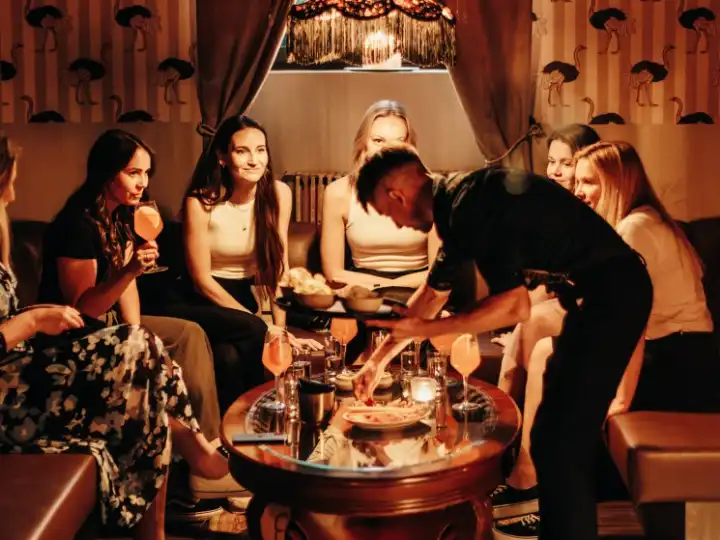
Lithuania’s Song Celebration marks a century of music, culture and unity

Lithuania’s Song Celebration marks a century of music, culture and unity

In the car park next to Vilnius’s Twinsbet arena, boys and girls in their finest attire are balancing instruments under their arms and looking over laminated sheets of Lithuanian marching music. It’s not long before everyone is due on stage and, over at a nearby catering tent, more musicians are loading up on pancakes, yoghurt and fruit. Alongside amateur youth groups from all over Lithuania, tonight’s concert also features the Baltic state’s professional military bands. Egle Juciute, dressed in a blue-and-red 18th-century-style uniform complete with gold-trim trousers, has been playing in Lithuania’s Military Orchestra for 14 years, an ensemble normally dispatched to welcome international dignitaries. “It’s a responsibility to be here and to play,” she says, flute in hand. Crowds have gathered to watch and the show is beamed around the country via the state TV broadcaster.The wind-and-brass band evening is just one event in a huge, week-long extravaganza known as the Song Celebration, which takes place every four years. The event, which marks its centenary this year and is also observed by neighbouring Latvia and Estonia, is recognised on Unesco’s lists of intangible cultural heritage. It is known for the staggering number of participants; in Lithuania’s case, 37,000 performers are taking part this year.Folk celebrations in Kalnai ParkPerformer at the football-stadium dance dayProcession from Cathedral Square during the final day of festivitiesChoreographed dancingLithuanians from the US enjoy a tippleLithuanian Air Force Band member ready to take the stageTonight’s concert, introduced to the repertoire just over a decade ago, is an acquiescence to the growing popularity of brass bands. Under the bright lights of the indoor basketball arena, there is a mishmash of outfits, including a group of young children dressed in black, complete with yellow rain boots, who run onto the stage as bands play behind them. Primed, prepped and beaming, there are barefoot girls in flower headdresses and others in red tartan who are shaking pom-poms, making it feel a little like a US beauty pageant. But it’s a piece of music set to a video and shown on a screen behind the stage that gets to the heart of what the Song Celebration is all about. It shows the Baltic Way – the peaceful, pan-Baltic human-chain protest that was staged against Soviet occupation in 1989. It stretched for hundreds of kilometres and was part of the “Singing Revolution”. Rich in symbols and symbolism, it’s a chance for independent, democratic Lithuania to get misty-eyed and in touch with its history. To finish the night, everyone gathers for a final rendition of “Kur giria zaliuoja” – an unofficial anthem that mentions Lithuania stretching “as long as the river flows” – as the night’s TV presenters put their arms around each other and sway, one of them gesturing that she has goose bumps. The self-reflection reaches fever pitch on the last two days, when everyone dons traditional dress. First there is the football-stadium dance performance which, at one point, has 9,000 people linking arms and moving in lines and circles on the pitch at the same time. Some of the people streaming into the stadium at speed occasionally lose the grip of the dance companion next to them, causing a panic to catch and rejoin the chain. The event culminates with song night, which features several hundred choirs and 12,000 people lined up in rows on an open-air stage that was custom-built in 1960 in wooded parkland. The same stage also stands in Estonia’s capital, Tallinn. The music is often traditional and folkloric but there is also space for new compositions, which often reference Lithuania’s pagan past.During one of the choir rehearsals for what proves to be a dizzying organisational and choreographic set piece, Saulius Liausa – choir conductor and the director of the Lithuanian National Culture Centre, which runs the Song Celebration – plants an oak tree on the edge of woodland near the stage. Ripe with symbolism, it’s designed to tie in with this year’s theme, which is “May the green forest grow”. As people take turns to shovel earth around the sapling, one heralds Lithuania’s independence while another salutes the young generation and the hope that they might sing the same way for another 100 years.Liausa says that in a small country like Lithuania, with a population of about 2.8 million, it’s essential to safeguard culture. “We have all kinds of laws and documents to protect nature,” he says. “But what we sometimes forget is that culture is also a fragile thing that needs protecting and that’s what we want to draw attention to.” He says that there are hundreds of customs and traditions that have been lost. And the Soviet past, in which the Song Celebration was hijacked by the occupiers, is still fresh in memories and painfully brought back to the surface by Russia’s invasion of Ukraine. “The wars that are happening in the world, Ukraine included, are about culture,” he says. “It’s language and culture that people are fighting for, not money or land as such. What we’re seeing in Ukraine – and what we also think here in Lithuania – is that a nation that really loves its culture and itself is very, very difficult to defeat.”Traditional dress at dance dayClarinet player from PalangaBackstage at dance dayYoung dancer waiting his turnSaulius Liausa, director of the Lithuanian National Culture CentreGetting ready at the makeshift hotel in the Vilnius Liepkalnis SchoolMusic teacher and conductor Rimantas JocysAt the dance day’s evening performanceGiven that view, it’s not surprising that the state plays such a top-down role. The celebration, which costs about €5m, is paid for by the country, with almost every procurement going out to tender; the provider offering the lowest cost wins. The price of helping to support a year-round ecosystem of dance and song clubs around the country, where people practise the repertoire, is harder to estimate but it needs support. While performer numbers have managed to stay stable, the number of music groups has been declining, even if the membership within those remaining is growing.Alongside the culture ministry, education, internal affairs and foreign affairs all play a part. Municipalities send delegates and help parents to chaperone groups of children, as well as providing buses to get people to the capital. The state spends €1.1m on keeping bellies full, dishing out 250,000 portions of food, and it turns schools into accommodation, which become makeshift encampments for a week. Monocle visits Vilnius Liepkalnis School, where more than 200 children and adults, mostly from Pasvalys, a city near the Latvian border, are either playing basketball outside, resting on green camp beds or reapplying make-up ahead of the evening’s celebrations. Ruta Jaruseviciene, from the municipality, shows us around. Remarkably, given the number of people temporarily living here, all is going smoothly, she says, even though six children came down with a mysterious vomiting bug the day before. Jaruseviciene offers us home-brew from several kegs in the makeshift bedrooms (the Pasvalys flag features a bull and hops in a nod to its beer tradition), while someone else is soon proffering a plate oflasiniai– seasoned and smoked pork served in slices. “I thought that the children would be tired after a full day,” says Jaruseviciene. “But they eat and then go wild!”During the dance day, performers pack into a backstage area to sit on rugs or pass out under the sun from the excitement and exertion. A German flag tacked to net fencing and a sign for the Chicago Suktinis – a dance troupe made up of Lithuanian American teenagers – point to the 2,000 performers from Lithuania’s diaspora who flock back to the motherland to be a part of this mass showing of collective memory. After the show, Monocle meets a dance group from Scotland, which includes an Indian with no link to Lithuania and an Argentine called Santiago Markus from Berisso in Buenos Aires province, whose grandfather is the son of Lithuanian immigrants. “It’s something I do to represent him,” he says of his second Song Celebration.Backstage at the Twinsbet arenaCollective from Chicago in Vilnius’s Town Hall SquareMuch-need break ahead of the final performanceMany young people like to take part in the folk celebrationsMilling in the crowds is Simonas Kairys, Lithuania’s culture minister, who is dressed in a traditional shirt from Dzukija in the south of the country. The minister calls himself a liberal and a globalist but he says that it’s important to show where you’re from. So, given the messaging and what can be seen as an interventionist approach towards culture, is this a political event? “Visit the Venice Biennale and you’ll see how art is affected by current events,” says Kairys. “This isn’t political but it’s the basis of statehood, humanity, a peaceful world. When you’re singing, you’re not fighting with somebody.”Some have reservations about elements of the Song Celebration, which are clearly designed to rouse the nation. “Too much is made of nationalism,” says Nerija Putinaite, associate professor at the Vilnius University Institute of Political Sciences. “The focus should be on civic, not ethnic identity.” Still, you would be hard-pressed to find anyone in the crowd, from cheering family members to someone who has travelled here from abroad, who isn’t overwhelmingly enthusiastic about the event, which has an atmosphere that often verges on the euphoric. By the time the last night of celebrations approaches, the mood is festive, with people tucking into sausages from food stalls and sipping beer orkvass, a sweet malt drink. Choir music – including catchy numbers such as “Zmones ant kalnu” (“People on top of hills”), conducted by one of the evening’s 31 conductors, all greeted like rock stars – can be heard well past midnight. The thousands of choral members are visibly elated, pleased to have eyes on them. On several occasions, a Mexican wave sweeps through the choir, with songs often finished with a collective ripple of jazz hands. The crowd responds, some singing along, raising phones where once there would have been lighters and enthusiastically applauding. To arrive at the stadium, the performers had assembled in Vilnius’s Cathedral Square and walked for several kilometres in a giant procession – often accompanied by more brass bands. They were waved on by people lining the streets, some of whom were perched on grass embankments to get a better view. Inside the park just before the clearing where the stadium stands, Micheline Beniusis is sitting on a bench, wearing a lilac dress, with a crown of flowers in her hair. Born in Montréal to Lithuanian parents, she is in her late eighties, which doesn’t seem to get in the way of her flying over to join what is a physically demanding event alongside three grandchildren and two nephews.“It’s very deep-rooted,” she says of the festivities, as the procession stream past her. And then her group of maple-leaf flag-wavers arrives, a sea of lilac and flowers, ready to pick her up to join the night’s mega-choir. She’s off with a wave of her hand – ready to belt her heart out in the name of Lithuania.Mega-choir on the last evening of the Song CelebrationTired but happy

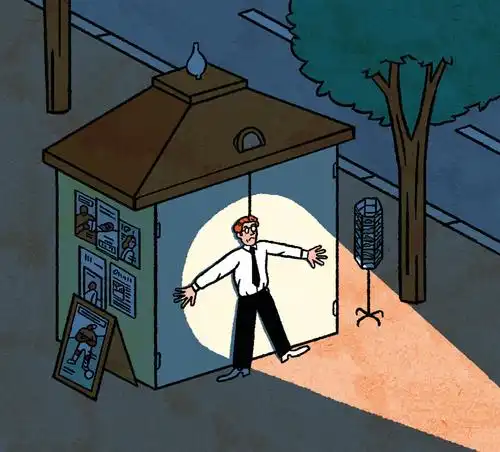
Leading photography collectors on what you should buy and keep

Leading photography collectors on what you should buy and keep

Collectors 01Darnell Moore&Yashua SimmonsLos AngelesDarnell Moore (on left) and Yashua Simmons, with ‘Untitled (Grapes)’ by Clifford Prince KingWriter and activist Darnell Moore and his partner, fashion editor and stylist Yashua Simmons, are an established presence on the Los Angeles art scene. The couple have a particular interest in photography that stems, in part, from Simmons’ work in magazines.Indeed, one of the first pieces that they brought home was an image that Simmons had worked on with photographer and filmmaker Micaiah Carter. Other acquisitions include pieces by the late Herb Ritts, Tyler Mitchell (best known for his cover image of Beyoncé for a 2018 issue ofVogue) and Illinois-based portrait photographer Bryce Batts.The couple source these works through people they meet, the city’s creative community or gallerists who understand their tastes. “It has been a beautiful experience to develop an eye and a practice together as two black queer men,” says Moore.Though identity isn’t always the driving force when it comes to the pieces that the couple acquire, it’s important to them that their collection represents black life and culture, and combines their individual tastes. “We’re at a point now where I know what [Simmons] would be moved by,” says Moore.Simmons agrees that finding art relies on an instant response. “It’s a spirit,” he says. “Nothing is grey or in the middle. They’re all just kind of emotional.”Collectors 02Isabelle von RibbentropLondonVon RibbentropIt’s no surprise that Isabelle von Ribbentrop has an impressive photography collection. She is executive director of Prix Pictet, which awards a biannual prize of chf100,000 (€106,000) to a photographer focusing on themes of sustainability and the environment.Von Ribbentrop’s lifelong relationship with photography began when she helped her grandmother, a professional photographer, in the darkroom. When she later bought her first photograph with her husband, it was a large Wolfgang Tillmans, which hangs above the sofa in their west London living room.Her fascination with the medium lies in the fact that it’s hard to be a passive observer of a photo. “I find photography so real,” she says. “You could be in this photograph or you could be the photographer.” And when it comes to the work she acquires, be it by Jeremy Deller, Jenny Holzer or Alicja Kwade, Von Ribbentrop buys what she loves. Works by Taryn SimonTo those who want to start collecting, her advice is to learn about what you like, buy photography books, visit galleries when travelling and consider what you would really like to have hanging at home, rather than its prospective value. “You need to love a piece and it doesn’t matter if it’s someone well known or not,” she says. “It’s much more interesting to buy someone who isn’t hanging in every museum.”Collectors 03Rafaël Biosse DuplanParis & LondonBiosse DuplanFor Rafaël Biosse Duplan, whose mother worked as a curator at the Louvre during his childhood in Paris, the question was never whether to hang art on the wall, but rather what. In 2005 he bought his first photograph – by German filmmaker Wim Wenders – and became hooked. “There was this extraordinary medium that produced pieces like nothing I had seen before, in its diversity, formats and techniques,” he says.One of the merits of collecting photography, he says, is that it is a “democratic medium”, likening it to literature. “You can have a version of a manuscript that also exists in paperback. It doesn’t take anything away from your collection.”Robert Frank portrait by Richard AvedonBiosse Duplan divides his collection between his homes in London and Paris, though moving works between them has become harder since Brexit. “These days there are two parts of the collection, as opposed to one full collection,” he says. What unites the two is that each photograph displayed can’t immediately be understood. “It’s not about decorating the house,” he says. “It’s about showing works that challenge and excite you, or sometimes calm you down or create strong emotions.”On the wall

Editor’s letter: Into autumn’s glow

Editor’s letter: Into autumn’s glow

In the northern hemisphere the back-to-school feeling that hits after a hopefully blissful summer isn’t something that only students or their teachers experience. It permeates everything. Galleries pull up the shutters to open new shows, shops unveil their autumn wares, politicians return to parliaments – things click back into gear. While packing away the loungers and returning the sun cream to the bathroom cabinet can be a little unsettling, the new season also brings the promise of change and a renewed determination to end the year on a high, with projects completed and at least some of those January promises fulfilled. Here at monocle, there has certainly been a feeling that it’s time to switch things up, to try some new ideas to make the most of the autumn sprint. That new-season enthusiasm also, in part, explains why this issue has landed with such a thump and almost 300 pages of global reporting.Just in case you were napping poolside when that new hotel started checking in guests or when the US got an airport terminal to boast about, one of the first things that we decided to include in this issue is a guide to recent openings, launches and products that might have snuck past you. Produced by our editor Josh Fehnert, it kicks off on page 171 and, during the numerous rounds of picture selects and editing, has already encouraged several of our team to change their travel plans.Being a man with broad shoulders, Josh has also been marshalling a new to-be-regular essays section that aims to inform, challenge and entertain. One of the stories is about life on a submarine and the discipline and mindset that you need to live under the waves. Told as a long q&a, the narrator is Taylor Sheppard, who has completed eight deployments as a US Navy submarine officer. And how did we meet her? It turns out that one of her ways of coping with the weeks of isolation is to pack copies of monocle andKonfektand she took up our offer to drop us an email.This is also our style issue, in which our fashion editor, Natalie Theodosi, gets to seize a vast swath of editorial real estate. The directory of talent that she pulls together for these issues is always impressive and works on two levels. If you want to add some well-honed clothing to your wardrobe, of course, she has you covered. But the roll call of new brands is now essential reading for any fashion-shop buyer or sector investor on the talent-acquisition hunt.In the Affairs pages, there’s also a story that touches on the worlds of fashion and design – and cultural confidence, identity and joy too. A generation ago, national dress seemed to be on a slippery slope to oblivion. It was often seen as parochial, a symbol of backwardness, a weakness if you wanted to project an image of modernity for your country. No more. Now it’s seen as youthful, a powerful marker of belonging and pride. In countries around the world designers are giving national dress new relevance, allowing people to take even more pleasure from sporting theirthawbor saree. Alexis Self, our foreign editor, has marshalled a runway parade of writers to decode their country’s national dress with warmth and insight. Perhaps a kilt is in order.This year’s monocle Quality of Life Conference will be taking place in Istanbul (from 10 to 12 October, if you would care to join us – tickets for it are now available frommonocle.com/conference). We have taken our presence in the Turkish city as an excuse to dive into its design and music scenes, which reveal stories of tradition and modernity being valued, used and cleverly adapted in myriad ways. And there’s a surprising undercurrent of rule-breaking too.It’s this need to innovate that runs as a rich vein throughout this issue – knowing how to hold on to the past while embracing new ideas. It’s an autumn recipe to embrace.If you would like to drop me an email, send me ideas, point out things we might have missed, you can find me atat@monocle.com. And also in Istanbul.

Poetry is a way that people survive the fear and uncertainty that war brings

Poetry is a way that people survive the fear and uncertainty that war brings

One Saturday last October, as we entered an elegant restaurant in downtown Beirut for lunch, my Lebanese colleague pointed out a Hezbollah minister sitting smoking shisha. He was a slim man in his early fifties, wearing a grey baseball cap and, like the other three men at the table with him, black jeans and a black T-shirt. We stopped to talk; Israel’s war against Hezbollah was at its height, with daily bombings of targets across the country. After we got to our table we laughed, slightly nervously, about whether the Israeli drone whirring overhead would drop its bomb before or after we had eaten our main course.Black humour is a staple of life in places such as Lebanon, where your destiny seems to be beyond your control. The same Lebanese colleague had been late that morning because she was stuck in a traffic jam; the Israelis had bombed a car on the road ahead, killing two people inside. I never did find out who. A Hezbollah commander and his wife? A visiting Iranian financier? It could have been either. You couldn’t know whether the person in the car you were passing, or in the house next door, or on the street as you walked by, might be a target.Poetry is another way that people survive the fear and uncertainty that war brings. Four lines by Bertolt Brecht have become an aphorism:In the dark timesWill there also be singing?Yes, there will also be singingAbout the dark times.After living through the civil war in the 1970s and 1980s, four Israeli invasions, numerous assassinations of leaders, economic collapse and, in 2020, an accidental explosion of nitrates at the Beirut port, which has been described as the most powerful non-nuclear explosion in history, Lebanese people are fed up with being praised for their resilience. A poem by the New Orleans poet Zandashé l’Orelia Brown that starts, “I dream of never being called resilient again in my life/I’m exhausted by strength”, has been circulating on social media. It resonates across borders and cultures.People often turn to poetry in times of personal grief and trauma, as well as political crisis. This is why, in my career as a reporter often covering conflict, I have always carried a volume of poetry with me. Poetry has an allusive power that journalism lacks; it picks up where we leave off. I turn to it when my own words run out.Though the TV images we see daily have a huge effect, journalistic language sometimes fails to convey the intensity of the experience. As journalists we pride ourselves on the clarity of our prose and on making complex stories simple. Our job is to explain why terrible things are happening and to challenge the euphemisms used by politicians and military spokespeople. We also try to convey the thoughts and feelings of those we meet and a sense of what it feels like to be on the ground. Yet we may lose the deeper meaning, such as the universal significance of what we have witnessed or the contradictory emotions that war engenders.On 21 October, Israel bombed, without warning, a building next to the Rafik Hariri hospital, the biggest health facility in Lebanon. Eighteen people were killed. We arrived the following morning to see a bulldozer scraping away at the wreckage. It would stop and the watching crowd would fall silent so that people could listen in case any mobile phones were ringing from inside the mountain of rubble. A man in a red baseball cap with tattooed arms scrambled up and started desperately digging with his bare hands. He was looking for his five-year-old son, Ali. Reaching into the crumbled ruins of his house, Ali’s father pulled out a multicoloured sack. He turned it upside down and a stream of plastic toys poured out, their bright pink, yellow, red and blue stark against the grey ruined concrete. “Are these the Hezbollah weapons?” he shouted. I thought of Anna Akhmatova’s poem about the siege of Leningrad, in which she compares the sound of a bomber to thunder that doesn’t bring blessed rain:My distraught perception refusedto believe it, because of the insanesuddenness with which it sounded, swelled and hit,and how casually it cameto murder my childThe shock of the last line echoed the shock I felt in the moment, watching the unspeakable pain of a father who has lost his own.The dominance of the Great War soldier-poets – Wilfred Owen, Rupert Brooke, Siegfried Sassoon, Isaac Rosenberg – in Western culture might lead to the assumption that war poetry is a male preserve, and that Western poets have a monopoly on the form. This is far from the case. The first known war poet was a Sumerian high priestess, Enheduanna, who lived in Ur, in what is now southern Iraq, in about 2,300bce. Contemporary poetry, much of it written by women, reflects the fact that modern conflicts tend to kill more civilians than soldiers. The late Irish musician Frank Harte said, “Those in power write the history; those who suffer write the songs.” A lot of songs and poems have been written in recent years.Across the Arab world, poets are revered. Poetry is not seen as an elite pastime but central to culture and identity. Poets may be as important as soldiers in other conflicts too. A statue of Taras Shevchenko, with his massive, drooping moustache, stands in nearly every town I have visited in Ukraine. The reputation of the national poet, who wrote revolutionary verse in the 19th century, has been further elevated by the 2022 Russian invasion. In Borodyanka, a small town near the Ukrainian capital Kyiv, which saw some of the worst of the early fighting, he surveys a bombed-out apartment block, the windows blackened and broken.More than 150 years on, his struggle is not yet won. A new generation of Ukrainian poets has been born of the war, writing in Ukrainian not Russian, part of an assertion of Ukrainian culture. Focusing on physical suffering, Western journalists may fail to see the importance of art to people struggling to preserve their humanity. Mental health and trauma are a focus but we are often oblivious to spiritual and religious needs, and to the yearning for the comfort of ritual and recitation that poetry provides.That yearning is increased when people are forced to flee. Refugees bring only what they can carry, which often means songs, stories, poems and prayers that they know by heart. They can’t go back, not just because it’s dangerous but because the country they grew up in no longer exists – war changes everything. They are lost in both space and time. Verses learnt on a grandmother’s knee or in school are anchors to the old life and provide a source of strength and identity that give solace in an alien and often hostile world. In TS Eliot’s words from “The Waste Land”: “these fragments I have shored against my ruins”.While we ate our lunch in Beirut, the minister’s driver leant against his black four-wheel-drive with its tinted windows, smoking and looking up at the drone, before finishing and whisking his boss away. A few minutes later a new party arrived at the table. They couldn’t have been more different: four fashionably dressed women with bee-stung Botox lips and sunglasses perched on their head. The two divergent sets of table guests are part of the complexity of contemporary Lebanon, land of chuddars and bikinis, political parties with their own militia, and multiple sects and religions. Even in the darkest of times, it’s possible to admire the glory of Lebanon’s contradictions and diversity.As the great Lebanese-American poet Khalil Gibran wrote in the 1920s:You have your Lebanon and its dilemmaI have my Lebanon and its beautyYour Lebanon is an area for men from the West and men from the EastMy Lebanon is a flock of birds fluttering in the early morning as shepherds lead their sheep into the meadow and rising in the evening as farmers return from their fields and vineyardsYou have your Lebanon and its peopleI have my Lebanon and its peoplePoets don’t have the answers but they can turn the horror of war into works of beauty. Journalism is of the moment; poetry lasts forever.About the writer:Hilsum is international editor at Channel 4 News in the UK. Her new book, I Brought the War with Me: Stories and Poems from the Front Line, is published by Chatto & Windus.

The World Meteorological Organization’s secretary-general brings a new way of leadership

The World Meteorological Organization’s secretary-general brings a new way of leadership

Whenever a thunderstorm breaks out over Lake Geneva, Celeste Saulo is happy. The Argentinian, who has led the United Nations’ World Meteorological Organization (WMO) since the beginning of the year, is the first woman to hold the position. She researched and taught at the University of Buenos Aires, where she headed the meteorology department. “I love weather forecasting, where I can combine mathematics, physics and modelling,” says Saulo. But she realised that something was missing. “We published studies but there was no connection between the research and the weather service.” At that time, the Argentinian National Meteorological Service was under the control of the country’s air force. Together with a group of colleagues, Saulo pushed for its independence from the military, which they achieved in 2007. Soon afterwards, she was offered the position of director. “I thought, this is how I can bring these two communities together, research and weather forecasting,” she says.Scientists are sometimes reluctant to move into the field of management and finance but Saulo felt comfortable. As director of Argentina’s National Meteorological Service, she became the country’s permanent representative to the WMO and began to understand how, as a member state, Argentina could influence the organisation’s decisions. She quickly rose through the ranks, becoming a member of the executive council and, later, vice-president. In June 2023, Saulo won a landslide victory to become secretary-general, receiving 71 more votes than the runner-up, Wenjian Zhang of China.Everyone says that, since her victory, the organisation has been gripped by a spirit of optimism. She is the first person from the Americas to lead the WMO. “Argentina is a middle-income country,” says Saulo. “This means that we can speak to both industrialised and developing countries on an equal footing.” She comes from a weather service where she always had to fight for budget and that experience gives her the ability to help countries in a similar situation. One of the things that many poor countries need help with is building efficient warning systems for extreme weather events. The WMO wants to see such systems installed in all member states by the end of 2027.“You can only build a system like this if you work with stakeholders who don’t come from the meteorological world,” says Saulo. In addition to the weather service and the hydrological service, civil defence, television and the Red Cross also play an important role. Saulo wants to strengthen the role of the national weather services and the hydrological services. There are still many countries where governments do not pay much attention to these. “We want to increase their visibility because they are key to the development of countries,” she says. In order to increase economic productivity, for health and for a secure food supply, reliable information on weather, climate and water is vitally important.In her role as secretary-general, Saulo often comments on climate change. When it comes to the subject, she chooses every word carefully. Saulo recalls the early research of Japanese-American meteorologist and Nobel Prize winner Syukuro Manabe into climate change, which he published in 1969. “And nothing happened because economic power has so much more influence than science,” she says. The WMO has been contributing to climate research for a long time, and the organisation’s research programmes measure emissions of greenhouse gases, especially CO2 and methane. But there are still gaps in their knowledge. “To be honest, we don’t yet understand very well how forests store carbon,” says Saulo. “We have to measure it.” The forests in the Amazon region, for example, store carbon in a different way to those in Canada or Africa.The scientist does not want to interfere in the politics of individual countries but she does want to clearly warn about the dangers of climate change. On a cold spring day, she looks out at snowy peaks from the window of her Geneva office. The meteorologist says that she felt overwhelmed by the way Switzerland welcomed her. Geneva is great in many ways: everything works so well. “But it’s important not to forget that the world isn’t all like that,” she adds.This article was syndicated from ‘Neue Zürcher Zeitung’.

Culture agenda: New art spaces from Guadalajara to Warsaw and what’s next for the Australian Ballet

Culture agenda: New art spaces from Guadalajara to Warsaw and what’s next for the Australian Ballet

Media: DubaiQ&AIsabella CraddockEditor, ‘Near+Far’New Dubai-based publication Near+Far offers a Middle Eastern perspective on hospitality and travel. Its stories range from those on the Palestinian art scene to coverage of Dubai’s latest hotel openings. The magazine’s founder and editor, Isabella Craddock, tells Monocle about its audience, the tourism industry and her aim to dispel regional clichés.Why is Dubai a fitting place to launch this title?There’s space here for a homegrown, independent title such as mine. I have worked in publishing for more than 10 years but it’s still exciting to launch a new magazine.What’s the main aim of your publication?As the title suggests, I want to go near and far. The first part of the magazine is all about the Middle East. The second is about other places but with travellers from this region in mind – though anyone can read it.Is tourism booming across the region?Tourism numbers are very positive. Great hotels are opening, not only in Dubai. Saudi Arabia is also an exciting place for tourism. In Near+Far, I try to dispel the clichéd image of the region as one of camels and desert dunes. There’s more to it.To hear the full interview with Isabella Craddock, click here.Art: PolandTo those who waitMuzeum Sztuki Nowoczesnej (MSN) has been a long time coming. “There are newspaper articles from the 1950s arguing for a dedicated modern-art museum in Warsaw,” says Sebastian Cichocki, its chief curator. Now it has finally arrived.The museum was originally slated to open 10 years ago. In 2005 planning began in earnest for the new building on Plac Defilad, the capital’s central square, next to the Stalinist-era Palace of Culture and Science. The project, however, was beleaguered by several false starts and delays.After such a long wait, it seemed that the only appropriate way to celebrate the museum’s launch was with a three-week party. In October, the MSN’s curators lined up more than 160 events over 16 days, including performances by US musician Kim Gordon and Lebanese contemporary artist Tarek Atoui. The festivities and a rich public programme will carry on until the full opening in February, when visitors will be able to see the full extent of the collection, which focuses on art made since 1989.“Much of this space was handmade by craftsmen from Warsaw,” says Thomas Phifer of the 20,000 sq m building. The New York-based architect’s design is a minimalist box in white concrete. “There’s a sense of abstraction,” he says. “It’s very simple, very heavy and all about the light.”The MSN’s ground floor is open to the public and serves as a shortcut across the square, where the city is building a performing-arts theatre (also designed by Phifer) and a park. A symmetrical staircase takes visitors up to the galleries, which range from compact rooms to vast, skylit spaces. Resisting the trend for flexible exhibition spaces, the MSN has opted for a fixed floor plan. On every floor, windows and balconies overlook the Palace of Culture on one side and a shopping centre on the other. “Moving through the building, you have different framed views of the city,” says Phifer.The location of the MSN is fitting, as it sits between structures from Warsaw’s communist past and its subsequent commercial boom. “Poland was the best student in the class after 1989,” says Cichocki, referring to the country’s embrace of capitalism after the fall of the Iron Curtain. “But it always lacked a magnet.” It might be a few decades overdue but Polish art finally has a venue that stands on its own.artmuseum.plArt: MexicoCentre of attentionWhen José Noé Suro discovered a former funeral home in Guadalajara’s Americana district, he knew at once that it was where he would open the city’s latest art space, Plataforma. Not only was it central and in a creative area but the 1970s modernist site would also provide ample exhibition space. “The bones were perfect,” says Suro, who called on the expertise of architect Sergio Ortiz for the project.Suro had long dreamt of an art hub that could provide a platform for the burgeoning regional talent that he already knew and worked with in his ceramics business. His collaborations have also included international designers and architects, such as Kelly Wearstler; he has welcomed artists in residence from across the globe too.At Plataforma, Suro has brought in renowned curators – including Madrid-based Agustín Pérez Rubio, former director of Museo de Arte Contemporáneo de Castilla y León – to develop exhibitions with artists from Guadalajara and Mexico’s interior. Also on display are pieces from Suro’s private collection. Meanwhile, a bar just opened and a restaurant is in the works. “We will show visitors what is happening in the region,” he says.Ballet: AustraliaQ&ADavid HallbergArtistic director,Australian BalletThe Australian Ballet’s new production, Oscar, reimagines the life and work of Oscar Wilde through dance. It’s an ambitious commission that celebrates love in all of its forms. Here, David Hallberg, the company’s artistic director, tells Monocle about using Wilde’s life as source material, the power of storytelling and choreographer Christopher Wheeldon’s brilliance.Why did you and Wheeldon bring this story to life?The life and writings of Oscar Wilde have been explored before but never really in the ballet world. I want to tell bold stories that people can relate to.Do you feel that you have broken new ground?People have said so but that wasn’t the intention. Wilde wrote beautiful stories and also had a troubled existence. He was tried for gross indecency with young men, served two years of hard labour and died not too long after he got out of prison. We wanted to tell this honest story. I hope that this paves a new path for more courageous storytelling.How do you create the building blocks of a character through dance?It takes a great choreographer such as Wheeldon to evoke the wit and character of Oscar Wilde through movement. He has told Wilde’s story not through the words that he wrote but through the life that he led.Music: UKPlaying it by earThe Marquee Moon in northeast London is a bar of two halves. At ground level, you’ll see traces of its past life as a pub: an oak parquet floor, leaded windows with streaks of green stained glass. The formidable array of DJ equipment dotted around the building signals its new function as a listening bar. The downstairs space was once a club with “a little 60-capacity dance floor”, says co-founder Eugene Wild. Now it’s a sleek, seductive world of mid-century lamps and stools, half-moon booths made from teak and sapele, and banquettes, tiles and speaker grills in shades of deep orange.The listening-bar concept has its roots in the jazzkissa– bars or cafés playing US jazz records that emerged in Japan in the late 1920s. Many of these venues banned talking, such was the veneration towards the perfect sound. In recent years, more relaxed interpretations of the idea have spread across the world.Wild and his business partner Stuart Glen have worked together since 2018 and today run five businesses in London. The Marquee Moon was partly inspired by the fact that its customers were increasingly going to late night bars. “As they’re maturing, so are we,” says Wild.The DJs who play here are briefed to steer clear of “run-of-the-mill” electronic dance music. “We know that these DJs have amazing record collections. So, we want to encourage them to play like they would in their living room to a bunch of mates.” The downstairs area is acoustically treated and the JBL speakers are rigged for quality, not volume. Unlike a traditional Japanesekissa, conversation is encouraged. And Wild promises the occasional airing of punk band Television’s 1977 albumMarquee Moon, the bar’s namesake.themarqueemoon.uk

advertisement